I wished I knew this before hitting $300k MRR
Nathan Miller grew a supplement subscription to $300k MRR in eight months. He targets older white and Asian men to lower churn, uses low front-end pricing to cut customer acquisition costs, and keeps U.S. warehousing to avoid shipping delays. Third-party testing for contaminants protects both customers and brand value.
Chapters
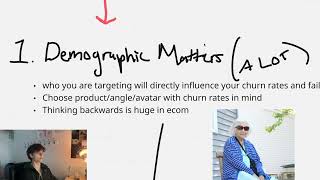
Yo, what's going on guys? So today I'm gonna be breaking down basically all the things I wish I knew before I got into like MRR with E Comm. So like, you know, selling subscriptions and you know, specifically more for like the supplement side. And I am saying this as someone who currently has, you know, around actually over 300k in MRR. So I've been doing it for the past, like, I don't know, eight months or so. So like I have have learned a lot from that. So let's just get straight into this. So first things first. All right? Demographic matters a lot. And there's a reason why I put this first, because currently I do and I do sell to a demographic that isn't the best. And I, at the time when I was first just starting out, I was just trying to find whatever worked basically. And I found something that was working that, you know, had decent results. You know, the CPA was pretty good and everything. But I didn't think about the back end. I didn't think about how this customer react and how this customer would churn. How this customer. Does this customer even have enough money to like, you know, pay for the subscription? Like, you have to think about these things. And so who you are targeting will directly influence, you know, your churn rates and your failed payments or payment rates. So like, for example, like older white men would be like probably peak customer profile that you want to target because usually they have more money. I guess Asian men, technically Asian men would have the most money and they also probably have the less churn because you know, the failed payments and they understand it more. And so that's something you kind of just have to think about. And then obviously like probably at the bottom of the barrel you have like some poor demographic or something like that. So you know, it's really important to choose your product avatar angle with your churn rates in mind. You know, you can do this on chat, you can do this on whatever, but really try to think backwards and be like, okay, before I go out and look for products, what kind of customer should I even be targeting in the first place? That would make more sense long term. And so, you know, this is something that is very important and something I definitely didn't do and learned. So the next one we have here is, I'll zoom in a little bit. The goal is to acquire subs for as cheap as possible, but kinda you don't want to go too cheap. And that's kind of why I said kind of. But usually like when you're selling something that's not a subscription, right? You want to like just get as much as you can. You want to AOV max, try to bring up, do anything to bring your AOV up. But with subscriptions it's not exactly like that. Like if you look at the screenshot right here, this is Rise Superfoods. They are a billion dollar company. They do subscription only. And as you can see they are selling it for only $27 on the front end. It does bump to 36 when they refill like on the rebills. And the reason probably why they do this is because their CPA is much lower to get someone to buy something for 27 than it is for 36. And so you know, they're willing to eat, you know that, that like less profitably up front as long as their CPA is lower. And this is something that I've done as well. Like I've tested a bunch of different pricing and lower, lower, lower pricing. And I wouldn't go anything lower than like, like 15 or $20. But like you wanna, you wanna try to test out and see, you know, if you do lower your prices, does your CPA go lower? And then if you're rebuilding at the same price, the back end, then it doesn't really matter if you're like, if your CPA is lower than it was before, that's all that really matters. And so that's something that I learned this year and that's super valuable. You can also do this by adding just more value, more gifts and like your margin up front will be lower because you're adding all these different cogs and stuff. But if you're increasing the value and like over time it just trying to think of a way to break this down. So like let's say you have $100, you spend $100 a day on ads and usually you get like a $33 CPA, right? And you're selling it for, let's just do this $36 and you get a 30, $33 CPA. So you get basically 33 times 3 or 36 times 3, which is like oh my gosh, I have to do this math because I'm retarded. Which is 108, right? So you get 108 MRR from that. But let's say you had a 27 like what they did. So now you have a $27 CPA. So now you're getting basically four subscriptions. But the renewal price is the same. So you basically instead of getting 108Mrr, you actually get another one. So it'd be plus 36. Again, I gotta do this math because I'm retarded. So now you're at 144. So you just almost increase your, you know, your MRR you're getting every day by like, you know, was that 50%? So you got to just think about it in that way. I probably should have drawn this out in here, but I just did on my notepad, so hopefully you guys get that. But like you said, the goal is to be increasing your mrr and you need to sacrifice a bit of upfront profitability, but not too much. And that's what I'm going to get to the next one. And obviously this one, you can see we got heel here. Take your freaking profits. And this is something I've seen for myself and for friends who are in the space and kind of do the same thing I do is you don't want to go too negative because there are a lot of costs that you just don't even factor in once you're like scaling at a low row. Ads, like some of these brands, like rise, like they're able to scale at like a 0.5 or a 0.6 ROAS up front because they are backed by so much money. They are not bootstrapped. They have infinite resources. So they could wait till five months down the road to make their first profit because they're just backed by that much money. But for someone like me or someone like you who's bootstrapped, you need to be a little bit more frugal. And so the goal should be to break even up front. So whatever your break, even, realize that's what you should be kind of trying to scale at. And that's something I've done this whole year. And I'm very glad I did that because I did have another friend who he went a little bit lower and he don't know, he doesn't even know where some of the money went. Like he lost. He thought he made a lot more than he actually did. And even me to a point, like me, like, there's. I thought I made a little bit more. So I'm really glad that I was frugal with it. And so I would continue to, like, keep your margins healthy. Don't, like, if you get, let's say you get up to like, you know, 50K or 100K MRR, and you start getting like, you know, $2,000 worth of rebuilds every day, don't just like go 2,000 in the red up front. Just because you're getting that in, like, it's not gonna always even out. So you want to make sure that you are being smart and that you're keeping your margins healthy and you're being pretty frugal with it. So. But you, you can afford to. Once you have more profit coming in and you have more mri, you can start to go a little bit less than break even. Like right now, probably a little bit less. But I still like to keep it, you know, pretty frugal. And I do advise that. Okay, now for you need a bookie. So a bookie is a bookkeeper. And the reason why is because I realize this, my friend realized this as well. Triple well is not accurate. So on triple well, you got like, obviously your ad spend, it factors in, I think it factors in some of your returns. It factors in, you know, cost of goods, but there and then also like shopify fees and stuff. But there's so many different expenses that are on there that are not factored in. And so like, your profit is actually a lot different than what it says on there. For example, when you're running subscriptions and usually you have like dispute a fire or some chargeback software set up, those fees are not going to be calculated on there. And you're going to get a lot of those if you're doing a subscription brand. Because a lot of people just, even if you make it super obvious on every page, like, they're just not gonna grasp the concept that they're applying for a subscription. So they're gonna like get charged and be like, yo, what the heck? And so you are gonna get chargebacks. It's inevitable with any type of business model. And so that does bring in its own fees. And for me, it was a lot because of my demographic and I wasn't taking that into account. And that's something that really can eat into your margin. And so that's one example. That's a huge example. Returns as well. You have your agencies, you have different apps you use. There's a lot of different things that go into it. And so you just need to get a bookkeeper, set everything up, get them to set up Intuit, QuickBooks and everything. And just make sure you actually know how much money you're bringing in every month. Super, super valuable. And if you don't have a bookkeeper, I would kind of just preface it by saying like, whatever Triple Will says, the margin is usually 10% lower at least. So that's what I'd Based off. And that's not even for subscription. That's also for like regular just drop shipping. So number five is to go easy on refunds. So the cat, bro, I love the cat. So I had a big issue with like my disputed fire fees going like through the roof, right? Like, I was paying, you know, more like five figures more a month in just those fees. And I kind of did some, some like, tweaking with my, you know, how easy and how flexible like my refund offer is for people who are buying my product. And I like, talk to my, you know, creative or not my creative. My customer service team was like, all right, let's try this. Try to be super loose with my refunds and, and see if that helps with our total, like loss for the month. Because just refunding someone is actually a lot cheaper than, you know, not refunding them and getting a chargeback because getting a chargeback you have to refund them because you're using dispute a fire, which automatically refunds them. But there's also a feed added on to that. So it's Also, it's like 150% more expensive to get a chargeback than a refund. So when I was like, okay, I'll just be super loose with refunds, I'll just eat the refunds and then hopefully my chargebacks are lower. And also that's good because your chargeback rate is just a lot lower as well. So I definitely recommend going very easy on the refunds. It's how I honestly saved. I used to like have a crazy amount of fees I was paying per month and I cut that probably almost in half just from doing this. So I definitely, definitely recommend that. Number 6 is USA shipping is a must. And this is basically for subscriptions. You probably should get USA shipping as soon as you can. And if you guys don't know like how to do that or anything, my private supplier does do this. So they have, you know, a China warehouse and they also have a USA warehouse. So what they can do for you is they can make all your inventory in China. You get the China prices and everything. But then they ship it over in bulk. So you have products here. And so then it's just like one to three day shipping from there. And that's what I'm doing right now. But basically the reason why you must do this is because you can get like overlap with your subscription. So because China, like is super inconsistent. There's tariffs, there's, you know, more custom inspections now, especially for supplements and stuff like that. You are going to be facing a lot of customers who they order the product, they don't get it yet, and then they get rebuilt again before they even receive the product, which is terrible. Like no customer is gonna, you're gonna get a crap ton of chargebacks, you're gonna crap ton of complaints. It's not going to be good because they're getting charged twice when they haven't even got one product yet. So it's super, super important to get USA shipping. Your customer satisfaction will go up, your chargebacks will go down and overall it just makes your business flow a lot smoother and it will decrease your churn as well. So I definitely recommend that. You know, I think this is the last one here. Get your shit tested. Like never trust China. Like, I don't care how good of relationship you have with your supplier, you cannot trust China. So you need to get your product, either order it to your house or order it somewhere and get it tested here in the states by a third party test. And you need to test for lead and all these other like heavy metals and stuff like that. And it's very important for one, I mean if you ever want to exit. It's just something that's good to have two. China does like actually make things that are can be very harmful. There was a brand, very popular brand like Kayla did, I think it was like micronutrients or something. One of those brands or maybe it was clear Nutra and they're currently getting sued by, by the state of California for having lead in one of their products. So like, and a lot of people just rip straight from that brand. So like you're selling their products that could have lead in it. So you need to get that tested, you need to make sure your stuff is clean. And also it's good that just a good to have like you're selling something that someone's putting in their body. Like you want to make sure that it's the highest possible, you know, quality and that it's not full of a bunch of toxic things because if down the road that could just cause you a bunch of headaches. So really, really important, get your stuff tested. And that is basically the last point. So hopefully you guys got some good value out of this. I've been doing this stuff for, you know, eight months and this is kind of what I've learned so far. I'm gonna learn a lot more especially about churn and stuff like that soon, I'm sure. But hopefully you guys got some good value from this video and I'll see you pookies later. Peace.