Nathan Miller argues that fear of being seen stems from a system designed to produce compliant workers: public school to college debt to nine-to-five jobs. He traces this pipeline to John D. Rockefeller's education reforms, and says breaking free requires self-education, building independent income, and trusting your intuition over institutional authority.
Chapters
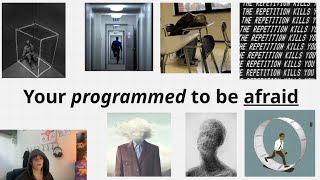
Alright guys, this is going to be an incredibly deep video about why you are afraid of being seen, why you fear, why you fear failure, why you, you know, you want to do stuff, you want to live more, you want to have more in your life, want to do more, achieve more, go more, see more. And you know the way to do that is by kind of sticking your neck out and trying something new, but you're afraid to do so. And so let's get straight into this. This is a very deep video, like I said, something that I'm very passionate about and I'm someone who has taken this path and actually in a place of freedom where I get to travel, I make money and I'm not confined to a system. And so I know a bit about this, I've done research on this. But I do encourage you guys and as you will see, to do your own research as well. But let's get straight into this. So money is the root of all evil is something that has been actually put into our society to get you to think that money is evil. Money is not evil. It's as you guys can see right here, the love of money, that's all evil, right? So, so the love of money is the root of all evil. And some quick examples of this. Recently this happened this month, December 18th, this professor at MIT was assassinated. Like he was shot and killed in his home and he was working on something that, as you can read here, this is literally from a Google search so you guys can search this up yourselves. He was working on harnessing a fusion energy for clean power and basically something that had the potential to revolutionize energy. So why would this happen? Why would a random MIT professor, like, there's no way he was involved in anything bad to get into MIT alone. And to be a professor there you have to be very clean as a person. So it can't be from anything like that. So it's very likely that he was assassinated because he was onto something and something that would revolutionize this energy or energy across the world. And as you guys can see, energy is a 3.3 trillion dollar industry. So even if it was a small change, even if it was, you know, something that maybe just helped a small fraction of this industry or just revolutionized would still affect billions and billions and billions of dollars. And you know, with people losing billions of dollars to, let's say, this new revolution, those people are obviously, you know, have this love of money and they're going to take action against this guy. And so that's likely why he Got killed. I think anyone could see that. But another example that is, you know, pretty common is insulin. So insulin, on all these other countries, it's sold for like, you know, it's still sold at a markup because it cost, you know, two to six dollars to make. But compared to the United States, we sell it for almost a hundred dollars, which is like a 50x markup, which is insane. And people have patents on this. People have, you know, made it. So basically no one else can sell, sell this insulin. You have to buy it from these few sources. There's no room for legally any competitors to come into the space and start, you know, selling it cheaper. And the reason why, I mean, the only reason you can think of is because people are just greedy. The people at the top who make all this money, who have a love of money, they start making a certain amount and they don't want to see that amount come, come down. Let's say they're making like, I have no idea what they're, they're even making a month, but off of insulin, you know, let's just say like $500 million a month. They make $500 million a month. Like the companies that run that, they don't want to make $400 a month. Like 400 million or 300 million. Like, they're not going to want to see that, right? They're going to hate to see their numbers drop. They just want them to keep increasing. And so they, they make these, these systems, they get into legal, they go behind the backs of our government, they go behind the backs of the wealthiest people in the world, and they build monopolies like this so they can basically just make as much money as they can. And it is pure evil. Charging people what people need to live at a price that's 50x marked up is insane, which is ridiculous. And it's complete evil. No one else, like no right person or no ethical person could ever do this. It is literally just pure greed, pure evil. And so what if I told you there was, you know, in the beginning of America or the earlier stages of America, So like the 1800s and like the early 1900s, there was a guy who was the first billionaire right, in America. He created and he founded a lot of the, the systems that, you know, influenced how we learn and how we actually, what we learn and how we're taught. And he was already had a big, big influence on just the, the whole society in general. And, you know, if, if there were someone that were, you know, the first billionaire ever in America, So if you have the most money, like, I know a lot of people like to say the president's the most influential people in America. But if you still think that, like, that is not true whatsoever, you can clearly see that for a while our presidents have been puppets. If you don't believe that, then you should just look a little further into that. Look into, you know, why we're giving money to places and stuff like that. But I'm not getting into that in this video. But basically, money. And the reason why people like money so much and people lust over it and have this love of it is because it equals power and equals control. And so if someone wanted more money, let's say, like, you're the richest dude already, but you want more because it's. That's kind of how it is with these people. Like, they start. You don't start as the richest guy. You get to that, that level by being obsessed with money and by wanting more. Obviously it doesn't fall into your lap. And so you're at the spot where you have all this money. You're the richest guy in America. How would you go about getting even more or creating an environment where you could even earn even more money? And that is from controlling, obviously the population in some sort of way. And so if someone like this were to control a population who has all this money, the way they would do that is, number one, through education and curriculum. Obviously there are other ways that it's happened in history. People have controlled food supplies, people have controlled, you know, a lot of different things. But education and curriculum are like, is the top thing in America that someone would control. And there are some, you know, examples of this. But basically this guy I'm talking about is John D. Rockefeller. And you might have heard a lot about Mr. Rockefeller over here, but basically he is the biggest oil money dude in America. Or was he? You know, basically, I don't even know how much percentage of oil market he really created or he had, but he was the nation's first billionaire and he made that off of oil. In oil, you need a lot of different things, a lot of different. What's it called? You need factories, you need a bunch of different workers. You need like freaking. I mean, it says it right here. You need refineries, pipelines, rail drilling operations. You need a lot of, like, labor, a lot of people who manage the labor. You need all this, this infrastructure and these workers and these cogs in a machine to even get that thing to run. And so John D. Rockefeller, I did not mean to Draw a line. Who was the most influential person in America at the time? Because he was the richest man in America, you know, he decided that he wanted to help out and be a philanthropy or philanthropic, I don't know what the word is, but he wanted to basically help fund the schooling system we have today. And so the reasons why he wanted to do this, obviously he used the, the term philanthropy and he was like, I just want to like, you know, what does philanthropy even mean? It means like donating or like helping, charitable, being charitable. But if you look into the motives of anyone who is the richest dude in that they don't just do stuff like that out of goodwill, like, it just doesn't happen very often. And with John D. Rockefeller, especially if you look at the signs of what we're taught in schools, which I'm about to break down, you will see exactly what I mean. But basically the real reason why he supported this was to create a lot reliable workforce. So he believed in, you know, if you want to build a workforce that's going to make you money, which he needed a huge workforce for his oil companies and all the, the systems that go into that, they need to be disciplined, they need to be punctual, and they need to be obedient. Sounds a lot like what they teach us in school. If he wants, you know, a nation of workers to create a nation of workers, he wants to, obviously you would want to reduce entrepreneurship and independence. He would want to make sure people are predictable with their habits, their attitudes, you know, they don't talk out too much. He would want to make sure that everything that just aligns with what a worker would be for his company. And I mean, here's a little bit more information, but we'll get kind of straight into this. And so this is the guy, I think it's Herman's man or something like that. So this is the guy who, if you look up on Google, who founded the education system that we that's in America today still to this day, it would say him, but he was influenced. And he was backed by the General Education Board, John D. Rockefeller, which created the General Education Board. So this is just kind of fugazi, whatever. And so this guy, he's seen as like a nice dude, but when you are backed by someone like this and the world's richest man, you're probably going to cater to his needs. It's like the same thing with elections nowadays and people getting donations from these companies, like presidents getting donations from companies while they're running for being president. Just so that they can push their narrative and that they can, you know, accept their terms and maybe not look away to some things that, you know, certain industries are doing and, like, be softer on them. It's the same thing going on here. And so he created the schooling system which today kind of pushes this box. And this is the box that 99% of people are in. And this is the box that directly ties into the fear of being seen in this box. I have a couple of pictures here just to kind of show, but I'll kind of walk through all of these. So this box is basically the traditional route that you've always heard. And, you know, I went through this while I was going through high school. I had the show down my throat as well. I never liked it. I. I never thought it was cool. I wasn't the greatest student. I wasn't super, like, outwardly boastful or, like, crazy or anything like that. While I was growing up, I moved around a lot and I saw a lot of different. Like, I just moved a bunch. So I didn't really have, like a super huge voice or anything because I just wasn't. My personality. I was more conserved and stuff. But I would notice, like, kind of some patterns. And basically this box is what 99% of people are in. And in here, you have television, right? You have the nine to five cubicle. You have graduation. You have this funnel, which is basically everyone before school, public school, and then after. You can see they're all the same. You have this very distressed person who is just overwhelmed with consumerism. You have suburbia. You have the nine to five cycle that people are running in. You have a depressed college graduate who kind of figured out his degree doesn't mean anything anymore. You have someone living in a box that they kind of put themselves in and they're not leaving. You have debt, and you have everyone going the same direction while one person goes the other direction. This box is what 99% of people are in. And the reason why you fear being seen or you fear taking that step that will change your life or doing the thing that you. You've wanted to do for so long that's different than what fits into this box is because 99% of the people are in here. And once you step outside the box, you begin to be judged, you begin to be criticized. You don't really fit into society anymore. You don't fit into this narrative to what everyone else does. And I've. I'm kind of right there as well. Like, there are a lot of conversations that are really weird for me to have with like ordinary people who still believe this kind of thing. And I mean, I'm grateful that I'm in the spot I'm in. I've worked very hard to get in here. But it's still, I feel very called to talk about this box, this box that they can form you into. And it starts at a young age. It starts very young. Like throughout your whole schooling career, you'll always be graded based on, you know, how accurate your answers are. And you're taught that failure is bad, that you shouldn't want to fail, when, you know, in my experience, failure can be a very good thing. And I'll explain that later, but this is like the average life of someone who's living, I guess in America now, today. And I mean, I can explain it to you very briefly. Like you go to school, you go to college, you get into some debt, you get a job that pays decent, but even if it pays decent, you're in debt. And then you are living this life. You watch tv, you watch football on Sundays, you look forward to the weekends just so that you can go back into Monday and have to work a job you really don't like. You don't really have that much freedom in your life. You get maybe a couple weeks of vacation life every year, but you still are kind of trapped in this cycle it feels like of having to do go to work on Monday through Friday. Your thoughts and your opinions are kind of repressed. You want to think about other things, but you don't because all your co workers, all your friends and family kind of have the same sort of beliefs. You guys are more interested in politics and what's going on with other people's lives than you guys are with your own. That's why you watch reality tv, that's why you watch sports. That's why you're consumed by things that aren't taking control of your own life. And this is the path that this 99% of people take. And it is honestly, you can find happiness in there. And there are people who are very happy and very like their lives because they have families and they're good. And some people actually do very well for themselves in this, but a lot of people don't. A lot of people aren't happy and a lot of people are just living this mundane life and it's just so unnatural. It's so. This is like, the fact that this is normal nowadays is like kind of crazy. There's like very little nature in here. There's very little like, like I've even gotten to the type of foods they push on you. Like, there's so much stuff in this box that is so bad for you, so harmful for you. And like, when I was going to school, I remember I did not plan on going to college and I didn't go to college. And the reason why is because I just knew I was going to figure something out. I just had a belief in myself that college doesn't make sense to me. I wasn't going to be in stem, so, you know, paying and going to in debt for a degree didn't really make sense to me. I knew that. I saw other people making a bunch of money online. I saw people who were, you know, doing crazy things with their life. And I was like, okay, I think I can do that too. And I remember there was like a career day or something where everyone wore like merch from the college they got accepted into. And it was like, it was just the weirdest thing to me because all these teachers were like celebrating with these kids, like, oh, you got into this college. That's so great. Like, what does getting into a college even mean? It doesn't secure your future now, like, unless maybe you're in stem, there are some degrees I think that are very useful and are great, but even then you're still kind of in a cog to big pharma and stuff like that, which I don't really like, but I'm getting very controversial here. But like, bro, like you go to college, you have a fun experience, you get into some debt most likely unless you're smart and you are able to, you know, get a lot of scholarships and stuff. But a lot of people do and that's very smart of them. But it's still a four years of a lot of your life that you're kind of extending this indoctrination and this, you know, extending this belief system and hardening this belief system that puts you inside of this box that you need to get a job, you need to watch this freaking NFL every Sunday, that this is what life is, this is what life, a good life looks like this is what you're supposed to do. And it's just like, I don't know it. To me, college is just not all that. And I get pushed a lot, but like there's so many degrees out there. Like a business degree, bro, like, you're telling me that you're going to go to learn about business in college from a professor who's never started a business Before I have started, I don't even know how many businesses, but I know infinitely more probably about running a successful startup than these college professors know. And they could probably study like cool startups and stuff, but all these entrepreneurs who are starting these things and like living life and are doing these things, it's not because of college. College does not have a factor in it and the reason why. Okay, we'll go to here. This is like some questions you should ask that kind of explained my point a little bit more. So I'll try to fit this as best as I can on here. So what behaviors are schools actually training? Independence or compliance? So I mean, this one's kind of easy, but if you look at, you know, the schedule they give you, right? Waking up at a certain time, this is when you get to eat. This is how much time you get to go to the bathroom, this is how many times a day you get to go to the bathroom. This is how you're supposed to learn. Like, schools don't teach creativity at all. They only teach you how to do busy work. Learn stuff from a page, not from experience. Learn stuff from a page and then just put it onto a piece of paper and regurgitate information. You're not learning stuff. You're not challenging things. You're not actually building a brain that can, that can fail and learn from that. A brain that, you know, has this capacity to, you know, think bigger and achieve bigger things. That's not what school does. It, it does put you into a box. They don't teach you about, you know, for the next point, why are students prepared for jobs long before they taught how money, debt or advertising actually work? And like, yeah, they don't teach you about how to invest or know why you shouldn't get into debt or why you should, like, how to make financially strong decisions. Like, it's crazy how kids at 18 year old, 18 years old are pushed to make a decision that could put them into a lot of financial debt before they even like, have a job, before they even have made any decent money, before they even lived on their own. And understand how much, like how much it actually costs to live in society nowadays. It's actually insane. And so that's another question you should ask. Why are students prepared for jobs long before they're taught how money, debt or advertising actually work? If schools exist to help students thrive, why do so many feel disengaged or alienated? And this is true as well. I would say about 50% of people go to school. I mean, this is Just based on my personal experience. But don't like school, or, like, a lot of kids don't like school. The kids who like school are usually the kids who, like, like it because of the social reasons, because they get to hang out with friends because it's fun to them, and they're, like, kind of, like, popular or something. And they have sports and stuff like, that makes sense. That is fun. But, like, the kids that. That, like, don't align with what's being taught and are just. Are different types of people. They are just so alienated and discouraged and disengaged, and they are, like, cast into, like, a bucket. Like, even me, when I was telling teachers that I didn't want to go to college and stuff, like, the way they just looked at me and the way that they just put, like, this energy on me that was like, I'm lesser because of that, because I'm thinking outside the box, because I'm doing something different. And I remember this one teacher I had. His name was coast or Costanza. And I was, you know, I had a really good relationship with this teacher. Like, during study halls or doing, like, free periods, I would go into his class and just chill. We had a lot of good conversations, mainly about sports and stuff at the time, because I was really into that in high school. But then I remember in my senior year, I had a conversation with him, and I was kind of telling him about what I wanted to do after high school. I was like, yeah, I don't really feel like going to college. Like, I think that I would want to get. I didn't. I haven't done this, but I was like, I want to like, explore another way that I can, you know, make money. Like some sort of, like, entrepreneur thing. Like, I was really interested in, like, real estate and stuff at the time. And I would tell him that, and, like, he would just, like, look at me so weird. Like, I was just, like, weird. And, like, so many people probably thought I was so weird. And you look at it now, and four years have passed, and the life I'm currently living compared to my roommates is. Or my, you know, high school. Everyone else in high school, basically, who I graduated with is probably completely different. I doubt that there's one kid out there who is kind of living like I am. I went to high school, probably had a class, like 300, right? And maybe there's another dude who started some sort of business, but I haven't seen him. And I haven't seen anyone who's done anything really. So, like, and all these people, like, I'm starting to see it too. They're getting out of college right now. Like, everyone's turning 22, 23. They're getting out of college and they're like, I'm starting to get text on my phone and text on my Instagram, like, yo, bro, can you mentor me? Can you put me on? But these, these dudes are clueless. Like, they just went to college for four years and they still don't even know what they want to do. If they knew what they wanted to do, they wouldn't be interested in what I'm doing. And so it's, it's crazy to see that. And another question we need to ask is like, what kind of human does the system need to reduce to sustain itself? What do colleges need you to, like, what colleges do? Profit off of students? They're private. There's, I mean, there's some state ones and stuff like that, but majority of colleges are private and they profit off of students. And so to keep this funnel of students coming in, you know, what kind of system do they need to. These high schools and these elementary schools and all these schooling systems need to create, to sustain itself. It's more consumers, it's more people going to college, and it's more people getting into debt and getting into this box that we see right here. So how do I break the system? How do you break the system? Okay, so how do you break this system? Well, one, I have these kind of out of order, so I'll go through them as I want. But becoming educated, and that sounds retarded because that sounds like going to college, but that is not exactly what I mean. I mean, becoming educated means doing your own research, doing your own education. And don't just use ChatGPT, don't just use Google. These things are built to have. They do have some bias behind them. And if you don't believe in that, you can prove it. There's some things you can look up that just don't show any results. And there's a reason for that. So becoming educated, understanding why I mean, even this watch in this video, you're becoming a little bit more educated. But I encourage you guys to go deeper into this and really understand it. And then next is to ignore the noise. So this is kind of the biggest thing that I've learned is like, if I have a different perception of the world, right? And I've done my own research and I trust my gut. Most of the people who are influencing most of my friends, most of my Families, most of you know, my old colleagues or something like that, they're going to have perspectives and they're going to have opinions, but their opinions are going to be directly from the system that we just talked about, directly from these colleges, these high schools, all these things that are just pushing this one narrative, pushing this box on them, and they're going to be inside that box. So if someone's in that box, you need to like almost ignore them. I mean, I would keep an open mind to some things, but you should only really take advice from people who are doing better than you or who are where you want to be in life. And so that is the best advice I can give you guys, probably from this whole thing. Take advice from people who are exactly where you want to be. Because if you're listening to anyone else, then that advice doesn't really apply to you, does it? So trusting your gut, once you become educated, once you start ignoring the noise, you're going to have to trust, try. You're going to have to start trusting your gut a lot. You're going to have to believe in yourself and actually start using the intuition that God gave you, this, you know, discernment that God gave you. And actually, you know, trust what your body is thinking because your gut is usually right. Like most of the time it is right. So you should honestly learn to trust that a lot. And that's going to go against a lot of things that you are going to be uncomfortable about and you're not going to like and people are not going to like. But it's super important you do that. And then using all this from ignoring your noise, trusting your gut, becoming educated, you should start to become self sufficient. So basically that means you should start to work on making a source of income that doesn't rely on anyone else or it doesn't rely on, I mean, it's always going to rely on someone else because you're going to have customers or you're going to have this and that, but like something that you can, a business, basically a business or a source of income you can run that you are in complete control over. So like a normal job, like you're not in control over because who decides how much you get paid? The people who you work for. And so with a business or with, you know, some sort of, you know, self entrepreneurship thing, your effort, your input and your ability to capitalize and your ability to learn is going to be the direct input that determines your income. And so you actually do have control of how much you create and so that is if you manage that as like the single best thing that will make you just have an infinite amount of freedom. But you have to remember that with freedom becomes more discipline. Because in when you're working a nine to five, as long as you show up in those eight hours and do a decent job, you're good. That's not really how it works. When you come self sufficient you have to be dialed in every sense of your life. Because normal nine to five people, they can get away with, you know, watching bunch of TV scrolling, being kind of mindless, kind of brain rotting themselves off the, off the clock and stuff. As long as they come back into work and work right, that's all that matters. You can't really do that if you're trying to be self sufficient because your mind and how you think and your clarity and your actions actually really matter. And they really, you have to have a very sharp mind and a very sharp, you know, just entire self to puncture the system that is being pressed against you. Because I mean everything from the food to the media to the news, like everything is trying to get you to think a different way. So you have to be sharp and become self sufficient in that. And then the next and final thing is just to question everything. Anything that you have learned, you should probably question literally anything. You should really try to ask bigger questions on things that are maybe not challenged as much. Really try to understand everything you can. And that goes for everything. That goes for you know, religion, that goes for obviously schooling like this, that goes for societal like norms. That goes for just like literally everything. And then once you question more things and you learn about more things, you're going to start to draw dots, you're going to understand more and then you're going to be able to better navigate and make the correct decisions instead of just trusting what has been passed down or the information you've been taught or what your parents say or what your friends say. Like you should question genuinely anything. And by doing all this stuff honestly you are going to be weird. You are quite literally making yourself an outlier, which means you're weird. And I mean this even happened to me like I just went back to my hometown for Christmas and I was talking about like 9, 11 and stuff to some of my friends and just like bringing up some points in here and then and not even like pushing that like I believe it was completely fake but like just bringing up some like weird like things that happened. And my friends was like just basically said I was weird. And so I'm like, okay, yeah, I am weird. And I honestly think that's a good thing. I'd rather be weird and be happy than be normal and be sad. So that is kind of what I got from that. But if you start to do this, this is how your life's going to be. You're going to be able to eventually it's going to take time, it's going to take a year or so. You're going to be weird, you're going to be called weird. People are not going to understand you. People are going to think that you're doing the wrong things, people going to criticize you. But I mean, do you get criticized anyway? So like might as well do the right thing, right? But basically this is kind of what happened in my life. One I have a sense of really. I mean you see this guy enjoying his, his trading on. I don't even know where that is. That looks like a finger lake or something, I don't know. But this guy's having a great time. And you are just living life. You are fulfilled, you are actually happy because you're pursuing things that you want to pursue. You feel creative fulfillment, which God is the biggest creator in the world and he wants you to create. He gave you creativity so you can create things and it is the best thing you can do for yourself. I swear creativity is the highest and purest form of self love. I swear by that. You're going to start thinking bigger, you're probably going to eventually make a lot more money, you're going to have more inner peace and more time to even reflect on yourself and to control your inner self and learn about all that. And then you're also going to be able just to see more, experience more, travel more. And that's like a great example. Like even in this, these past two years where I have kind of done this for myself, I followed this route and this is how my life is now. What you're seeing on the screen the past two years I have probably lived, traveled and done more than probably my entire family combined in the past like generation. So and that's from two years. So like just think about that. And then some things that obviously I see. Life is good here because life is good. But all the people that I've met that do that have this life, right? The life that we all want, freedom, travel, fulfillment, happiness, you know, thinking big, doing big things and making good money. All these people, and I swear I've met a lot of them believe in God, which is true. Not religion though they don't they believe in God, but they don't believe in religion. And so what this means is basically your relationship with God and religion don't go hand in hand. And I'm a big believer in God. I love God, I love Jesus. I think he completely has transformed my life. But there are so many religions out there, and even Christianity as a religion have done God a disservice. And it's because it's not from God. It's people. It's people in these religions. And people are always going to mess up. It literally says that in the Bible. We are all sinners, we are all going to sin. We all don't know what we're doing, we can't control what we're doing. And so we're always going to mess it up. And that's what happens with religion. And that's why religion has been used to start wars. Religion has been used to do terrible things across, you know, across history. And I mean, that's one of the biggest reasons why it's like one of the biggest levers the devil has is like to turn religion into something that people perceive as bad. Because there are bad people in high positions in religion. And I mean, it ties back to the whole money thing. Like, people just love money. And so that's why I believe in God. I prioritize my relationship with God over everything. And, you know, independently following him, listening to him, getting discernment from him. They also take risks. They take a lot of risks. I've taken a lot of risks. And they're not afraid of failure. They learn to control their center. Because the only thing you can really control is yourself. Right is yourself, is your actions, is how you think, is how you believe, what's in your heart, what's not. That is what you control. And so if you can control that and make that the best you can, it will reflect in your life. They don't take themselves too seriously. This is something that, I mean, you might see it with celebrities and stuff, but they're kind of. They're kind of fake. Like, celebrities are not always there for the right reasons. And a lot of them crash out and burn. But the real people, the real ballers behind the scenes who are doing good, are peaceful, who love and who are just overall peak fulfillment of life and doing the right things and living the right ways, they don't take themselves too seriously. Because before, I mean, in 200 years, everyone's going to forget you. Everyone's going to forget you. The people who remember you, even if you're like one of the biggest stars in the world or did some crazy things, eventually you will be forgotten. And so don't take yourself too seriously. Like, this life, it is short, but, I mean, it's the only one you have. So just do what you want. Don't think of anything. Like nothing really matters all that much. Like, nature will take its place. God has a plan, and everything's going to happen in accordance to what it's supposed to. And then the biggest thing is they accept failure as a part of the process. This is probably the best thing, one of the best things I can tell you guys. But in school, they teach you that failure is bad. Being called a failure is bad. But everyone who's become successful in any sort of business or anything like that has failed, has failed tragically. I failed so many times. I failed more times than I've won. But every failure has built up to my biggest successes. And because of those failures, I have stepping stones I can build off of. And every time, I get closer and closer to success, and then eventually you get there. And so that is the. The big things that I take away from this. But that is basically it, y'. All. So thank you guys for watching this video. I hope you guys got something from this. This is kind of a different breakdown than I'm used to, but I think it's super important. So, yeah. Thank you, guys. God bless you all.