the naughty little secret brands use to print out viral products
In this solo instructional video, Nathan Miller explains that the hidden driver behind every successful e‑commerce brand is a disciplined approach to product‑market fit. He illustrates the concept with several high‑profile case studies—Gruntz (gummy greens), Purely Like Deluxe (teeth‑whitening kits), Comfort Hoodies (anxiety‑relief hoodies), and RXBAR (clean protein bars)—showing how each founder identified an underserved consumer pain point, repackaged an existing idea, and marketed it through an untapped channel. Miller then translates this insight to dropshipping, walking through his own recent launch of a rotary cheese grater. He outlines a step‑by‑step validation framework: confirm viral traction on TikTok Shop, verify strong sales volume on Amazon (≥10K orders/month), check the Facebook Ads Library for low competition, and use Google Trends to gauge demand. By launching the grater with minimal Facebook ad spend, he achieved $3,000 revenue on day one with a 5× ROAS, demonstrating the power of the method. The video concludes with a concise checklist for finding winning dropshipping products, emphasizing the combination of TikTok virality, Amazon sales, and quietness on Facebook as the hallmark of product‑market fit.
Chapters
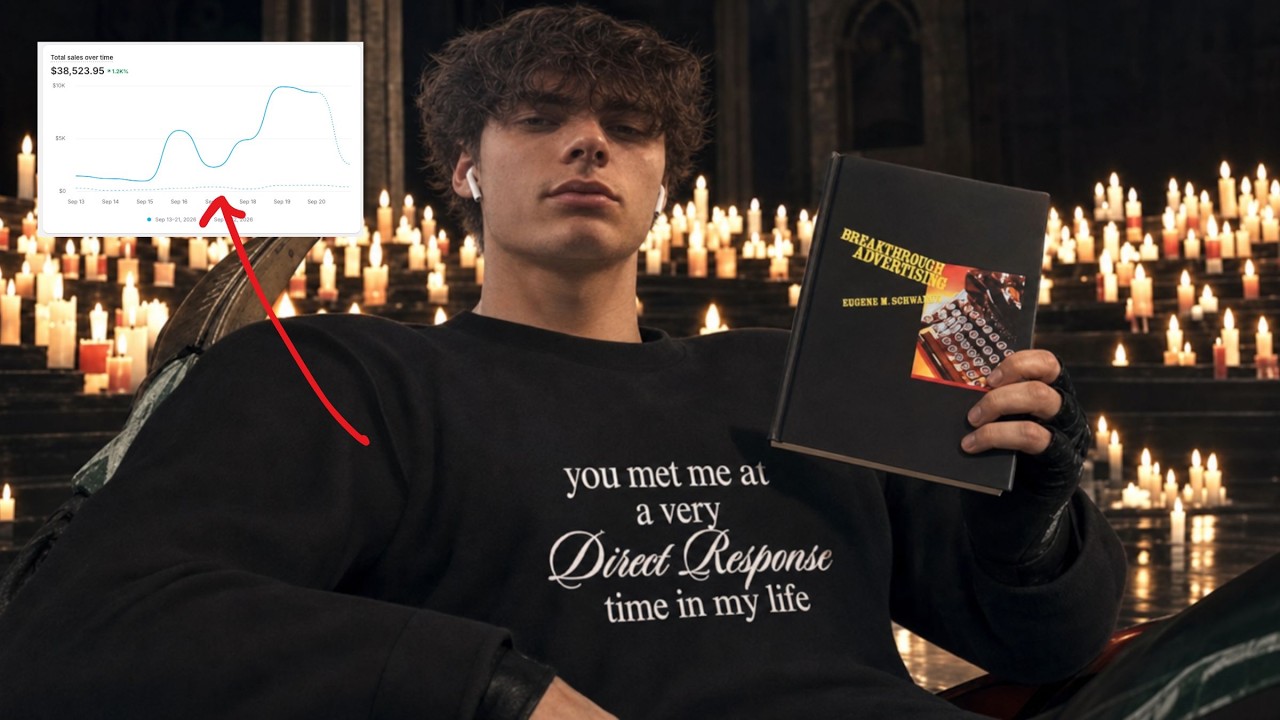
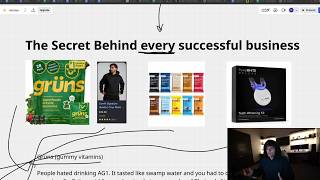
Okay guys, so now we're gonna be talking about the secret behind every business, and this is a very important thing that I think nobody really talks about online, and I don't know why they don't talk about it because it's literally how— the easiest way to find a winning product. It's how you make winning product. It's how you find opportunities that you can literally just make a bunch of money very, very quickly. Is this what I did with the cheese grater? It's, it's the secret behind every successful business, right? You can see it in— Gruntz has done this, Comfort Hoodies has done this, RXBAR, super cool protein bar, protein bar, I don't know what you call it that. And then like Purely Like Deluxe, like these are like huge brands and this was purely an e-com brand. Gruntz is kind of an e-com brand. They started more in like the actual like legitimate retail kind of like side that costs a lot of money, but it doesn't matter what kind of lane you're in, you still need to understand why they chose their products and how they went about choosing the products, how they found the actual opportunity. Because you guys can use that for dropshipping as well. Like, there's plenty of opportunity out there. And so I really wanna explain this and hammer this guy, this one thing in your guys' brains so much that you guys really take this into account when you're looking at products. Because most people just look at products and they just pick whatever looks nice, Oh, problem solving. Oh, it's got this, it's got that. And then they run it and it does nothing. And this solved a lot of that. So first I want to look and go through every specific example and tell you guys how they found this thing. And if you're wondering what the tactic is, it's product-market fit, okay? And so I'm about to explain to you what product-market fit is and how to use it. So sorry for the, uh whatever the lines here, but grunts, these are basically gummy vitamins, right? So people hated drinking AG1. If you guys don't know what AG1 is, huge, one of the biggest probably e-com brands right now. I don't even know how much they do a year. If you look on SimilarWeb, yeah, 2 million visitors a month, like huge e-com brand. Like you've seen this, you've had to have seen this somewhere if you guys are on the internet and don't live under a rock. AG1 was a big, like a big, big thing. And there was a huge trend going on with greens specifically, like being able to take your greens in some sort of a drink, some sort of maybe like a pill or something. So you didn't have to actually go out and like worry about eating all these vegetables and stuff. So people online were doing this and it was a big trend, right? And this was before Grunds was actually a thing. And everyone was like, it tasted like swamp water, you had to clean the shaker every morning, it was gross. So Gruntz, the founder of Gruntz, and his name is Chad Janice, he has a bunch of interviews online and on YouTube, and I highly recommend looking at them and listening to them. I do it, I've probably listened to every single one. He was like, literally told the story about how he came across it, and he's like, yeah, like I was just at my dad's like, office or something like that, and he was drinking this greens powder, and he was like, dude, there's no way I'm gonna be able to do this for 30 days. Like, that's like the whole point is like they want you to— you got to do it consistently to get the effects, you know, the effects of the science and the studies of actually taking in your greens and getting all those little micronutrients and everything. He's like, dude, there's no way I'm gonna do this for 30 days. And so for whatever reason, All right, maybe by luck, maybe by fate, maybe by God, he had a fixation about gummies. He loved gummies. He always used to eat Sour Patch Kids and all this stuff, and he loved gummies, especially in college. He used to eat like a whole bag every day, he used to say. And he found, he was like, you know what, no one's actually done a greens vitamin supplement thing into a gummy. And essentially that's what he did. And their ads literally showed the gross green sludge next to the cute gummies. Customers ended up switching, and now it's, it's not even a $5 million brand. I want to say it's, it's gonna be more than that. Um, in 2 years, it's one of the fastest growing e-com brands ever. Gruns, you'll see them in retail, you see them in Target. And it's something that he literally just found an opportunity that no one was thinking of in a He saw something that was already working and he found a way to put a twist on it or to make it a little different, right? And that's kind of what you can do with product-market fit. You can see like, oh, people take gummies for this. People were taking Flintstone gummies for how long, but nobody put a greens powder in a gummy for some reason. And so he's like, you know, greens are doing good, gummies have always done well, why don't I combine the two? And so he saw the opportunity, right? And so he basically made the popular thing easier to use. Now if we look at Purely Like Luxe, the teeth whitening, Hudson found teeth whitening kits on Alibaba for cheap, same stuff everyone else was selling. He just made better ads with dentist-approved NASA tech vibe and sold them 10x. Product wasn't special, the marketing was. And what Hudson talks about, he does a lot of these podcasts as well, and so that's kind of why I'm using these examples, is nobody was selling These Purely Like Deluxe, like they might have been selling on Facebook at the time, like teeth whitening. They might have been selling on, you know, what other ad platforms out there, but nobody was doing TikTok ads. Nobody was doing Snapchat ads. And so he took what was working on a different market or a different, you know, even ad platform and he moved it over to Snapchat and he found his own way to market it and his own little niche to market it to that nobody was doing yet. So he, once again, he found something that was already working and then he found an area that was untapped and he took advantage of that area. He used product market fit and the first year he did millions of dollars. I'm not totally sure how much it was. He is actually the guy who started Comfort as well. And same guy had anxiety and he wished that someone would hug him. So he got a heavy oversized hoodie that feels like a hug, put "You matter" on the inside tag, got TikTok creators to post about it. Comfort's one of the fastest growing brands as well. They're gonna be well over a billion, um, very, very soon. No ads, no stores. They have a very different— they're not really an e-com brand in the sense that they run ads like that. But Comfort, what Comfort does super well is he found like, you know, everyone's buying these comfy hoodies and stuff, but nobody's really taking a different angle at it. They're not selling to people who have anxiety. They're not creating something so comfortable that makes you feel like you actually are being hugged and like wanna feel cozy and comfort. Like comfort really does make you less anxious. Like it's a thing. So he found the opportunity and he took advantage of it. He found a way to, you know, hoodies are obviously been selling for so long and so he found a way to market them that nobody had done before. And then one of the cooler ones is RXBAR. And RXBAR are these like protein bars, you probably have seen them. They're very, very healthy and they kind of, have an interesting packaging on them. And so RXBAR were founded by this guy named Peter. Again, he does all these podcasts and stuff on YouTube. Highly recommend you guys look into them. So Peter did CrossFit, okay? So he had his own experience when he was thinking of creating this product. So CrossFitters hated regular protein bars. You know, they're trying to be super dialed. They need to be as clean-cut, dialed with nutrition, everything, so that they can perform to their best. Because CrossFit I'm not a CrossFitter, so I'm not totally sure, but I'm pretty sure they get like, you know, rated on like their times or something like that. And so they want to cut down and be as dialed as possible. Like these are the most like crazy, crazy performance people, right? And so he made a clean bar from his mom's basement and sold it. He didn't sell it on Facebook ads, right? He didn't sell it in these places where like there was a bunch of competition already. He went straight to the CrossFit gyms and started selling them in person. And so he created a product that was better, and then he sold it to the people who would want it at first, and then he scaled it up through that. And then, um, ultimately he stayed in CrossFit gyms for a while, but then he went mainstream, and then they sold to Kellogg's for $600 million. Um, another thing, like, he found an opportunity with his own experience, which is really cool because one thing you guys individually all have is your own experience. You have your own hobbies, you have your own niches, you have your own interest, and you guys can really leverage that to do something like Peter did here, to find a gap, right? And so he just made a product that— protein bars were huge. Protein bars are still huge. They're going crazy, right? Everyone's doing protein bars nowadays. And he found a specific market that was being not really directly marketed as, or didn't have a product specifically for them, and he filled that demand, right? The demand was already there. He filled it. Same with the other ones. And so the lesson is to find a small group that hates what's out there, um, win them first, and then worry about everyone else later. That's what all these brands are doing. You know, they find people who are annoyed at whatever exists, or maybe they— it doesn't suit them exactly, and then you give them a better version specifically tailored for them, and then you sell it to where those people are already hanging out and where there's not as much competition, right? So the thing about these brands though is these are like, you know, very high, high-level ecom brands. So how does this— they're not dropshippers, you know, dropshipping is a little different. So how does this look like in dropshipping specifically? So I want to bring you guys back to the rotary cheese grater. This product right here, obviously I already showed you guys the screenshot of it, but— or not the screenshot, I showed you the dashboard. The rotary grater It was very interesting. I want to tell you guys exactly how I found product-market fit. So product-market fit is finding demand that's not being fulfilled, right? It's fine, it's supply and demand. Like, you're trying to find something that, you know, where there's a bunch of people who would buy it but there's no one selling to them yet. And the great thing about that is you can— as soon as you throw up a product, you have the opportunity. If it really has as much demand as you think it does and it's actually true to literally print on day 1, which is crazy. And I don't know why nobody makes videos about this, especially with dropshipping. So what I did with the grater is I obviously looked on TikTok, right? People were selling it crazy on TikTok Shop. It was one of the best products. I think it was doing like, you know, $3 million in revenue a month or something like that, something insane. It was literally top 3 when I found it, right? Um, and then I went on to Amazon. People were selling very similar products. They were doing like 10K orders a month. I'm like very zoomed in. They were doing at least 10K orders a month. And so it had a lot of demand on Amazon as well. So people were searching for it on Amazon, people were buying it on TikTok, and yet nobody was selling it on Facebook, right? I went to Facebook and like I said, there was virtually nobody selling it. So it was selling here, it was selling here. It was a product aimed at older people as well. And so I was like, Facebook, like why is no one selling it here? It makes a lot of sense, there should be, demand there, but no one's selling to it. And then what I did, I threw it up and day one was a $3K day, right? I did $3,000, literally $3,000 revenue day one, like $1,000 profit. It was like 5 ROAS, which a 5 ROAS is like basically I spent on that day, I know I spent like maybe $500 and got back, you know, over $2.5K on ads, which is like insane, right? And so Literally all that was was product-market fit, was finding an opportunity that wasn't— and finding demand that wasn't being satisfied yet. And that is one of the most important things you guys need to understand when you're looking for products. And so, how does this work in dropshipping? How do you find a winning product? I wouldn't say winning product, but a product that fits those categories or those whatever. You know what I'm talking about. Number 1, you gotta pick a product. So something you find kind of interesting, and you don't have to pick one immediately, right? You wanna like look at a product. So for example, you go to Kaleidata and you find a product on there, or you go to Amazon, you find a product on there. You wanna find something interesting that's kind of new that you haven't seen before and something that's obviously trending, right? It needs to be trending. And so on TikTok Shop, you want good units sold. I don't wanna use these frameworks. Um, even these as well. Don't worry, don't worry about that. Um, so you want to see if it's selling, preferably on TikTok Shop and Amazon. For what the model we're doing, we're specifically going to be teaching Facebook ads to you guys because it's the best platform. And so you need to find something that's probably selling on TikTok Shop. Why does it need to be selling on TikTok Shop? Because one, it obviously shows that there's demand. Two, there's going to be videos out there for it. So that's just gonna be even better, 'cause you're gonna be able to repurpose those videos and bring them to Facebook. Amazon as well, you wanna make sure that there is probably some people selling on Amazon. If it's not, it can be kind of a red flag, 'cause that could mean that there's probably some sort of issue. You can pretty much find anything on Amazon, so it should be selling on Amazon. It should be doing like at least 10K orders a month combined through, or over that through all the stores and all the listings, right? Shopify, you honestly don't want to see anyone selling on Shopify yet, so don't worry about that. And the next thing you're going to do is once you find a product that's selling on TikTok, on Amazon, you're going to check Facebook Ads Library, okay? Because Facebook Ads Library is the way that you actually see if anyone's running ads on something, okay? So few or no ads running means that there's basically no competition, no one's really fulfilling demand yet or doing it effectively. There could be like Chinese websites or, you know, really bad ads. And so you can go in there and make some better ads and actually take their sales and actually fulfill that demand. So if there's few or no ads running, you want to go for it. That's when you know, okay, I need to test this product. If there's a ton of active ads, that means skip or you need to find a new way to sell it. You need to sell it in a different niche or a different market, a different way, right? But usually it just, it means a skip for you guys, like Finding a new angle— you guys are beginners, right? So you want to find something that works pretty, pretty fast. Finding a new angle requires more testing and stuff. So honestly, I recommend you guys just go back to the drawing board and pick another product, okay? And so to basically sum this up, you guys can look at places like TikTok Shop, Amazon, potentially even Reddit. Don't worry about Shopify. Look at these 3 platforms, see people are talking about, see if it's trending, see if there's videos, see if there's demand, and Is there sales? And then you need to see Facebook ads if there's anyone running it. If there's people running it, then the chances of you succeeding with that product are just going to be lower. It's just the facts, right? So if you're trying to find product market fit, you need to make sure that there's little to no competition on Facebook ads. And then the winning combo, obviously viral on TikTok, viral on Amazon, like the greater, and then very, very quiet on Facebook. So basically nobody running. And that is product-market fit, guys. That is how you can leverage what these, you know, 9-figure brands right here— these 9-figure brands do— to actually implement that into dropshipping to find really big and quick success. I did it with the Greater. If you guys want to see this on a Google Trends thing, I'll show you right now. Also, I'll be talking more about Google Trends in a bit, but if you look up rotary cheese grater and then we do the past 4 years. Oh wait, I spelled it, spelled it a little wrong. You wanna guess, guys, when I sold this product? You wanna guess when I sold this product? I still started selling this product August 2024, right? So I started selling it right here. Literally right here is when I started selling the product. And then I caught— I was able to catch this wave. And obviously some of this was from my Facebook spend and stuff like that. And so yeah, that's when I, when I sold the product. So that kind of shows you, like, I caught the trend, I saw the demand, and I was able to fulfill it, right? A lot of this Google traffic went straight back to my store, and I was able to actually capture it through Google. So Pretty, pretty cool. But yeah, that is product-market fit. That is how these brands are leveraging the secret behind every successful business to make their stuff pop and pop quickly.