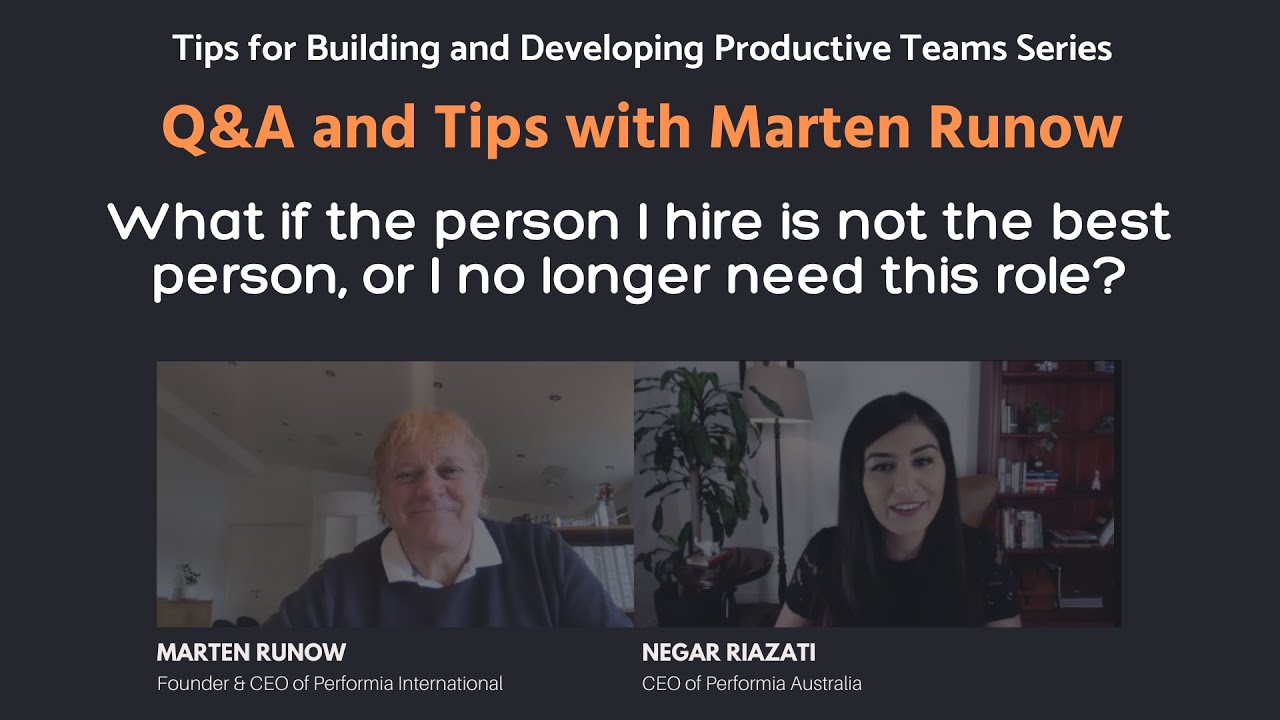
In this dialogue, the speakers discuss the importance of hiring highly productive "A" players for a business rather than focusing on politeness or niceness. They argue that productive people naturally finish what they start, making it easier to expand and manage a team. Managing unproductive employees requires constant training, correction, and motivation, which can be a liability and drain resources. The conversation highlights that hiring productive individuals creates a virtuous cycle: such employees attract more talent of the same caliber, similar to how top sports teams draw top players. Conversely, retaining unproductive staff can damage a team's reputation and deter high performers from joining. The speakers advise focusing on hiring people who are driven to help and produce, emphasizing that each new productive hire simplifies future recruitment of similar talent.
Companies that are hiring, they've got this concern. So they're thinking, what if I do make a decision now about the role I need to hire for and the person I hire, but then they're not the best one? Like if I hire a person and then I might not have a job for him later on.
This is one more reason why there are no unimportant positions. When we hire, we should hire a great person. A great productive person, that's what we're going for everywhere. And it doesn't necessarily mean the most— the nicest person or the most polite person, but it's a person who actually can get a job done. And the funny thing with productive people, they are productive normally because they understand that whatever I start I need to finish, I need to get it done. And when you have people who get things done, it's very easy to first of all expand, and it's also easy to manage that group with people who get things done. What is very tough is to manage people who do not get things done. They need a push, they need a correction, they need inspiration, they need to be talked to, they need to be listened to. Actually, that can sometimes be harder when the person is really nice and polite and still doesn't get it done. So you feel like, I cannot be tough with this person because he's so nice. But look at it, the person who does not produce what he or she is supposed to deliver is actually a liability for the, for the group. Now that can sometimes be handled by a bit of training and a bit of push, but our experience is that the people who need a lot of training and a lot of push, they normally keep requiring that in the future. Those people who are basically oriented towards becoming valuable or being valuable, you don't need to work so hard with them. They start to improve when they get it and they want to help.
So—
Mm-hmm. I would say that, you know, now is the time to look for people who are great at helping, who likes helping, who likes producing. And there are always people in the market who have that characteristic. The more you hire of them, the easier it is to get even more of them in because, you know, like productive people kind of attracts other productive people. The same way as a top team in a sport attracts top players because people hear about that team and that team is really good. They have done some really amazing things and I feel I'm a good player, you know, maybe I should play there, you know. So it just gets simpler and easier and easier to get more productive people. On the other hand, if you do the opposite, if you, yeah, we hire some not productive people and we keep paying them, we keep trying and they still don't produce and they still keep giving us trouble, you know, soon that rumor will get out and the real productive people, they say, hmm, you know, I don't know, that doesn't sound like it's a group for me because, you know, I want to work for a winning team. I want to work for someone where they— where they really, really want to get somewhere. So just a few unproductive people in a group can actually cause the situation that no productive people want to go there. Even you think, oh, but we have so many people and not everyone is super productive. No, don't worry about that. Just worry about that the next person you hire is really productive. And the next person after that is going to be simpler to attract.
Yep.
So just get on the— on that, uh, train, you know, towards getting more and more productive people. And when— and, you know, maybe in a year or two, that's going to be the rumor about your company, that your company is so productive and you only hire productive people. So And we even have clients who have told us that they have people who applied for a job in their company and they realized, you know, that I didn't get this job because I was not really at that production level. It's a little bit like in sports, you know, I applied to play for this team where they're real champions and I realized that I'm not on that level, you know, but I still like the sport, you know, so I can play in another league. maybe in the second or third league, and there I can do well. And you have the same thing actually in business. You know, there are some people, they may be good players on some level, but they cannot play at the top level yet. You get one or two top players in, that becomes very attractive for other top players to look at your team and see maybe that should be a team I should join. And as we know that production is the real foundation for high morale and good team spirit, it's very, I would say, impossible to create a good team spirit in a group that is not really producing.