Intro BYT - 9. The Production Check Interview
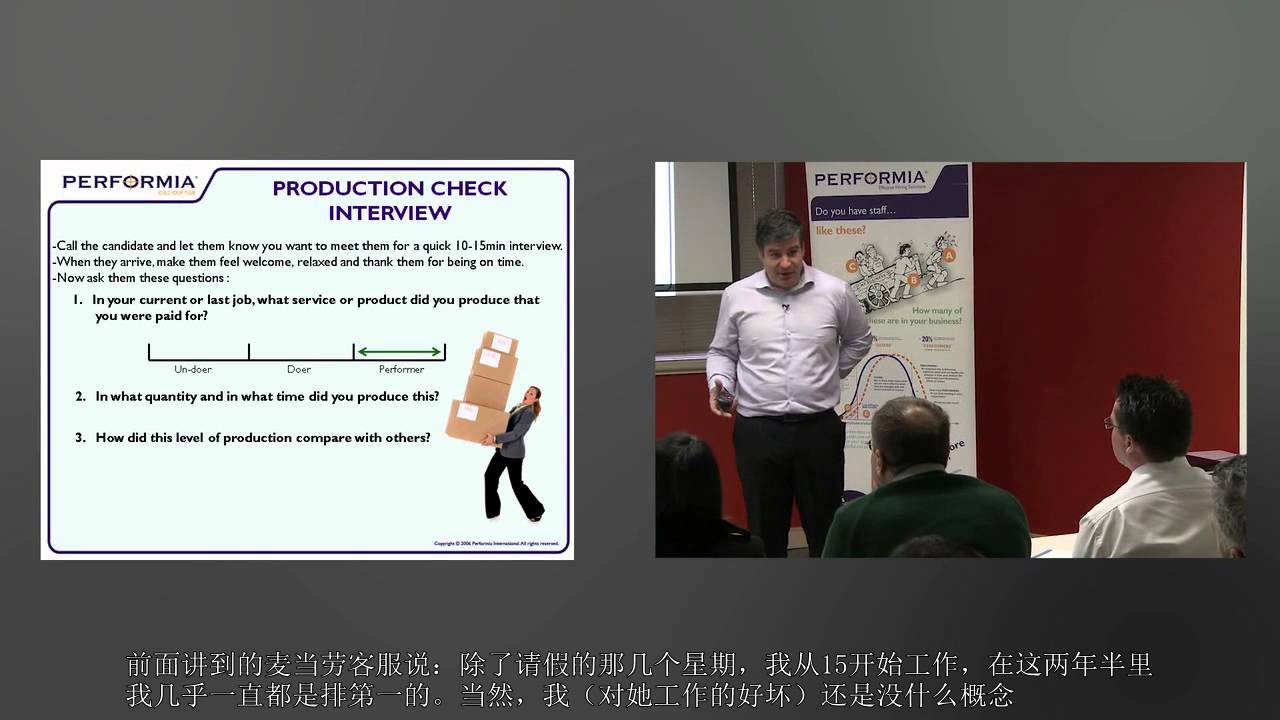
The video presents a structured "production check" interview method designed to evaluate candidates based on concrete, measurable results rather than vague duties. The presenter explains why focusing on the product or outcome a candidate delivers is essential for hiring, especially when comparing roles across industries. The interview consists of five core questions: (1) What is the product/result you produce? (2) In what quantity and over what time period? (3) How does your performance compare to peers or industry standards? (4) Who can verify these results? (5) What non‑academic achievements are you proud of? The speaker illustrates each question with real‑world examples—from a 17‑year‑old McDonald’s crew member to an automotive engineer—showing how performers can quickly quantify their output, while doers and "undoers" struggle or become hostile. The method emphasizes fast, 10‑15‑minute interviews, online pre‑screening questionnaires, and rigorous reference checks. It also categorises candidates into performers (quantifiable, comparable, verifiable), doers (activity‑focused, lacking results), and undoers (hostile, uncooperative). The approach integrates personality/motivation assessments and can be scaled globally with multilingual online tools.
Chapters
And so we're going to look at this now from a hiring perspective. It's like, how can we put our attention on the result? Because in hiring, we looked at it, it's quite easy. You hire a sports person, you can get the statistics, and if they play soccer, it doesn't matter where they come from. Paraguay, it's like it's the same rules, the same ground, the same size ball, the same everything. So it's much easier to measure their productivity than it is, say, a receptionist. Because receptionists in this company could be totally different to receptionists in here. And so how do we start to measure these things? And the first step is why we've gone through is to be able to, when someone's talking to you, the first thing you need to be able to understand if they say that they are a bank teller or they worked at McDonald's or they are the managing director, what was the product they're meant to produce? Because this becomes key to knowing how productive or how valuable someone is. So, we have this interview. This interview we can actually deliver it online if we're going to do mass screening, but it always has to be done in person. Online or computerized testing is never a substitute for doing your final screening or final selections. It's just a tool to help guide you in the right direction. So, the first thing is these interviews can be really fast. Because if the person walks in and they're not productive, do you really want to talk to them for another 55 minutes? That's horrible, isn't it? It's like, I know I'm not going to hire this person, but I feel like I should talk to them more. So let them know it's only going to be a fast interview. You know, we just need you to come in 10, 15 minutes. We need to find out a few things, look at you, just, you know, get a feel for you. And they go, okay. Now if the interview goes for an hour or 2 hours, they don't They're like, wow, he said it was gonna be 15 minutes, I was there an hour and a half. They must really like me. And the truth is, if you are there that long, you do like them. But if you want to get rid of them early, it's like make sure you've set them up to go early. So you can go, okay, thanks, that's all we needed to know. They go, okay. And they're not unhappy. It's not like this huge problem for them. I can see you've done a bit of interviewing. Thousands. The next thing is when I arrive, obviously, you know, the interview is a 2-way thing. You're checking them out, they're checking you out. It's important that the candidates know that you care for people. That people are important to you and that they're important to you. So, you know, don't treat them like a tenant that's going to rent your house. Treat them as a human being and someone that's going to come and add a lot of value to your organisation. They're quite special and important. And then we can go in and go through these 5 questions. And which, you know, unverbatim, it's like, you know, you really need to own these questions for yourself and deliver them in a way that really just gets the answers you need. But the first question is really, we're asking them, okay, so in the job you're in now, you know, what would you consider is the product that you produce that you actually, you know, entitles you to be paid? And you can word this so many different ways. If the person has a bit of trouble, you can even give an example. Say, look, you know, okay, if you're a baker, that's your being. What you do is you bake bread and what you have is bread. That's right. that can be sold. So tell me, you know, what's your bread? What's valuable that you produce or service you deliver? And pretty much, you know, depending on the industry or the type of job, because salespeople should be able to answer this quite easily. Oh yeah, sales. Cash. Money. You know. No chances. Yeah, it should be pretty easy. But you know, you get to a receptionist or a personal assistant, gets a little bit tougher. Oh. Well, I do and I do and I do and I do. Okay, but you do all these things, but what's the result? And funny enough, you'll get pretty much somewhere between 5 and 10% of candidates depending on how you advertise. But between 5 and 10% of candidates will answer this question in most industries. Some of them just snap answer, right? And the faster and the more accurately answered, the more it indicates that we have a possible performer. And I say possible because at this stage it's just we're getting— this is the first indication. And you know, I've done interviews like with a girl from McDonald's. She was 17 going for a job to be a receptionist in a real estate agent. And I remember asking her, so what's your product? You work as customer service at McDonald's. What's your product? She goes, I don't know. I suppose quickly serve customers that are happy. I go, okay, this is pretty good. In fact, excellent. And so you need to be able to know before, as the person's telling you their job, you go, okay, roughly what is the product of this job? And some jobs are really tough. I remember interviewing a guy that worked at Fisherman's Bend for Holden. He spent 4 years designing a part of the steering column for their new Commodores. And I go, so, you know, what's your product? He goes, oh, I don't know, I suppose a, You know, I can't remember the name of the product. Yeah, let's say steering column. A steering column that's within weight specification and budget. You know, that's perfect. And you'll get, you know, some people will answer this quite quickly and quite easily. Others, you'll have to ask them in different ways. But it's important to give the person the opportunity to be able to answer the question. And it's a bit of a tough question to ask because it takes people a little bit by surprise. You know, they're not used to being asked for their result, especially straight up. But we're looking for the result. We're not really interested in the philosophical answers. You know, you ask the salesperson, you go, so what's your product as a salesperson? Yeah, well, let me just tell you my philosophy on selling. You know, I think it's really important when you're selling— No, no, no. Okay, you can tell me about your philosophy later, but what's the result? What do you get paid for? If the person can answer this question, then we can go into question 2 and ask them, in what quantity and what time did you produce this product or that result? And so let's say they're a service technician, which I've done a lot of them. You know, usually they know their product. You ask them this, a good service technician, he knows. Yeah, yeah, look, you know, I do, you know, on average I do 9 service calls a week and on every second service call I always find something to quote to the client. And, you know, they really can go through and they know their numbers. And, you know, I know that I always finish this, so I get my paperwork, you know, 93% of jobs I complete on the first visit. And what's interesting is that not many organisations, believe it or not, measure results. You know, even large organizations, if you look at even Myers, they've only just started measuring the individual results of their sales staff. And I only know this, I've done so many of these production check interviews that it's like you get to know companies inside out. You know all their measuring systems and their products and margins. It's a very fast way to learn about a business. But performers, if they give you the answer, oh, you know, it was never really measured, but you know, what about you? Did you measure it? Do you have any idea? Yeah, sort of. It's like, oh, I know this. And they start to tell you how they measure it. Because performers, they like to play a game. Everything they do is a game and they're comparing what they do this week to last week, this month to last month, this month to the same time last month. They drive their car and they're like, got the little economy thing and they're going, I wonder if I can keep it under 10 liters per kilometer. They play a game with pretty much everything that they do. And this is actually what makes them so productive because it's like life is a game for them. It's not so serious. It's just always, I wonder what I can achieve with this. And they measure it. And so when you ask them these sort of questions, they generally have anything from a vague idea to very accurate, exact answers. You know, with the McDonald's girl, she told me— does anyone here work for McDonald's? No. No? But she told me, she goes, oh, you know, and I can't remember the exact figures so I'm just dubbing in. But she goes, oh, you know, I was producing— actually, first off she goes, what do you want to know, for last week or last month or last year average? I don't know. Last year average. She says, oh, last year average I did $228 an hour and an average of 19 customers. I go, okay. I mean, it's great that she has the answer, but is this good or bad? Does anyone know? Good. So, sorry?
In sales?
For McDonald's over the counter?
That's probably good.
Yeah,
the thing is,
what we
know, if they're that detail orientated, they've either made it up or—
maybe in sales is quite interesting. It's very rare, you know, people in—
How much they've made.
Yep.
That's it. But when you try and drill down on it, the ones that have all the figures, I'm like, really?
Could be.
I write it all down, but then I do have a calculator and they send me calculating the figures.
Yeah, it doesn't make sense.
And I go, so what did you really make?
Yeah, sales guys naturally will embellish to some degree because especially even good salespeople, they live in the future, so they always tell you a little bit of what their future is going to be. And so it's pretty natural that some sales guys will embellish and some just totally lie. The totally lie are a problem. Embellishment, not so much of a problem. But the thing is with the McDonald's girl, we don't really know, do we?
No, it's too tight.
That's right. So we ask this next question. You know, how did this level of production compare with others? And you know, you sometimes get the answer, oh, you know, I don't want to say. I don't like to compare. I never compare. It's like, but you know, push them to compare. And you know, sometimes you get the, but I'm the only one in the organization with that job. Okay, how did it compare to the person that had the job before you? Or how does it compare with other people in your industry? You know, generally a performer will have some sort of comparison. They'll be able to find out some way to compare. And you know, sometimes they go, you know, I'm really average or below average. Okay, well thanks for letting me know that because we do this process, we go back several jobs. So you may have the Harvey Norman computer salesperson that went into selling bank software that doesn't fit the job. So It's crappy results. But now we go back another job and we find out, ah, really good results. So we have a— we either have something happen in this guy's life or we just have a, you know, something doesn't fit so well together. The McDonald's girl, she goes, ah, you know, well, you know, I'm pretty much apart from a few weeks, I've been working there since I was 15 and for 2 and a half years I've been pretty much number 1 the whole time. And of course This doesn't still tell me the whole picture, so I ask her, ada how many? She says, ah, there's 60. And, you know, at this point it's okay too to actually get interested in a person and start to ask them about the do and the be. You know, that's amazing, you're number 1 in all this time. It's like, how do you do that? And of course they should be able to tell you pretty accurately without too much hesitation how they did it. Ah, I'm a good person. And she told me, she goes, oh, you know, it's actually really simple. What I do is in the McDonald's training, it tells you to serve 3 customers at once, take 3 orders, and then you turn around and you fill all 3 orders and you give them all 3. And she said that way it's much more efficient with your time. And she goes, but also what I do is like sometimes if I, you know, if I have families or I see families in other queues, I wave them into my queue because families are always like $50 orders. And so, you know, it just gives you really good sales. And this is from a 17-year-old girl giving me these answers. You know, it was funny when I asked the engineering guy, you know, he spent 4 years designing this component in a steering column. It's like, okay, so in what quantity, in what time did you produce this? He goes, oh well, in 4 years I designed a steering column. So I go, okay. I remember scratching my head a little bit and then I get to this, I go, well, you know, how did that compare with others? He goes, oh, I don't know. I don't really know how to compare it. I was just on that. I go, well, there must have been some, you know, you had to design it within a certain budget and specifications. He goes, oh yeah, yeah, well, I did that in the first 4 months. I go, okay. So what happened after that? He said, oh, well then my manager came back and halved the cost I had to design it in. It wasn't halved but took 20% off and made it, made me lighter. So he goes, Took me another year and I reached that. I worked out how to get it 20% lighter and cost less and, you know. And I said, well, then what happened? He goes, well, then they came back and took another 20% off everything. So he said, that took me nearly to the full 4 years. But he said, you know, in the end, I've got it at a third of the cost that they originally set out, half the weight and, you know, all these different criteria. And I said, well, did anyone else achieve that? He goes, no, no. In actual fact, my product got patented and they're using it right through General Motors. He goes, no one else, we'd only got 2 other patents or something out of the whole design. So straight away it's like, this guy, there's something a little bit special about him. And you gotta watch out too for people that work in teams. This guy worked in Coles Group and tells you, he's like, yeah, my product was more cereal sold per square metre. You know, this is his product. Pretty good. And it's like, you know, what quantity and what time do you produce this? Well, you know, from when I started 4 years ago, now per square meter we're getting 12% more cereal sold. Now he used the word we there. And so you go, ah, so you're part of a team. Yeah, yeah, well, you know, I manage the Kellogg's category. Okay, so how did the Kellogg's category go? Ah, mine, 30% increase over 4 years. Wow, how'd you do that? Because I mean, 30% increase is huge in fast-moving consumer goods. Especially in supermarkets and especially with a branded product. So how did you do that? Well, you know, Kellogg's were really getting upset. We're bringing generic brands in. And so what they did, they bought the better space and then they did more promotion and they did more ads. And then it is actually telling you that he basically sat back where Kellogg's did all the work. So you know from this, you don't really know much. For sure, he had— he was involved while it was going right. So this is interesting. But we're going to have to go back further and try and find out more. Or find out if he developed the strategy with Kellogg's. So the thing is, we still don't know something here, do we? Like you were saying, we don't know if the person is just totally embellishing or lying or whatever. So we just ask them this next one. It's like, who can verify this? And like you were saying, you know, you get your calculator and you work it all out. When we start to do the knowledge checks, we actually— first thing we do is we verify the production results. The person said they were taking this many calls and did they? Oh yeah, that sounds about right. Or you can ask them straight out like, you know, how much did he sell? And sometimes they don't know the answer, but you can get an idea or they can check for you. And generally the more the referee wants to— referee, yeah— the referee wants to help you, the more the better the candidate is. Or the more friends they have, one of the two. But of course there's a whole other module to reference checking. There's a lot of information to know about reference checking. But when you ask this question, it's like, you know, if it's been— person's been pretty honest up here, so they can normally just give you like, yeah, you can check this person and that person, and yeah, my boss and the owner, and they can just— they can spit out all different people that can verify it. That's still not a guarantee. Always reference check, because we've had people zap through this, give us this whole list of names, we ring them and go, what, he gave you my name? You're joking. The guy was—
I've had that a few times.
But these are the guys that just rely on the fact that you're not going to do a reference check. So they know that half to two-thirds of jobs get placed without a reference check, and so they rely on that. And then the other people that have lied a bit or a lot, they're sort of like, yeah, well, you can't ring my current employer because he doesn't know I'm leaving. And if they do this, then I always make the deal with them. Okay, so but we'll give you the letter of offer, which will be subject to a good reference check from your current employer once you've told them you're resigning. But then it's like, yeah, my last job, it's like, you know, that company went broke, and another job for that, well, that owner died, and I know they've gone overseas. And it's just like gets too hard. And when reference checking gets hard, it's like you know you've got a problem. And now of course some people can't answer the first question. And so now we can't really ask them. So they give us all the do. It's like, yeah, well, I did this and did that and did that. Yeah, but what was the result of that? Well, no, I was doing, doing, and it's like they can't really give you an answer. And so most probably now they're falling into the doer category. Sometimes they pop back into the performer category as you go through the questionnaire. And the thing is we can't ask them the same question about how much in what time. So we ask them now more about their level of activity And their level of responsibility. So, you know, from when you started or from in that period to now, has your responsibility increased? Did your level of activity increase? And they can tell you about that. So yeah, when I started, it's like, you know, all I did was just unpack the boxes. But then, you know, I was allowed to start to serve customers. And then I was taught how to use the register and I took over the register. And then 3 months later, it's like the boss gave me the key and I would unlock the store. Then now I do the cash. And it's like they tell you their story of how they were given more and more responsibility. And sometimes they'll start to tell you about the level of actual value they add. You know, I had one accountant tell me how, or a bookkeeper in an organization tell me, you know, when I started I was so busy, I was working 7 days a week and now it's like for 2 days a week I sit around and play cards and on my Facebook. Oh really? Yeah, well when I got in it was just such a mess. And, you know, they had no payroll system and it's like all the filing was in garbage bags and there was $1 million of debtors stretching back over 2 years that were owing and no suppliers were paid. But, you know, I got in and I fixed it and I worked and I fixed it and now there's, you know, all the debtors are under 60 days and the payroll is all in order and, you know, it's like, it's actually now I can just do the whole job in 2 days and I'm bored. That's why I'm coming to you because you said in your ad that your accounts are a mess. And so, you know, not only do you see that she's actually got— could be quite productive, but now she started telling me the product. Because as a bookkeeper, you know, one of the key products is, you know, timely payments from suppliers and customers. Would you agree? Yes. You know, this is one of the keys. And added to that, the only other product really is, you know, timely reports. But you don't really care about the reports so much if you're getting everyone paying you fast and you're paying everyone fast. The reports become less interesting. And so you can get a really good indication from these 2 questions. And then again, how did it compare? And who can verify it? Now if we keep going down the path of now we have a person, we ask this question. They go, what sort of question is this? You know, I think what's important here is that it's like, you know, I've been— I was the sales director for 7 years. What's this got to do? And now we're getting someone that's starting to get a bit hostile to the question. And so we put these guys in the undoer range. Like most people, and again depending on how you bring people into the organization with your marketing, the message you put into your job ads and how you attract people. But most people minimally will try and look for an answer and try and help with the answer and they're trying to really contribute something. To the interview. But as soon as someone is trying to now like question you and your style and your techniques, you know, well, imagine what this person's gonna be like in 6 months if this is just off the first question. And so pretty much if you get anyone that's what we call the undoer, which is your trouble source or, you know, troublemaker or suppressive person, spiky balloon, it's like, you know, these are the guys that you just really don't need to waste any more time on. And of course, you know, if you're getting into your ineffective doers, then this range, you're not so interested in them either. So there's no point going on. You can just basically go, okay, you know, I'm done on this interview. And of course, once you get through the production check interview, now we're interested in personality and motivation and knowledge. And, you know, there are other areas that, you know, there's quite some, you know, ways to sort out and what we cover actually in our full training. Now also, like I said, we go back several jobs because someone may be not winning so much in this job that they're in now, but the one before they were really good. And so, you know, it's good to go back several jobs. But usually if someone is being a little bit antagonistic or hostile to the first job, there's no point going back to the last job because you just don't need those sort of people necessarily in your organization. And then what we do, we finish off with this question, which is basically, you know, what else other than your academic results are you proud of achieving in life? And this is especially important. This is especially important for, you know, people that are newly into the workforce. Like they've just come out of school or they've just come out of university and they haven't had much work experience. Now we want to look for all the things that they've achieved that show us that they're active and they can get a result. You know, whether they've been captains of sports teams, won awards, whether they, you know, running scout groups, whether they helped their dad renovate a house or strip a car down, or, you know, whether they could hack into the FBI computer system. Whatever it might be that's appropriate to the job, or, you know, we want to know about. And usually when you interview older people in their 40s and 50s, it's like, They've sort of forgotten. So you gotta just prompt them. It's like, okay, so when you were younger, was there anything you were proud of? Oh yeah, I was young once. So it's a very important question. And like I said to you, we actually have this set up for screening. We can deliver the actually online questionnaire and pull back the results to know who we're really interested in, who we should go further with. And it's like It's a great tool, especially if you have like, you know, sort of getting excessive candidates, which is not so much of a problem in Australia right now. Although maybe it will be as more and more people are being— I think unemployment's gonna go up soon. But yeah, when you can deliver this online and get the information back, it's like, and you can basically, you know, do the hiring anywhere in the world as well. It makes it much easier. And of course, we also have online personality tests and different things so that we can screen online and we have it in 31 languages and, you know, all the great things about the internet and websites and systems. But the value is really in the, you know, how to evaluate the information.
More from Negar






Episode 2: Building a Games Culture: How to Turn Your Business Into a High-Performance Team

How One Dental Practice Owner Stopped Managing Staff And Built A Team That Just Produces

Performia Intro Seminar - Get the tools to create productive, fun, safe teams