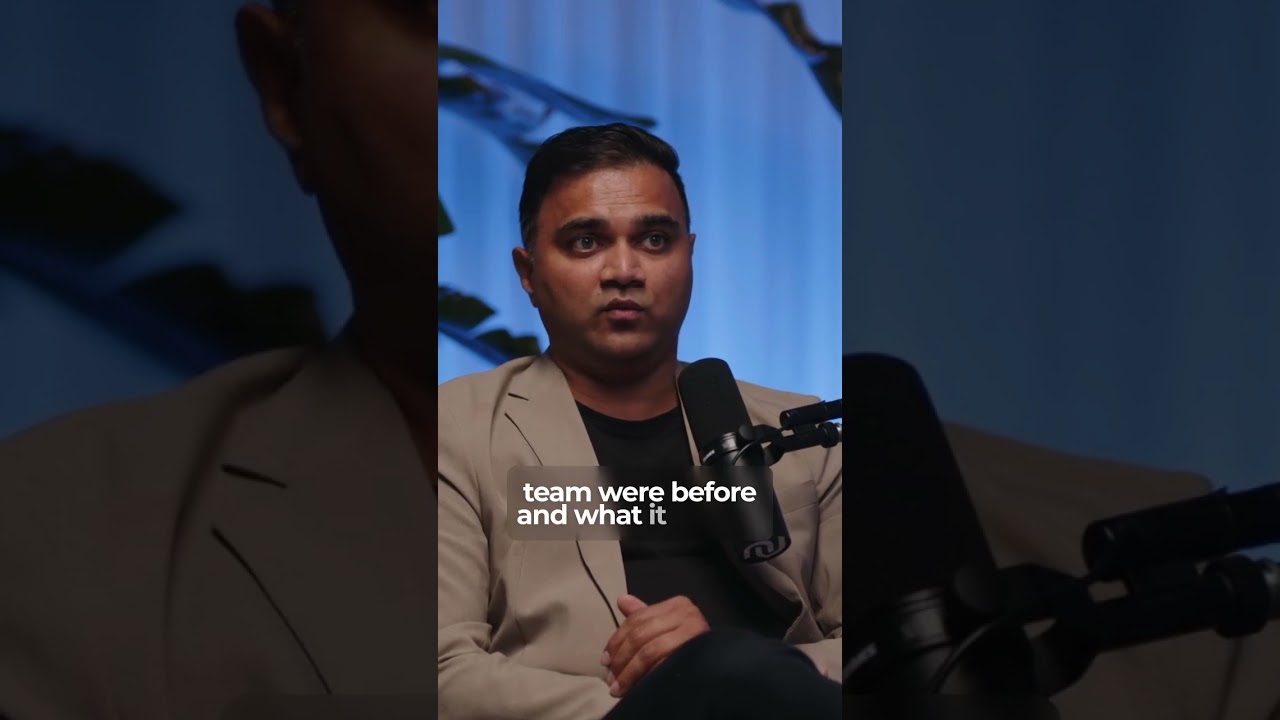
Moneyball for Business Owners

In this interview, host Negar (Speaker A) and guest Gareth discuss Gareth’s 40‑year entrepreneurial journey, from an apprenticeship and early management roles to founding and scaling a commercial refrigeration business, selling it, and joining Performia. They explore the pitfalls of traditional hiring, the "Moneyball" approach to talent acquisition, and how treating a business like a sports team can improve performance. Gareth shares rapid‑fire personal insights, his philosophy on delegation, happiness versus money, and the importance of incremental improvement, merit‑based discrimination, and resisting marketing‑driven misconceptions. The conversation also covers the hiring market dynamics, the role of recruitment platforms, and practical advice for building championship‑level teams in growing businesses.
Chapters
Get ready for the first episode where we tackle everything from fascinating stories of entrepreneurship, surviving the hiring trap that holds business owners back, the Moneyball way of building a team, and how your business can run like a sports team. Hey Gareth, I'm so excited we're having this chat today. I think I've known you for like over 15 years and it's the first time we're sitting down for a recorded chat.
Yes, feels very professional. 15 years of knowing each other from humble beginnings, basically coming in on a— what's it called? A vocational or from university?
Yeah, I think I had finished 2 years. I had a year to go and found Performia and here we are 15 years on.
So from washing dishes?
Oh no, I never did that part. You delegated? Yeah, that's right. I started my managerial duties that young. I was like, This isn't for me. But you know what? I have no problem washing dishes now. It's just more like back then I was 19. And I was like, I've started a career here. I'm meant to be advancing and you want me to wash dishes? What is it? Put IKEA furniture together? But that's okay, it was a Swedish company. So, you know, it should have made sense. I should have expected from the start that IKEA will be involved.
But, you know, interestingly, it's Always been a bit of my method is to, when someone starts, give them a task that they wouldn't expect or that's below them or odd just to see how they react. Did I
pass?
Well, you did amazingly because I just thought it was done and 5 years later I found out you delegated it.
So effective.
Yeah. If Matt had come back and said, hey, Negar won't want to wash the dishes, you would've failed because you couldn't delegate.
I would have negotiated my way out of that too, I think.
Delegate up.
Yeah, that's right. I'm like, you know,
actually, come to think of it, you still delegate up.
Do I?
Yeah,
delegate up. That must be a new term.
Yep.
What is that? What's delegate up?
Well, you're delegating tasks. As you know, you're the CEO, you're delegating tasks up to, you know, technically I'm like a board member and you delegate tasks up to me.
Very efficient. Damn, now you know my strategy. So before we officially dive in into the full episode, I want to start with some rapid-fire questions.
Yep.
So you got to be fast.
Okay.
Favorite day of the week? Hmm.
Yeah, that's a tough one because I love all my days.
It's rapid-fire, fast.
Probably Saturdays because it's my tinkering day.
Oh, I like it. Night owl or early bird?
Both.
You have to pick one. Do you ever sleep?
Yeah, I do. It's like I'm more of an early bird these days. I'm always awake and usually up around 5:30.
Favorite show?
Oh, you know, yeah, that changes regularly. I
don't think you've answered any questions straight yet.
I haven't. I was like, maybe it's just because I have I enjoy so many things so much that favorites don't come into it so much, but I can get really interested in any show that comes on.
Okay. What's something you wished you'd known in your 20s?
This is, I wanna say this is I wish I'd known how to hire people and had a hiring strategy.
In your 20s, as early as 20s?
Absolutely, yeah, because, you know, We'll talk about this a lot, obviously, but it was my major downfall from having a major empire now because I was putting people together and just would hire anyone. Had this idea that I could make— in fact, I had an ideology that I wanted to be able to make any person be productive and have a great career. And I'm sure that ideology can be true, but not for what I was building in my 20s.
Interesting. Favorite quote? Or okay, I'm going to change the word favorite because you don't want that.
No, no, I have a favorite quote. So the one you— so the favorite quote is a Gandhi quote, which he says, if you have nothing worth dying for, then you have nothing worth living for.
I love that. What's the favorite place you've ever visited?
I love the snow. And so I'd have to say probably it'd be the Rocky Mountains, like in Colorado.
Beautiful. And what's a non-existent job that you wish was actually created?
I'd love to be in charge of, say, the unemployed and in the sense of the social security system and then have ways of being able to bring people into being productive and feeling much better that they can get out and have the job they love and feel like they're contributing rather than feeling like they need to live off the government.
What do you think, I don't know if we're going off track, but kind of off my own questioning, but what do you think is the next closest to that job right now if you don't think that exists?
Oh, that does exist?
Yeah.
Geez, I don't know. I mean, 'cause that's, I think, one of the issues we have is like we have a, you know, we have a, say, people that look after social security from the sense of making sure people have the financial means and those sorts of things. But I don't know that we really have positions exist where someone your job is to basically empower people to, you know, have great careers.
That's sad, isn't it?
Yeah. And I could be totally wrong too. I don't know the industry so well. There could be people—
If you have a business out there that does this, please come and tell us.
Yeah. Or they do do it because it's like— and I'm sure I've, you know, I've seen things like Salvation Army and those sorts of groups, you know, I'm sure are working hard to try and empower people to have those sort of things.
And I think there would definitely be individuals within organizations as well.
Yeah,
that within their capacity try and do their best to do those things. But if you have organizations totally focused on that, well, you can achieve so much more if your core purpose is that.
Yeah. And for me personally, and, you know, I feel like I've had an amazing life, and I think the big part— yeah, and the big part of my amazing life so far has been I've just always loved my work. And so I just feel like it's my duty for as much as possible to get people to like their work.
I love that. And what I said so far, by the way, I didn't mean it's gonna get worse. I mean, like, you still have many years to go. Yeah, I realized how that sounded after I said it.
Maybe I'm only halfway through.
Exactly. That's what I like to think. What motivates you?
Um, you know, I'm always motivated I'm, I'm, you know, people observe me is that I don't stop and, you know, I don't really get tired. It's like, so I don't really think so much what motivates me, but I'm definitely always striving for improvement. I think my whole life is about, you know, just constantly improving every part of it wherever I can. And that's why I love to tinker and play with things and develop systems. And, you know, so I'm motivated for improvement.
That's pretty interesting. And that's what best practice is in business, at least. It's all about that, isn't it? How can we do that extra couple of percentage improvements to get even better and better?
Absolutely. And that's what makes work so interesting. I always set little targets everywhere, whether it's just to basically improve a bit of machinery and find a part. I'll find something worn out and then I can go and replace it. Or it's like set marginal sales targets that are slightly higher or better and just chip away at improving things. It gives a great game to play.
What's the most recent thing you improved?
Well, the most recent thing is obviously I'm not just involved in performing, I also have a business in construction. But I found a crane truck really cheap and then luckily I bought it and it needed to be fixed up 'cause I love those sort of little projects. And so that's the most recent thing that I've just basically taken and made really work well. And then I have a whole multitude of things we're trying to improve. You and I are trying to basically go through a whole bunch of programs and perform here and improve things. And then I'm about to start a service department in this construction business. So there's just always so many things to create with it.
Keeps it interesting, doesn't it?
Absolutely.
Last question, money or happiness?
Definitely happiness. I've gone— I started work very early and so full-time. So I've always had more money than my friends around me. At 15, I was getting an apprentice wage, but that was still infinitely more than my school friends. When I hit 19 years old, I was basically earning the same money as probably a doctor 2 or 3 years out of their time because I was progressing my career pretty quickly. I started my business at 22, um, you know, by the time I was 25, I had already paid off my house. And so, you know, I was, I was really affluent. And then the interesting thing though was by the— I hit 29, and because what I said earlier, I didn't know how to hire, and, you know, we were growing to 150 people but losing money. All of a sudden I went to having no money. You know, it's like the whole thing crashed around me, and we had to work really hard to make it survive. It's like, you know, I just— and then with no money, 2 children came along. And but my life never changed. I still had the same happiness. And just because I couldn't buy the great beautiful holiday, you'd just substitute it for like going bush and camping. And so I've never found money to have any influence on how happy I am, but definitely having money and some reserves, it's a lot more relaxing, you know, it's a little bit— it's less stressful. But, you know, sometimes Stress can keep you motivated and happy as well.
That's true. Never stop the challenges.
Yeah, absolutely.
And you touched a little bit on this just now, but you've got a great story of entrepreneurship with the businesses you've built in your background. Can you share a bit about that? You don't want to start in 1950, but just a summary of your What your background is and what you've built.
So I was fortunate to be offered an apprenticeship when I was 15 and my parents didn't want me to leave school. I wanted to take the apprenticeship. Coincidentally, I got expelled from school. So I started my apprenticeship by default. And then I didn't leave school because I wasn't academically doing well, but I was just a troublemaker. I was over school. I was ready to get out and do more. And it was either become an Air Force pilot or a tradesman. And, and then decided tradesman. And there was too much work, it looked like, to basically get the sort of scores you need to be in the Air Force and be a pilot. But unfortunately, a year later, Top Gun came out, so I felt like I made the wrong decision. I wanted to be Tom Cruise, you know. Um, and then so I did an apprenticeship. And but, you know, being very good at maths and science, I did really well at my trade school and topped out each year at Box Hill TAFE. I was very inquisitive to the point where I'd actually sometimes blow things up and break things trying to experiment with them.
There comes that improvement thing.
Yeah. And then, but I turned 18 and I was just about 4th year apprentice, given a car. I was given $2 million projects to project manage. You know, through that time I won Box Hill TAFE Apprentice of the Year. I was a finalist in the Victorian Apprentice of the Year. And then our company went from being quite small, about 10 people, 3 of them were the business owners. 2 of them were the business owners' sons, and then there's a few others. It was a very— I didn't know at the time, but it was an unbelievably productive company. And I learned later that what we were doing was probably equivalent to a 50-person company.
How many did they have?
10.
Oh, wow.
So it's like I didn't know that I'd learned such amazing productivity skills from these people. Anyway, we got taken over by a larger company. It was 200, 300 staff. In fact, we got taken over by a Sydney company, and then the next day that company that took us over sold that group to another company.
Oh,
wow. And then the company changed a lot. So we had all these people come in, and then I started to learn how lazy people could be, how slow things were, how disorganized they could be, how people were actually destructive to their company. I'd never seen that before because—
Did you just start observing it for yourself, or did someone point it out to you? No, I
was just observing for myself. I was working with, you know, when you work with a tight-knit group of 10 really productive, like 10 absolute performers, 10 out of 10, you have to be if you're
producing this equivalent of a— yeah, person.
And they were the best. And I never knew this because it was my first experience working full-time. I never knew what a team of the— what we were. And, um, and all of a sudden we went from 10 people to within a year there was 30, of us and we were pretty much getting less done with 30 people. And then we had all these political things happening and a guy came from Sydney that I had to work with and he would steal and lie on his timesheets and all sorts of stuff. And it was a whole total change. And interestingly enough, about a year after that, they put a new state manager in and we just didn't get along. This state manager was a person that basically faked his way into the job. But obviously being working under him as a site manager and I was seeing the mistakes he was making, I could see really quickly that he didn't know what he was doing but faking it. And so we used— How
did he fake it in? Like, you mean from job application or like from—
He came from a really large company as a salesperson and then got the job as the general manager in the state. And so, but when he came into the company, he pretended he had all these skills of like he had technical skill, he had quoting skills, had all these skills, but actually he You could see working in a large company, there's probably people that would catch the dropped balls or he could fake it. But when you come in, and obviously I knew my trade and I would basically go to draw down on them, say $50,000 of the items and discover he'd actually never included them in the quote. And I would ring him and say, I have this technical issue, can you help me? And he'd go, oh look, I'm busy, but do you wanna come jet skiing? And so we started clashing and he fired me eventually. And, you know, not wrongly because I was definitely insubordinate, but I feel like for the right reasons because he was really incompetent, made my job hard. And I was at the time, I actually had won the work skills competition as an apprentice. Right. And I got sent to Sydney for the finals. And when I was in Sydney for the finals, the directors of the company took me out for dinner, got me drunk and they go, oh, how's Graeme? And so that all came out. I rode back to Melbourne and he fired me. And
did he also get fired?
Well, interestingly enough— and you said don't make this a long story, it's getting really long— but interestingly enough, he, um, the one of the shareholders— when they sold the business in Melbourne, the original owners became shareholders, and one of them was also a director. So when I got fired, he was my direct report, and, um, he basically went to the board in Sydney and said, if you don't put— hit this guy back on then I'm gonna leave as well. And I caught up with him a little bit later and said— and see, I didn't know actually how valuable I was. I'd never been told. I always worked pretty much either with that group of 10 top performers or later on I had my own crew. And so I sat down with this, my direct report, his name was Pat, and he said, he goes, I just wanna let you know I'm gonna resign if they don't put you back on.
Wow.
And I go,
What, what, what? That's like the best validation you can get as a team member.
Well, I didn't understand why, to be honest.
But good on him.
Yeah.
For realizing that.
But until he said, because I can't, I can't be expected to run my area if they take the guy out that does half the work.
Wow.
There were 6 other site managers. And so he's basically telling me I was doing half the work. And it was a big validation. And I was really upset. I actually went home and cried after I got fired. And, and then I was living with this girl, not romantically. She just shared— we were friends from early on in high school. We're like brother and sister. And she's very, she's very kick-ass and entrepreneurial. And she's basically, at the time, she was like an area manager for a rental car company. She was only 21, 22 years old. And her father actually was a very successful businessman. And she said to me, she goes, look, don't get upset. get your job back, work hard, don't upset anybody, and then just start your own business. She goes, you're going to start—
Great advice.
So I did. I went back, I worked my ass off, I basically made no trouble. And then an interesting situation occurred where one of the directors in Sydney basically had an altercation because the company became very political and he got kicked out. And I never— I only met this guy once for 30 seconds, but obviously had a reputation. He called me and he goes, hey, I've been kicked out of the company. Um, do you want to start a business with me? And, um, I said okay. And, um, anyway, I started the business with him and, um, it was great because I learned a lot from him. But interestingly enough, he's what we'd actually— if you do the performing training, is what you call a spiky balloon. So his whole mission was to destroy the company that kicked him out. And, um, and he was such an evil operator. but he was also very competent and I learned a lot from him. One, how evil works, and secondly, how to basically service your customer and some very technical things. But basically 4 years later, I had to basically have a whole situation and get rid of this guy. And so anyway, so the business grew to about 150 staff from when I started in 1992. We got Coles and Woolworths as clients. We'd opened up in Queensland and we started off in Sydney and Melbourne, added on Queensland, added on Albury. We're doing work all over the country. It was an amazing rocket ride, you know. There was no internet, didn't know anything about computers. It's like, you know, I remember trying to work out how to do my accounts, and I went to a newsagent and bought what's called a Kalamazoo accounting system, which is this literally huge general ledger, and you, you write all your things on, and then you rip off the page at the bottom. It's this big with all your numbers. And so that taught me accounting and So I had to learn everything from scratch because I was just a tradesman. And, but it was very successful until, you know, the point of which I didn't have direct contact with everyone. So above about 30 people, I had to start putting middle managers on and didn't have proper systems in place. And just simple things like getting invoices out. And we— I had staff were hiding hundreds of thousands of dollars worth of invoices just because they were too tough to get invoiced. And—
Oh, wow.
Yeah. So it became a real mess. And, you know, and people say you grow too fast. That's not It's not a true— it's not the true way to look at something. I think the true way to look at growth is like you can— you've got to grow as fast as the, you know, the people you bring on that are on board, like really on board for the program. If you've got the right people, you can grow as fast as you want because they'll take responsibility. You know, they'll put their hand up when they're struggling. They won't try and hide things. They'll admit when something's not going right. But we grew fast with a lot of the wrong sort of people. Yeah. You know, I was hiring celebrities from the industry rather than, you know, someone that was known. He was like the general manager of this or that, or he came from this big company. I'm going, great, I need that person. And it's sort of the traditional way, you know, hire for this, how good someone looks or what their reputation is.
It's also kind of like listening to what other people are saying, you know, and it's like Chinese whispers. It like grows into, you know, something bigger than what it is, and you go, I've got to have them.
And you know what's interesting is I was also not listening to people. Like, my biggest client was Coles, and their engineering manager I became close to and, um, and was good for business, but he was also an unbelievably great guy. You know, he's very religious and he really cared. I was about the same age as his son, and his son had died, so he sort of— But I hired a new general manager from our competitor, and this guy, his name was Don Griffith, beautiful guy. He calls me and goes, hey Gareth, I just wanna let you know that this person you're hiring, he's not really your business type of person. And I just brushed it off. It's like I didn't wanna listen to it. I was into empire building and I was into like looking important. Arrogant maybe. Yeah, I'd never failed at anything. I'm now 26 years old and I was hitting 80 staff and it's, I was always, the smartest person in the room in my mind. And, um, but that absolutely wasn't the case. There's, there's so many— I mean, the dumbest person has got something you can learn from them. And, um, so the whole thing came crashing down in about 1999. It's like we ran out of money. It's like we were hemorrhaging, you know, $1 million a year and we couldn't sustain it. So we had to do a lot of adjustments fast. And, um, it was an adventurous time, had to bring a lot of people on board. We managed, we scraped our way through. It was a tough 3, 4 years. And then hit 2005 and I finally had something to sell and get out of it. And that's when I found Performia. And so just as I had basically found someone to sell, I met Martin Ruenow. I'd seen, I met him through a seminar and I saw this seminar, the first 20 minutes he presented and I go, oh my God, I know exactly the source of every problem I've had in my business. And I went and spoke to him afterwards and, you know, we ended up having dinner and I didn't know that he was actually roaming around Australia looking for someone to start performing in Australia. So pretty much that night we'd penciled something to go, let's do it. And so yeah, it's 15— was it 15? It was 2005 I met him. So it's 19 years ago.
Yeah.
And so yeah, since then we've rolled out performing in Australia and China and started an office in Japan. And so And then I finally go, I need to— I want to use these tools myself. So then I built another refrigeration slash air conditioning business using these tools, and it's just chalk and cheese. It's like, it's nearly too much fun and too good to be true.
I love your story. And look, you've touched on this, and any business that's growing needs to build a team. on that growth journey. It doesn't matter what size they are. So growing businesses need that. But I feel that not all businesses put equal, have an equal level of interest or put an equal level of effort into the importance of building that team, that great team.
Yep.
What do you put that down to?
Look, I know from experience, in my 20s when I started my business, My experience with people back then was as a site manager working for somebody else doing and putting refrigeration into supermarkets. Quite often my boss Pat would call me and go, hey, we don't have enough people. You got any friends that you can work with that you can call up and work with? So he just relied on that I was young and I would just say yes to everything. Mm-hmm. So one job, all the other site managers would have like 3, 4 guys. Pat would send me out by myself and then go, oh, can you find some people? And so I'd just ring my mates and my cousins and they had no technical training, no nothing. And I would actually very quickly make them super productive and I could still pump out jobs with unskilled labor that my boss was probably paying a quarter of the money to than the others. And I could still pump out 3 times more work a year. So when I went into business for myself, that was my thing. It's like I can just hire anyone and make them productive. You know, I didn't have the concept that people wouldn't want to be on board or that they did something else or that they needed others to make them productive. Because, you know, you don't notice when, like, I was in this really productive team and then I'm running my own teams. I didn't know what the other side of the coin was. And then, and so you don't—
Everyone has the same intention as you if you're a good operator yourself.
Yeah. And you don't— I never even considered that it was important. I could just basically, if someone basically had a pulse and could move their arms, it was pretty much, that's fine. Then when things aren't going quite right, and now that makes you super busy. And so then you can get so busy putting out fires and sorting things, and then you start to share your stories with other people, and they tell you they have the same stories, and it becomes the agreement that this is— people are problems, you know. Yeah, you know, it's this generation or that, or that person's bad. It's like, oh, it's always that way. And, you know, and so you start to not even think that it's a problem you can solve or you should solve. And, um, and so that's why it's just so easy to just have this, like, I'll just— I've got to read a resume or meet someone, and if they, if they feel like I can connect with them, or they seem like they're a good guy or they're a good girl or whatever, I'll just hire them and everything else will be okay. And, you know, I learned the hard way. I literally cost me millions and millions of dollars basically having all those wrong assumptions. And so I really get why You know, 90%, I would believe, of the managers and business owners feel like, you know, there's no— firstly, there's not a problem, and secondly, if there is a problem, there's nothing you can do about it.
It's normal. It's normal.
Yeah,
yeah. And it's come from a bit of a lack of awareness of that it's important, but also that it is possible to build that amazing team so you don't have all those challenges.
Yeah. And look, it's probably even got worse in the last 10 years. It's like because there's too many people make money out of recruitment, they make money out of people leaving your company. And so you've got, for instance, Seek. We pay them as employers a lot of money. Pretty much every job ad costs the same as a whole website. But they don't market to us. As Performia, we're big customers of Seek, but I don't feel like we're their customer. I don't feel like they come around and go, thanks for spending hundreds of thousands of dollars with us every year. But what they do do is they market to candidates. They run ads on TV about you should change job and have a better life.
Actually, on that topic, I did get a reach out from them to say, hey, thanks for spending so much with us. We're actually putting someone even more dedicated on your account to service you.
Nice.
They contact us for education and go, hey, do you want to come to this? We don't really go, but they're like, at least the service is good. Customer service is really good.
That's nice, but it's like I can't see them anything other than an enemy to business because they've identified that the more people move jobs, the more money they make, and they push that narrative. They basically take statistics and skew them to make us as bosses feel it's okay that if someone stays 2 years, that's the norm. But it's actually not. We'd have to check these statistics, but I think I sent you a little email on this, that the actual Australian Bureau of Statistics, the average time in a job in Australia I think is 8 years. And yet if you actually asked any business owner, what do you think the average is in Australia, they'll tell you 2. And that's true.
Well, they're happy if someone stays 2 to 3 years. They go, that's good, you know, if they can just stay that long.
Yeah, but it's, you know, of course people, there's a small part of the market that moves a lot. The younger people move jobs more, but it's like, you know, Now that I've been, I'm 40, this is my 40th year working full-time. That means that I'm up to my 34th year of being in business. And I've got staff members like, you're my second longest staff member, but my longest ever full-time staff member.
Megan?
Yeah, Megan is longer. Well, actually Anthony's probably longer than you as well, but he was my staff member and then he became my business partner. But as you start to see as you get older how long people will stay with you.
And the more top-producing, top performer they are, the longer they last too.
Absolutely.
Because A, they move up through the company or they grow their contribution responsibilities. And B, if the company's good, they look after that person.
Absolutely.
So it's like that person is not going to leave the company because of money and benefits and conditions and better things. You know, example one is like we have so many examples of candidates we've helped companies hire in the last sort of 15, 16 years that are still with their business. They started off in like, you know, lower level role and then became client services ops manager, CEO, and I'm in contact with them. And then now they're our contact, you know, and it's so beautiful and it's such a pleasure to see that transition. And just goes to show, it's like, yeah, they Easily clocking 10 plus years.
Yeah, you're right. I've never actually even thought about it. How much fun would it be to go back through all those and see how many of them have stuck? Well,
I'm in contact with quite a few of them, so they're fantastic.
Yeah, well, I know that some are still around that I was involved in hiring in, and I probably haven't been involved in assisted recruitments with Performia for over 12 years.
So now I want to talk about Moneyball. So we both know this.
Oh yeah, my favorite show.
Yeah, I know you can answer the question. And obviously this is based on the true story of the Oakland A's baseball team and the general manager Billy Beane and what he was able to achieve, you know, had a shoestring of a budget, about $40 million, and he had to, assemble a team fit enough to go for championships and compared to New York Yankees that I think had like $126 million to do the same.
Yep.
So it's— and he was able to achieve pretty incredible success by changing his strategy of how he built this team. And I think they went on to win like 20 consecutive games. which was unbelievable at the time, especially given that budget. And they really transformed the game, didn't they?
Yes. Not just their game. I mean, if you look at that whole recruitment system, it's like, what do they call it? Scouting system. It's like they changed it in so many sports. Like if you even look back in Australian sport, like Hawthorn and Geelong Football Clubs were 2 of the first clubs to adopt that. And especially Geelong, it's like just from that change in their strategy, it's like they went through to probably have the most successful 20 years of any AFL club over the last 20 years. So it changed a lot of sports. And when I first heard about this and read the books or the movie, it was obviously amazing because it was exactly— I wouldn't say exactly, but it's very similar to the strategies we have in Performia. But it also shows you what's possible. Here you are, your competitor's got 4 times the budget you have to go out and recruit the best talent. But at the end of the first year with Billy Beane basically just adopting a different way of looking at people, he was able to basically match the same amount of wins. I can't remember exactly, but a similar amount of wins with his $40 million budget to New York Yankees, $140 million. So anything's possible. And it's, and you know, I've seen this over my career too now. It's like, you know, what I used to achieve, say per hour or with margins and everything in construction that I thought was really good and towards the limit, we're 4 times beyond that just because we chip away, chip away and just basically go, this is all I have, what can I do with it? And you know, the owner of the Oakland A's, he told Billy Beane when he took on the job, he goes, you know, I only have $40 million. Don't come back to me with money. You don't have any more. I don't have any more. You've got to make this work. So he basically sat down with this $40 million and he, he realized— in the book he explains this really well— but he realized that it's like the, the scouting system or the recruitment they were doing in baseball didn't work because they were looking for individual skills and how good a person was at those individual skills. And he was selected personally as the number 1 draft pick knowing that there's like 100 players that were much better than him. And so when he finally had a pretty crappy career, which he expected, and then became the team manager, he goes, the first thing I need to change is what I know is broken, is the way we're recruiting. And, um, you know, if you've got to watch the movie, you haven't seen it, or even better, read the book, because it just gives you that like, let me look at this a bit differently. And this is exactly, you know, when I saw the movie and already doing performing, I go, oh my God, this is exactly—
It's our performance hiring way, which we've been— It's our performance hiring.
It's like, yeah. Stop looking at a person's— stop looking at the regular things we look at when we recruit, which is what all our competitors are doing. Let's look at people from a perspective of like, what's the most important thing I need to know about someone before I can even consider them? And it's like you can basically not only widen your hiring pool and make your hiring so much easier, but you can just have the most amazing people come into your business and create results that you just never thought were possible. And that's where I started my career, this group of 10 of us that could do 4 or 5 times the amount of work of our competitors, not even knowing that we're already, you know, probably we may have been the best, most productive commercial refrigeration group on the planet. We wouldn't know because we don't play sport. But if it was a sport—
It can be so much the same, isn't it? Like sport and business, why not? Everything is so transferable.
There's absolutely no difference. And the only diff— you know, there are obvious differences because people, most people play sport, they get paid for it. In fact, they pay money to play.
Hey, I play lacrosse, no one pays me.
Yeah, well, you pay, you gotta pay money, you pay for insurance and, you know, annual fee and donate money to keep the club running. Um, but there's, you know, there's this— it's how business should be. Like, people should be going to work. I, I feel like I haven't done this, I should do it just to try, but I feel like I should be able to tell my team, hey, we're out of money for 3 months, I can't pay anybody, but I just need you to keep working. And I feel like everyone on my team would say, okay, let me work out, let me work it out, I'll try and work it out. Because they don't come to work, the number one priority coming to work is not for money. It's like they come because it's like they— I try and create a playing field where they feel like they're They know if they're winning or losing and they're high-fiving and we, you know, they get accoladed. They're part of what— they know what's going on. We keep them informed. And, and I really want them to feel like it's, it's the— it's a, it's a weekend team sport. It's a celebration. And of course, enjoying weekend sport means you've got to train hard and sweat. You've got to go in and take some knocks for the team. You've got to maybe lose more often than you win. And, um, and The wins feel great because you've also enjoyed the, or had to endure the losses. And as a manager, are you a manager or are you a coach? And as the team manager or general manager, it's like then you gotta make sure you've got the right coaches, which are the managers. And then you should have your scouts, which is your HR department. So it's all the same rules.
Yeah. But you can't really do that, treat your business as a sports team if you're not, if you can't hire, if you don't know how to select and attract and bring in the right people because everything will fall flat. Because as soon as you can't do that, you'll be stuck with what you have and you'll be like, oh no, I've got to tolerate that now. Or like, oh no, I can't correct them because they might leave. Or, you know, and then you move away from that games culture.
Yeah. Well, see, Here's the thing with voluntary, you know, amateur sport. People attend because they want to go. Yeah. They want the camaraderie. They want to contribute and try and win. And, you know, quite often it happens even professional sport where you'll get someone who's played in 6 championship teams in a row and then they go to the bottom team because they've run out of challenge. They go, you know, I'll take a pay cut. Just pay me half the amount. I'll come on to your team because they want to now go through the whole fun of losing, losing, losing, and win, lose, lose, win, win, lose, win. And then, and they might take them 4 or 5 years, and then they help that team become a champion again. And the difference in the workplace is, you know, everybody has to earn a living. It's like, you know, when we have, you know, money is our pay to survive. And so if you can't live off Social Security and you feel like, oh, I have to get a job. And so now you're not there so much to contribute. You're there because you have to survive. You have to basically pay some bills. And so you can end up with people in your workplace that aren't interested in all and how the business goes, or if others are doing better or worse. You know, they're not there voluntarily. They're there because society forces them to be there. And so when you're building your own team within your business, you can't just take anyone that, you know, comes and says, I want to work for you. You've got to take the people that are engaged. They feel something about the purpose of the product or service you're delivering, and they like to see other people do well. It's no different, you know, to someone who comes and voluntarily plays sport. And that's why it's a good sign too if someone has played volunteer sport or are volunteering to play amateur sport, you know, it's a— it can be a good sign that at least they work within a team for the fun of working within a team rather than just being there in a team because they have to, you know, make money and pay their bills.
And it comes back to that rapid-fire question of money or happiness. It's like they're not— it's actually that sense of fulfillment and where am I going to get more fulfillment and how am I going to get that? Is it through achieving something I also didn't think was possible or I didn't know I could achieve before and now I can?
Yeah, absolutely.
The money will come, right?
It does. And if I look back over the 40 years of people I've known and people that have worked for me, it's like I can— it's nearly one for one that the people that were never really asked you for pay rise or, you know, never were concerned about their conditions, they're generally all— they're all— they're all the ones that are basically, you know, have done the best financially. You know, they've, they've got into the, you know, the area of their life where they basically have their financial and work freedom. And it wasn't even something they were concentrating on or really wanted. It just fell in their lap because along the way they reaped the rewards of what they sowed.
And I think overall, coming back to Moneyball, it really comes down to thinking differently and not going with the flow of the, this is the usual way and everyone else does it, because everyone could be doing the wrong thing. And my favorite quote from Billy Beane is when he goes, you know, the problem we're trying to solve is there's rich teams and then there's poor teams and then there's 50 feet of crap. Yeah. And it's us. It's an unfair game. We've got to think differently. I love that quote.
Yeah. No, look, it's amazing. And look, that's why even when you're doing, you know, one of the hardest things, like let's look at this in reverse. You're the New York Yankees and you've got everything, you know? It's like, I don't know a lot about baseball, so I can't tell you how good or bad they really are. But I get that they're pretty successful. Obviously they have a lot of sponsors, they get a lot of money. They probably were number one many times, but remaining number one can be tough. And it's so easy—
Everyone's after that position.
Yeah, and it's so easy just to throw, keep throwing money at something to make it work. I mean, our government is renowned for it. It's like if something's wrong, okay, we'll just announce more money for it. And then 2 years later, you look at it, it got worse. So what they do, throw more money at it and make it worse. And so having more money is— money solves nothing. It's
how you spend it.
It's how creative you are. Yes. And the more money you've got, the less creative you need to be. When you have nothing, you hear about people how they start a business and 5 years later they're—
They come from another country, a migrant with like $10 in their pocket. And then now you're looking at them going, how?
That's it. And they were just creative. And so Money can dull creativity. Creativity in a business, you know what I'm saying? And that's why if you go into the corporate sector, it's like they can be— it can be quite dull. You know, when you go into a small business, it's like it can be much more creative. And, you know, that's why, you know, that book, what's it called, Small Giants, it describes— it's probably 20 years old now, that book— but it describes, you know, these small businesses that are just— if they were They're the best in their industry. They might only have 50 or 100 staff, but the author found them and found how amazing they were. And if you extrapolate out their numbers, some of these businesses were basically turning over 1/100th of their competitor and making more profit. And so there's, you know, in small business, there's no limits to how creative you can be, how you can get yourself out of it, how nimble and how quickly you can change markets and do different things.
I think that's also, I I personally find that more fun. Yeah.
You
know, because it does, it's like necessity.
Yeah.
To be more creative and go, how can I achieve more with less?
Yeah. And you gotta be careful too that it can work against you sometimes because when things are all going well and you should change nothing, entrepreneurs just go, oh, now what can I change? So it's good to know yourself and go, am I changing something that's actually going all right or am I being impatient and I just gotta give it a bit more time? Because I've been so guilty of doing those sort of things. Something works so well, I was going, how can I make it better when I should leave it alone or make the changes much more incremental? And that was my problem when I was hitting 150 staff. It's like running that sort of business, it's— you can't run it on just this desire to have fires to put out. Yeah, it's like, you know, that's small business, very small thinking. And, you know, I've learned my limit now, you know. I like businesses that— running businesses between 30 to 50 where I can be involved and do the things I want. It gives me freedom because there's enough depth there, but I don't need— I'm not relying a lot on middle management and not knowing who's working for me. It's not a big business, it's not exciting for me. If I grow a big business, then I'll have to put a manager in and hand it over.
Yep. And I think one of the challenges or issues which happened in Moneyball and also in business, it can happen too, is if you measure the wrong things. Because if you measure the wrong things, whether it's in your hiring or your existing people, it can lead you down the wrong track. So like in Moneyball, the way the scouts were picking new players was— what was it? There was 4 things.
Yeah. How far they could hit the ball, how far they could throw the ball, how fast they could run 100 yards.
Yeah. How much they can hit, how much power.
Chiseled. they were, you know, they had to have the baseball look.
Very important, factor 101.
Yeah, isn't that amazing? That was actually real. Like, imagine saying that now. Yeah, sorry, it's like your chin's a little bit—
You're almost perfect, but your hair wasn't flowing in the right direction.
Yeah, it was. I can't— I mean, I don't know for sure it was real, but that's in the book. He talks about that. That was one of the 4 factors.
'Cause they were picking people outta college. out of school, college, or early in their career. So they had to predict the future of this person and they were picking these things. And then Billy Beane, he changed it and he said, no, we've got to be looking at the on-base percentage.
Yep.
And they kept saying, gets on base, he gets on base. They're like, but he doesn't have it, but he gets on base. And just staying laser sharp. on this one key metric because it worked out if you can do this means you're creating opportunities and you're on the right track to achieve the right outcomes, the right results.
Yeah.
So doing that kept them focused on what's most important and allowed them to now find people that were undervalued, looked like misfits. You know, they throw— you know, they said, oh, that guy throws funny, or he doesn't look right. And it's like, yeah, but Look at his stats. Look at the results he's getting.
Yeah. And that's how I hired in the '90s. And I think that's how 90% of hiring happens. That's the same. It's like how fast someone can hit the ball is like, well, what's their qualification? How fast they can run 100 yards, that's like how much experience do they have? And of course, we constantly hire people that look feel right. And it's just, I learned it's just absolutely totally wrong way to do it. And when you actually focus on the things that matter, like actually what are the results? What's the potential for this person to contribute to the business more than they need to take from it? That's the key. And then you do end up sometimes with a company, people that look like misfits. Or they're dull, or they just— you go, how can this be? You don't have any training in this area, but you're so good at it. And it makes all the difference, makes a wild amount of difference. And Billy Beane proved it, and we prove it constantly. I prove it personally constantly with the way I hire and the way our clients in Performia are hiring now.
And it's so important to be able to spot people like that because One of the big issues that I see in many industries that they're hiring is they go, no one's out there. No one can— there's just nobody out there. And it's just my industry and we're all struggling and doing, you know, facing the same challenges. And it's like, yeah, well, you're all doing it the same way. Yeah. So you're all doing the traditional way. So you all end up seeing the same people and then you think there is nobody out there.
Yeah.
And then this also pushes up the wages, makes it more expensive, whilst meanwhile there's all these other people that are actually fantastic, but they just don't get an interview.
Yeah.
And it's being able to spot those people, you can actually create so many more opportunities in the business, help the person that actually really deserves the chance. And that's one thing I'm really passionate about because at Performia is that give the opportunity to the people who really deserve it. 'Cause the moment you don't and you give it to someone who faked it, pretended, didn't deserve it, didn't get there because of really who they were and just how good of an acting they did, it's not fair.
Yep.
No,
absolutely. If you look at that 4th factor in baseball, like the chiseled look, you could nearly say that's racist because obviously only certain races are gonna have that certain look. And, you know, the way we hire, like, we have to discriminate. You can't hire without discriminating. And but the only correct discrimination is actually, you know, has to be on merit. If, you know, so you can only discriminate by how much a person is going to contribute to your business or not contribute. And so it's okay to discriminate and say we don't want to hire this person because we don't feel that they'll maybe they won't. We feel, or we know with some science, that they can't contribute. Or we also know with some science that they're not going to fit the job so well, so even if they can contribute, they're not going to enjoy the workplace. And they're the only 2 reasons to really discriminate. When we discriminate on, you know, education, qualification, experience, and how a person looks and feels, they're all actually incorrect. And you're giving— now you're saying, I'm only going to take people where they've got this qualification, even though it's not required for any statutory or insurance reason. It's like, well, why should someone that has that— the opportunity to go to university— why should they only be considered for the job? And then if someone sits down and, you know, they look and feel right, well, how's that right? Just because a person doesn't dress the way you want, or they're a different weight to what you expect, or, you know, there's something different about them, it's like, that's not fair to not hire them. So, you know, if you really hire on merit, it's the— I feel it's the only true and honest discrimination we can apply. And, you know, hopefully in society we can continue with that discrimination because that's what builds the society, and it's the last honest and true discrimination we can use. So everything else I find we shouldn't be using.
That's right. It's like some of those other things to look at, we're not saying don't Don't look at personality or experience. They're important too, but get the priority right.
Yep.
Yeah. Do you think some people are irreplaceable in business?
No, everyone's replaceable. It's unfortunately sometimes you think that you can't replace yourself and that traps you. And on the other side, if you have someone you think is irreplaceable, that's a trap as well. And quite often, I find, I've found in my experience, the people I've thought were irreplaceable were also—
The ones to replace.
The ones to replace. They sort of built, they're like, it's like they're experts in making themselves feel irreplaceable. And you tend to find when they do leave, they were hiding things, they were keeping communication lines secret. They were, they wouldn't share their contacts and because they feel like, I'm not really good enough, I need to make myself look better. And so— It's
a survival mechanism, isn't it?
Yeah.
Don't improve your performance to keep your job and move up the ladder, but like,
yep,
act it out.
Yeah. And to the point now where I have a policy that if I feel like I'm relying on someone, it's like I've got to really double-check. Go, am I really relying on this person because they're so productive and doing so well? Or am I relying on this person because They're making themselves valuable just so that I can't get rid of them. Yeah. Because the most productive person, even when they decide to leave, they're gonna give you enough notice and they're gonna work it out and go, look, I'm gonna put my notice in. I realize that project finishes then, so I'll finish with the project. Or it's like, I wanna help hire the new person. Or I'm gonna write up and try and hand everything over. That's what good productive people do.
That's definitely one thing I look at when I'm hiring is if they go, oh no, no problem, I can start within a week. I'm more concerned saying, what are you gonna do in your current business? How are you gonna help them out? And if they have no care factor, well, that's a red flag.
Yeah, no, absolutely. When we're done general manager hirings, it's like, Can we do a reference check with your current employer? Oh no, I haven't told them. But you're the general manager and you're out looking for a job and the current company doesn't know.
That's a responsibility.
Because a good general manager will be leaving a job because they've sort of completed all their missions and handled everything. And now it's sort of maybe the job's boring for them or it's whatever it might be, but they've spoken to the owners or the board and they're going, I think my time's done. I'm going to start looking for a job. I'll start recruiting a new person.
That's the best sign. At
that level, yeah. I mean, if it's someone doing customer service and they're 21 years old, it makes sense. But the more senior and more responsibility, the more that company would cost that company to replace them, the more you need them to be taking responsibility.
Yep. So I feel like this story of Moneyball's been around a long time. We've been around a long time, but companies are still going through and building their team. hiring a bit blind.
Yeah.
You know, and I think, you know, building that championship team is not for everybody. You know, some people really want it.
Yep.
Some people are okay to have a good team, and that's okay too, you know. But to build a championship team, what do you think are the key steps, the key ingredients, you know, the key things for a business owner to really get right? as they grow their business?
Well, there's sort of— you sort of asked 2 questions there. And the first one, you said like Moneyball's been around and performance has been around a long time, but it's sort of, you know, I would guess that 97% of businesses still hire like traditional ways. And, you know, I think there's a good reason for that, and there's a few of them. Like one of them, like I said, you get companies like Seek and the HR industry, they want to make themselves valuable, so they put narratives out there that like aren't necessarily true and make us feel like that everything is normal to go through the pain we do with stuff sometimes. Um, also, you know, if you look at marketing in the last 40, 50 years, marketing has become so sophisticated. And what it's sort of— I think it's caused us to do is take our eye off sometimes what the real value of things is. And, and, you know, and that's basically the real value you could say is when you look at the merit of something And for instance, I love nice cars. I buy a car that costs 10 times more than the same car can do exactly the same thing. That's because of marketing. And we buy labeled clothes. And so we're not— I think with marketing being so good, we're becoming less savvy at looking at value. And that causes us to do it in our business as well. And we have a lot more demands on us as employers as well because we're We're being educated and told to be more inclusive and all these sorts. So it makes it harder to check your real value. And so that makes it for most, for a lot of businesses to even start making a decision to go, can I go to a next level? They haven't looked at or discovered there's a new level. And then to want to go to that next level, it's no different with sport. Most people that play sport, They play at volunteer level, as in amateur level. And then in that, some people, you know, the coach and the team, they just get— it's for a social gathering. They get together and then they train a little bit and then have some, you know, they get and eat pies and have a beer. And then when they get on the field and they lose every match, they don't really care because they get together and they have a barbecue afterwards. And it's totally fine for them, and good on them for getting together, and they get out and they run around a little bit. And it's the same in business. Some people, they run a business and that's all they want. You know, they may be doing okay, they make— might even make really— they make good money, and it's not a big deal for them whether they grow their business or whether they have the best of the best. And then in sport, you have your absolute champions. You know, if you look at, you know, soccer and Formula 1 and, you know, Olympics and those sorts of things, some people strive to get there. Hmm. And some people in business, that's what they want. And if you're into that constant improvement, if you're that person that's willing to look 2, 3 years into the future and you start something today and you go, in 3 years, I know I can get there and I'm going to chip away at it, then you will go down this path of using a business like Performia to go, that part of it is very key and important. And you'll also get that it's no magic pill. There's not magic pills. Sometimes you do change something and minor and it doubles your margin. And, um, you know, you can say they're a magic pill, but they're not. A lot of them around it, I find in businesses, you, you chip at every angle. Chip at getting your margin up, you chip at getting your overheads down a bit, you chip at getting your productivity up a bit. It's always chip, chip, chip.
Nothing great came easy.
Yeah, but sometimes if you chip away at enough things in a year, you can improve. You can, you can. I've found I've doubled my profit just by chipping and feeling like I did the smallest things, but I chipped at every little angle. And I didn't go for any great leaps, but then I got a great leap in the profit. Hmm. And one of the easiest places to chip away at is to just look at how you're bringing people into your business and decide that, you know what, I can have everybody on board. I can have that same team that I had when I was 15 and started working and didn't know it, that it's taken me that whole revolution to come back 30 years later and go, I need this, I've just got to build that. And now I have found the tools to do it.
That's right, you don't have to go through trial and error guessing.
Yeah,
you know, random experiences. Now there's science you can put in place.
Yep. Yeah, and it's just like anything, it's usually, you know, the way most people are doing it is just sort of something that fell together and became sort of the agreed way. And then, you know, quite often someone just changes it and reverses it And it turns out to be the proper way. Even something as crazy as Galileo, the planet thought the world was flat and that everything revolved around our flat planet. This guy comes and goes, I don't think so. It's like, from what I'm looking at, I think the world might be a ball and I think we actually move. And of course they threw him in jail because how crazy could he be?
Yeah, I think the message today is like, challenge, challenge things, you know, especially if someone's telling you, no, it can't be done. Yeah, this is the usual, you know, go and look at it at least for yourself, you know, don't just, don't just accept it.
Yeah, and look, there's one thing that comes with experience is basically seeing more and more of what's possible and seeing cycles and seeing how you believe something for so long and it wasn't true. And, um, and, and to some degree, I see more of what things that we get told aren't true because marketing has become so powerful and marketing can happen at such huge levels now, you know, with social media and we can get infiltrated in so many places that it's like, it's so easy to stop looking and, you know, but we've always gotta look, you know, the old term, look, don't listen.
Yep.
You gotta look and try things and, but it all starts, looking starts with like, you know, having some sort of constant improvement program and challenging yourself, even just minorly challenging yourself, a little bit better margin, a little bit higher sales, a little bit lower operating costs, a little bit this, a little bit that. And then those little challenges, they're easier to win and they create a big difference.
Perfect. Gareth, thanks for the chat today. And thank you to everyone who's listened or watched this episode today with us. I hope you got some inspiration out of the conversation. If you have any questions, comments, leave them in the feedbacks and we'll answer them for you in the next video or article. Thank you. Thanks, Gareth.
Thanks, Negar.
More from Negar





Episode 2: Building a Games Culture: How to Turn Your Business Into a High-Performance Team

How One Dental Practice Owner Stopped Managing Staff And Built A Team That Just Produces

Performia Intro Seminar - Get the tools to create productive, fun, safe teams