In this presentation, the speaker critiques conventional hiring practices that rely on resume matching—sorting candidates by experience, education, or automated keyword matches. He argues that such methods yield a very small proportion of truly productive hires, as most candidates with impressive credentials either move jobs frequently or are already targeted by other firms, leading to costly turnover. The core recommendation is to invert the screening process: assess candidates for demonstrated productivity first, then select the top performers regardless of their résumé details. The speaker introduces Performia’s system, which processes large applicant pools through phone, face‑to‑face, or internet‑based evaluations that rank candidates by production output. By focusing on the most productive 5‑10 % of applicants, organizations can reduce hiring risk, avoid destructive hires, and accelerate growth with a leaner, higher‑value workforce.
Chapters
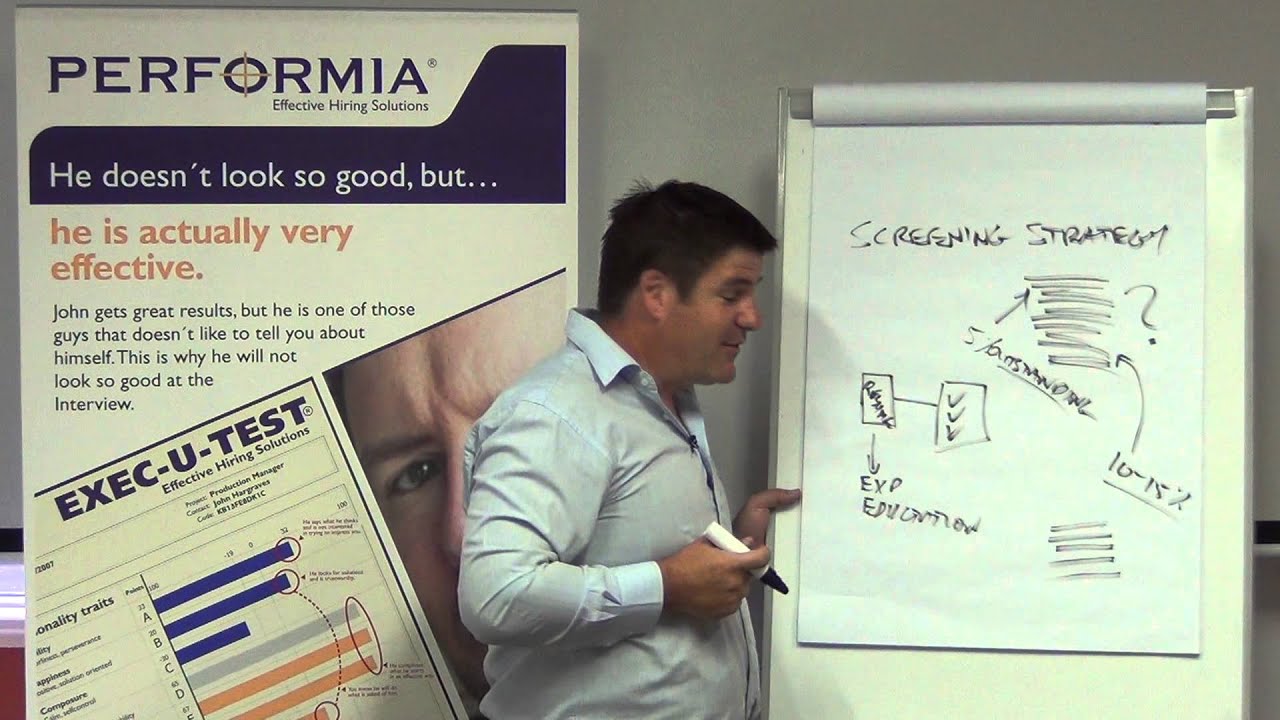
You know, hiring strategy and more specifically screening strategy. How when we have a big pile of resumes that come in, either they come in an electronic system or they come in on a person's desk, you know, how is the— what's the best way to sort these? Because in this pile of people right here There's gonna be, you know, if there's 100, we know there's probably gonna be 5 outstanding people that are applying. You know, in the workforce we know it'd be 20, 20%, but only if someone's a really effective and productive worker, they move jobs a lot less and they apply for jobs a lot less. So we know that probably less than 5% will be actually the people you really want to deal with. Okay, there may be another 15%, 10 to 15% are very employable and very effective. So how do we find these 20% of people out of 100? And this is where the screening strategy becomes really important because traditional hiring uses what may be called resume matching. So whether this is done, whether this is done with a computerized system that takes the application applicant's resume and then matches it over to, you know, what the requirements are. Whether someone goes through and starts to sort things based on usually experience, what their education has been. And so now you get a pile of this split up where they go, okay, here out of the 100 are the 5 people that have the most experience and the most education. But what do you think Are they going to be the cheapest people in this pile or the most expensive to hire? That's right, they're going to be the most expensive. And because it's traditional, just by the term traditional means most people doing something that way. Is, do you think that these people have also hit the radar for other companies? Of course. That's right, they're on the radar. So now these people are going, I want to come and work for you, I'm going to take the job. Then when it comes time to finally sign them up or they start, they go, oh sorry, actually I took another job. You know, this other company didn't get back to me. You know, it's very frustrating. The thing is, because we do look at experience and education, does that mean that out of this pile of 100 people that we found the people, the 5 people that are going to be the most effective in your organization in that job? No. Because this system is flawed. Just because someone has 5 or 10 years experience in accounting and just because the person has done all the university and has, you know, a CPA, it doesn't mean that the person's going to be productive in the job. And so we're hiring someone because on paper the machinery looks right, but the machinery hasn't been run. And so what happens is the person's hired Or screened based on how they look and feel. And they're interviewed and asked, well, you know, what did you do? How did you do that? And then this all sounds good, maybe a reference check's done, so now the person gets hired. And so now the person goes and starts to produce and we find out only over a period of maybe months or years that the person is either very productive and the hiring was right Or the person actually can't produce at all, or worse still, they're destructive to the organization and the people around them. And so based on this, and I'm sure you guys have seen when someone's been hired and they look great and everyone's excited but they didn't work out. Have you seen this? Yes. So the trick here is to be able to check this first and reverse the flow. So check productivity first. Go through this pile and go, who is the most productive? The next productive, the next productive, the next productive. And say, I want these 5 most productive people. And looking at resumes is not going to tell you this. Very rarely do people write their resumes in a way that you go, wow, this person I know is productive. I know this person has been able to create a lot of value for the organizations they've worked for in the past. Okay, as you go up the organization structure, it normally gets easier, funny enough. As you come down through the organization, it gets tougher and tougher. But for every job, we only want to hire people that can create value. And so at Performia, we have a system that can actually get these 100 resumes, run them through a system. It can actually either be a phone or face-to-face interview, which is a bit slower, a little bit more thorough, or on an internet-based evaluation system and allow this pile to be sorted based on production. So that now you just deal with the 5 people at the top that are the most productive. This in itself doesn't sound so exciting, but when you realize it swaps that whole strategy where no longer you need to use your organization to be the testing ground, this is what now allows a very powerful system to bring in the right people, that are going to be effective and create value and allow the organization to grow much easier and much faster with much fewer issues with your human capital.