10 Minutes of Nicolas Cole talking Digital Writing, Category Creation, and Self-Publishing
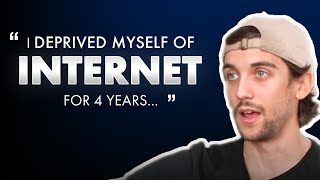
This is a YouTube video titled "10 Minutes of Nicolas Cole talking Digital Writing, Category Creation, and Self-Publishing" containing a monologue by Nicolas Cole recorded in November 2022. In this video, Nicolas Cole shares insights on writing strategies, content distribution, SEO, niche audience building, and the importance of consistent output in digital writing and self-publishing.
And so when you're creating a product or you're creating a service, what most people do is they go, this market exists, and boy, is it catching fire. I want to try and create something that fits into it so I can take my little sliver. And that's a rat's race. It's a loser's game. It's like showing up to someone else's party, whispering into everyone's ear, being like, you know, I throw really great parties too. It's pointless. Instead, what you want to do is you want to go, look, I have a dish different awareness of the problem, or I am aware that you're experiencing a problem that hasn't yet been framed, or no one is owning this unique thing that you're struggling with. I'm going to frame the problem and then I'm going to educate you on all of the things you're currently experiencing that you would no longer experience. Once I solve this unique problem for you, this is like how you climb the ladder as to becoming a better and better writer. The beginner version is I going to tell you a story, and then I'm going to tell you what you should take away from it. I'm going to give you the ending. The advanced version is I'm going to weave the two together. And then the expert version is I'm going to tell you a story, and the entire time you're going to listen and you're going to be engaged and you're going to feel like it's helping your life, and you're not going to know why. So this is one of the most effective writing principles just ever. It is so wild to me. Once I made this conscious for myself, this was. I just created this for myself. It's just a mental model that I use. It is so incredibly simple and. And yet it achieves everything that you want it to achieve. Call it the One through one model. What this is, is opening this section with one sentence. I'm putting three sentences or three thoughts in this middle paragraph. And then I'm ending on the other side with one sentence. If you click on this, by the time the thought even crosses your mind, should I read this or not? Your eyes have already read the sentence. Life is all about perspective. And then because you've already read that somewhere, you think to yourself, well, I've already read that one, so I might as well see where this is going. And then because of the rhythm of it, and because this then middle paragraph is 3, 4, 5 sentences, don't do more than 5 6, 7 sentences, way too much. It's easy enough that the reader can get through where then they go, wow, I'm starting to make some real progress. And then when you reward them again with one more single sentence, the reader's like, I just flew through the whole intro. I might as well go into the main points. And so this is the rhythm and cadence that you want to give readers. You want to. You want to make them feel like they're crossing these checkpoints, where then the reader goes, oh, wow, wow, I'm flying through this thing. SEO is only relevant if your site is a business period. If you just want people to read your writing, Google as your primary distribution outlet is like the least effective thing you could possibly do, because no one knows your site exists. Most writers are not SEO writers. They don't have that expertise. They don't want to. They just want to write. They want to write what they want to write about. And so if you approach it that way, you're locking yourself into this game where you're basically saying, I, I'm going to forego all of the other largest ecosystems on the Internet. I'm not going to use Quora. And the fact that they distribute my writing to hundreds of millions of relevant readers there or Medium or Twitter or whatever it is, you have these huge ecosystems. So people go, how much should I care about SEO? I want to have my own site. When literally these other sites are built. Their entire purpose is to distribute your content to relevant readers. The whole secret and goal is, how do I write things that are really timely and applicable to the world that we live in now, but are timeless enough where three years later, I can still share it again and it's just as applicable, right? Yes. And because I've done that and I've built a library of hundreds, thousands of articles that live in that intersection, I can keep reposting my stuff because it has a very long shelf life. If you think about it that way, your content isn't, how do I just do this and then get the result and then I'm done. What you're building is an asset that then can pay you dividends down the road. Tell a personal story, give actionable advice. People don't read stories just because you wrote the story. Which is like a really big bias that writers have. Right? Is, hey, I spent a year writing this story. I deserve for people to read what I spent all this time writing. That is not why people read stories. The reason why people read stories is because the story is answering a question that they are interested in, in learning the answer to. People don't think of stories as questions, but that is what they are. And if you want proof of that, go spend 30 minutes reading random answers on Quora and you'll see all the highest performing, best answers on Quora are stories. And the story is answering the question. Now every person is going to sit there and go, that is so weirdly specific. No one's going to be the market for that's going to be so small. Until you realize that what category creation is all about is finding a specificity that is universal. Anytime someone says that's too narrow, that almost always means that is actually the thing that is so specific that it's universal. Curation just means you're organizing other people's ideas versus sharing your own original ideas. There's a ton of benefit in doing that. I mean, think about how much knowledge there is in the world, the average person. We're not going to read every book that exists in our lifetime. So if someone comes along and goes, hey, I read 10 books and I'm going to distill only the important stuff down for you, you can read it in three minutes. That's really valuable because the curator is now saving you a hundred hours. Curation is you saving other people time and you saving other people the learning curve of sifting through complexity to understand something. And that's a very valuable skill set. Very valuable. Gary Vaynerchuk literally has a team now where he pays, he employs people to go out and better curate the content that he creates himself. So he's. I made a podcast video. Now I want you go curate all the best moments from that podcast video. That's your job. And then I want you to curate all the best one liners from all my podcast videos and put it on Twitter. That's your job. You talk about unforged career paths, the ability to power level yourself by curating someone else's material and proving, hey, I'm a really valuable asset, not just to this person, but to anyone who wants to read about it. Then all of a sudden everyone goes, I love that person. And you're curating their stuff better than they're curating it themselves. So I also love, a couple years ago, this friend of mine, Craig, we did a writing session at his place, lives in this amazing house here in la. And I'm sitting in his office and we're looking out over the hills and he goes, all right, we're going to write for two hours. I sat down. We do the first hour and he turns to me and he's like, how's the writing going? I'm like, good. I got like three pages done and I turned to him and I go, how's the writing going? And he goes, I think I've almost got the headline figured out. I'm just like writing and writing and writing and figuring it out as I go. And he's literally sitting there playing with individual words, being like, what's the headline? Right? Like, what am I actually trying to say? And he was the one who really instilled in me, like, if you don't know what your North Star is, you're going to write for 20 hours and not have made any progress. You have no idea what you're actually saying. And I'll tell you, the biggest takeaway is broad topics get more views and less engagement. Niche topics get less views and more engagement. And this is where people think, like, I want both. But the reality is that that is the difference. You might think, oh, I want something with a million views. But I've written dozens and dozens and dozens of things with a million plus views. And it really does not change very much in your life. It doesn't. It's cool. You can be like, I wrote something that went viral, but it really doesn't have a big impact on whatever it is that you're doing, your business, whatever audience you're building, whatever the goal is. In reality, building a super specific niche library is what's going to move the needle way more. And in order to do that, you do not need a huge following, you don't need to write things with millions of views, whatever. A lot of it is vanity metrics, like, the easiest way to 10x your reach is pick one platform that is your primary. For me, that was Quora. All I did was write on Quora for four years. And then if you have the time, if you have the energy, if you just want to like get more mileage out of the thing that you wrote, just copy paste it to all these other native platforms where there are already users and you can post articles. The best ones, Quora, Medium, LinkedIn, Twitter. Say you're averaging a hundred views on one platform and then you start copy pasting it. And even if you're only averaging 100 views on each one, well, you just 4 or 5x to your reach by doing nothing. A lot of people don't know you can do that. There's this whole SEO argument that makes absolutely no sense. People think, oh, I wrote this on one platform and I'm going to break the rules if I put it somewhere else. All of this is allowed. I've been doing it for a decade. It's your content. Go to town with it, chop it up, copy paste it, do whatever you want with it. But I would still encourage come back to one platform, have your primary and then copy paste from there. This is why I believe so much in the output mentality. At the beginning of that year, I challenged myself to write one Quora answer every day for a year straight. I had graduated from college and I essentially decided I want to become a professional writer. I need to figure out how I'm going to do this for myself. I didn't allow myself to have Internet in my apartment for four years. And the reason was because I knew I had to take the train at 8 to be at work by 9, work till 5 or 6, take the train, be home at 7. If I had Internet, I was going to go home, watch YouTube videos for two hours, pass out. So I deprived myself of Internet and every night would come home and write and practice my craft. Going back to my years as a gamer, I firmly believe the Internet is a video game. It doesn't matter what platform you're on, your social profile is your avatar. And so when people go, oh, no, I'm not trying to do XYZ with social media. Like it doesn't matter whether you think you are or not. When you meet someone, they go and look you up, they look at your profile and they come to conclusions. Right? We're doing it anyway.
More from Nicolas



What Every Writer Gets Wrong About Their Audience #writing #creator #writingtips




