20 Tiny Copywriting Tips That Make A Huge Difference
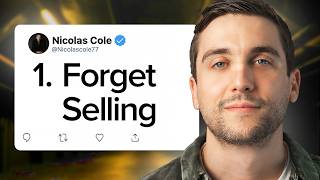
This is a YouTube video titled "20 Tiny Copywriting Tips That Make A Huge Difference" created in July 2024. The content features Nicolas Cole delivering an extensive monologue sharing 20 detailed copywriting tips focused on educating rather than selling, emphasizing empathy, clarity, and understanding the customer. The video is a solo presentation without a conversational exchange involving multiple speakers.
Here are 20 copywriting tips every writer should hang on their wall. So the first one is, you are not selling anything to the customer. You are giving them an opportunity to change. This is something a mentor of mine in Chicago used to say all the time. We would leave the office and go to a sales meeting, and the whole time we'd be sitting in the Uber on the way, and he'd go, cole, remember, we are not selling anything. We are giving the other person an opportunity to change. And the reason this is so powerful, especially in writing, is because you have to remember that nobody wants to be sold anything. Really, the whole art of copywriting is not selling, it's educating. And when you educate, you aren't pushing the person to make a decision. What you're doing is you're presenting the opportunity and reminding them and educating them on what their life will be like if they don't change and what their life will be like when they do change. And I think starting from this place is really, really important, especially when you're writing, quote, unquote, sales copy. A lot of times people think sales copy is about using shocking words. You know, the. The one thing they don't tell you about, right? Like, that's not what sales copy is. Sales copy is about educating. And in order to educate, you have to empathize with, with the other person, and you have to help them. You have to ground them in what their life is currently like, what their life will be like if they don't change, and what their life could be like when they do change. Number two, don't use formal language. So the customer is not someone you're trying to impress. The customer is a friend. And so when you speak in a more conversational tone and you know, tactically, that could look like using contractions like saying can't instead of cannot, right? Or instead of, like, I understand, maybe you say gotcha. Right, Gotcha. Finding ways to communicate that you are just having a casual conversation and that you are the customer's friend is very powerful in helping them feel like, again, you aren't trying to impress them, you aren't trying to sell them. You aren't trying to come from a place of power. All you are is a peer. And you're a peer looking out for a peer. You're a friend looking out for a friend. So you really want that to come through in the writing. Number three, this is a really tactical one, but I learned this from Craig Clemons, who is, I think, the best living copywriter on the planet. He became A friend of mine in Los Angeles and something he pointed out very early to me in my own writing is when you're talking to a customer, don't say to the customer you are experiencing a problem. Say you might be experiencing a problem. Because what this allows you to do is it allows you to speak to different problems that are still related to the same person. Whereas if you say you are experiencing this problem, it's very easy for the customer to go, well, yeah, I might be the target person, but no, that's not the problem I have. It's actually a different problem. And then they sort of tune out and lose interest. So for example, how we've done this with ship 30 for 30 is we'll say things like, you know, you might want to build an audience, but you also might just want to share your stories and insights at scale, or maybe you just want to connect with other like minded creators. So these are all different problems that the same type of person would have. But by saying you might, it allows us to speak to these different problems and sort of widen the scope of who we would be able to attract. So instead of you are, say you might. Number four, this is a tough one. Avoid the word better at all costs. So better. It's very subtle, but the word better implies comparison. Because if someone says, I'm going to give you a better financial plan or I'm going to show you a better way to live, or I'm going to give you a better workout plan, and really it's any word, like it's all the er, words. I'm going to give you a healthier option, right? I'm going to give you a faster option, I'm going to give you a cheaper option. All of these er, words imply comparison. Because when you hear I'm going to give you the healthier option, you can't help on a very unconscious level, ask, well, what's the original option? Right? You immediately enter comparison mindset. And so that's like the reason why you shouldn't do it. But from a copywriting perspective, the reason I would encourage you to avoid these er, words and words like better is because it actually is a very faulty place to begin your thinking. Your thinking starts in a place where you think that the game is. You take something that currently exists and then you explain to the customer why it's better. You sell them on it. And that is not the true art of copywriting. The true art of copywriting, like we talked about, is about educating the prospect. It's about empathizing with them. And so the goal, the ultimate goal of whatever thing you're trying to position or frame to the customer could be a product, could be a service, could be a widget spinner, it doesn't matter. You're trying to communicate to them what makes this thing different, not what makes this thing incrementally better. Because anytime you open the door of incrementally better, faster, cheaper, smarter, smaller, right, all you're doing is you're basically saying, hey, customer, by the way, if you'd like to get really nitty gritty, why don't we sit here and we'll tit for tat and we'll go back and forth and we'll see how these things are basically the same, but mine's just a little bit better. And it's very hard to sell people that way. And a much easier way of getting them across the finish line is going, yeah, no, these things actually aren't that. They're not that similar. We can't really compare them. This isn't an incremental improvement on what is and what already has been. This is something different. And the moment something is different. The moment something is framed as different, well, all of a sudden you can't compare the two and it becomes a different purchase decision. So I think a great stress test for sales copy is look at your landing page, look at your email, look at your vsl, look at whatever you've written and assembled and look for all the, er, words. Because chances are, wherever you've stuffed a bunch of er, words, the underlying problem is you don't actually know what makes this thing different yet. And that's the real problem to solve. And no amount of shocking words or quote unquote copywriting techniques is going to solve that problem. You have to figure out what makes this thing different. And the symptom of that is these, er, words. Number five. You want to be a painkiller, not a vitamin. So sometimes there are products and programs and services and books. There are things that just inherently are vitamins. A vitamin is something where it doesn't cause immediate relief. You know, it doesn't remove any sort of pain today, but it is more preventative. It helps you avoid pain later or, you know, further out in time. And there's benefit in vitamins. You know, we all take our vitamins every day. Hopefully you are. But really, if you're asking yourself, you know, how do I build things that are lucrative? Well, the most lucrative things are painkillers. And I mean, even in the most literal sense, right like, there's a reason why painkillers are a huge part of the pharmaceutical industry, right? And so everyone wants to remove pain more than they want the chance of feeling better and avoiding pains at some point in the future because it's, it's more unknown. You're like, well, how far into the future and how painful is it going to be? I don't know, I can't really wrap my head around it. So whatever, I just want to remove my pain now, right? So whenever you're thinking about creating products or maybe you're working with someone and you're trying to figure out how to sell their product or service, you've been hired to do some copywriting. You really want to ask yourself, how can I frame this to be a painkiller, AKA how can I frame this product or service to remove current urgent existing pain versus framing it as a vitamin, which is, hey, if you do this thing, your life will be a little bit better and it'll help you avoid pain sometime in the future, but we don't really know when that is and we don't know how painful that's.
Going to be, right?
So just as an overarching framework, be a painkiller, not a vitamin. Number six, you always want to sell and emphasize the result, not necessarily the process. So the easiest example here is, you know, imagine if I was trying to get you to go to the gym. Well, what a lot of people would do is talk about how great the gym is, right? It's like, hey, and by the way, you come to the gym, you're have a great time at the gym and the gym is going to be awesome. But the person doesn't actually really care about the gym. The person cares about what the gym is going to give them, what, what the gym is going to unlock in their life. Same thing with eating healthy. Nobody gets excited about how, you know, like, what are all the things that make broccoli broccoli? Nobody cares. The only thing the person wants to know is, is this going to help me achieve my fitness goals? Am I going to have six pack abs by the time summer rolls around?
Right?
So whenever you're thinking, how do I move the customer across the finish line, you want to really emphasize not, here's all the things that go into whatever we're going to do together. And talking a lot more about what is the end result? What do they care about? Why do they care about it? What positive benefits would that bring them? How would their life change?
Right?
There are all of these things that are really important to the target customer and to the target reader. And if you don't take the time to emphasize to them what those things are, well, they're not going to buy into the process if they don't know what result they're going to get out of it. Number seven, this is tried and true. This is probably something that you might not catch the first time you write something, but when you reread it, this is what I would pay attention to. You want to write copy for one specific reader. A big copywriting. No, no Is addressing the crowd, so saying, hey, everyone. Because when you try to write something for everyone, you end up writing something for no one. And a lot of times people will write sales copy just speaking very generally. And instead, what you really want to do is you want to think about if you were to walk down into that crowd and you were to laser in on someone and go, hey, who are you? Where are you from? What's your background? How did you get here? What are you interested in? What do you care about? What problems are you running into? What have you tried in the past? Right, that one individual. That's who you want to write for. Because then the Internet's job and the job of just broader marketing and all of the other things that you do to drive attention to the sales copy, that job is to then go find all the other people in the world like that one person. And that's really the name of the game. The game is not, let me imagine the biggest crowd I could possibly imagine, and let me speak to all of them. That's like a surefire way of not resonating with any individual person. Number eight, this is a tough one for people to wrap their heads around. You don't sell the customer on your brand. You educate them on the category. So what I mean by this is oftentimes, especially founders, whether it's you and your own product or if you're writing for someone else, founders take a lot of pride in the things that they create. And part of the creation process is actually forgetting that not everyone cares about it as much as you do, because you're the one who created it.
Right?
And one of the big mistakes that founders make, marketers make, CEOs make, is they spend all day, every day, thinking about their brand, thinking their brand is what matters to the customer. And in reality, what really matters to the customer is the category of product or service. And then your brand is basically the relationship that they have with you within that category of interest. So I'll give you a really good example. You are not going to buy a Tesla unless you buy into the category. And the idea of owning and driving an electric vehicle, it doesn't matter how cool the Tesla brand is, it doesn't matter how cool the logo is. It doesn't matter what viral marketing thing they had that you saw 8 billion times or whatever the marketing stat is. Oh, when people see something seven times, they buy it.
Right.
It's stupid. None of that matters. The only thing that matters is you decide, I want to own an electric vehicle instead of a gas powered vehicle. That's the only decision that matters. And then once you make that categorical decision, you are then going to ask the question, which brand of electric vehicle should I go with? And that's where you almost always end up defaulting to the category king. Right? So Tesla owns the category. You're probably the vast majority of people are going to go buy a Tesla. And then sometimes people might make a different decision and be like, actually I want a Rivian.
Right?
This is true for everything. And so again, if you really want to master the art of sales copywriting, I mean really, I think about this not as sales copywriting, I think about it as category copywriting. You have to figure out how to educate the customer on a new and different category or a new and different subcategory. And this is where, you know, I'm just going to future pace a little bit here. When you get really good at this skill, you realize that it's actually not just the writing. The writing is one component of it, but the writing actually works hand in hand with the product creation. Because when you come up with a new category or a new subcategory, well, that changes what sort of product you create. So you would much rather be the category king in a new category or new subcategory rather than a competitor and another brand in an existing category. There are people that disagree with that. That's my thesis. That's why you're here. I'm giving you my thesis. Obviously there are outliers and there are ways to make it work on the other side. I just think it's like, would you rather show up to the party and be the 10th person who walks in with the exact same outfit or would you rather walk in and, and add something new and different to the room and create new rules and basically present the opportunity of, yeah, you can play by those old rules or you can join me over here, I've got a new party going on.
Right.
So I do think that educating customers on A new category is a very powerful piece of this number nine, teach don't sell. I've said it. I am a firm believer that copywriting is not about sales. It is about education. Nobody makes a purchase decision on something they don't understand. They have to understand the problem it solves first. They have to understand how it makes their life better. They have to understand how it increases their future earning potential. They have to understand how it works. No one makes a decision without understanding. And so I think one of the big mistakes that people who want to get into copywriting make is. Is they go down this rabbit hole of, like, I need to figure out how to sell. And that's not really the game. The game is how do you understand your target person, your target reader, your target buyer so unbelievably well that not only is it clear that you understand them, but through your writing, they feel understood. If you can do that, they will buy. If you can't do that, they won't buy. And so that's the whole game. So I would really encourage you, especially if you're watching this, listening to this, trying to figure out, how do you apply this to your own business? You don't start from a place of, well, how do I get really good at sales? Or how do I get really good at copywriting? You start from a place of, what are all the things I currently understand about the person that I'm trying to help? And what are all the things I don't understand yet? Go understand those things and then go talk to a bunch of those people and see if you can communicate in a way that helps them feel understood. That is the bottleneck. Number 10, never blame the customer. So you don't, you know if someone's bad at math, right? You don't say, hey, you're bad at math, and that's your fault. Well, because that doesn't really inspire them to take action. Instead, you go, hey, hey, you're bad at math. But you know what? It's not your fault. It's actually the education system's fault. They do a really bad job of teaching math right? And the customer goes, right, yeah, you and I are on the same team. We do not like traditional education. You're like, great, now that we're on the same team, let's talk about where to go from here. Okay? So you should never blame the customer. You always part of making them feel understood. You always empathize with them, show that you understand, and you pick a mutual enemy. You're like, hey, we're both mad at this other thing together. And that is what makes them feel like they're on the same team as you. Number 11 is you want to separate writing copy for insiders versus outsiders. So what this means is there are, there are certain scenarios. Sometimes it's on the front end, it could be with traffic, it could be with a landing page. Sometimes it's on the back end, it's deeper into the funnel, it's inside emails, whatever. Insiders are people who already are part of this category, part of this industry. They speak the lingo. Outsiders are beginners who aren't fluent yet. And you need to have the awareness to know, well, which one am I speaking to? Right? Am I speaking to insiders or am I speaking to outsiders? When you're speaking to outsiders, you inherently want to use language that is more general. You, you want to use language that is easier to understand. You don't want to use like industry specific terminology or acronyms, right? Because when you use those things, the beginner and the outsider isn't going to be able to follow. And when someone can't follow, I promise they don't sit there and try and figure it out. They just go, oh, this is an inside joke I don't understand. Or this is a party I'm clearly not invited to.
Right?
Which makes it hard for new people to enter your category and your industry, or it makes it hard for them to more specifically enter your funnel. Insiders are, when you go, I know I'm talking to people in this context that already speak this language. They understand the lingo. And so if that's the case, you want to use acronyms or industry specific terminology, right? Because when you do that, you're showing to the insider, hey, we speak the same language, we're on the same page, right? And so depending on who you're talking to, you want to shift the language in those ways. Is this for an insider or is this for an outsider? Number 12, whenever possible, you want to try and ground any argument you're making or more specifically, any amount of education that you're sharing with the person in some sort of shocking statistic. So documentaries do this really well. There's a great documentary on Netflix, I think it's called seaspiracy. It's all about know fishing practices. And I remember watching that in the pandemic and every, every time I was about to tune out, they would hook me with some other shocking stat and I'd go, I had no idea that many dolphins died every year. Right? And then I'm right back into it. So this doesn't mean throw a gazillion stats at the reader, slash customer. What it means is figure out the thing you're trying to educate them on and then pick one shocking statistic if you can. You don't always have it, but if you can, one really strong statistic that grounds the reader in the importance of what you're talking about. And it's just, it's one of those really sticky ways to help people go, oh yeah, oh, this is a, this is a big issue, right? Number 13, this is another great one is adding the phrase according to science. So, and you can replace science with, you know, anything that's related. But you know, according to this recent study that just came out by the New York Times, or according to this really well known industry thought leader who just presented this study, or according to.
Right.
Anytime you use the phrase according to congratulations, you just added in a whole new layer of credibility into your writing. This isn't something that you should overuse. Obviously don't just barra, you know, just barrage the reader with this over and over and over again. But it is a really nice thing where when you're educating them on something you can say, and by the way, you know, according to blah, blah, blah over there, this is a really new and important thing. We should all be paying attention to it, right? So it's just a very easy way to inject a little bit more credibility into what, into what you're sharing. Number 14, you want to organize information's in information into lists as much as possible. So this is especially true for when you're writing copy, especially long form copy. Could be in emails, could be in landing pages. You want to avoid big blocky paragraphs and instead you want to find ways to list information so that the reader can very quickly skim through whatever it is that you're presenting to them. So instead of going, hey, I'm going to talk about the problems and then you have this long winded essay about the problems that the customer is experiencing. Well, make it faster. Hey, you probably have these five problems. 1, 2, 3, 4, 5.
Right?
So lists are very skimmable and it makes it very easy for the reader to fly through whatever it is that you're sharing with them. Number 15, don't oversell the problem, just say what it is.
Right?
So for example, if you had something like, have you ever had an impossible, excruciating, mind bogglingly frustrating time finding something to watch on tv, there's no need for all that Right. It's like, you don't have to overdo it. You just say, hey, can you not find anything good to watch on tv? Customer's like, yep, okay, great. We're on the same page. So don't feel the need to be verbose or, you know, oversell whatever it is that you're trying to emphasize. There's almost this weird thing that happens in language and with writing where the simpler you say it, the more it lands. So you always want to ask, you know, if it takes you 10 words to say what you're trying to say, how can you say it in seven? If you say it in seven, how can you say it in five? Say it in five, how could you say it in three?
Right.
The faster you can get there, and the simpler you can get there, the easier it is for a reader to go, yes, I'm on the same page. Great writing is not really about how beautiful the sentences are. Great writing is about clarity. So whatever achieves clarity in the most economical way possible is typically the quote, unquote, best version of that in writing. Number 17. Give your customers new language to talk about the new problem you're educating them on. So a really good example of this. And Craig Clemons, great copywriter, pioneered this, if you remember, in, like, 2015, 2016ish, maybe 2018, probiotics really, really exploded. And fun fact, Craig and his company were really the ones that started the whole probiotic marketing craze, and they really helped invent and scale that category. But the way that it hooked people and you still see this language used today is they anchored probiotics to a problem, and they gave that problem a name. So they didn't just say, hey, you need probiotics because you aren't feeling well. And they didn't just say, hey, you need probiotics because, you know, your stomach hurts. They said, hey, if your stomach hurts, you might have what's called leaky gut. You've probably heard that term before. Okay, well, somebody made it up. Okay? And this is how the world works is when you give problems names, they stick. When you give solutions names, they. They stick. And a big part of really advanced category copywriting is going, how do I explain what makes this different? How do I present that this is actually a new category of problem or solution? And how do I give that new category a name? And the better and better you get at that skill, the stickier your copy will be. Number 18, remind the customer what will happen if they don't. So a big part of Educating someone and helping them make a decision isn't just saying, hey, here's the solution and here's how great your life is going to be. Here's how amazing everything that I'm talking about is. Before the person can care about the solution, they have to care about the problem. And the way that you help someone care about the problem is you have to ground them in inaction. So you go, look, I just want to help you. If you don't change this, here's what's going to happen. And you're not selling them on anything, right? You're not being mean, you're just educating them. You're like, hey, if you don't fix that clogged toilet, I'm just telling you the water's going to keep seeping out, it's going to smell really bad. And if you don't fix it in like at least a week, that bathroom floor is going to be ruined.
Right?
That's all sales copy is. And so you want to find as many ways as possible to remind the reader and ground them in, hey, I understand you feel like this isn't a huge problem or I understand you don't feel inspired to take action right now, fine, but let me at least educate you on what's going to happen if you don't, because I want you to walk away from this understanding. You know, you either confront it today or you're going to confront it in a month. But these things aren't going to go away. And you have to really approach it from this empathetic lens of I just want to be helpful. I just, I would hate to see that brand new bathroom floor get torn apart by sewer water, right? Hey, we got to fix this. Number 19. This is a big one. You always sell and emphasize the benefits, not the features. So you see this problem. I swear, I think of any industry. Silicon Valley Venture backed SaaS companies are probably the worst at this. They are so excited about the technology that they're building that they are probably the worst at copywriting and marketing of any industry because all they do is talk about how great their SaaS is. They talk about how many amazing features it has. They talk about how fast it is, they talk about how shiny it is. They talk about the cool little feature where when you click the button, like confetti pops out, graffiti pops out. So none of those things are what the customer cares about. The customer does not care how cool you think the technology is. The customer only cares about the benefits of using that technology for them. People are Selfish. They want to know what's in it for them. Okay, so another great stress test for your copy is looking through all of the. All of the different things that you're saying and whether you are emphasizing the benefits or the features. And if you're talking about yourself, that means the customer's not interested. You want to talk about the customer. You want to talk about what's in it for them. You want to talk about when you use our SaaS platform, for example, these are all the good things that happen in your life. These are all the problems we solve. These are all the efficiencies we help you build.
Right?
Customer, customer, customer. It's always about benefits to them. And number 20, you want to, as much as possible, remove the fear of buyer's remorse. So I always like at the very end, speaking to something that helps communicate to the reader, to the target customer. Look, and I understand, you know, maybe you've been burned in the past, or I understand that you have this fear of it not working out. And this is where you can get creative. This is sort of. You're no longer just in sales copywriting. You're sort of merging into product design and even, like business model design. Because sometimes you can get around this problem by going, I'm going to offer a full refund if you don't like the product or don't like the experience in the first week. Sometimes this means some sort of personal guarantee. Like, hey, if you take the plunge with me, I guarantee, like, I'm going to work with you until this outcome happens so you can get creative on how you mitigate that risk. But from a copy perspective, you do want to find a way to communicate to the reader and to the customer, hey, and I understand you probably have this buyer's remorse fear. Let's help mitigate that from the beginning. So these are 20 small copywriting tips that I feel like make a huge, huge difference. But the thing that I can't emphasize enough is I really feel like there's so much copywriting education out there that is that so heavily emphasizes this idea of selling people. And as someone who has sold, you know, I've sold over $5 million of ghostwriting services and over $10 million of digital products. I can tell you it's really not about, quote, unquote, sales. Sales. Copywriting is really about education. And when you truly understand someone and when you truly empathize with them and in the writing, they feel understood and they feel like they're learning from you. They feel like they can trust you because you can articulate what they're going through so well. That's what makes them buy. It's not, hey, I use this clever, you know, copywriting technique and sentence structure that I learned at a sales conference, and, well, bam, my sales triple. Like, that's. That's really not what it's about. I think copywriting is far more of an art than people realize. The way I like describing, you know, Gary Halbert, who is one of the most successful sales copywriters of all time, is when you read Gary's work, it actually reads a lot like Hemingway. Their sentences are very similar. They have a very similar terse, direct, minimalist sort of style. It's just Hemingway went the literary route and Gary Halbert went the sales copy route. But their language and their writing style is actually very similar. And I love studying. I think I love both of their work. I love studying both of their work. But that's always something I like pointing out to people is, you know, really great copy actually doesn't read like copy. Really great copy reads like a story you can't put down. Or it reads like a really informative, educational book that you go, this came at the perfect time. This is helping me so much. So that's really what the game is about. So I hope this helped you. I'm a big fan of studying this type of stuff, but I do tend to talk about it more through the lens of education, not necessarily sales copy. So take these 20 tips, implement them in your writing, and hopefully it helps you move some customers over the finish line.
More from Nicolas



What Every Writer Gets Wrong About Their Audience #writing #creator #writingtips




