Editing Is A Waste Of Time (Digital Writing Advice)
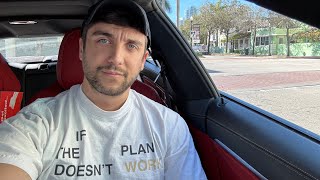
This is a YouTube video titled "Editing Is A Waste Of Time (Digital Writing Advice)" created in February 2024. The content features a single speaker sharing personal insights and advice on writing, specifically about the inefficacy of editing early drafts without reader feedback. The speaker discusses their own writing process, emphasizing volume and iteration over perfectionism, and reflects on how this approach has helped them improve and overcome fears. The context is focused on digital writing and creative productivity, with a personal note about the speaker's upcoming wedding.
All right. It's the day before I leave for my wedding. I'm getting married this weekend. I just got a vitamin iv. I've been doing that this year. It's been helping a lot, just with my immune system staying healthy. Figured I'd load up before the festivities this weekend. But something that I wanted to talk about this morning is the. The idea of editing your work as a writer. This is something I've tweeted about quite a bit. Every time I tweet it, I always get inundated with a ton of comments from people disagreeing, saying, this isn't right. This is the opposite of good writing, et cetera. So, all right, so I wanted to explain this idea fully. So I believe that 99% of the time, editing your work as a writer is a waste for a very specific reason. And it took me a long time to understand this and for this to crystallize as a POV for me in the beginning. And when I say in the beginning, I mean both as your career as a writer and also in the beginning of trying to write anything new. So whenever you're moving into writing about a topic that you haven't written a lot about, as in you haven't. You don't have very many reps. You don't have very much pattern recognition. So it's. You have to treat every single topic and even every single format and even every single medium, like every different platform. Like, you have to really internalize that all of these are different, and they all require pattern recognition in order to understand how to do it well, okay, so in the beginning, it is a waste of time to sit there and edit your work because you don't yet know what to edit for. So what most writers do is they sit down and they go, all right, I'm gonna write this thing. And then they write it. And sometimes this happens even before they finish writing it. Sometimes this happens in the very first sentence. They write a sentence, and then they go, I don't like that sentence. Then they rewrite the sentence, and then they go, oh, should I say great, or should I say terrific? Or should I say splendid?
Right?
They start playing this game of swapping out adjectives, or they get a couple paragraphs in, and then they go, ah, should I say, you know, that idea first or should I say that idea second? And then they sit there and they move all the pieces around, and then they're like, ah. And then they go back and forth, and they can't make up their mind, right? And most of the time, the result of the editing actually leads to the opposite outcome that you desire. Because most writers who go down the rabbit hole of editing, they think editing will help make my work better, and then they will put out a more polished version of their idea. And in reality, what ends up happening is all of that incessant editing ends up leaving you really frustrated with what you've written, which usually results in the writer not publishing it at all. So they get halfway through editing their piece, and then eventually they go, this is frustrating. I don't know where anything should be. I give up. And then they don't hit publish, right? So you, you set out to edit with the hopes of making a higher quality product, and the majority of the time you end up not finishing the product or putting anything out it in the first place. Okay, so already editing is failing to achieve the goal. But the real reason why, I feel strongly that in the beginning, again, my two definitions of in the beginning, I think editing is a waste of time because you don't yet know what the reader values. So what you're doing is you're editing based on your own quote unquote intuition. You're editing based on what you think is right. The problem is you have no pattern recognition, so you don't actually know what's right. Which means all of your quote unquote intuition is not based on anything. It's literally just you sitting in a room by yourself going, should it be great or should it be terrific or should it be splendid?
Right?
Which word should it be? And you don't know why you're picking the word that you want are. You don't know why you're presenting the idea that you are. Aside from the fact that some part of you just thinks almost like magically, I feel like this is the answer. And so that's what I should choose, right? And really what you end up realizing is as you start to write and as your writing gets in front of readers, and as readers start to give you feedback on a very unconscious level, you start to learn what's working, what's resonating, what they like, what's helpful, right? And so when you look at anyone who's producing volume in the most basic sense, the reason why they're getting better is because all that's happening is they're putting data points out into the world. They're getting their work in front of readers, and then slowly but surely, they're starting to learn what to edit for. That's why you look at artists or writers or creators, and you're like, boy, I really liked their stuff in the beginning, but three years later, I like it even more.
Right.
The reason you like it even more is because they're learning with you what you want. And as they give you more of what you want. Right. If you think of it like a. Like a pie chart, it's like every. Every piece of content that you consume from this person in the beginning, you're like, I really love 50% of it. Like, 50% is exactly what I was looking for. In the other 50%, like, I could live without.
Right.
But then they get better, and the next year, 60% of any given piece of content, you're like, wow, this is, this is so. For me, this is what I was looking for. Until five years later, they've learned what. What is most valuable to you. Where almost everything they put out, like, 90, 95, 98% of it, you're like, this is exactly what I want.
Right.
This is helpful to me. And all that's changed. Yeah. Like, it's, it's. It's actually a misunderstanding to say the writer or the creator is getting better. It's like, yeah, they are getting better, but really the thing that's improving is they are learning what you value. And the percentage of that value in any given thing that they create just keeps going up and up and up.
Right.
And so you can't actually learn how to do that, and you can't increase the value of your value to a potential reader without their input. That's why one of the biggest things that we talk about in ship 30 for 30, is you're not writing for readers. You're writing with readers. Because if you want any sort of external outcome, if you want approval, that's an external outcome. If you want money, that's an external outcome. If you want praise for your work, that's an external outcome. So if you want any sort of external outcome, you have to recognize that everything that you're doing is in service of the other person. It has very little to do with yourself. At the end of the day, it does, but it doesn't. And so why is editing a waste of time? Because in the beginning, you don't know who your reader is yet. You don't know what they value. So you sitting in a room swapping out adjectives is a huge waste of time. It doesn't. You're not. You are not accomplishing what you think you're accomplishing. That's my issue with it. And so something, you know, I don't know that I'VE ever really shared this publicly. But now I'm going to start because I see how important it is to share. But I would say, and I am not exaggerating, 99.9% of things that I write on the Internet, I don't even reread before I hit publish. So I just write it, I 1 take it, and wherever I land, I go. That's what I'm putting out. And I think a lot of people would hear that and immediately jump to the conclusion, oh, so you're just pumping out low quality work. Okay, first of all, if I didn't tell you that, you wouldn't know, right? So that speaks to the level of the quality. Second of all, because I've conditioned myself over such a long period of time, years and years, that that's how I'm going to treat the majority of my writing. My first rough draft is much better than most people's first rough draft because I've trained myself to operate under the condition of, I'm really not going to sit here and obsess about this. I'm just going to put it out into the world. And obviously, the first time I did this, the first hundred times I did this years ago, like, my first draft wasn't very good, but now my first draft is better than most people's final draft because I already, I already know I have the clarity of, I've put out so much work, I know who my reader is, I know what they value. I don't have to think, think about it anymore, right? And then also, if I share, you know, 99.9% of what I write, I don't even reread, I don't edit at all. I just put out into the world. It's very easy to jump to the conclusion, well, you're putting out low quality work, you don't care about the final product, et cetera. And that couldn't be farther from the truth. I care very deeply about the final product. I care so deeply that I want to get my idea out as quickly as possible because I want to know how it's resonating with readers because I want to help them, right? So when I'm putting ideas out at such a rapid rate, my goal is not to check a box for myself. My goal is to get it in front of the right person and go, is this helpful? Is this interesting? Do you find value in this? And if you do, let's figure out what else I can give you to make it more valuable, right? To increase that percentage and so that's why it always bothers me when people think that volume implies low quality work. No, in many ways, volume is you prioritizing the quality of the work. Because you know that you are not the smartest person in the room. You know that it is a waste of time for you to sit by yourself and try and figure out every single question that your potential reader has or everything that they would find interesting or valuable. You don't know. And you will never be able to figure that out on your own. You do not write for readers, you write with readers. So As a result, 99.9% of what I write and share on the Internet, I treat as practice. I don't even consider that my quote unquote, real writing, even pieces that I spend a lot of time on, I don't consider that my real writing. I treat it all as practice. Because all I want is to put data points out to the world to understand what readers find valuable. And then the work that I edit and the work that I rewrite, it's almost always two things. It's products that I'm creating, paid products. Could be a course curriculum, could be an ebook, like, could be a cohort based whatever. Like any sort of paid product. I spend a lot of time on that. And also my books, because those are more finalized versions of all of the ideas that I'm just trying to get out into the world as quickly as possible and gather data on. So I recognize this. I don't think that this is the conventional point of view, to be honest. I think that because of the speed at which technology is changing the way that people think about creative pursuits, I think that this POV will become more and more accepted over the years. Because whether or not creators, writers, artists, whether or not they realize it, they're already doing this like this. This process of learning is already happening on an unconscious level. Whether you're putting out one book every month or one book every 10 years, at the end of each cycle, you are unconsciously soaking up your learnings. What worked with the reader? What did they find valuable? Was this helpful? Did they find it interesting? Did they find it entertaining? You're soaking all that up and you're incorporating it into your next rep. And so all I've done for myself is go, well, I'm going to do this anyway. This is the psyche of creating anything, so I'm going to do this anyway. I might as well just make it conscious, treat it as a lever I have control over and push the volume so that way I can Learn at a faster clip. So wanted to just share this. I hope that this also gives you a lot of comfort. You know, for me, it's. It's really helped me overcome. I used to be such a horrible perfectionist. And it's this volume approach has really helped me overcome all of those fears, uncertainties. I need to make it perfect. Like that was why my first book. My first book, Confessions of a Teenage Gamer, is a memoir about me playing World of Warcraft as a teenager. Life lessons, coming of age story. It took me four plus years to write that book. And the reason is because I just sat in my apartment by myself swapping out adjectives for months on end. And I thought there was something noble about not putting it in front of people. And all it did was just make the work take so much longer than it needed to. Whereas my next book, the Art and Business of Online Writing, I wrote in four months and it was so much easier to write. Also was a different category and a different type of book. But a large reason why it was so much easier to write was because I had already written and I was already writing about all of those same ideas on the Internet. So I already had data. Everything in the art and business of online writing I already knew was gonna resonate with readers because I had already put it out in front of them and I had already gotten. I had already built that relationship with that type of reader. So there wasn't much thinking I needed to do when it came time to write the book. And. And since then, I've never written books the same way again. I've never written. I don't even create paid products and curriculums and courses the same way. Now I treat everything as an iterative game. I. I want to get in front of the reader as fast as I possibly can. I am not, you know, I've accepted the fact that I am not the genius. I am not the smartest guy in the room. I am not what matters. What matters is the reader. And if I'm helping them, if I'm helping you. So wanted to share this. Hope this is helpful. I'm getting married this weekend and then I'm really excited to come back, lock in. And we got some big goals this year. We got some big goals. So I will keep you posted. All right, see you later.
More from Nicolas



What Every Writer Gets Wrong About Their Audience #writing #creator #writingtips




