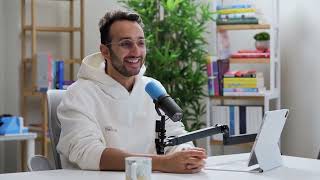
In this interview, writer and entrepreneur Nicolas Cole recounts how he turned online writing into a viable income stream. He begins by describing a conversation that led him to discover Quora in 2013, realizing that each question functions as a writing prompt and that compelling answers are story‑driven. Cole reflects on his early attempts at traditional publishing—a self‑published gaming book that earned only $1,000 after four years—and the frustration of relying on the old gate‑kept model. Determined to experiment, he imposed a disciplined habit of publishing one Quora answer per day for a year, treating the process as a clean experiment. A breakthrough came when a short, personal answer about his health journey went viral on Reddit, garnering over a million views. Recognizing the demand, he quickly wrote two ebooks that addressed the most common follow‑up questions (workout routine and diet) and sold them through a simple landing page, earning about $5,000 in the first week. This moment crystallized his “inverse” approach: start with what the audience needs, then create the product, rather than writing first and hoping an audience appears. Cole expands on the importance of an audience‑first mindset, the necessity of treating writing as a business (funnels, ads, email courses), and the distinction between passion projects and moneymakers. He discusses niche selection, emphasizing that a niche is defined by the reader’s problem, not the writer’s interests, and that creators can hold multiple interests as long as they recognize which pursuits are revenue drivers. Throughout, Cole shares practical advice on discipline, experimentation, and entrepreneurial thinking for writers seeking sustainable income online.
Chapters
I was talking to a friend at the time, and the question that I posed to him— he was a YouTuber as well, he was a gaming YouTuber— and I was like, if models and foodies and other archetypes have Instagram, and gamers and, you know, educators and filmmakers have YouTube, where do writers write? Like, what is the writing equivalent? And he said, oh, you should check out this platform called Quora. And Quora was a question-answer site. I had never heard of it. It was 2013. And immediately fascinated. Like, I spent hours reading on Quora. And what I noticed is every question was— the way I saw it, every question was basically a writing prompt. So it wasn't really a question-answer site. It was a social question-answer site. And every question was this, this jump-off point. And all the highest performing Quora answers were stories. So someone would be like, what is it like to be an entrepreneur? And the answer wouldn't be, here's a formal definition of entrepreneurship, right? The first sentence would be like, when I was 22, I was worth $8 million, and 6 months later I was worth nothing, sleeping on my parents' couch again. And you're like, obviously I'm going to read the story, right? And so I had this aha where I noticed that I didn't have to wait for permission anymore. What my teacher was trying to tell me and us and all these students is there's a way that the game is played and you have to wait for permission, or you have to have someone else give you permission, and they have to validate you, and you have to wait, and you have to wait, and you have to wait, and your success is based on someone else deciding when you're successful. And the internet made me realize, well, no, I don't have to wait for anyone. I can just start writing. And if the quality of my writing reaches people, then We're good to go.
In that position, a lot of, in that position, a lot of people might be thinking, well, how am I going to make money from this? Like, it's all well and good answering free questions on the internet. I was writing on forums back in the day, but like, there's no obvious path to monetization there. Whereas in the, at least old school traditional industries like publishing, it's like, hey, you know, J.K. Rowling got 57 rejections or whatever it was. And then the 58th one became, made her a billionaire. That kind of model. So I guess how were you thinking about the monetization? Were you thinking about the monetization, that fear of, okay, cool, I'm writing on the internet, but like what then?
Totally. The whole time. I mean, I could say, you know, I've been at it for 10 years now and the monetization question is really hard to answer. That's part of why I'm so passionate about talking about it because 10 years ago there weren't a lot of resources explaining how to make money. The first, So in college, I started writing my first book, the book about being a gamer. And my goal was I want to finish this book. And I kind of had the pipe dream that I think every writer has where you think my first book is going to be my magnum opus. It's immediately going to be this incredible bestseller. The world is going to notice my talent. And you just kind of think magically you're going to make a ton of money from it. I spent hours researching about should I do self-publishing, should I try and get a publishing deal, all this stuff, because I wanted to be educated on the business side. I didn't want to just, you know, accept whatever happened. And that first book did not make me a lot of money. I had a very real moment with myself where I spent 4 years writing this book, and you hit publish, and then you're like, cool, I made $1,000, you know. And then you start to realize that The way that you're taught to think about monetizing your writing is only that model. You know, it's, I hope the world recognizes my genius. You know, I don't even know what a publishing contract is, but I hope I sell enough copies so that I just magically, you know, have enough to live on. And then you start doing the napkin math and you're like, this is not gonna work out the way that I think it's gonna work out. So yeah, I spent a lot of time reading forums and studying other digital marketers and trying to understand like, what is a funnel? You know, what are ads? What's a landing page? What's an— what's a free email course? You know, and just year after year, I just kind of kept piecing all these things together, learning how to monetize.
So at the time you were writing on Quora, but it sounds like you weren't thinking— or were you thinking that, okay, if I can do well on Quora, sudden, then, then how— yeah, how are you thinking about the monetization?
I mean, in the In the very, very beginning, it was a, I have no idea, I'm just gonna try stuff. My assumption was if I get enough people reading my work on Quora, something will happen. So what I did is, you know, because that's the only place you can start from, right? And so what I did is I challenged myself to go, okay, I'm gonna commit to this new thing. I was extremely disciplined in my 20s. I still am, but I was way disciplined in my 20s. Was really into bodybuilding. I was lifting every day. I was eating 6 meals a day every day. I know I don't look at it anymore. And it was to me, it was really important that if I started something that I baked it into my daily schedule and I did it every single day because I knew that that was the only way that you would really see, is it working or is it just I'm not putting in the effort, right? I wanted to run a clean experiment. So I was like, I'm going to Write every single day on Quora, one answer a day for a year straight. Worst case scenario, I do the thing I love, which is write. Best case scenario, something happens. And I had this moment where, you know, it's how it always goes where you start a new habit and then you get like a month in and you start getting in your head about it and you're like, I don't know if I really want to do this. And one day I was like, I really don't want to write today. I'm just tired from my job. I don't wanna hit publish. Forced myself to stay an extra 15, 20 minutes, uh, at my job cuz I didn't have internet in my apartment. I didn't allow myself to have internet for 4 years until I finished writing my book cuz I knew I would waste it on YouTube. So I removed that option and I did all my writing at, if I need to use the internet, I would just use it as coffee shop or at work or something. I wrote this Quora answer, I hit publish, got on the train, and by the time I got home, it was on the front page of Reddit. It was over a million views very quickly, and it was basically my story of going from really sick as a teenager, not knowing I had celiac disease, to this bodybuilder. And I had this before and after photo, uh, at the top. And it was a really short answer. And immediately I had— I got all these emails from people, a lot of guys that looked like me on the left-hand side, which was skinny, scrawny, insecure. And I got the same two questions over and over again. What's your workout routine? And what are you eating? And so I saw that and I had this connection moment where I was like, oh, a huge part of monetizing your writing is you need to write things that people want answers to, right? Like you are trading information for money, at least through the nonfiction lens. And so I spent all weekend writing these two ebooks, and on Monday I put 'em up for sale. I connected the website and where I was, where I was selling them to that viral answer that was still going crazy on Quora. And I remember sitting in my Monday morning meeting and my phone's just going nuts with Stripe notifications. And that's how I made my first like $5,000, something like that. And I had this aha moment where I was like, oh, You can make money as a writer. It's just you need to differentiate between are you saying, I want to write this, and then you go out into the world and go, who's willing to buy it? Or are you starting in the opposite direction and go, what do you need? What, what answer are you looking for? What question do you have? And can I provide it? And that was the— as soon as I realized that, everything changed. And I went from the fallacy of I'm going to sit down and write what I want to write about. Now I have to go hustle it, right? With starting in the inverse. Who's, who's the reader? What do they want?
I was doing a session for our YouTuber Academy yesterday where, where, you know, we were doing like a little Q&A and people were— people always struggle with this question of what's my niche. And one way of approaching it is what do I want to make videos about? But the more successful way of approaching it is what do other people want and how can I serve them?
Yes.
And just kind of thinking like an entrepreneur rather than thinking like a hobbyist who's like, hey, I have all these, I have these 100 different interests. I want to make videos about productivity and entrepreneurship and personal development. Like, okay, as do 5 million other people. Like, come on. Where is there a market? Where is there something that we can serve someone?
Yeah. I mean, the hardest thing I think to wrap your head around is your niche is not about you. Your niche is about your reader or your viewer or your listener. So where I notice a lot of writers go wrong is they spend their whole lives just going, well, I want to write what I want to write about. And you should. That's great. But also you are in service of the reader. And I think a really important thing to differentiate between is if you want to write whatever you want to write about, Go for it. Like, that's the beauty of the internet. That's the beauty of self-publishing. That's the— you have that freedom. But don't 2 seconds later then complain when the external result isn't what you want, right? So someone goes, I want to write what I want to write about, and then they go, and why aren't I going viral? Or where's all the money? Or why don't I have a gazillion followers, right? And that's because you're not being clear about whether you're doing this for yourself or you're doing it for an external outcome. And I think you need to be honest and go, I want to write to make money.
Great.
Make decisions that unlock that outcome. You know, whereas there's a lot of things that I want to write in my lifetime that I want to write, and I'm not confused about the fact that those things are probably— maybe it might be a home run, but probably not going to make as much money as if I start with the end in mind and go, well, what does that person need and how can I use writing to serve that need? You know what I mean?
There's this famous artist, I don't know if you're familiar with this, I think Aziz Ansari was at a party and he asked this really big musician who releases stuff every 10 years or something like that. And I'm blanking on the name, but essentially he asked him like, hey man, it seems like you just kind of do whatever you want. You just release You can release music when you want. It seems like you're not caught up in the trappings of the industry. Like, how do you do it? And the guy was like, it's easy. I just make a lot less money. And it's like, you know, the way we teach this on our YouTuber Academy is I always say to people that there is a spectrum between I'm doing this as a hobby and I'm doing this as a business.
Yes.
Where are you on that spectrum from like 0 to 10? And everyone says 10, 10, 10, 10, 10, 10. Otherwise they wouldn't be in the course. Whereas when we do our free workshops, everyone's like 2, 3, 4 is like the average. But then the same people that are like, I want to do this 10 out of 10 as a business, are still also kind of still struggling with this thing around like, oh, but I have all these 10 different passions and I want to make videos about all of them. Whereas you wouldn't make a grocery store, well, a shop trying to sell absolutely everything because you'd be competing with Amazon. You'd be finding a niche where you know there is a market for the thing and just focusing on that, even if you have these other 10 interests.
Yeah, I mean, the example I love We use this in our course, Ship 30, which is we ask the question, what's Ryan Holiday's niche? And immediately the whole chat all blows up with the same one word, right? Everyone says stoicism. And then I go, okay, great. How do you know that? Right? Like, why did you type that? And we don't realize that we associate niches with people because they educate us to do that, right? It doesn't just happen. Like, the reason we associate stoicism with Ryan Holiday is because he writes book after book after book, and he makes YouTube video after YouTube video that says stoicism, right? We would not do that if every single thing he wrote or every video he created was a different topic. So I think that's point A. Point B is realizing that you can do both. I— it's a fallacy to think you're a one-dimensional person. You're not. We all have many interests. You can do more than one thing. Most people don't know that I have like, I don't even know, 3 poetry books published.
Oh, I don't know that.
Yeah, right. Most people don't know that. And that's fine because I'm not confused about which thing I do because I want to do it and which thing I do that is my moneymaker. That's the whole question is you want to make the niche. If your goal is how do I make money, right? You want to make the niche your moneymaker. But that doesn't mean you can't do other things. You can just don't expect those things to have the same external outcome as your moneymaker. Right. And I think remembering that gives you so much freedom and it allows you to do all the things that you want to do. And you aren't confused about what to optimize to make sure that you can still put food on the table, right?
By the way, if you're brand new to writing online and want a really easy place to start, I recommend reading The Art and Business of Online Writing. I wrote this book after I'd been writing online for over a decade and accumulated over a billion views on my work, monetizing my writing in all sorts of unconventional ways. And I wrote this book to give other writers like you a way to scale skip all the lessons that I had to learn the hard way and start seeing success from your writing a whole lot faster than I did. So if writing online is something you're thinking about or something you're actively practicing, I recommend picking up a copy of The Art and Business of Online Writing.