How To Measure Success As A Writer (3 Part Framework)
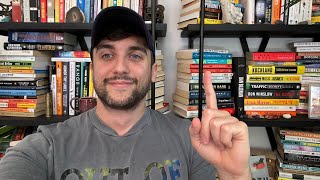
This is a YouTube video titled "How To Measure Success As A Writer (3 Part Framework)" created in January 2024. The content is a detailed monologue or talk by a single speaker who shares personal insights and a structured framework on defining and measuring success as a writer. The speaker discusses different career paths for writers, the trade-offs between optimizing for money versus status, the importance of understanding the size of the audience based on the topic, and the long-term perspective on a writing career. The tone is reflective and educational, aimed at writers seeking guidance on their career and success metrics.
All right. Something I want to talk about today is how to measure success as a writer. I'm sitting in my home office here. I got quite the collection of books. I've read most of these. I haven't read all of them. And over the years, I've read and consumed a lot of information around how to think about your career as a writer. You know, as any writer would. You know, you look at the people who did it before you you out and buy their books. You're looking for some sort of blueprint or roadmap that you can follow. And this is a topic I've spent a lot of time thinking about because I graduated from college with a degree in creative writing, really a degree in fiction writing. And the only career path that I was really exposed to was you work either at a magazine or at a newspaper and. Or maybe as a barista, and then you work on your novel at night, and then you send in proposals for your book, and you wait for a publisher to give you their stamp of approval. And the way that the dream is sort of articulated to writers is. And once you're chosen, everything takes care of itself. You know, it's like, oh, once you land that book deal, you make infinity money. You don't even know how much money that is. You just assume once you get a book deal, well, then the rest of my life is paid for and taken care of, and you can ride off into the sunset. Congratulations, you're a successful writer. And what I've really learned over the past decade, you know, I graduated college 10 years ago, just wild to think about. And I've really learned that your career as a writer comes down to a very important decision, which is, are you optimizing for money or are you optimizing for status? And how you answer this question really dictates what paths are possible in front of you. If you want to optimize for status, you're going to pick different vehicles for your writing than if you want to optimize for money. And those different vehicles are going to give you very different things. Some vehicles are going to pay you more in money and less in status. Some vehicles are going to pay you more in status and less than money, and some are a blend in between. And I've really experienced this. So just a little story. So I graduated from college. I got good grades in college. I got to know all of my professors. I really looked up to all my professors. I made it very clear that, you know, I wanted to be a writer. I mean, everyone there wanted to Be a writer. But I was like, I want to be a professional writer. I will do whatever it takes. And so I got to know a lot of my professors, many of whom were published authors and had successful careers in Chicago. And by the time I graduated, I would speak on behalf of the program, and I would talk to new students. And I was a tutor, and I would tutor students. And so I felt, you know, I felt like this program was really, really valuable for me. And I had a. I built a strong relationship with my professors there. And then I graduated, and I went, got a job in advertising. And then a couple years later, I fell into ghostwriting. I started writing on Quora. I self published my first book, and I started doing all of these things that no one really told me about in college. And it was clear, even to me back then, that I was exploring a different path for myself. And so a couple years after I graduated, I went back to the school and I said, hey, I've learned a lot of really interesting things. I would love to pass them along. I would love to share them with other students. And there was really no interest. And at first I was just confused. I was like, I. I've accomplished a couple cool things. I would love to go back to the school and share, because I wish someone would have told me these things. And then a couple months went by and there was still no interest. And they basically said, like, no, thanks. We just. We don't think this will be valuable. And then I started to get upset, and I was like, well, I don't understand, like, why you aren't recognizing what I've done. I've graduated from this program, and I've accomplished a lot. And this was five, six years ago. And then it really started to click for me because I would see the other students that they would let go back to the program and share and hold workshops and do all these things. And it really started to crystallize for me that the reason that they didn't want me to come share was because they didn't actually see the things that I had done as successful. They saw them almost as distractions or. Or like, false accomplishments. Like, those aren't the things that make a successful writer, which, of course, infuriated me. And so I started piecing together this framework for myself, which is trying to better understand, okay, well, if they don't recognize what I've done, where else does this show up in a writer's career? And the more that I would research, you know, what is the career path of a literary writer? What is the career path of a genre fiction writer? What is the career path of a nonfiction author? What's the career path of a digital writer? I started to realize that each path pays you in very different ways. And so an easy example and something that I've really had to come to terms with is because of the vehicles that I've picked and because of the paths that I've picked, my path as a writer, and especially, you know, this whole point of view of being a digital writer. Like me and Dickie, my business partner in ship 30 and our premium ghostwriting academy, we were the first ones to call ourselves digital writers. And we were the first ones to start evangelizing this whole category, this new category of writers called digital writers, which is very different than legacy writers and very different than people who want to go pursue the path of landing a book deal and being a literary writer or something like that. And it became clear to me that because I chose this path, I unlocked a lot of outcomes that paid me in money, paid me really well in money, but they did not pay me very much in status. And so I would go back to my school or I would go, you know, to some writing program or wherever, and those people wouldn't recognize what I've done. But that's because we're playing different games. And so that, I think, is one of the first big decisions that you need to make as a writer. And what's unfortunate is because there isn't very much education on this topic, which is why I want to write more about it and talk more about it. What happens is the writer doesn't understand which choice they're making, or doesn't understand which vehicle they pick leads to which outcome. And so they just think, well, if I write, which can mean a lot of different things, but if I write, I will get paid in both status and money. And that's not true. And you see it in just an easy example. Digital writers on Twitter who may have only been writing for two or three years make five, 10, 20, 30, 50 times more than Pulitzer Prize winning authors. But Pulitzer Prize winning authors get a ton more status. You know, so. Or even just a more specific example. In the world of digital writing, there are writers who write way. They write about way bigger or more broad or more universal topics than I do. They write about life advice, or they write about money broadly, or they write about productivity, and that's fine. But the result of those topics, because of the nature of the vehicle, is they get paid in a lot more status. So they have Way more followers than I do. And the inverse though is also true is I write. I tend to write about more niche topics. I'm more interested in writing about writing and writing about the career path of a writer and writing about different business models for writers. Like, that's the thing that I'm really interested in and that I want to dig into. Well, the result of that is our business are our businesses are extremely lucrative and I and we make a lot more money than many of the other writers, like in the digital writing world, but less status. You know, I don't have as many followers. And so that is an interesting part of the career path that you have to wrap your head around, which is not every vehicle is going to pay you the same way. And if you choose a vehicle expecting one outcome, but the vehicle is really designed to give you a different outcome, what's going to happen? And you see it with, you know, why is the cliche no one makes a living as a writer? Well, the reason is because you have generations of writers who have only been exposed to one vehicle, which is, I put together a proposal and I submit my novel and I hope a publisher signs me and then they take whatever advance they give them and then they get like a 8 to 15% royalty. And because that's the only career path available or the only career path that really gets, that really gets educated at scale to writers. Like that's what you get exposed to in creative writing programs and even in high school, like in English programs and things like that. It's changing a little bit more now. But since that is the primary vehicle, writers choose that vehicle thinking they're going to get rich, not realizing that that vehicle doesn't pay you in money. Usually that vehicle pays you in status. And the status that you're getting is you were chosen, congratulations, a publisher thinks you're great. Whereas, for example, I've self published 10 books. And I know a lot of people in the writing world especially don't view my writing on that same level. You know, they look at it like, oh, it's just a self published book, that doesn't mean as much. But my books make me way more money than 95, 98% of writers who take book deals. So that's an important part of the equation is which one do you really want and which one are you optimizing for? And I've sort of gotten to a place where I accept the fact that push come to shove, I would rather optimize for money than for status, because money ultimately gives me More creative freedom, whereas status doesn't pay your rent. And so I've come to terms with that. And I have sort of reached a point where I recognize, you know, I might not ever be seen as a, quote unquote, real writer the same way that a Hemingway was seen as a real writer. You know, I might never achieve that. I probably won't ever achieve that perception outcome. But that's okay because I've recognized that that's not the game that I want to play. That's not the game that I'm trying to play. And so instead I'm focused on unlocking a different outcome. So that's big decision number one, which leads to decision number two. And this is a lesson that I really learned writing on Quora. Quora is a question answer social site. And the big lesson I learned writing on Quora is that the size of the question dictates the size of the audience. And so, for example, how to make more money is inherently going to reach more people. Or the question how do I make more money is going to reach more people than how do I make more money as a nurse living in Baltimore? The size of the question is what dictates the total addressable market of potential readers? And the mistake, what happens is writers think of their careers as I want to write, what I want to write about. They don't even consider the size of the question. And then they spend all this time writing it. And then on the back end they go, now how do I get a million people to read this or buy this? And the problem with that approach is you spend all this time writing something without even asking the preliminary question, which is, but how many people are there willing to consume this? What is the size of the potential market of readers? And so if you pair that idea with the first one of what are you optimizing for? Are you optimizing for money or optimizing for status? If you want to optimize for status, status inherently means, on some level, fame. And so that means you need to be answering questions, quite literally, your writing needs to be answering questions that lean bigger, broader, more mainstream, more wide reaching. You know, there's a reason why all of the best selling nonfiction books are not niche. You know, they're talking about productivity broadly, they're talking about money broadly, they're talking about life advice broadly. Right, because they're optimizing for reach. Whereas if you want to optimize for money, you know, as the adage goes, the riches are in. Or the. Yeah, the riches are in the Niches. So you're better off actually not writing about big broad topics because big broad topics attract people on a very surface level way, right? They read a book that like the Subtle Art of Not Giving a Fuck is a great example, massively best selling book and reached tens of millions of readers. But a lot of the, like, what's the outcome of reading that book? It's like that was interesting or that was entertaining, right? But you don't really like, where do you go from there as a reader, as a consumer, as a customer. Whereas if you're optimizing for money, and that's what, that's the, the outcome that you want to unlock, you have to recognize that money is often a byproduct of drilling into people's problems and really helping them, you know, extend, extending, ltv, extending the lifetime value of your relationship with your readers. And so you're better off digging into a niche and really writing about a niche that, where someone goes, wow, not only did that book lead to a life changing outcome for me, but I don't just want the book, I want the templates with the book and I want the course and I want the mastermind and I want the coaching sessions and I want the insert whatever business model. And so the size of the question dictates the size of the audience is a really important piece of the puzzle and it pairs really well with, okay, so are you optimizing for money or optimizing for status? Which leads to the third and final piece which is thinking about your career over a long time horizon. And the question to ask is, are you optimizing for hits or are you optimizing for legacy? And the story that I think about all the time, whenever, whenever I'm in a place where I'm asking myself that question is little fun fact. Jay Z, who is without question one of the most successful, not just rap artists, but music artists of all time and incredibly successful entrepreneur. In any given year, Jay Z was never the best selling rap artist of that year. You know, if you kind of know your hip hop history and you go back, you know he would have an album come out the same year as DMX or he'd have an album come out the same year as Eminem, or more recently have an album come out same year as Drake. And so in any given year, Jay Z was never the quote unquote, number one most popular best selling rap artist of that year. But over the long time horizon, he has a longer and more robust catalog than the vast majority of artists. And he will outlive many of the artists that in any given year maybe outperformed them. They had a bigger single or they had a bigger album or whatever it is. And I've always been really fascinated by that because I think it puts into context again, what are you optimizing for? And if you want to optimize for status, for example, in the short term, that means that you're optimizing for hits and you have to play a specific game, you have to write specific things that achieve that outcome. Whereas if you're optimizing for long term legacy, for example, then the performance of any one thing in your library or, you know, even if some masterpiece that you create, if it doesn't catch fire and doesn't become some big best selling case study of yours, it doesn't matter because you're playing a different game. You know, that's the reason why we can go back and listen to a Jay Z album today and be like, wow, this thing is incredible. You know, he's playing a different game. And so I feel like those three points or those three questions are really important if you're a writer thinking about what does my career look like over a very long time horizon? And so to recap, it starts with, well, which one do you really want? And this, this takes a lot of reflecting and you have to be really honest with yourself because it can be very easy to say I want money, but your actions say I want status or I want status, but then you can't pay your rent and you're like, but wait, where's the money? Right? So understanding which one you're really optimizing for many of the times you can unlock a blend of both, but it's almost always one or the other that takes the spotlight. And you have to know within yourself which one that is. Which then leads to the second of the size of the question dictates the size of the audience. So depending on which thing that you want to optimize for, what are you writing? Who is it for? You know, what's the total addressable market of the readers that you're trying to reach? And then third, taking that question and plotting it out over a 50 year time horizon. That's one of the reasons why I've always loved writing and why I'm obsessed with thinking about writing over a long time horizon. You know, most pro athletes, they only have 20, maybe 10, some sort sports, maybe five years of their full potential, you know, or they can only play for 10 years. But writing is something that you can do at a very young age. And it's something you can continue doing pretty much until you get diagnosed with Alzheimer's and you just, you fall over, right? And so you have to think about this as a craft that you can iterate on over a 50, 60, 70 year time horizon. And if you start there and you go, okay, I have 60 years, how do I want to think about my own measures for success? What game am I really playing? You know, and for some people, that's hits like they're, they go, I will stop at nothing until I am the, the biggest writer this year, you know, and that's the game you want to play versus other writers are like, you know what? I don't really care if I'm the biggest writer this year, but at the end of my journey, I want to have a library that I'm really proud of. You're optimizing for something different. You're optimizing for legacy. So I just wanted to share this because, to be honest, I haven't heard anyone really break it down like this before. And I really wish someone would have explained this to me at the beginning of my path. I think it would have saved me a lot of time, but more importantly, it would have saved me a lot of really frustrating journaling sessions and conversations with myself where I was thinking I was unlocking or optimizing for one outcome, but really I wanted the other one, you know, and I didn't really know how to separate the two in my head. So this is something I'd like to do more of. There's a lot in the world of writing that I think would be very valuable to share. I've. I think I fall in a unique category in the sense that most writers only pick one vehicle or one business model or even one industry, and they just kind of stick with that. Whereas I've written and built businesses in a wide variety of different types of writing vehicles and different types of industries and business models. And so I've gotten to see, you know, what are the pros and cons of each of these and which ones unlock outcome A versus which ones unlock outcome B. Which ones are harder, which ones are easier, which ones are more scalable, which ones are more fun. So this is something I'd like to do more. I'd like to just share, you know, as if we're sitting here having a cup of coffee. And this is what, this is what I would tell you if we went and got coffee and you said, cole, how do you think about your measures for success? This is exactly what I would say, so I hope this is valuable. Let me know if it is. And what other topics would be helpful to riff on? You know, again, treat this like we're grabbing a cup of coffee. And if there's a specific question you have, let me know and I'm happy to share.
More from Nicolas



What Every Writer Gets Wrong About Their Audience #writing #creator #writingtips




