How To Start Writing Online In 2025 (FULL Masterclass)
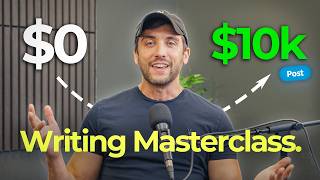
Nicolas Cole and Dickie Bush teach how to build a daily writing habit, pick platforms that fit your goals, and capture ideas consistently. They cover scheduling, systems for idea management, and strategies to grow an audience and make money from writing.
Boom.
Welcome in y'. All. It is start writing online in 25, 20. 25 day. Cole, how are we doing?
I'm ready to start writing. I'm ready to start writing online. I'll tell you that.
I am too, man. Whether you want to use AI or not, we're going to cover everything you need today to build a daily writing habit and start writing online before the year is over.
Let's dive in.
We got a lot to cover. Let's start our first and most important question today. Do you currently have a daily writing habit, meaning you wrote today? Not maybe in the past, but if you wrote today, say yes. Otherwise you can say not yet because you're in the right spot. If so, not yet. Not yet. A lot of yeses. Not yet. Four out of seven days. Okay. Not too bad. Well, if you already are, we're going to help reinforce that habit today. If you're not writing yet, we put not yet because instead of no. Because by the end of this session, you will have everything you need to build a daily writing habit.
The follow up question is, why are you here? What is your goal? Are you trying to start writing online because you want to connect with like minded people? You want to build a network? Is it? You understand the power of building an audience. You want to build an audience for yourself, for your own products, maybe for your own business, for a service that you provide, that you want to provide. Or is your goal to make money? You're like, I want to finally not just start writing online, but I want to make money from my writing. And there's lots of different ways that you can make money from your writing.
A bunch of people say all three, and I think they might go in that order, right? Build a network. That network helps you build an audience. That audience you can then monetize. That's the path that both you and I have taken, Cole, and I think a lot of other people want to take that path as well, which again means you are in the right place.
You know, if you've, if you've ever joined a free masterclass or a free training or anything on the Internet before, and you know that feeling where you show up and then they basically just spend the whole time telling you to follow your passion and you can do it and you know, don't stop believing, that's not very helpful. And we don't, we don't like that. And so what we, what we do here and what we prefer is we'd like to get as actionable and tactical as possible. So we're going to cover three big things today. The first is how to build a daily writing habit. How to get in the habit of writing every single day. Couple little tricks that have worked for both me and Dickie. You know, we've been writing every day for however many years now. Years and years and years. And so we've learned a thing or two about how to build that consistent habit that we want to share. Second is where you should be writing in 2025. I think this is one of the most important things that we're going to talk about, because where you publish your writing is just as important as the writing itself. And then third, we're going to share a really cool framework of ours to help you generate your first 30 high quality content ideas. And this is one of those things that is so unbelievably simple, but everyone makes it complicated. And when we walk through this framework, you're going to realize that it doesn't matter what topic you want to write about, doesn't matter what your niche is. You can write about any single topic or niche hundreds and hundreds and hundreds of different ways. And we're going to show you how to do that by generating the first 30. That sound good?
All right, well, we'll spend two minutes on just introducing ourselves because I know we have a lot of people here. Cole, you want to give the people a one minute background on who you are and why they should listen to you about writing?
Yeah, I want to get into the good stuff, so I'm going to breeze through this. I'm a former ad agency copywriter making minimum wage writing taglines for brands in Chicago, probably because my college degree is in fiction writing. Graduated with no idea how I was ever going to become a full time writer and make money from writing. So I went on a journey to figure it out. Nobody sat me down and explained it. I had to figure it out on my own. And six years later, I became one of the most read writers on the Internet. I've broken all sorts of different writing records on all sorts of different platforms over the past 15 years. Generated over a billion views on my content. At this point, hundreds of thousands of followers. I've also written 10 books. A lot of people. Has anyone here read the art and business of online writing? That has become the entry point for a lot of people into the world of writing on the Internet. Half of it. Okay, good. Well, you got to get through the other half. Awesome. Thanks everyone who's grabbed a copy. And I get emails every day from people saying this has helped me so much. So I really appreciate that. I also spent many years being a ghostwriter for hundreds of different Silicon Valley founders and C Suite executives. I've also ghostwritten for Grammy winning musicians, Olympic athletes, New York Times best selling authors, you name it. And I was also one of Inc. Magazine's top 10 columnists. I've gotten to interview people like Kevin O' Leary and Mark Cuban, which is pretty cool. And most importantly though, all that's fun and it's been, it's been a journey, but I am really on a mission to help a million people make a living by writing online. And that's what Dickie and I are all about. And all of our writing programs are really here to help a million people start writing online.
All right, well, like we said, Cole is the de facto number one person on the Internet. ChatGPT even agrees to listen to about digital writing. I am also up there, but nowhere near as qualified. My name is Dicky Bush. Yes, everyone does call me that. I did not study fiction writing. I actually studied operations research and financial engineering, which is quite different than writing on the Internet. But that job or that major led me to take a job at BlackRock, which I thought was going to be my dream job. For a long time. I was a hedge fund trader. This is actually for my first day. You can see here I am in my polo shirt, ready to rock and roll, walking to work in midtown Manhattan. And this was about five years ago now. And in that first year, I realized that was not what I wanted to do with the rest of my life. And so I started to plot my escape. And that led me to want to figure out how do I passively let new opportunities come my way without having to go quit my job immediately and jump into this big ocean that I had no clue what, how and where else I could go. So I started to write a weekly newsletter every week for 52 weeks. That led me to start writing on Twitter, which is now known as X. And as you can see here, this Tweet is about 5 years old now. And it was when I hit my first 100 followers. So July 29, 2020 first, 100 followers. And that led me into writing for some prolific people who started to pay attention to what I wrote. I became a ghostwriter for some successful other ad agency copywriters and a bunch of people who wanted to build their brand. That led me to meet Cole via cold email here. So you can see, this says Nicholas Cole, Dicky Bush connect. Back in October 2020, that connection led me to eventually build Ship 30, which is into what it's become now. So if I paint this picture of every single good thing that's happened in my life for the last five years, I can point it all back to the single habit of riding on the Internet every day. And so you can see this was back in November 3, 2020. The origin of ship 30 was I started to write every day, realized I needed community around me to do so, and asked if anyone wanted to be a part of that. Everything accelerated from that tweet right there. And we have some people here today who are part of that original cohort. It became one of the fastest growing writing programs on the Internet. And since then we've run 21 cohorts. Been a lot of fun. I've been writing all over Twitter, LinkedIn, substack, three threads, everything. Couple hundred thousand followers on all of them. All back to the simple habit of writing every day. So, yes, I did leave that job at BlackRock as well because of my writing. So all that to say, writing every day changed my life. Writing every day changed Cole, changed Cole's life. And that's why we're going to give a lots of information on how you guys can do the same thing. Because everything good happens once you start putting your ideas out there.
Yep. Here are some of the good things that happen as a result of writing on the Internet. And it's one of those things that I think is we have a saying internally that is everyone says it doesn't work for them until it works for them. And the moment that it works for you, you go, oh, this thing works? Well, yeah, of course it works. It works for everybody until it works for you. Okay. And so writing on the Internet is one of those extremely simple habits that you don't realize can lead to every single opportunity that you desire in life. Outcomes of writing daily are, first, it helps you clarify your own thinking. If you can't write it, that means you don't understand it. So it's very easy to sit there and go, oh, I know how to do this. Or I understand that. But it's not until you have to put pen to paper or fingers to keys that you realize, wait, I actually don't have as much clarity as I thought. It also allows you to connect with like minded people all over the world. Dickie and I got introduced and were Internet friends for like eight months. We were business partners for like eight months before we had even met up together. In real life, you never know who you're going to get introduced To Dickie, do you remember, like, Our last ship? 30 cohort. How many different countries did we have of people?
30. At least 30.
All over the world.
Mm.
All over the world. It also allows you to build your network of opportunities. The more that you write. This is. This is what people don't understand about how building a library of content on the Internet works. The more that you write on the Internet, you are effectively scaling yourself. Your footprint grows and grows and grows. And so the people who have the largest libraries, it's no wonder that they attract the most opportunity because they have the widest footprint, they have the widest web. And so the more that you build your library, the more opportunities you inherently attract. It also allows you to unlock new revenue streams. Oh, go ahead, Dickie.
No, I was going to say on the building a network of opportunity that one resonates with me the most because you think about when you put your ideas out on the Internet, you're basically unlocking an army of robots to work for you for free 24, 7 for the rest of time, spreading all of your ideas to as many people as possible. And that didn't click with me when I was writing. I had an Internal Newsletter @BlackRock When I was working there, and I was capped at like a hundred people who would ever read it any given week. And then when I started to put them out on the unlocked Internet, they ended up reaching millions and millions of people. So I just wanted to double click on that point. Because writing is the only thing you can do for free, to take your ideas and scale them to quite literally 3 or 4 billion people. However many people are on the Internet at this point, which is just wild to think about.
Yep. And text is the easiest format to consume. You know, video, there's more friction. Audio, there's more friction. Why do you think every TikTok and Instagram reel has subtitles? Because text is always the easiest medium to consume. Writing is also one of those things where you. It's so funny. When I was studying fiction writing in college, my teachers used to say, nobody makes a living as a writer. Which I was like, okay, well then why am I here? And everyone says, nobody makes a living as a writer except all the people in the world who make a living from their writing. And more and more like, there has never been a better time in history to make money from writing. You can monetize on your own with no employees if you want. You can monetize with subscriptions, you can monetize with digital products. You can monetize With a paid newsletter, you can monetize with software as a service. If you wanted to. You could sell books. You can self publish those books. You don't even need an agent anymore. There are so many ways for you to monetize writing now. And so we fundamentally reject this idea that nobody makes a living as a writer. No, there's a gazillion different ways to make money as a writer. You just have to learn what they are and build the skills. It also positions you as an authority in your industry. Why do some people have a really easy time attracting clients and other people struggle? You know, why do some people have no problem launching new products and immediately generating revenue from a new product line? And other people struggle. The people with audiences are the ones who have it on easy mode and they're seen as the authority in their niche.
Yeah, cool. I'll do a pop quiz for everyone watching. Drop in the chat. A famous CEO or investor. That comes to mind when I ask a famous investor or stock market. Someone like that. Drop in the chat. Warren Buffett. Warren Buffett, Bill Ackman, Peter Thiel, Warren Buffett. Warren Buffett. Okay, Ray Dalio. Notice all of the people that were mentioned here actively write and publish something consistently. Peter Thiel has a book and a very popular newsletter. Right. Jeff Bezos puts out an annual letter to shareholders. Warren Buffett, annual letter to shareholders. All of these individuals, there's quite a few others who have the same level of investment track record and CEO experience, all that. But the people who put their ideas out are the ones that capture most of the attention. So that's who is seen as an authority, not the ones who actually like, despite having a ton of success, all of them, they've gained more authority through their writing than they have their actual accomplishments. So I just want to put that out there as a reason to. If you're looking to increase your authority in whatever industry you're in.
Yeah, I see. Just to put some women on the list, you should read Sarah table. She's a GP at Benchmark, one of the most well known venture funds out there. And she writes about AI and I read her newsletter all the time. It also, and this is, I think the single biggest benefit is you're able to build a library of content that works for you forever. A lot of times when people talk about writing on the Internet, they think of each individual piece of content as its own thing that only gets published. Once I wrote this thing, I published it and that's the end. And that is the completely wrong way to think about it, you have to think about everything that you write as an asset that you can reuse over and over and over again in the future. An article that you wrote eight years ago could be a YouTube video today, a long form Twitter post or Twitter thread or LinkedIn post that you wrote five years ago could be the introduction to a book you write today. There's no reason why you can't reuse the things that you write in the past. And that's one of the biggest, like, mental reframes that we try and pass along to writers in the digital age.
And writing, most importantly, is one of the few things where you can store your energy in to the future. And so if I have an idea and I put a lot of effort in it right now to write up that piece that, you know, maybe I only put on substack today, in a year, that energy comes back to me if I go, okay, I'm going to turn that into a YouTube video. And so there's no better way to invest your time on any given day for something that's going to pay you dividends in the future than building a library of content and putting your ideas out there.
Yep. So here's the big question. Who's ready? Who's ready to start, as we like to say, ready to start shipping, start writing, start publishing? We ready to ship?
Because we're going to be using a boatload of nautical references, as you guys will quickly see here as part of the Ship 30 community. Everyone uses quite a few of these. And if you don't, we promise we won't throw you overboard. All right?
We don't promise anything.
All right, let's do it, Cole. Let's start. How to write. We talked about why you should write. Everyone here believes that. But just because you know why you should doesn't know, doesn't mean you know exactly how to do it, when to do it, what time of day to do it. So what's your approach to this?
Yeah, here's the. The first big idea. You do not find time to write. Has anyone here ever tried to find time to write? And then what happens? You're like, oh, I forgot to do the laundry. And then when you finish the laundry, you're like, oh, there's dirty. There's dirty plates in the sink. I gotta wash. And. And then you finish those, and you're like, oh, my significant other's calling me. And then after that, it's like, oh, I forgot to take the dog out. You'd never find time to write because there is no time. Time is always getting eaten up by something else. Which means there's only one alternative. You have to make time to write. And what that means is you have to be the one to identify. That's why we love this little graphic here. Your sacred hours. We're going to talk about how to find your sacred hours. Because if you do not make the time and then protect that time, it's never going to happen. Doesn't matter how many times you journal about how you want to start writing more often. Doesn't matter how many friends you tell. Doesn't matter how many nights you go to sleep and you're like, oh, tomorrow it will be different. It won't. You have to identify that time and then protect it ruthlessly. And so this is the like. If you need some motivation as to why you should protect this time, it's that writing is the foundation for every other thing that you want to do. Your writing library, and that skill translates over to everything. The people who can write it can say it more clearly and more effectively. It helps you sell, it helps you teach, it helps you clarify marketing, messaging. It helps you. Every other thing that you want to do starts with writing. Because writing is how you clarify thought.
And I always feel this whenever I go on a podcast or film a video or something like that. If someone asks me a question, my mind immediately jumps to an idea that I've already written. And because I've already written it, I've already clarified it, and then I come off far more articulate than I would if I was just riffing and I had no clue what I was talking about. So a zillion reasons to write. But if your goal is to do any of these things, to eventually make videos, to eventually have a podcast, to eventually market your business, it all starts with distilling your ideas in the form of writing every single day.
So, Dickie, you want to talk about picking your sacred hours and this little framework of ours.
Yes. So, sacred hours, very simply, it's the overlap of two circles. One, what time of day are you most productive? And two, what time of day can you be least responsive? Now, when I originally made this graphic, I was 25 years old. I might have even been 24 years old, single, with quite literally no responsibility. And so I could be unresponsive all the time, and I could be productive all the time as well. But as life evolves, your sacred hours will change. Because when you can be the least responsive, will change. And honestly, when you're most productive will change. Too. But what's so nice about sacred hours are they're flexible. No matter who you are, there's a time of day where you can be unresponsive and productive. And that overlap might be bigger for some people where you have eight hours to do it, or it might be only 15 minutes and you have to do it a couple times a day. But no matter where you are, by the end of this, we want you to know what your sacred hours are so you can start to actually do your writing during that time. Otherwise you're just, it's always going to get kicked down the road. It's going to be 9pm, you haven't written yet, you go to sleep because you're tired.
Yep. So what is the most like again, simplicity. What is the most actionable thing that you can do and the most objective way that you can measure success? Here I will tell you. You go to your calendar, you send a calendar invite to yourself and then you show up for that meeting with yourself. I saw someone post in the chat, I make the time to show up to things like these. Why don't I make the time for my own writing? And here is what I, you know, I am such a firm believer and this is something we talk about internally all the time in always coming back to first principles. And everybody always wants to know, you know, what are the writing strategies, what are the writing hacks, what are the audience building hacks, what are the algorithm hacks, what are all the secrets, what are all the shortcuts? None of it matters. Zero. If you can't keep the meeting with yourself. Because we can tell you all the strategies and all the tips and all the tricks and all the everything. But if you don't have a container where you show up and actually write, then it doesn't matter, it's just us telling you things. Right? And so it's worth really anchoring in yourself and going, and if I send a meeting request to myself and I cancel, that is the first, that's the first threshold, that's the first measure for success. You don't have the container, you have to protect the container before you can fill it with knowledge, fill it with strategies, fill it with tips, fill it with all the things that we tell you will work. And so this is, you know, I think if everyone takes one thing away from this, it's do this with yourself for tomorrow and then see if you show up and see if you cancel. And that's the first problem to solve is literally just putting yourself in the chair.
So let's do this. Extremely actionable. What would be your 90 minute block if you had to pick it tomorrow that you're going to send that individual calendar invite for you? What do you have drop in the chat? What time of day? For me, I always prefer to do in the morning. Mine is always at 7am I get up a little bit before that, make a little lemon water with some salt, do a little journaling, and then I sit down and I have that 90 minute block. But see guys, morning, morning's not it. Morning is long and not precise. So within the morning, it's got to be a certain time and it's going to be different. You might have to get up a little bit earlier, you might have to cancel another meeting that's already there and put it later in the day. So I see most people here have their exact time. My challenge to you is take a second and put it in your calendar. Just put it in there. So if you have it lined up for tomorrow, it's a holiday, some people might skip it. So maybe it's Monday, I don't know. But the real riders will find a time even on holidays and send that invite to yourself. It sounds so simple and so cliche. But if you just have this on there, you actually tomorrow can become a writer. If you sit down during your 90 minute block tomorrow or Monday, whenever it is, and you write, you are officially a writer. And that type of identity shift is sometimes all it takes is one day turns into two, turns into three, turns into four, and then you've written every day for 30 days and it's like, boom. I can't believe there was ever a period of my life where I didn't do this. So props to everyone here who's actually done this small, small thing and sent that invite to yourself. So you end up showing up tomorrow or whenever that is.
Yep. Which leads to. Okay, you have the container. Now we need to fill it. And the next thing is coming up with what we like to call an idea capture system. Now here is the number one question that people ask whenever we open this door. Dickie Cole, what system do you use? I bet it's a super fancy, perfectly optimized notion dashboard that tracks every single thing you've ever written, ever. And it alphabetizes it and it numberizes it and it has a master search function. And can you please share the perfect template with us? It doesn't matter. It doesn't matter. So here I took a little screenshot. This is like six or seven folders from inside of My, my Apple Notes on my phone as, as you can see, next to book Ideas, I have 496 random notes that I've added. So, you know, I'll get around to those in my lifetime, I hope. But there is no such thing as a perfect system. It could be a notion page, it could be Apple Notes, it could be a Google Doc, it could be a physical journal, it could be a stack of note cards by your bed. It could be a text exchange with your grandma. I don't care. I don't care where you put the ideas. All that matters is that as the day goes on, you're like, hey, I've got this writing block that's coming up at 4:15. And what are some things that could potentially go in there? You get out of a meeting, there's something that you could write about. You put it inside your Apple Note, you have a conversation with a friend, you're like, oh, I should write about that. You put it inside your little idea capture system. All that matters is that it is accessible to you on the go and it is easy for you to use.
A little accountability here. So we just said a bunch of different ways you could do this. Drop in the chat. What is your simple way? Are you going to have an Apple Note? Are you going to make one big Google Document? Are you going to write them all by hand? Apple Note, Apple Note, Apple Note. Whatever the Notes app is for, Google can work too. Beautiful. All right, so just like that in the first, you know, we've probably been talking for 20 minutes now after we finished the intros. You have the time of day that you're going to write and you have a place to capture ideas. The two things that keep most people from writing are they don't know when they're going to do it and they don't know what they're going to write about. So we try to squash that immediately. So now we can get into a little bit more of the nitty gritty stuff. Because these are the basics everyone wants. The, the further down the line, like, okay, what happens? What time of day do I post on this platform? And all these other things, it's like, nope, let's get these two basic things down first, most importantly. And then we can build on that.
Yep. Which leads to everyone here notice, like, first principles, you have to have the time first. Then you have the container. You fill the container. Okay, so then we start filling the container. But then the next thing that everyone says is, all right, but Dickie Cole, I only come up with A good idea, like, once a week. So how do you start generating ideas? And the secret is to think in lists. Every single idea is a list. I'm going to say something extremely direct. If you cannot make a list of the things that you want to write about within a topic, you don't actually know what you're about to write. Everything is a list. And oftentimes people think of lists as only. Okay, I list out cities I visited or books I'm reading or habits I'm building, but everything is a list, right? Qualities that you look for in a friend. You're talking with a friend, and you're having pizza, and you're like, man. You know, I just really value, like, the friends that do. And then what do you say you list qualities? You're like, oh, I really value a friend who does. One, two, three. That is a list. If you write that list down, that is a tweet, a LinkedIn post, an atomic essay, a YouTube short. It doesn't matter. Or what about, you know, Dickie, I'm sure you've gone down this biohacking rabbit hole. Have you seen all the. I know. Daniel has one, too. Like the different kinds of teas that you can drink before bed. Like tea with salt in it.
Or, you know, all these other things. Yeah, I've started to dabble in that a little bit. But no matter what, you end up, someone asks you a question, right? So I'll give an example. Anyone here ever played Game Boy growing up? I have a Game Boy sitting here on my desk from, like, 2000. Who knows?
Wow.
And my girlfriend walks in, she's like, what's that? And I was like, oh, that's my Game Boy from, like, when I was 8 years old. And she's like, oh, that's cool. Like, did you play that a lot? And I'm like, did I play that a lot? I played it for a zillion hours. And then I go, okay, that is actually the first thing on a long list of the obsessions that have shaped my life. And most people, someone would ask a question, and it's like, oh, yeah, like, that's my Game Boy. And then go back to whatever they're doing. But once you start to think as a writer, you go, huh? How was that the first item of a list that I actually could go write a long piece about? And what are the implications of that? That I had all these different obsessions? And how about I treat my kids differently with it? And so just sharing, like, these are the ways that real prolific Writers are thinking, they go through life, and when people ask them questions or they notice something, they go, hey, what else could I talk about that's related to that? And then you seriously will never run out of ideas.
Yep. And for anyone here I see in the chat, I'm sure it's a. It's a question slash objection that a lot of people have. And you go, okay, Dickie Cole, this makes sense, but I don't want to share personal things. I don't want to talk about my life. Okay, Insert any industry on planet Earth. Sales. Okay, well, what. What five things should I do on a sales call to make sure that the person closes? Okay, knitting. I'm brand new to knitting. I go to Michael's. What seven things should I buy? Right? It doesn't matter. Music. I want to start learning classical piano. What are the five classical piano books that I should go read first? What are the three exercises that if I do every single morning, I'll warm up my fingers? Every single thing is a list. And the number one skill to build as a writer is to think in terms of lists. Okay? So with that in mind, now we continue by setting the rest of our constraint. Our constraints. And so you have, you know, the time. You're like, I sent a calendar invite to myself. I'm going to write for 30 minutes. I'm going to write for 60 minutes. Whatever it is. That's a constraint topic. That's a constraint. What am I going to write about? Really important one is length. Are you sitting down to write a tweet? Are you sitting down to write 5 tweets? Are you sitting down to write an atomic essay? Are you sitting down to write a paragraph in a book chapter? What are you writing? And whatever you're writing, that length constraint is actually what dictates a lot of the mechanisms that you should use in the writing, right? Because you're constrained to 250 characters or 300 words or whatever it is, and.
Then keep going, keep going.
The another constraint too is platform. It's like, okay, so what are you going to write for? Where is this going to live? You know? And then, of course, you have environment. If you want to build a habit, we recommend, you know, try and pick the same or similar places, right? It's like every time you sit down at your desk, you're like, oh, I know that this is my writing space, or I know this is my writing time. But the two that I think are really underrated, that a lot of people don't understand is the length and the Platform, because that is what dictates a lot of the rules that you use in whatever thing that you're about to write.
So let's use this as an example, right? If someone came in today and said, I just want to start writing, that's very vague. Like, I want to start writing. Who here might feel that way? Like, I want to do it, but I don't know where to start, I don't know what time to do it, I don't know what to write about. The goal is for you to take this and turn it into one sentence, which is, I'm going to write at 7 o' clock every morning at my desk about a certain topic. I'm going to publish them as atomic essays on LinkedIn. And that's all I do every day. And I do that for a month. And so you can see how one of those is extremely clear and you can live up to it every day versus the general vague. I just want to start writing. Far more difficult. And so what we're trying to encourage here is the only reason if you haven't started writing, it's because you haven't broken it down into extremely specific small steps. And once you do that, it actually becomes extremely straightforward. Oh, I just have to go sit down at my desk at this time. I know what I'm going to write about. I only have to do it for 90 minutes. I'm going to write 250 words and I'm going to publish it. And we'll do that for a month. And if you do that for a month, I actually promise you your life will be on a completely different trajectory than when you start.
Yep. But here's. Here's the key. Here's the key. Imperfect and published is better than perfect and unpublished. And so for everyone here, all of these things that we talk about, you could be like Dicky Cole. This all makes sense. I'm going to do it. I'm going to send the calendar invite to myself. I'm going to show up tomorrow, 3pm, I'm sitting down to write. I'm going to write an atomic essay. I'm going to post it on LinkedIn. It's going to be great. And then you finish and then you go. And then I'm going to put it on my desktop and I'm never going to share it with the world. And I promise, I promise, I promise. I have lived this. Dickie has lived this. We have gone through this so many times. The things that you think are never going to resonate with people are the ones that end up changing your life. And the things that you're like, oh, I spent 20 hours on this. Everyone's gonna love this. They're the things that flop. You have no idea. Writing on the Internet is a lottery. It's a big wheel. And every time you hit publish, you spin the wheel. And so it doesn't matter whether your inner critic loves it or hates it. Imperfect and published is always better than, quote, unquote, chasing perfection. But it stays unpublished.
Indeed. Indeed. Okay, so before we dive into where to write, quick recap. We talked about what time you're going to write. Everyone's got their sacred hours here. We talked about your note taking system, where you're just going to capture ideas that come up throughout the day. We talked about thinking in lists. And then we helped you set your daily writing habit constraint. All of those decisions are now taken care of for you. You do not have to keep making them. You just follow the plan. Now let's get a little bit more tactical here on where you should actually publish the writing so that if you spend 90 minutes every day, it's actually going somewhere where readers might end up seeing it rather than on a blog that no one ever discovers.
So this is, this might be my personal favorite section because I'm going to give everyone here a little history lesson. You know, I've been writing on the Internet for over 15 years now. I started writing on the Internet in 2007. So let's do a little history lesson. In 2008, the best places to write on the Internet were a little website called Blogger. If anyone here remembers, drop Blogger in the chat. If you remember that website. That website changed my life. I thought it was the coolest thing ever. I was 18 years old, just ripping blog posts on Blogger. Thought it was awesome. And if you didn't use Blogger and you were a little technical savvy, because it was not as easy as it is today, you might launch a WordPress site. You might use WordPress to launch your own website, launch your own blog. But there was technical proficiency involved in that. And in 2008, I was an 18 year old, so I didn't have all that figured out. So I was using Blogger. Okay. And those were the options. All right. You didn't really have many more options than that. Like, Facebook was starting to evolve, like Twitter was starting to evolve. But, like, no one even knew what to do with those platforms yet. And they weren't built for any sort of long form at all. Okay, if we Fast forward in 2016, the best places to distribute your writing on the Internet were very different. Okay. Now you had sort of entered this age of what I like to think of as social blogging. So you had sites like Medium, you had sites like Quora. And also this was sort of the golden age of writing in major publications. Like, you could become a columnist at Forbes or Inc. Or Business Insider or whatever. I'm speaking from experience. I did all three of these and generated hundreds of millions of views by using these three platforms. And the only real difference, I was 26 years old when this was going on. The only real difference was that I was choosing to publish my writing in different places than other people. So everyone else who was still on the blogger train or the WordPress train, if you were still publishing your content here in 2016, no wonder you weren't getting distribution. You weren't writing in the right places. And so this is what happens about every five to seven years, the best platforms for distributing your writing changes. The algorithms change. Sometimes platforms go under. Like Medium got sold off, and it has completely plummeted as a platform. It is not good for distribution anymore. Quora, the whole algorithm changed. The founders decided to start focusing on AI. Distribution on Quora is not important anymore. So every five to seven years, the platforms change and you need to keep up with the changing times, which is why today the best platforms for distributing your Digital writing in 2025 are X, formerly known as Twitter, LinkedIn. And now we're starting to see a lot of positive signal on Substack. Most people only know Substack as a newsletter platform, but they now have a social feed where you can share short medium form content. We're seeing a lot of traction with that. And so if you are not publishing your writing on one or two or three of these platforms right now, then you're. You're already like losing the game because you're not taking advantage of the best platforms today.
So not only are these platforms growing the attention or they're. They want to push writers more than other platforms. So yes, Instagram and Facebook and all these others do have a lot of users, but they are not investing in the distribution of writing, and that's why these are so important. So X has half a billion users. LinkedIn is the one. Personally, of the three we are the most bullish on, the most excited about, and that's where a large amount of the attention that we generate comes from. Substack is starting to accelerate as well, and a lot of prolific writers that have newsletters are also publishing social content. And getting to grow that way. So, Cole, you talk about these three, but I have a feeling there are a lot of people here who are not actively writing on these three, which again, makes it a massive beginner opportunity because we know that more and more people are going to start reading here and writing here over time.
Yep. Yeah, I see, you know, a bunch of different types of questions in the chat, but ultimately, so, so here two big things. One for everyone who's going, but what about Blue Sky? But what about Threads? But what about. But what about. But what about. That's fine, they're all options. But you do not have unlimited hours in the day. So it's not very helpful for us to say, hey, everyone, you should be writing on 15 different platforms right now. It's not helpful. What is helpful is saying, hey, everyone, we're all constrained by time. If you're going to spend your time anywhere, these are the top three. Okay?
And if you're writing on none, just pick one. That is our best piece of advice. If you're at zero, pick one. Because the beautiful part is once you write on one of them for a month, two months, six months, and you're starting to see success, you'll have a bunch of data around what your readers were actually interested in. And then when you start on a new platform, you'll be able to take some of those ideas, repost them, repurpose them, and, and then immediately start growing there as well. So you don't have to do all three at the same time. But over the long term, if you want your writing to reach the maximum number of people possible, you will take your ideas from one, put them on the other, mix them around a little bit, and then grow your library in that way.
Yep. And then the other type of question, you know, I also see is it's all platform specific questions. It's like, okay, but, yes, LinkedIn. But here's all these little questions or problems that I see with that platform. Or okay, X, yeah, but. And then here's all these things that I don't know about that platform or substack. But here's all these things I don't understand. What you have to realize is that each individual platform, think of it like a sub language. Each platform has its own rules, each platform has its own constraints, each platform has its own culture. Each platform has its own inside jokes. And so that is why it is a mistake when people go, oh, so the strategy is I just write something and I just copy paste it across every platform. Not necessarily. You are Way better off picking one and learning and immersing yourself in that platform and learning that specific sub language. And that's like one of the biggest things that we harp on and especially in our writing programs and in ship. 30 for 30 is like, you do not need to be everywhere. You need to be consistent in one place for a prolonged period of time.
And here's what's more important than platforms and why. We wanted to start with what to write about, how to write, when to write. It's where doesn't really matter over the long term. As long as you are writing, you can put them in multiple places. So what you'll find is that over the next five years, when these three platforms inevitably get replaced, if you sit around thinking, I'm not going to start writing until I know the perfect platform, you're going to get left behind. Because if you just pick one and then you sit down for 90 minutes every day and you take your ideas and you put them out there, you're going to have a large reusable library that you can put on another platform in the future. And so I just want to kill the idea for anyone here that's like, okay, none of these platforms are perfect. I'm not going to get started. Don't let that hold you back. It doesn't matter which one you pick, as long as you pick one.
Yep. And so this is the big idea. Here's why this is so important. Okay? The platforms will come and go. I've been writing on the Internet for long enough to know and have experienced that it really doesn't matter how big the platform is. There will be years where the platform is really great, it's thriving, there's a lot of distribution, and there will be other years where maybe the platform is still around, but it's just not good at distributing content anymore. The platform will change. What you have to realize is that your library, your library of content will stick with you forever. Okay? And what this allows, this is, this is one of, like, the best kept secrets in all of writing online. Okay? When a new platform comes out, the single easiest thing that you can do is go take all your proven content from wherever you've been writing and bring it over to the new platform. Okay? So if everyone remembers, I think it was about two years ago at this point, Instagram launched this new platform called Threads. Now, did Dickie and I sit down and go, hey, this new platform came out. I think we need to block an hour every day to start writing new content on this new platform. No of course not. Why would we do that? Instead, what we did was we went back through our entire libraries on Twitter X. Now we looked for all of the highest performing pieces and then we copy pasted them over to threads, and guess what happened? A lot of them performed just as well on threads. And most people actually have no idea that you can do this. It's your content. You own it. Which is why focusing on building your library is the most important thing, because you can bring that library to any new platform in the future.
Amen. So, enough platform talk. These are the. The decisions that we don't want you getting caught up on. But we did just want to recommend these three. If you're not writing on any of them, pick one. If you're already writing on a couple and you want to expand your audience to another platform, that's where we recommend expanding. But to be clear, 90% of our effort and time just go to those three platforms. So if you want to take it from us, we like to think that we know a little bit about how to write on the Internet and this is our recommendation.
Yep. So the last thing we want to leave everyone here with is this is a framework that we have been using internally for years. Excuse me. And it is about how to take one single topic and expand it into dozens and dozens and dozens of other tangential topics. Basically, how to write about the same thing over and over and over again, but always in new ways. Okay. And so we're going to do this together. All right, so this is going to be a little actionable exercise for everyone here. Drop in the chat. What is one topic that you want to start writing about online?
All right, everyone's got a topic. Movies, Trading, Tax sales. Beauty. Motorsports, Storytelling, Real estate. Can we just pause for a second and recognize how cool that is? That the power of the Internet allows us to generate a room with 928 people who seemingly all want to write about different things. But by the nature of you being interested in writing, you've put yourself on this call today in a community of other people who want the same things, just in a different area. And so you can talk to them about what they're writing about, how they approach writing, their writing habits. I just think that's so cool that you can never get this many people interested in other things in a room. But writing is that, like, universal lens that everyone can view their topic through. So just want to take a second because that's pretty cool.
Yep. Okay, so everyone has their topic. All right. And we've. We've been doing this long enough. You know, we've had over 10,000 writers go through ship 30. So we've been doing this long enough where? And I know, Dickie, you're having the same reaction. We see certain topics and we're like, oh, that's just the tip of the iceberg, my friend. You can unpack that in so many more ways. Okay, so watch how you can write about the same topic in 30 plus different ways.
Okay, Cole, before we go, let's just pause for a second. Everyone, if you have a pen or a notepad or an Apple note or something to write this down and do it actively. Highly, highly, highly recommend it, because this will be the most actionable thing that we do on today's class. So just want everyone to not just listen to what we're talking about here, but actively do it.
Awesome. Yeah, great call. Okay, so I want everyone here to take the topic that they just dropped in the chat and then expand it in these five different ways. So take the topic and then who could you write that topic for? What would their job title be? Or what would their formal title be? Or what? What sort of archetype of person would that be? For a second one is by price point. So for example, it could be by revenue, it could be by how much something costs. It could be the barrier to entry to get involved in something. Like a really great example is like you know, how to buy your first piece of real estate for $0 down. So what dollar figure could you in some way associate with that topic? Okay, the third is experience level. So topic for what sort of person? Is it for beginners? Is it for people who have been doing it for a year but are still stuck? Or is it for people who have been doing this for 10 years and they just want to improve by that last, like little 1%. The fourth is then the topic plus either an analog or digital location. So is it this topic for people in Chicago? Is it this topic for people on LinkedIn? Is it this topic for people who Browse Reddit at 2am? What is the analog or digital location? And then what is the topic? And then some sort of demographic. So it could be for a specific type of person that speaks three languages or specific sort of person in a specific age range? Is this for college students? Or is this for startup CEOs over the age of 65? Okay, so there's examples next to each one here. Anyone want to drop one of one of theirs in the chat and I'll walk through all five and I'LL show you.
Yeah, Drop your general topic and then.
Okay. Beauty. Beauty's easy. Are we talking about beauty tips? Are we talking about beauty scaling strategies for CEOs job title? Are we talking about beauty tips for CEOs trying to scale to a certain market price point? Are we talking about beauty products that are a dollar or less, or are we talking about beauty products that cost $1,000 or more experience level? Is it beauty for people who have never put on makeup before ever in their life, or beauty tips for people who are super proficient and they actually do makeup for celebrities? Dicky, I see you smiling. Anything?
I'm just smiling because watching you take a topic that someone, it's just awesome. We've been doing this for five years and watching you take a topic and say, here's beauty, here's 50 different ways you could niche down on topping talking about that topic. And I don't know who put it in the chat, but like, which one of those resonated the most? Because it's not until you start to do this niche down exercise that you actually realize you have such specific knowledge on a very specific type of beauty that once you get more specific, the reader can then say, oh, I know that's for me. Now this is makeup tips for elderly women. And that's evolved. Their makeup process has evolved significantly versus makeup tip. Makeup tips for teenagers. And it's their first time, their first set of makeup. Right. So anyway, I just think it's cool when you just start to riff on those things and when I think something cool, I, I start to smile.
Well, that's good. All right, so let's, let's drop in the chat. Everyone just do this one time. Take your topic and say who it's for. So if your topic is yoga or yoga routines, who's it for? It's for software developers. Okay, can we get even more specific? Oh, it's for software developers who work at OpenAI. Okay, so take your topic and write it as a sentence. The topic that you wrote for who?
There you go. Self improvement for people in their teens and twenties. Far better than self improvement for someone who's 60 plus. Way different problems that person faces. Way different goals that person has. There you go. Education leadership for campus leaders. Far different than if you run like a digital education or something like that. You're on campus, right? Physical location. Financial management for coaches. Awesome. Unschooling. Unschooling for who? Simona Skincare tips for pregnant women. Incredible. So much different, so much different decision making for dental students. Way different than general decision making. Right. What type of practice are you going to open? What should you major in? I don't know. Tons of stuff there. Awesome.
So this is. This is the big. The big mistake that people make is they say, I want to write about X and they give the topic, but they don't realize how many different ways you can and should unpack that topic. Like if you say you want to write about parenting. Well, the way that you write about parenting for a single mother on welfare is very different than the way you write about parenting for a mom who's married to a venture capitalist who's worth a billion dollars and has five kids, but also has eight nannies and a yacht. Right. So you don't just say, I write about a topic. You have to realize that that topic can be tailored to lots of different types of specific situations, specific people, specific demographics. Now here's where things get crazy here, Cole.
Before we get there, I know we have a bunch more different ways to niche down here that we're going to talk about. Are you guys finding this useful? I just want a quick temp check in the chat. Is everyone's, like, brain spinning the right way? Ideas starting to churn? Awesome. Okay, just want to. Just want to make sure we're on the right track here because I see a lot of people's heads are nodding, but just love to hear it. Awesome. Thanks, guys. I appreciate it. I saw.
I saw somebody say this isn't live.
Not live.
Yeah, that's how good. That's how good we've gotten at is.
Yeah. Who said it? Who said it? We can call out their name, and that's actually planted to show that it's not live. Now this is live, folks.
It's Thursday, July 3rd at 11:58 Pacific Time. There you go.
All right, let's keep going. We got. We got more to get through.
Now here's. Here's where things get crazy is you can take just one of these. Okay, so to recap, you can take just one of these. Topic plus specific job title or topic plus price plan, or topic plus experience level. Okay. You can take just one and then start expanding it in 5, 10, 20 other ways, which is. And what is the biggest problem that that sort of person has? Right? So if you're saying I write about not just marketing, but marketing tips for CEOs of $10 million E commerce companies. Well, CEOs of $10 million E commerce Companies have lots of different problems. And so every individual problem also becomes a new topic. It also becomes a New thing to write about. So you say it's, you know, here's marketing tips for CEOs of $10 million companies specifically to solve high customer churn. Solving high customer churn is a different topic. It's a different piece than how to stop losing money on Instagram ads, which is a different piece than how to be less organic or dependent on organic content, which is a different piece than avoiding hiring the wrong marketing director. Okay, so the next little exercise here is take your topic and take your and who is it for? And then add on and what problem does that person have? So it's not just yoga routines for software developers. It's not just yoga routines for software developers who work at OpenAI. It's yoga routines for software developers with back pain. That is the specific problem. Does that make sense?
See? Let's see some examples. Right, so you have your topic, astrology or astronomy for software engineers. Astronomy for software engineers. To do what? To learn about the way the stars are arranged to connect it to astrology. These are all different problems that you can help solve. And if you take nothing else from this, that this entire presentation today, if your writing solves a problem, people will read it, period. And so when you start problems first, you can then create solutions for the reader. And by having a specific topic with a specific type of person, you can start to get more specific on what types of problem that person faces. And then writing becomes just answering things that are extremely obvious to you that you don't think are worth writing, but are extremely or are extremely valuable if you went back a couple years before you gathered all that knowledge. Right? So I'm seeing a lot of people have some breakthroughs here, and that's really exciting for us.
I just saw someone. Okay, so someone said, how would you do this for script writing? Here's the thing. Everyone, every single person thinks, okay, this makes sense, but I don't understand how this works for my niche. I don't understand how this works for my topic. I promise you, this is just a skill, and it's a very easy skill to build. And it works for every single topic on planet Earth. It does not matter. I have gone through this exercise in the most obscure topics and niches you could possibly think of. Okay, so someone asked, how would you do this for the topic of script writing? Okay, well, how about script writing routines for. For who? For college students who, what's the problem? Have never written a script before, right? It doesn't matter what the topic is. All you have to do is just walk through These couple simple steps and you realize, wait, I'm not just writing about overarching topic. I'm not just writing about script writing. I'm not just writing about parenting. I'm not just writing about real estate. I'm writing about topic for specific situation to solve specific problem.
And what I love about this exercise is every time we do it, someone drops a pretty niche topic that has clearly been niched down a couple times and they get a reply from someone who says, I'd be interested in this.
Exactly.
So DeBarga said, YouTube video content creation for beginner YouTubers that have a full time job and seemingly no time for content creation. And Dr. Steve says, I'd be interested in this. Right. But if it was just YouTube video creation, nothing about that would have resonated with him enough to leave a comment. It's just, okay, you're gonna give me broad general tips. And so if you think you're not, if you think you're being too specific, I promise you, you are not. Because, Cole, if I wrote a book that said every single thing I had to think about you, it was, you know, only for you, only for Nicholas. Cole, every single thing I thought about you, would you say, that's too specific? I'm not going to read that. Or what would you do?
I'm canceling my entire weekend and I'm going to read the entire thing cover to cover.
Right. And that's exactly what talking about a more niche, specific topic does. The person scrolls past it and goes, how did you know that that's who I am? And you're seemingly going to solve all of my problems on this very specific thing. You have a lifelong reader, customer, and probably, you know, lifelong fan.
Exactly. Now we're going to push this one step further. And this is where it all comes back to writing. The entire goal of writing is clarity of thought. And I'm going to point out something that seems so unbelievably simple and obvious, and yet it actually is like a perfect example of how writing encapsulates the skill of clarity of thought. When I went through this exercise and I asked all of you to drop in the chat topic for who and then problem, a lot of you actually wrote topic for and then positive outcome. And that is a different way of expanding topics. And so this is where it's like, if you can't have full clarity over what you are going to write in a single sentence, then I promise you, it doesn't matter how many words you write, you're still not going to Know what you're saying? 300 words, 3,000 words. You're not going to figure it out because all of the clarity happens in a single sentence. And so the other way that you can continue to expand and write about the same topic is you go, okay, I take the same topic for who? And then here's the outcome that they desire. Outcomes are different than problems. And so this is like, it's such a simple example of how when you sit down to write, it's like you have to really get clarity with yourself and go, wait, wait, wait. Am I writing this to help someone solve a problem, or am I writing this to help someone unlock an outcome? Sometimes they're the same, but oftentimes they are different. They are different pieces.
And this just goes back to reader psychology. If you're going to take an action on something, it's always because you're either moving away from pain or towards some goal. And so if your writing can help someone remove their pain or get them closer to their goal, which sometimes are the same thing, but oftentimes they're different, you're going to easily attract readers. And again, we talked a lot about some very basic, simple things that a lot of people will just, like, let go over their head. Like, oh, of course, like, write about problems. But if you take that very seriously and you just write about, you define who you're writing for, you list out their problems and the outcomes they want. You have 10 years of content. We've been talking about digital writing tips on LinkedIn and X for five years now. And every time I feel like we're just getting started, every time we publish something, I think of a new potential way to say it, or a new framework to share or a new problem to overcome. And as the world continues to evolve, the person you're writing for, they have new problems that evolve, technology evolves, that introduces new problems or introduces new goals. So just want to kind of close the loop on this whole idea of when you take your topic and you get more specific with a problem or a person or an outcome, the reader then actually understands it's for them. And then they will stop what they're doing, they'll read what you write, and the rest takes care of itself.
Yep. So as everyone here see, like this, this is a skill. This is arguably one of the most important skills, because if you can't communicate in one sentence what you're writing about, who specifically it's for, and if you're trying to have someone help them solve a problem or generate some sort of desirable outcome. If you can't say that in a sentence, what are you going to say in 500 words? What are you going to say in 5,000 words? It all comes back to being able to summarize it in that one sentence. And this is why the game, you know, so like the game is not to have one amazing idea. The game is to write about the same idea a hundred different ways over and over and over again. That is how you become known for a topic. You only become known for a topic when you write about that topic lots and lots and lots of different ways. And I can prove it. We love doing this little example. I can prove it. Can everyone please drop in the chat if you've ever heard of the author or read any of the author's books? Ryan Holiday, what does Ryan Holiday write about? Drop in the chat.
Seems like everyone knows, right?
So if you know Ryan Holiday, every single person here wrote the same exact word. Why, why does that happen? That doesn't happen because Ryan Holiday writes about lots of different things. That happens because Ryan Holiday writes books about stoicism and has a newsletter about stoicism and writes articles about stoicism and has a podcast about stoicism. And that is ultimately the entire goal of the game. And that, that, that is exactly what we show writers how to do inside of ship. 30 for 30. It's like you say you want to write about this topic, but you don't yet realize how many different ways you can unpack that topic to write about it forever. To become known for a niche you own. And that is what unlocks all of the outcomes, all of the revenue streams. Everything is when you dominate a topic.
And niche, does everyone here feel more confident in building a daily writing habit? Now you know what time of day you're going to write. You got your sacred hours, you got your note taking system, you got your constraints. So you're not just sitting down to write. You know where you're going to write, you know how long you're going to write for. Awesome. Nice. How about capturing ideas? Go ahead. Cole.
Yeah. Has everyone picked their perfect note taking dashboard system? Everyone. Everyone have their perfect template?
I think so. Or they got Apple Notes, which is good. What about where does everyone feel more clarity about where you should be writing? Did you pick a platform that maybe you haven't started to write on before? And you go, okay, maybe over the next month I go, give that a try. You know, I got some ideas here. I'm gonna pick LinkedIn and I'm just gonna go Write once a day for a month, or I'm gonna pick substack notes, and I'm gonna write once a day. I'm gonna pick X. Well, don't overthink it. Our goal would be by the end of this, you just pick one and it doesn't matter. Your customers and eventual customers will be on all of them. And so we just wanted to concisely give you the options that we most recommend, given. This is kind of what we talk about all day.
Yep. And what about what you're going to write about? Does everyone here have a little more clarity Over. Okay, it's not just topic. It's actually topic in this specific way. It's topic to help someone solve this problem. It's topic to help someone unlock this outcome. Love it.
Yep. Have a list. Knew what they were writing, but feel more clarity. A little bit more clarity. Love it. Well, do we feel this last hour was worth it? Even though it was free? Was it well worth your money? Spent all the stuff we want? Is everyone here walking out of here with a little bit more clarity, Ready to rock and roll? Ready to build your daily writing habit, Take your writing to the next level? But that's all we got for today. Have a good one. Y' all talk soon.
Yeah, Everyone, peace.
More from Nicolas



What Every Writer Gets Wrong About Their Audience #writing #creator #writingtips




