How To Write Fiction That Makes You Money (7 Steps)
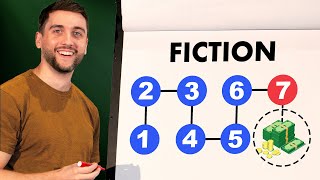
A writer breaks down seven steps to publish fiction and make money, starting with short stories, picking a niche, using Amazon, and building an audience on social media before monetizing through Patreon or email lists.
One of the most common questions I get asked is how to build an audience as a fiction writer, how to become a successful fiction writer, and quick context. I actually studied fiction in college. That's what my degree is in. But I've also spent 300 plus hours studying the fiction landscape and really trying to reverse engineer what works, what doesn't, who makes the most money, what the ideal strategy is for becoming a successful fiction writer. So that's what I want to share with you today. I've spent a lot of time over the past decade studying this. So I wanted to break this down into seven simple steps. Step one is don't try to write a novel out the gate. Start by writing shorter series or shorter stories. And the reason is because novels just take too long, it just doesn't make sense to try and iterate where the first thing that you Write is some 800 page epic, okay? And instead you can start gathering feedback and seeing what's resonating and clarifying your writing voice and the niche that you're playing in. And your story arc. You should just start with smaller stories. And I think there's a fear that fiction writers have where if they do that, you know, if they don't jump to writing some epic fantasy novel, that it's not going to be as effective. And I think a really great example to pay attention to is Hugh Howey's short story Wool. He wrote this short story, published it on Amazon, and this short story ended up becoming so successful that he went, well, I should probably just expand this into a novel. And so he did. And then that novel performed so well that he turned it into a series. And then the series performed so well that it ended up getting sold and turned into a TV show on Apple TV called Silo. And I just found out that it's like one of Apple TV's most successful series of all time. And that is such a great example of. We talk about this framework in our beginner writing program, ship 30 for 30, called Lean Writing, where you start small and then as small data points prove to be resonating, you double down on them and you expand them. And there are a lot of success stories in fiction where this is what people will do. They'll start by writing some shorter, you know, web, web serial, or like something on Wattpad or something on Royal Road or, or some sort of community where they're just building a story in public. And then because it performs well, they go, well, I'm going to turn this into a whole novel or oh, the novel Performed well, I'm going to turn that into a series. So you should take this iterative approach to your writing and not think that the path to success is you sitting alone by yourself in your apartment or your house and you slaving away on this 900 page epic fantasy. And then you go, I'm going to put out my massive vision and then it's all just going to succeed. That's a recipe for disaster and failure. So instead, take a more iterative approach and start with shorter stories. And if you don't know this, you know, Amazon has an entire subcategory specifically for this. And Amazon's department, they call it Amazon Original Stories. And these are short reads. They're typically around, you know, 10, 20,000 words or less. And they're really great stories and they invest heavily in them. And oftentimes, you know, I've done the math on it. There's a really cool tool called Publisher Rocket where you can look up the sales data on Amazon. And a lot of these short series and really short books, 10,000 words, are doing hundreds of thousands of dollars in revenue every month. It's crazy. So there's a case to be made for why would you spend all this time writing an 800 page book when you could probably make just as much money publishing something really short? And your feedback loop is tighter and it allows you to learn, it allows you to iterate, and then whatever short stories start performing well, expand those into your novels. And every time I explain this strategy, it's one of those, it's so easy to hear and then everyone ignores it. But I'm just telling you, I've studied so many successful genre fiction writers and a lot of them start this way. Step two, play in a smaller, less competitive subcategory. So I noticed that almost every fiction writer wants to start out in one of the big mega categories. They go, I want to become a mystery writer, I want to become a thriller writer, I want to become a sci fi writer, I want to become a romance writer. But you have to recognize that these mega categories have, A, been around for a very long time. There are very established writers in these mega categories and B, is they are insanely competitive at this point because there are so many people who are all trying to do that and a much easier place to start. I'm not saying that you have to abandon the thing that you want to do, but a much easier place to start is to niche down and to actually choose or ideally create a new subcategory within one of those Mega categories. So if you're really interested in writing sci fi, for example, one of the best things you can do for yourself to differentiate yourself, to position yourself uniquely, to separate yourself from competition, to dominate some sort of subcategory and become known for that niche, is to just put a clarifying word in front of the mega category. So instead of calling yourself a general sci fi writer, pick a subcategory. Can you be a Vikings sci fi writer? Right. Or a cowboy sci fi writer? You know, pick or create some sort of niche within the mega category. Same thing with romance. Don't just say, oh, I'm a romance writer. There's eight gazillion romance writers. Right? You want to pick or create a new subcategory. Can you be a. You know, I remember back in the day, I remember when military romance first came out and then now that subcategory is flooded, right? So you're always promise, it's not the story, it's not your brand, your personal brand, it's the subcategory. The subcategory is what people buy into. That's what readers are most interested in. So step two, you want to pick some sort of smaller, more specific subcategory and then you want to dominate it. You want to write within that subcategory for a very long time. You want to make it clear that you are the person who owns that subcategory. And just to plant the seed here, everything I'm explaining, you know, I've spent 300 plus hours reverse engineering all of this stuff. I've studied everything, I've read every obscure book you could possibly read about the publishing industry and about genre fiction writing. And I'm telling you that, you know, I'm planning on publishing and releasing some fiction of my own later this year. And I, you know, I studied fiction in college. I love fiction. I want to build a whole fiction empire in addition to all of the nonfiction work that I do. And I'm going to do all of this. So everything that I'm explaining to you, you will watch me execute step by step. You will see it happen in public. And the smaller subcategory that I'm going to start with is lit RPG's. I just discovered the subcategory. I'm fascinated by it. I used to be a pro gamer as a teenager. I know that I'm going to crush this category. I know I have an information advantage. I'm going to do it justice. And within that subcategory, I have ideas of how I can create new subcategories. So not only am I playing in the LITRPG subcategory, but I have other ideas for how I can niche down and create even more subcategories within that. And that's what I'm going to do. And I'm going to do that for a very long time. I'm going to write LITRPG books until it is clear that I have dominated that subcategory. And then, and only then am I going to move on to something else. And I find very often that fiction writers do not take this approach. They don't think about it this way, and instead they pick a. A mega category that is not clarified at all. It's filled with competition, and they aren't ever able to become known for a niche they own. And then B, they bounce around. They don't give themselves the long time horizon to really deploy volume in a specific subcategory. So they write one mystery story and then they're like, oh, now I want to write a sci fi story. And then, oh, I want to write a romance story. And they're, they're enthralled with this idea of being able to do it all. And you can do it all, but you have to recognize that doing it all means doing it over a very, very, very long time horizon. And you can move on to some of these other things, but the only way that you start really unlocking some of these rewards is through density. You have to dominate specific niches first before you start building and building and building. Okay, step number three, you have to treat Amazon as your primary publishing platform. So oftentimes fiction writers will ask me, you know, where should I start writing online? And that's a great question, because that is the question to ask in nonfiction. But with fiction, it's actually a little different. With nonfiction, my whole point of view and everything that I would recommend is start writing on a social platform and then leverage that social audience to something larger later. You know, direct that social traffic to an email list or a paid newsletter or a course or a coaching program or whatever it is. With fiction, it's a little different. With fiction, you are much better off treating a platform like Amazon as your primary platform, because that is where, like Kindle Unlimited is a great example of this. You have so many people looking for new things to read. And almost all of the really successful genre fiction writers, they don't really have huge social audiences. They're not great marketers. That's not where they started. Where they started was Amazon, or they started on one of these, like, niche web serial platforms like, you know, wattpad, Royal Road, whatever it is, and then they came over to Amazon later. But for the most part, they treat Amazon as the primary platform. And it's not about building some huge social audience and then driving all that traffic to Amazon. What it's about is relentlessly publishing new books and publishing those new books on Amazon. And the big decision you need to make here, this is getting a little in the weeds, but the big decision you need to make is are you going to go exclusive to Kindle Unlimited or are you going to do what's called going wide, which is you're not exclusive, you're not in Kindle Unlimited, and that's what allows you to publish on other platforms. So you can publish on Apple Books, you can publish on Kobo, you can publish on your own website. Okay? And something that I think is worth understanding about this decision is if you want to make a full time living as a serial genre fiction writer, you're like, I just want to write stories, I just want to write books, and I want to write as many of them as I possibly can. And this is what I want to do 50 hours a week for the next 40 years of my life. You are probably better off playing the Kindle Unlimited game. There are nuances to this and there are times where it would make sense to not be exclusive and to go wide. But for the most part, Kindle Unlimited is actually a publishing platform and you have hundreds of millions of readers there and they're paying a subscription. And the reason they pay to Kindle Unlimited is so that they can read everything that's in it. And so the way Kindle Unlimited works is, is you're getting paid almost like Spotify would pay an artist per stream. You're getting paid for the number of pages read on Kindle Unlimited. And so if that's what you want to do, that's the game you want to play. Because especially in a lot of these genre fiction subcategories, a lot of the readers are voracious readers. They don't want to read a book a month, they want to read a book a week or a book every three days. So that's why they're paying for Kindle Unlimited is because they want to churn through material, right? And so that's why, if you understand that that's the game that you want to play, and those are the types of readers you want to service, all you want to do is focus on publishing new material on Kindle Unlimited as often as possible. That's the game. Everything in addition to that is gravy. It's, oh, yeah, okay, great. I have a social audience, I can drive some traffic, I build a newsletter over time, I can drive some traffic. But the real core of the game is, is publishing on Amazon. And I find oftentimes fiction writers don't really understand that that's what the game is. And so it's like all of the, you can see how all these steps build on each other. What they do is they sit by themselves in their apartment and they work on their 900 page fantasy novel and they spend seven years on it and then they put it out into the world and then Amazon's like, cool, you just published your first thing. Great, we're going to go prioritize the person who's publishing a new thing every two months, right? So you have to realize that's a different game. And I would really encourage you. And again, this is the approach that I'm going to take. I would really encourage you to start with the Kindle Unlimited game and to start by really pushing volume. And then over time, you know, as your library grows, as your audience grows, as you start making money from your fiction, then maybe you can expand, be a little entrepreneurial, go to new subcategories if you want to. You can go wide and not be exclusive to Kindle Unlimited. You can pick, you want some series to be exclusive to ku, you want some series to not, and you want to sell those on your website where you might collect a little bit higher margin. Right? You can, you can choose all of those things over time. But for the average genre fiction writer who goes, I just want to make a living from my writing, you have to treat Amazon as the primary publishing platform. Now, that said, step four is you also want to build an organic following. And the platforms that I would recommend are X, formerly known as Twitter, LinkedIn and Medium. Those tend to be the best ones to leverage interest into fiction. Most people don't think about LinkedIn, but I'll explain why in a second. So a couple things that fiction writers don't really understand about audience building I found, and for many years I didn't understand this either. So that's why I want to, I want to explain this. I have found that on social, most, if not like 99%, the vast majority of successful fiction writers aren't really sharing fiction on social, and that's just because it gets consumed in a different way. And instead an approach that I have found to work really well. And I see other people doing it really well. And I think it actually opens the door for more optionality, and it allows you to make more money in different ways. The approach is actually to build social audiences around your nonfiction. And whenever I like, the moment I open this door, fiction writers just lose their minds. And they're like, I don't want to do that. Okay, but let me explain. When you are a fiction writer and when you are pursuing the craft of storytelling, you have to recognize that one of the most valuable things that you have is your approach. It is your frameworks. It's your methodology. It's how you make decisions. It's how you choose to tell your stories. It's how you choose to assemble these story arcs to. To describe characters. Right? These are all things that make you and your writing unique. And there is a massive market of people who would love to understand, especially if they love reading your fiction, how you make what you make. And I think it's helpful to imagine this in a separate industry. Ask yourself the question, would you or would you not enjoy reading or following from your favorite music artist, how they make your favorite songs? Every single person would say, I would love for them to do that. Right. Whoever you love listening to, of course you would go, I wish. I would love if on Instagram you showed reels of how you made that beat or, like, the thought process of how you assembled those lyrics. We all love the nonfiction element of creative work. We want to know how things get assembled. And I think that the best strategy for building an audience and driving traffic as a fiction writer is to actually treat social as the nonfiction. It's the. Here's how I do what I do. Let me explain my framework for storytelling. Let me break down why I built the story this way. Let me walk you through my exercise for coming up with ideas. And this is another one where you're going to watch me do this. I am going to do this publicly. You're going to start seeing more and more of me talking about fiction, and then you're gonna watch as I drive that traffic to my fiction series. Okay, so everyone thinks that this doesn't work, but I'm telling you that it works. And I see it work, and I'm. And I can already see the beginnings of it working. And someone else who does a really great job at this is Nathan Baugh. He's become a friend of mine over the years. Nathan also has aspirations of being a fiction writer, and what he's done is build a huge audience online writing about Storytelling. And in a way, it's the best double dip. Because if you're a fiction writer and you want to pursue a career of storytelling, well, then you're going to want to spend a lot of time learning about how to tell great stories, right? If you want to be a fiction writer, you're probably reading books about how to write fiction. You're probably trying to crystallize and clarify your own frameworks for writing your fiction. So every time you do that, why wouldn't you just write it down and share it with other people? You're going to do the work anyways, right? And I think that this duality of treating social as the nonfiction, here's how I do what I do, here's how I'm learning how to do this, and then driving that traffic. Because there will be a subset of people who are also interested then in reading your fiction. And driving that traffic to your fiction, I think is the best barbell. It's the best of both worlds. And when you do this, this also opens the door for you to monetize in other ways because you're building an audience around the nonfiction, which means you can monetize with. You can monetize with nonfiction books, you can monetize with a paid newsletter, you can monetize with courses, you can monetize with coaching, right? And so there's all these other ways that you could double, triple, quadruple your income as a fiction writer just by going, yeah, and I'm happy to share how I do what I do, right? So like, imagine if Brandon Sanderson had a course on how to write fantasy. You would buy it. If you love his fiction, you would buy it. And that's the thing to recognize is so as a fiction writer, you no longer have to just play the game of I only make money from my fiction. You can make a lot of money from the nonfiction side too. Step 5 Find your royal road and get some early feedback. So if you don't know, Royal Road is a website primarily where a lot of writers will write, like web serials around, like the game lit, litrpg, sci fi sort of world. There's also platforms like Wattpad, but there's also really obscure forums and websites where people will publish all sorts of niche fiction. And a model that I have seen work really well is for fiction writers to find the really niche platform like this website. Usually, usually it's not anything like super modern, it's kind of janky. But there's a lot of readers there and they just love devouring content and finding the platform that matches what you're trying to write, and then publishing very early versions of your work. And the reason isn't really to build an audience, it's not really to make money. The reason that you do that is to get feedback. Like, no one will be more brutally honest with you than if they read something for free. They're gonna like, yeah, people will give reviews if they buy a book or something, but sometimes not. Cause they're like, ah, I bought this. And I don't. I don't wanna go through all the effort of giving feedback or sharing my opinion on this. But if someone takes the time to read something for free and it's not very good, they're gonna let you know. And you see it all the time in comments on Reddit, right? So it's actually a great strategy to go find one of these platforms and publish very early versions of whatever story you're working on, no matter how raw, completely in progress, and just see what happens, like, see who comments, see what they think, start up a dialogue with people. And then as you keep writing and as you edit and as you clarify the story and as you get to a point where you're ready to publish, you can then just take those chapters down and then publish on Amazon. And actually, an interesting model that I've seen work really well specifically on Royal Road and wattpad, is people will start there, they'll get a bunch of feedback. Sometimes the series blows up and they build an audience there. That's great, but that's not really the purpose of this step. And then when they're ready to publish on Amazon, what they do is they leave up the first three chapters or whatever it is, and they leave those up basically to sort of capitalize on whatever traffic they've built. So they're like, here's the first three chapters for free. And then they just link and go. And the whole book is on Amazon. And if you go exclusive to Kindle Unlimited, there's a rule where you can't publish, you know, because you're going exclusive, you can't publish the content anywhere else online. And anywhere else that you do publish, the content has to be less than 10% of the whole book. Okay? So if your book's 100,000 words, you can't have more than 10,000 words from that book living somewhere else on the Internet. So as long as you stay under the 10% threshold, you can leave those couple free chapters up on Royal Road or wattpad or whatever platform, and then that can sort of act as a traffic driver, because people will continue to discover it on that platform and then you just link them to Amazon. So two different things that this step accomplishes. But I would really encourage you to find some place to get some early feedback. And again, going back to step four, a lot of times people think, well, maybe I can get some feedback on Medium or publishing excerpts on X or LinkedIn or whatever. And I just never really found that to be super effective. I think those platforms lend themselves much better to nonfiction, but what you can capitalize on is by leaving some of those chapters up on these platforms, getting feedback as you go along, and then sort of letting them sit there as a traffic driver. A lot of times this also works really well with SEO. For example, really successful series lit RPG series that came out of Royal Road. Now when I hear about them, I'll type it into Google and the first link that comes up is their original story on Royal Road. So then I click to there. I read the first two chapters, I'm like, oh, this is cool. And then they link me and like, oh, the full book's on Amazon. And that flow I've watched myself go through several times. And so you might as well just. That's just one more way of introducing readers to your work. Step six. You also want to build an email list and or a discord. And your two most valuable assets are going to be either this email list or discord. Because the real goal, again, it's yeah, is it great to have an audience? Yeah. Is it great to drive traffic? Yes. But the real goal is to learn. When you have a dense group of people that are willing to give you feedback, your speed of iteration is going to be very, very high. And I find it's more true in the sci fi world. But I think there's no reason why you can't apply it to any subcategory. The more that you have interactions with your ideal readers, the more you're going to improve. And specifically, the more of those readers are going to jump and want to get the next book the moment it comes out. And the reason that's important is Amazon really tracks two core metrics. Those two metrics are a how much external traffic you drive to your books. It doesn't need to be a ton of traffic. But Amazon wants to know, like, are you bringing people to Amazon? But then the second metric, which is really the more important one, is and of the number of people who come to Amazon, how many of them buy your book? So it's the conversion rate and if you, it doesn't matter if you drive a small amount of traffic if you have a high conversion rate. Amazon internalizes that and goes, oh, that when someone clicks on this book, they find it valuable and they buy it. We should show this book to more people. So it's actually the conversion rate that matters more than the pure number of page views that you drive. And so what are the best ways to accomplish that? Well, yes, it's always been an email list, but now I'm seeing more and more fiction writers do this with private Discord servers. And it allows them to interact with their readers, it allows them to share, you know, chapters in progress, it allows them to get feedback, but really it also allows them to build those relationships so that when the next book or the next short story comes out, they can alert all of those readers, and then those readers go and purchase the book. And the conversion rate is very high because they've been interacting with them via Discord email lists. It's the same idea. It's just probably a. A lower quality relationship because if you're in a Discord server with someone, you're going back and forth, you're like, you actually get to have a dialogue. Right. So I would say that step six, you know, are these things important? Is having an email list or building a Discord helpful? Yes, of course. But truthfully, it is not as important as just maintaining a high level of output and being really consistent and relentlessly publishing on a platform like Amazon. That is, that is truly the thing that moves the needle. Stuff like this is a little bit more incremental. It's something that you want over time. But it's not like, oh, I need to have this massive Discord server before I publish my first book. No, this is something that you want to build and grow over time. But the primary thing, the thing that really moves the needle is just being relentless with your output. Which leads to step seven, which is a little bit of a bonus. But another way to monetize your content is with what I like to call sidequest content. And I'm noticing a lot of fiction writers, the savvy ones, doing this on Patreon, and most of them, what they do is they have the book for sale on Amazon, and then throughout the book, at the beginning of the book, on another platform like Royal Road or Wattpad or whatever, they drive readers to their Patreon. And one of the core benefits that they put in their Patreon is you can read ahead. So especially for writers that come from, from the web novel, or web serial world. You know, these readers are voracious. They get into a story, they want to binge it. And so many are willing to pay an extra 20 bucks a month to read ahead. And that's sort of been the model. And I think that that works. But I think it also misses a lot of other opportunities. And what I would recommend and what I plan on doing is by taking this sidequest content approach where you would set up a Patreon and your stories would link to this Patreon over and over again. This works even better if you're not just writing one story or one novel or even one series, but you're really building an entire world. And in the Patreon, you're putting all the content that might not make sense to put in the stories or the books, or it's still helpful and still interesting content, but you just wouldn't really put it in there because it would bog the story down too much. So things like planet maps or backstories of characters or backstories of locations, like how did this world or this piece of this world come to be? Item lists, like, what are the items that, that someone might discover or run into in this sort of world? Word definitions, like if you're creating a new word or a new world and you are inventing a new language, or you're using all these new terms that the average person like, sort of understands, but might not perfectly understand, well, why not put together a master dictionary where you explain what all of those words mean? Right? Even side quest stories, like things that don't make their way into the core story, but would still be fun to talk about, sort of has to do with backstory. You can put those in your Patreon. And so here you're sort of double monetizing where you have the core story that gets people in the door, but then you can monetize again by just dumping all of this sidequest content behind a paywall. And I want to reinforce, like, we didn't have the technology to do this 10 years ago. It would have been very hard to set this up. And now you can set it up very, very easily. So like I said, I've spent 300 plus hours studying this. This is the exact strategy I plan on using for my fiction and I just wanted to lay it out here for you.
More from Nicolas



What Every Writer Gets Wrong About Their Audience #writing #creator #writingtips




