If I started writing on X in 2025, here’s what I would do (0 to 200k followers)
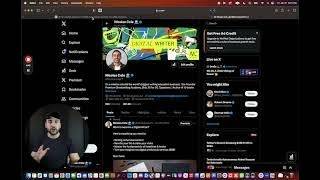
Nicholas Cole walks through how to build a following on X from scratch to 200k. Start with a specific niche, optimize your bio, build an email list alongside your audience, and adapt to what's working on the platform right now.
My name is Nicholas Cole. I'm one of the most read writers and highest paid ghostwriters in the world. And today I'm going to walk you through what I would do if I was just starting to write on X in 2025. Here's exactly what I would do. Going from a brand new account zero all the way up to, you know, right now, I just crossed around 200,000 followers on X, formerly known as Twitter. And so these are all the things that I would do if I was to create a new account. And also what I would do if I could go back if I had to start over, you know, because I've. I've been playing this game for a long time. I've been writing on the Internet for over a decade. So these are just a couple of the steps that I would really encourage you to go through. These are the same mistakes I see beginners make over and over and over again. So let's walk through them. So the first thing, step zero is if you're a total beginner, you've never written anything before on the Internet, ever. Then I know that your biggest bottleneck has to do with some sort of faulty belief and, or uncertainty. Okay? It really doesn't. We can't even talk about the writing yet because you're swirling around in all of these. What's my niche? I don't know if people are going to like it. I don't know. A good writer. What if it doesn't go viral? What if someone comments something negative? It's all just mental, okay? And a lot of that, I mean, half of it is the faulty belief side, and the other half is just the uncertainty of not knowing what you want to write about, not knowing what you want to commit to. There's this identity question. You know, I don't want to pick one thing and then be locked in for the rest of my life. I've mentored thousands and thousands of writers, so I'm very familiar with all of these problems. So step zero is write one thing every single day for 30 days and just see what happens, okay? Don't make it something bigger than it needs to be. Don't make it this existential. Who am I? What's my identity question? Just write whatever comes to mind. And whatever you feel compelled to write about that day, do it consistently for 30 days. This is a big reason why, you know, we started ship 30 for 30. It's our beginner writing program. And the whole purpose of the program is write for 30 days and see what happens. Because Worst case scenario, you practice and you get better. Best case scenario, you write something, you realize that you like it, or you realize other people like it, and now you have a path forward. Okay, so step zero is really all about generating ideas, gathering data, seeing what works out in the marketplace. Every time you hit publish, you're taking an idea, you're putting it out into the world, and you're seeing what happens. The other important aspect here is, is that people really have a hard time wrapping their heads around the fact that all of the rewards in any game, but especially when it comes to writing on the Internet, they all go to people who play the game the longest. I've been writing on the Internet since I was 17 years old. That was back in 2007. So I've been playing the game for a really long time. And anyone can start. Anyone can get started. Anyone can start building an audience. If they begin today. It's not like these platforms are so saturated and you're late to the party. No, Every single day, every week, every month, every year, new classes of writers and creators pop up. And so I encourage you to do that and get started, right? And so, again, one of the primary bottlenecks is that you need to build the discipline of writing and publishing every day. If you don't build that discipline, nothing else matters. I can give you all the writing hacks in the world. I can tell you all the tips, I can tell you all the strategies. But if you're not consistently doing it, then that's sort of like hiring Michael Jordan and Michael Jordan telling you, oh, and here's how you jump up in the air through the legs, oh, slam dunk. And it's like, well, you're not even going to the gym, right? You're not even getting on the court. So step zero is so much about just fundamentals, just getting going and seeing what happens. But let's assume you do that, okay? Let's assume that you're consistent. Let's assume that you're playing with things, you're putting ideas out into the world. You start noticing some data points. Now we begin. Okay, If I was to start over, step one is, and this is a mistake I made, this is a mistake I notice every. Every writer makes is thinking that you can write really well about multiple different things. And oftentimes what writers do is they want to put in their bio and they want to say, you know, I write about real estate and investing and private equity and global markets, or I write about personal development, health and wellness, and psychology and what they fail to realize is that each of the things that they're listing out are none of those are niches. Each of those are mega categories. Like, personal development is one of the biggest categories in the entire world, right? Health and wellness, one of the biggest categories in the entire world. These are not niches. These are mega categories. So already, if you were to pick one mega category, you wouldn't be able to own it. A mega category encompasses 10, 20, 50, 100, 1000 niches. They all bubble up inside of it. So not only is one mega category probably too big, but you go and you list multiple mega categories, and it is impossible. It is impossible to write well about multiple mega categories. And. And it's also impossible to become known for any of them when you say you do everything. And this is fundamentally one of the biggest mistakes that writers make is they try and say that they can write something for everyone, and in reality, they end up writing something for no one. Okay? And so not only do you want to not pick a single mega category, but you want to try and find a subtopic or a niche within that mega category. Okay? So, for example, I don't say I write about all types of writing. I say I write about digital writing. And now over the years, because we've built different businesses and things, I say I write about digital writing and ghost writing, okay? Those are two very specific niches. I don't say I write about all writing. And I can help everyone from the beginner all the way to the person who's working on the next Pulitzer Prize winning novel. It's very hard. It's very hard to encapsulate that many different niches. And so all roads lead back to you want to pick a topic and then I would strongly encourage you to commit to it for at least a year. Another massive mistake that writers make is they think that, you know, they try something and then it doesn't work, and then they pivot a week later and then they try a different thing, and then, oh, I didn't become overnight famous, and then they pivot and they try something different, and you're not allowing any compounding to happen. Okay? So if I was to start over, if I was to create a blank X account, I would pick a sub niche in writing because that's what I enjoy writing about. I enjoy writing about writing and the art of that and the business of that, right? And I would pick a very specific sub niche and I would just make all of my content centered around that specific niche. It's all I would do. Because it's way better to become known for a specific niche than it is to try and say, I write about everything for everyone. And the other reason I would say commit for at least a year is because a. A year is not a long time. And the whole secret is that you have to learn how to build a valuable library in one specific niche. I guarantee you that I could go pick just about any niche I wanted tomorrow and I would be able to build it better than the average writer, because I've already spent years, years and years and years figuring out how to do that well within one niche. So once you build the skill of learning how to do it once, you can replicate it over and over and over again. If you don't build the skill of doing it once and you don't understand what it means to commit to a niche for an extended period of time, you are never going to learn how to duplicate it into other niches if you want to pivot later. Okay? So you have to commit for a meaningful period of time, and I would just earmark a year. Okay, Step two. The second thing is out the gate. One of the most important parts about writing on a social platform is this little one, two sentence bio. The reason and the metaphor I like to use is this is like beachfront real estate. This is some of the most valuable real estate on your entire profile. It's the first thing that people see. And the mistake that a lot of writers make is they take their most valuable real estate and they fill it with something irrelevant. They fill it with something clever. So they write something like, you know, oh, I want to signal that I'm a mysterious writer. And they'll be like, you know, you can catch me inside on a Friday night, just me, my dog, and a cup of coffee. And you're like, I have no idea what you do. I have no idea what value you provide me, the reader, okay? And so the way that you need to think about your bio is that it has nothing to do with you. It has everything to do with what you are going to give the reader, okay? And so you can signal that in a bunch of different ways. So you can either signal that by saying, this is what I write about. So a very early, like, V1 of a bio that we train writers on in. In ship 3430 and inside our premium ghostwriting academy, for example, is you would say something like, I write about, let's say, ghostwriting for fintech entrepreneurs, if that was your niche. Right? Or I ghostwrite educational email courses for real estate agents, it's like, what do you do for the target reader? What do you write about for the target reader? Okay, this is how my bio was for a very long time. You could also Maybe like a V2 is what are you on a mission to do? Right. I'm on a mission to. And it's like, help specific person achieve specific outcome or build a business that solves a specific problem, achieves a specific outcome, helps a certain type of person. Right. When you signal I am on a mission. Two, again, yes, it's an I statement, but it's actually not about you. It's telling the target reader, hey, I am actively building something that would be for you. It weeds people out. You're either interested in that mission or you're not. A third component is the credibility component. So I have built two companies in this niche, or I've helped, you know, a thousand teachers get started doing XYZ, or I've generated $5 million in sales revenue or whatever thing that you could put there that would be relevant to the first or second point that I just talked about. Okay, so all of these are the things that you want to think about with your bio. But the overarching takeaway is that your bio is not about you. Your bio is about the value that you can provide to the reader. And that's why it goes back to step one. The more specific the topic that you pick, the more specific the type of reader that you're going to speak to. And if you don't have this congruence and this specificity, it's going to be very hard to build an audience. Everyone thinks that the secret to building an audience is to going really, really wide. And that's not actually the secret. The secret is to become known for a niche that you own and then attract all of those types of people. And they're going to consume your content way more than the average person, because they're going to be obsessed with. With the topic that you've picked to write about. And then they're going to tag other people that are interested in it, or their algorithm is going to feed it to other people who consume that same type of content. Right. It becomes so much more condensed. And that's what you want. You don't want to try and say, oh, I write everything for everyone. And then as a result, you don't attract anyone specific. Okay, so the bio is a really, really important piece of the puzzle. Step three, another big mistake I notice that a lot of writers or content creators make is they don't start capturing people's email addresses from the very beginning. So what they do is they think I need to build a big audience and then I will come up with some sort of email capture and or paid offer. It could be a digital product, they could launch a service, whatever it is. And I find that there's always this fear in wanting to either collect emails or monetize, thinking I need to get to a certain point, I'm not there yet. And I can tell you, because I've mentored thousands and thousands of writers, is whenever I ask them to define for me what is the actual milestone, you say you're not there yet. So at what point will you be ready? They can't tell me. And that always shows me that there is no one right answer where you say, oh, once I cross this level, then I'm equipped, then I'm a quote unquote expert, then I'm ready. What it is, is it's a way of people giving themselves perm to not take action. It's the card they give themselves to just keep swiping and being like, I don't have to do that yet, I don't have to do that yet. And in reality, what they're really doing is they're covering up some sort of faulty belief or some sort of internal objection that they have going. I don't feel comfortable doing this or I don't want to do this yet. And it is always wrong. It's wrong. If I could go back and do anything different, it would be starting to collect emails way earlier in the process. Okay. Because chances are if you want to start writing ON X or LinkedIn or any major social platform, you probably want to do it to achieve some sort of monetary goal. Whether that's you want to build a big business or you just want to launch a digital product and make an extra, you know, couple hundred, couple thousand dollars per month, or you just want to, you know, build an audience and then start a ghostwriting side hustle. Right? It doesn't really matter, but chances are it all ladders up to something monetary. And so if that's true, then you should start collecting emails day one. And so again, this is where the congruence comes into play. The more specific the topic, the more specific the reader, the easier it will be for you to create a relevant pinned asset. So here you can see there's this pinned post at the top of my profile. And here, if you click on this, this basically is like a thread of all these different assets that I Give writers to get started. You know, it's like, here's this SaaS platform that I'm a co founder in, Typeshare. If you want templates, go play with that. If you're new to writing on the Internet, here's an ultimate guide. You click here. Oh, that's where I type in my email. Great. This is by the way, the top of our funnel into ship 30 for 30. Oh, you haven't read my book. Here's my book on all things digital writing, the art and business of online writing. You know, you want to practice in public, you should come join us on ship 30. You know, are you interested in using AI? Writing with AI? Check out our newsletter over here. Right. So obviously this is, this makes more sense for me now because I've been doing this for a very long time and I have lots of different businesses and business verticals built in these different sub niches of digital writing and ghostwriting. But you would, you know, same thing, ghostwriting. Here's an opt in for getting started as a ghostwriter. Type in your email. Right. This is the top of our funnel for our premium ghostwriting academy. So for you as a beginner, it would be one of these, you know, you would go build something like this. Just one opt in for the specific reader that you're trying to reach that is related to the specific topic that you're digging into. And I would pin it straight to the top of your profile here. Okay. And so what this means is that as your audience starts to grow on X, you're gonna start collecting these emails day one. And the beauty of that is it basically means that the entire time you're building your audience, you're also building a list of future potential customers. And it's like, why not? Like, why, why would you want to wait until you have a bigger audience on a social platform when you could have been collecting emails the whole way up? This was one of the biggest mistakes I made. And I see writers make it every single day. I see creators make it every single day. So I would not, I would not postpone that. I would do that immediately. Fourth, the way that you accelerate the capturing of emails is there's a tool called hypefury. And hypefury has a really cool auto plug. Here's a good example. So you can set up an auto plug that is essentially like a pre written comment. So you can set this up inside your own hypefury account. And so when you have certain posts meet certain thresholds so you could set it, you Know to I only want the auto plug to go out if a post gets 50 likes or more or 20 likes or more or a hundred likes or more, right. You can set the threshold and then what it does is it auto plugs a comment or a follow up post like this that is a CTA to and you can add in a link or you could add in whatever you want. You could add in a link to another thing that you've written. I would encourage you to use it for your opt in. And so what this does is this creates a little flywheel where every time you write you can set a constraint in hypefury of if the post performs well, I want you to auto plug but my opt in right or my pinned asset. And what this means is that every time posts start to perform well, you're going to get that opt in in front of more and new readers, which accelerates the growth of your email list. Right. Which inherently creates Runway for hey, I'm building a list of all my future potential customers. And this is what every top creator does. If you're not doing this on X, you are missing out massively because this is how we build and fuel all of our funnels. This is what every other top creator does. Look up anybody like they are using some version of this. And so you want to the same way that you think about building your audience as you write on X, you also want to build your email list. And your email list is really what allows you to then go build some sort of digital business and or monetize. It is very, very hard to monetize when you don't have the email list in the middle. And a lot of times writers and creators think, well, if I start writing on X or LinkedIn, I'll build a huge audience and then one day I'll make a post and then I'll sell a bunch of products or services. And that's actually not how it works. The most effective way to sell digital products or services is to get people on an email list so that you go from social platform to email list and then you nurture them into buying some sort of digital product or service. So you're going to have to do this eventually if you have any sort of monetary goal. So you might as well just start building the list as you build your social following. And then step five, I'll cover digital product monetization and service monetization in another video. So if you're just talking audience growth, then one of the best things that you can do is to Pay attention to how things change on every platform. So I started writing on the Internet in 2007. I started writing on Quora in 2013. Back then in 2013, you could sneeze on Quora and get a hundred thousand views. It was a very up and coming platform. Nobody knew like what it was at the time. I was pretty early to it. I took advantage of it. I became one of their highest viewed and most read writers. I think in 2014 or 2015, I forget which year, I was the number one most read writer on the entire platform. And then three years later, Quora's algorithm changed and their priority list changed and the sort of product they were building changed. And Quora wasn't the same opportunity. So Quora fell off. And then I moved over to medium. And in 2016, 2017, 2018, I was one of the most read writers on Medium. And at the time they had a really cool paywall program where you could post. I mean, they still have it, but this is when it was very lucrative because they had just rolled it out and you could post content behind their paywall and you would get paid the same way that an artist gets paid on Spotify. So artists get paid per stream on Spotify. You would get paid per read on Medium, essentially paid per read, I guess I should say. And in 2017, 2018, it was incredibly lucrative. And what I did, because I had been writing on Quora for so long, is I took all my viral answers from Quora and I just reposted them behind the paywall on Medium. And I performed so well behind Medium's paywall that in 2018, they paid me out something like $150,000. I was making like 10, 15 grand a month just republishing old content from Quora behind Medium's paywall. And it was awesome. I was like, oh, I hit the jackpot. This is great. And then a year later, they changed the way that the payout structure worked and the algorithm worked and views fell off a cliff and payouts fell off a cliff. And then now today, a couple years later, I think Medium makes me like a hundred bucks a month. So I share this story because. And then I guess just to finish it, I mean, I started writing on X, formerly known as Twitter, in like 2020, 2021. If you were writing threads on Twitter in 2021, it was not hard to go viral. It was not hard to get a million views on a thread. 2022, 2023, that changed. And then all of a sudden, threads weren't going viral anymore. So my point is, why I'm sharing these stories is that as time goes on, there will always be 1, 2, 3 big text based writing social platforms. But the rules are constantly changing and the formats are constantly changing. And one day it's Quora Answers and the next day it's medium articles and the next day it's Twitter threads and the next day it's carousels on LinkedIn. Right. And so your job is to constantly pay attention to what's working. And it really is not that hard. People think like, oh, I need to go download some fancy tool or buy some SaaS subscription or whatever to get advanced insights. No you don't. What you need to do is whenever you open any given platform and you're scrolling through it as a consumer, pay attention to what's in your feed. Because if it's in your feed, it's in your feed for a reason. And especially on X, you know, posts now, they show you the data underneath it. I mean everyone can see like you can see the likes and the retweets and the comments and more recently they added so you can see the views. And so it doesn't take a rocket surgeon to scroll through a feed and go, oh, that's really interesting. In my feed I noticed this same sort of format keeps popping up. Okay, well if you want to capitalize on whatever's working at that given time, you should mimic the format. And the thing that people misunderstand whenever I explain this is I'm not saying copy the content, I'm saying copy the format. I'm not saying to say the same thing. I'm saying look at how they're framing it, look at how they're constructing it. And then what you want to do is you want to use that format in your niche. So I might see someone who writes a so on on X, for example. There, there's a. We just did this. And I'll give you a great example. Okay, so lately there's been this trend on X, there's been this format where people will do profiles on people. If you've spent any time on X, then you've seen this, I know you've seen this. And a lot of the threads that go viral now are, you know, this person name. You probably don't know who they are, but they played a hand in some major thing that you recognize. You know, here's the story of this person that you've never heard of but had a massive impact on you and your life, right? So it's like a Profile, sort of thread. So I saw that, or whenever I see these formats working, and my first thought is, okay, the format is working. Now how do I apply that to my niche? And so my niche is digital writing, storytelling, ghost writing, copywriting, like that sort of sphere, right? So when I'm coming up with thread ideas, I'm not thinking, oh, let me do a profile on anyone, right? Because if I do a profile on anyone, then that's not helping me build my niche, right? That's not building my authority in around a specific topic. So what I do is I think about people or unconventional people that I could tie to the topics that I write about most often. And that is the whole game is you're looking for viral formats, but you're tailoring them to the specific topic that you want to write about. And this probably is the thing that has the biggest impact on audience growth. All of these other things are, you know, like consistency. Pick one thing, become known for a niche you own. Clear, not clever. Like, don't be confusing. If the reader's confused, they're just going to leave. They're not going to sit there and figure it out, okay? So tell them what you can help them with and why they should give you their attention. Step three, collect emails on the way up. Right. Step four, if you want to collect a lot of emails on the way up, use this auto plug. Right? But step five, the thing that will have the biggest impact on audience growth is finding the viral formats of the moment, but tailoring them to your category, to your topic, to your niche. All right, so if I was starting over, I'm telling you, like, These are the five things that I would do. And this is 99% of the game. And it's not like I'm withholding the 1%. I'm just saying everything else is incremental. It doesn't move the needle as much as these five things. So if you want to get started writing on X this year, in 2025, this is exactly what I would do. I would encourage you to go make an account. X and LinkedIn are the two best writing platforms on the Internet right now. They give the best distribution. I would really encourage you to start writing and make use of them. And these are the things that if you go execute, you will be successful.
More from Nicolas



What Every Writer Gets Wrong About Their Audience #writing #creator #writingtips




