Self-Publishing A Book On Amazon vs Traditional & Best Book Marketing Strategies (AMA #1)
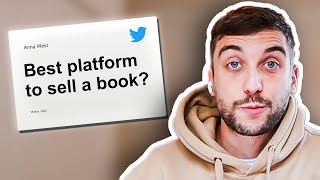
Adam compares self-publishing on Amazon to traditional publishing and shares practical marketing strategies for authors. He covers costs, timelines, and what actually works to sell books in a crowded market.
What's up digital writers? Today we are going to be talking self publishing. I put out this AMA on Twitter asking for you to send me your self publishing questions. This is a topic I'm super passionate about. A lot of writers get led astray, especially early in their careers by signing book contracts. That's not to say that all book contracts are bad. I just tend to believe that many writers sign them prematurely. And if you are going to go the route of traditional publishing, you should do so when you, you are the one who has all the leverage. Because then you can actually get a book contract that benefits you versus signing a book contract that disproportionately benefits the publisher. So today we're going to dig into a handful of questions, things that people asked. Also just some topics that I'm really passionate about in terms of self publishing and things that I think will benefit you. It's important to know these things, especially if you want to go the self publishing route or even just become a writer. For context. Everything that I've written has been self published to date. The big books were my first book, which was a memoir, Confessions of a Teenage Gamer, self published that back in 2016. My best selling book to date, the Art and Business of Online Writing, self published I think that was in 2020. And then three big books with Category Pirates, Snow Leopard, the Category Design Toolkit and A Marketer's Guide to Category Design. All of those were self published. I've sold tens of thousands of copies of self published books. And I think the biggest benefit to self publishing is just how much control you have over it. One of the big misunderstandings is that self publishing is really expensive or that you have to do all of it. Your most people don't really know that. Amazon fulfills all of those orders. So it's all print on demand. So how it works is you upload your manuscript, which is just a PDF. There's free tools that you can use to do this. You set the price of your book, both ebook and print. And every time someone orders a print book, Amazon basically just runs the print cost. So say the print cost of Your book is $3.50. Every time someone buys your book for 10 bucks or 12 bucks or 15 bucks, Amazon prints it, ships it to them and just subtracts the $3.50 because that's their cost for printing it. And then on top of that they take their margin split. So the remaining amount minus the print cost, it's something like 65, 70% of it. They take 30% and that's the split. And you don't have to worry about housing the inventory. You don't have to worry about carrying books to UPS and shipping them out. It's all just print on demand. So it's actually a lot easier than, than people think. So I'm going to go through. I posted this on Twitter. There's a bunch of questions that people have. I'll just kind of go down the list and we'll see what we can cover. The first one is Adam, what is the most important thing to unlearn before writing and self publishing your own book? So it took me four years to write my first book. It was a memoir about my years as a teenage gamer. I was a pro World of Warcraft player when I was 17 years old, and I really wanted to write this memoir about the coming of age experience of that. It was, I thought it was a really unique thing where I didn't know I had celiac disease till I was 18. I was really sick growing up. I was a loner and had a really hard time fitting in school. And then I would come home from school and I was this Internet celebrity in the World of Warcraft and it felt like I was living two different lives. And it was very much a coming of age story for me. I studied fiction writing in college. One of the classes that I took was, I'm pretty sure it was literally called like Coming of age Stories. I really fell in love with that structure. I thought it was really cool. And I wanted my first book to be a memoir. I just loved the genre and I spent four years on it. It definitely leaned more artistic than educational. And the book was okay. I mean, I published it when I was 26 and I didn't have a lot of money and I could only do so much in terms of marketing. And I think it sold a couple thousand copies and it was by no means a grand slam home run. Part of the challenging takeaway for me was learning that there's a big difference between writing a book that you want to write versus writing a book that your reader is telling you they want to read. So the unlearning thing is when you sit down to write, you have to be aware in yourself of which goal are you aiming toward. And they both are valuable in different ways. I love the fact that I wrote that first book. It's probably one of the things that I'm most proud of. I know that I will value it and cherish it for the rest of my life. But I also am not naive to the fact that never going to sell as many copies as, like, the art and business of online writing. Two different audiences, two different goals for the book. And I noticed this with a lot of writers where they don't. They don't have clarity over which goal they're going after. Are you writing this book because you genuinely want to write it and it's just something that you want to get out and put out into the world? Or are you writing the book because you see that there's a question that someone has? That someone is probably more than one person. There's lots of people. You see how your book can answer that question. It's an educational resource. It's easier to rationalize buying a book like that because the person sees it as an investment in themselves. One I see as more of a artistic, expressive goal, and the other I see as more of a educational, entrepreneurial, monetization goal. And what I notice is a lot of writers say, I'm writing this for myself. But then when it comes time to publish, they're like, well, but why aren't I getting all the sales and where's all the money and where's all the external stuff? And so they never really got clarity over which thing that they were going after. I think the thing that you would need to unlearn in yourself is understanding. There's a big difference between writing what you want to write and writing what a reader wants to read. And sometimes they end up being the same thing, but they're two very different starting points. All right, Paul asks, what are the three key ingredients that will make a successful book? So the first is, in ship 30 for 30, we talk about the 4A framework. So you have actionable, aspirational, analytical, and anthropological. So what the reader needs to know is which one is it? Is this a book that's going to teach me how to do something actionable? Is it going to inspire me aspirational? Is it going to break down why something works specifically with numbers, Analytical? Or is this going to get at the psychology of what's happening? Anthropological. Most people who try and sit down and write a book don't actually know themselves which one it is. And so what happens is they have one paragraph that's actionable and then one paragraph that's aspirational. And then they throw in some analytical, and then they also touch on some anthropological, and it ends up being this big melting pot. And the problem is, if the reader doesn't know which thing they're getting, we say this rule in ship 30, all the time is if the reader is confused, they're gone. So what happens is if a reader doesn't know, they don't sit there and try and figure it out, they just move on. So your job out the gate is to make it very clear which one of those four A's is your book. Because that is the reason why the reader is going to read it. Second is we came up with this really cool framework in Snow Leopard. We we analyzed the top 500 best selling business books of the last 20 or 30 years and we categorized all of the books based on title, subtitle and topic. And what we found is that the best selling books have this unique combination of a non obvious title with a very obvious subtitle. So the non obvious title would be like Snow Leopard, right? So you're like huh. And then the subtitle is how legendary writers create a category of one. Then you go ah. So that's the sound that you're looking for is you want the reader to read the main title and go huh? And then they read the subtitle, which is super clear, and they go ah. And there's something really satisfying about that. And what happens is, you see, like the two big mistakes would be a main title that's really obvious and then a subtitle that's really obvious. And so there's no curiosity gap. Like the reader's just going ah, ah, right? And then they just move on or the writer does double non obvious. And then the reader has no idea what they're talking about. So then the sounds are huh, huh. Right. And then they don't get it. So what you want is you want that magic combination of a little bit of non obvious to like trigger their curiosity. And then you need to resolve the chord in the subtitle so it's ah, ah, right. And then the third is this was another thing. Another part of the analysis we did in Snow Leopard is that the top two best selling book categories are personal development and personal finance. Said differently, why readers buy books, the majority buy books, especially nonfiction books, is because they want to improve their life or improve their ability to make money. And what happens is a lot of people want to write books that they think fall into one of those two categories, but they actually don't. They fall into other subcategories like leadership or functional excellence or case study. You know, you see that with business books all the time, where a company CEO is like, I want to write a book about the success of my company or the story of my company, but that has Nothing to do with the reader. And yeah, they might extract a thing here or there, but that book is always going to come second to a book that speaks directly to the reader and says, you will make your life better if you read this. You will make more money if you read this. Right? There's a reason why those two are the top selling categories. So in order to make a successful book, right? It's which are the four A's? Make that very clear to the reader. Tie the four A's to either personal development or personal finance. And then third is structure the main title and the subtitle as non obvious and obvious. So it's huh. If you can do those three things, you're already gonna outperform 99% of other writers. Because to be honest, most publishing houses don't even know what I just said. So those key ingredients are crucial. Okay, Anna asks, what's the best platform for selling the book? The obvious answer is Amazon. The biggest benefit is the print on demand ability on Amazon. So you're not the one who has to fulfill any of the print orders. It's all just Amazon printing it from their warehouse. That's if you want to do physical books. The most honest answer about self publishing is if you just want to do ebooks, you might as well just do it on your own site or a place where you have the most control. The problem with selling ebooks on Amazon is that you don't actually get any of customer the data. So you don't know who the customer is. You don't have their email, you don't have a way of interacting with them afterwards. So the pro of Amazon is you can tap into the distribution a little bit because you're, you know it's a bookstore, right, and people are searching for books and they might buy yours. The con is that you don't have any visibility over who the customer is, which means you don't have control over that relationship. So I would say if you're doing just ebooks, you want to find a way to do it on your own site or to use a platform like Gumroad, for example, where you have at least a little bit more visibility into the customer. But if you want to do print, there's a reason Amazon's the category king for that. And it's just really easy to do with print on demand. Dick asks, what's the meaning of life? Life has no defined meaning. You are the one who defines the meaning of life. Life is a game. You can choose how you want to play that game. And the longer you look to someone else to give you the a definition of life, the harder it is for you to define that purpose for yourself. Okay, Katie asks. I spoke with a publisher a few years ago about a wellness book. She said it ends up being much more expensive self publishing and that her team knows how to work the algorithms to get authors on bestseller list. Okay, so let's break a couple things down. First of all, becoming an Amazon bestseller is not hard. How it works is Amazon allows you to tag your book into different categories. And how a book becomes a number one bestseller on Amazon, like if you, if you want to game the system is all you're doing is just putting your book in a sub subcategory that has very little competition. And it doesn't matter which sub subcategory it is. There are some subcategories that are so small that if you even sell two books, you're a number one Amazon bestseller because you're a number one bestseller and in that sub, sub category, right? So when a publisher says we know how to do that, you can just google that on, you know, there's a bunch of different blogs and you just google it and they'll tell you exactly how to categorize your book on Amazon. And it's not hard. You can figure out how to do it in 10 minutes. The second thing is the larger bestseller lists, really the only two that matter if you want to play the legacy publishing game are New York Times and Wall Street Journal. Those you pretty much have to play the legacy publishing game. I'm nearly positive that it's rigged to the point where even if you sold a million copies of a self published book in the first week, those lists wouldn't recognize you because they're only tracking books that are through formal publishing houses. So just to give you a sense of the monopoly that is the traditional publishing world, that's a big reason why I historically don't really care about those titles, because it's a bit of a rigged game. But if those matter to you, then you most likely have to play the legacy publishing game. Even still, just for context, from what I've heard and from other people who have gone through the traditional route, it's expected that if you want a chance at those lists, you should be prepared to spend approximately a quarter million dollars on your book launch. It's from hiring pr, social media campaigns, setting everything up. You're going to need a handful of contractors to help you do everything, schedule all your podcast interviews. It's a lot a Lot of work. So be prepared for that to be a 6 to 12 month lift plus spending a minimum of 6 figures if you want a chance at hitting one of those lists. The main thing that I want to answer in this question is this idea that self publishing is expensive. It's not. You only need a couple things in order to self publish a book. One is you need to design a cover. Most of the designers who work inside big publishing houses also freelance on the side. All of my books except my first one, Confessions, because I didn't have any money at the time. I've worked with this designer, she's amazing and she used to work in a big publishing house and now she freelances. So you're basically getting the same designer you would get at a top five publishing house and they're just helping you do your cover on their own. Each of my covers costs somewhere between a thousand dollars on the low end and five grand on the high end. I understand that not everyone has five grand to spend, but if you think about it like a book is your mini startup and your biggest cost is a few grand on a cover. That's not a lot of money considering this is a business and you want to get your business up and running and the COVID is arguably the most important part. The second is the formatting. You can pay someone to do the formatting, make it look professional, or you can use a platform called reedsy R E E D S Y and you basically just copy paste all your text in there and you can format it inside their free editor and then you can export it as both a Kindle file and a pd. You can upload both those files for the ebook and for the print book. You can literally do all of that yourself. Requires no technical knowledge, maybe takes you a couple hours. Aside from that, you don't really have any other costs. That's the cost of creating a book. You can upload it for free. You don't have to buy any inventory because it's all print on demand. So when a publisher is like, self publishing is really expensive, you're literally just talking about spending 1,000, 2,000, maybe $3,000 on a cover. And that's about it. All of your other marketing is going to be done by you organically anyway. And so self publishing is not expensive. Danielle asks, what are my thoughts on the future of self publishing? So big picture, self publishing is only going to get more popular, not less. There's a weird irony in the publishing world where if a publisher is giving you a million dollar advance, the Only reason they're giving you a million dollar advance is, is because they believe they can make 10 million on you. That's the only reason. They don't give you a million dollar advance because they think you're talented. They don't give you a million dollar advance because they like you. They give you a 50k, 100k, 500k million dollar advance because they believe they can make 10x that off of you. It's worth asking if the publisher is willing to give you a million dollars or use whatever number because they believe they can make 10, why would you give them your book? Right? Because a million dollars seems like a lot until you realize they're going to make 10. And this is always where I've gotten caught up for myself and why I've just consistently chosen to self publish my own books. Again, maybe I will choose to do one book or two books very strategically with a big publishing house at some point, but the reason I always lean more self publishing is because to me, the moment that a publisher is willing to give you an advance is the same moment when you don't actually need them. Right? Because they're buying your audience, they're buying your distribution, they're buying whatever traction you already have. So it's worth asking, if they're willing to buy you in that moment, why would you not just own 100% of the book and do it yourself? Just for context, the average publishing deal, what it looks like is they give you an advance. So say they give you 100k advance, you're giving up 85% ownership. So the royalty you're going to get on your book is around 15%. Okay, so you're basically being given 100k now to no longer own the majority share of your product. Not only are you no longer the majority owner of your product, but then the book publisher goes, we just gave you 100k, now you should go use that 100k to not just pay your bills and pay your rent, but to market the book that you now no longer own. Right? Because now you're expected to spend that money to go market it and make the book successful. That's not exactly a great position to be in as a writer. The future of self publishing, in my mind means that as more and more writers start to wake up to how predatory these deals are, what they're going to start realizing is the only time that you want to actually do a deal with a traditional publisher is when you already have so much distribution and you already have so much credibility in your own space that by the time you go negotiate the deal, you have total leverage. You are the one who has all of the things that the publisher wants. And the only thing that they're going to bring you is legacy credibility and make it a little bit easier to get into bookstores. As more writers wake up to this, what's going to happen, I think, is they're just going to postpone the book deal. They're just going to stay self published for longer and longer and longer until by the time that they finally decide, you know what I want to do my one book deal with a legacy publisher, you're already going to have made your money, you're already going to have built your audience, you're already going to be the one who has all the distribution. You're going to, you're going to be the one who has all the leverage. And so that decision is going to be very strategic. Whereas in the past, a lot of writers, I think, took these book deals in the beginning because it was the only option and they didn't know how to make money on, on their own. And they didn't, they didn't have the ability to build an audience or build an email list or build that direct relationship with readers. So I think as self publishing grows, it's not necessarily that the legacy publishing world is going to go away. It's a pretty large monopoly and it's going to take a very, very, very long time for that to change. But I just think that as writers become more intelligent, they're just going to postpone that decision. All right, Dennis asks, what's been your most effective book marketing strategy? So out the gate, if you don't have your own email list, there's almost no point in writing and publishing a book. You should absolutely be focused on writing online and building some sort of email list, slash, newsletter before you go write a book. Because otherwise, without those attention engines, no one's going to know your book exists. And even if it's on Amazon and you do some keyword tweaking and, you know, you try and make it more visible there, those aren't the people who are most likely to buy your book. Like, you need your super consumers. You need this attention engine running before you go and build your first product, which is a book. Okay. Second is the most effective ROI that I've seen on money is not running paid ads to Amazon or something like that. I actually have seen the best result in going and finding book review pages on Instagram, TikTok, YouTube, and a lot of these Book review pages. How they make their money is a publishing house or a self published writer goes to them and says, hey, you have 100,000 followers on Instagram or 500,000 followers on TikTok. I'll pay you X amount. You know, whatever they charge for access to their audience, call it a thousand bucks. They will review your book, they'll post about it. If they have an email list, they'll also put it there or something like that. The reason I like doing that is because a, you know that you're reaching people who are interested in reading and especially if you can find a page that's very genre specific. So someone. So if I write a business book, you would go find pages that are reviewing business books, for example. But second is that you're actually getting an asset out of it. Money that's spent on paid ads is just attention in the moment, right? Someone sees an ad, they click and then that's kind of the end of it. But where you can get even more juice out of every dollar you spend is by spending money with other creators who are turning your book into content. So they're reviewing it in a video, they're taking a picture with it, they're highlighting things on pages and taking pictures of those. They're turning them into, quote, graphics, right? Those are all assets that then you can use. So you almost think of it as half of the money is being spent tapping into their audience. The other half of the money is being spent paying them to be a creator for you. And now they're creating new content that you can share. You can create a testimonial board on your site, or you can use those assets in your newsletter and be like, hey, look at what this creator's saying about this book, right? You're able to squeeze more juice out of it. Money spent on pr, you know, money spent on paid ads. You know, maybe you hire someone to book you on a bunch of podcasts. You know, I could see a decent ROI on that. But in terms of dollars spent and money recouped in book sales, I like doing the book review pages the most. All right, last one. Nikita asked, did you use any third party editors to help clean up the book? So this is totally subjective. Obviously there's different answers here. I used an editor for my first book, which was a memoir, and in hindsight I actually regret it. I thought that it was one of those, you got to spend your money this way. I proofread it a hundred times myself and then I paid an editor to review it and then Even when it got printed, I still caught mistakes, you know, And I think in general, if you have the time and you have the money, you might as well, you know, there's no harm in having someone else read it. But the reality is, either way, you're going to find mistakes when it gets printed. And the beauty of self publishing is you can always re upload a new version. Every time I publish a book, I inevitably get emails over the course of six months from people being like, hey, just a heads up on page 47, this word should be plural, or you forgot a comma or a period got chopped off. And then I just go in, I edit the manuscript and I re upload it and it's fixed. In general, and especially if you're on a tight budget, you're publishing your first book, you want to keep costs low. I really don't think that you need an editor. And that's just for the basic stuff like the grammar and spelling and punctuation and all that. If what you're looking for through an editor is someone to actually help you structure the book, that's something totally different because I've never done that and I've never needed to do that because those are skills that I've built on my own. But I understand that some people want that. That type of editor, I think, is a totally different relationship and that is way less transactional and I view that more as a part. You're looking for someone to help you clarify the idea. You're looking for someone to help you figure out, does this section go here, does this section go here? And there's a lot of value in that, especially if it's your first time doing that. So if you want to work with an editor or a collaborator like that, I think that's great. But again, if the question is just really incremental, do I need an editor in order to self publish? No, you don't. I encourage you to proofread it a handful of times and then don't be surprised when you get emails from people pointing out little mistakes and just tweak the original version and re upload it. All right. We just covered a lot on self publishing. I love this topic because I think self publishing is incredible. What a time to be alive that you can upload your work and share it with millions of people all over the world. I think it's very important to educate writers on the types of deals that they're being confronted with. I think we've seen this for the past two, three decades kind of the realization that artists often get taken advantage of, especially from publishing houses, record labels, movie studios, things like that. And so specifically in the world of writing and publishing. I am very passionate about helping writers understand what these deals mean, what they're signing up for, and also the economics of the deal. If you do the math, doesn't really matter what the advance is. You would have made more money than just self publishing the book. So it totally depends on what your goal is. If your goal is, I want my mom to be proud of me and I want that legacy badge of credibility, sure, take the book deal, but then don't be surprised when you don't make as much money as you think you were going to make. Whereas if your goal is, I want to maximize earnings, I want to maximize creative freedom, I want to maximize impact, chances are you're better off self publishing. And again, I think that there is a place for doing a book deal. I think it can be done very strategically in your career to get some of those badges of credibility. But you want to postpone that as much as possible. You don't need it, you certainly don't need it to make $1 million. You. You don't need it in order to have your own creative freedom. If you're going to do it, do it when you have the most leverage. And then that way you're the one who benefits the most from the deal versus signing up for something that in all honesty, is taking advantage of you. So if you have questions about self publishing, please tweet me with them. Comment on this video, let me know how I can be helpful. I plan on self publishing the majority of my work for the rest of my life. So if there's anything I can share along the way, I would love to.
More from Nicolas



What Every Writer Gets Wrong About Their Audience #writing #creator #writingtips




