The 5 Pieces of an Effective Headline
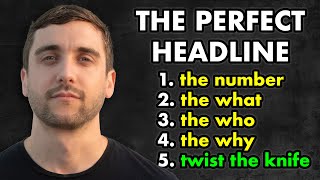
This is a YouTube video titled "The 5 Pieces of an Effective Headline" created in March 2024. It features Nicolas Cole delivering a detailed instructional talk on how to write effective headlines for digital content. Nicolas explains the five key components of a headline—number, what, who, why, and a copywriting technique called "twisting the knife"—to help writers capture and maintain reader attention. The video serves as a digital writing mentorship session aimed at helping viewers improve their writing skills for online platforms.
You could be the most prolific writer on the Internet. You could be Ernest Hemingway or Virginia Woolf reincarnated. But if you don't know how to write headlines, nobody is going to stop scrolling and read your writing. In today's video, I'm going to walk you through the five pieces of an effective headline. The number, the what, the who, the why, and a little copywriting technique known as twisting the knife. These five pieces are the secret to writing headlines that capture and keep your target reader's attention, whether it's a medium article, a blog post on your website, a subhead on a product landing page, or even the subject line of an email. So let's dive in. The five pieces of an effective headline. You might not realize it, but this in itself is a headline. So let's walk through our checklist. Piece number one is the number before a reader gives you their attention. They do this quick cost benefit analysis in their brain and it happens in a millisecond. We all do it, but it's a very simple equation. How valuable does the reader perceive this piece to be? Divided by how long do they think it's going to take them to consume and what? One of the easy ways readers do this little cost benefit analysis is they try and figure out how many things you're promising you're going to explain to them. So, for example, what's the perceived time difference between these two headlines? Headline number one, three steps to brainstorm, build and sell your first digital product. Or headline number two, 300 steps to brainstorm, build and sell your first digital product. It's the same idea, but they both promise the same value and end result. But the first one says this will only take three steps, AKA this won't take you very much time. Whereas the second one says this will take 300 steps, aka be prepared for this to take you a lot of time. Listicles like this have a really bad reputation because everyone associates a number in the headline with a buzzfeed article. But the reality is, listicles are incredibly effective. They make it really easy for you to organize your ideas, but they also make it easy for the reader to quickly evaluate, well, how long is this going to take me? So how many things are you promising the reader? That's the number. And how can you signal this time investment right away in the headline? That's one of the biggest benefits of writing and using listicles. Piece number two. The what? Quite literally. What is this piece about? Now, this might sound overly simplistic, but you would be surprised how many writers think they know what their writing's about and. And then do a horrible job communicating the what in the headline. And the biggest mistake by far is being clever instead of clear. Couple examples. Whispers in the Wind or A Lesson for the Ages or Disrupting the World One pixel at a Time. Okay, if any of your headlines look or sound like this, congratulations, you have officially mastered the art of repelling readers. Because here's what you think is happening. Scroll, scroll, whispers in the wind. What? Am I in the presence of greatness? Is this the next once in a lifetime talent in the flesh? Karen, cancel my afternoon. No, I need to sit here and give this piece my full attention. Obviously, I'm using an extreme example, but this is what every single writer who writes clever headlines thinks is happening on the other side of the screen. Do you want to know what's actually happening? They go. Scroll, scroll, whispers in the what. Nope. The reality is, if the reader doesn't understand what your writing is about, they aren't going to sit there and try and figure it out. They're going to go right back to watching cats swing from ceiling fans on TikTok. Basic rule of thumb, if confused, the reader is gone. Which is why, right there in the headline, it's so important for you to make it painfully clear to the reader what you are giving them. Are you giving them habits? Are you giving them templates? Are you giving them personality traits? What? What are you giving them? So, going back to our own headline, what are we giving the reader? We're giving them the five pieces of an effective headline. Okay, that is what this piece is about. But notice how the entire piece would change if we changed part of the what. So imagine if the headline said the five emotional qualities of an effective headline or the five psychological hooks of an effective headline. It's the same topic, but what we're giving readers changes the content of that piece completely. Piece number three, the who. Now, the who in the headline is the intended audience. And this can either be explicit or implied. For example, the who in our headline here is implied. The five pieces of an effective headline. Who is this for? Well, there's no audience named directly, so it's implied. This is for anyone who wants to learn how to write an effective headline. But if we wanted to, we could make the audience more explicit by naming a specific niche audience directly. Notice how the headline changes when we do this. The five pieces of an effective headline. Every political speech writer should know. Okay, so notice how by naming a specific audience the way you interpret whether or not this topic is for you, completely Changes. Little pro tip here. I feel like most people don't know this. If you're brand new to writing online and you aren't sure how to get the attention of a specific audience, the best thing you can do is name that target audience in the headline for two very specific reasons. First, if you put political speechwriter in the headline, for example, if that's the target audience, anyone who associates with that title or is even remotely interested in that topic or that type of career is going to see themselves in your headline. It's going to resonate with them, which is what makes them click. That's the whole game of writing on the Internet. But the part most writers don't know is that social platforms and search engines have evolved quite a bit over the years. And every single word in your headline and even in the body text of whatever you're writing is getting crawled, organized, distributed into different people's feeds. Even if you have 0 followers, you're a total beginner. All you have to do is name the audience in the headline and the social platform will take care of the rest. Which leads to piece number four, the why. The last piece of the headline is the why. And this is the piece I notice so many writers either forget or overlook. They think, oh, I don't need it, it's not that important. Quick context for you. I've been writing on the Internet since 2007. I've written thousands of articles under my own name. I've ghostwritten thousands of articles under other people's names. I've racked up over half a billion views on my written content. I can tell you firsthand experience. The why is the most underrated part of any headline. The why is your mini sales pitch to the reader. Because if you really want them to click and read, if you really want them to give you their attention, you can't just tell them what your piece is about. You have to tell them why it's in their best interest to stop and give you their full attention. And that means telling them one of two things. Either read this to unlock this positive outcome, or read this to avoid this negative outcome. Here we have. Let's go through the checklist. How many? The five. What is this piece about? Pieces of an effective headline the who is implied. It's anyone who wants to learn how to write an effective headline. But we aren't telling the reader why. We aren't telling them. And if you understand how to write an effective headline, here's what happens. So notice how much stronger our headline gets when we Add this piece in. The five pieces of an effective headline that guarantee readers will give you their full attention. Why would someone read this? Yes, because they want to know the five pieces of an effective headline. But. But really because they wanna know how to get readers to give them their full attention. Or let's do the negative outcome. The five pieces of an effective headline. Without these, you'll never become a successful writer. Oh, no. Right. Why would someone wanna read this? Yes, because they wanna know the five pieces of an effective headline. But really, they wanna know how to avoid this terrible negative outcome. Which leads us to piece number five, Twisting the knife. If you aren't familiar, twist the knife is a copywriting term. It really just means giving the reader more. So if your why is a positive outcome, why stop at one positive outcome? Why not twist the knife and give the reader two positive outcomes? Or why not twist the knife harder and give them three positive outcomes? So, for example, notice how much stronger the headline gets when all we do is list more positive outcomes that we know the reader cares about. So the five pieces of an effective headline that guarantee readers will give you their full attention, fall in love with your writing and support your work. Work forever. The more positive outcomes we list, the more we pull this target reader in further and further. It shows that we understand what they care about. And the same goes for negative outcomes. So notice how much stronger this headline gets when all we do is make the negative outcomes more painful and more urgent. The five pieces of an effective headline. Without these, you'll never become proficient, prolific, or become a successful writer. The more negative outcomes we list, the more we pull them in and show them. Hey, I understand this is what you don't want to. I can help you. Now, I want to answer the question that always gets asked whenever I explain the five pieces of an effective headline. But Cole, if I use all five pieces, my headline is going to be so long. Nobody reads long headlines. This is just wrong. People read long headlines all the time. As long as the headline is clear and relevant to the reader, the reader doesn't care if it's three words or 13 words. The reader just doesn't want you to waste their time. And wasting their time has nothing to do with word count. And it has everything to do with clarity of message and value. So are there some platforms that constrain you when it comes to headlines word count? Sure. You know, the headline of a YouTube short, for example, should be six words or less. The subject line of an email should ideally be nine words or less. That's true, but the mistake is that writers start with this constraint and then try to find something quippy or clever to cram into six or seven words. And that's not the game. The game is for you to go through this exercise, get all five pieces of an effective headline on the table, really get clarity over what you're giving the reader who it's for, why should they read it, and then go through the process of whittling it down to fit the constraint of the platform? My name is Cole. On this channel, consider me your digital writing mentor. So if you want to become a successful writer in the digital age, click that subscribe button. Send this video to that friend of yours who keeps saying they want to start writing, but can't seem to hit publish. We all have one. And let me know what follow up questions you have in the comments. Till next time.
More from Nicolas



What Every Writer Gets Wrong About Their Audience #writing #creator #writingtips




