The Offer Stacking Framework That Generated $20M In Sales
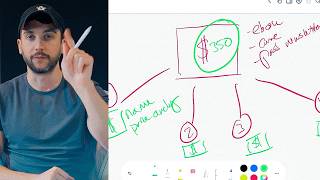
Nicolas Cole explains offer stacking: unbundle your product into named mini-products with templates, checklists, and cheat sheets that answer your buyer's top questions. He generated $20M in sales using this method, which works because answering the right questions with valuable assets lets the buyer sell themselves.
Chapters
The thing that I want to jam on today is this idea of offer stacking. This idea also applies to services. You can apply this to just about anything in business, but we're going to use the lens of digital products. Offer stacking means how do I continue adding things in order to make this more and more and more and more valuable, a.k.a. Irresistible for the customer. You often hear people use the term offer stacking in terms of landing pages and offer creation. It's when I present an offer, how do I stack multiple different things on top of each other so that as someone scrolls down the page, they become even more bought in, even more bought in, even more bought in. There is an old copywriter I'm sure it probably was, he wasn't the only one, but one of my favorite sales copywriters ever is Gary Halbert. I have a bunch of his old sales letters in a big 3-ring binder in my office. I study him all the time. And he used to call it the slippery slope. The slippery slope being once the reader starts going down the slippery slope, it goes faster and faster and faster and faster and faster. This can be applied to anything that you write. Like whenever I'm sitting down and even writing a book, I'm always thinking about the slippery slope, right? Like once we get started on a chapter, how do we make the momentum them go faster and faster and faster. But this is very true when it comes to landing pages and offer creation, which is yes, you have your big idea or the big product or the big thing that you're offering the customer, but then as time goes on, as they go further down the landing page, you are offer stacking, you are stacking lots of different things on top of each other to make the slippery slope go faster and faster and faster to the point where by By the time they reach the bottom of the page, they're flying and they're like, "I'm ready to go. Let me click the button. Let's check out. Let's go to cart. I'm bought in." This is one of those things that it's a very simple idea, but I find that it's very hard for people to execute. The reason that it's hard to execute is I'm sure everyone here understands what I just said. It's not a lack of understanding. How do you translate that understanding into things that are actionable? How do you take that idea and go, okay, Cole, that makes sense, but literally what do I do, right? So that's what we're gonna talk about today. Now the first idea, I had a lot of fun with the iPad last time, so we're gonna bring the iPad back out. We're getting the whiteboard out, okay. The first idea is with the product itself, alright? So something that I talked about I think 2 weeks ago is oftentimes people think of their digital products like this. They're like, I have a digital product, it is one big box, and it is for sale. It is something. Now this, this could be, you know, an ebook, this could be a course, this could be, you even a paid newsletter, right? It doesn't really matter what it is. They just think of it as one thing. In reality, just to recap what we talked about, it's lots of different things. You want to unbundle these into smaller sections. So let's say we have 4 sections. We have section 1 and we have section 2, we have section 3, we have section 4. Let's— this content was already going to be part of it, right? This is how we were going to organize our digital product. And the big thing that I walked everyone through is yes, this is one big digital product, but really how we increase the perceived value is we make each of these their own mini product. So instead of thinking, oh, I spend, you know, whatever it is, $350 and I get one product, actually you're spending $350 and you're getting 4 products just bundled into this umbrella. Right, so is that— I'm just recapping this idea. Does that make sense for everyone? The content was going to be the same. I'm not, I'm not saying you have to go like reinvent the wheel. You were already going to have these 4 sections. The only thing that you're doing is you're breaking them out, right? And then we want to give each one a name and we want to give each one some price anchoring. So that way it's like, okay, this is its own individual thing and this thing in and of itself has value and you want the perceived value of all of these to be greater than the value of that. It's very, very simple. Think of this as like V1 of offer stacking is it's just so much more compelling to say you're getting all 4 of these things opposed to just getting one thing, right? Okay, very simple. Now where you go from here, and this sort of can be applied to the product itself, is that offer stacking, quote unquote, where people go wrong is they think of it like, I'm just gonna give the reader more. And this is what makes digital products so hard is that the answer to that is, is both right and wrong. So what I mean is, is the answer give the reader more? Yes. And is the read— is the answer to just give the reader more? No. What I mean is, when you just give more for the sake of more, it actually has the inverse effect. Okay, so I'll use a really simple example. Let's say that our product was like how to start writing on LinkedIn, okay? And then as the landing page goes on, I go, you also get my health and wellness cheat sheet, and you also get my coffee picks for the year, and then you also get my favorite dog training, boy, I can't type with this thing, can't write. You got my favorite dog training routines. Look at how much more I'm giving you. Does that make the offer more compelling? No, not at all, right? If anything, it has the inverse effect. You're like, I don't want any of that stuff. Or it's not that you don't want it, it's just that you don't see the value because it's not congruent with this thing up here. You just don't see the value, what's the point? So offer stacking has very little to do with just giving more. That's why it's both the right answer and the wrong answer. Offer stacking has to do with one very simple idea. And anyone who was on the PGA call before this, you're probably noticing a theme here. Offer stacking is all about answering questions with assets. That's all it is. Okay. So when you present a product, you present a big idea. You might not realize it, and this, this is where this, the skill of building digital products comes in, is you might not realize it, but, but when someone is presented with something, immediately 10 questions come to mind. And those 10 questions are going to differ by industry, they're going to differ by what the product is, they're going to differ by what the customer cares about, they're going to differ by their experience level, right? So it's not necessarily like the same 10 questions every time, but no matter what product you're creating or selling, the person is going to have questions, okay? And you can answer those questions with information, with text on the landing page, but the most valuable questions you actually want to answer in detail with assets, okay? So let's walk through this. If our product is like how to start writing on LinkedIn, drop in the chat, what are a couple questions that come to mind for you? It could be specific to, I mean, yes, there will be questions specific to the product, like how long is it? How many videos is it? Does it cover these topics, et cetera? But ignore those for a second. What questions do you have about LinkedIn itself. You're like, I want to start writing on LinkedIn, but I'm wondering, like, do you cover how to use AI to write on LinkedIn? Do you cover how often I should post? Do you cover how to create my bio and audit my linked products? Do you cover my, like, a content calendar and a cadence? These are all questions that someone has. And my whole philosophy around sales, both if you're selling services or if you're selling digital products, is that sales has very little to do with quote-unquote sales. Sales has everything to do with education, because if you sufficiently answer someone's questions, they will sell themselves. They will naturally come to the conclusion, wait a second, I need this. You're clearly answering all the questions that I have. I see value in getting all my questions answered, right? So sales and copywriting is not about how do I convince the reader to do something. Sales and copywriting is all about how do I sufficiently educate them, aka how do I answer all of their questions so that they come to the conclusion on their own, right? So what does offer stacking look like through this lens? Well, it's actually a very simple idea. Offer stacking is we just take each— why is this not— oh, there we go. We take each question and we represent it as an asset. So this is what your landing page ultimately starts looking like. Okay, so let's say question number 1 here is, um, "how do I know how frequently to post? Like, what should my posting schedule and cadence be?" Now, I could say, "Don't worry, we answer that inside the product," but what immediately makes it more compelling is if I say, "Yeah, don't worry, I actually give you an entire 90-day content calendar," inside of the product. Not only do I answer your question, but I actually give you an asset specifically for that question. Now, does that mean that we have to go create new assets? Sometimes, but oftentimes not really. All it means is we go back to how we've broken this out, right? And inside of each of these individual products, We have— and I ran through the whole checklist last time, but we have like all the different sections, right? And one of those sections that we want to cover is some sort of bonus asset. Why do we want some sort of bonus asset? Because after you explain how to do something, you also want to give the reader, hey, and by the way, I made this for you. This will, this will help you. Could be a template, could be a checklist, could be a blueprint, could be a cheat sheet. Here's some sort of asset that helps you do the thing that I just explained to you how to do. So how do we increase the perceived value? How do we make the slippery slope go faster? How do we offer stack? Is we just take these bonus assets and on the landing page, we attach them to questions. Does this idea make sense? Sometimes you can come at this from two different directions. Sometimes you start with all the questions and then you create the assets in response to them. Other times you create the assets and then you, in reverse, attach them to questions. But you can see how there's so much more value than if I was to just say, "Hey, we have this new product, LinkedIn AI." It'll help you start writing on LinkedIn. And I don't answer any of the questions. It's like I don't explicitly say, and we, you know, give you a whole posting and content calendar, and we help you audit your profile, and we do all these. Like, if I don't answer those questions, the perceived value of this is very low. If I do answer the questions, but I just say, yeah, we answer those questions in the product, don't worry about it, that's a little bit better, but it's not great. Right. The perceived value goes up tremendously when I go, here's your question. And not only do I explain how to solve it, but I actually give you this asset directly correlated to that question. So, Sushil, this is the example I'm walking through, an example of this right now. Okay. So what's another question that someone has? Well, I want to audit my bio. Well, I can say I answer that question, or I can say I actually give you an entire bio cheat sheet with everything that you need. Perceived value goes up, right? I want to know how to connect with people in my niche. Okay, great. I also give you a whole like lead scraping automation template that I built. Does everyone see how as, as I go down the list and as I attach assets to questions, can you feel the slippery slope getting faster? You're like, whoa, this just got more valuable. Whoa, this just got more valuable. Oh, this just got even more valuable. That is the goal. That is the goal. Okay. So does this make sense? Now, typically I would recommend as far as questions, especially, especially when you're presenting an offer and especially if we're talking in the context of a landing page, aim for somewhere like 3 to 7 questions. Okay. You don't need to answer 100 questions. You don't need 100 assets. Somewhere in the ballpark of 3 to 7, okay? Natalie, questions framework, how do we determine what the most helpful questions are? Well, one is if you are creating products in an industry that you have experience and some sort of expertise, some sort of information advantage, chances are you know what those questions are because those are the questions that you used to have, right? When I'm building digital product or digital writing products, I know the questions because I've, I've been that person. It's like, well, how, how do I start writing on a new social platform? What should my content strategy be? What should my niche be? How do I rewrite my bio? How often should I be posting? How do I monetize my content? I'm not like making these questions up. These, these are genuinely the questions that I was faced with. So the first and easiest one is what are all the questions that you have experienced personally in this industry, in this niche, and how do you demonstrate that you help people solve them? The second one is— the second easiest framework is what are the questions that are directly correlated to some sort of financial ROI? You can expand it a little bit and say status or money, you know. Everyone either wants attention/status or they want money, but those are the most valuable questions. To say it very simply, the most valuable questions are the ones that are directly correlated to the most objective form of value, which is revenue, which is money, right? So let's make this actionable here. Let's say that your product was something that has nothing to do with driving revenue. Let's say that it is 15-minute yoga routines at home. You're like, hey, my digital product is I give you 100 15-minute yoga routines, right? But let's say that you're selling to founders and CEOs, and maybe let's get even more specific, we'll say female founders or CEOs. One question that that person might have is, are these routines that I can do from my desk chair? Because I'm in— I'm on Zoom meetings all day long. And like, basically, do I need any other materials? Do I have to go somewhere to do these things? Or like, can I literally do them at my desk? I can answer that question, but I can make the perceived value go up tremendously when I say, oh, and I broke out these, you know, 20 routines that are the desk chair stretches. I was already going to cover that in my product. I'm just breaking it out and highlighting it because it directly answers the question, right? We can take it a step further and go, all right, that makes sense. But how do I, how do I attach this asset to some sort of quote unquote financial ROI? What are the most valuable things? Well, maybe another question is this target customer saying, I'm really stressed and I'm going through a fundraise right now. I'm trying to raise a lot of money. For my startup, and I want to know, like, what are the stretches that I can do that will give me the most mental clarity mid-afternoon when I have— when I'm typically exhausted and have a ton of brain fog? You're like, great, I could answer that question, or I can break it out and call this like the anti-brain fog Afternoon routines. And then in the copy I can explain, I just say back to you, hey, you might be a really stressed out startup founder or busy executive. I bet usually around 2 or 3 PM brain fog starts creeping in, you're exhausted but your day's not even close to over, right? You have a lot riding on the decisions that you have to make. Maybe you're trying to raise a round for your startup. What are the implications of that? You're trying to raise a million bucks, $10 million, maybe more. Well, why don't we help you solve that brain fog which has a direct impact on quote unquote financial upside. Here's another bonus asset I put together of stretches and routines that you could do in the afternoon specifically to get the blood flow and to solve for brain fog. Does everyone see how this works? You're attaching questions to assets and then maybe a little bit of explanation of and why this is so valuable to the person. And I promise you can always attach things back to something, some sort of financial ROI if you want to. Like 15-minute yoga routines, if we really wanted to, We just explain, well, how much time does it take you to drive to your local yoga studio? How much does your local yoga studio cost? Maybe it costs $200 a month and it takes you 30 minutes round trip every time you go. So it's costing you some money and it's costing you a ton of time. Well, we can solve both of these. At home with my product. You can do this for any industry. This, this is, this is quite literally what the art of copywriting is, is attaching questions to assets to value. Value can be time and value can be money. By the way, if you're brand new to writing online and want a really easy place to start, I recommend reading The Art and Business of Online Writing. I wrote this book after I'd been writing online online for over a decade and accumulated over a billion views on my work, monetizing my writing in all sorts of unconventional ways. And I wrote this book to give other writers like you a way to skip all the lessons that I had to learn the hard way and start seeing success from your writing a whole lot faster than I did. So if writing online is something you're thinking about or something you're actively practicing, I recommend picking up a copy of The Art and Business of Online Writing.
More from Nicolas



What Every Writer Gets Wrong About Their Audience #writing #creator #writingtips




