The Perfect Novel: Tomorrow and Tomorrow and Tomorrow by Gabrielle Zevin
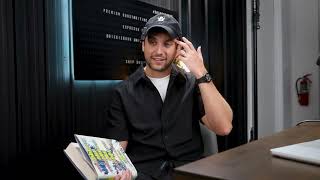
This is a YouTube video titled "The Perfect Novel: Tomorrow and Tomorrow and Tomorrow by Gabrielle Zevin" created in March 2024. It features a single speaker discussing their approach to reading and studying fiction, specifically analyzing the novel "Tomorrow and Tomorrow and Tomorrow." The speaker shares a detailed framework for what they consider the perfect novel, breaking down qualities such as action, perspective, theme, nostalgia, interpretation of action, metaphor usage, and authorial voice. The content is educational and reflective, aimed at writers and readers interested in understanding novel construction.
Okay, I'm officially married. Here's the proof. This is post wedding week. And I picked up this novel during my mini moon this past weekend called Tomorrow and Tomorrow and Tomorrow, a novel by Gabrielle Zevin. And I wanted to talk today about A, how I read. The way that I read is really particular. I don't actually read for pleasure. I read to study things. And I want to talk about and show you how I do that. And then B, reading this book, I've started to assemble this framework that I'm going to start calling the perfect novel, because I notice I studied creative writing and literature in college. I've read a lot of fiction, I've studied a lot of fiction. And fiction is very different than other types of writing like nonfiction writing or sales copywriting. But also within fiction, there's all sorts of different subgenres in terms of the way that the writing is approached. So, for example, if you're writing genre fiction that's trying to appeal to the widest number of readers, the language is typically simpler, it's more plot heavy, et cetera, whereas novels like this tend to lean a little bit more advanced. The language is amped up a little bit, the metaphors are more beautiful, but there's still enough plot where you're not fully in literature territory. And I sort of think that that's the sweet spot of the perfect novel. This book is now this giant bestseller. I heard it just got optioned to be turned into a movie. There's all sorts of video game references in here because the two main characters are designing a video game together. And so now the publisher is turning some of the fictional games from this book into real life games that you can play on the Internet. And so I think in order to tap into all of those things, you have to write a novel in a very specific way. And I've extracted, you know, as I'm reading this, I'm already starting to build a framework around it. So I want to share that framework with you. So first, when I say I don't really read for pleasure, I very much subscribe to the belief that output will teach you more than input. That's not to say that input doesn't matter, but I have just. My whole point of view is rooted around the fact that I think the more you create, the more you will inherently learn. Whereas if you spend all of your time reading or studying, you don't actually get better at the creation aspect, you get better at the reading aspect. So I see so many writers go, I just want to keep studying I want to keep reading. I want to go back to school, you know, and really, they don't realize that they're not actually building the writing skill. They're building the reading skill, which is great, and it's a valuable skill to have, but that is not what ultimately makes you a writer. So I'm of the belief that the way that you grow the fastest as a writer is through output. However, that doesn't mean that it's not worth studying other writers. Right? And so what I do is I. I am not the type of person that just flies through books. I. I'm not in that camp where I just devour, like, a book every three days or a book a week. What I will do is I will buy a lot of books. I will maybe read the first few pages or the first chapter of each one, and then when I find one that I think can teach me something, whether it's informational, like I'm trying to learn about a topic, or it's within the. The actual writing itself, like, I'm studying because I want to understand, like, how did this story get crafted, or how do they come up with these metaphors? Whenever I find a book that I feel like can teach me something, I. I essentially ignore everything else, and I only study that book for a period of time. And one of the things that I do is I am a. I am a voracious annotator. So you can see here, like, every. Every page, everything that I'm doing, I'm constantly trying to pick apart and ask myself, what's actually happening here? You know, like, is. Is. Are we moving the plot forward? Are we. Are we defining a character? Are we using a metaphor in a particular way to elicit a feeling in the reader? And I think that that's really important. When you're reading, it's very easy to just. All of a sudden, you get one or two paragraphs in, you sort of get lost in the story, which, from a pleasure perspective, is great. But if you're trying to become a better writer and you're using input as a vehicle for improvement, it's really important to actually not get lost in the story. At every single sentence, every word, you want to ask what's happening? How is the writer eliciting the feeling that I'm feeling right now? And so the reason that I annotate, A, it's because I have ADD and it helps me stay engaged, but B, because it allows me to really see the writing as a bunch of Lego pieces so I can actually see how it's all stacked on top of each other. And so which sort of leads to, you know, I'm starting to think, like, this is a great example of what I'm calling the perfect novel. And I've started extracting a handful of notes here on what makes the perfect novel. And each one is a skill that you can practice. When you look at a book like this, it's really easy to just assume this person's just brilliant and they sat down and magic just flowed out of their fingers. And on some level, that is sort of true. When you reach that level of proficiency, you do it intuitively. But I don't believe that there's people that are born writers and there's people who aren't. I think all of these are ultimately skills that anyone can learn. It's just no one has really taken the time to extract them and point them out and help writers isolate each individual one. Right. I studied creative writing in college. A lot of our classes, they just said, write from the heart or be authentic. That doesn't actually show you how to assemble a story. So some of the qualities that I'm starting to pull out and create this framework around the perfect novel. The first one is action. So I think where you start to lose readers is in the barbell of if it's all action, then there's not enough substance. Typically genre fiction that appeals to the widest number of people, it leans very close to it's all action. You even see this in film, too. Right? Like Marvel movies, for example. Right. It's like, all action. On the other side of the spectrum, think of it as the indie film where, like, nothing happens. And that's the point of the whole film. You know, literature is the same way, where it's written so beautifully, but nothing really happens. And so you as a reader can appreciate the art, but you're also sort of like, this isn't really doing anything for me from, like, where's this story going? Perspective. Right. And so the perfect novel sits between those two barbells. And again, this book has been an amazing example of this, where things are happening, but all throughout it, the author is also sort of flexing that muscle of I'm doing other things in the story that show you I have mastery over my craft. And she's very. She's clearly very talented. So the first quality is that things have to happen. You don't want to be so far on the literature side where nothing happens. The second quality is this book is written in the third person, but it's Written where it oscillates between sort of the author, general narrative perspective and very close third. Close third is a really powerful point of view because it allows you to maintain enough distance where you can see the whole story and all of the characters. It's third person, but it allows you to sort of sit on their shoulder and really get into their head or get into what they're thinking. And this book has been a cool example of how when you oscillate between the two, you know you're really close third. You zoom in on a specific character and then you can zoom out and sort of speak as this omniscient narrator. And oftentimes I see talented writers will inside that omniscient narrator. They will also sort of put in their own opinions or their own points of view. Very fine line to be able to pull this off. But I think the perfect novel is not written in first person. I think it's written in this close third person. The third is having a theme or having two or three general themes. The big theme in this book is there's this history around video games and video games as a metaphor. And so in a lot of the action. So going back to the first quality and a lot of the action and the plot moving forward, it is either literally about games building a game, life as a game, or metaphorically about games. Like, what do games say about us as human beings? Or what do games say about the way we interact with each other or our own pursuits in life? And when you have a central theme and you're constantly reinforcing it with action, with metaphor, with perspective, that is what makes it easy for a reader to then latch on and go, oh, I can tell other people about this book. Someone goes, what's this book about? And they start talking about the theme, right? As a reader, it's also very satisfying when you understand what the theme is. And there's all these constant reminders, like, here's a different way of thinking about the theme. Here's another way of thinking about the theme. Here's a callback to the theme. So in order to assemble the perfect novel, I think it's important to understand, as the writer, like, what is this central theme that I want to reinforce and how can I constantly refer back to it or talk about it in a different way in the narrative? The fourth quality, and this is one that very recently clicked for me, is an element of history or nostalgia. So something about video games is the history of video games is very nostalgic. You know, if I talk About Donkey Kong or Super Mario Brothers or Mortal Kombat. You know, if you played video games growing up, when I say the name of a game, you are probably thinking of a specific memory or a specific moment in time. You know, you say Nintendo 64, and immediately I think of the Christmas when I was like, 8 years old and I got a Nintendo 64 and I thought it was the coolest thing on planet Earth. There's a very nostalgic element about video games, but the truth is there's nostalgia in almost anything. If this book was about music, you could have nostalgia of different songs. If this book was about two architects, you could talk about different styles of architecture over the course of history. Nostalgia. So there's this element where when you combine the theme with some sort of history or nostalgia, it gives the reader this feeling of, not only am I in the story, but I'm also reflecting on those moments in my own life. And as I've read this, I've noticed myself thinking about moments in my own history where I'm thinking, okay, when did I get that video game? Or when was the first time I played that? Or, oh, I never played that. Interesting. And so it doesn't matter what the theme is. Your target reader will probably start to associate that theme with an element of nostalgia, which is really powerful. The fourth quality is the author's interpretation of action. So when you have something happen to a character, it's usually not enough to just say, this happened. What the reader really wants to know is, well, how do we feel about it? So it's like two characters are in a car together, one gets out and they slam the door. We can interpret that action, but we're more drawn in when the author actually tells us how to feel about it. And you can use that. Close third. Zooming in on a character where a character slams the door. Close third. And then you get into the one who slammed the door. What are they thinking and feeling? Or zoom in on the other character, the one who got the door slammed on them. What are they thinking and feeling? So when you play off of the what's happening? And then also how are we supposed to interpret the action? That is another really great quality of pulling the reader deeper and deeper into the story. The sixth quality, this is another recent framework for me, is I've noticed that novels that toe that line between mainstream and just edging into literature, which sort of opens the door for all of the elite readers think of the New York elite who talk and think about literature. It opens the door for them but it still makes it accessible enough where an everyday reader would want to pick this up and give this a read. The quality is what I'm calling the Pulitzer metaphor. So a Pulitzer metaphor is when you say something is like something, but when you say something is like something, it's a very unexpected and surprising metaphor. So most writers, especially novice writers, will say something like, you know, her eyes were blue like the ocean. You know, that's not surprising, you know, but if you say something like, you know, her eyes were blue like the bottom of a blueberry teacup after it had sat out in the sun for six days, you're like, that's. I can't help but imagine. That's weird, you know, and the more surprising the metaphor, the more you feel like you haven't heard that before, the more likely you are as a reader to go, wow, this is a really. I mean, this is written so well, right? So I always like asking the question when, you know, every so often you don't. Don't do it for every single thing. But when you have something happen in a story or you're zoomed in on a character every once in a while, how can you use this Pulitzer metaphor and say, something is like something, but the something else that it's like has to be very different and very surprising and almost like you would never think to put those two things together. And then the last quality, this is something that this author does really, really well, is what I'm calling, like, author mic drop moments. So a mic drop moment is when you use all these qualities that we're talking about. You build this scene or you build a chapter, and once or twice in the chapter, the author sort of through the voice of that omniscient narrator, that third person narrator, sort of puts their own perspective that they want to land for the reader. Like, what is this story really about? So a sentence that I pulled from in here was, but it is worth noting that to be good at something is not quite the same as loving it. And that's a really great example of the author going, this is what I believe. This is what I think. And so, you know, she goes, and she paints this whole scene, and then at the end of the scene, she's like, this is what it's all really about. And I think having one or two of those mic drop moments where the author is sort of inserting themselves going, this is the point, you know, this is what I'm really talking about here. I find that to just be a really effective way of pulling the reader in. So I'm starting to assemble this framework of the perfect novel. Selfishly, I'm assembling it for myself because I love fiction. This is something that I want to get back to. I studied fiction in college, but I also want share with you. You know, I think one of the biggest missed opportunities for writers is all of the advice out there is so aspirational. You know, just write from the heart. Write what you know, be authentic, be yourself, tell a great story that doesn't help you, that doesn't actually break down the pieces. And so my goal here is, as I do my own studying and learning, is how can we extract those pieces, isolate them and be able to practice each one individually. So hope this is helpful. Let me know if you're reading tomorrow and tomorrow and tomorrow. I'm really enjoying this. And if not, I encourage you to grab a cop.
More from Nicolas



What Every Writer Gets Wrong About Their Audience #writing #creator #writingtips




