This 20-Email Sequence Made Me Millions of Dollars
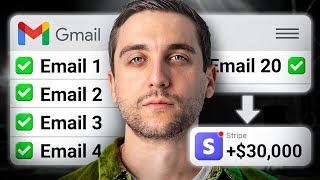
Dickie and Nicolas Cole break down the 20-email sequence that converted free subscribers into paying customers for Ship 30 for 30. They explain how they mixed education with sales pitches and what worked in their customer psychology approach.
After running over 20 cohorts of Ship 30 for 30, our beginner writing program, thousands of students enrolled, millions of dollars in revenue generated. We've learned on average how many emails you need to send in order to.
Convert a free subscriber into a paying customer.
And it's not one, it's not two.
We did a whole analysis of all of our different funnels and what we found is that on average it's about 20 emails. And so what I want to walk.
You through is this 20 email strategy that we've been using for the past.
Couple years to generate, like I said.
Millions of dollars for our beginner writing program.
Ship 30 for 30. So how this works is the first.
Part of this sequence is very education.
Oriented and the second part of the.
Sequence is very sales oriented.
Obviously there's components of both, but you sort of want to move in this order because one of the things that.
So many creators or business owners really.
Misunderstand is that the reason most people don't buy, certainly don't buy after one or two emails, isn't because it's too expensive and it isn't because they don't see you as credible.
Right.
The problem, the reason why they haven't bought is almost always rooted in some.
Sort of education deficit. What I mean by that is they don't feel like your product answers the.
Questions that they have or solves the problems that they want to solve. That is not a sales problem, that is an education problem.
And so what you will notice as.
We walk through this is why so much of this is anchored in education, not necessarily sales.
So high level. Before we dive in, how our funnel works is we write on social platforms. So my co founder Dickie and I.
Will write primarily on X, formerly known.
As Twitter and LinkedIn. We will then direct that traffic to.
A five day educational email course. Hours for ship 30, the front end. This educational email course is on startwritingonline.com.
This is a five day EEC that basically walks people through a very, very compressed version of a lot of the.
Things we cover in chip.
30 for 30 educational email courses are amazing opt ins. It is a great way to provide a ton of value in a very.
Short amount of time.
And once someone enters their email and.
Enters our ecosystem by subscribing to this.
Five day educational email course, this 20.
Email strategy is what would be on.
The back end of that.
So you sort of think as the.
Five day EEC as providing a bunch of free value and then at the.
End of the five days, so quote unquote.
Day six is when this 20 email strategy would begin. And this is how we've had our.
Funnel set up for years, like I said.
So what I want to do is walk through each individual email and explain why we have that email, some of the things that it accomplishes. Just to get ahead of the question, sure, you can put these emails in a different order if you'd like. Really the thing that's important is making sure that you educate the customer and.
Making sure that you hit on a lot of these notes.
So if you want to play with the order, you can. But what's important is that you hit.
On these notes because these are the.
Things that people want to know before.
They purchase your product.
So let's go down the list.
Email number one. So remember this is on the back end of what would be ideally some.
Sort of really valuable opt in. So I would not think of that.
Opt in as a newsletter.
I would think of that opt in.
As an educational email course or some sort of free download.
You know, download this white paper, download this cheat sheet, or download this bundle of templates.
Right?
You want to give away something valuable for free.
And then on the back end of that is when you would begin these emails. So email number one is just a plain pitch. It sounds so silly, but you would.
Be shocked how many people just don't do this.
They have something for sale and then they never say that the have this thing for sale because the faulty belief is, well, if I tell my subscribers that I have something for sale, they're going to unsubscribe. Well, let me tell you something. Having people on your email list who are not buying anything from you is not very valuable.
You either want someone to subscribe and.
Buy or you want someone to unsubscribe.
Having 100,000 people on your email list.
Don'T do anything is a vanity metric.
And it drives me nuts when I.
See creators go, I've built a massive email list.
And then they never mention their products.
And then they go, I don't understand why no one's buying my products. And then you talk to them and they go, well, I'm afraid to pitch my list because I don't want them to unsubscribe because I don't want my.
Shiny number to go down.
Who cares?
You would way rather have an email.
List of a thousand people all paying you than have an email list of 100,000 people paying you or people who don't pay you, right? So email number one, the very first thing you're going to do is you're going to tell the customer, the potential customer, the reader. Here's what I have for sale, here's the problem that it solves, and here's how you can buy it. It's very simple. You're like, hey, I just walked you.
Through five days of free value.
By the way, we have this writing program called Ship 30 for 30. Here are the problems that it solves, here's how you can buy it. Click this link. And if you don't do that, bare minimum, don't be surprised if people don't buy your product because you have to tell them, I have a product for sale. Here's the problem it solves, here's why.
You should buy it.
Right.
Then email number two.
And moving forward, you'll notice how this.
Is less and less about sales and more and more about education.
And I want to just do a quick pause here. The real bottleneck to getting someone to.
Buy is very rarely a sales problem.
And it's almost always an education problem. Now I'll give you a quick example. So recently I was looking to buy. I was going to get on the bandwagon. I was looking to buy a, like, ice bath for my house, and I found this really great company. I just Google searched around, found this great company. They had great branding. They had a ton of testimonials, right?
They check all of those boxes. But the reason I didn't buy was.
Because I was on their website and they kept talking about how great the cold plunge was, but they didn't answer.
Any of my questions.
I was like, how often do I have to clean this thing and can bacteria grow in it? And how often do I have to swap the water? And if I leave it outside is the temperature. You know, this was when I was living in Miami. I'm like, can it survive Miami temperatures? You know, how long is it going.
To last if I leave it outside?
Do I need to get a cover?
I had all of these questions and.
Meanwhile, the company was just like, here's.
How great it is and here's all.
These testimonials and look at our sexy branding.
And by the way, do you want 10% off your order?
And I'm like, none of those things.
Are the reason why I'm not buying. And eventually I didn't buy the cold.
Plunge because my questions weren't answered. And I felt notice the word. I felt uncertain about my decision.
I felt uncertain about my ability to.
Buy something that would give me the.
Thing that I was looking for.
Had nothing to do with price, had.
Nothing to do with branding, it had.
Nothing to do with credibility or testimonials. And this is something so many people really misunderstand, especially when it comes to.
Email marketing and setting up sequences.
So email number two, and as we get further and further along, you will notice this is way more about education because we need to empower the potential.
Customer to feel like they can make an educated decision.
So email number two is, who is this for? So this is where your second email essentially says, hey, you might be one of these three different archetypes for ship 30. It's. You might be someone who's never written.
Anything before on the Internet and wants to.
Right?
You might be someone who has been writing a little bit but just aren't seeing the traction that you want, or someone who's been writing for a really long time but just want to keep.
Power leveling your digital writing skills.
You know, you're really good at analog legacy writing, but you don't know very much about digital writing.
So notice how when you have an.
Email that speaks to a couple different.
Archetypes, it allows you to sort of.
Widen the scope and go, hey, we.
Can help these specific types of people. In my opinion, I would avoid speaking.
To more than three different archetypes. And ideally, just to put a fine point on this, you don't want these.
To be three completely different people.
You want these to basically be three.
Different variations of the same person.
So an easier way to think about it is think of your archetype and you're speaking to someone who hasn't started yet. Then you're speaking to someone who has already started but isn't really seeing the results they want. And then you're speaking to someone who has been doing it for a while but wants to get better at it. Okay? And so you're. It's basically like three different variations of.
The same person or really the same person on. At different stages of the growth journey, if you will. So in this second email, who is this for?
The reason you want to call this.
Out is so that your target customer.
Goes, oh, that's me.
This is for me.
This isn't a product that's for anyone.
This is a product that's specifically for me.
And so you want to call those out. And then again, at the end of the email you go, hey, by the way, we made ship 30 for 30, for example, specific for someone like you. Here's how we can help you.
Click the link to buy email number three. We get even more into the education space.
Email number three is where you walk.
Through the 10 biggest problems that this.
Type of person is either currently faced with or will be faced with. Okay, so these are problems that the person either didn't know they had or problems that they know they have, they just haven't gotten around to solving yet. And you want this email to be your education. Like, you're not even talking about your product. All you're doing is saying, hey, email number two, right? We said we could help you. Well, today in our third email, let me explain how much we know you. We know why you have these problems.
We know you've been struggling with these things. And we know because.
And usually this is a key part of the quote unquote story, but we know because we've been there too, right?
So a lot of times the problems.
That you're pointing out, in an ideal world, you should be able to speak to and go, I know because I.
Used to have those same problems.
Right?
So this email number three is all.
Anchored around what are the 10 biggest.
Problems that your target customer has?
And you have to educate them on.
Those problems, why they're happening, right?
Maybe things that they've tried in the past, how they feel about those problems.
Before you can continue talking about the solution.
Because the person can't care about the.
Solution or the product until they first care about and ground themselves in the problem.
Email number four, very similar, but instead of talking about problems, now we're going.
To start talking about outcomes.
You could do three desired outcomes. You could do five desired outcomes. You could do 10 desired outcomes. Chances are, problem list is usually bigger, right? Most.
Most of the time when someone wants.
To get better at something, their list.
Of problems is very long.
But their list of outcomes and the.
Things they desire is typically pretty short.
It's like, I have all these problems, but I really just want to solve this one thing or I really just want to unlock this one thing. So in this email, basically what you want to think through are what are the, let's just call it, three desired.
Outcomes that this target person would care the most about.
And think of this as the carrot. You know, first you grounded them in the problem, and then in this email, you want to talk about how great.
Their life is going to be when.
They solve those problems.
And this is a really important distinction.
A lot of times people think, hey.
Let me tell you how great your life will be when you buy this product.
And that's not. That's. You're missing the nuance here.
It's not that their life will be better when they buy your product.
It's that their life will be better.
When they solve those problems.
You are having an education conversation.
You are not having a sales conversation.
Because when you successfully link in the potential customer's mind, you have these problems. I know why you have these problems.
I know how to solve them.
And when you solve them, you will.
Unlock these desirable outcomes. The customer naturally assumes your product helps.
Them cross that bridge. So, again, it's a small nuance, but.
I see people make this mistake all the time.
You're not talking about how great your product is. You're talking about how you can help them solve those problems and then allow them to unlock these desirable outcomes. Okay, so email number four, get them.
Excited about the future.
Email number five, my story. So this is another big misunderstanding. You will hear constantly on social platforms or in writing groups or marketing groups or courses or masterminds.
You will hear people say, oh, the secret to marketing is storytelling.
You have to share your story. The customer loves your story. Okay, let me tell you a little secret. Nobody cares about your story. Your story is irrelevant.
The only time your story matters is.
When your story provides context to the reader about something they care about. Okay, so you talking about yourself.
Pointless. You talking about yourself to give context to the thing that you're trying to.
Explain to the reader, Then it's valuable. So what is the secret to sharing your story? Well, you basically want to say, listen, I have been exactly where you are today. That is the point of the story.
The story is to help the reader.
Relate to you and for you to.
Demonstrate that you understand where the reader is.
If you just start telling your story for the sake of telling your story.
It'S not going to accomplish what you.
Think it's going to accomplish. So you basically want to say, I used to be exactly where you are today. I know the problems you have because I used to have these problems. I know the outcomes that you want.
Because I wanted those same outcomes. And by the way, here are the things that I tried that didn't work for me either.
So the whole point of you telling.
Your story is not really to tell your story. It's to help the reader see themselves in your story and have the reader.
Go, oh, I have those same problems.
I wanted those same outcomes. I tried those same things, and they didn't work right.
So it's not about you. It's actually about the reader. And then you go, here's what changed.
Here are the things that I started doing differently.
That's what allows you to sort of segue into, here are the things that I did differently.
And by the way, these are all.
Of the things that I show you.
How to do as well in our product.
So that's the whole line, you know, the thought process that goes into it. You are not just telling your story for the sake of going, listen to how great I am and how much.
I love my life.
Now you're telling your story so that.
The reader can see themselves in it.
Email number six, we call it the Stop Start email. So a very easy way of thinking about this, a nice little template is in this email you're going to go, here are all the things that you're probably trying to do right now to.
Solve this problem or to solve these problems that you have.
Here are all the things that you're trying to do right now to unlock these outcomes that you care about. Okay, stop.
Here's why those things aren't working.
So a really easy example. Like in the writing world, if we go, you know, one of the things you're probably doing is you're sitting there.
Just obsessing over, what time of day should I post?
You know, should it be at 8:30am or 2:00pm or 7:30pm?
Right?
You need to stop. Because obsessing over that isn't going to.
Get you the outcome that you desire.
So that's the first half of the email. You go, what are a handful of things that you would tell the potential customer? You're probably doing these things right now. I'm just telling you, free education. You need to stop it. And when you do that, what that's doing is that's demonstrating to them, hey.
Trust me, I understand why you're trying.
To do these things. Chances are I've tried doing them in.
The past as well.
If you have, you should definitely speak to that. And then when you tell them to stop, what's the natural next question? The next question the reader has is.
Well, what should I be doing instead? Segue into the second half of the email, right? Instead you should start doing these things. And guess what things you're going to have them start doing?
Well, they're all the things that you walk them through in your product, right? So you give them the free education.
You go, you should stop doing this and you should start doing this instead. Oh, and by the way, if you.
Want us to just tell you how.
All of this works, or you want us to hold your hand through it.
Or you want us to just give.
You the blueprint, or give you all of the templates. These are the things that we cover specifically in our product. So this Start Stop email is a very powerful education tool for customers.
Email number seven are the myths. So, myths, faulty beliefs.
What are the things that your potential.
Customer is telling themselves, keeping them from taking action? And this is one of those things where ideally, you know, you are, you want your target customer to basically be.
The former version of yourself.
Ideally, because then you understand what all.
These faulty beliefs are.
If for some reason you don't know.
You'Re trying to build an audience or.
Launch products in a space where you weren't the target customer yourself, then you need to go talk to people and you need to listen closely and go.
What are the narratives that they're telling themselves keeping them from moving forward or keeping them from taking action.
So in this email you basically are walking through, here are the faulty beliefs that most people have that keep them from whatever the action step is. And a lot of times these faulty.
Beliefs go multiple layers.
So you might say something like, you know, Faulty belief number one, they think we'll use ship 30 as an example. You might think that you aren't a very good writer. And so you don't think that you would be able to take ship 30 for 30 or even start building a daily writing habit. Well, the, the root of that problem.
Little copywriting technique, never blame the customer, always give the customer someone to blame.
Right.
The root of that problem is I don't blame you. You know, I mean, the traditional education system kind of makes everybody feel like.
They aren't very good writers growing up.
Maybe that resonates with you.
That's certainly how I felt.
Right.
And then the root of, the root of the problem is not just oh, I'm not a very good writer or root of that, blame the traditional education system.
But the root of the root is.
And honestly, like maybe you're sitting there just you feel like you have low self confidence or you're afraid to put yourself out there. It actually doesn't have to do with.
Whether you're a good writer or not.
You have this underlying fear of, but what happens if I put myself out there? And as you start to really dig into the psychology behind these decisions, that's where you start unlocking really powerful copy inside these emails. Because again, the reason people don't buy.
Usually isn't all the surface level stuff people talk about.
It's an education problem. And that education problem is rooted in some sort of faulty belief or, you know, unhealthy narrative that the person's Telling themselves. I can't tell you how many times we see people go through ship 30 who at the beginning go, there's no way I could write. I'm terrified of putting myself out there. You know, I, I feel insecure about my writing voice. I. I'm afraid of being judged. And then you see them come out the other side and they go, oh, that wasn't so hard.
Right?
I've seen that pattern over and over and over again. And I think part of why our.
Emails resonate so much with people is because we speak to those things.
And so that's a question you need.
To ask yourself, is how can you.
Speak to these faulty beliefs that are.
Deeply rooted in the person that you want to try to help?
And you have to recognize that even.
Just you pointing these faulty beliefs out is valuable.
Right?
Most people aren't even aware that these.
Faulty beliefs are happening. They can't hear that narrative going on in their head. So when you point that out to.
Someone, they're actually really grateful for it.
Again, education.
Email number eight, quick tips. So this is a pure education. I love throwing this in there.
Again, the goal is not really to.
Talk about how great the product is. The goal is to go, look, I know how to help you, and I can prove that I know how to help you. So whether you buy from us or not, let me give you some quick tips. Let's say you want to go do this on your own. If you're going to do this on your own, here's what I would do.
And everyone think it's so counterintuitive, but.
Everyone thinks, well, if you give away the answers, the person's not going to want to buy from you. And you know, I've sold over $5 million worth of ghostwriting services. I've sold over $10 million worth of digital products. I can tell you unequivocally, it is always the opposite.
The more you give away for free.
The more the person wants to buy from you because they trust you. The less you give away for free, the harder it is to get people to buy from you. So I'm just telling you, if you're sitting there thinking, if I give away things for free, they're not going to want to buy. Everyone makes this mistake, and it is always the opposite. So email number eight, quick tips. You want to do this on your own. Okay, if you don't end up buying ship 30 for 30, let me just tell you what I would do, right? And again, this doesn't need to be a. Well, now I have to explain everything in depth.
This is going to be a 30,000 word email.
All you have to do is just very high level.
These are the things I would do.
If you want to go figure this out on your own, by all means, let me just point you in the right direction. What does that do? It's like a no sell, sell. I'm not going to sell you, I'm just going to tell you. And then as a result, the customer goes, well, thanks for telling me. Could you tell me more things? Oh, well, then I should probably go buy your product, right?
Email number nine.
This is a cool pairing with the email before it. Email number eight.
Email number nine is all about mistakes. So you can sort of build, you.
Can see how you can construct these.
Sequences where you can sort of build on each one.
They don't have to be perfectly linear, but sometimes there's benefits in, you know, having one email come before the next one.
So email nine, you're talking about all of the mistakes most people make when they try to do this on your own. On their own.
So what you can do is you can reference email 8 and go, hey, yesterday I told you if you want.
To go do this on your own.
These are the things I would focus on. But I also.
More free education.
But I also just want to point out to you, here are some of.
The mistakes most people make when they.
Try and go do that. And so again, what you're doing is you're helping them become aware of how difficult it is to do this thing on their own. And as people become more, more and.
More aware of how difficult it is.
To do something on their own, they naturally come to the conclusion, boy, I mean, I could save myself all of.
This time, energy and effort if I.
Just buy the answers, right?
And the product is all of the answers.
And so I love this, you know. Email eight quick tips going into email nine mistakes combo because it really allows you to go again, you want to do this on your own, by all means, let me just tell you, as soon as you start heading into that forest, these are all the things you can expect. And the more that you educate people on all the things that they're going to expect, the more they naturally come to the conclusion, I don't know that I really want to walk into this dark forest all by myself. Right, again, no, sell, sell. Email number 10. This sort of rounds out the first half of our sequence. Email number 10, last real free education are templates.
Templates are amazing things to give away for free because they are Tangible.
When you give someone a template, the reader can feel that template, right? They can copy paste the template. The way that a template typically gets delivered, especially online, might be in a.
Google Doc, or might be in a.
Notion document, or might be in some sort of download. Even though these things are quote unquote digital air, they're still objects, right? You're like, oh, I'm getting a Googled that feels like an object in the digital world.
So I love giving away templates because.
It really feels like you're giving the.
Reader something very, very tangible.
And so what I like to do in one of our emails and in email 10 here is basically go, hey, one more thing I want to give you before you head into that forest. You want to try to do this on your own. No problem. Keep in mind these are some of the mistakes people make. So what I went ahead and did is I put together a couple of these templates to help you avoid those mistakes so that you start your journey off on the right foot. So again, you're sort of like, hey, I know you're. If you want to, if you're about to walk into that forest, just wanted to give you a flashlight. And it's the no sell, sell. It's like the more that you give.
People, the more they start to naturally.
Come to the conclusion, man, you're giving me all of this for free. I wonder what is inside the paid thing, right? That is the goal.
That is how you want the customer to feel. And notice how different that feeling is.
Rather than the customer feeling like, oh, you just keep talking about how great your product is and oh, do I want 20% off? And like, those aren't the things keeping the person from buying. What's keeping the person from buying is.
Them not feeling educated on the decision.
Okay, so that's the first half of the sequence.
And notice how much of it is not about sales.
It's really about helping the customer make.
Sure that they are making the right decision for them.
Now, after these first 10 emails, you should like, you have no problem pitching the customer because you basically, and in an ideal world, you wrote for free on social platforms.
Free education.
You drove them to some sort of free opt in free education, in our case our 5 day educational email course.
And then you gave them another 10.
Emails on the back of that that weren't really about your product. They were about helping the customer become aware of a problem they didn't know they had or a problem that they know they have, they just haven't gotten around to fixing. And all of the outcomes and the.
Faulty beliefs, right, the mistakes that most.
People make, that's a ton of free education. So that's the first half of the sequence. The second half of the sequence is.
Going to be much more sales oriented.
And again, you can only do this.
At this point because you did all.
The upfront work on educating the customer.
Customer can't care about the solution until they first care about the problem.
So in this back half, you shouldn't feel any sort of way about pitching the customer because in an ideal world, you've already given them a ton of free education and content on social platforms. That's probably how they found you and got into your ecosystem. You ideally drove that traffic to some sort of free opt in. In our case, that's our free 5 day educational email course. Start writing online. So you gave them free value there, then on the back end of that, some sort of free opt in, you just gave them 10 emails that are.
Extremely education oriented, right?
Help them become aware of problems that they're faced with. You educate them on outcomes that they might want, mistakes that most people make, faulty beliefs, things that are holding them back.
All of this is free education.
And so after 10 more emails of that, if the person is still reading, it's time to lean into, look, we can help you.
Let me tell you specifically how we.
Can help you, okay? And I already mentioned it. But the big thing I want to emphasize here is as a general rule of thumb, selling digital products.
The more emails you send, the more money you make.
The less emails you send, the less money you make. And every single time I see a.
Creator go, oh, sales are down or.
I don't know why people aren't buying my products product.
The vast majority of the time it's because they don't want to send too many emails because they're afraid of people unsubscribing.
And I'm just. We've seen it internally, we've sent thousands of emails. At this point, we've had over 10,000 people go through ship 30 for 30.
Generated millions of dollars.
I'm telling you, the more emails you send, the more that you get people over the finish line, the less emails you send, the less effective your funnel is. So email 11, this is where you.
Start pitching the product.
This is where you start really digging into. Here's how we can help you.
Email 11 is everything that's included. So what this is, is this is.
Basically a walkthrough of whatever product you're selling. Here's everything you're going to get. Here are all of the topics that the modules cover. You're going to get text and video. Here are the different templates we give you. Here are the different cheat sheets we give you. Here are, here are the different bonuses that we throw in there. It is just one big, here's everything that we're giving you.
And ideally this is a really important nuance.
Ideally every time you say here's another thing we're giving you, you're not just.
Talking about the product, but you're linking.
That part of the product to a.
Problem that the customer has. So you don't just say, hey, we.
Give you 10 hours of curriculum. We go in. A better way of saying it would be These are the 10 different modules.
We cover in our curriculum. And let's go module by module and explain why we cover that thing in that module and the problem that it.
Helps you solve and the outcome it helps you unlock. So you don't really just want to go product, product, product. You want to link elements of the.
Product to back to education, the things that the customer cares about, the problems they want to solve, the outcomes that.
They want to unlock. Email number 12 is when you get into bonuses. So bonuses are something that a lot of people don't know how to use strategically in their digital products. So I'm going to give you a quick little crash course here. The way to think about bonuses are.
What are the three biggest objections that.
Someone would have from buying your product?
Whatever those objections are, you turn those into bonus ideas.
So for example, let's say one of the biggest objections that someone has to buying your products is them going, I.
Feel like this might work.
I just don't know if I have the time. I'm really busy, I work a full time job, I have two kids. Well then it would be awesome to have bonus number one. If you're someone who's really busy working a full time job, you have a couple kids running around at home. We created a fast track version of our product. We compressed it down everything. All of the most important ideas instead of a 10 hour curriculum is compressed.
Down into an hour long curriculum.
So you get both. You can always go through the 10.
Hour one at your own pace later.
But if you just want to binge the fast track one hour curriculum, you can get this done in a single day. Well now you just over the objection with a bonus.
That is the way to think about bonuses. And it's a very, very powerful framework.
Once, once you start to understand how that works. So I Guess just going down the rabbit hole a little deeper here.
One of the mistakes that people make.
With bonuses is they just go, how do I dump more in? They almost think that, you know, volume is the answer.
And in this case, it's not.
Like if you go, a really great example is when people do book launches and they go, hey, if you buy.
My book early, I'll give you a bonus chapter.
Well, the person hasn't even read the book, so why would they care about.
Another chapter of a thing they haven't even read yet?
They don't even know if they like it.
So why would you give them more.
Of the thing they don't know they like?
Right.
So that's how most people think about bonuses, and they fall flat.
You might see a lot of people.
Do this and think that it's successful, but it unlocks a fraction of the upside as opposed to if you think about bonuses as a vehicle for overcoming objections. So don't just think I'm going to dump more. Think how.
What are the three biggest objections that someone would have to buying my product.
And how can I create bonuses that address that Objection. Then email number 13, notice we're just.
Sort of checking off different boxes.
Like, what are the things a customer would need to know? Email number 13. Want proof? Want proof it works? Want proof people are happy? Want proof that we're not just some random people on the Internet? Testimonials. This is a pure testimonial email. It's just, let me show you and talk about all the people who are happy because they bought this product. And one of the things, the objection that I always hear whenever I talk about this or I walk people through the sequence is they go, well, what if I don't have testimonials yet? Well, first of all, you shouldn't be building this 20 email sequence until you have first had a bunch of people go through your product for free. Because so much of this sequence is based on you really understanding who the person is that you're trying to help. And so what I would really recommend.
Before you even begin assembling something like.
This, is build a V1, a very, very basic V1 of your digital product. I'm talking Google Docs and loom videos.
Then go find 10, 20, 30 people.
To go through it for free.
Then get all of their feedback, make.
A V2, and in exchange for them going through it, anyone who's happy and was like, hey, thanks for free access. I went through it, by the way. It actually was pretty helpful. Get testimonials and if you do that upfront work, not only will you have.
Testimonials for this sequence, but you will.
Also have so much more content to play with for writing all of these emails because you're going to have talked.
To your target customer directly and you're.
Going to know exactly what to improve.
For the V2 of your product.
So small tangent, but you need to go do that up front work first. Email 14, this is where this is more of a like a sales copy type email. I love this email. We use it in all of our sequences. Email 14 is where will you be.
One year from now?
So basically what you want to do is you want to future pace two different scenarios for your target customer. You go, one scenario, where will you be a year from now if you don't take action? If you don't just let us tell you all the answers, go, I'm going to try and do this on my own. And you've been trying to do it on your own.
You haven't figured it out yet. So where will you be a year.
From now if you just keep trying to do the same thing you've been doing versus where will you be a year from now if you allow us to help you?
And you basically are painting two very different outcomes.
And you go, one outcome is you probably end up exactly where you are today.
Your life doesn't change very much.
The other outcome is, is here are all the great things that are going to happen on the other side, right?
So you're getting them excited about the journey.
Sort of like imagine someone at a.
Bus station or a train station.
You're trying to sell them on going.
On this long journey, right? Well, the way you sell them is.
You'Re like, hey, I promise you get on this thing.
When you get to Los Angeles, when you get to the west coast, the weather is incredible and they have all this great healthy food and the restaurants are amazing, right? You're selling them on going on the journey. And that's really what this email is intended to do.
And you're sort of amplifying that decision by also presenting the counterpoint. The counterpoint is, hey, and if you don't go on this journey, probably gonna be stuck on the east coast during Christmas and it's gonna be really snowy and slushy and cold and it's not gonna be enjoyable. You could be on the west coast sitting by a pool, right?
So that's really the way to think about this email is you're painting these two different scenarios.
Email number 15 is really a deep.
Dive of one of the Testimonials from email 13.
So what we like to do here is if 13 is a big roundup of a bunch of testimonials, email 15 is we will pluck out one of those testimonials. Usually someone who has seen a lot of success, like someone who's really enjoyed the product or program, someone who had a huge transformation. And we amplify it, we spotlight it. We're like, in this email, we're just going to tell you about Suzy here. Suzy started exactly where you are. Susie was faced with all the same problems.
Suzy had all of the same faulty beliefs.
Suzy was making all of those the same mistakes that you're probably making, by the way. She decided to take the plunge. Join ship 30 for 30. Now, here are all the things she's unlocked.
Here's how different her life is. So you're taking one testimonial and you're.
Really spotlighting it so that the target.
Customer can see themselves in that other person.
Right.
It's not just your story that's going to get them across the finish line.
It's actually walking them through and showing them someone else's story who was also successful.
And again, if you don't have this in the beginning, that's totally fine. But the easiest way to power level this, give your product or program away.
For free to a handful of people.
And get these testimonials. I promise it is the faster road. It's the shortcut because it just power.
Levels all of this for you. Email 16.
Another one of my favorite emails. We, we templatized it. We call it the Tale of Two Archetypes.
But this is based on a very.
Very popular sales letter that was run for the Wall Street Journal years ago. And I think the sales letter was called like a Tale of Two Men or something. And basically the sales letter was, there's one person who doesn't read the Wall.
Street Journal and there's one person who does.
And it sort of paints very similar.
To the email we were just talking about, but it paints these two outcomes.
Of, well, if you don't do this, here's what your life is going to be like. And if you do do this, well, here's what your life could be like and the nuance. What makes this email different is I.
Always like writing this as sort of a fable.
I write it almost like a creative writing exercise where I go, here's a quick story of two different types of people. And I basically create fictional versions of the person who doesn't take action and just keeps, you know, trying to do what they've been doing forever versus the people who does take, who, who does decide to take action, does, you know, join ship 30 for 30 does build a daily writing habit, does implement all.
Of these things that we talk about and by telling it as a fable, it again, it allows the potential customer to sort of see themselves in it.
From a different vantage point. And I've always found this email to.
Be very, very powerful.
We use this in our evergreen sequences, we use this in FOMO sequences, we use this in sporadic product launch sequences. This is one of my favorite emails to use. And if you want to, if you really want to know the history, I would encourage you just Google, you know, Wall Street Journal, Tale of Two Men sales letter, and it'll probably come up email 17. This is where we're sort of getting to the end of, okay, you haven't bought, so let's just, let's just get direct here.
Email number 17 is what has you on the fence.
So you could do this in a couple different ways.
The advanced version is you could set.
Up a little survey where you can track links, clicks. So you basically say what has you on the fence? And you, you know, you write out three potential objections and you hyperlink each one and you go, can you just.
Click which thing has you on the fence? And then you can gather data in.
The back end of whatever software you're using, like ConvertKit for example, and you can look at, well, how many People clicked Objection 1, Objection 2, or Objection 3. That gives you some real data as to why people might not be buying.
Right.
Usually the things that we list out.
Are it's too expensive. So I want to know if price is an issue. I just don't have the time.
Right.
Is time an issue?
And then the third one is usually some sort of like context specific objection.
To whatever industry you're in.
Like, I just don't think I'm a very good writer or I think I might be too advanced for this.
Right.
So it's usually something that's specific to.
Whatever you're talking about or whatever, whatever.
The product is, the manual version, especially if you don't have a ton of.
People on your email list. This is what we did in the.
Very beginning is we just said, hey.
Do you mind responding to this email letting us know what has you on the fence?
Is there, are there any questions that we can answer for you? And this is one of those things.
That don't, doesn't scale very well.
But in the beginning you don't need things that scale to the moon, you know, especially if you have 50 people.
On your email list or 100 people or 500 people.
Like imagine if all 500 people bought from you, you would be ecstatic. That's amazing.
And so do some things that don't.
Scale and just ask people, hey, if.
You'Re reading this, do you mind emailing me and letting me know what has.
You on the fence?
Open a dialogue, right? Work with them directly.
These things that don't scale are worth doing in the beginning because A, it's gonna get you sales, but B, because.
It'S gonna teach you so much about what's holding people back.
And as you learn those things, you.
Can go back and refine all of these emails and refine your funnels.
Right?
So a lot of this is a learning game for yourself.
Email 18 is you do a behind the scenes look. So something we love to do, it's very easy to execute, is in this email, I might record a loom, a.
Loom video walking through the product. And there's something about just showing the person inside, right.
It makes it feel tangible. So I'd go, hey, Cole, one of the co founders of ship 30 for 30 just wanted you to see what you're getting yourself into. So here, let me pull up my screen. This is what we use to host.
All of the modules. Let me click through all the different.
Modules, here's how long they are, here's a bunch of the things that we cover, right? You're basically giving them a tour of the product. And I've always found that that is another really helpful thing.
It helps the person see that it's real.
It might just give them a little different perspective.
Like, oh, I had no idea that.
There was a whole vault of videos included in here. I didn't know that I missed that.
In one of the emails.
Right?
So nothing like a good behind the scenes tour.
Email 19.
This is where you can really just play into the FOMO a little bit. Think about one of those final objections. So what's maybe the last thing keeping someone from deciding to purchase? And then what you want to do is you create a disappearing bonus that addresses that objection. So it sort of depends on obviously what you're selling and, and what the objection is. But for example, let's say for ship 30, for 30, someone goes, you know, like we look at the data and what we get from one of those previous emails is someone goes, I just feel like I've Been writing online for a while, and I don't know if this is advanced enough for me. Well, if we wanted to really bump this up, we might take a couple weeks and go, you know what?
Let's build an entire separate mini course.
That'S all like more advanced writing techniques and things that an average beginner might not need, but someone further along would.
Find a lot of value in. Let's just build a whole separate product.
For free and what you can do. And I would only go through that effort if you saw that that objection was the thing that was keeping like 30%, 40%, 50% of people from buying.
Right?
You wouldn't do that if it was.
A small minority of people that weren't buying.
But if you felt like it was worth the effort, that would be the level 10 version. And so then you would add that.
Into the funnel, into this sequence as a disappearing bonus.
You go, hey, by the way, we heard you. If you've been writing online for a long time and you just don't know if ship 30 for 30 is advanced enough, first of all, I will say every single time someone says that, they end up going through ship 30 and.
They still end up learning something. But just to sweeten the deal, we.
Went ahead and created our advanced digital.
Writing techniques mini course.
And if you join ship 30 in the next 48 hours, we will give.
You this as well for free.
And that is an amazing way of just. You're killing so many different birds with one stone. And the whole key here is if you're going to take the time and.
Deploy the effort to create a separate product as a disappearing bonus to.
To address that objection, you also want to price anchor that bonus. So the way that we would typically execute this, we would say something like, we made this whole mini course. It was specifically for your archetype of person. To be honest.
We were thinking about launching this as a separate course.
We were thinking of launching it as a $500 product.
But to sweeten the deal for you.
Here, if you join ship 30 in the next 48 hours, we will give you this $500 product for free. When you do, that is a very.
Powerful and compelling offer.
And again, like, you're hitting on all these different notes, right? You're like, we hear you. You're saying, we understand like that that.
Objection is what's keeping you from joining.
We have this other thing that we.
Went and built that is specifically for.
That overcoming that objection. We price anchor it. This is, you know, you could even make it the same price as the, the normal thing. So that way you're like, oh, I'm basically getting two for one, right? And you're price anchoring it and you're making, you're forcing the decision to be urgent. You're, you're injecting urgency. You go, you only have 48 hours in order to do this. And by the way, we don't sell this anywhere else. So it sort of becomes a hidden bonus.
Only for people that get all the.
Way through at this stage of the sequence and then still haven't bought. It's very, very pinpointed, very strategic thing to add into your funnel. And then of course, email number 20. This is the absolute last resort.
Okay?
So many people will send one email and then go, oh, you didn't buy after one email. Well, here's 50% off. Huge mistake. It's not price, it's always education.
So the very last email in the.
Sequence, this is for everyone who's gone.
Through the entire sequence and still hasn't bought.
You might go, hey, let's sweeten the deal just a little bit more. We really want you to take action. We would hate for price to be.
A barrier to entry for you.
If you sign up in the next 48 hours, here's x percent off, or here's $50 off, or here's $100 off.
So you would do a disappearing discount.
And again, I can't emphasize enough. Everyone always races and they put the.
Discount at the very beginning.
And that is the biggest mistake you can make. You are leaving a ton of money on the table and you are really.
Missing the point of these types of sequences.
These are education sequences.
These are not discount sequences.
So the discount should be your absolute last resort. And the other reason, and I just want to sort of round out here and close, you know, how does this sequence work?
The reason that you make the disappearing.
Bonus email 19 and the disappearing discount email 20 is because when someone is going through this sequence, whenever they buy whatever email they that, that gets them over the finish line, that is where you would pull them out of the sequence. Okay, so let's say they read the.
First 10 emails and then email 11, they finally click the link and buy.
You would not send them emails 12 through 20, right? You would pull them out of that sequence at that moment. And what we do, what we've done.
In the past, is the moment someone.
Buys, we pull them out of the sequence and we just put them on our evergreen newsletter if they're not there already.
Right?
So you're either moving them to your evergreen newsletter, or you're just pulling them out of the sequence and that's it. They don't receive any other emails because.
You wouldn't want someone to buy email.
11 and then 8 days later go, oh, you were going to offer me a discount at email 20, right. So the only people that you're pitching the disappearing bonus and the disappearing discount to are people who have gone through the entire sequence and for whatever reason, still haven't bought.
And then you can go, all right.
Well, let's sweeten the deal. And, you know, we made this specifically for you, but you, you have to take action in the next 24 hours or the next 48 hours. To be perfectly honest, we don't use. Even at the. At the back end of these sequences, we might do disappearing bonuses. We will lean in that direction first.
Very rarely do we do discounts.
I think just generally when you default to discounts, you're training your customer base to go, well, you'll probably discount this later, so I might as well just wait around for it, right? And you might not notice it right away. Oftentimes this problem gets masked when you present discounts very early on because you're like, well, it got a bunch of people to buy. It's like, okay, well, yeah, it got a bunch of people to buy, but.
What did that cost you in the long run?
Right?
So just as a final note, I really don't like relying on discounts. I think it often masks other underlying.
Issues that are keeping customers from wanting to buy from you.
And so if you are going to.
Do it, do it as an absolute last resort.
Otherwise, the whole name of the game is all education.
More from Nicolas



What Every Writer Gets Wrong About Their Audience #writing #creator #writingtips




