Why These 3 ChatGPT Twitter Threads Went Mega Viral (10M+ Views)
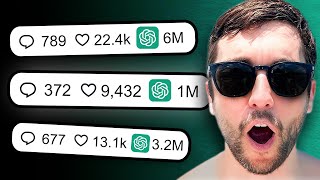
Nicholas Cole breaks down three ChatGPT Twitter threads that each hit 10 million views, explaining what hooks made them viral and how to replicate those writing strategies.
What's up, digital writers? My name is Nicholas Cole, and I want to break down three viral Twitter threads specifically around the topic of ChatGPT. And what I want to dig into is why these threads worked so well, what the one unique part of the hook was that got the reader's attention, and how you can write about ChatGPT moving forward. Because this is going to be a trending topic for the next five or 10 years, and there's a lot of different ways of thinking about how to write about it. And these three threads are a great example of how you can take something that's new and popular and trending and how you can tailor it for your own specific niche and audience. So the first one I want to look at is Dickie wrote this really amazing thread. The hook goes like this. ChatGPT is overhyped. That's what I told myself after two weeks of trying and failing to use it. Well, turns out I was just a poor, prompt writer. But after spending hundreds of hours tinkering, I finally cracked it, and now it's my personal writing assistant. Here's how. So, usually what I've found is that there's one specific thing in every hook that gets the reader's attention. Even though a hook is this whole thing, you know, it's the whole idea. There's usually one sentence or one statement or one very specific promise that gets the reader's attention. And in my mind, it's this. It's this idea of, turns out I was just a poor prompt writer. And the reason I think that this is the real root of the hook is because what it's doing is it's admitting to the reader, I didn't know how to do this. And then I figured it out. And a lot of times when you look at people's hooks, people put the expertise at the forefront, but they don't usually acknowledge the. I, at one point, wasn't an expert. And so I think this one statement opens the door for a lot of readers going, interesting. I can see myself in that hook. I am where you were five hours before this, 10 hours before this, 50 hours before this, however much time it took Dickie to create his own personal writing assistant. So whenever, as a reader, whenever I see hooks that perform really well, I'm always looking for the what's the one sentence or the one promise? And that is the thing that got my attention. And whatever got my attention there, there's probably something to leverage there in order to get other people's attention. So if you see a Hook like this, you know, my first takeaway is, okay, turns out I was just a poor prompt writer. Immediately my brain goes to, what are all the other ways that I could use this sentence? You know, I could apply it to writing, you know, Turns out I was just a poor sales copywriter. Turns out I was just a poor Twitter. Twitter writer. Turns out I was just a poor Twitter thread writer. Turns out I was just a insert whatever type of writing. I was just a poor quora writer. Poor medium writer. Right? You can just replace the word prompt with basically any niche that has to do with writing and reuse the template. You can also replace these two words with a different niche. You know, so. Turns out I was just a poor salesperson. Turns out I was just a poor real estate investor. Turns out I was just a poor. Right, and all you're doing is you're replacing the niche, which here would be writing. And then the. The vehicle. Like, what is the thing we're talking about? Are we talking about investing? Are we talking about drawing? Are we talking about storytelling? Like, what. What is the thing? And then you can build the hook around that statement, right? So you would just kind of take the related thing is overhyped. That's what I was telling myself, you know, or related thing is misunderstood, you know, but after spending hundreds of hours playing with it, I finally figured it out. So you can kind of see how this hook is broken in half. It's like before, you know, what you thought before then. This is the sentence of transition, of realization, you know, Turns out I just didn't know what I was doing. But after playing with it, I finally figured it out. And so I always like looking at hooks in this way of going, what's the full story that's being told here? And then how could I replace it for whatever I want to write about? So this is an awesome hook that Dickie wrote. At the same time, I actually wrote a similar thread, but we tackled it from two different perspectives. And I didn't know he was writing it that way. He didn't really know I was writing it this way. And I took a different approach, which was instead of, you know, my own, I didn't know what I was doing. Now I figured it out. This actually is a bit what I was talking about where just out the gate, I'm saying, I know how to use this. This is how most people approach their hooks. Is you as full, it's not as dense, it's not as informative. So when you put these two contradictory things together, it makes the reader go, interesting. You're going to give me a masterclass in 60 seconds. And it kind of goes back to this hook psychology. I talk about this all the time, which is readers always want a lot for a little. They want something expensive for free. You know, they want the huge outcome immediately. So you always want to be thinking about how to build your hooks around these fundamental sort of timeless, how can I give the reader a lot for a little? So I started with this idea of how could I create a ChatGPT thread that was a masterclass in 60 seconds? And then I kind of expanded on it and go, okay, and if you know how to do this, you're going to know how to create prompts like a virtuoso writer. So just a little explanation, but I really feel like this 62nd masterclass is the thing that makes it work. And again, when you kind of pull, pull out the this is the thing that makes it work. Think about all the things you could build around this. What? As soon as this thread went viral, my first takeaway was I should do a 62nd masterclass on how to write on Twitter. 62nd masterclass on how to Write on LinkedIn. 62nd masterclass, how to write on medium, right? So whenever you see that thing that works, don't just go, oh, this hook worked, and leave it. You want to pull out these pieces and go, how can I use them again and again and again. Then this third thread was really interesting, written by Rowan Chung. And what I really liked about this hook is that it was very specific. It was very specific to something that had to do with what was trending on Twitter at that time. So if you were paying attention and kind of reading on Twitter, you saw that there were all of these threads coming out where people had looked at the Twitter algorithm and saw, like, how much weighting was being given to different engagement metrics. And so whenever you see something trending, especially when you can combine it with another trending topic like ChatGPT, you're just the likelihood of you tapping into this as being something very long. It's like if you were to go sign up for a masterclass, it would take days, weeks, months, years, right? You associate masterclass with something that's long and arduous, and 60 second, you associate with, well, that's not a lot of time, that's easy, that's quick. But as a result of it being easy and quick, maybe it's not as full, it's not as dense, it's not as informative. So when you put These two contradictory things together, it makes the reader go, interesting. You're going to give me a masterclass in 60 seconds. And it kind of goes back to this hook psychology. I talk about this all the time, which is readers always want a lot for a little. They want something expensive for free. You know, they want the huge outcome immediately. So you always want to be thinking about how to build your hooks around these fundamental sort of timeless, how can I give the reader a lot for a little? So I started with this idea of how could I create a ChatGPT thread that was a masterclass in 60 seconds? And then I kind of expanded on it and go, okay, and if you know how to do this, you're going to know how to create prompts like a virtuoso writer. So just a little explanation, but I really feel like this 62nd masterclass is the thing that makes it work. And again, when you kind of pull, pull out the. This is the thing that makes it work. Think about all the things you could build around this. As soon as this thread went viral, my first takeaway was I should do a 62nd masterclass on how to write on Twitter. 62nd masterclass on how to Write on LinkedIn. 62nd masterclass, how to write on medium. Right? So whenever you see that thing that works, don't just go, oh, this hook worked, and leave it. You want to pull out these pieces and go, how can I use them again and again and again. Then this third thread was really interesting, written by Rowan Chung. And what I really liked about this hook is that it was very specific. It was very specific to something that had to do with what was trending on Twitter at that time. So if you were paying attention and kind of reading on Twitter, you saw that there were all of these threads coming out where people had looked at the Twitter algorithm and saw, like, how much weighting was being given to different engagement metrics. And so whenever you see something trending, especially when you can combine it with another trending topic like ChatGPT, you're just the likelihood of you tapping into the zeitgeist and going viral for a day or two is much, much higher. And so what I like about this is it was solving a specific problem. So it's like, here's how to use ChatGPT to do X something specific. And that something specific was trending and it was already being talked about. So it's. You're just compounding the likelihood of people paying attention to it. And so this hook. ChatGPT can now browse the Entire Internet. I spent my weekend. So this is a statement to pay attention to. I spent my weekend is very similar to Dickies. That's what I told myself after two weeks of trying and failing. But after spending hundreds of hours tinkering and then the hook continues. Analyzing the Twitter algorithm with help of the new ChatGPT. One thing that makes this work was the analyzing the Twitter algorithm for maximum virality. That's like the promise, but the before and after the transformation is actually this sentence. It's a little buried in there. It's I spent my weekend. And a good rule of thumb is you always want to tell the reader how you did so much work and are giving it to them for no work, no effort, right? So I spent my weekend doing all of this, so you don't have to. I spent five years getting a degree, so you don't have to. I went and read 20 books on this topic, so you don't have to. Whenever you can give readers a lot for a little, it's just, it's like, how could they not pay attention? Because the promise you're giving them is, hey, I went and spent 5, 10, 50, 100 plus hours doing this and I'm going to give it to you in less than a minute. Right? 62nd masterclass. So whenever you're thinking of creating hooks, this is how I like. Anytime I sit down to write a hook, especially on Twitter, I'm always thinking of what, what is the arc? What's the before and after? And you can see it really clearly in Dickies here. This is the before ChatGPT is overhyped. That's what I told myself. You have the moment of transition. Turns out I was just bad at it. And then you have the end of the story. After spending hundreds of hours tinkering with it, I finally cracked it. Now I have this outcome. Personal writing assistant click to read the middle, right? So every hook should always kind of COVID that, you know, before transition and outcome. And then the reader clicks for the middle. Where people go wrong with hooks is they go, I'm going to tell you the beginning. And then they think that by just telling the beginning, they're creating this mystery that makes the reader go, okay, now I want to keep reading. And that's not what happens when you only give the beginning and you don't hint at. And here's the outcome. The reader doesn't know what they're going to get. And if the reader doesn't know what they're going to get, they're not going to keep giving you their attention because there's too much risk. There's too many pieces of content out there to look at. So why would they give their attention to something that doesn't have a guaranteed outcome? The guaranteed outcome here is it's my personal writing assistant. Here's how to create a personal writing assistant for you, right? Outcome here is in 60 seconds, you can create prompts like a virtuoso writer. That's the outcome. That's the promise in this one. Here's exactly how to optimize your Twitter post for maximum virality. That's the promise, right? So every time you create a hook, you always want to be clear with yourself and with the reader. What is the promise? What are you going to give them? And how enticing that promise is, is basically the lever of how likely they are to click and read your hook, your Twitter thread, your LinkedIn post, even your book, right? You think of the introduction of a book that you're writing as the same thing. You need to convince the reader you should give your attention for the next 300 pages, right? So a hook is really just the most compressed form of that. So I love doing these breakdowns. I think it's really interesting to talk through why certain things work. If you found this helpful, drop a comment, let me know if you have other questions. Let me know if you have certain threads or LinkedIn posts or articles or newsletters you want me to do breakdowns of. But I just think that these are. This is a really good way of training your brain to look for what is the piece in the hook that really gets the reader's attention. And once you can start training yourself to notice those pieces, it's much easier to start building viral hooks for yourself.
More from Nicolas



What Every Writer Gets Wrong About Their Audience #writing #creator #writingtips




