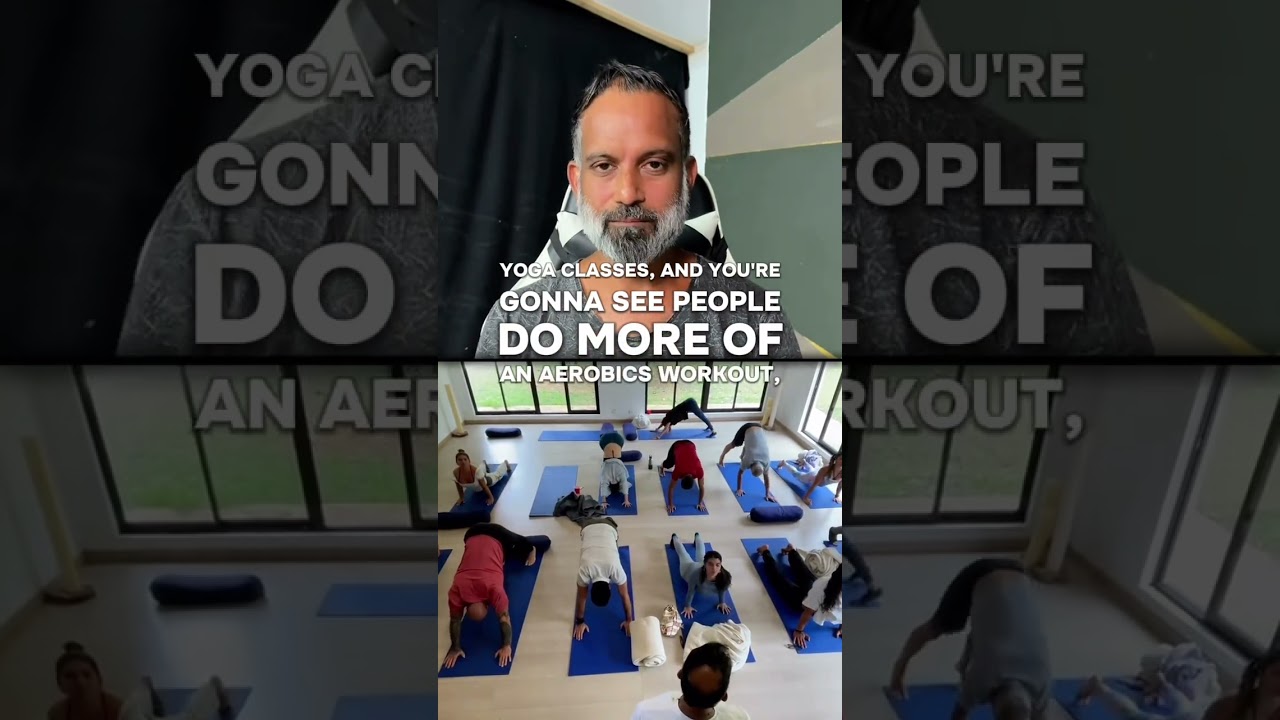
If your yoga class feels like a low impact aerobic workout, you are completely missing the point.
21 Jul 2026 · 2 min
1:41
Niraj Naik studied with a 70-year-old yogic medical doctor in India and argues that Western yoga classes miss the point by flowing continuously like aerobic workouts. Real yoga holds poses at maximal effort, creating intermittent hypoxia that forces muscles to rely on stored energy and build strength, flexibility, and resilience. The difference is breath control and stillness, not movement.
Chapters
More from Niraj

youtube.com
Guided SOMA Breath Practice with David and Chantal | Breathe Together Sunday | 2026-10-11
3d ago

youtube.com
Guided SOMA Breath Practice with Piotr Ciepiel | Breathe Together Sunday | 2026-10-04
1w ago


youtube.com
We’ve all been told we need to lift weights, run, or do HIIT to stay fit and healthy.
1w ago




youtube.com
Guided SOMA Breath Practice with Kiera Young | Breathe Together Sunday | 2026-09-27
2w ago


See all content
