Power Hour With Niraj - 22nd April at 12pm ET
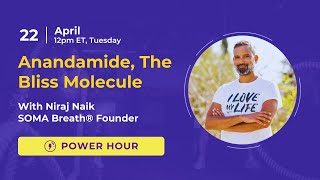
Niraj Naik, founder of Soma Breath, led a live breathing training session demonstrating a six-minute technique using rhythmic breathing and breath-holds to trigger physiological changes: increased red blood cells, nitric oxide, and BDNF. The practice releases anandamide, dopamine, and other neurotransmitters; participants should lie down if prone to fainting.
Questions this video answers
April 22, 2025
2 beats in, 4 beats out (two-in:four-out)
About 60 to 90 seconds (hold after full exhale for intermittent hypoxia; also hold-after-full-inhale variations shown)
21 Day Awakening Journey
Sorofe (by Neeraj/Neeraj Naik, featuring Nicole)
Chapters
Welcome, everyone. Let me just make sure that I am visible and that you can see me and that you can hear me as well. Welcome, all. Can you all hear me?
Yes.
Thank you so much. My name is Piotr Chepiel and I am a somobred master transformational coach. But today I will be the host of this power hour with Neeraj Naik, the founder of Soma Breath. But of course. And I see so many incredible beings here as part of this zoom call. We've got 99 participants, 100 already. How is everyone feeling right now? Can I see some smiles? Can I see? Thank you. Thank you, Adriana. Thank you, Johan. Thank you, brother. Yes. Clapping. Yes. We're going to have this as an interactive session, okay? I want you all to be involved. Some of you know me from hosting guiding sessions throughout the challenges for our Sunday Breath togethers. I'm in the app. I do a lot of work with the amazing Soma Brett. But of course, today I shall be the host. And of course, before we even bring Niraj to the stage, let's celebrate his newest release, the Soma Brett style. I don't know if you've seen the footage that I've played at the start. That is that no one has seen. That is my private footage when he played that song for the first time at the retreat where I was co leading with David in Ibiza. And he first played that song. That song is of course called Sorofe. So by all means, my beautiful beings of light and darkness, Soma bread community, I invite you all to stand up. Stand up. And just before you even start dancing, you're going to be connecting to the breath. Breathing into the nose and out through the mouth. Feel the vibrations. Close your eyes and be in the depth of the track of the vibration. Okay, I see Niraz already part of the room, so he's going to be watching you as well, but he's going to be dancing with us. So let me start sharing. Stand up, everyone. Come on. Let's make this a global movement of vibration. Music, sound, breath, smiles, joys, all of it. Okay, here we go. Are you ready? Can I see some thumbs up? Terry, Voiko, Marlene, Sebastian, Natalie.
Yes.
Amazing. Okay, let's do this. Let's do this together. Just confirm it me that you can hear this.
Can you hear this? Yes. Okay, let me just play this louder.
So.
Yeah.
Remember to breathe. Remember to connect.
It's sam.
Read in. Breathe out. Connect, vibrate, Connect, vibrate.
Me.
Sa.
Sam.
Welcome back from a trip. A trip, a trip, a trip. Let me just make sure that I'm going to. I was trying to dance, I was trying to breathe. I was also making sure that I'm admitting more and more people to the room.
Wow.
Beautiful community. Welcome, welcome. Just make sure you're calm. The moment of bliss. The moment of joy. You're in control. Welcome again, everyone that has just joined and more people are joining, welcome. My name is Piotr Schipielle, a Soma but master transformational coach, host of challenges Sunday Breathe Togethers, but also host of this power hour, Whitney Raj Naik, the founder of Soma Breath. And today we will be going deep. We will be unlocking a deeper truth within us. We're going to be talking about bliss, joy, peace. Who has experience in their life. Bliss, joy, peace. Tell me in the chat. Quickly put in me, me, me, me. And of course I do hope somebody will put in Soma Breath so much me.
So my breath brings me that bliss every time we work together. Yes. Amazing. Thank you everyone. Please keep using the. The chat box as well because I'm going to be monitoring the chat and making sure as well that any questions that you might be having throughout this entire hour, they'll be flagged and I'll just make sure that they'll be ready towards the end or in the middle. As our dearest friend, brother Niraj wants us to go deeper with this session because today we are talking about Anandamide. Anandamide. I think I always like to think this is about Ananda. Ananda. Bliss. Sanskrit bliss. The molecule in the bodies. The natural way that shows us what is possible when we align the body, the breath and consciousness. And when we are here together as this tribe, together in this community, music like that you just heard, you can go onto Spotify and just put this as your favorite track. Sort of also leave reviews, send this track to everyone because it is a high vibrating track. And just before I of course bring the rush to the floor and give him the mic, I will just play because I know some of you have requested this one. It's a short video. It's a really short video. Unseen footage of Niraj playing the track at one of the Soma Breath retreats. He hasn't seen this. Okay. He hasn't seen this. Look what's happening when you come to Soma Breath retreat. This was recorded in Ibiza by me, by my phone.
Yeah, that. That probably was me there in the background being. Because since the moment that track was launched or was just given to us as a gift, like I went like Wow. I mean, he knows this. I keep playing this at all my events as well. This track is just so powerful. Niraj, brother, how are you doing, my friend?
Thank you, Piotr, for that amazing introduction and bringing up that little memory from the past. Yeah, I think that was the first time I played it live, but there was lots of other unseen footage of when we were jamming it for the first time in the Cole in the same villa and yeah, and my intention was to get that track sign to a decent label and make a name for myself. And in the end, one of the biggest names in the Afro house world actually wanted to collab on that song when he heard it and boom, it just got released last week and it hit the top 30 in the charts within a few days. So that was pretty cool.
And yeah, that's the start of many more to come. So a little side manifesting experiment that went on, manifesting a DJ career in Ibiza that seems to be unfolding as well by itself. But obviously we bring the breath to all the worlds, right? The dance world, the medical world, the yoga world. Every single world that exists there is room for breath. And breath elevates that space. Right, so.
What I'm also going to be doing this. A lot of things happen. We've partnered with this company called Ibiza Hike Station where we now. Well, they do 8,000 plus hikes a year now it's like doubled I think, where they take people to amazing locations in Ibiza, but with our headsets which are coming very soon. The Sono Breath headsets where they do breath work experiences up in the mountains in phenomenal places. We just did one last week, 70 participants with a famous DJ DJing on the way as well. And a hike meditation that I led. So that then has opened doors to me opening, doing the opening breathwork ceremony for one of the really coolest clubs in Ibiza, coolest events and then another venue, really, really cool venue called Cova Santa. I'm gonna have like a residency where we're doing breath work in the cave before the party starts and then I'm going to DJ at the top. So loads of cool stuff started to happen unfold in Ibiza, which shows, you know, if you go deep on one, one thing, follow your bliss. We've been talking a lot about that. Magic starts to unfold. So the topic of this. Well actually first let me just see, what do you think of that song? Like am I just insane, like. Or is Piotrcho crazy? Or is it actually good.
Because I am high On Bread. I'm high on Suma. Brett, Niraj, of course. I'm crazy. Welcome to the tribe.
Nice. I see the feedback coming in. So awesome. So sounds like there's a good way to start your breathwork sessions or morning workouts. Yeah, you can put it, put it on your headphones and go down the gym and check it out. If you want to listen to on Spotify, it's Sorrow FE S O R O F E by Neeraj. My name and Nicole. You'll see one of our instructors called Nicole. She happens to be the singer on it. We've made some other amazing songs together. They'll be coming out soon as well.
So as an instructor in Big though.
Which is our library of so Breath sessions and other music, you actually get access to so much incredible music like this that we've produced not just me, but incredible musicians that we've collaborated with over the years. Our in house little tribe of magicians. So the instructors who maybe listen to this go and check out the new updated library. There's so much amazing stuff on there too. So follow your bliss. Well, you know, one of the.
Reasons why Summer Breath has music as a core part of it is because it, it really is my bliss, my passion. When I'm in a studio creating, making music, time stands still. You know, you go into this incredible flow state and the magic starts to unfold as you're doing it. So years ago, I really followed my bliss when I was a student at university. And you know, the whole saying, follow your bliss and.
Then you'll be happy and successful, well, that's not always true. Okay. Because following your bliss can sometimes take you into areas and situations and environments that are not really aligned with who you are. Right. Because, you know, you may not have the wisdom yet of which things to discern to choose, you know, which the right decisions to make. And when you're just starting out on this crazy journey when you get very successful at a young age, and I was pretty successful running big rave events, I followed my bliss and ended up doing the music thing. But I ended up in a very hedonistic world as well. And my bliss also involved getting artificially blissed on a lot of different things and substances. So I crashed and burned in the end and lost everything. And a few bad things happened around that time, bad bad luck, situations, business decisions. And boom. I ended up.
Going opposite of my bliss and becoming a pharmacist. Right. Having to finish my degree and actually work for seven years in a community pharmacy, which was like a prison Right, for me being a creative person. So I actually went against my bliss for ages and it almost killed me, right? It was soul destroying, but it was also the best thing that happened to me because if it wasn't for that, I wouldn't have the insight that I have now, you know, I wouldn't have the.
Wisdom that I have now, the knowledge I've been able to share through sober breath, and I wouldn't have found my real bliss, which is what I'm doing now. This is much more aligned with my core values. So when you're following your bliss, and you may think about this.
For yourselves.
You'Re going to think about what are your core values first, what really are your values? What do you really abide by? And this can help you somewhat to avoid getting yourself into sticky situations. Because temptation is always going to come your way when your bliss works out and you get success off following your bliss. Now the thing is.
You can at the same time end up learning more from not following your bliss, much more about what that really means. Because I think this is the thing. Bliss is always changing what we feel or what we think of as blissful.
Changes. And it's different for each person and also at different times in your life. So what I've realized, what I've tried to do now, because I know that it changes, is I've tried to now find a way to maintain a natural high, a natural, like, not ridiculous state of bliss, but a state of peace and a blissful feeling within me because I've worked hard on maintaining my health. I eat the right foods, do the right form of exercise, but most of all, I use a technique, right? That is what we should teach in Soma Breath. And this method that involves a sequence of breathing techniques, right, creates a physiological state called intermittent hypoxia. Intermittent hypoxia is a lower than normal state of oxygen. And this state, when you achieve it, creates an adaptation response to low oxygen. Your body thinks it's running out of oxygen, so what it does is it becomes more efficient at using oxygen, right? It produces more red blood cells. You increase capillaries and blood vessels, especially on your heart, into your brain and your blood flow in general around your body. And you also produce, through nitric oxide, a cascade of other incredible effects that happen. You increase.
Bdnf, the factor that increases brain cell production, neurogenesis, right? And you also stimulate P53, the guardian of the genome, protects against cancer. You increase your mitochondrial efficiency, so you make energy more efficiently, right? There's a whole Host credible benefits from just delivering a dose of this intermittent hypoxic training. So there are actually clinics out there that exist that also simulates intermittent hypoxia. And what it does, it delivers it through using machines, different concentrations of gas you breathe in and out. And the results from these clinics are incredible. And there's a lot of science and evidence now that supports all of this. We have all this on our website if you want to check out the references. But what.
Some of these effects are is.
Basically improvement in mood, protection against cardiovascular disease, reduction in symptoms of diseases, and also the awakening of stem cells. Stem cells hate oxygen in your body, so they hide in areas of your body where there's low oxygen and then they come out to play and they help to regenerate and reduce inflammation in the body. Right? So we can even deliver stem cells, wake them up out of circulation, use them for healing with this technique. And this can explain a lot of the self healing experiences that people have from doing our Soma Breath protocols. And there's so much look up intermittent hypoxic training if you want to go deeper. There's loads of information out there from all these clinics that do this as a therapy. But they cost thousands and thousands of thousands, right? Not cheap and out of reach for most people. Like, only the rich go to that stuff. Right. But with Soma Breath, we mimic, we do what they do in these clinics at home. We have an app filled with daily doses that delivers a dose of intermittent hypoxia. We also have courses like the 21 Day Awakening Journey, which follows mimics the protocol from the clinics so that the dose increases each week progressively. Right. And we have incredible testimonials from 21 days. So we know that this is working. People are getting this dose of intermittent hypoxia. But we also have instructors and instructors doing classes all over the world. You know, we have some of them on this call right now. And they run classes online, they run through our app, but also in person. And there's nothing better than getting this dose of insulin hypoxia right in the company of other people. Because there's a magic that happens with the Soma Breath technique that involves rhythmic breathing where everyone's breathing at the same time, same rhythm, followed by breath retention. And the guidance of the instructor can take people into this profound spiritually awakened state, Right? Where you feel connected to everything, something beyond yourself. Right. Even some people have conversations with God as a result of doing this. Now, here's the thing. Cambridge University did a study on the 21 Day Awakening protocol. It's now peer reviewed. And they showed how our technique can create the same effect as a dose of psilocybin used to treat severe depression, right? And they showed that a lot of the mechanism of action was the breath retention phase, the holding the breath. This is where we create the intermittent hypoxia, right? The dose. And here's what happened. There's a way I can explain the feeling that you get because this feeling of like oneness, bliss comes up, okay? And you feel it all over your body. It's like a tingly sensation that goes all over your body. You really feel like an elevated mood. Mood shift, right? So what's happening here is you're getting a release of certain neurotransmitters, okay? And it spells a dose. ADOS A stands for anandamide. Anandamide is your endocannabinoid system, right? So we actually have cannabis receptors in our body, right? When you smoke cannabis, the good stuff, right? You actually feel blissed out. And mother's milk is filled with endocannaboids, and it literally makes the baby stoned, okay? So the thing is, anandamide is the bliss molecule from the endocannabinoid system. It gives you that feeling of bliss. Ananda actually means bliss in Sanskrit, so that's where the name comes from. So that's one of these neurotransmitters that comes up.
All right?
Then you have dose. Dose stands for dopamine, all right? Some people take pain to get that dopamine hit. Others play video games and so on and so forth. Others do really crazy sports and jump out planes to get that dopamine rush. We can get it with this technique, okay? Oxytocin. Oxytocin is the social bonding hormone, right? It's actually the love molecule is known as the love hormone, okay? And it creates connection. That's what an oxytocin is really increased through the rhythmic breathing phase in a soma breath journey. And it creates a bond, right, with everybody that participates because you're all producing a lot of oxytocin at the same time, then you have serotonin. Serotonin is related to mood, right? And you produce a lot of it in the gut. When we do this abdominal breathing, we have a lot of serotonin receptors in the gut. We start to stimulate the serotonin production, okay? It's the. It can lift our mood. Endorphins, right? Is E. So that spells dose. Endorphins.
Are. Is the feeling you get from runners high, okay? Like when you're running, jogging, doing intense exercise, high intensity training, you get this glowy, warm, fuzzy feeling afterwards. It's your own natural body's painkillers, okay? And actually some people become heroin addicts because they love that feeling. It numbs all the pain, it takes away all of your cares and worries, instantly makes you feel naturally high. Right now heroin is a very like extreme dose of that. We're just talking about small doses, microdoses, macro doses, when you do longer sessions. So this is like a cocktail or feel good, positive neurotransmitters that you get that lifts your mood. If you do this at the start of the day, right, you feel bliss. And what I really believe, this is from my own personal experience and lots of research I've done studying people who are masters of change and transformation, what I really believe is that your quality decisions comes from how you feel, okay? So if everything that you have in your life, every experience you have, is a result of a decision that you make, right? Either intuitively, instinctively, or influenced by others, right? The quality of that decision comes from how you feel. So if you feel like shit, you're not gonna manifest what you want, are you gonna manifest the opposite, what you are more of, what shit that makes you feel shit. If you feel blissed out, naturally high, happy, healthy, you start to make decisions from that, that vibration. And when you make decisions on that vibration, you go towards your bliss in alignment with your core values. Because here's the thing, you'll start to know exactly what throws you off that high very quickly, because any influences taking you away from your core values, right? You'll feel it intuitively because that high goes away if you meet somebody, just not on the same frequency. You'll feel it in your body because by doing this practice, your somatic intelligence wakes up, right? And there's deeper practices we do that makes your somatic intelligence even more aware. From awareness comes really good quality, high vibrational decisions. I'm telling you, my life is completely the result of decisions I make, right? If you really boil it down, and there were many times in my life in the past when I hated my life, when I said I hate my life rather than I love my life, right? I just made the shittest, worst decisions, especially when I was hungover, right? Which happened a lot because I was trying to numb the pain. So when you're hungover, the worst decisions ever get made. And I just was always unlucky and I was just wondering, what's going on? And I blamed everyone, you know, for My problems, the world and the conspiracy of the governments and all that shit, when actually that feeling was under my control all along. It was underneath my nose this whole time. So when I got sick, when I went off my bliss, the universe gave me a choice to get back into alignment. And then from that, I actually followed my real bliss. There's an alignment to core values. Now, don't get me wrong. I still have to be very aware. I'm not always making the right decision still, you know, there's some days I don't feel great, right? I don't feel amazing, okay? If I haven't slept enough, sleep is one of the factors that really throws you off, right? But, you know, when I.
When.
But the thing is, when I maintain this practice and maintain this routine, and I do the breath, I do the journeys, I actually elevate my spirit. I have this natural height. It's like you make better, like, inspirational ideas in this state. You get, like, divine downloads. You know, you. That shuts off when you go off your blip. When you move away from that feeling by, you know, going against your core values, that. That channel, that connection to spirit gets cut off. But when you have a way to raise your vibe, you get connected to something beyond yourself. It's real magic that starts to happen. So now what I want to do is make the world naturally high, happy, healthy, right? Show them how to make this a dose, right? Naturally, every day, using just simple breathing techniques and cool music and really beautiful guidance, right? Which is what our instructors provide. Because with this morning routine, I really believe if everyone did it, the whole world did it, right? Imagine everyone was breathing together at the same time. Imagine if we all had to do it like, 11, 11 or something crazy like that. The whole world just doing a breath together at the same time. But what that would do. So that's why I want to do. That's the mission. That's the. That's what we're about. And, you know, it's working somewhat, but slowly. We need to pick up the pace, but we're getting there. And breath work is spreading anyway. It's like it's becoming mainstream now. You know, the celebrities talking about it. It's in movies. There was a remake of Beetlejuice, and I just watched it on the plane. She was. The Winona Rider character was doing breath work in the. In this movie. So, like, you can see it's now becoming mainstream, okay? But I really believe this morning routine with Soma breath that we've created, which isn't just breath by the way there's dance, there's movement, there's exercise. Piotr is going to be doing a whole challenge on the physical exercise part because there's nothing better than raising the dose, right? Than physics. Anandamide is really that bliss from within is awakened by the anaerobic exercise and this high intensity exercise that we combine with breath control, right? So we make a sequence of these practices you do every morning. It can take like 30 minutes, you can say one hour, you can customize, you can even do 15 minute one, repeat it a few times a day, just doing that, which you can find as well on the breathworks challenge. You can see a beginner's one on the breath work challenge on the Soma breath app. So if you haven't got the Soma breath app, get that. But then we have Piotr's challenge if you want to go deeper. And we have incredible instructors doing classes. So go and find an instructor near you. So what I want to do though today on the call is I want to, I want to give you a precise dose of intermittent hypoxia. One dose you're going to get in just six minutes, right? Who hasn't got six minutes a day right? Now here's the thing, you can repeat that up to 15 times, right? But we're going to be doing longer sessions because actually if you want to say, take yourself to another level, if you start to do four to eight doses a day, you start to follow that protocol, but you need to do it safely. We build up gradually. Two doses for one week, four doses the next, six, eight. When you do a progressive.
Course, right, which we, our instructors do with our clients and the 21 day awakening journey does, right, you get the actual safe, progressive benefits of intermittent hypoxia. That's happening on a day to day basis. It's not just like you do it once and forget about it. No, it's like a gradual progression. Right? So I'm going to do one dose with you today. Okay. We all, are we all ready for this to do it.
And if we have a little bit more time, I might actually do another one that's a little bit longer. But I'd love to get some questions and feedback from you. So let's do this first.
So what I recommend you do is you need to have a good posture to do breath work. You need to have good posture. So you want to sit up straight, take a deep breath in through your nose.
Into your belly, into your chest, fully in, and then let go.
And now with A straight back. You've corrected your posture. All right? You can use your breath to correct your posture. It's really cool. Now, from this position, you're going to be, when directed, breathing in through your nose. Through your nose. And imagine you're filling up your diaphragm, then into your chest. One long continuous breath in.
Then you're breathing out through your mouth.
With pursed lips, with no pause between the inhale and exhale, to the count of two. In, four, out. So let's do it like this. In, two, out, two, three, four. In, two, out, 2, 3, 4. In, two, out, Two, three, four. Okay, coming back to normal breathing. You get the hang of that. So that's the rhythmic breathing technique. You're going to be doing that for about 20 reps. Then you'll take a deep breath in, breathe all the air out, hold your breath. After full exhale, become very relaxed, and you hold your breath so you cannot hold your breath any longer. Okay? Then there'll be a point when you start to feel this, like, strange euphoric feeling, but also a little bit uncomfortable at first. You'll learn to love that bit of discomfort. At this point, you can keep holding until you get the command to breathe in. Or if you find you can't hold it at all, you breathe in, breathe out, and hold it. And repeat that a couple of times until you get told to breathe in.
And then you hold your breath in and you relax every muscle in your body as you're holding your breath.
And then you hold your breath until.
Directed. Okay? Now around 60 to 90 seconds of holding your breath is when you produce a dose, okay? That's when you produce a dose. And this is what we call the soma within, the bliss from within. Okay? So that's why you'll hear it counted in this special track, right? You'll hear it in the guidance. Okay, so all of these instructions are going to be repeated right? In the. In the session itself. So don't worry about if you get lost right now. And at the end of it, we finish with a hum. Hum.
You can even look to your third eye as you hum. And this humming completes the sequence that produces intamin, hypoxia and nitric oxide. All right? Okay, so let me get this session. It's very short.
But very, very profound.
Okay.
You ready, everybody?
Let's begin.
Welcome to SOMA Breath intermittent hypoxic training sequence, where you're going to be breathing in a two in, four out rhythm with a breath retention phase. Breathing in through your nose, out through your mouth.
That's right.
So now sit comfortably with an upright posture, relaxed. When you hear me say in, breathe in. And when you hear me say out, breathe out. The smooth and consistent rhythm to the rhythm and groove of the music. That's right. Let's begin. Three, two, one. Exhale and in.
Breathing in. Breathing out. The smooth consistent inhale and exhale.
Breathing in through your diaphragm, then into your chest and letting go on every exhale.
This rhythm should be effortless, relaxed, with no force.
Deepen your breath slightly, taking longer, deeper breaths, staying in that rhythm.
Deepen your breath even more.
Begin to breathe deep full breaths in that same consistent rhythm.
Just three breaths left before the breath retention phase.
Two breaths left.
One last breath. Now take a deep breath in and breathe all the air out, holding your breath after a full exhalation.
Relaxing the shoulders, your chest. Let your chin drop towards your chest and relax every muscle in your body. That's right. You have 60 seconds remaining on this breath hold.
If you need to take a breath at any time time, take a little sip in through your nose and breathe out. And hold your breath. And you can repeat this as many times as you need to until you get the command to inhale.
That's right. Stay calm, stay relaxed. You are perfectly safe.
Allow your muscles of your body to be relaxed.
And at ease.
Let your shoulders drop, soften your jaw, your face. Becoming very relaxed.
You have 20 seconds remaining. You're doing great. See if you can hold your breath slightly beyond the comfort zone. Going beyond what you thought was possible. Overriding the fear of holding your breath rubs off on other areas of your life where you may be having fear that holds you back. 5, 4, 3, 2, 1. Now take a deep breath all the way in.
And hold your breath after full inhalation, pulling up the muscles around your pelvic floor, your sphincter up, contracting up. You send this energy up like a spiral of light into your midbrain, illuminating you to the light. This blissful awakening. And focus now on maintaining the state of stillness by holding your breath as long as you comfortably can. Now you have 15 seconds remaining. This breath retention phase.
Relax muscles in your chest, your diaphragm.
Your face. Just stay calm and at ease and enjoy that stillness.
5, 4, 3, 2, 1. Now let go with a humor hum.
Now coming back to normal breathing, observing how you feel, noticing any changes.
Congratulations. You have now just learned and experienced how to do soma breath intamin hypoxic training. So if this felt really good, then imagine doing a whole 20 to 60 minute full deep dive session. You can find a variety of these on the Soma Breath app inside our courses like the 21 Day Awakening Journey and in our instructor's classes.
All right, so slowly coming back around.
Present moment.
So just let me know how you feel.
Give me like one word describes the vibe.
Nice.
Cleansed. Content. Refreshed. Elevated. High, transformed. Bliss. Peaceful. Wow. Shocked. I was able to hold my breath that long.
Relaxed, Amazing.
So many amazing comments coming through.
Beautiful.
Great.
All right, well.
There we go. And that was just six minutes, right? So imagine doing a longer.
More deeper session, right. With even more epic music. Well, that's what we have in Summer and Breath in our Summer and Breath app. If you haven't got the 7 breath app yet, you can do that, you can check that out and there's loads of incredible.
Beautiful tracks on there for you to try.
And.
Also our courses like the 21 Day Awakening Journey, we have like hour long sessions are very powerful. And then you can also find an instructor near you. So if anyone's got any questions about anything or any feedback they want to ask anything about what we've been talking about.
Just to recap, you know, we're all about elevating your state, especially from the start of the day, so that you make better decisions in your life. You're a nicer person to be hanging out with and that goes on and rubs on others and it's the butterfly effect of so breath. So that's our mission. We want to spread that, right? It's very tangible, simple and we're going right for the thing that actually makes us, you know, make decisions in the first place, take action. That's how we make a big change in the world is by helping people change from within, how they feel, right? So that's what we're all about. If anyone's got any questions or anything they want to share, feel free to ask.
Amazing. Raj, I just want to ask Monica, can you type into the chat? Because some participants are asking about instructors in different areas of the world so you can find them through the summer but website and you can just find an instructor near you for one on one sessions. Group events. Soma Breath is spreading. We are everywhere right now, so by all means reach out. Katherine is asking about Quebec. So Monica, if you can just type in where people can find instructors to go deeper. Somebody mentioned is one Niraj. Disappointing. We thought it's going to be 20 minutes of breathing with you today.
So now more of Niraj. Niraj is also going to be The Sunday Breath Together. Am I correct? I think this is your Sunday Breathe together as well.
Yeah. I do the.
Long, deep dive breath sessions on a different day on the Breath Together Sundays. This power hour is really about understanding the mechanics and going deeper on various subjects. Right. We have so many incredible instructors and so many free sessions all over the place.
Seriously, you don't need to join one of my calls to do that every time. There's a lot of other calls going on, a lot of other sessions going on that you can jump onto. So. Yeah. Anyone else want to say anything, ask.
Any questions, feel free to use the emoji as well. Raise your hand and.
Yeah, yeah, raise your hand. You can raise your hand and we can. Exactly. There's a few questions here, though.
Do you have experience with elder dementia? So I. Not directly, but one of the things that is known to help this degenerative brain diseases, right, like Parkinson's dementia, Alzheimer's, is getting the blood flow back to the brain. And these breath retention techniques, that's exactly what it does, is it gets blood flow going back to the brain with stem cells. Now, I can't say that this is going to reverse or like suddenly completely stop the dementia. No. But it could potentially help with symptoms and slow down progression, which is very powerful in itself. And also look up what the intermittent hypoxic training clinics offer on that. If that what they say about dementia. Because you've had to find out a lot from them as well, because I'm sure they work with a lot of older patients. All right, so we have one more question. And.
And then I'm gonna. Exactly. Then I'm gonna have Amal, Heather, Dustin, Dana as well. Just this question from Natalie Niraj. Is it normal to feel like fainting when doing the longer version? Can we faint doing that or we just have to over work through it?
Yeah, you can faint. So that's why.
It'S best to do it lying down. Right. And by fainting, you're not like. It's a different type of thing. You're. You're just. It's like going to sleep for a bit. Right. And no harm is caused by it. In fact, people feel like refreshed afterwards. But it's best to do this lying down on a bed where you're not going to fall over. And definitely don't do that in water. All right. Always good to do it when somebody's around. So there's a bunch more questions. There was this one here. How do I take a sip in when I need to extra Breath. Can you demonstrate through the notes? Yes. So when you, if you can't hold the breath as long as the instructions, what you can do is go like this.
And then so you just a quick sip in through your nose, breathe out through your mouth, hold. Right. And you can repeat that two to three times. Okay. All right, Perfect.
Shall we unmute? Amal, the first person that I see your hand raised. I'm unmuting you now, brother.
Thanks.
Thanks everyone. I hope you can hear me. Sameer, thank you so much.
We can, we can.
Yeah.
So thank you so much. Nice meeting you. So this question is Neeraj. You know I've been running sleep stress anxiety workshops in India and death book has been giving amazing results, you know, for people to come out of insomnia. Now I just had a recent case. I just wanted to bounce it off one of the women, you know, she basically had a surgery around the pelvic region and it actually misfired. The surgery got misfired and there is a bundle of nerves which is painting, you know and you know, the doctors have given up. I just wanted to maybe validate could her doing breath work, while it will help her in, you know, getting to alpha brainwave state and sleeping better, but could be also, you know, start healing the sensations of pain. So that was my question. Yeah.
Are you one of our instructors?
Yeah, I've not yet and I've not been able to get time to get, get certified. But I've been doing breath over the last one and a half, two years in my workshops I just joined.
Have you been using summer breath techniques? Because we have one track that's very good for it called. Okay. It's a 4, 8 healing alpha healing session. You'll find it on the app 48 rhythm. You breathe in for four beats alpha rates continuously and it just turns on the relaxation response. You just get very relaxed and that can really help nerve pain because it's contraction in that area that causes the pain. So when you relax all the muscles, right. The pain starts to go away and then healing can happen because blood flow goes to that area because when you're tense because of the pain, blood flow stops. Right. It gets. When you tight contract something, blood flow stops. So when you release the blood flow flows back in and that's what can help the healing process.
Also. Yeah, Also the, the breath sessions that are like, like what we just did now two in, four out with breath holds is good as well. Like the rest sleep heal session.
Thanks. Thanks.
Thank you so much. Amol Heather. I'm Going to unmute you now.
Yes. Hello, everybody.
Hello.
Oh, hi. Can you hear me?
Okay.
Thank you very much for this breathwork session. I'm grateful.
Every time I do breath work, it's either during it or towards the end or after I cry. And I didn't know.
What that means. I mean, it's a release.
It feels good.
I feel like it's an extra boost after I do the breath work. It's kind of like an extra healing. But I didn't know what your thoughts were on that.
Have you ever had time in your life where you didn't cry much or you found it hard to cry or suppressed emotion, or were you always like a crier?
I, I, maybe I think I might have had some suppression of it where it was like, you know, I'm okay, I'm okay. You know, instead of letting it.
Yeah.
Come. Yeah.
So you quite in control of your emotion? Are you, like, quite a rational person who.
Likes to.
Have some kind of control over emotions?
Yeah, yeah. Like, I don't want to be on the crazy train. Like, I like to have them be in. I want to be in control of them. Like, I don't want them to control me.
Yeah, correct. Yeah. So, so that's actually quite normal that what you're experiencing with people who are like, I'm, I'm a bit like that as well, where I don't always express how I'd want, how I normally would, because I, like, control the emotion for the situation, which is actually beneficial because sometimes you don't want me to explode.
Very nice. So, so, yeah, so, so that's the thing. We, because we live in a society where it's hard to express emotions now, you know, and cultures are different everywhere as well. So in some cultures, you're not even allowed to, you know, so depends where you are. But, so that means we, when we do something like breath work, which triggers a limbic system, it takes you right into the limbic and reptilian, takes you into those primal states, right? We get these emotional releases because you're no longer consciously able to control them anymore. It just comes up, and that's why it can feel so good, because they're stored in your muscle memories, right? They're, they're there in your memory, and when you, if you hold on to it, you become tense over and time come rigid, Right? So, you know, some people get their emotions out through sports, competition.
Work, even, you know, and down the gym doing really heavy weights and stuff. Others do it through yoga and other practices and in soma breath. We help people to do this through our, like, shaking rituals. Shaking, you know, for, like, 20 minutes to wild rave music releases so much emotion. That's what animals do when they're scared or they're disturbed, they shake. In the wild, humans can have the same release of stress with shaking. All right, so we have all these different practices in Somal Breath. In fact, everything in Somal breath will help you release repressed emotion.
So.
Yes, completely.
Thank you.
Appreciate it. Thank you very much. Yes. I. I look forward to all the breath work, and I'm. I'm very grateful for you putting this out for the world, for all of us, because we really need it.
Thank you.
Thank you. Very nice. Thank you so much. All right.
Thank you so much, Heather. Yeah, we got Dustin, our instructor, if I'm correct.
Brother.
Hey, what's up, man? Good to see you.
Hey, Dustin. Good to see you again, bro.
How you doing?
We were just in Austin together.
Yeah. Yeah. I just wanted to say just a little feedback. I think this might have been the first time I've heard in the guidance to do, like, the countdown. So, for example, like, you have three breaths left. Two, One.
Yeah.
And then the countdown for the breath hold. I. I like that. I don't. I've never really experienced that in Soma Breath. I thought that was a really cool addition.
Yeah. I think it's the way forward. Yeah. Yeah. For beginners, like.
I think it helps to follow, like, and also be prepared of the breath hold phase, because it can be a lot to remember all the instructions. So having that countdown prepares participants. But also, like, back in the day, when I first started Song of Breath, I assumed very wrongly that everyone understands the structure of music. So they would know when the breath retention phase would be intuitively, because the way the music flows. But obviously that's not how everyone is. So having that extra guidance really helps helps everybody to understand. So we're gonna have. Have to add that now going forward.
Yeah. Yeah. It's always a delicate balance between over explaining and under explaining.
Right? Yeah. Truth. Yeah. And then.
But I. I thought that was really neat. Like, I. I just woke up and I wasn't ready to go into a breath hold, like, right away. And so the countdown made me push it a little bit further, and I thought that was really good.
Nice.
Yeah.
Cool. Good feedback. All right, brother. Good seeing you.
Thank you so much for sharing, Dustin. All the best.
We just had the most epic time in Austin. Dustin showed me around, and we went to his cool biohacking facility, and he came to The Next Level Soul conference, where. Yeah, we rocked it. So.
Yes, yes, yes, yes.
Will we have time for one more? Two more?
Yeah, one more?
Yeah.
Oh, hold on, hold on, hold on.
We got three more. Let's do all three.
Yeah, absolutely.
Oh, hi. Well, I'm starting the 21 day program on the 7th of May, but I thought that I would join you today. Anyway.
I experienced air hunger since I was 15 years old, so practically all my life, which is really horrible. So I thought that I would join this to see if this can sort of regulate the way I breathe in a way. I forgot how to breathe and I need to learn how to breathe, but I want to breathe unconsciously. So you speak a lot about conscious breathing. Actually, what I would like to do is just to forget about breathing because sometimes if I don't remind myself to breathe, I find myself holding my breath and I do. I've done a lot of mouth breathing. I still do, which is obviously very unsettling and obviously that I am on a permanent fight or flight kind of.
State, which is very uncomfortable. Have you ever worked with somebody who experiences. Experience something like this successfully?
Yeah, yeah, yeah. So this is quite. I mean, tell, tell me what you mean by you suffer from air hunger. Tell me what you mean by that.
When you breathe and you can't get to the top of your breath, you know, when you breathe, you, you take an. You know, you just. You sigh and it's like, ah. But when you breathe to the top, you can't get. You are not satisfied with the breath.
You can only breathe in a little bit.
Well, I can breathe, so the problem is not my lungs. It's something else. I don't know what it is.
Yes, but tell me what symptoms do you get as a result of this.
Constant restlessness? Permanent restlessness?
I think that I generate a lot of. Of cortisol because I am on a hyper arousal sort of. I'm on permanent fight or flight because of the way I breathe. So I activate constantly my sympathetic nervous system rather than my parasympathetic nervous system.
Yes.
So it's very difficult.
But do you get any other symptoms as they affect your energy levels, your concentration?
Yeah, yeah, yeah, yeah. Oh yeah. Memory, the whole lot really. Ability.
Does it affect you, you physically, like, do you get sick more often, things like that?
No, not, not, No. I actually have a decent immune system, you know, I'm hardly ever ill, you know, okay, physically. But.
So what have you done for this? What have you done for this so far?
Well, I tried all sorts. Therapy Group therapy, Family constellations, Trauma constellations.
Well, I'm, I'm a qualified counselor myself. So I did, you know, the training.
Helped to a degree, but not really. Yeah.
So you know, I thought that focusing on something that sort of committed to something that is focused on the breath, I thought that that would be the way.
Yeah. So have you heard of Buteyko Method? Have you done anything like that? Sorry, have you heard of Buteyko Method?
No.
Okay. So Soma Breath, we have various courses and the one, there's a free one that you can start with which will give you a real understanding the physiology of breath. And from this you'll be able to understand like how to become relaxed using your breath right instantly. Then that might help already. So it's for free on the app, the Soma Breath app and it's called Breath Works Challenge. Okay.
It's called breathworks Challenge Challenge and it's.
On the Soma Breath app. If you scroll, scroll down to the courses section, it's there. Okay, do that. But if you want to go deeper, we have another course called Breath Fit which is much more about deeper on breathing retraining. You can also work with a SEMA breath instructor who can be like, where were you based?
Dorsets. I already met somebody. Yeah. In England.
Okay.
I have already met actually in South England.
Yeah. You can find a summer breath instructor. Now.
This intamin hypoxia technique can help as well, but we have to be careful that it doesn't over.
Turn you on.
Adrenalize you. Right. Because you want to do the more calming breathing practices where the slower breathing like the one we just did. Did you do this just now, the breath session? We just did?
Yeah. Yeah.
And how did you find that?
It's a bit, I mean it's a bit stressful because of what I just described how, how my breath breathing operates. But you know, I, I think, you know, I even come, I even bought the, the oximeter and, and all this. So I, I, I even wonder whether the, the, the course that I joined, that I subscribe to is going to be the.
What course did you do?
Is the 21 day.
That's a good course as well.
Okay.
It's very powerful. But I would do the, the breathworks Challenge first.
Okay.
I mean it's a very powerful course. The 21 days will help you as well. But, but just got to get to the root of what's causing. Either you're the second person.
In the lot, like the last person was at the next level soul but conference Described exactly the same thing, exactly the same symptoms. You're the second person in my life who's described symptoms like that. Right.
It's horrible. It's horrible.
Which is strange. It's strange. Like I'm wondering what it is. So I'll do some research. But I would give those two a go first.
Okay. Thank you. Thank you.
Yeah. Okay.
All right. Thanks. Thank you.
Brilliant.
Thank you so much. Guadalupe, we have also tagged you and the courses in the chat, so you can straightaway go and click, click on the links and go straight to the courses that Niraj has mentioned. Thank you so much.
Right, thank you. Thanks.
And we have our captain.
Hi, Honoraj. Three quick questions, if I may. First one, when you breathe out, should you be pulling your.
You know, your, your balamunda in when you're breathing out? No, you'd be sort of sucking your stomach in.
No, no, when you're breathing out. No, it's the opposite.
Okay. So when you're breathing in, the stomach goes out, of course, into the chest. Then when you breathe out, what should happen?
Just to clarify, just relax your diaphragm.
Just relax. Okay. Just relax.
Okay, Got it?
Yep.
Thank you.
Okay. Sleep recommendations. I wake up 5 o' clock every morning, which is. I love that. But I don't think I'm necessarily getting enough sleep. But I think somewhere I read or you said, if you're doing breath work, like every day. I do it every day, 30 minutes. How much sleep do I really need and how do I really improve the quality of my sleep?
So if you're doing this technique with breath holds, right, that we've been doing for intermittent hypoxia, you're going to. Potentially, if you improve your CO2 tolerance and your oxygen efficiency, you'll start to need less sleep. Right? Yeah. So that happens. Now, if you. When you wake up, do you feel like you haven't slept enough?
No.
Do you feel fine?
Fine. It's maybe later in the day.
What time do you go to sleep? What time do you go to sleep?
I. I aim for about 10, 10, 30, but I'm probably awake sleep.
I'll probably sleep by 11, so six hours is great. That's. That's plenty of sleep. Yeah, that's good.
Okay, final question. I do a lot of exercise, very competitive. Is there a quick technique to maximize my performance before I do, like playing.
Pound we just did today that, like that exact. That breath session. It will be going on the app in the. It will be a beginner's session.
Okay.
Sound good?
Thank you.
Yeah.
Perfect.
Nice one.
Thanks.
Cheers. Okay. Respect.
Okay, I think there was one more hand up.
Yeah, I saw Johan as well.
Yeah.
Yes, yes, yes, I see your hand back up. Perfect. Okay.
Hold on, hold on. Let me. Now just accept the unmute.
Yeah.
You'Re still muted. You're still muted.
There we go. There we go.
Perfect.
There we go.
Oh, you just mute yourself.
Now.
There we go. There we go. We're good.
Okay, let's see. Let's see if we can handle this. Okay.
Yeah.
Don't touch it now.
That's it for the small session.
Okay.
Again. Okay. I was. What. I was wondering if it was what happens. I've been. I've been experiencing with Soma breath for around a year and a half already in the Soma app and following one of your instructors just dusting over there, and I'm ready to become my training for. For.
An instructor. Sometimes I. I don't know if I'm going over my limit because sometimes I lose control of my bladder. Is that correct?
Is.
Is that all right? Should that happen or. And sometimes I get a little.
Like, injury, like. Like a little pain over here in my. In my costillas. How do you call this in English? Is that correct?
Yeah.
Or am I going way too far? Way too far?
Okay. How many rounds of the breath are you doing a day?
I wake up really, like 3:00 clock in the morning, and I do, like, two, two, two sessions. So I do 3:00am Yeah, I wake up three, three, eight. Because I believe that's the best moment to do this type of practices.
And then do you go back to sleep afterwards, or.
Oh, no, no. And then I do some visualization. I do some.
Then I start my day. I go to the gym. I just start my day. But I start when I wake up.
When you go to sleep.
I go to sleep around 9, 9 o', clock, 9, 10.
Okay, so you're getting enough. You're getting five hours? Yeah. Perfect. Cool.
Yeah.
All right.
Is that okay? Because when I. When I. When I. Sometimes when I need to do, like, the sip, that's the moment that I lose control of the bladder. So should I.
The pelvic floor or should I just relax? What should I do in that moment?
Yeah, so this is. You're the second person today who brought this up. There was another.
One of our instructor training zoom calls, and one of the instructors has the same problem, and it's not an uncommon issue. All right. So you just get so relaxed that you lose control of the bladder. That's all it is, right? And you could. If you. Obviously, if it's embarrassing, you can. First, don't drink too much water before the session. The second is you can contract a little bit, control it. Right.
Okay.
So you can control a little bit, but. But there's nothing to worry about. And also, the pain is probably from the. The. The inhalation. You know, the. The muscle pain. Right. As long, like you. You seem too healthy to have any other.
I'm really strong.
I work.
Yeah.
I work my body.
Yes. Yeah. So basically, I love strange pain and. Yeah, that's just the muscle. Okay.
And on the. On one of the different sessions that. That I find in my. In the app, there's one where these are, like, quick.
Yeah.
Through the nose and exhale through the mouth. But it's difficult to press the pelvic floor while inhaling because I inflate my stomach. And then I can't.
I.
It's like I. I don't. I can't. I don't know if I'm doing it right.
Because on the fast one. No, the fast one, just breathe out.
Don't worry about the pelvic floor.
Okay. Okay.
Yeah. It's just breathing fast. Out, out, out. Inhale. You're getting rid of the CO2. That's what allows you to go into the samadhi state.
And there's no limit. Right. I can do, like, many rounds. Okay. Or. Or.
But the intense one, don't do that too often. The intense one, do that, like, once a week. Whether it's very fast breathing. The. The one. The type that we did today, which is a few minutes of rhythmic breathing and breath holds, but slow, rhythmic breathing. Two in, four out or four in, four out or four, eight. Okay. Those ones, you can do up to 15 rounds a day.
Oh, okay.
So there's not much harm you can do, but, like, do it progressively. Don't do 15 in one go every day for the rest of your life. Just build up gradually. Right. There's also an amazing course we have called Breath of Life, which, if you subscribe to the app, there's a course called Breath of Life, and it has all these. You've done it all. Right. There you go. You know? You know?
Yeah, Yeah. I think I've done almost everything that's on the app. That's what. That's why I'm. Yeah, yeah. I'm. I'm ready to start.
My.
My instructors. Yeah. So I think.
Cool.
Yeah. I don't know. I mean, in Colombia, I made.
Where in Colombia?
Medellin.
Oh. I almost moved To Medellin.
Last year I, I know I, I wasn't ready financially, but now I'm ready and today is my birthday, so I'm paying today. But I need to make the new, a new phone call. I don't know, I'm just, I'm just flowing with, with the breath.
Oh, you're already ready to sign up?
Yes, yes.
Okay, so reach out to Monica if you can reach out to Johan and get his details. You can also message support and Monica will hook that up.
Thank you, sir. Thank you very much.
Very cool. Beautiful. Amazing. Thank you so much, Johan. It's been an absolute pleasure. Nice to meet you.
Thank you so much. I once again, happy birthday from all of us. Happy birthday.
Happy birthday. Happy birthday. See you in the community soon. Yes, respect. All right, we can do one more with Maha. She's just perfect.
Absolutely.
So I'm working overtime today. Overtime.
Hello. Hi Niraj. Hi Piotr and everyone, very, very quick question. I know you're over time regarding the someone who has sleep apnea. My brother has been suffering from sleep apnea for years and in my mind once I'm done the certificate I have to help him. So far with all the videos I watched, I didn't hear anything about sleep apnea. So I need an advice from you if there's something that can be done.
So where are you in the course?
I'm almost end of level 1B. I just need to submit my.
Yeah, so you're very early in the course.
Yeah.
So when you do, have you done the Breathworks challenge?
I'm doing daily and I'm starting the 21 challenge in two days.
No, but the breath works challenge is the first one.
Oh no, because in there doing the limitless.
Yeah, no, you need to do the Breathworks challenge. It's in the course and it's a five day challenge. You have to do that as to get the foundational knowledge and in there you'll see the part on breath hold time and your, your job as instructor is get your clients to have a breath hold time between 30 seconds or 40 seconds and beyond beyond 40 seconds. Then things like sleep apnea go away. So all of the techniques that are inside the course in the breath fit course especially will help with sleep apnea and improving your breath all time. So you, you still need to go through the course.
Okay.
You're very early. Like there's many more.
I, I, I know, I'm just asking if it's gonna. Because I'm thinking for later, I hope I can help him.
You Know.
So yes, you can.
Yeah.
100.
OK. Thank you.
Brilliant.
Thank you so much, Maha. Thank you very much.
Thank you, Pjar.
Nice. Okay. I think we've come to the end.
I think so, Niraj. I think so. And absolutely, as Niraj mentioned before, Maha, and to everyone else, if you're at the very start of your level one, level two, I mean the course itself, it just, it's packed with information and things that you, I don't think you even expect. And the bliss that we're talking about today that we used in this power hour will be delivered through so many practices. And I can vouch for that because both in retreat settings and courses online in person, it is all possible. So Maha, keep doing the work. You got this. And everyone else as well on this course. Honestly, it was an absolute pleasure. Niraj, your parting words with all of us.
So what I'm saying is follow your bliss, right? Keep following your bliss but have your core values like written down and hung up somewhere on a wall, framed so you can see them. And when you connect your mind, body and spirit as one in perfect alignment, you get into this flow jo state, you know, of divine flow, where life becomes effortless and a lot of fun. And you know, following your bliss can take you to really cool places as a result. So that's it.
Thank you so, so much everyone. If anyone here wants to be also part of the bliss, just so not. Not only as an instructor. 17th of May, Niraj is in London. The sober rave is happening. We've put that into the chat box as well. And you can put Monica again if you're in London on 17 May, raving with Niraj Naik in person.
Okay.
Ministry of Sound.
Yes. Yes.
Thank you all. Thank you all so much. Let's see everyone. Let's see everyone. Thank you very much. Niraj, brother, everyone as well. Hearts to all of you. Thank you. Blessings your way. Bliss. Ananda to everyone, all the best. Bye bye.
Peace.
Hi honey. Three quick questions if I may. First one. When you breathe out, should you be pulling your.
You know, your, your balamunda in when you're breathing out? No. Should you be sort of sucking your stomach in?
No, no. When you're breathing out? No, it's the opposite.
Okay, so when you're breathing in, the stomach goes out of course, into the chest. Then when you breathe out, what should happen?
Just to clarify, just relax your diaphragm.
Just relax. Okay.
Just relax. Okay, Got it?
Yep.
Thank you.
Okay. Sleep recommendations. I wake up 5 o' clock every morning which is. I love that. But I don't think I'm necessarily getting enough sleep. But I think somewhere I read or you said, if you're doing breath work, like, every day. I do it every day, 30 minutes. How much sleep do I really need and how do I really improve the quality of my sleep?
So if you're doing this technique with breath holds, right, that we've been doing for intermittent hypoxia, you're going to. Potentially, if you improve your CO2 tolerance and your oxygen efficiency, you'll start to need less sleep. Right? Yeah. So that happens. Now, if you. When you wake up, do you feel like you haven't slept enough?
No.
Do you feel fine?
Fine. It's maybe later in the day.
What time do you go to see. What time do you guys.
I. I aim for about 10, 10:30, but I'm probably awake sleep.
I'll probably sleep by 11, so six hours is great. That's. That's plenty of sleep. Yeah, that's good.
Okay, final question. I do a lot of exercise, very competitive. Is there a. A quick technique to maximize my performance before I do, like playing.
Pound. We just did today that, like that exact. That breath session. It will be going on the app in the. It will be a beginner session.
Okay.
Sound good?
Thank you.
Yeah.
Perfect. All right.
Nice one.
Thanks.
Cheers. Okay. Respect.
Okay, I think there was one more hand up.
Yeah, I saw Johan as well.
Yeah.
Yes, yes, I see your hand back up. Perfect. Okay.
Hold on, hold on. Let me now just accept the unmute.
Yeah.
You'Re still muted. You're still muted.
There we go. There we go.
Perfect.
There we go.
Well, you just muted yourself.
Now.
There we go. There we go. We're good.
Okay, let's see. Let's see if we can handle this. Okay.
Yeah.
Don't touch it now.
That's it for the small session.
Okay.
Again. Okay. I was. What. I was wondering if it. What happens. I've been. I've been experiencing with Soma breath for around a year and a half already in the Soma app and following one of your instructors just dusting over there, and I'm ready to become my training for. For an instructor. Sometimes I. I don't know if I'm going over my limit because sometimes I lose control of my bladder. Is that correct?
Is.
Is that all right? Should that happen or. And sometimes I get a little.
Like, injury, like. Like a little pain over here in my. In my costillas. How do you call this in English? Is that correct?
Yeah.
Or am I going way Too far. Way too far.
Okay. How many rounds of the breath are you doing a day?
I wake up really like 3:00 clock in the morning, and I do like two, two sessions. So I do like 3:00am Yeah. I wake up three, three, eight. Because I believe that's the, the best moment to do this type of practices.
And then do you go back to sleep afterwards or.
No, no, no. And then I do some visualization. I do some. Then I start my day. I go to the gym. I just start my day, but I start when I wake up.
When you go to sleep?
I go to sleep around 9, 9 o'. Clock, 9, 10.
Okay, so you're getting enough. You're getting five hours. Yeah. Perfect.
Cool.
Yeah. All right, so situation is that okay?
Because when I, when I, when I. Sometimes when I need to do like the sip, that's the moment that I lose control of the bladder. So should I, so the, the, the, the pelvic floor or should I just relax? What, what should I do with that moment?
Yeah, so this, this is, you're the second person today who brought this up. There was another.
One of our instructor training zoom calls, and one of the instructors had. Has the same problem, and it's not an uncommon issue. All right. So you just get so relaxed that you lose control of the bladder. That's all it is. Right. And you could, if you. Obviously if it's embarrassing, you can. First, don't drink too much water before the session. The second is you can contract a little bit, control it. Right.
Okay.
So you can control a little bit, but, but, but there's nothing to worry about. And also, the pain is probably from the, the inhalation. You know, the, the muscle pain. Right. As long like, you, you seem too healthy to have any other.
I'm really strong.
Yeah.
I work my body.
Yes. Yeah. So basically, kind of strange pain and. Yeah, that's just the muscle. Okay.
And on the, on one of the different sessions that, that I find in my, in the app, there's one where these are like, quick.
Yeah.
Through the nose and exhale through the mouth. But it's difficult to press the pelvic floor while inhaling because I inflate my stomach and then I can't. I, it's like I, I don't, I can't. I don't know if I'm doing it.
Right because on the fast one. No, the fast one, just breathe out.
Don't worry about the pelvic floor.
Okay. Okay.
Yeah, it's just the breathing. Fast. Out, out, out. Inhale. You're getting rid of the CO2. That's what allows you to go into the samadhi state.
And there's no limit. Right. I can do like many rounds. Okay. Or.
Or.
But the intense one, don't do that too often. The intense one, do that like once a week, whether it's very fast breathing. The. The one, the type that we did today, which is a few minutes of rhythmic breathing and breath holds, but slow, rhythmic breathing. Two in, four out or four in, four out or four, eight. Okay. Those ones, you can do up to 15 rounds a day.
So there's not much harm you can do, but, like, do it progressively. Don't do 15 in one go every day for the rest of your life. Just build up gradually. Right. There's also an amazing course we have called Breath of Life, which if you subscribe to the app, there's a course called Breath of Life and it has all these. You've done it. Yeah. There you go. You know? You know?
Yeah, Yeah. I think I've done almost everything that's on the app. That's what. That's why I'm. Yeah, yeah. I'm. I'm ready to start My. My instructor. Yeah. So I think.
Cool.
Yeah. I don't know. I'm in. In Colombia. I made.
Where in Colombia?
Medellin. Oh.
I almost moved to Medellin last year.
I. I know I. I wasn't ready financially, but now I'm ready. And today is my birthday, so I'm paying today, but I need to make a new call, A new phone call. I don't know. I'm just. I'm just flowing with. With the breath.
Are you already ready to sign up?
Yes. Yes.
Okay. So reach out to Monica if you can reach out to Johan and get his details. You can also message support and Monica will hook that up.
Thank you, sir. Thank you very much.
Very cool. Beautiful. Amazing. Thank you so much. Johan. It's been an absolute pleasure. Nice to meet you.
Thank you so much once again. Happy birthday from all of us. Happy birthday.
Happy birthday. Happy birthday. See you in the community soon. Yes, respect. All right. We can do one more with Maha. She's. Yes, perfect.
Absolutely.
So I'm working overtime today. Over time.
Hold on.
Maha.
Hello. Hi, Niraj. Hi, Piotr and everyone. Very, very quick question. I know you're over time regarding the someone who has sleep apnea. My brother has been suffering from sleep apnea for years, and in my mind, once I'm done the certificate, I have to help him so far with all the videos I watched. I didn't hear anything about sleep apnea. So I need an advice from you. If there's something that can be done.
So where are you in the course?
I'm almost end of level 1B. I just need to submit my.
Yeah, so you're very early in the course.
Yeah.
So when you do. Have you done the Breathworks challenge?
More from Niraj

Guided SOMA Breath Practice with David and Chantal | Breathe Together Sunday | 2026-10-11

Guided SOMA Breath Practice with Piotr Ciepiel | Breathe Together Sunday | 2026-10-04


We’ve all been told we need to lift weights, run, or do HIIT to stay fit and healthy.




Guided SOMA Breath Practice with Kiera Young | Breathe Together Sunday | 2026-09-27