The Truth about Statins, Cholesterol and Heart Disease - part 1
Pharmacist Niraj Naik challenges the link between high cholesterol and heart disease, citing cross-country studies, population paradoxes like the French and Inuit, and randomized trials that show mixed results. He questions how saturated fat raises cholesterol and flags how relative risk statistics can overstate statin benefits.
Chapters
And at the moment, he's also.
Earning his living being a pharmacist. And it became a tragedy to him to hand out pills all day. So he started looking at alternatives and started getting involved in what people can do for their own health. And that's how he's with us today. He's getting to talk to us about what you do for cholesterol has become a big buzzword. We all have people in our classes who are concerned about their cholesterol and they're just going to educate us today about cholesterol, its role in heart disease, what it is and very importantly, what it isn't.
Okay, so you know a bit about me already.
Just want to ask the room, what is your current view on cholesterol at the moment? Do you think that it's a really bad guy and causes all these problems, or do you think that's misleading and we've enlightened what's the general view?
Reporting to my doctor as enemy number one and I ought to be taking step in his life, they.
Which is generally the common consensus. Would you say that?
Well, the reason I've done this presentation is because I have been gathering lots of evidence to suggest actually in the defence of cholesterol, actually it's probably one of the most beneficial substances our body makes. And, you know, this crazy idea that we should be lowering cholesterol could be doing us more harm than good. So I've called this presentation Cholesterol versus the World. And I'm going to attempt to give cholesterol a fair trial, because I don't think it's had a fair trial yet. And then I'm going to let you guys decide based on the evidence, whether cholesterol is the bad guy or there's something else that causes heart disease. Okay. Okay. So a bit about me. Well, you know, probably wondering why am I so motivated about this? Well, I've been a pharmacist for like around seven years now. So really, to be totally honest, I got really frustrated at my job because we pretty much as pharmacists, spend most of our time beyond the counter, you know, dishing out drugs all day long. And we don't get the patient contact that we're supposed to get because we're so inundated with prescriptions. And, you know, for my own personal job satisfaction, I really wanted to. To be able to speak to my patients because we've done all this training at university. I felt like I was wasting all my knowledge just being sat down on the counter. So I made it my effort to go out there and speak to patients and we do something called medicine use reviews and it's a government thing where we go over a patient's medication and check whether there's any problems, whether they have any side effects, and then we offer advice, whether they need some lifestyle advice or recommendations to the doctor to change their medication. So I was doing this, I started doing this as much as possible and delegating all the other responsibilities to other people. And in doing so I found or discovered that pretty much one out of five people who were on statin medications were suffering really horribly side effects. So things like muscle cramps, tiredness, you know, even to a point there was memory loss was becoming quite common as well. So I was quite concerned because so many people are on statins, it's like a very commonly prescribed drug and I was getting so many complex side effects, I was like, right, you know, there's something not right here. So I was doing my research on statins and in doing so I discovered this whole world of research that actually maybe statins are actually doing us more harm than good by the way they work. Because the way they work is they lower our body's natural production of cholesterol. That's how they work. And the reason they've been designed is because cholesterol apparently causes heart disease. So I'm going to start this trial off and try and show to you why I believe cholesterol probably doesn't cause heart disease. It's just an idea. There's no real substantial evidence to suggest that it does.
And then I'm going to talk about at the end, in the conclusion, the ways that we can actually prevent heart disease and things, things that are non drug based, which everyone in the room actually has the ability to do now.
So that will be in the conclusion. So now I'm just going to go through all the evidence to say why cholesterol has been accused of causing heart disease. And then the defence to suggest that actually it's not cholesterol at all, it's something else. Okay, so let's start.
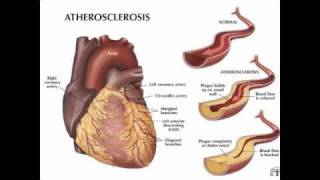
So what is actually the generally accepted view of heart disease right now? This is what is being taught to your children at schools right now. Okay, so in coronary heart disease, the important arteries and veins to take note of are the coronary arteries and veins. Okay? Now coronary heart disease is the most common form of heart disease. That's the heart disease that kills the nice people. So that's the one that we really need to worry about. And when your Coronary artery, which is the artery that supplies the blood to your heart, gets blocked. The result is a heart attack. Because what happens is your heart gets starved of oxygen and the nutrients that it needs to carry on beating, and then you get a heart attack. So what can also happen is that your arteries can be blocked for a prolonged period of time, and then slowly over time, your heart tissue can die. And that's known as myocardial infarction. Mi, you might have heard of that term before.
So really heart disease is a disease of your coronary arteries and it's often called artheriosclerosis. Have you heard of that term? So arthuria means actually this buildup of this gray white fatty gunk in your artery walls, which is also known as plaques. And cirrhosis means the general thickening and hardening. So that's where the term comes from. Now plaques are generally thought to progress from this initial fatty streak that we have to getting bigger and thicker over time. And then eventually they become calcified and they can almost turn into like these bone like tubes. But this takes a long time to occur, like decades to occur.
But it's not actually the hardened plaque that we've got to worry about. It's actually this unstable plaque. It's the intermediate stage. So what happens is during this plaque formation, you get this like cyst forming in the arteries. And this cyst actually has like a semi liquid center which is like it's goo like substance. And this is made up of fats and dead cells and broken down bits of blood clots. So you find cholesterol inside this goo like substance. Okay.
Now if this thin wall that surrounds this cyst breaks down, you get this body makes this real clotting signal, this real strong signal for your arteries to start clotting. And this results in this thrombus, a blood clot that forms over the plaque.
Now if this clot is big enough, it can actually stop the blood flow going to the heart. So this is where you get the blockage in the arteries forming.
So then that's how you get this starvation of oxygen. And that's what's known as the myocardial infarction. And basically cholesterol is now standing on trial today as being the cause of this whole disruption going on. Okay, now I'm going to try and defend cholesterol to you.
So here is an example.
Diagram of exactly what's going on. So you've got your coronary arteries, which are quite similar arteries that support the.
Blood to the heart. And then you can see normal blood flow there. But in atherosclerosis, you get these plaques building up on the wall and then eventually it can completely block and you get clots and all that stuff going on. All right, So I don't know if you can see that very well.
So let's have a look at actually, what is cholesterol? Because probably not many people actually know what cholesterol is, what it does. Okay. So it's actually found in every cell of the body, and particularly in our brain and our nerve cells. Actually, 60% of our brain is cholesterol and essential fats. Okay. Cholesterol is actually a type of fat and it's known as a lipid. And it's actually like a major building block from what our cell walls are made from. So it's a really important stuff.
And it's also used to make very important substances like our sex hormones, most of our hormones, bile acids and, you know, how, probably how important vitamin D3 is these days, and everyone's talking about it. It's actually what is required to make vitamin D3 in the body. So our body uses large quantities of cholesterol every day. And this is. This is like so important that pretty much every cell has the ability to make it, except for the brain cells.
Right. So isn't it a bit strange that we're trying to lower something that seems so beneficial? It sounds a bit strange, doesn't it? Okay, so this is the current information that's on the NHS website. So I'm going to give you a summary of what they're talking about. So this is what's going out to the whole public. And this is the current hypothesis of why cholesterol causes heart disease. So you've obviously heard of good and bad cholesterol. So cholesterol can't actually travel around the body on its own because it doesn't dissolve in water. So it's carried around in your blood by molecules called lipoproteins. The two main ones are LDL and hdl. Have you heard of those two yet?
So LDL is the main cholesterol transporter and this carries cholesterol from your liver. That's where it's made. That's where cholesterol is made to the cells that need it.
So if there's too much cholesterol for the cells to use, this can cause a harmful build up in your blood. Too much ldl, cholesterol in the blood can cause cholesterol to build up in the artery wall. So this is where this theory comes in and this leads to a disease in the arteries. And for that reason, LDL cholesterol is known as bad cholesterol. So the lower the levels of this, the better it is for our body, apparently, according to nhs. So high density lipoprotein hdl, HDL actually is the good cholesterol, which carries the cholesterol away from the cells and back to the liver. We're to going, gets broken down and then it's passed from the body as a waste product. So that's why it's known as good cholesterol, because it mops up the cholesterol from the arteries, apparently.
Now, the blood cholesterol is measured in units called millimoles per liter and it's often shortened to that. And the government recommends that your level should be less than 5 millimoles per litre.
And actually doctors are competing to get them as low as possible these days.
So these are the risks of high cholesterol that the NHS says it says that evidence strongly indicates that high cholesterol levels can cause a narrowing of the arteries, which is arteriosclerosis, heart attack and stroke. So NHS are clearly saying the cholesterol, high levels of it causes narrowing of the arteries. This is because cholesterol can build up in the artery wall, restricting the flow of blood to the heart and the brain and it can increase the chance of a blood clot developing.
So your risk of coronary heart degenerative disease, when your heart's blood, blah, blah, blah, is blocked and disrupted, rises as your blood's cholesterol level increases, other factors, such as high blood pressure and smoking, increase the risk even more. So high cholesterol is the main risk that they're talking about. And then they say other risks can increase the chance even more.
And a number of different factors contribute to high blood cholesterol. So things are lifestyle factors, diet, exercise and smoking, treatable factors like diabetes, high blood pressure. And then there's fixed factors like familial hypercholesterolemia, which is actually a genetic condition that causes really high cholesterol levels. And a. Apparently, according to the studies, people are dying of heart disease at a much younger age. I haven't gone into this in that much detail in the actual FH data, in that much detail in these presentations is very complicated. But actually, when you look at the evidence.
It'S not very clear whether it does cause heart disease at all. This high cholesterol. But then. But the books I'm going to give you to read, they really talk about this in a lot of detail.
So other lifestyle factors, unhealthy diets. This is really important, this bit. You need to really take this on board because this is where cholesterol comes in big time. So some foods such as liver, kidneys and eggs contain cholesterol, which is known as dietary cholesterol. However, dietary cholesterol has little effect on blood cholesterol. So they're admitting that the cholesterol in your food has very little effect on your blood cholesterol. But this is the point they're making. Now, what they're saying is more important is the amount of saturated fats in your diet. So foods that are high in saturated fat include stuff like red meat, meat, pea pies, sausages, hard cheese, blah, blah, blah. What they're saying.
All the things that nice.
So what they. Exactly why is so annoying, isn't it? So saturated fats, okay, in your diet is. Now what you're going to find is what they're saying creates high cholesterol in your body. Right. Now, I have to question this completely because if you look at cholesterol synthesis, how cholesterol is produced in the liver, the fundamental building block of cholesterol is a substance called acetyl Coa. It contains phosphorus, sulphur and nitrogen, none of which are found in fats. They are only found in proteins. It has several ring structures, none of which are found in fats. So what I'm wondering is, how does the liver miraculously turn saturated fat into cholesterol? Why does it do it? Who knows?
Now, this is the current theory on the mechanism of saturated fat turning into cholesterol. I've done so much research into trying to find the actual mechanism. This is all they can say. The liver has an amazing ability to change one molecule into an entirely different molecule. It can turn protein into sugar, sugar into fats, and. And so it can turn saturated fats into cholesterol. That's the hypothesis. There's no biochemical pathway that shows this.
Nothing saturated.
Exactly, isn't it? It's shocking, right?
I just think this is evidence that you've looked for. This is still what they're showing on the NHS website.
No, this is stuff that I'm now going into myself. And you can do your research yourself, go onto PubMed online and type in saturated fats turns into cholesterol in the liver. And PubMed is where they have all the research papers published online. Okay. It's a really great resource if you want to do your own research.
So, Richard, this is baffling. This is amazing, isn't it.
Now, just to disprove this theory, a study by Duke University researchers was done. University Researchers randomly assigned 120 overweight volunteers to the Atkins diet. I'm not saying the Atkins diet is very healthy, but they did this. And the volunteers reduced their carbohydrate intake to less than 20 grams a day, with 60% of the calories coming from fat. After six months of participation, they had lost 31 pounds and an 11% increase in good cholesterol. Okay. And a 49% drop in their triglyceride levels, VLDL, which is also known as the bad cholesterol. The triglyceride is also known because when you get into this, there's so many weird ad hoc theories.
It's an interesting. In this, on a high fat diet.
Their cholesterol levels dropped, their good cholesterol went up, their bad cholesterol went down.
On a high fat diet.
On a highly.
Fat.
Exactly. Super high fat. So you can see like 60% of the calories came from fat. Contradicts what you just told us. Exactly. So the current theory is that saturated fat increases cholesterol in our blood, whereas you do an experiment, it's completely the opposite. Actually makes our good cholesterol go up and the bad cholesterol go down.
Okay. I mean, don't go by just this one piece of evidence. I'm going to show you a lot more crazy paradoxes that are going to completely shock you. Okay.
Now, a study from the Oxford group examining postprandial, which means after eating effects of low fat versus low carb diet. This is from an Oxford group, and it was led by Roberts. Carb consumption raises triglycerides and VLD cholesterol. So it's actually what they're saying is sugar consumption is what raises this bad cholesterol. Okay. But the fats raise the hdl, which is the good cholesterol. And high triglycerides levels and low HDL levels are indicator of clock and glycation, the precursors of heart attack and heart disease.
Okay, so this chocolates are out and the butter is in.
Exactly. Well, yes, but there's, you know, there's different types of butter as well. I would say ghee would be better because butter I'll go into later on can cause problems. If it's made in a factory, it's just like glue, right? Pretty much. Okay, so.
There you go. That's another bit of evidence. Actually, it's the carbs, it's not the fat.
Does that include carbs from grains?
Yes. Well, it's more. I'm going to. A lot more in detail later on. It's actually fructose and high fructose corn syrup. Okay. Which I will talk about. And that's going to shock you as well.
So where does this idea come from that saturated fat and cholesterol causes heart disease? Let's go back and do some research. So there was a guy called Rudolf von Virtschau in the mid 19th century. He found great amount of cholesterol in the plaque of arteries. After examining corpses, he must have had a really fun job, and he concluded that it must be from the blood. So that's what began this idea that his cholesterol's got something to do with this.
So Nikolai. I can't pronounce his name. Anishkov. In Russia in 1930s, he fed rabbits a high cholesterol diet. Their arteries thickened and filled up with cholesterol. Okay? So then he said that this must be what happens in humans. And, well, right now, if this was a courtroom drama in real life, I would be like, objection right here. Okay? Because how can you compare a rabbit to a human? Firstly, they're herbivores, right? We have the ability to have meat and vegetables. And, you know, how can you base one?
Exactly. There's so many factors, so many different factors. And it determines on what he determines is a high cholesterol diet. Exactly, exactly.
So let's go back now to the famous Ansel Keys. Now, this guy is the. This guy is the real prime suspect at this whole saturated fact conspiracy, okay? Because what he did was in the 1950s, he performed this study called the Seven Countries Study. And our whole current understanding of saturated fat causing heart disease is based on this, right? And this is going to really blow you away.
So what he did was he took seven countries and looked at their saturated fat consumption. And what he did was he plotted a graph and he showed that there was a straight line relationship between heart disease and cholesterol levels, saturated fat intake. So these were the countries he took. So basically, what he was saying was, okay, in these seven countries, the more saturated fat they eat, the higher the cholesterol is, the more heart disease they get. Okay, now, who decided on those seven countries? Only he did. He was the one who decided on these seven countries. No one else. It was never Pixar Random or anything like that. He just plucked these seven countries, did the study. So in more recent times, Dr. Malcolm Kendrick, who's a Scottish cardiologist for over 25 years, instead of just taking seven countries.
Wouldn'T it be more smart to do, say, 25, 50 countries if you're going to do such a profound study? Well, he took 14 countries, performed the same tests, and this data was all gathered from the World Health Organization. Every single one of the seven countries with the lowest consumption of saturated fats. So the lowest consumption, saturated fat has significantly higher rates of heart disease than every single one of the seven countries with highest saturated fat consumption. So he completely turned that data over upside down.
Can you just settle it in?
Sorry, I know that's a little bit complicated. So what happened, what he did was he took 14 panel system and he found that every single one of the seven countries with the lowest consumption of saturated fat had the significantly higher rates of heart disease.
It was opposite. Totally the opposite was lost.
Okay, so this is another study which the government and everyone has based their information on about saturated fat cholesterol causing heart disease. And this is known as the Framingham study. In 1948, now, this was set up in a town called Framingham in Boston, and it still continues until today. So it's quite weird that they actually, this one town, they measure their blood and everything religiously to do this study. So the whole population was screened for factors that might be involved in causing heart disease. And their findings was that cholesterol in the blood is the best predictor of someone dying of Parkinson's. That's what they.
Found.
Ok, so what they're saying is that high cholesterol in the blood in this town was the best predictor of them dying of heart disease. So what they assume from that is a high cholesterol in the blood in this town means that high cholesterol causes heart disease. That's the assumption they make. So there's another doctor, Dr. George Mann, 1970s, very smart guy. He decided to study Maasai villages in Kenya in the 1970s. They have the highest saturated fats and cholesterol ever discovered. Their diet consists mainly of milk, meat and fats. They actually drink blood, Coca Cola, often with their breakfast.
So really, Right, by this hypothesis, they should have the highest rates of heart disease of anyone on the planet. Right. Actually, it's practically zero. They have practically zero incidence of heart disease.
But is this because they're not living long enough?
No, no, they. I don't. I don't. Well, you know, I haven't looked into that. So I don't think that that was a factor because he did a big study on this and I think he would have taken that into account.
But this is not the only paradox. This is just one example. Let's have a look at this example. Food rationing after World War II. This was the biggest probably experiment in our country ever. If you look at it, because for 12 years saturated fat consumption was severely restricted. Okay? Fruit and fish consumption increased, but the rate of heart disease nearly trebled during that time. Okay, so if saturated fat is causing the heart disease, what's going on here? This is surely their heart disease rates should be right down.
Now there's the French paradox as well. There's another amazing paradox. They eat more saturated fat than we do in the uk. They smoke more than we do in the uk. They do less exercise, they have similar cholesterol, HDL and LDL levels, have a similar average blood pressure, a similar rate of obesity, consume more saturated fat than any nation in Europe, but have one quarter of the rate of heart disease. Okay, why is all this going over in a white world? What's going on?
You say that, but in Britain we've actually overtaken the wine in, sorry, the French, in wine consumption.
But look, because that's what everyone says, it's got to be the garlic they eat, it's got to be the wine. So actually this guy called Synergy, he did a meta analysis and he looked at the effects of garlic on blood cholesterol levels and he actually concluded There is a 12% reduction with garlic therapy of the total cholesterol between garlic treated subjects and those receiving placebo. Okay, this meta analysis where they take lots of evidence from lots of other trials, put it together, then work out the best idea. Okay? So this evidence comes from a systematic review of published and unpublished randomized controlled trials and garlic preparation of at least four weeks duration. Now check this fill up. Studies were identified by search of Medline and Alternative medicine electronic database and through direct contact with garlic manufacturers.
Now do you not think that this could be biased?
Now check this out. Because he actually thought it was biased because he changed his mind when he performed his own randomised control clinical trial on garlic consumption, there was no significant difference between the group of steam garlic and the placebo in mean concentration of. Oh, so it's not the garlic. Garlic definitely the one.
Alcohol is actually. The alcohol is actually very bad. And I'll go into why later on. Okay? A small amount, not loads of alcohol, it's a small amount.
Another paradox, and this is what the government say, they explain this paradox. They say Inuit Eskimos have a high saturated fat intake with very low rates of heart disease. But this can be explained by their high consumption of beneficial omega 3 from fish. So we've all heard about omega 3s being beneficial. Okay? Now check out this Israel paradox that contradicts that. Israel has one of the highest dietary polyunsaturated fats, saturated fat ratios in the world. Their consumption of omega 6 polyunsaturated fats is about 8% higher than in the US and 10 to 12% higher than in most European countries. Despite their good diet, they have a high prevalence of cardiovascular disease, hypertension, non insulin dependent diabetes and obesity.
I want you to take on board all of these paradoxes and have a think about the people where this paradox has happened. Right. As well, and we'll go into that in a bit more detail.
Okay. Now apparently women are meant to be better protected against heart disease and that's true, they are. Okay. Now there was this, there's this one study that happened, 48,835 women aged 50 to 79. This was called the Women's Health Intervention Study in the usa. And what this actually means is that they actually changed their diets. They went in there and changed their diets, they intervened with it. And this study length was 8.1 years. And this is probably one of the most concise studies you can get where it's done over a long period of time. Very large population size. It's very controlled clinical study.
Those randomised intervention group were intensely cancelled to reduce their daily fat intake to 20% of calories, to increase intake of fruit and vegetables to at least 5 servings daily and to increase grain consumption to at least six servings daily. OK? The control group consuming on average 30% calories of fat compared to intervention groups, 27%. Okay, so you have two groups. One the consumed 37% calories of fat and the other one had 27%.
Among the studied population as a whole, there was no significant differences in coronary heart disease, stroke incidence, CHD mortality or stroke mortality or total mortality. Okay? So you know, really there should have been, there should have been at least some differences. We're going to hold whole debates, okay, on, sorry, a whole argument that to say the cholesterol, we're going to pin everything on cholesterol, say that this causes heart disease and we're going to create a whole empire of drugs that lowers it. Okay. Surely we're going to take on board some of these studies and you know, these studies should be proving, not the opposite really, they should be backing up the drug trials and all this stuff, but they're not, they're going completely against it.
Now the Japanese Paradox. The Japanese are very smart people, actually, because they actually invented high fructose corn syrup, which I was talking about before, and they gave it to the Americans, said, we're not going to take it. That stuff's evil. Right. Because they actually give us. Yeah, exactly. Getting their own back. Right. So this is a really amazing paradox. The Japanese persons in 1958, okay, the carb intakes was 84. Right. Protein intake was 11. The important one is fat intake was 5, cholesterol levels was 3.9 and the rate of stroke was 1334 per hundred. So what was happening was they were having a lot of carbs and they were like, wondering, what's going on? We're having low fat, but we're having lots of carbs. Because apparently saturated fat causes heart disease. But everyone's dying. You know what's going on. Yeah, strokes, they're all very related.
So, you know, everyone's dying. What's going on, what is happening? So what they did was because they realized, high fructose, torn, stroke is horrible, nasty. But that happened a bit later on. But they did realise that sugar was a problem. So what they did was they lowered their carb intake and they dramatically increased their fat intake because they realised that actually, fat is probably not bad for you and you probably do need it. Okay, so look at the rate of strokes, it completely went down.226 per 100,000. The cholesterol levels went up.
Yes, Dramatic rate of stroke went down. Stroke is caused by where the plaques form and the blood clot falls off and it goes and causes like, disruptions over the body, especially in the brain. So you could get a plaque forming and that blood clot could reach the brain and causes a stroke. So they're all related, heart disease and strokes, all related.
So let's go back to the NHS website. Evidence strongly indicates that high cholesterol levels can cause narrowing of the arteries, heart attack and stroke. So in this Japanese study, both rates of heart disease, stroke reduced by an increase in saturated fat consumption and an increase in cholesterol levels. Okay, so it's reduced. And this is the amazing statistic. 1 millimole fall per litre fall in cholesterol levels is equal to a 546% increase in a risk of dying from cardiovascular disease. Okay, that is a worrying, worrying statistic. This is a Japanese. We don't like to talk about other countries and what's going on there. You know, we don't. Our newspapers don't talk about it, but this is evidence.
Japan.
Yes.
What are the Highest rates of longevity.
That's correct. Totally.
I think it might be the.
Yes. Yeah. The Okinawans are the longest living in en masse on average. But the problem is. I'll talk about that now. Actually what happened was they were very long living. Okay. And actually what happened was a lot of American businesses, corporations went over to Japan and started doing business and they set up things like McDonald's and fast food restaurants. So what's happening now? This is a crazy phenomenon in Japan that some of the grand great granddads are outliving their children.
I'm sorry, their grandchildren. Grandchildren are dying when they're about 40, 50. And the great grandparents are still carrying on because they're carrying on with their old traditional ways of life, which is all about this. One of the reasons why that is is because they have more of a holistic approach to life and they're very family orientated and, you know, things that are slightly missing now from our Western way of life. I'll go into all that in a lot more detail later on. But yes, amazing statistics. So, okay, so women and heart disease. Women suffer much less than men with heart disease. They also have a higher cholesterol level than men. So that's a bit of a contradiction in itself. Women. So this is the argument. Women produce hormones that must protect themselves against high cholesterol and heart disease. Right.
They're the female hormones.
Yes, but we, that's, that's what women have.
They dropped. The levels dropped massively. But I'm going to actually totally squash that.
It's basically. In 1963, the study was carried out on women who had hysterectomies. Half of the women had their ovaries removed and at the same time they had no sex hormones and the other half retained their ovaries. So one half had sex hormones, the other one didn't. The results were there's no difference in the prevalence of coronary heart disease, disease, sorry, heart disease, between the two groups. This suggests that there's no link between female hormones and the potential protective effects on the heart.
I mean, there's lots of other studies. This is just. I'm just pulling out the main ones. I've found there's lots of others that show that. Now here's another example. If we look at Russian women against British men.
Russian women actually smoke less than British men. Their average cholesterol is lower than British men and their saturated fat consumption is at 1.32 and British men is 134.
Their death rate from heart disease is higher than British men. So if we're going to go to this whole thing that women's hearts are kettlebell, hormones, all that stuff, their death rate should actually be lower because they've got less risk factors. The British men have got more risk factors going on. They've got higher cholesterol, more saturated fat and they smoke a lot, almost double the amount.
Now let's look at Aboriginal men. This is a really crazy one as well. Aboriginal men versus British men. Aboriginal men. Blood cholesterol on average is 4.9 million miles per litre. British men 6.1. Average systolic BP is 125. So they have lower blood pressure than British men, which is 133. You know, when the doctor does your blood pressure, you've got the systolic and diastolic. So the systolic one is lower. Average BMI 23.2. So they're actually less obese than British men. And their average HDL is lower too. So the good cholesterol is actually a bit lower. 1.1 milliliters old, 1.3 million. Death rate from heart disease is 1100. Okay. Per 100,000 per year. Whereas British men is 229 going by that because their HDL is so low. You know.
It doesn't make sense, does it? If you look at the stats. Why are Aboriginal men dying?
What's going on here? How can it be the cholesterol? How can it be saturated down in cholesterol? There's something else that's killing these men, right? Causing heart disease. Okay?
Immigrant Indians have the worst case of stroke and heart disease in the UK and usa. That's a very well known fact. They also what the government says because they have more susceptibility to getting diabetes. Diabetes causes the heart disease.
Native Americans have the worst rates of heart disease.
Isn't there something similar between these two groups? Why is it that immigrant Indians and Native Americans who are people who have also had their whole lives turned upside down.
Immigrant Indians having to go from one country to another, settle in and find a new home and all this, and compete with racism and all this stuff. Native Americans have literally been trampled on. Aboriginal men, same thing. Their lives have been completely trampled and disrupted. Study in Russia responds to a dramatic increase in deaths due to heart disease. The latter half of the twentieth century by Shetov showed that a low level of LDL was the most important risk factor for dying of heart disease. So lower level of LDO was shown to be the most important risk factor. Okay, so it should be the Higher, Right. But they found there's a lower. So there's lots, so many paradoxes going on. And what was going on in Russia, there was a lot of problems politically in Russia. There was a lot of upheavals, you know, and they were under a lot of stress. Right? So we'll go in, we'll go into that in pisa.
So now the government say, but statins lower cholesterol, okay? So therefore. And they're proven to save lives. So therefore cholesterol definitely causes heart disease. It must do because of statins. So let's look at this in more detail. Artobustatin, have you heard of that? Nicotor is a very commonly prescribed heart medication. A statin medication, okay? Very, very commonly described. So a couple of years ago, a major trial that was supposed to last five years was called Ascot lla, but it was stopped early because of a massive reduction in cardiovascular deaths in those given statins compared to those taking placebo. Right. So this was Lipitor. So they found there was a massive reduction in cardiovascular deaths, right, compared to the placebo. So everyone was like, wow, this drug has to go on the market. You know, let's have a look at the actual results more closely.
Right. The most important statistic that's not talked about in the study is the overall mortality rate. So that's. That means that the actual amount of deaths in total, not just cardiovascular deaths, but deaths in total. Right.
This, however, when charted, shows no statistical difference between placebo. So although people are dying, are not dying from result of cardiovascular reasons, they're dying of something else instead. Okay, so when you look at the data more closely, you start realising that something else is going on. And, you know, isn't it suspicious that they shut this trial off after three and a half years? Why do they do that? Why do they do that? Maybe because everyone's dying of something else.
Another one, Crestor Rosuvastatin trial, that's another very famous recent statin drug. They actually made a billion. No, they spent a billion dollars just on the marketing budget for this drug. So you can imagine how much money they made. They must have made 10, 20 billion dollars out of this. So a study in 2008 showed the treatment with rosavastatin at a dose of 20 milligrams, the dose, almost half the risk of vascular events such as heart attack, stroke and death from these conditions in middle aged men and elderly men and women. Okay? So overall risk of death was down too in those taking the Rosa acetamin to the tune of 20%. So average length of treatment was just under two years. So another miracle drug, you know, it's taken the risk of death down by 20%. 20% is a big number when you look on paper. Wow. But let's have a look at that in more detail. Right. The participants picked for the study were essentially healthy anyway, so their risk of heart attacks and strokes was pretty small. Pretty small risk. So the risk of vascular events were 2.2% in the group taking a statin and 2.8%. So 2.2% are very small risk. Very small risk. So. And 2.8% is just a little bit higher. It's only 0.5% higher. Sorry, 0.6% higher. Right.
Sorry. It's only 0.6 higher. So when you actually work out the absolute risk reduction, right, if you do statistics, you'll know what I'm talking about. What that means is that you work out the difference 0.6, and then divide that by 2.8 times 100. Okay? You get 20%. Okay. So.
That'S how you make statistics more sexy. Okay. You play around with the figures a bit and you show, you know, because you have absolute risk reduction and relative risk reduction. So. So the relative risk reduction, sorry, the absolute risk reduction was only 0.5.
And the relative was 20%. So 20% sounds a lot better.
Than 0.5. So that's how drug companies tweak the results.
But this is an important point. What is also worth mentioning is that those who was treated with Rosavastin also had a significantly increased risk of diabetes. So what do you want? You know.
What, you want that, right?
Yeah.
And they were given to health, relatively healthy people anyway.
And increase their risk of getting diabetes.
Increase their risk of getting diabetes.
So lowering cholesterol probably leads to other problems. That's what my point is. Yeah.
Okay, so let's go even deeper. Right? So individuals had to have a. Your level of cholesterol less than 130mg per litre to qualify. Right. And to qualify for the study, individuals did have to have elevated levels of substance known as crp. CRP is a marker of inflammation in your body. If you've got heart disease, your CRP is generally higher. If you've got any kind of chronic disease, you tend to have a high CRP level. Okay.
Now, significant benefits were seen in Vigils who had elevated CRP levels, but no other major risk factors for cardiovascular disease. So what they're saying is rosavacin did have a beneficial effect in some people who had elevated crp. Levels, Right?
So what the point is is that maybe statins do work, but it's something completely different. It's not the cholesterol. Maybe they lower the inflammation somehow, okay? Because statins do actually have an anticoagulant effect, which is like aspirin, you know, it thins the blood. So this blood thinning effect. So there is some, you know, there's a lot of trials that show that statins do work, okay? So I'm not going to discount them completely. And what they do show is they work best in people who have already had a heart attack. So if you've already had a heart attack, it can significantly reduce your risk of having another one. But it actually has. There's no evidence to suggest if you haven't had a heart attack yet, that it actually has any effect on your risk. But the mechanism of action is probably nothing to do with cholesterol. It's probably to do with this anti inflammatory effect. The thing is there's so many other ways that you can lower your inflammation. So, so many other ways, you know, and anticoagulant effects from an aspirin could be way more beneficial.
So another example of the fact that I don't believe that statins actually.
They'Re beneficial effects got anything to do with cholesterol, okay? Because if you take a review from 2005 that assesses the impact of cholesterol reducing therapy on overall mortality, statins significantly reduced risk in overall mortality. But these other.
Therapies that reduce cholesterol, which are like fibrates, resins, niacin and diet, show no statistical significance. So that kind of shows the statins work by some other mechanism. Well, their beneficial effects are by some other mechanism completely. And whether it's worth having them in the first place, I don't know. Because the side effects of them is horrible. Side effects of statins is absolutely horrible.
So another study, University of British Columbia study. If cardiovascular serious adverse events are viewed in isolation, 71 primary prevention patients with cardiovascular risk factors have to be treated with a statin for three to five years to prevent one myocardial infarction, stroke.
Does that make sense? What it's saying is that.
Basically 71 patients who haven't had a heart attack yet, okay, which is primary prevention patients with cardiovascular risk factors have to be treated with a statin for three to five years just to prevent one myocardial infarction. So it's not a very efficient drug at all whatsoever. Do you know what I mean? You know, it's not efficient, but it Costs a fortune to the ahs. Absolute costs a fortune. The drug itself is very expensive. You have to do, you know, to keep going for checkups and doctors, you're taking a burn up on the doctor. You have to sometimes go to the hospital for checkups. So it's a very expensive drug. Very, very expensive drug. Right. So this cardiovascular event is not reflected in two measures of overall health impact, total mortality and total serious adverse events. Therefore, statins have not been shown to be providing overall health benefits in primary prevention trials. Okay.
And this study got ignored by the way. And this is by University British Columbia and they are very prominent. They work with the World Health Organization. And this is Tony Bin Ignore.
Another doctor, Dr. Graham Jackson in the UK he said long term use of statins for primary prevention of heart disease disease produced a 1% greater risk of death over 10 years versus placebo when the result of all big controlled trials reported before 2000 were combined. So it's actually causing a greater risk of death compared to the placebo.
Now this is really interesting. Royal College of Psychiatry, they say the lower cholesterol levels are related to higher levels of self reported impulsivity. The finding of a lower average cholesterol in the depression and self harm group confirms other published studies. So people who have low cholesterol tend to have more depression and cause more self harm. It is thought that cholesterol may influence serotonin, a neurotransmitter in the brain, low levels of which are associated not only with depression and suicide, but also aggression and impulsivity. So why the hell are we lowering cholesterol? What's going on.
Now? This is really cool. This is really interesting. I love this person, Dr. Marcia Engel of the New England Journal of Medicine, which is one of the most influential journals in the world. She says it used to be that drug companies simply gave grants to academic medical centers for the use of their clinical researcher to do a study. And that was it. It was totally arm's length. Okay? Now this is very different. The drug companies increasingly design the studies, they keep the data. They don't even let the researchers see the data. At the end of it, they sign contracts with the researchers and with academic medical centers saying that they don't get to publish their work unless they get permission from the drug company. Can you believe this? One of the most influential journals. What a session, right?
And everyone's got vested interest in them. If you look at the directors, they're all small amounts of people, a very small group of people all got their hands in all these different pies, like high fructose corn syrup, you know, and things like that, which I'm going to go into in more detail.
Right.
An article published in the New York Times, 2009. In a first year pharmacology class at Harvard Medical School, Matt Zurdin. So this is the New York Times. This is a very, you know, prominent paper. First year pharmacology class at Harvard Medical School. Matt Zurden grew wary as the professor promoted the benefits of pleasure of drugs and seemed to belittle the student who asked about the side effects. Mrs. Zerden later discovered something by searching online that he began sharing with his classmates. The professor was not only a full time member of the Harvard medical faculty, but a paid consultant to 10 drug companies, including five makers of cholesterol premiums. This was a big thing that went out all over the New York Times paper, but then we didn't hear about it afterwards. It went out for a bit and then it was forgotten.
So if this was a courtroom case, I'm going to summarize the prosecution of the people accusing cholesterol. Okay, so let's summarize what they would say. So countries with high saturated fat consumption have higher cholesterol levels and heart disease rates from heart disease. Okay, that's high death rates from heart disease. Sorry. And that's from Anzald Pease. That's the Anzel Key Study. People with high cholesterol in the blood have high rates of heart disease. The Framingham study in familial hypercholesterolemia, which is that disease of high cholesterol in the blood.
Shows that high cholesterol must be involved in causing heart disease. Rationing in World War II was followed by falling heart disease rates. Plaques in the arteries are full of cholesterol. Vercho and Anishtikov rabbits fed on high fat diets developed cholesterol levels and heart disease. And lowering blood cholesterol levels of statins reduces the rate of heart disease. Okay, so this is all the evidence from the prosecution.
Now let's look at it from a defence point of view. There is no association between average cholesterol levels, saturated fat consumption and the heart disease rate between countries. Because when we do a 14 country study by Dr. Kendrick and the many other paradoxes that you see in all these other countries like Sweden, France.
There is no association over the age of 50. The relationship between heart disease and cholesterol levels is gone. This is actually from the National Centre of Heart Health Statistics. And a falling cholesterol level is associated with a Greater risk of heart disease. If you look at people like immigrants, Indians, Native Americans, people like that, aborigines, you know, low cholesterol levels associated with higher risk.
When you closely examine statin trials, you can clearly see statins offer no benefit to the those who do not have heart disease, but show some benefit to those who have already got heart disease in preventing heart attacks. The actual risk reductions have been spiced up with clever statistical adjustments. And there's also a very strong link between drug companies and the research into statin development, indicating the results of the trials could be misleading, unaccurate and biased with dangerous consequences to the public. There is no installation for the mechanism by which good cholesterol actually mops up any excess cholesterol in the arteries. There's no clear explanation for the actual role bad cholesterol plays in forming arthritic plaques. And people get heart disease even with low levels of ALDL like the Australian aborigines. Right? So how could it be the ldl?
The fact that cholesterol serves such a vital role in the human body could explain why many people are shown to be particular affected by high cholesterol levels after a certain age, as it is likely to be involved in the healing process when an injury occurs in the coronary artery due to many other risk factors. Very low cholesterol levels are associated with an increased risk of many other diseases such as depression, cancer and stroke. Not to mention the recent increase in diseases of the brain where cholesterol is found in the highest levels such as Alzheimer's. The isn't that right? We've got this huge increase in Alzheimer's and dementia.
So it seems that high cholesterol does not in fact cause heart disease at all. It's something entirely different. In young men. A high cholesterol level could actually be an indicator that something's going wrong rather than it being the cause.
And it seems whenever this idea that high cholesterol causes heart disease comes up.
And it is just an idea that high cholesterol false heart disease and when it's questioned this strong evidence suggests otherwise, more and more ad hoc theories are added on when it probably would just be easier and healthier. Just admit that actually high cholesterol doesn't cause heart disease at all. It's something entirely different because there's so many different crazy ad hoc theories. There's like it's not LDL, it's VLDL. It's not VLDL, it's LPOA1. It's so complicated and crazy and convoluted. It gets more and more convoluted the more you look into it. It actually fries your head just thinking about it. So, you know, if we just admit it's not high cholesterol because it's something else, maybe we could actually start coming up with a substantial treatment of strategy that works and doesn't have side effects. Okay. Right. Well, that's. So that's the end of this first half.
So I just wanted.
Yeah, well, first I just want to ask the audience, based on this evidence, if this was a courtroom trial and you were the jury, what would you. Would you say was guilty or not guilty?
More from Niraj

Guided SOMA Breath Practice with David and Chantal | Breathe Together Sunday | 2026-10-11

Guided SOMA Breath Practice with Piotr Ciepiel | Breathe Together Sunday | 2026-10-04


We’ve all been told we need to lift weights, run, or do HIIT to stay fit and healthy.




Guided SOMA Breath Practice with Kiera Young | Breathe Together Sunday | 2026-09-27