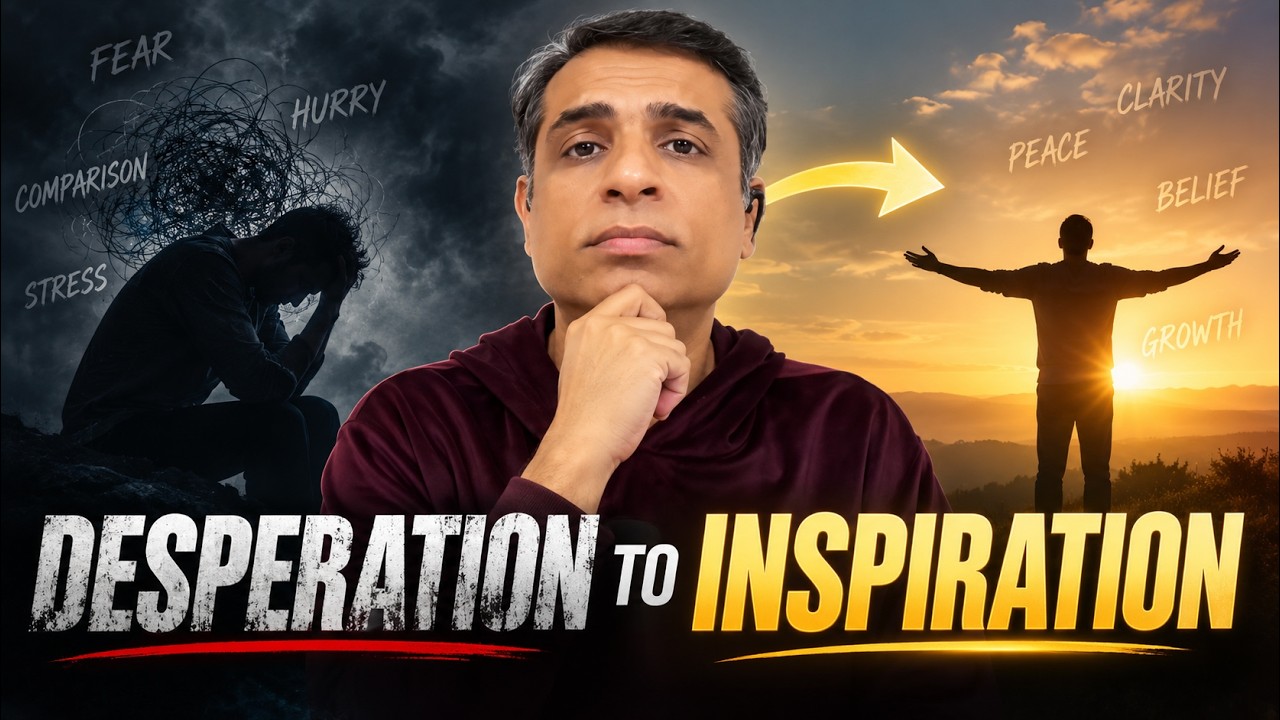
5 Toxic Emotional Patterns You Must Break | Mitesh Khatri

In this self‑help video, Mitesh Khatri (joined by Paridhi Dhingra) outlines five common toxic emotional patterns—blaming/judging, excessive criticism, victim mentality, manipulation, and snapping/reactivity. For each pattern he provides concrete examples, explains why the behavior is harmful, and offers practical tools to break it, primarily through specific affirmations and communication techniques such as the appreciation‑sandwich method. He ties the discussion to the Law of Attraction, emphasizing personal responsibility and emotional alignment as prerequisites for manifesting goals. The video also includes promotional mentions of an Advanced Law of Attraction course and a call‑to‑action encouraging viewers to share the video with others who might benefit.
Chapters
Today specifically, we are starting this first video with recognizing 5 emotional patterns which are toxic. First one is blaming and judging people. Why do we judge? Because we start blaming people. You'll see blaming and judgment always happens together. The second one is consciously or unconsciously criticizing. The more we criticize, what happens is it becomes toxic not for us but for other people first. Third one is about not being a victim in your life. When we feel victimized, we feel stuck in our life. The 4th emotional pattern which is very toxic— this is a toxic pattern which many people don't realize that they are even doing. This is called manipulation. But you know why we are not being able to be honest many times with other people? Because we are not honest with ourselves. The 5th emotional pattern which is toxic is called snapping and being reactive. When you're dealing with people who are very snappy and reactive, It's exactly like walking on the minefield because आपको नहीं पता कौन सी बात से उनको बुरा लग जाएगा और they will snap at you. Let's see what are these five patterns and how can you help yourself and other people upgrade your emotional pattern and attract better things in your life easily. A lot of us sometimes get into these toxic emotional patterns and we don't even realize it. Sometimes you meet people who have these patterns and we don't know how to deal with them because we don't recognize these patterns. Let's see what are these 5 patterns and how can you help yourself and other people upgrade your emotional pattern and attract better things in your life easily. Ready? All right. Those of you who are meeting me for the first time, my name is Mitesh Khatri. I and my wife Indu Khatri, we are Law of Attraction coaches and national bestselling authors of this book, Law of Attraction. Let's begin with emotional patterns, 5 specifically, which are toxic emotional patterns. First one is blaming and judging people. Which means what? Have you seen people sometimes who blame people around them all the time, or they blame situations around them all the time? They're constantly blaming and judging. Example, if something is going wrong in their life, they'll say the market is bad. Or if their mood is bad, they'll say the climate is bad, it's too gloomy, that's why I'm feeling bad. Or if they're not hungry, they'll say, you know, because of the summer season, it is just affecting my body right now. If they're not losing weight, they'll say it's because of my thyroid. All the time blaming something, or sometimes somebody, for all the problems in their life. And then using that blame, we start judging people. Example, I know I used to do this mistake of judging my wife, where I would judge her that because of you, this person is not talking to me because you got angry with that person. You see, I was judging her for my problem between me and my friend. But why do we judge? Because we start blaming people. So you'll see blaming and judgment always happens together. This is a pattern that you will recognize in others very easily because others are very angry. You'll see an emotion here of anger, irritation, when people are blaming, when people are judging. Now, how do you deal with this? The best way to deal with blaming and judgment is, especially if I would be going through that, then I will use this new affirmation to upgrade myself. And the affirmation is, I am 100% responsible for my life. I am 100% responsible for the way I feel. Now, when I say I am 100% responsible for my life and 100% responsible for the way I feel, am I going to blame others? Am I going to easily judge other people for what I am going through? No. Then as a result of that, our judgment goes down, our blame goes down, and our ability to take responsibility goes up, which is a very powerful pattern. So use this New affirmation. Whenever you find yourself stuck a little bit also in this toxic emotional pattern of blaming and judging, quickly remind yourself to take your right hand like this and give yourself a tapu. I do that sometimes. I give myself a tapu just to remind myself to get out of that pattern, and I tell myself loudly, Indu is not responsible. I am responsible for my life. I am responsible for the way I feel. The market is not responsible. I am responsible for my career. I am responsible for the way I feel. Nobody is responsible for my life. I am responsible for my life, and I am responsible for my feelings. Imagine what level of strength, emotional strength, will you have when you start using this affirmation every day. Makes sense? Now let's go towards the second emotional pattern, which can also be very toxic for a lot of us. The second one is consciously or unconsciously criticizing people. What is criticizing? Let's say somebody shows you something good. You look at it, and then you start criticizing something about it. Here is an example: You're sitting on the dining table, and somebody makes good food for you, and they ask you, "आज खाना कैसा था?" And you're like, "हाँ ठीक था, बस नमक कम था।" You see, we are so quick in judging and criticizing instead of appreciating. The more we criticize, what happens is it becomes toxic not for us but for other people first. And because it becomes toxic for others, it also becomes toxic for us over a period of time, because then. People start moving away from us. I realized many years ago when I did not know this pattern in my organization, my boss had told me first time that, Mitesh, you give negative feedback very easily, but you take time to give positive feedback. And I didn't realize it at that time until he gave me that feedback. And that he gave me that feedback so beautifully that I quickly understood it. And that is why I decided to upgrade my emotional pattern that day based on the recommendation of my boss. He told me, he said, Mitesh, instead of giving criticism first, give appreciation first. And even if you want to give negative feedback, give it in a beautiful sandwich format of appreciation, which means, let's say the bread comes first, then the vegetables, then the— then the bread again. What does that mean? Appreciation first, then one negative input, and then a lot of appreciation input again, so that you're sandwiching the appreciation, or rather you're sandwiching that negative input with this lot of appreciation that you're giving to people. Because of that, people feel appreciated and they learn from that negative input instead of feeling bad. You see, the intention of giving negative input is never to hurt people. The intention is to help people grow. But in the way we give negative feedback, sometimes becomes criticism. When is it called criticism? When is it not called negative feedback? If the other person gets hurt, if the other person feels bad— criticism. But if after listening to my negative input, if somebody says, "Hi, आप तो सही बोल रहे हैं।" I need to work on this. That means I communicated that negative input in a way that made sense to the person, and they wanted to learn, and they had an open mind. But that's because I gave that feedback in an appreciative way rather than in a critical way. Makes sense? So catch yourself anytime you get into this criticism pattern, and quickly upgrade yourself by using the appreciation mode, and use this affirmation for yourself. I love appreciating myself. I love appreciating others. I love seeing the good in me. I love seeing the good in others. The more you say this, when you look at even a notepad or when you look at a report, you will see the good things first and the negatives later. I'm not saying don't look at the negatives. Sometimes that's necessary to improve in life. But first, let's learn to see the good things in life. So for that, use this new emotional pattern. Use this new affirmation. I love appreciating people. I love appreciating myself. I love seeing the good in others. I love seeing the good in me. Makes sense? Now the third one is very, very important. The third one is about not being a victim in your life. A lot of people go through this toxicity of constantly feeling victimized. What is victimized? Victimized is about feeling I am stuck in my life. मैं बेचारा हूँ. When I say बेचारा, think of it as When you are in the court and कटघरे में खड़े हो, and you've been convicted and then you've been put in the jail, the person who's been sent to the jail has been convicted as a as a victim. भई इसने गलती की है। Now because of that, that person is in a jail and stuck all their life. Just like that, when we feel victimized, we feel stuck in our life. कि कोई हमारे साथ कुछ गलत कर रहा है। The more we feel victimized, the less we feel power. In fact, we feel power. Less. In our Advanced Law of Attraction course, we go into details of how you can break these emotional patterns on a regular basis, and we teach you 10 powerful lessons to upgrade yourself in Law of Attraction and attract all your goals at 10 times more speed. Interested in that? In the link of the description below, you can right now pause this video, quickly register now, and get the first lesson free of my Advanced Law of Attraction course completely free, which is worth ₹10,000. And you will learn how there is a big difference between basic and advanced law of attraction course. Because think of it, like right now we are talking about victimhood. If I continue to being a victim and if I'm saying amazing affirmations for my goals attraction every morning and evening, but the whole day I feel like a victim, will my affirmations work for me? No. That is why advanced law of attraction is very, very important. So register now and I'll see you in the first lesson stream. Let's continue today's video with 4th lesson, the 4th emotional pattern which is very toxic. This is a toxic pattern which many people don't realize that they are even doing. This is called as manipulation. What is manipulation? Manipulation is saying something which you are hiding in your heart, but you're saying something else. Here is an example. Sometimes I'm hungry and I want to eat food, but instead of telling people I am hungry, I want to eat food, We ask people, "ये तेरे को भूख लगी है क्या? Are you hungry? खाना खाना?" And the other person says, "नहीं मुझे भूख नहीं लगी।" अरे नहीं नहीं बहुत देर हो गई कुछ खा लो। You see what we are doing unconsciously? I'm manipulating the other person by not being honest about what I want. When we are not honest about what we want from other people, and we say it indirectly, subtly, to get it out of them so that then we can get what we want, that is called as manipulation. Another example of this can be many times asking a person they agree with you, not by directly asking for a positive or negative feedback, but by manipulating. Example: अच्छा बनाया ना मैंने खाना कैसा है? You see now you already said अच्छा बनाया ना कैसा है? So you're making sure the other person says अच्छा ही है because we've asked a positive closing question कि खाना अच्छा बनाया ना? Now you're not asking an open question. खाके बताओ कैसा है? अच्छा है तो अच्छा बताओ, नहीं अच्छा लगा तो बताओ लेकिन give me honest feedback. See that is being honest. But you know why we are not being able to be honest many times with other people? Because we are not honest with ourselves. So to upgrade this pattern, use this affirmation. I am honest with myself and I am honest with others. My mentor once taught me that Mitesh, there is only one person in the world whom you can be honest with. Who is that person? Yourself. Nobody else, right? So upgrade that pattern and work on that affirmation to yourself, which is, I'm honest with myself and I'm always honest with other people. Now, sometimes this pattern may not be yours. It may be somebody else's pattern. When you identify other people having this pattern, don't judge them. You don't get stuck into the first pattern that we talked about today of blaming and judging. Instead, understand the person that they are also stuck in the pattern. They're not doing it consciously. Like when we sometimes get stuck into patterns, we're not doing it consciously, right? That way others are also stuck in their patterns. So understand them, appreciate them, and you want to give them that feedback that they are right now got into this pattern of being dishonest or being manipulative. Don't give it directly, use the sandwich method, right? Upgrade in the way you communicate with them, give them lots of appreciation, then give them clarity about how they are sometimes unconsciously not asking for what they truly want They're asking for something that they— you— they want us to say instead of they saying it directly. And now give them a lot of appreciation in the end so they feel good at the end of it and they feel like working on your input. Makes sense? The 5th emotional pattern, which is toxic, is very, very powerful. And this is the emotional pattern that you'll see in many, many people. I have gone through that. Probably you have gone through that. You must have definitely met many people in your life who've gone through this pattern. It is called as snapping and being reactive. Now, what is snapping and being reactive? Let me give you an example. Have you heard about in the war zone there used to be a concept called minefield? What is a minefield? Where in the land they would hide mines, bombs, and if you step on it by mistake, boom, you die, right? Now, these minefields are called as human minefields. There were 2 kinds of minefields, by the way. One made for machines like tanks, The second way made for human beings. Now it was very difficult to go into these minefields because these mines were hidden below below the earth or below that mud, so you could never see them. When you're dealing with people who are very snappy and reactive, it's exactly like walking on the minefield because आपको नहीं पता कौन सी बात से उनको बुरा लग जाएगा और they will snap at you. Example: Let's say you tell them कल ना तुमने खाना बहुत अच्छा बनाया था। आजकल ऐसा खाना रोज खाने को नहीं मिलता। You gave a compliment, but the other person, if they are reactive in their state of mind, they'll say, "अच्छा, कल ही अच्छा बनाया था मैंने। रोज़ अच्छा खाना नहीं बनाता मैं।" Oh, you see now what happened? Your compliment converted into a reaction for them. Why? Because inside them they have so much anger, they have so much reaction that they're constantly snapping at people. Another example can be, let's say you came home late and the family members say, "क्या हो गया आज late हो गए?" And many times people snap saying, "क्या हो गया late हो गए तो family के लिए तो काम करता हूँ time pass थोड़ी कर रहा था office में." Nobody said तुम time pass कर रहे थे, but I said that because I was snapping. But why am I snapping? People who are stuck in this pattern are very reactive inside them. They're not doing it consciously, and because they are reactive inside them, it's like inside them they've got fire all the time. They've got burning sensation all the time. So if you touch a little bit, boom! It blasts like a minefield. So how do you deal with this emotional pattern in case you find yourself being stuck with it? Well, you say a simple affirmation. I have a lot of patience and I'm very calm as a person. I have a lot of patience and I'm very calm as a person. In case we don't say this affirmation, what happens is the old pattern continues. कि मुझे बहुत जल्दी गुस्सा आता है। People say this also. If you observe people who are very snappy and reactive, they say this. मुझे ना बहुत जल्दी गुस्सा आ जाता है। कोई कुछ बोलता है ना मेरे को अच्छा नहीं लगता है। And they keep repeating that affirmation so they become more snappy. More reactive, correct? So don't judge these people if you catch them. Reply to them by saying again and again unconsciously to them saying, "You have a lot of patience. You're very calm as a person." Give them that compliment again and again. The more you give them that compliment, the better they become as a human being. But if you keep repeating to them, "You're very reactive," तुम बहुत गुस्सा करते हो। Now what happens is this becomes their identity because everybody around them constantly keeps telling them that they are short tempered and they're very reactive. So they continue to become reactive. This goes into a negative loop. So to help them upgrade, you be the one person who gives them that compliment every single time you meet them. पता है तुम्हारी एक बात बहुत अच्छी लगती है। Patience बहुत है तुम्हारे। You're a very calm person. I love the way you talk. You always have a lot of patience. And the more you say that over a period of time, that becomes that person's identity. Makes sense? Now you can use this affirmation for yourself or somebody else. That's your choice. But listen, do you know some people in your life right now who need to understand these emotional patterns and break them and upgrade them? Instead of you telling them about these patterns, my suggestion would be share this video. I'll tell you why. When we tell our friends to change, they don't like it. Like, if I go and tell my best friend to do all these things, you think he's going to like it? No. So you know what I do? I take my mentor's video and I send it to him. See, that way people learn because Between them, that relationship of friendship is not there, so it's easy for them to learn. So share this video today with 3 people at least who you know need to break these patterns so that you can help them grow. And remember to appreciate them, don't misunderstand them, don't judge them too strongly. And if you found that you have one of these patterns, don't be too hard on yourself. It's okay, we are human beings, we get stuck in these patterns. Now love yourself, be compassionate with yourself, and upgrade your pattern. And subscribe to the channel right now and hit the bell icon so that the next time I come up with a video like this, you definitely get an email from YouTube. Okay, see you soon in the next video. Bye.
More from Paridhi


The secret to making manifestation actually work #manifestationtips #mindset #shorts


ou Create Goals but Can't Stay Consistent? Here's Why 👀 | Mitesh Khatri | Law Of Attraction
The Money Mistake That Keeps You From Becoming Wealthy | Mitesh Khatri | Law Of Attraction

The ONE Emotion Blocking Your Wealth | Why Impatience Keeps You in Lack | Mitesh Khatri


The Hidden Reason You Feel Responsible for Everyone | Mitesh Khatri | Law Of Attraction