In this YouTube video, Paridhi Dhingra demonstrates a rapid, 30‑second Neuro‑Linguistic Programming (NLP) technique designed to interrupt and reduce anxiety. She first explains how anxiety often leads to shame, self‑judgment, and isolation, especially in high‑achieving professionals like doctors, and how these patterns can persist for decades. The core intervention involves dramatically changing one’s body language—standing on one leg, raising a hand, touching the tongue to the nose, jumping, taking cold showers, rubbing ice on the face, or other sudden physical actions—to shock the nervous system and break the anxiety loop. The demo with a participant named Indu shows the method in real time, with the participant moving from breathlessness and tears to normal breathing within seconds. Paridhi emphasizes that the technique may need to be repeated, but frequency should decrease as the pattern weakens. She also stresses the importance of self‑acceptance and loving others experiencing anxiety. The video concludes with a call to action: a free introductory NLP lesson and an invitation to enroll in a full NLP certification course, plus standard YouTube subscription prompts.
Chapters
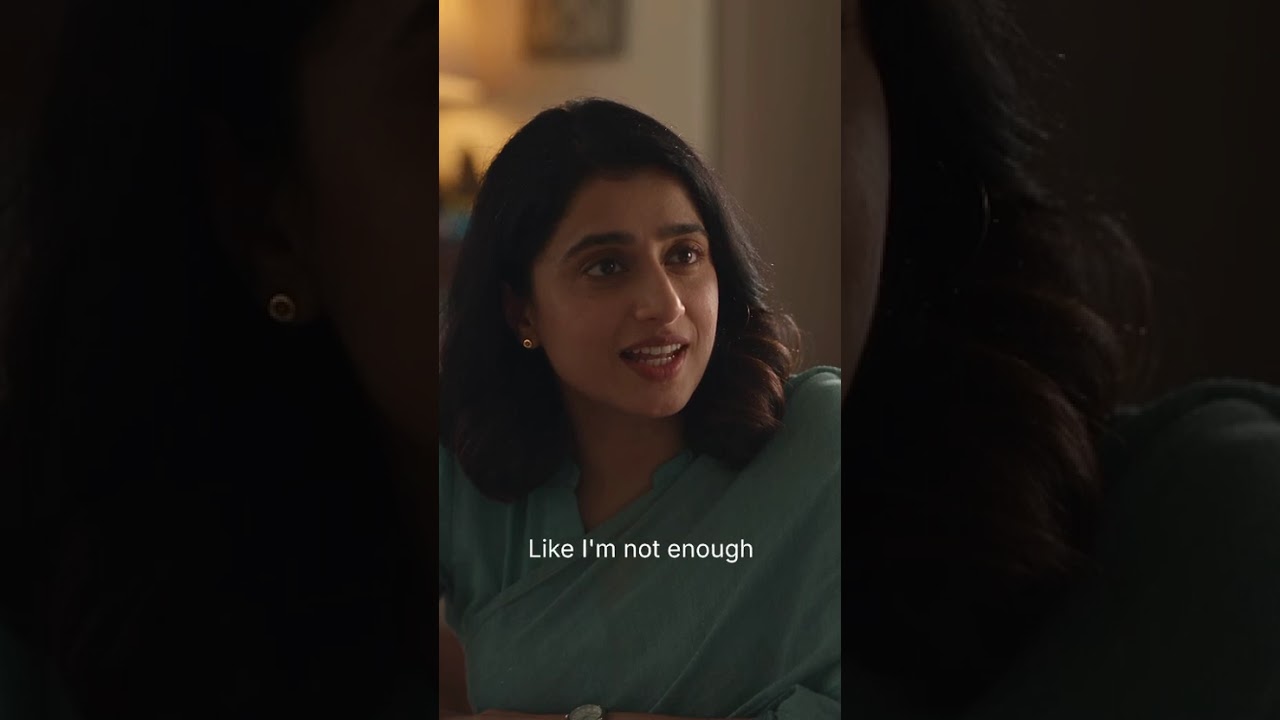
You okay, ma?
I'm super breathless.
Why?
What happened? I'm breathless also. I don't know.
What happened?
I have no idea what happened. I can't tell you.
Don't worry, she's fine. We wanted to show you this is what anxiety can look like. And when people go through this kind of an anxiety attack, many times they're trying to hide, they're trying to be alone, and they feel so ashamed of that experience that they don't talk about it to anybody. In this particular story, you will observe that this lady, she's a doctor, but in spite of that, because of all the judgment, all the conditioning about anxiety is bad, and she was judging herself, she was going through a lot of shame, going through a lot of guilt. Eventually, she became very, very lonely. And because of this, she was not able to deal with this anxiety for more than 20 years in her life. But here is the best part. The best part is, no matter how difficult anxiety is, it can be broken in just 30 seconds, and we will show you how today. Is it normal to have anxiety?
It is normal to have anxiety.
Why can a person have anxiety?
It can be anything. It can be the person's resistance to deal with things.
So past experiences can trigger it?
Past Experience used to trigger her like this. Anything used to happen and she used to get triggered.
Right. So past experiences, bad memories, a bad situation can also trigger anxiety. Right.
But then once it gets anchored, once it is there, then any small thing can also trigger it. It is not necessary that entire thing has to happen. Any small thing or a thought or a memory can also trigger it.
Can a person like this believe that now I am stuck? मैं ऐसा ही हूँ, मैं ऐसी ही हूँ.
Yes.
I am like this only and start judging themselves.
They start not only judging themselves, they start looking down to themselves. Then they start going into the shell. They stop working. Then they also start thinking that I'm not good enough.
If you relate to this for yourself or for somebody else, we want you to know this can be resolved. This is normal, right? So what do we need to do? We need to apply a very powerful technique here from a powerful concept called NLP, called as Neuro-Linguistic Programming. And I'll give you the first lesson of complete NLP course, the first lesson free. Link is in the description. But right now, I want to show you how one simple technique from NLP can break your anxiety in 30 seconds. I did with her, which you can do with yourself, with your friends, and it can give you results like this. It's called changing your body language dramatically. Now, what does that mean? If she is going through anxiety— Hey! She's locked into a particular body language. Example, can you go back to that body language? How would it be? Higher or lower body language? Breathing would be deep and restless, or would it be normal?
No, it will be deep and restless.
Deep and restless, right? Can you show me that again? Now, when she's going through this, she's locked into that body language. Here is what I did with this doctor. I said, doctor, wait, continue going through what you're going through. I'm not stopping you, but what I want you to do is Stand on one leg. Go ahead. Now see, she's standing on one leg and she's getting a little unstable. I want you to keep your one hand up. Look up. Try to remove your tongue and touch your nose.
Ahhhhh!
Now go through the anxiety if you need to. It's okay. Keep standing. And she was crying, by the way. She had tears and she was smiling at the same time. And I said, continue crying, nothing to worry. Don't judge yourself. Stand up. Keep that one leg up. Keep one hand up. Keep trying to touch your tongue to your nose. And try to think of a bad memory, Indu.
I can't.
Think of your worst nightmare. I can't. Maybe the day you got married to me. Okay, keep your hands down. And here is what happened. In reality, in 30 seconds, she was normal. Her tears went away. And I showed the whole crowd, all 300 people. So I said, if this anxiety was permanent, how can it change in 30 seconds? People with anxiety believe that that they are going through reality. They're going through permanent reality in their life. It is not their reality. It is just a symptom. Now you can deal with this by changing the body language dramatically. Now when I say dramatically, it really means dramatically. It cannot be as simple as I'm crying and I just turn on the left and cry. That is not enough. So what do you mean by dramatically, Indu? Give you— give them some examples.
It can be a lot of things. It can be start jumping. It can be go splash the water.
So I can start jumping?
Go take a shower, and if it is winter, take cold shower. If it is summer, take hot shower.
So take a shower won't work, but taking a cold shower works.
मुझे तो
बहुत जोर से ठंड लगती
है। Or else, if you if you are at a place where you cannot do lot of things, then you can just ask for a couple of ice cubes and rub it on your face.
Such a brilliant idea.
To break your pattern immediately.
Dramatically changes your body language. दो बरफ खा भी लेना। Right? Imagine how it dramatically shifts your body language from outside. And inside. And if that person is in the office and they're going through this anxiety and they can't talk to their colleagues, they can't talk to their friends, how do they use this 30-second technique of changing their body language dramatically?
Just go to washroom, start jumping in the washroom. As simple as that. You have privacy there.
If washroom is locked, so how about going to the emergency exit in the staircase area?
And they can jump there as well. They can jump there. They can find a lot of places.
They can go down 2 stairs and come back.
Come back.
Even that is possible.
Yeah, they can do that. You can do a lot of things. You just have to be creative to change your body language. Remember, you have to change your body language dramatically.
Dramatically, right? And the more dramatic the change in the body language, the faster the shift from anxiety to once again strength and in-control behavior. Your breathing will come back to normal. Your strength, your emotional control will come back in your hands and in your heart. And then you can take control of your life. Now, when you're doing this dramatic shift in body language, sometimes it may feel like, okay, the problem is solved. But Indu, is it possible that sometimes I have to repeat this body change example?
Yes, that's a very good question. In fact, it is a possibility that you may get it more frequently, but as you start breaking it, as you start stopping it, it will reduce. So say like right now, let's say you are in a very high anxiety— cancel, cancel. You get once in a day. Then when you start breaking your pattern, it will start reducing. You may start getting it once in two days, then once in three days. Like this, it will. But I have
to keep
changing the body language dramatically again and again and again
again. The question they may have is for how long?
जब तक आपको लगता है कि आपकी anxiety चली नहीं गई।
करना क्या? Body language है तो change करना है। So remember, do it as long as it takes, and remember it can be dealt with. Now the question is, are you going to apply this on someone you know, or are you going to love and accept them? Because most of us, what we do is we judge them.
Yes.
And we overreact about their anxiety. Now sometimes that's ourselves, sometimes that's somebody else, and we're thinking, why is this person going through so much anxiety? But that's judgment. What we can do is not only apply this technique on them, but also love and accept them the way they are. But believe it or not, I go through it, she goes through it, we all go through it for different reasons. Not only is it normal, you can heal it, you can deal with it this fast, and you can love and accept yourself and other people who are going through it easily.
Easily, yes.
Now remember what we told you. If you want to become a master at this— master, not just like a little bit of this— you want to become a master at this, what can they do?
They can sign up for a free program. We have a first lesson free for you. That's called NLP. We do an NLP certification course. So you can come, you can attend the first lesson completely free, and then if you feel like, you can sign up.
All right, see you soon in our next video. And the next time you come, make sure that you're already subscribed. So hit the subscribe button now and the bell icon so that every time we introduce something like this, you always get a notification. See you soon. Bye.