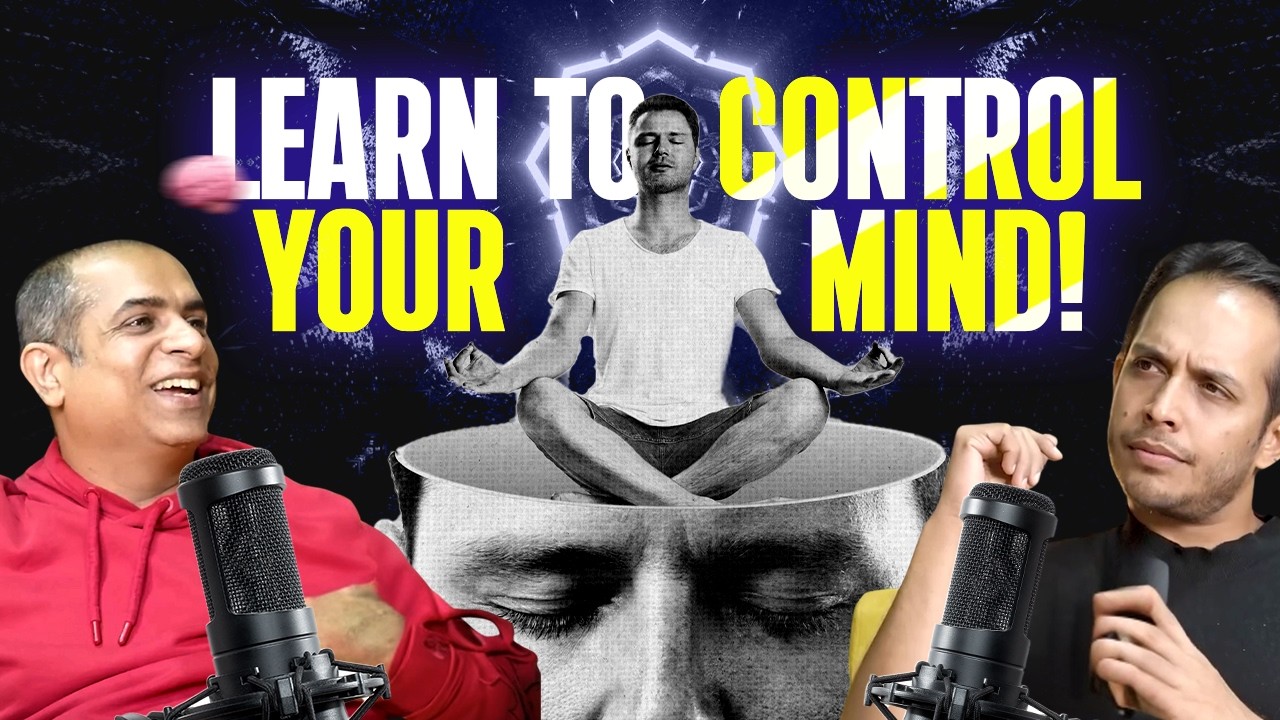
In this conversational interview, Paridhi Dhingra and Dr. Sidvariar explore how Neuro‑Linguistic Programming (NLP) explains the ways we filter reality through Generalization, Distortion, and Deletion (GDD). They argue that these mental filters shape our emotions, beliefs, and ultimately what we attract into our lives. The dialogue walks through concrete examples: how people over‑generalize negative experiences, how misinterpretations (distortions) fuel conflict in relationships and workplaces, and how deleting positive memories can lead to depression. To counter these patterns, they demonstrate practical NLP techniques—asking clients to recall recent easy actions to break negative generalizations, and a guided gratitude visualization that sequentially revives cherished childhood memories while physically embodying them. Dr. Sidvariar adds a neuroscientific layer, describing the amygdala hijack and threat‑biased attention that keeps negative spirals alive, and how gratitude practices can rewire this response. The conversation ends with a call for "healthy skepticism" and an invitation to register for a deeper NLP lesson, encouraging viewers to experiment with the techniques themselves.
Chapters
So NLP says there are 3 ways in which we communicate and receive communication. We call it GDD— generalization, distortion, and deletion. Deletion is what? So when we delete information which we don't need— and now they would imagine delete all the good memories of their life. What if they deleted every blessing they've had? What if they deleted every good thing that happened to them? Life would feel meaningless. Being able to regulate that deletion module is about understanding how I can stop deleting good information from my past And highlight positive information. In NLP, we say be aware of your GDD so that you can know how to regulate that. Why? Because our generalizations are creating our emotions, our beliefs. And if you don't take control of those emotions and beliefs, you don't control what you're attracting.
At some level, um, both sadness and happiness are reactions of our brain to how you perceive reality. True. People can be unhappy in the quote-unquote best of situations, and they could find happiness in the worst situation of life.
Can't get a better example than this.
Absolutely right. So if you are in a concentration camp and people are actually finding happiness there, um, there is a lot to be said about how our brain can reprogram reality to make it work for us.
So NLP says there are 3 ways in which we communicate and receive communication. We call it GDD— generalization, distortion, and deletion. Okay, so which means, what is a generalization? A generalization is everything seems the same. So you'll see people who generalize a lot, they'll say, you never listen to me.
GDD is how you perceive
information,
information,
experiences of life. How do you interpret experiences of life? Let's say a person who's talking to me and the person says, you know what, things never come easy to me. Is that interesting? Really? When was the last time you got something easily? Now guess where will they look?
In their past, obviously. Yeah.
Now I want to make sure they look in their past, so I'm going to ask them a past-related question,
right?
So, okay, tell me, when was the last thing you got easy? I don't know. So just look for it. It can be a small thing, doesn't have to be a big thing. So I don't know. I said, did you open your shoes easily today? Of course. So okay, did you open the door easily? Oh come on, that's too much. Did you drive easily? Did you walk easily? Did you breathe easily? Did you eat easily? So today since morning, how many things did you do easily versus not easily? And they're like, yeah, that's actually true. So I said, today how many difficult things happened? Nothing.
Nothing happened.
I said, okay, in the last 3 days? One. I had a difficult conversation with my wife. Okay, in the last 1 week? 2. So if you compare that with the number of instances which are easy versus not easy in the last 1 week— so now what I'm doing is, in NLP we say break down their generalizations which are negative,
right? Because somebody who generalizes will tend to pick up on only the things that confirm their bias. So is this also confirmation bias?
Confirmation bias, but expanding it, multiplying it 10 times,
right?
Even though it is seen once, they'll see it 10 times. It's almost like Ravan's head.
Yeah,
there's one, but we see 10,
right?
The moment I say the word Ravan, it's a rank up. Similarly, a person who's a generalizer would, whether positive or negative, they'll generalize. Example which I say is, uh, my wife asks, am I looking beautiful? Say yes. You look all— you always look beautiful no matter what you wear. You always look beautiful.
Some generalizations are useful.
Exactly. So generalization is not necessarily a bad thing, but in NLP we say be aware of your GDD so that you can know how to regulate that. Why? Because our generalizations are creating our emotions, our beliefs.
Yeah.
And if you don't take control of those emotions and beliefs, you don't control what you're attracting. Because you're not controlling what you're acting. So look at the word acting and attracting. My actions create my results, my results creates my attractions. A lot of times law of attraction is seen as hocus focus, but it has a lot to do with positive action. But how do I take positive action if I have negative beliefs?
Yeah,
and negative feelings. But it is very difficult to say that to a person who's used to having negative generalizations.
Okay,
so help them regulate those generalizations. If they do, suddenly now they know Okay, here I can generalize, here I don't need to generalize. Similarly, distortion. A person can see— oh no, what is a distortion? Let me explain that first. Have you ever had a situation where somebody said something to you and you misunderstood that?
Yes.
And you felt bad?
Yes.
And later you realize you were wrong?
Yes.
Now that's a distortion.
Yeah. And usually that distortion happens because you have some preconceived notion of what that person feels about you or—
Fair. Perception about that person, right?
Yes.
But if I'm not a distorter first, I'll generalize it more negative, then distort more negative.
Oh.
Yes.
Oh.
So people who misunderstand a lot are distorters in the sequence first. What if I could teach them how to identify their distortions and reduce that? Suddenly, There could be less misunderstandings between a boss and a subordinate.
Yeah.
Suddenly there could be less misunderstandings between a couple, husband and wife. Like, for an example, one of the most common things between a husband and wife is the wife says something and he says, why are you saying that about me? And she's like, I didn't mean that.
Yeah.
And he's like, no, you meant it. She's like, no, but I didn't mean it. Now this guy is insisting.
Yeah.
You insulted me, you meant it.
Yeah,
but what if it's just a distortion?
Yeah,
of our brain. Then that poor wife has nothing to do with it because,
yeah,
she's just barely playing the role of a stimulus. But my program is to distort it negatively so I feel bad feeling humiliated. Similarly, there is deletion.
Deletion is what?
So when we delete information which we don't need or we should— like, imagine a person who would think of all their past memories and misunderstand a lot of them,
a
lot of distortion. And then multiply that by doing generalization that nobody loves me, nobody supports me, nothing works in life, I have always worked hard, nothing really works for me. So much of generalization which is negative. And now they would imagine delete all the good memories of their life.
Hmm.
What if they deleted every blessing they've had? What if they deleted every good thing that happened to them? Life would feel meaningless. No wonder they would go into depression. So Being able to regulate that deletion module is about understanding how I can stop deleting good information from my past and highlight positive information.
Hmm.
So in NLP, one of the things we practice is we make a person close your eyes. Try this at home. It's a beautiful exercise of closing your eyes and starting from your childhood. Think of the first good memory, earliest that you can go, and To make it better, use your body language. Like, take your hand like this and imagine you're holding that memory with your eyes closed. And you— the moment you remember the memory, you bring it in your heart. It's just a metaphorical way of feeling it. And then you go a little above that age and you bring the second best memory, then the third best memory, then the fourth best memory, then the fifth. So we actually do this with people with music. And interestingly, when I look at them and their eyes are closed, their eyes are going towards their past. So if they fake it, I would know it. And they kept feeling it. And in just about 3 minutes of this exercise— try it at home with some beautiful music— you'll have tears of gratitude. She's like, wow, my life is so amazing. So what did I do? All the stuff that you had deleted, I brought it back. So what if we could bring back a lot of beautiful memories and delete a lot of not so beautiful memories?
Yeah.
What would that do to me? And how useful could that be?
Yeah, this is very interesting because when you are in a negative spiral,
yeah,
um, neuroscientifically what is happening is that you are under a sense of threat.
Yes.
You, you, you are convinced that something is wrong, something is going wrong with you. And whenever you are threatened, it is very difficult to spot good news.
True.
Because it is biologically more important to spot bad news.
True.
So you will only think of the negative things, you'll only spot the bad people. You'll only think of, um, things that make you feel angry or threatened or sad.
Also called as the amygdala hijack.
The amygdala hijack. So that's pretty much what it is. So your amygdala is more sensitive to spotting threatening patterns, correct? And, um, in order to get out of it, I now realize that gratitude practices are great because you are in a way convincing your own Negative patterns that things are not as bad as they think, as you think they are. True. So gratitude practice is a great way to do it, and this technique that you're explaining is a very in-your-face gratitude practice. It's not just write it down somewhere.
No, no, no.
You are visualizing it. You're going back to that moment.
You're even physically metaphorically bringing it back
to you. Yes. I think I really yeah. I think that would work. That's a really good. That's a really good technique.
Thank you. All right, how was that video? Did you love it? You saw how neurologists have an open mind, and because they have that mindset of a scientist, even when they are skeptical, they are healthy skeptical. What is healthy skepticism? They say कि चलो करके देखते हैं, पता करते हैं कि होता है कि नहीं होता है। They don't directly become skeptical saying कि नहीं होता। This is the power of scientists. Like Dr. Sidhvariar. So what I want you to do is be a scientist in your life, where before you discard anything, before you believe in anything, खुद try करके देखो, सोचो, think. If you really had the power to transform your mind, isn't it worth learning it? और जा क्या रहा है? Sixty to seventy-five minutes of your life and you can learn more details of an NLP right now. Did you register for the first lesson that I gave you? If not, do it now. And like I said, skeptical बनो, लेकिन healthy skeptical बनो। Find out for yourself whether it works or not. And if you realize that it works, बल्ले-बल्ले, फिर तो life में निकल पड़ी, right? Awesome. So I will see you soon in my next YouTube video. But before that, hit the subscribe button and hit the bell icon so that the next time I'm creating videos like this, you definitely get a notification. Okay? See you soon. Bye bye.