7 Signs You’re in a Toxic Relationship (And How to Break Free)
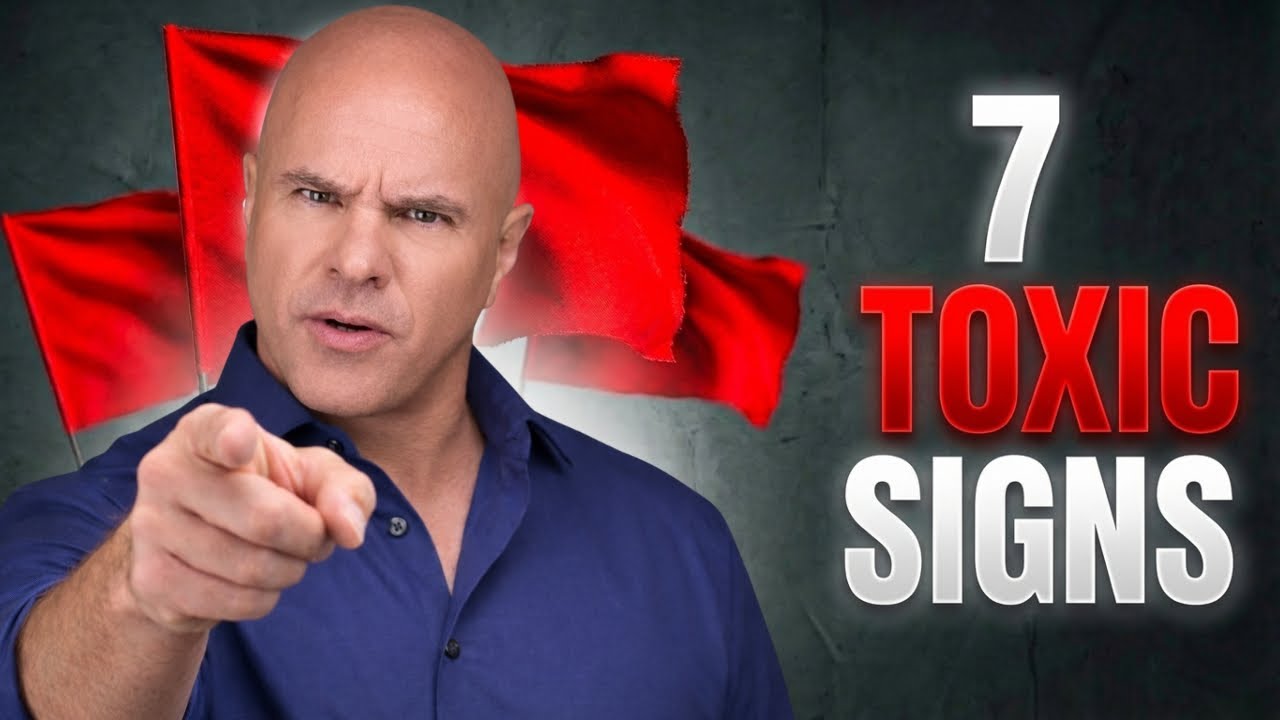
Ralph Brewer, founder of Help for Men, identifies seven toxic relationship patterns: emotional manipulation, disrespect, control, volatility, lack of accountability, inconsistent affection, and chronic negativity. He compares a toxic relationship to a phone battery constantly draining, and argues that real change from a toxic partner is rare without their willingness to seek help.
Chapters
Every man dreams of finding that woman that makes his life better. Someone who brings him peace, love, and joy. But sometimes the woman that you love the most slowly turns into the person that hurts you the most. And like everything else in life, it doesn't just happen all of a sudden. It happens a little bit at a time, doesn't it? One little mean comment here, a little guilt trip there, and she explains it away and you forgive her. And then one day you kind of wake up and you're sad and you're confused and you're tired and you don't know who you are anymore. If this sounds familiar, you are not alone. It is not your imagination. Something may very well in fact be going on here, and that something is probably very unhealthy. I know all this because been there and done that. Over a decade ago, I endured a terrible divorce and I had to rebuild myself from the ground up. And I have dedicated my life to helping out other guys just like you do the same thing. Today, I run Help for Men in our private support community that we call the Brotherhood. Hundreds of men from all over the world get together to help learn from each other, to get support and rebuild their confidence and stop their pain and stop getting stuck in these toxic relationships. Because yes, there is a way out. You are not broken and you are not alone. You can learn more about our organization at help4men.com/join. A lot of people think that toxic means like really overt stuff, a lot of screaming and yelling, but that's not it. Because truthfully, everyone gets upset at times, right? Everyone gets mad, everyone gets angry, but that toxicity happens when that bad behavior on the part of your happens over and over and over again, and it just becomes part of your normal day-to-day life, and it slowly makes your life worse. Instead of your relationship giving you strength, it takes away your energy, your joy of life, yes, your money and your peace. Think of your relationship like a phone battery. A good relationship keeps the battery charged on a regular basis. You feel focused, you feel calmer, you feel stronger when you're in this relationship. In a toxic relationship, on the other hand, your battery is consistently drained. You are always in low power mode, just trying to survive day to day. The little things always become big things in a toxic relationship. A small insult today can become consistent insults day after day after day. One little lie, little innocent white lie or gaslighting can become a lot of confusion and a lot of you questioning your reality. If you don't act early and address this toxicity, then the resentment grows and the trust dies and the relationship starts to disintegrate and your life goes into what we call chaos. And the end cost of all this is not just like a nasty breakup, but it could be a loss of a great chunk of your life, a lot of lost time, damaged self-esteem, financial stress, and yes, let's not forget about the poor kids and the impact that it has on them. So let's talk about what you can do to avoid some of these toxic behaviors. What are some of the early red flag signs that you can look out for in a relationship? Relationship. Number 1, emotional manipulation. Emotional manipulation is one of the clearest signs that you have a toxic partner on your hands. Emotional manipulation is when your partner uses your feelings as a tool to control your behavior and your decisions in life. So instead of having healthy, open communication between the two of you, she uses what she knows is your shame and your guilt and your fears, and she takes those and uses them against you, all in an effort just to manipulate you and get her way in the end. Some ways in which this emotional manipulation may manifest itself is that she makes you feel guilty for maybe wanting to go see your family. Maybe any kind of little need that you may have in the relationship, she labels as being very unreasonable. Or maybe she flat out denies ever saying things that you very clearly remember her saying or doing. And what's bad about all these things is that over time, they cause you to lose trust in yourself. You start second-guessing everything. Are my needs normal needs, or are they just really needy, baby-like needs? If I go have time with my friends, am I taking away time from my family? Is it selfish of me to want to have time just for me? When I rest, does that make me less of a partner, less of a parent, just because sometimes I'm tired and I want to just do nothing? You may find yourself constantly apologizing to your partner. You may just want to stop all the tension and all the negative anxiety that you're feeling over all the manipulating that she's doing to you. So your shame, your internal shame intensifies over time to the point where you start hiding like genuinely innocent little things about yourself because you you don't want her to use that information against you. So the longer this dynamic goes on, you feel very confused, but at the same time very dependent on her. Believe it or not, in healthy relationships, conflict is addressed through adult communication, calm words, and respect. But in a relationship that is emotionally manipulative, love and affection are conditional. Love and affection is withdrawn whenever you are assertive and whenever you put up boundaries, and the love and affection is only returned when you submit. This keeps you chasing seeking approval from her rather than being true to yourself. Number 2 red flag to look out for: disrespect and contempt. Disrespect and contempt from our partner does a very good job of further eroding our sense of self-respect. At first, like everything else, it just seems like innocent little jabs, doesn't it? She may say something kind of snotty about what you're wearing, or maybe she rolls her eyes when you talk about something that you're really interested in, or maybe when you're in a social group she makes jokes at your expense. But contempt goes a little bit further than these little innocent jabs, so to speak. It's this ongoing theme of looking down on you. Over time, all the little jokes and the digs and the eye rolling and all that stuff, it builds and builds, and eventually you feel like less than poop on the bottom of her shoe. You begin to very much doubt your value as a mate and as a human being. Does this sound familiar to any of you guys? You come home and you're very excited about some kind of successful day you had at work, and instead of joining you in your, in your positive energy and bouncing up and down and saying, congratulations, that's my man, good job, She dismisses your efforts. She mocks your excitement. She belittles your achievements. She doesn't see what all the fuss is about. That steady erosion of respect over time makes you shrink. You start to withhold parts of yourself. You stop sharing those wins. And when you do open your mouth, you brace for impact. In a healthy relationship, even when there's inevitable conflict, you are treated with respect as an equal human being. But in a toxic relationship, contempt replaces is the kindness. Belittling you becomes a power move. It becomes a way for her to feel big and for you to feel small. Number 3 red flag: control and isolation. Control and isolation is an interesting one. It often doesn't show itself in very overt actions. Instead, it sneaks in disguised as concern. At first, she may say she's worried about you. Where are you? Who are you with? Why did you spend so much money today? And for a lot of guys, especially very needy guys, early in the relationship, this feels good. She's concerned about you. She cares. Slowly but surely though, those concerns become restrictions and limitations on your life. She may start to say that, you know, those certain friends of yours, they're bad for you. And every little social plan that you make comes with criticism from her. And like every other nice guy, bit by bit, you start changing your behavior to what? Avoid conflict. You stop going out with friends. You tell the family, uh, maybe next Christmas. Before you do anything on your calendar, you always check in with her. And then one day you wake up and you realize, I don't have anything left on my calendar. I don't have any hobbies. I haven't seen my friends friends and forever. In fact, your entire world revolves around her and her approval. That isolation that you're experiencing is no accident. That isolation makes you a lot easier to manipulate. You have less people to turn to now. You don't have any outside perspective. Nothing shows you that, wow, this is kind of weird what you're experiencing here. In a healthy relationship, independence is celebrated. In an unhealthy, toxic relationship, independence is looked at as a threat that needs to be neutralized. Number 4 red flag: volatility and drama. Volatility and drama turn your life into an unpredictable roller coaster. One day she's very loving and affectionate, the next day she is withdrawn and despondent and crying. Someday she may even be very angry and violent. You never know which version of her you're going to get. So what do you do? You start tiptoeing on eggshells around her. At the very beginning of the relationship, this emotional roller coaster, especially for guys that don't have a lot of relationship experience, feels like passion. It feels exciting. You have the big blow-up fight, the crazy makeup sex, and intense declarations of love. But over time, the highs get shorter and the lows get longer, and this leaves you constantly exhausted and always on guard. And like with all the other red flags, you start changing your behavior, you change your life to accommodate the toxic behavior of your partner. Your entire focus has to be on her emotional weather system. You don't know if it's going to be a sunny day outside or if it's going to be a torrential rainstorm. This unpredictability is not just extremely stressful on you, but it's also a form of control. What it does is it keeps you hoping and searching for the good her that comes out in just little blips every now And when that good side of her doesn't come out, who do you blame? Yourself. And what that does is it deepens your dependence on her and your self-doubt. Not good. Number 5 red flag: lack of accountability. She never owns her mistakes. Every disagreement that you have ends with you being the wrong one. In a healthy relationship, yes, both partners can in fact own up to their mistakes. They can reflect, apologize, and adjust their behavior. In a toxic relationship, apologies are nonexistent or just empty words. If she yells, it's because you made her yell. If she she cheats on you, it's because you didn't give her enough attention. If you bring up how you are feeling, she somehow flips it on you, and now you're consoling her. Over time, this pattern trains you. It trains you to feel that you are always the one that is wrong. Next thing you know, you just start apologizing reflexively. You don't even think about it, and you work harder and harder to do better, even while she's changing the rules on you, even while she's moving the goalposts, as we often say. And this dynamic absolutely destroys your confidence and your sense of fairness in a relationship. It's not too adults solving a problem like healthy people do. It's one person deflecting blame and the other person absorbing the blame. And as long as she completely refuses to take any responsibility, this dynamic never ever changes. Number 6 red flag: inconsistent affection. Inconsistent affection is one of the most confusing traps in a toxic relationship. Why? Because it mixes both love and pain. In the early days of the relationship, the honeymoon phase, she may shower you with love and affection. She praises you. Physical and emotional intimacy is off the charts. And then suddenly she goes cold and she ignores you. She starts withholding any kind of affection. She gives you the silent treatment for days with no explanation. This roller coaster hot and cold pattern, it gives you those emotional highs when things are really, really good and very, very deep lows when things are bad. And what do you do? As every other Mr. Nice Guy does, you chase the highs. If you just act right, she will give you all that love and attention that she used to give you, right? This is not what we call affection. It's what we call conditioning. By giving and then withdrawing love, she's conditioning your behavior. She keeps you off balance. She keeps you in a state of being very eager to please her. And over time, you lose your sense of self-worth and your security within the relationship. In a healthy relationship, affection can go, and it does often go up and down, but it is not used as a tool to control you. Number 7 red flag: chronic negativity. Chronic negativity slowly turns your home into a place of tension. And dread. In the beginning of the relationship, it may just seem like normal stress and a bad mood, but over time it becomes the foundation, the backdrop of your relationship. Every single idea you have is shot down. Every plan that you propose is flawed. Every moment of joy is interrupted by what? Complaints. She criticizes how you drive, how you spend your money, how you relax, even how you talk. Instead of your home being what it's supposed to be, a safe place for you to recharge after your day, It becomes a torrential storm that you walk into every day. You find yourself bracing before you even open your mouth to speak. You hide the good news to avoid the sarcastic remarks. And what a lot of guys tell me is that they can literally feel the energy drain out of the room when their wife walks in. In a healthy relationship, even in times of stress, there is room for kindness and love. There's room for humor and teamwork. In a toxic relationship, constant complaining and negativity, it becomes like the air that you breathe. This environment slowly chips away at your sense of self-worth and your mental health, and you begin to lose all hope for the future. So, in conclusion, the big picture here: everyone has a bad day. Nobody's perfect. Nobody is happy 24/7. But when all these negative toxic behaviors that I outlined, when they become the new normal and they happen day after day after day, you are no longer in a loving relationship. You're in a slow-motion train wreck. A bad day is when she had a stressful day at work and she snaps at you and she says, "You know what? I'm sorry, I shouldn't have done that." A toxic pattern in a relationship, on the other hand, is when that snapping becomes belittling and then manipulation and ignoring your needs every single day. In a healthy relationship, the good outweighs the bad. The apologies are real, and change in fact does happen, believe it or not. In a toxic relationship, the bad becomes the new normal. Apologies, if they exist, mean absolutely nothing, and your self-esteem slowly disappears. It's like living with a slow leak in your boat. At first you don't notice, but then next thing you know, you're scooping buckets of water out, and then before you know it, you're sinking. This is precisely why noticing these behaviors early on is so very important. It's not about judging somebody for their one single mistake or their bad day or even their bad week. It's about recognizing toxic patterns of behavior that slowly drain your confidence, your self-esteem, and yes, your mental health. When the bad days greatly outnumber the good ones, it's time to step up, and it's time to look out for yourself. It's time to stop making excuses. Now, you might be thinking, But Ralph, I recognize a lot of this about our relationship. Can things change? Can she make real change? Here's the honest truth. On paper, technically, yeah, of course. But from what I've seen and what a lot of therapists will tell you, in real life, it's relatively rare. It takes years of consistent effort on the part of the toxic partner to make real change. Think about it this way. You're not asking your toxic partner just to, you know, can you pick up the socks off the floor or can you help out more with household chores? What you're asking them to do is to fundamentally change parts of the personality, to recognize and to admit, yeah, you got a real problem, and then be vulnerable enough to open themselves up to getting help. That's no small feat. You're asking them to become a completely new individual. The bottom line is this: if she denies that there's even a problem to begin with and she keeps repeating the same behaviors over and over and over again, this is not going to change. I'm sorry, no amount of work that you do on yourself is going to give her the ammunition to look inward at her own problems and put in the very real work work to change her behavior. That takes her raising her hand and saying, I need help. You know your wife better than anybody. How realistic do you think that is? You owe it to yourself, to your future, and if you have children, to them as well, to walk away from this situation. Choosing yourself is not selfish or weak. In fact, it's the opposite. It's strong. It's a sign that you are finally protecting yourself. It's a sign that you finally take into account your own mental health and your happiness. If what I described feels uncomfortably familiar, then you know something needs to change. Don't ignore the signs. Don't wait for another year to pass. You're a good human being. You deserve peace, confidence, and a relationship built on respect. Leaving or setting boundaries in a relationship is not failure. It's choosing to stop the damage and to start healing. I have seen over the years hundreds and hundreds of men rebuild their lives. They regained their self-worth. And yes, they found healthy love and relationships, believe it or not. And you know what? You can do the same. If you are in a relationship that feels toxic, and you don't know where to go, you don't know what to do next, reach out to me, send me a message. And while you're at it, check out the brotherhood at help4men.com/join and join hundreds of other men that have been in your shoes or are currently going through the same struggles. We will help you see things clearly. We'll help you build confidence and we'll help you figure out whether or not this relationship that you're in is worth saving or if it's in fact time to finally set yourself free.
More from Ralph


Why Women Emasculate Men — and Why You Must NEVER Cave | Alison Armstrong Interview








Sexless Marriage… She Said She'd Rather Get a Divorce Than Have Sex With Me Again