Chat Live with Ralph and Sexologist Heather Ray
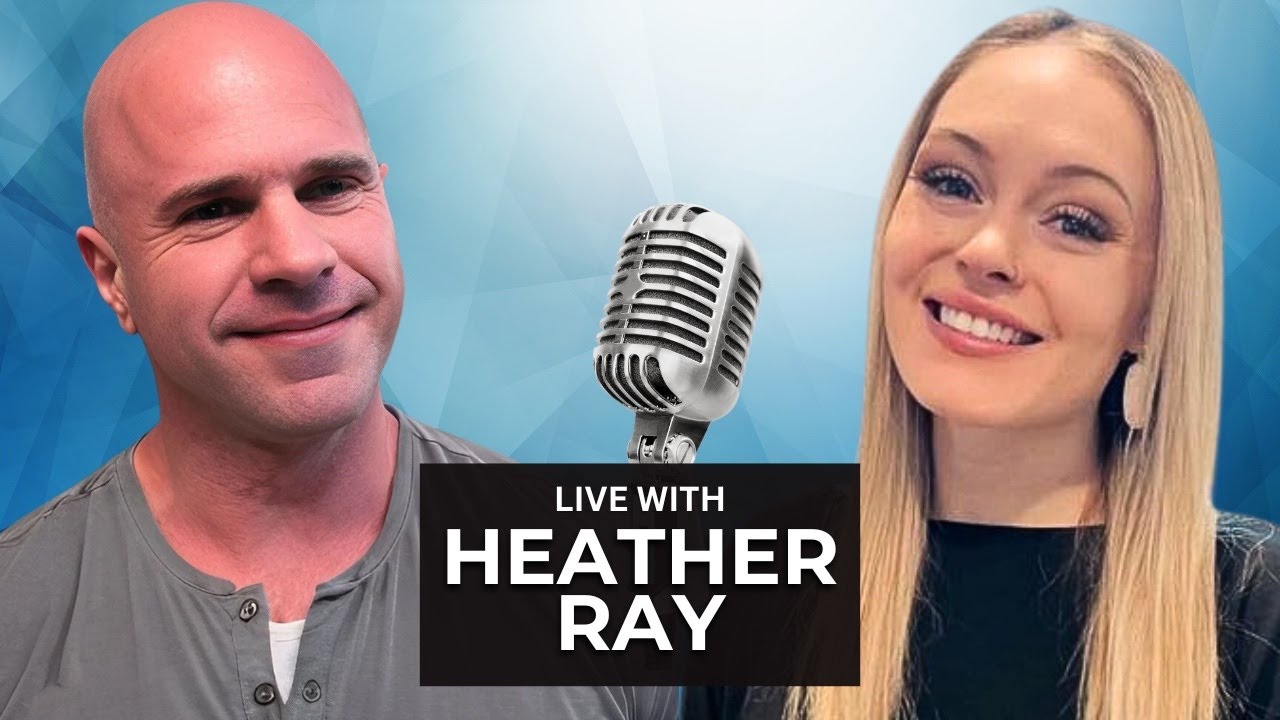
Ralph Brewer talks with licensed sexologist Heather Rae about sexual health, from erectile dysfunction to communication tools like her yes/no/maybe worksheet. They cover porn's impact on expectations, the death-grip phenomenon, and how trauma, ADHD, and hormones affect desire and performance.
Chapters
All right, it says we are live. Let me refresh, make sure we're good to go here. Try that again. And I'm still not seeing on my end. Try that again.
Okay.
Yes, we are live. Cool. Hello world. How are you guys doing today? With me today is the lovely and talented Miss— let me see, can I motion? No, wrong way. The lovely and talented Miss Heather Rae. How are you doing today, Heather?
I am good.
How are you? I'm hanging in there. Just got done with a meeting right before this, so I'm scrambling. I, I sucked down some protein. I sucked down some protein oatmeal right before this, so that's my, that's my lunch. Just make a quick protein oatmeal and away we go. If I could have you move slightly, uh, toward— there you go. Perfect. Excellent. Now you're centered in frame. Excellent. So People are like, who the hell is this lady? Why is Ralph talking to this woman? What's going on? Heather is what we call a licensed sexologist. Dum dum duh. What in the world is that, Heather?
So I do— that's a very big question to answer. The best way that I've found to explain it to people is I work a lot with individual coaching, couples coaching, I do workshops, sex ed, lots of different, you know, group sessions, lots of different things. But I'm basically helping you to either, you know, people who cannot orgasm or they haven't been able to, I'm teaching about the body to allow them to be able to do that. I'm helping couples, you know, who have issues communicating about sex because it is a vulnerable topic. And most of us were taught you're not allowed to talk about it. So allowing them to be comfortable having those communications with their partner helping them to pull themselves out of sexless marriages to allow that to be, you know, be better. They can get that connection back with their partner, re-spark that intimacy, is the way that I like to, to word it. Because we do unintentionally, in long-term relationships, we do unintentionally get lazy and we stop doing those things that we once did. So I'm kind of your go-to gal for any of your sex-related issues, whether that's dysfunction or just, you know, libido discrepancies, communication, just even just the education, because we're not taught about our own genitalia. So we definitely were not taught about our partners in terms of pleasure. It was, you know, the basic sex ed we got in school was just, hey, don't have sex. It's bad, you'll get a disease, and some of those can kill you.
And accidental pregnancy, that was the one that was hammered into my head as a teenage boy. Yes, because we had some guys that accidentally knocked up their teenage girlfriend and their life was quote ruined as a result. So we were all scared half to death. And yeah, I had a guy in high school, a good buddy of mine who shall remain nameless, who got his 15-year-old girlfriend pregnant. He was, I believe, a senior in high school at the time. And they're still together and they have like 5 kids and the whole nine. So it can work. But I remember at the time it was just like, oh, that was— so you're right, sex was a very verboten topic in a lot of ways. And my kids go to a Catholic school now. And I just had to sign off on a permission slip for my 13-year-old who was going through a Catholic little seminar on sex and what it means. And I saw on one of the list of, this is what we're going to talk about, parents, just so you're aware, so you can sign off that you're cool with your kid talking about this stuff. And it was the dangers of premarital sex, masturbation, all these other stuff. So I said, look, kid, I'm going to sign off on this, but here's the deal. I said, this is Catholic organization, very conservative, not the most sexually progressive. A lot of the stuff you can let go in one ear out the other, take it with a grain of salt, you know what it is, what it is. But, um, that's going to be my kid's version of sex ed from school, is very much like it's all just like all of it's bad.
Well, and I think too, you opening that up and letting them know before, they're able to take that in and, you know, know that, hey, if I have questions about this, Dad has created a safe space for me to come and ask him those questions that maybe I'm not going to be comfortable asking in this classroom, but I can go home and I can ask those questions to Dad.
And you can kind of help to, you know, and I've actually, actually wrote, I actually wrote a book for the young guys called Real Talk, which is all about sex and coming of age and then relationships and everything else. So I'm actually, I gave a copy to my first son, which I pestered him about it. I don't think he ever read it. He's like almost 18 years of age now. I'll give it to my 13-year-old to say, here comes puberty, so let's talk about this and see what happens there. But, um, people that come to you, I would assume most, if not all, are couples, right?
Not all of them. Many of them are— the majority are married. Maybe they're not together coming to me, but they're coming individually. We do couples as well. But sometimes, especially in the beginning, it's easier for me to talk to them individually. Because sometimes a lot of that fear is just worried that our partner is going to judge us. Or our partner is going to feel like we are judging them or we're saying that they're not good at what they're doing when really it has nothing to do with them. It's often it's just us not knowing our own body. And so we can't tell them, hey, we like this, or this makes me uncomfortable because you don't know how to say it. Or sometimes you just don't know. You know, I know we've talked, you know, many times before and a few of those, like even myself, I was married with 2 kids and divorced before I had even had an orgasm with a partner. And I thought I was broken. And now sexologist, many years later.
Here you are now.
Wow, I wasn't broken. I just didn't— I wasn't— that marriage did not allow me to be open in that way. So I didn't know what I liked. And I couldn't communicate that with him. And of course, if I'm not communicating that with him, it's forcing your partner to be a mind reader, which none of us are able to do. So it's setting you both up for failure unintentionally.
Yeah.
But I thought I was respecting his wishes, not knowing the other side of it until many years later. Now, you know, and I'm like, oh, that probably could have helped some of those problems.
Yeah, it's, it's a little bit more difficult for the ladies. We have the social stigma of sexuality in women is like, oh God, no, you know, and then we have the modern-day version of that, which is the quote-unquote slut-shaming and everything else that any kind of over-the-top overt sexuality within women is looked down upon by society and has been for a long-ass time. Not to mention there are anatomical things that get in the way where it's a little bit more difficult to get there, there being orgasm, finish line, so to speak, for a lot of women. While us men, we're just so simple in that way, aren't we? Like, we discover very early on, do this and this, and, well, that's good, that's all I need. And not so cut and dry for the ladies. And, uh, and us boys, we're never sat down to go like, here's the deal with these ladies. And for a lot of young men these days, the— curious to see what you think about it— their level of sex education at a very, um, what's the word, a very blunt X's and O's anatomical point of view comes from pornography. And In some way, that can be a good thing. You know, it's interesting, I hear a lot of people— the Nietzschean thought is porn shows a very unrealistic example of sexuality. It shows a lot of women having very spontaneous desire, which is not necessarily true for a lot of women. And a lot of women look at it and say it also presents women in a very unrealistic light physically, because the women look a certain way in these, and the average woman doesn't look like that. And I said, you know I've seen some of that material, believe it or not. And I see people of all shapes, sizes, colors, variation. And in fact, we see, it's interesting when I talk to my young men, they all seem to go towards the more shapely women. While back in my day, it was the skinny minis where you saw them on television, the models and stuff, they were emaciated and that was seen as the ideal of beauty. These days, the women or the young men seem to like an extra 20, 30 plus pounds and the adult entertainment seems to reflect that. So I don't know, I guess long-winded way of saying, do we see some positive— sexologist point of view— do we see some positive coming from this proliferation and popularity of pornography these days?
I feel like, of course, that's based on that relationship and how each partner feels about it is like the biggest thing. If you do have a partner who doesn't feel comfortable with you watching it, you know, yes, you start having hurdles. But there— and if you go into watching it and you know, hey, there are some unrealistic expectations, you know, their performance, you know, even for men, you know, they're like, whoa, like he just went a really long time and that's not like— I can't do that. So even, yes, we look at it as a woman's perspective, but there's a lot of, you know, things that the man can look at or a woman can expect from her partner, or they're like, wow, that person on this porn video is very well endowed. That's not average. And so comparing yourself to him is going to also reflect that confidence, you know, with that lack of confidence with you, like, oh wow, like maybe I'm not as great. And as a sexologist and as a woman, I can confidently say size is not everything. It is what you do with it. So regardless, yes, some people may prefer different, you know, which is fine.. But you know what you're working with, and it's not just that that you're working with. I mean everything. You still have an advantage. Educate yourself. But the porn does help. You're, you're still learning things. And, you know, yes, there are— there's a big stigma around porn. And a lot of it is because when you search it online, we don't know if that was consensually made. You know, you don't know what you're getting into. You don't know what you're looking at. And that's like one of the biggest concerns is, okay, I don't want to encourage that if it wasn't consensual. And, you know, there's that behind it. But I feel like if both partners are comfortable with it, it can be used as a form of foreplay. It can, you know, as long as both partners are good with it, you know, how about, how about as anything wrong with it?
Yeah, the foreplay and using it as a titillating, titillating, it's hard to say, tool between two people that are watching it together separately. That's one thing. What about from an educational point of view? You know, if there's a guy who just has a mom and dad that never talk about that stuff and friends that have to— and he watches it, this is his first foray into this is how you get it on. Um, that's very realistic for a lot of young men these days. Insert tab A into slot B. Oh, that's how it's done. Okay, cool. And oh, they seem to be enjoying themselves. They seem to like it. This, this is a positive thing. Okay, cool. Maybe there's some educational positive aspect to it. What I hear typically amongst educators and such is like, it's there's so much toxicity involved with it that it outweighs all the positivity. I don't know if that's necessarily—
oh, and there's the unrealistic expectations, you know. Looking as an educator, I wouldn't suggest someone going and watching porn to learn something, you know. I feel like they're now— especially like even with my position, my, my career, you know, sitting here and talking them through like, this is what that would look like, you know. You would, you know, and you have models that you're like molds that you're using to kind of demonstrate. You're using— I use slideshow presentations. It's way more educational than a porn video would give them. And they're not going into that thinking— they're not seeing results. They're not seeing, you know, they're getting breaks, they're getting spritz with water bottles, they're getting, you know, they're getting pauses. Yes, we don't get that in real life. So I feel like even with my single male clients that are like, hey, I haven't had sexual relations with a partner in a really long time, and I don't know how I'm gonna perform, you know, if my stamina is gonna meet that. Like, I've been watching these videos, and I kind of stop them immediately, you know, is it porn? And they're like, uh, and I'm like, I'm not judging you, like, that's okay, but I want you to know, don't expect yourself to perform like that. You don't see the cuts that they get. You don't see that. You're not going to last as long as he did. He didn't last that long either. And if he did, it's because he's, you know, lots of practicing, because we have— you have methods that can help with that, and we can talk through that. But they're not going to teach you that on the porn. And so being able to work through those hurdles and communicate it and let you— let me know, hey, these are the issues that I'm struggling with right now. Well, there's techniques that you can do to kind of help prolong ejaculation, and you help with that stamina, but then also different techniques so that you could take a break and still pleasure your partner. And it's not stopping the whole session while you're kind of like doing those techniques. It's kind of like that little, oh wow, he's very— I had a friend come to me earlier this week and she was like, he was very attentive. And that's not common. You know, I haven't— I've never experienced that before. And I was like, oh, well, that's good. That's a good thing. And she's like, no, I loved it. But having somebody who actually takes a break and instead of saying, oh wait, I need, I need to, I need to pause. Instead of saying it, they directed their attention elsewhere and they're like, hey, I'm taking a break, but you don't have to. And so it's that you're actually learning to do those things versus porn is, you know, great for foreplay or if you're masturbating and you just want something to watch. Kind of put yourself in that scenario, let your brain do its work. But as far as educational purposes, I feel like there are way better options now than what there were years ago.
Yeah. And, um, as far as young men are concerned, how it can be a negative— and then this bleeds over into men as well, especially men that don't have a lot of sexual experience— is, um, we hear this from some people that counsel teens when it comes to some of these things, is that The young men, for example, will take that energy that they see in porn and bring it to their girlfriend who has never had any kind of experience before, and she's scared to death because the energy is such that it's this guy flipping her positions and putting things where she doesn't want to have them put, and he thinks this is normal because he just watched so many hours of this activity. And it takes some empathy and time and understanding that she's scared. You're nervous? Well, take what you're feeling times a million. She's feeling that because she is, in essence, the receiver, so to speak. And, and that's a whole different mindset and vibe that we as men can understand. And it takes some— make sure there's consent, number one. Are you sure you're cool with this? Are you sure you're down for doing this? If you say no, that's cool. I understand. That's tough for a lot of young men to do. But I think that message has gotten through quite a bit. But a lot of men think once I'm past that hurdle, it's game on. And a lot of men take that into their married relationship, and they're trying to spice things up with the gal, and they've been watching this pornography. They think that if I am an ultra— oh, what's the word? Uh, what's the, uh, the opposite? A dominant. The very ultra dominant, take control. And they will do things as far as choking and restraining and everything. And in other words, he jumped from A to Z real quick. And there's a lot of stuff in between that you're more inexperienced, high energy. A lot of ADHD guys are like this, kind of hypersexual in that way. And they have a spouse saying, let me put on the brakes. And when they see that, can we put on the brakes a bit, they take that as rejection. Like, I'm not whipped into a sexual frenzy like you, you know, like you want me to be, Mr. Man. Therefore, I'm not really turned on by you. Therefore, this sucks and this is a terrible thing that we're in. In other words, porn can be a good thing, but it can be in the wrong hands. Oof, a really bad thing.
Yes. Yeah. Oh yeah, it can. Yeah. And knowing that is the biggest thing. Like, that's very important going into that. And there's other, you know, even adding spice and switching things up because you're like, hey, we do the same thing every single time. Like, they have to be getting bored with it. I'm getting a little like, I want to mix it up a little bit. And you go to that and you're like, oh, that looks really interesting. Let me try it. You're right with the consent. Like, you don't see that in porn. You're not able to ask those questions or you're not able to be educated about it. So you don't know to ask those questions. But same thing, even talking to someone who can help you. Like, those are things that I work with. I even have a— I call it my yes, no, maybe list. And so on that, I have a mild version, which is the one I use often, but then sometimes I have very experienced couples that are like, hey, you know what, we want to take it to that little more extreme, you know. And so basically the mild, you know, is talking— it has all of these different sexual acts that you can do together, and you're basically taking on the back sheet, there's 3 columns: a yes, a no, and a maybe. And so each partner is taking their own sheet, and they're taking those sexual acts, and they're putting it in in the column for themselves. Yes, I'm into that. Maybe, maybe I'd be into it. Or as a hard no. And I always tell people with that no column, do not allow it to be something that you're saying no to because you think that it's going to be painful or uncomfortable, because sex should never be painful unless you're wanting it to be. But there are things that go in that column sometimes, they're just like, Nope, not doing that. And it's because they're scared. But there's also the education background that that shouldn't hurt if it's being done properly. But we're— we've seen it on TV and or something has been tried without asking your consent. You had a bad experience. But if you do it this way and I'm able to tell them, you know, hey, I see it in the no column. Is it because that's just off limits to you? Because that's okay. You can have your personal boundaries. Or is it because there's a misunderstanding? Yeah, right.
Yeah.
And because you're not informed, you're not educated about it. You know, why is it in that no column? And if it's just because I don't like it, hey, that's cool. We've got all these other things in the yes and the maybe column. But sometimes you end up seeing your partners and you're like, oh wait, that's in the yes column for you. Like I said, maybe, but it's because I was scared to put it in the yes column because I wasn't sure if you'd be into that.
Yeah, yeah.
You know. Or it was in my no column because I thought that it wouldn't be on yours. I thought you were going to put it in the no column. So being honest, doing it separately, it actually kind of opens up some things that you can try that's new together and kind of, you know, keep it spicy. You're watering your own lawn, you're fertilizing it, you're letting it grow, and you're trying new experiences together. And it's also, without you knowing it, opening up those lines of communication around sex. And your desires and your— just what you want.
There you go. Very well put. And we are live today. You know, thank you for all of you for joining today. We are live on YouTube and Facebook. And with me today is Heather, the sexologist. I am Ralph Brewer. You're watching this on Dad Starting Over. You can learn more about our organization. Organization is called Help for Men, actually, helpformen.com. We have a private community for men. I like to do these live streams and have important people on here to talk about different things. And Heather, men love to talk about sex, as you know. That's one of our big topics. That's why I sold so many books, The Dead Bedroom Fix, for example. And I've talked about a variety of topics over the last 10 years, and nothing gets the needle moving or gets people more energized, especially dudes, until you talk about sex and marriage. That's a big topic. And Fight for a Better Now on YouTube is a follower. He says, curious, in your practice, Heather, do you have many women that are looking to better understand their men? And how, and how can you please stand? Because I think there's a misspelling there because they have a— oh, so in other words, from our perspective, as, as these anxious dudes, we're very much like, how can I be a better lover? How can I be a better lover? I need to understand how to do this better, that better, what not to do, what to do, when to do it. Do you see the inverse much where women are like, I want to be better, a better lover to my husband, I want better skills in that. Is there a discrepancy disparity there between men and women? Is one more than the other? Are they pretty even?
I feel like it's pretty even. I've, you know, and I've, I do workshops. And, you know, I've got my, you know, Cunnilingus, my Oral for Women workshop where, you know, men will sign up and they're like, hey, I want to, maybe I feel like I'm doing great, but there's always things to learn. But then you've also got my, I actually have a blowjob workshop. And so it's teaching women different techniques to, one, you know, we've got the some females that are just like, nope, I quit doing that after we got married. And my immediate response is that is wrong. We don't dangle that carrot for marriage and then yank it away. Like, that's your first— that's, that's a no-no. And two, they're just like, nope, only birthdays, holidays. Okay, why is it just Because you've done it, so you've consented to doing it. But why are you— or because, you know, you sometimes hear, because I wanted a new car. And immediately, nope, no, like, that's not what we're doing. Why are you not enjoying it? Let's talk about that. And so, which stemmed the idea for this workshop, because women can have fun doing that. And so when they hear that, they're like, what, you can make me have fun doing— I hate doing that. Nope, hear me out. I talk about the things that women have said that they don't enjoy, you know, the reasons they don't enjoy doing it, whether that's, you know, just, oh, it hurts my, my mouth starts to hurt. But I'm teaching them techniques to not— you don't just have to use your mouth with that, you know. There's so many other things you can do. You're playing temperature play, you know. You're, you know, even putting, you know, warm tea in your mouth and your mouth is really, really warm, but then switching it up with a sugar-free mint because it's tingly and a different sensation, and doing more with everything. Your hands, you can touch, you can fondle, you can build anticipation, and you're using that foreplay, and you're teasing and making him just want to squirm before your mouth is even on it, which is not making your jaw hurt. All of those fears, those uncomfortable things that women talk about, I've been doing this for 12 years, you know, working with women, women, and hearing their issues with giving a blowjob. And I said, you know what, we're going to make a workshop for this because first of all, I'm going to teach you the tricks and tips. Because when you're down there and you don't want to be down there, your partner feels that. And you're doing this to bring your partner pleasure. Like, they're not going to get full pleasure if they know you don't want to be down there. So I'm like, you know, my biggest thing when I start is I want you to clear your mind, and in this moment, you are worshiping that penis. Like, that is all that matters to you is bringing pleasure to that penis. And it's teaching them how to be comfortable with it, how to have fun with it. Like, make it fun, because if you're enjoying it, your partner's gonna enjoy it a lot more. And we have sold a ton of those workshops. They are— they eat it up. Yeah, they love it. And so, I mean, I've even— locally, I even do groups in person for that because it's clinical. It's a slideshow presentation, but I'm teaching anatomy. I'm teaching pleasure points of the male genitalia that people don't realize are even there. And so educating, that's what it is, is educating and then teaching these different tips and tricks, you know, oh, you don't like deep throating. Well, that does not mean that you can't give a great blowjob. You could still give a great blowjob without having to do that. And people are like, oh, well, that's why I don't do it is Yeah, I figured I had to, and I just can't. My gag reflex is ridiculous. So overcoming those obstacles and finding ways to work around them. But yes, absolutely. I know that was more than what he asked.
Yeah, no, it's good. And an example number whatever for how pornography may flip things into a negative way. Woman's like, I'm seeing what those women are doing on those videos. I'm not too freaking doing that. It's like, no, no, that's extreme, you know, cinematic stuff. It's not what we're talking about. Majority of women don't do that kind of thing. It's for the camera necessarily. And And those women, by the way, have a certain skill, if you will, to be able to do that. Most people can't shove something down their throat without throwing up all over the place. And they're performers. They're exactly, exactly. It's a Hollywood production, if you will. It's not necessarily real life. So, but a lot of men hearing this are of a certain ilk, a certain mindset, very anxious guys who tend to be with women who are very not open-minded about this sort of thing. So hearing you say that, a lot of men are kind of rolling their eyes, like, "As if, as if any woman would go, my woman would go to a course or a seminar or whatever for that." Guys, listen to this. Yeah, this world exists. There are people, men and women alike, that are open to this idea of what can I do to make this more fun? And you hinted at something that is something I push a lot, which for some reason it's just forgotten in a lot of relationships, is playfulness.
Just having fun with it. Yes, having fun with it.
Having fun with each other and having fun and making it like a little adventure, not being so goddamn serious about everything and all the time. And another aspect of where maybe pornography could get in the way, like, this is— I have a mission, damn it, and I got to go from A to Z, and I have to do all these positions, and I have to do this, and this has to go here and has to go— or not, you know. Or you could just have fun and be playful with your partner, you know, and enjoy each other. Seems to be something a lot of people forget, and they see it as almost a chore. A woman, like your low libido woman, may see it as a chore of like, I have to do this thing, I really don't feel like it. And man may see it as a chore of, I'm actually tired, but I have to do these 8 positions. And it's like, no, no, and no, you don't have to do these things. It can be just a playful, fun thing with each other. And Guitar God in the comments here says, uh, from Facebook, uh, be careful with the whole mint idea. Uh, he— I'm cutting out some stuff here. He says that, uh, he had a spearmint chewing gum incident that irritated things for a few days. He says Yes.
And there's different chemicals in different things.
Yeah, I can imagine.
Especially, and you have to also think, you know, if you're penetrating afterwards, the sugar-free part and the mints, like gum has different things in it, but that sugar-free is just, you're having that mint, you're taking it out, you have that coolness and it's more, even if you're not even putting it in your mouth, you're just kind of breathing, you're that throat room, sexy breath, just like up it, you're teasing, you're tantalizing. But yes, being careful with sensitivities and things like that. And if you're using something with sugars in it, penetration afterward is going to irritate a female partner.
Yeah. So, you know, keep that in mind.
So yeah, that sugar-free, the mints, like make sure that you're careful with what you're using. But, you know, we definitely— I typically, when we're talking penises, when I'm playing, when I'm discussing temperature play. Yes, warm tea is great because it really, like, your mouth is going to be warm and wet already, but when you add extra heat, it feels nice. Even a warm rag. I don't— temperature play, you know, people go immediately to ice cubes, which is awesome, but penises don't care for ice cubes all the time. So a mitt is a nice alternative so that we're able to kind of still experiment with those and see what you like. And you're just starting slowly to see, okay, does your partner like it? Do they not? And you're communicating through this, and I'm teaching them to do that. So just again, it's all about that communication, because when you come back later and you're asking, hey, so I tried some new things, what did you think? For one, she's excited. Or if it's a male taking the course for his female partner, he's excited. They're just, oh, I learned something new, I tried a few new things. Not all of the things I'm going to keep some in my pocket for later. But what did you think about that? You know, tell me. You know, it's not a, was that good? Was that good? Because sometimes that just induces anxiety. But it's a, hey, I tried some new things. What were your thoughts? Like, how did you enjoy it? Did you like the pressure? Did you like this? Did you dislike it? You know, let me know because I like, I kind of had fun with that and I liked trying that new with you. So I want to see which ones you enjoyed as well so that we could, you know, we can keep making it better and better. And that's the goal. You want to have fun with it. You don't have like every sexual encounter doesn't have to end in orgasm, but having fun with it and enjoying not just your partner, yourself. Like it's okay to be sexual. It's okay to embrace that. And yeah, just share that with your partner, especially in monogamous relationships. That is the one person in the world that you can share that with. Share that with. Have fun with it. That's something special just for the two of you.
And, you know, from a male perspective that you brought in the monogamy thing, very early on in the whole process of getting to know each other, it's— we seem to be, both men and women, a little bit more open to things. We let the lustfulness take over, and it just kind of— some of this stuff kind of naturally happens without having to think and dissect and analyze. And what about this? What about that? That comes later. That's just, for most of us, a fortunate, unfortunate, depends on how you look at it, aspect of the long-term monogamy. You got to mix things up, got to keep it fun, you got to try new things, you got to be open-minded about things, you have to communicate. You know, for all you guys listening to this newly divorced that are dating, you're like, yeah, right, I had 3 different women last week, I didn't have to do any of this. Well, that's not apples to apples comparison. This is— it's a little different world for the— in the long-term monogamy game. Jack from YouTube says, Do you work with many clients who are trying to accommodate for physical health issues such as neuropathy, lordosis, etc.? I would think, yeah, that's pretty common.
Yes, pretty common. And a lot of it's because going to their doctor and asking their doctor sexual-related issues, some doctors, they either, you know, they're like, okay, yes, there's a problem there, but I'm not quite sure how to walk you through that. They actually refer people to me here locally. They'll actually have my cards and send them my information. And sometimes it's either the doctor saying, hey, look, I can treat the condition and I can kind of help with that, but you're going to get better help speaking to a sexologist so that she can kind of, or they, he can look into what you're dealing with specifically because every situation is going to be different, especially with medical issues because your body is going to react differently than someone else's will. And so being able to work through those issues, not just with those, but many. You know, there's even— yeah, I mean, many. We could get— we could go down a whole other course with that one. But yes, I do.
And then we have Holland from YouTube saying, wouldn't low libido be from the diet? Well, Holland, low libido can be as a result of a lot of things, not necessarily just what they're putting in their mouth food-wise. I mean, sure, if you're overweight or eating the wrong things, that can have a detrimental effect on your health, which may cascade and cause other issues like libido issues and so forth. But libido is pretty complicated, isn't it, Heather? It is.
And again, it's a case by case. Some people are just, hey, we end up finding out every now and then that, oh, it just is uncomfortable. It hurts. And okay, that shouldn't hurt. So let's talk about that. And sometimes it is just something as simple as not having enough lubrication. Oh, well, that's That's an easy one. That's easy. Sometimes it's more here. If it's not happening here, it's not happening there, period. This is your largest sex organ, is your brain. And so it's definitely trying to figure out with that particular situation what's going on, what's causing that low libido. And sometimes it's just, hey, I have a responsive desire. It's not spontaneous and I need to figure out how to get it to respond in a, you know, a better way than what it currently is, you know, or finding a healthy compromise.
I hear from a lot of ladies in my comments because I do— the material I do is predominantly aimed at men. And based upon the book that I wrote, The Dead Bedroom Fix, some of the content will be around men complaining about lack of sex in their relationship and anxious guys avoiding women and all this other stuff. And you'll have women come back in the comments and a lot of them will say, well, one of two things. One is, you know, we have this problem too. A lot of us want more of it and we ain't getting it, dude. We can come back to that because we alluded to that in the last time you and I chatted, which was a little controversial. I don't know if you saw some of the comments on some of that.
I did.
Yeah, we will talk about that. But thing two is a lot of women saying, you don't understand, Ralph Brewer Brewer Brewer, some of our men are so flippin' bad at it. After experiencing really bad sessions between the two of us for so many years, I just don't want it anymore. I get nothing out of it. Orgasm schmorgasm. I forgot what that was even like. I don't receive any kind of pleasure. And their contention for the woman is, and I can't go to him with this complaint, his ego is too fragile, or whatever it may be. I guess, um, if there's a question here, it is the, you know, is that becoming more common that you're hearing more and more women say I want it, he doesn't, or he's really bad at it, that's why I don't want it.
I think a lot— I hear that often. But yeah, what I like to remind people, you know, and you know, for one, give him grace. You know, we weren't taught about bringing pleasure to penises or even our own genitalia. They weren't taught to do that either. That's our job, to teach our partner what we like. And you can't get upset when he's not doing a great job, even trying to open the conversation. How are you opening that conversation? Are you saying, well, I just don't— you don't bring me pleasure, that really sucked, you're really bad at it. Well, of course he's going to continue being bad at it. He doesn't want to talk about it because you just shamed him for it and now he feels awful. You know, be kind and be loving with that and just say, hey, look, uh, I really want to try new things with you. I want to, you know, make our sex life better. I'm not saying it's horrible right now. I'm— I want to try new things with you. I want to strengthen that connection. I want to have more pleasure with you. Like, I want more pleasure. I want to bring you more pleasure. It's not so much what you're saying, it's how you say it and allowing that to come across as nonjudgmental. Like, let them know, like, no one taught us about our genitalia, you know? And hey, I listened to this podcast today. You know, with Ralph Brewer, and he had a sexologist there, and, you know, she was talking about sex and pleasure, and we don't communicate much about how we're feeling in the bedroom, and I've never really sat back and taken the time to tell you what I like. I don't even know if I know what I like. Maybe we should explore that. Maybe we should, you know, look into that and try new things together and see, like, maybe we like things that we don't even know we like them yet, and I would really love to learn that with you. I think it would be fun. It's something we can do together and make a game out of it.
Again, open, open, playful, communicative. These are all good things. Guitar God from Facebook says, Heather, do you have much experience with clients who have porn-induced erectile dysfunction? Interesting. And if so, do you see much, much success in correcting this issue?
So a lot of that, in my experience with clients that struggle with that, usually goes back to them expecting every sexual encounter to be like they see in porn. And so typically with that, I try to pull them away from porn for a bit because it is judging your, your sexual behavior currently. And so I try to not say, hey, you're not ever allowed to watch it again. But while we come back to reality and remember that, hey, these things— and there's different types of porn out there. So it's real easy to, you know, type in Pornhub or something similar or whatever it is that you're looking for in porn, and it takes you to whatever website. But there's also others that are more realistic. They're not as out there. It's a little bit more realistic. So those are options too that, hey, why don't we go away from My first question is, what type are you watching right now? Because everyone typically has their go-to. What are we watching? Like, let's see if we can shift it a little bit. Let me look for other alternatives and I can send you those. You know, if we're trying to like, you know, sometimes people don't want to stop right away, but we can adjust that just a little bit and kind of bring us back to reality on what realistic expectations should look like. And there are options for that which can be helpful in a situation like that. But yes, I've definitely had clients that— and we've corrected it, you know, they're like, oh wow, this porn is actually really good and it lines up with what I'm getting. I'm actually able to maintain those erections again. I'm having— I'm enjoying sex again. Every now and then, yeah, I go back to the old porn stuff and, you know, every now and then, but I'm not having to do that. In order to maintain erections. Yeah, it's definitely helpful just letting them know, oh, I'm not— their biggest thing is I'm broken, something's wrong. You're not broken. We just need to tweak it a little bit. And that's, that's okay. And admitting that you need help with it, or hey, can you help me? Is this fixable? Is that first step?
So, you know, there seems to be like a physical and mental component to it, to these guys who have used porn for so long. That there's the physical thing. There's this, what's it called, death grip or grip of death. I don't know if you've heard of this. Basically, the men are so used to their hand and being in a certain way that it— death grip, if you will— that a real-life human being cannot compete with that.
And so there's also things we can incorporate. Sorry, I didn't know there was a delay. I think I cut you off unintentionally. There's also things we can incorporate with that. You know, you can, you know, some people are really against sex toys. I'm not. I'm not going to— I don't want anyone becoming dependent on it, period. But they can be— they're enhancement products. And when they're looked at that way, even a standard C-ring, which is just, you know, a cock ring, but it constricts the base of the penis. So it gives that grip. And it also helps him be harder, makes him last longer.
Keeps the blood flow in the area.
Yeah, the blood flow rushes to the head of the penis. So it makes them harder, makes them last longer, but it's giving that grip while you're with a partner. And you don't even have to have one that vibrates. You can get the regular silicone ones. And it's just giving that grip for you. You're not having to hold on to yourself to get that. It's doing it for you. So there are things you can incorporate to still have that if that's your preference, because many— you are allowed to have preferences. That's okay. But it also allows you to still enjoy sex with your partner because you're like, wow, like I'm getting that, but then I'm also getting this. It's like the best of both worlds.
Yeah, there's some—
it definitely helps.
The shame component of that, I need devices in order to do certain things. Some people are like, ugh, I feel like less than a human for doing that, which is silly.
But it makes it so much easier, you know, for a lot of people, especially you look at— and I'm doing Intimacy After 50, you know, work groups right now. But you think even later in life, you start struggling with arthritis or, you know, parts, you know, sensitivity, trying to orgasm, foreplay, everything takes so much longer. Having those devices even at that point are beneficial because for one, it's taking that extra, extra work off your partner. If you have a partner who takes 15 to 25 minutes, which is on— that's average for a woman to become aroused and you're introducing products like that, it's not a replacement to you. She still wants you. But the majority of women need direct clitoral stimulation. And so helping get her warmed up, getting her ready is one, like it's taking a lot of the work off of you. It's an enhancement product, not replacement. So it's kind of like your little sidekick. It's like, hey, I'm going to tag you in for a minute. You're going to get her all worked up and warmed up, but I'm doing it. I have control over this. And then I'm going to come in and finish it off. You know, it's like it's actually working for you if you look at it that way. Now, when you have a partner who does not want to have sex with you, or you know that she's not having sex with you, but she's using toys. Yeah, it's going to make you not like that. And that I don't— I'm like, no, like, yes, masturbating is okay. Like, we need to know what we like in order to tell our partner. But don't tell your partner, no, I'm not going to have sex with you when, yes, you're there and you're doing it all the time, but you're not giving that. What is the issue? Something's not right here. Like, we should be able to do to do that together and enjoy that. So they can be— it can be an issue. But I feel like it's a risk. Like, use it if you're able and both partners are comfortable with it. It can be a great tool.
In addition to the physical, we have the mental aspect of it.
Yes.
Um, we have some guys in our group, a lot of guys in our group that have— I mentioned it earlier, the ADHD thing. So they're constantly looking for their little dopamine fix. And so the porn is just engineered for those guys. I can quickly go Click, click, click, done. Click, click, click, done. And then to say, I know you've done that for so many years, months, whatever. Here's a real-life human in front of you. That's going to take some vulnerability, opening yourself up, schmoozing, talking, dating, the courtship process to eventually get to the end. Let's say the guy's dating, whatever, and then eventually he gets to the end goal and he's just like, nothing's working down there because I'm so used to Boom, boom, boom. Let's go, go, go. And it's kind of a mental thing. Everything, you know, if we went to the doctor, the doctor would say everything's working fine. Your blood pressure's fine. There's no coronary whatever. It's so you're good. It's all up in his head. He's just accustomed to doing that. And it takes some training. Get off the old porn and interact more with real human beings. I think that's probably far more common than what we think.
Yes, it is. And you're right, kind of taking it away. And that's kind of where I'm like, hey, let's stop doing that. Let's work on mindfulness. We're going to put the porn away. We're going to close your eyes. You're going to envision that situation, you know, whatever situation that might be. And you are, you're doing the same thing, but you're using your imagination. You're, you know, clearing everything around you. You're putting your phone away. There's no electronics to buzz and distract you because we want to be in here for just a few minutes. And you're enjoying that, you close your eyes and you're practicing that mindfulness. You're able to kind of put yourself wherever you want to put yourself, and you're also able to, you know, kind of go at different rhythms, different techniques, things that you wouldn't typically do masturbating-wise. I'm giving you other ways to try it because I want you to switch it up a little bit because it kind of resets your brain, but it also allows you to learn those techniques to help you from ejaculating too quickly because we're training at this point. It's training and you're helping to build that stamina to help you to last longer. But we're going to have to switch it up just a little bit because when you get into that same routine, that same habit, you're going to continue to have the same results. So switching it up just a little bit just kind of tricks the brain and they're like, oh wait, what are you doing? Okay, I see what you're doing there. And they have fun with it. It's still fun. And it's even solo time, it can still be fun. And you're just discovering new ways to bring pleasure to yourself. And you're going to be able to enjoy that more with a partner, especially being able to teach them that.
We got some comments here I don't want to miss. Some of these questions I think we've answered in a roundabout way already. Is it not better to teach men about proper pacing and understanding rhythm better? Instead of suggesting toys, I mean, that's kind of shaming to it. This, you know, what's good for one is not good for the other.
Yeah, it's not like any of my coaching is all, oh, get a toy. Like, sometimes that just doesn't work. I'm gonna try to use all of the, you know, I say tools at your disposal, our bodies first, before we resort to, hey, let's introduce a sex toy. That's not going to come up in a session in the beginning of our our sessions. Like, that's just not going to come up. We're going to talk about techniques because I could throw a vibrator at you and you aren't going to know what to do with it if you don't know the pleasure zones of the vulva anyway. You know, where am I going to put it? Oh, I just like stick it on. No, there's areas that are going to benefit you more, and there's way more areas there than you realize are there. Um, but you can also use it outside of that, you know, massage. You could use that, you know, down the chest, up the thigh. It's that vibration that is tantalizing and it's building that desire. It doesn't have to even touch the genitals. It can be used for so many things.
And, uh, it's funny you talk about the massage. Isn't that how those vibrators were marketed in a way to get around the censorship? It's a personal massager.
Yes, exactly. That's how they advertised them first when they first started being sold, like the very first place to ever sell them was Sears. But originally, women would go to the doctor and the doctor would use these medical devices to cure hysteria.
Hysteria. That's right.
Yeah, it was a vibrator. And that's what they were doing. She was orgasming and everyone feels better usually after an orgasm. So people, I'm like, oh, that's the trick. I just need to pretend to be hysterical. Make sure I get an orgasm. Today.
Before we go on to the next topic, I want to pause and just say, where can people find out more about you, book time with you, all that good stuff?
Yes, so you could definitely go to, uh, Best Life Behavioral Health. Um, I'm listed on her website so that, uh, you can book sessions there. You can see previous workshops. You actually have the option to, uh, buy those pre-recorded as well. Um, see any group sessions that I come— that I have coming up or have going currently. Um, and then I'm on social media as Heather Rae too. You can feel free to follow me there as well.
Um, yeah, so bestlifebehavioralhealth.com. We need to get Samantha to get a shorter domain. That's a little long. bestlifebehavioralhealth.com. And then look up, uh, Heather on there, and you can see all that you have to offer with the coaching and the courses and the seminars, pre-recorded or live coming up, all that good stuff. But I wanted to By the way, I want to be cognizant of your time. Do you need to be out of here by a certain time?
We're okay right now.
Okay, cool. The subject I wanted to bring up was a little bit of a touchy one. And we talked about it briefly for a second there. You and I had a chat before. And we talked about your previous marriage, which ended as a dead bedroom marriage, which, of course, piqued my curiosity, because I've been writing and talking all about it. And I said, well, here we have this attractive, female sexologist who was vulnerable enough to raise your hand to say, I've been in a dead bedroom, and I just got out— at that time, you just got out of one, and you were a newly single gal and sharing your story. And to summarize, this isn't necessarily fair, but it was basically good man, good relationship, just very mismatched in that physical department. He wasn't as interested, if at all, in that anymore. And you're like, I am. And you went through a personal transformation in terms of weight loss and other things. And here you are, which by the way, is the story I hear almost verbatim from men every single freaking day. I have— this man will say, I have decided I don't no longer want to be 300 pounds. I want to lose all this weight and I want to go to the gym. I want to eat better. Wife, what do you think? Wife says, eh, he's like, cool. Wife, I want to do that. Wife, I have a renewed energy. I want to get together physically, intimacy. Eh, I'm good. Very much, eh, almost depressed, very low libido. Man is re-energized. And when he goes to the internet and says, I'm a dude, I've been trying to get through this woman for years, nothing's happening. The internet as a whole, men will say, it's time to move on, dude. You know, some will go as far as to say, get you a side piece, as the men say, cheat on the side, keep your family life going. While others will say, leave, the world of abundance awaits you as a man who's newly fit and everything else. Then we have a gal, Miss Heather Rae, saying the exact same thing. And boy, did the men come after you, didn't they?
Yeah.
In the comments.
Well, I think some of it too, they, you, some of the comments they were picking up on parts that we were talking about that were not what, it wasn't my experience. Like with the 100 men, no, that we were being, we were exaggerating and it wasn't me.
Oh, I see. Yes, yes.
100 men.
I gotta watch how I clip these things.
Yeah, but that's me as a sexologist. I'm like, no one will ever know my number. They don't need to know my number because that doesn't define me. You know, it's— it could be too—
whether it's 2 or 200. Yeah.
Yes, it doesn't matter because that doesn't define me, just like it doesn't define a man. Um, that's, you know, people will say real quickly, oh, I want to marry a virgin because, you know, she hasn't been with anyone and I'm the only one that she's ever been with.
Good luck with that.
Are also the ones to complain later because she doesn't have the experience. And unfortunately, she can't help that. You know, she saved herself. She wanted to save that for you. The only experience she has is with you. So you're going to have to work a little harder, you know, but you can't shame her for it. So you, you know, there's a double-edged sword, as I said.
But I just wanted to point out the irony of that, of a lot of men And I got on there and said, "Yeah, I don't get it. Here we have a lady who's experienced—" I almost expected a little camaraderie from the men of like, "One of us, we're all there." But instead, it's a lot of sexism there, let's be honest. And it was also a lot of people lashing out at basically, you don't know it, but you represented the women that they were upset with in their life. Some of those men had been cheated on. Some of those men were the guy who sat at home and worked 100 hours a week and did all the things he was supposed to. And the wife said, adiós, I'm leaving for the pool boy or whatever. And so those guys are obviously very hurt. And here they hear a woman saying, I'm going to leave this what seems to be a perfectly good guy, other than you were wildly mismatched in the physical department, which, which, which is hugely important. Sorry, people, but it is. And Yeah. Oh, sorry.
The one thing too that I think we, we must not have gotten into it on that. But the one thing that I noticed a lot, like what you're saying, is I actually didn't file. I wasn't the one that filed. My ex-husband did. He felt that he was holding me back, which I don't like. We're really good friends now, but he's like, he's a great guy. Like, we get along great. We didn't have any issues outside of that. But after going through that sex sexless marriage and us talking about how it was making me feel, you know, lack of confidence. You know, I wasn't feeling sexy. The one person in the world that I wanted physically did not want me back in that same way. And he said, I do. I just, yeah, I just don't have a libido. I'm like, okay, but how I'm feeling, you can say that you are, but your actions are saying otherwise. And so this is how I'm feeling. And it's a really crummy feeling to have. Like my confidence is at an all-time low. Like, this is, this is challenging for me. So as we're working through this, he ends up, you know, 2 and a half, 2, 2 and a half years in, he has a heart attack. And I think obviously after a heart attack, you are put on medication, which is going to make that even more challenging. And so I think he already knew, okay, we're struggling with this. This is already an issue. This is going to get worse. And at this point, he felt he was holding me back. So instead of working through those things, he just kind of threw his hands up. And we were both, you know, we definitely now looking back, we both could have, uh, he says, no, you couldn't have communicated more, you were very assertive with your communication, as he's laughing because I'm like, yes, I definitely put it out there, I let you know. But I think both of us could have handled things differently. But I also, I don't know if staying, you know, people are like, oh, what do you wish that you 'Cause y'all mend things. And I really like the relationship that we have now. You know, we're friends. It's— no, I don't want to hear about him dating. That's weird. It's very weird. But we're friends. And I don't know if we had continued on that path that we were on, if we would have resented each other. And it doesn't mean the divorce was perfectly peachy and everything was sunflowers and rainbows. No, like we we had our hiccups there, you know, we definitely could have, we're human and we make mistakes. But now looking at it, I don't know that I would risk having that resentment toward each other and saying, oh, I wish we had, you know, he says, you know, I wish I hadn't pulled the trigger so quickly. But you know, what's done is done. And I am thankful that I do still have a friend in him. And you know, it's, yeah, it's been amazing still having that friendship and that, you know, If something were to happen to him tomorrow and he needed a caregiver, like I'm that person, I would do it. Yeah. Whether he liked it or not, like, hey, sorry, buddy, like you're stuck with me. But yeah, it's definitely one of those, it sucks that it happened the way that it happened. But yeah, that's definitely, it wasn't me that walked away from it. It was, you know, we had been fighting through that for a while. So.
So in essence, he was like, I gotta cut you free, girl, let you do your thing. This ain't working. And you know, You're a sexually open-minded individual. I'm going, you know, sexologist, that's a big leap for me to say that. But did alternative lifestyle type of things come to mind, such as open relationship or anything like that? I asked because I'm not— because that's my world, but because I hear that all the time.
Yeah, it did. That was definitely something that was mentioned on his end as a, well, if you're just getting those needs met, we'll be good. And I have many clients that are open, And I like, that's cool for me personally. I do not want that type of relationship. I am very— I'm a one-man gal. Like, that's, that's my thing. It's just I want that between you and me. It's special. I enjoy the passion with just us. I want you to walk around and know, yeah, my wife is a sexologist. Let them freaking be. They don't know how I am in bed. Like, they'll never know. You know that. Like, that is something that you have. You have that. Like, that's our thing. And so being able to, you know, especially like my partners are, you know, dating me, they're going to know, hey, yeah, sometimes she parades around online in lingerie and pours honey on her ass in a TikTok video. It happens sometimes because I sell lingerie. So they know that. But I'm like, no one knows what you know. You know, it's, it's different. So I feel like that's kind of my thing of like, hey, now this is and I don't like to share. Not judging others that do, but like, what's mine in the bedroom is mine. I'm not gonna share my sex toys, and I'm not going to share my man. And so it did get brought up. And he, you know, it was definitely one of the conversations that, you know, he did bring up. And my response to that was, you're not hearing me. That ain't me. What I'm wanting is you. I don't just need I need that passion and that intimacy with you, not anyone else. This is what I'm wanting. And you're trying to, you know, in my words to him, because of the way, again, it's not what you say, it's how you say it. But it was kind of like a, here, just go get it elsewhere. And I'm like, that's not meeting my needs.
My needs are us. And again, and guys listening to this, I talk to guys who hear this every day. They hear that the wife's like, go get your girlfriend. Like, I have— obviously, I'm not enough for you. And, you know, obviously, I can't fill all your needs. I don't want it like you do, if ever. So go, you have my permission. And the guy's like, no, I don't want to get it elsewhere.
And that's not the— it's crazy, because people who go into that open lifestyle, if they're gonna go into it and have success with it, it has to be both partners wanting that. It can't just be one saying, oh, I don't want to have sex with you, go get it elsewhere. Like, please, that's not how that's going to work. There's— especially when all that partner is wanting from you is you and that time, that attention, that passion. If they find that elsewhere, which you're inviting, what do you— what do you have to offer at that point? You know, it's— it makes it more challenging. You both need to be on the same page if you end up going into a lifestyle like that. And there are ways that you can do it and have success with it, but that's not one of them. And so I knew, hey, for me, sex is passionate, sex is feelings. Like, I had a traumatic childhood, so all of that comes into like, I have to trust a partner. I'm not just gonna have sex with somebody on the first night. I need to know that person and know that I'm safe and I'm gonna be able to open up and have fun. Like, it's great, but I need that. And if I find that connection because that's with my partner. But if I find that elsewhere, that's going to affect my relationship here. And I'm not gonna risk that.
Another way of framing it is, and this is something I hear often, is we're really struggling as a couple to come together to figure out how to make this work. We heard about this thing called open marriage. What they don't have is that introspection like you do, which is to say, I'm actually kind of, not kind of, very monogamous when it comes to that. World. And I know me. And if I were to form that kind of relationship with somebody, I'm going to be more drawn to that than I am to you. And that's going to put our relationship at risk. And that's what, what I've heard a lot of people discover after the fact. Oops, I've grown attached to, caught feelings for whatever. This person's my new primary partner. I'm forgetting this one. And that disintegrates in divorce and all the other good stuff. Um, so, and you're big enough to say, I know me, that's what's going to happen, dude.
So no. Yes. And letting clients know when they come and they're asking about it, letting them know. And when I know immediately, it makes it super easy because as soon as they're like, oh, that would never happen. You would never catch feelings. Nope. Never happened. Okay. You're not ready for that. Because anytime you are having sex with another person, you can separate sex and feelings. People do it all the time. You're able to. Great. That doesn't mean it won't happen. And if you're that quick to throw it out, oh, that would never happen, then you haven't thought enough about it because we need to have a game plan for when that happens. We need to have boundaries and what we both are comfortable with going into this. Like we're writing those out. And like I have my clients, like they write it all out. They bring it to me as a list and I'm like, okay, well I want you both to sign the bottom of them and I want you to tuck them away. Because you just know it's not a legal document, but you both saw it. You're both reading them over and you're tucking them away. And so y'all know, hey, if you disrespect that boundary and you do something that was not within your idea of what that open relationship looked like for you, that's gonna ruin all trust. And if you start catching feelings for someone, typically the rule is you're not talking to that person. Like, hey, I'm feeling myself grow attached to this person. We're going to need to step away from that and we need to focus here for a while like that. Otherwise you're— it's like a snowball and it's just rolling and it's collecting more snow and you're not going to be able to stop it.
It's one of my standby phrases is one man, one woman takes a lot of work to keep it going and keep things sexy and keep connected. Now all of a sudden you want to introduce other human beings into the mix. Your work just increased exponentially. Illustrate what you just illustrated right there. I caught feelings. Time out. Let's rework on us. That's work. And that's a whole level of complexity. And you think you're— you think everybody's just wired for that? Think again.
That's some tough— and those relationships have the same problems that a monogamous relationship with jealousy— with— they have the same problems. It's not like those issues go away because they're getting needs met elsewhere. No, it doesn't go away. It looks different, but they're all still there. And it's out in front of you all the time. Not all the time, but you know, when you're engaged in that.
Before I let you go, I want to address kind of a left turn in the conversation. I want to address Jay from YouTube says, after 20 years of marriage, 10 years in a dead bedroom. Oof. My wife revealed that she had sexual trauma. She had to sit on her dad's lap as a kid, and that's why she is all done with sex. I would assume there's more to it than that, but maybe not. I don't know. You know, everyone has their own flavor of what's traumatic and what's not. And he says, and this is the last— I don't even know where to even begin with this— he says, um, You know, is she— 10 years of a dead bedroom, my friend. I would— maybe people have different definitions of exactly what that is. I would assume zero, little to no contact between the two of you for 10+ years. What keeps you around, Jay? What's going on with you guys? Do you have a codependent streak within you that causes you to stay attached to such a dysfunctional relationship? Um, you know, she says, I had sexual trauma as a kid. And then you're kind of belittling it if, you know, by your tone of like, and she said she sat on her dad's lap. I would assume there's more to it than that. Maybe she's not ready to tell you, you know, I don't know. But, um, but regardless of what trauma or source of the disconnection is, dude, 10 years, you got the— something's dramatically wrong here and you haven't addressed it for a whopping 10 years. So something's going on in your noodle too, mister. So what's up? I don't know. What do you think about that? Heather? Well, and you said the beginning was they've been married 25 years or together for 20 and 10 of— so 20 and half of that has been in a dead bedroom.
And so the first half wasn't, which kind of, you know, it's definitely like, when did it stop? You know, and that's something that we would discuss like in a session so I could ask all the questions, but you know, when did it stop? What shifted? Has she talked to anyone about that? Because definitely, like you say, it's not, just so she had to sit on her dad's lap. Being me, my stepfather was the one that abused me my entire childhood, and even to this day I don't talk details of that. It's traumatic. It's something that I don't— I'm not comfortable talking about. People know it happened, but I don't go into details. And most people who have gone through something like that will not go into the details. It's just not— they don't want to relive that. And your brain will— it's interesting because it's almost like it starts to kind of block off certain areas of that so you don't have to relive it, especially if you're able to overcome that and, you know, not pretend it never happened, but you're able to heal and move on with life and not allow it to affect future relationships. But having someone to confide in and talk through that, which it's definitely, you know, let her see my information. You know, I have gone through that. It was my stepfather, but it was also the only father that I had ever known. So having that experience sometimes would make a lot of people a little bit more comfortable coming in and talking to me. And my biggest thing personally is I chose to take that ugliness and turn it into something beautiful to help other people, not have it control. I refuse to let my abuser control the rest of my, my life and my sexual being. Like, I am going to be a very sexual person with my partner, and I'm great with that. I love that, and I'm proud of myself for getting through that. But it took lots and lots of work, you know, and educating myself and knowing that, you know, consensual sex can be— it's okay. It's not a bad thing. It's not shameful. It's consensual, and you're allowed to express yourself however you choose to. But we're not taught that. So having somebody that she can talk to, to kind of spill that information to her comfort level is extremely beneficial and could be a big, a big deal.
Yeah. And this issue, if there's sexual trauma and so forth, Jay, is bigger than you, and it's not your job to fix. It's something that she needs to raise her hand and say, I need a little help with this. And you can help help as much as she's willing to allow you to do so and what you feel comfortable doing so, but it's not yours alone to fix the issue. You don't push her and say, you need to— I found a counselor for you, you need to go tomorrow, you need to do— that's not going to do anything. No. And you're not going to support it.
Yeah, you can give her the information, but if she's not ready, she's not ready, you know. And it's— you have to let her take that at her own pace. You can give her the information and just say, I'm here for you however you need me. I heard the podcast. I thought it was great information. And I'm, I'm just here however you need me to be here. But I love you. I support you. I don't understand what you've gone through. But know that I'm here. You're not by yourself.
You're not alone. And to put an arguably negative spin on this, Jay, you don't necessarily have to be her spouse and go through all this either. You can still be a loving partner, friend, whatever the proper term here is, and not be her romantic partner any further. You guys have a lot of baggage, 10 years of not touching each other under your belt, assuming.
That's a lot.
That's a lot. And most people won't be able to come back from that. Let's just be honest. Most people will say, that's got too much going on. I understand you have things in your past and so forth, and God bless you, I hope you get through it. But we, we can no longer be romantically connected. And that's not because what happened to you back then, it's all the other stuff and all the resentments and everything built up. So, but you can still be supportive, and especially if you have kids together and everything else. And the fact that you've been 20 years together and at the 10-year mark something happened, usually it's kids. And I can tell you, when you're questioning like what happened, usually it's like kids came in the picture that changed that dynamic between us completely. Postpartum depression, all kinds of stuff, uh, um, that happens quite often.
So, and go ahead. Sorry, to add to that too, and that what happened could be too like, obviously you're not going to— we're not going to feel or know exactly how he meant as you're typing. Like, that can be misinterpreted very easily. But, you know, if she came forward with this around that time and it wasn't— she didn't feel supported, or she, you know, something was— I, I say this only because my first husband made the comment, oh well, if it went on for that long and you didn't stop it, you must have liked it. And I'm like, I was 18 months old when he met my mother. Um, That's not how that works. And so maybe he didn't realize how he was saying it, but it's definitely something that's still in my head, you know, that I still remember him saying. And I was, you know, it definitely has an effect on you and it definitely like shut that comfort down. So, I mean, even little things like if you're thinking about how maybe you handled that, you know, it's not to say it's his fault, but just to throw it out there, there's so many other things that could play a role in that.
You know, you got it. Exactly. Think about everything. So, Miss Heather Rae, let's call her a— call it a day then. Thank you all very much for joining us today. Thank you, Heather. bestlifebehavioralhealth.com, check it out. Heather is a licensed sexologist to help you, your partner, whatever issues you have in the realm of sex, sex and intimacy together, all that fun stuff. Check it out, bestlifebehavioralhealth.com, and do a search for Miss Heather Ray. Heather, thank you so very much. Another good chat. We should do it again sometime. Absolutely. All right, guys, thank you for joining us today. If you could give me a like, follow, all that good stuff, subscribe wherever you're watching this. I appreciate it. Thank you, guys. We'll see you on the next one.
More from Ralph


Why Women Emasculate Men — and Why You Must NEVER Cave | Alison Armstrong Interview








Sexless Marriage… She Said She'd Rather Get a Divorce Than Have Sex With Me Again