Chat LIVE With Ralph (DSO) and Adam Nisenson
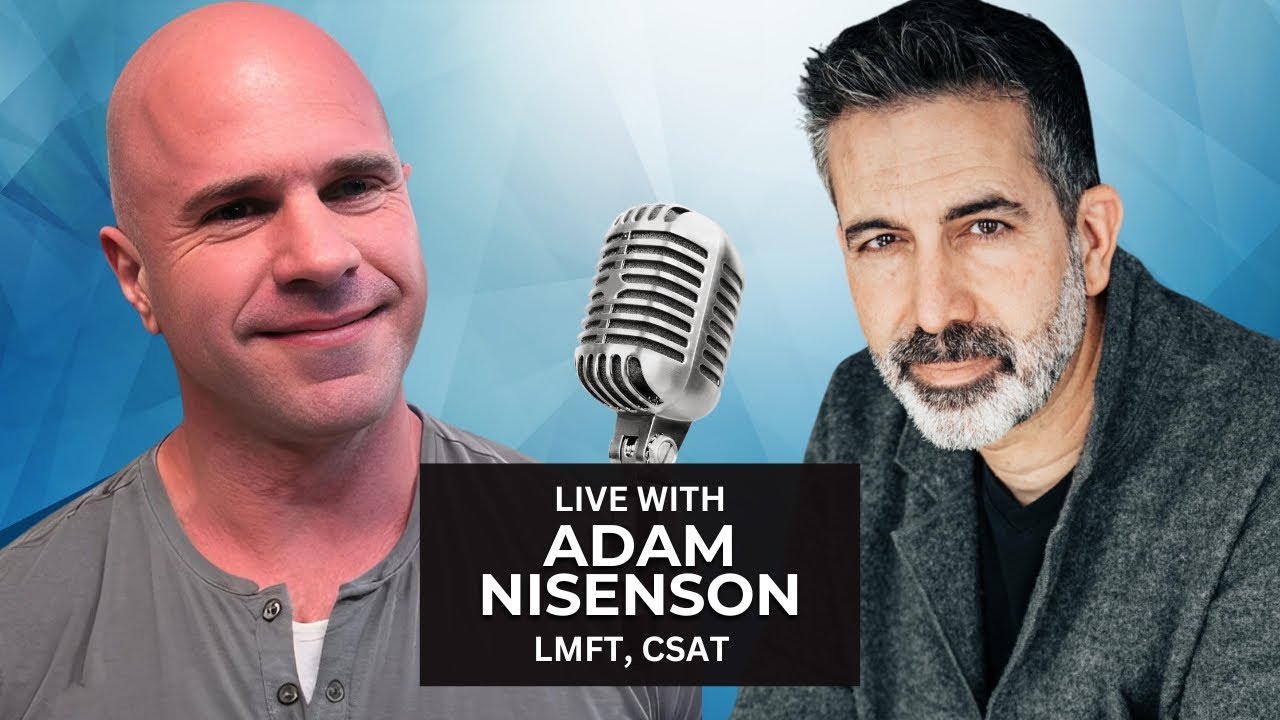
Ralph Brewer and therapist Adam Nisenson discuss how men respond to partner infidelity. Betrayal is usually the end of years of relational drift, not a sudden act. Reconciliation requires mutual work, and forgiveness matters more as self-care than as letting your partner off the hook.
Chapters
All right, all right, all right, all right, let me figure this out here, Adam. I got new software I'm trying to figure figure out.
Oh, that sounds fun.
Yeah, is it though? All right, hold on, it's still playing the dumb intro. Okay, how does one get rid of said intro? Okay, um, this could be the longest— there we go. All right, all right. So you know how these work, it's, it's live and the whole world is technically watching us right now. They're not, but it takes a little bit.
They should be, Ralph, they should be watching.
They should, because this is gold that we're offering here on a silver platter for free. I mean, come on folks, it doesn't get any better than this. Ralph, you know me, everything I do is just amazing. And then, and with us today is Mr. Adam Nissenson, the— I don't know, dude, your last name is so hard for me to pronounce.
I know, look, trust me, I didn't, I didn't choose it. Okay, all right, Ralph, I'll let it slide.
Why can't you know Ralph Brewer?
It's just a Adam, the Betrayal Shrink.
The Betrayal Shrink. And you can learn more at— hold on, let me get it— some— I got my banners up here. Uh, boom! Betrayalshrink.com. I don't know if you can see that on your end, Adam, but I'm showing on the screen right now. Betrayalshrink.com, guys, check it out. That is Adam's website, and that's a good intro into what the heck to talk about today is What does that mean, betrayal shrink, exactly? Tell us all about yourself.
Yeah, well, thanks for having me, Ralph Brewer.
Absolutely.
I like that I'm kind of becoming a little bit of a regular.
Yes, I do too.
And I love the work you do, and I love like what you just hit over 200,000 like on Facebook or something. Is that right?
Yeah, 200,000.
Yeah, life goals. That's awesome. That's good.
That took a while.
Yeah, none of that stuff ever moves fast enough, but it means you're doing something right and you have a good— and I do know you have a good product, or I appreciate it.
Thank you.
Yeah, I wouldn't want to keep popping in, but what I do kind of, I guess you could say, piggybacks on what you do. I'm a licensed therapist in CSAT, if any of you know what that is. It's a Certified Sex Addiction Therapist, but my specialty is betrayal for men. So, um, I work only with men and men who have been cheated on, or I like to say men get cheated on too. And then I know you have your books. I got my book. I actually, I wrote what for? I think I've been told it's the first book by a man for men around infidelity.
There you go. I just put a banner on the screen that said Adam's book, A Man's Guide to Partner Betrayal.
Yeah, check it out there. That's, that's my gig. So yeah, between your books and my book, I think we got a lot of stuff covered around manhood.
That's right. So, wow, what a deep subject though, my man. And, uh, you had proposed, you know, via email, we were chatting back and forth for this, and you had said, um, maybe we can go down the, uh, the slippery slope. That's not the right term. It's a controversial take, if you will, or a controversial subject rather, but it's one that every man that I work with And the type of men that I work with— let's, you know, cover that. I've said it, I'm sorry to the folks that heard me say this a million times, but I tend to attract a certain type of individual to my material and to our private group, The Brotherhood. And that is what I call like your anxious guys. And their form of attachment is they're very preoccupied with the health of the relationship, and they pursue the years and years of pursuing their wife. And, 'Do you love me more now? Love me more now?' And, and a wife who's very like, 'Back off.' And often, not probably not the majority, no, I'm in a minority of time, but a surprisingly large number of guys report, oh my gosh, I just discovered my very avoidant, loveless wife was having an extramarital affair. Of all the people on the planet Earth, what the hell? And then the follow-up sentiment is, 9 times out of 10, how can I save this? Um, because I, I don't want, I don't want to lose my family. I don't want to lose my kids. All this stuff that I've worked so hard to build, uh, the emotion that I've poured into this, not just a monetary thing, but the emotional currency over the years of I've devoted myself to this person and I thought we were going to grow old together and now this. And unfortunately for— hell, I'll say it— all of the men that I talk to, what they hope to get from their spouse is, you caught me, I'm sorry, I didn't mean to hurt you, that was my last That was not my— that was not— that was not my intent.
It's not me.
No, my intent was not to hurt you. My intent was just to sneak off and have a little fun, something on the side. And, uh, for a variety of reasons, I got— I got issues when it comes to this stuff, obviously, blah blah blah. But bear with me, work with me. If you want to leave me, I understand, but I hope we can stay together, blah blah. That's what every man hopes. But instead, it's basically like, I'm not quite sure what we are anymore. I don't know what to do. Just leave me alone. Let me have my space. And the guy's like, I want to save this no matter what. He's not sleeping. He's not eating. He's lost 30 pounds due to the anxiety. And then he comes to a guy like you and says, Adam, buddy, I don't know what to do here.
What do I do?
Is there hope here? Can I save this? What do you say to that?
There's so many things, Ralph, to say. You know, I'll I'll tell you this, what I find really interesting is I feel like most the guys I work with, their first response is usually, and you were kind of alluding to it, is like, I gotta fix this. And so many guys I work with, they're like, they wanna figure out like, what did I do wrong, right? And I think that's kind of the guy, the male kind of our ego is, I'm gonna fix it, I'm gonna show up different, I'm gonna do the work. And, um, man, it's so much more than that. It's so much because, right, there's another person involved. And, you know, one of the things I know just being a therapist is betrayal doesn't happen in the act of the betrayal. It has— most often it's been building for months and months and years. And, and often I'll have guys tell me like, yeah, I've felt it, or I kind of knew, or we just kept drifting apart, and there was there was nothing I felt I can do. And so I get a lot of, I get, that's kind of the theme of what I get from men when they're struggling. And then that, the theme from there goes to a lot of times shame, right? And then, and what really worries me for men is we have this amazing capacity to isolate and to hold our feelings, right? Right and stuff it all down and pretend it didn't happen. I have so many guys that like, they just go back to work the next day and they act as if, and they, with their partner, and, and that doesn't work. Like, that shame can become super toxic and it can really, uh, it can lead men down a very, uh, very unhealthy path, if you will. So, yeah, did I answer that? Did I get that? I think I— well, that was a good—
you I threw a lot at you all at once.
Yeah, it was a lot. There's so—
but okay, so the guy's hearing this saying, okay, you know, I'm good to feel, or it's normal for me to feel what I'm feeling. It's normal for me to want to hang on. It's normal for me to say, what did I do wrong? It's— all these things are normal. Great. But Adam, maybe if you could put a number on this. That's what a lot of guys like to do. What are the chances you think of this turning around and us saving this relationship and starting over and being the best we've ever been? Which, by the way, let's preface it by saying what I just said about the wife and her attitude towards this is not the best in the world. I'm not getting good feedback.
There's, you know, right, there's two scenarios, right? Either reconcile or we don't. At the end of the day, the only way reconciliation happens is if both partners, both individuals are willing to do the work. And I will tell you this, I, I see it so often. If both are doing the work and both want it, I have so many of the guys I work with, they'll be like, this is a marriage I, I never expected, or I didn't know I can have, right? Because it, it cracks us open. It knocks us out of some of those unhealthy, we'll call it masculine tendencies, or being shut down emotionally, or not being willing to ask for what we really want. And so in that realm, if both partners are doing the work I mean, you got— you can, you can create a super healthy, super safe, loving, and fulfilling relationship. I have a lot of guys also that they're fighting for it, but their spouse isn't. And, and a lot of times I see those guys, I, those guys, for me, my heart hurts the most because they want it. They're doing the work with me or someone else, and their partners just keeps gaslighting them or dragging them along. And it's, I mean, for some people, they, that's a great deal, right? My, I can do whatever I want, have the life I want. My, my partner keeps funding it, if you will. And I, I want to tell guys often, like, run away. Like, take care of yourself, find yourself. Um, you know, this work, Ralph, is, it's all about like self-worth and self-esteem and self-love. And what I find is, and I think women do this too, but we're just here to talk about men and that's our expertise. But I find often men, we find our validation externally, right? Like, I'm a husband, or I'm a therapist, right? Or these are my kids, or that's my, that's my, my motorcycle, whatever it is. And that's just not going to fulfill you. And that's one of the things this work cracks you open and makes you learn to find self-worth from within. And when you find that, it doesn't matter what your partner does, because you're going to have the strength, awareness, and bravery to do what you have to do to take care of yourself. And, and that's not selfish. I think if we don't take care of ourselves, we don't have the capacity to help others.
So, well, yeah, very well put, you know. And going back to your, your statement of, uh, put in the work, um, if you're both willing to put in the work— what that doesn't mean, guys, is rug sweeping. Let's just kind of forget that this ever happened and let's move on, you know. Let's put our big boy and girl pants on and just, hey, sometimes this happens with adults, you know. They know what I've seen. Tell me if you see different. Is that often— and again, this is illustrative of who it is I attract to my material and yada yada— but dude, was there anything— talking to the man— was there anything leading up to this betrayal, this affair, that— get red flags along the way, things that made you say, whoa, bad things, bad storms are coming? And they will just tell me some of the most horrific stuff, often from the woman's background, her childhood. She was a victim of sexual abuse. Mom and dad split up. Dad left her. She had no father figure. Um, she just basically took care of herself as a kid, blah blah blah. But she held it all together, and she was a great mother. Kind of a cold fish when it came to being a wife, but at least, you know, she kept it together until some kind of thing happened, is what I hear often. Not every time, but often enough where I can see a pattern here. And a thing is usually some kind of super stressful situation that cracks things open, and away we go with some kind of crazy behavior, which includes affair and other things, everything else. So the affair is just part of a puzzle of issues is what I see. It's not the thing. Yeah, so when—
that's what I was alluding to. It's happening way before.
It's happening way before. More often than not, it didn't just pop out of nowhere. We would love for it to be a one-off. She just happened to meet some guy at the bar, they had one too many drinks, one thing led to another. Oh shit, what have I done? I'll never do that again. I'm gonna run and tell my husband. But from what I've seen, that's relatively rare. It's usually, again, a puzzle piece makes up a jigsaw puzzle of all kinds of issues.
Yeah, I'll look— I'll, I'll just expose myself, although it's all over my website, my book. But like, my ex-wife cheated on me, and, uh, it's so hard to admit sometimes, but like, it's kind of like I knew, I saw it, I had that feeling I knew where we were relationally. And, and the truth is, there was big parts of me, I just kind of ignored it. I didn't want to deal with it. It felt so painful. And to do the work— I knew, like, we were going to have to work. I knew this was going to be a huge rupture. And what's ironic is, when there's, when there's betrayal— listen, guys, no one— a guy cheating on his partner, or a woman cheating on her partner, You never get away with it. No one ever fully gets away with it. You always get caught. It always catches up to you. And then fine, I'll do the work, right? It's kind of— we— it's like, you know, what's the saying? What you resist persists, right? And it's, it's so much of that. And so I always tell my guys, like, hey, do it. Go in. Like, let's— it's messy already. You don't think it is. And yeah, this might make it messier, but That's the only way. Like, like, something about the human experience is that we have to, we have to go through pain to find the healing. We have to go into the darkness, right, to find the light.
And yeah, I always, I always call it the, uh, the face down in the gutter moment. You've hit rock bottom. That's what so many of us need to go, all right, I got a problem, time to work on this. Yeah. And that's, and you know, for a lot of our ladies in our lives, unfortunately, that do this kind of stuff I alluded to it earlier. They have this whole— oh geez, just I'm picturing a shopping cart full of baggage and red flags, whatever analogy you want to use here. And, uh, they got a lot of work to do. And if you're a dude and you've, and you've both determined that, all right, we're going to work through this— she's, she raises her hand and said, I need help with a lot of this stuff. I hurt you. I'm hurting my family. I need to figure this stuff out. Please don't leave me. Let's work on this together. Let's be a team again, blah, blah, blah. I'll be patient with you. Boy, you got to be patient with her too, because it's not just going to be wine and roses and it's all uphill from here. It's this.
Yeah, you actually, Ralph, you bring up a great point, is what, what I tell my guys a lot is I want, I want you to realize, like, your wife, the betrayer, they actually, they hold on to a lot of shame and guilt and And they will have their own resistance and, and shame will keep, always keep us from wanting to step into that light. Because, because, you know, I've never really met a betrayer that's like, yes, I cheated, right? Like, no, most of the time it's like, I can't believe I did that. That's not who I am, right? And so, so when you're working with your partner, understand that, that they're going through their own crap right now too, and their own struggles, and they're trying to figure out who they are and what this all means for them. And they're also having their own ego wound, just like you, the man, you're having your own ego wound. Like, what does this mean about me and my manhood and, and how the world sees me? So, so those are all important things. The other part I want to add is so many guys, like, it's so easy, we go to anger and resentment, right? And that keeps us stuck from moving forward. And also it can just bring up so many other kind of abandonment wounds. And I think all of us, even if you had the perfect childhood, there's still going to be it. There's still abandonment wounds. And so it really, it brings all that up, I think, for both, for both partners. So Yeah, it's a nice hot mess for sure.
Yeah, the typical thing I talk to guys who come to me with these issues— and I understand it's veering towards kind of therapist talk, of which I am not by any shape, size, whatever— but it helps me to put kind of understand the complete picture here. And I'll be like, tell me about like her background as much as you know. And then they just, for the next 45 minutes, you're just like, oh wow. And then you go, well, now let's switch over to you. Is there anything from your past that would kind of lead to this? Well, and man, I hear this more often than not, my dad did cheat on my mom, and it was like a big deal when we were kids, and it was like this big blowup, and they almost— there was almost a divorce over it, and they just kind of ignored it and moved on. And that's just something that I remember from my childhood, this big event of this cheating moment. Or my dad was a serial cheater, or mom got caught, and my brother is the result of another— of an affair or something like that. You know, all these things. You're like, well, Man, surprise, surprise, who saw this coming, you know? And when you don't, when you don't deal with those things, that history has a way of repeating itself. And I had a, I had a therapist years ago who told me, um, after I had told her some of the things from my ex's past and how they had resulted in what we see now, and then things from my past, and she just kind of sat there and smiled and grinned, she goes, it's kind of creepy, isn't it? It's kind of creepy how history repeats itself, you know. If you take your hands off the wheel, this is what happens. And like, yeah. And she goes, and it's kind of interesting too, isn't it? It's like, yeah, it is kind of interesting how we just repeat these patterns subconsciously. We don't even think about it. Next thing you know, you're with— yeah, all over again.
You know, you're one of— I'll tell you, like, as a therapist, and I'm also like, I'm surrounded a lot in like the PhD world and stuff like that, there's so, there's so little data out there around men being cheated on, about mask— what I call masculine betrayal trauma. And the reason why is, is because it's underreported. Men don't want to talk about it. There's so— like I was saying earlier, there's so much shame. And yep. And I do know, I do know some, some people that are starting to really do the research and, and focus on it and And it'd be, it's gonna be really interesting to see like how many of those people come from broken homes or saw their parents cheat or, and, and I'm sure, right? Like it's probably pretty staggering. It's probably the majority, I think.
Yeah.
Or, you know, broke. Yeah.
The more we learn about epigenetics in that field, the more we learn like how much of a genetic or familial component there is to a lot of our behavior. And sure enough, if you're the kind of guy who's like, I just can't keep it in my pants and I'm just cheating left and right, I bet you we don't have to go far into your family tree, probably immediate mama dad to see the exact same behavior. It's so interesting how that works. Is there, is there a cheating gene? Is there a cheating— I don't know.
It's interesting, you know. I don't know if there is, but I'll tell you, I do know what I, what I see a lot and I sense a lot is if you, if you grew up in a home that was unstable or didn't have a health— have, um, healthy relationships being modeled, um, One of the themes I hear a lot is this idea that I learned at an early age I have to have a backup plan, that I can't trust love, or love will trick me, right? Or this person, I can't always trust them. Oh, that's right, I wanted us to talk about trust today. But anyways, so yeah, I think that's a big— like, I don't want to call it a red flag, but if your partner comes from a lot of trauma or a broken home or if they're— one of their parents was a serial cheater, right? It doesn't mean they're going to be, but it does mean that you need to really work on how you show up in the marriage and how you create safety for your partner and safety for yourself and how you're vulnerable. And, and that's the thing men struggle with. But I can tell you that, like, I think vulnerability, like, is the biggest muscle that you need to work on because that's the thing that creates all the strength and power in your relationship. And not only that, in yourself, because when you're sharing your heart and your truth, there's no gray area for yourself or your partner.
So, but it's a— whoa, that's a tough sell for a lot of men, especially the men that tend to attract to them the type of people that take advantage of that vulnerability in a bad way. A guy rolls over and exposes his belly to somebody, and the person says, hey, thank you for trusting me, watch as I hurt you. It's like, well, shit, I'm never going to do that again. So to tell those men, no, there's actually— it's a two-way street.
Yeah, it is. But Ralph, I got to say this. For me, I'd rather be authentic, in my truth, vulnerable, know my wants and needs and my boundaries. And one thing I do know, because I see this over and over again in my practice, I've seen it in my own life, is we attract what we're putting out there. We attract where we're at. So guys, if, if you don't have your shit together, if you're not healing, if you're not, you know, taking care of your emotional and your psychic safety, you're gonna find someone that's in that same realm or someone that preys on that. But I can tell you, if you do your work, if you're an honest man and you really fight hard for who you are, you're gonna attract that same kind of person. I see it all the time, you know, and it's like light. Go ahead.
And if by chance you happen to attract to you somebody that falls outside of those standards, somebody of low moral, whatever, you have the tools in your mental toolbox to go, whoa, it's been nice knowing you. See it, you'll—
I think you'll— I think you'll know. I think you'll know pretty quickly. Like, I was in the dating world for a while, and like, I knew, like Yeah, this isn't like you— like, like, I want to say this too, and this ties in not only to dating but in betrayal, is I want you guys to trust your gut. When you have a— when you, when you feel something isn't quite right, you know, we, we often like, like they say, like, your gut's like your second brain, and it's because like the second most nerve endings are there. And, and that's why often like if we're stressed or something's up, right, we Oh my God, my stomach or whatever happens, right? Happens 'cause that part of our body knows. But what happens here is I have that gut reaction, ooh, maybe that's not the right person for me. Then I start to think about it and then I start to talk to my buddies about it, right? And now all my filters, all my other life experiences, my buddies who are in my ear, no, she's hot, doesn't matter, you, you guys will figure it right. And now I totally— what I was originally believing to be true is gone. And then sure enough, it usually comes back to, damn, I should have listened to my gut. And I'm sure if like every guy that's listening to this would probably raise their hand like, yeah, I've not listened to my gut and wish I would have. It's happened to all of us over and over again. And that's just— I think it's super important for us to trust ourselves.
So, and I'm glad you said that because there's another subset of guys that come to my material that have a little bit more difficult time with the gut thing. To, I guess, to, uh, further define it, they have a difficult time with the nuance and subtleties involved in the world of interpersonal relationships. And those are guys that are neurodivergent, guys on the autism spectrum, for example. Um, those guys are very much attracted to a lot of material online for for guys trying to decode women and understand relationships and get women and how to pick up women and how to, how to come to terms with this infidelity thing. And they read a lot and they watch a lot and they take it all in. And, um, there is a dynamic, and I, you know, I noticed this myself in doing some research. Apparently I'm not the first to notice this. Um, you guys on the autism spectrum, it is not unusual for them to connect with, for example, women who have a personality disorder like borderline Personality disorder, a lot of borderline stuff. It would seem that because they are ill-equipped— I don't even know if that's the right term— they don't have the tools in their toolbox.
They're just wired different.
Yeah, they don't see the things that make us go, whoa, dude. They're just like, I thought that was normal. I thought this up and down and crazy and super attachment and discarding, I thought it was something I did. And because, you know, personally, yeah, they have a lot of— they have a history of people misinterpreting what they mean, what they say, just, you know, setting them aside. They've been outside of friend groups for a while because no one quite gets them, and they just thought that that was— this is part of that. So we don't want to necessarily tell those men like, dude, you knew all along. Some of them were like, no, I didn't.
They don't. Yeah, you know, don't quote me on this, but it's some— it's a little bit over 50% of like the world is somewhere on the spectrum. And there's no shame. The spectrum is huge. I mean, I'm dyslexic. Yeah, yeah. I mean, there's so— right. And, and how Yeah. So no shame in it. And I think if you don't know if you are or not, and if you can find out, I think that's good because then that helps you understand how you understand your world. And, and yeah, you're right, Ralph. A lot of times spectrum issues really mess with our interpersonal relationships, not only with others, but sometimes with ourselves.
So you got it. And we have I don't want to ignore our, uh, viewers who are leaving lots of comments. Thank you guys so very much. Want to say hi to Mr. Jack Luhmann, who is a regular. Uh, I don't know how to pronounce this last name, Ludovic or Ludovich, I'm not sure which, from Belgium. He says hi from Belgium.
So very cool, a tougher last name than mine.
Ludovich something. Yes, Mr. L. And then we have, um, Sean with a big comment here. Kind of goes kind of a left turn in the conversation, but maybe this will lead to something else. He says co-parenting seems to be hard because I was thrown out and boundaries were set to, quote, you need to respect me, as she immediately had someone else after a 9-year marriage. Okay, so she probably already had somebody else. You had to get out of the way. We see that often. And then what's the best advice for someone that's 7 months into a separation/divorce and I'm left with bad feelings while she's out living life with her new partner. Well, it's natural to feel bad about that. How do I feel as my autistic son is told that his new partner is a— oh, that the new partner is a better choice? Oh, so it sounds like we may be dealing with the old personality disorder thing. It's not normal for somebody to say, hey son, see new boyfriend, he's better than your dad. I mean, like, that's very dysfunctional. Something's going on there. And so your question is, Sean, like, how do you deal with this? That's— what do you say to somebody like that, Mr. Adam? It goes along with the betrayal thing.
I don't know, I'm still— I'm still— I gotta tell you, I'm still stuck on the guy that asked about like, she's out having fun and I'm still stuck. I was kind of thinking about that guy and how— was that what—
wasn't that kind of the same guy? Yep, same, same thing.
Okay, there was a lot there, but let me comment because that's kind of where my mind went. And I was just thinking like so many men I work with get stuck in, in the resentment trap. And like your whole, it sounds like to me, man, I, you know, not your therapist, not diagnosing you here, just making that clear to everyone, right? Um, but resentment and holding onto the anger, a lot of men, that's all we know how to do. And that's what feels safe, you know? And I would say you need to learn some ways Forgiving is super important. Now, I can probably hear a bunch of the guys, the thousands, the millions of them out there listening to us, Ralph Brewer, that are going, "I will never forget them for this," right? That's fine, good for you. Hold on to it, let it fester, beat your chest, be all those things that you think you're supposed to be. And what I can tell you is that'll stay with you, that'll be toxic, that'll get you nowhere in life, that'll keep you stuck. And then your partner just gets— your ex-partner, probably at this time— gets free rent in your brain, and you never get to heal. And what I want you all to know is that forgiveness is not for that other person, it's for you. And forgiveness does not mean you forget, right? It's just, it's, it's a form of acceptance. That's the other part, is when we can start to accept, and when we can also start to accept like, what's my part? And when I say that, I want to be really clear. No one ever does anything that gives your partner permission to cheat on you. Even if you cheated on your partner and then they go cheat, that still didn't give them permission to do that, okay? And I know, like, in my situation, I missed some things. I know I did a really great job of being an avoidant, you know, and And I did a really good job of not speaking my truth and asking for the boundaries I needed to be safe because I was an avoidant. And so you can hold on to your resentment. I can tell you that the emotional drain, it'll, it'll haunt you for as long as you do it. I know it can lead to depression. I know you will struggle, like we were talking earlier, to find healthy relationships.
Um, so yeah, yeah, my version of that, my version of that— I don't know if it's healthy or not, but this was what I eventually came to— was, um, hey, she's— she was a flawed human being, or is a flawed human being like everybody else. Her flavor of flawed was such that it led to this, and unfortunately it hurt a lot of people. And you know what, that's something she's got to live with, and, uh, that's not on me. And I got to move on. And I literally wish her the best moving forward. If she, you know, tomorrow wins the lottery and meets the prince of somebody who pays her way in life, or whatever, you know, awesomeness it is, I'd be like, good for her. I mean, yeah, that's her journey, and I have mine. And, uh, she's the one that has to deal with what happened. Oh well, c'est la vie. Easier said than done when you have like some of the issues we have here where the, you know, I'm stuck with the children, she abandoned me and the kids, and all this other stuff. And it's like, yeah, Um, I, I get it. It's tougher to let go of something like that.
Yeah, you know, like, I'll say this, I've, I've worked in some of those situations where the guy is suddenly just stuck with the kids and their partner, she's like off like living this life she never got to live.
And the old midlife crisis.
Yeah, yeah. And, and not caring about the kids. If that's, if that's the case, guys, I mean, that's terrible for the kids. But for you, I kind of look at it like, like it's like everything is how we focus, right? And what I focus on expands. It's, it's actually a blessing because how many of us were really raised by our dad, or how many of us really were our dads there all the time? Not many, right? Because depending upon your age and generation. But, but for me, like I always tell my guys, like, you got some extra work to do, but man, your kids are going to get to know that they're loved, and you get to build relationships with them that you wouldn't be probably prone to otherwise. So it's, it's a gift, although it has a tragedy wrapped into it. And how you, how you approach it will say— we'll say that will save those kids. And the other thing I'm going to tell you is don't ever talk crap about your partner to your kids. Don't ever— what we call it triangling or parentifying your kids and making them your confidant and stuff like that. That's not the place. Never ever talk bad about your partner to your kids. Just, you can say things like, well, that's Mommy's choice. Yes, I miss Mommy too, but this is, you know, but you have me. I do things to validate them and to pull them closer to you.
That's, that's huge, and that's so difficult. And the more you hang on and, and hold on to that resentment towards your ex because of what they did, the more apt you are to, you know, when the kid says, Mommy said this and this and this, you go, well, your mommy's a whore. And, you know, okay, no, that's not—
you want to say that, but don't, don't have—
no, you're just like, oh, okay, anyway, you want to eat macaroni tonight? Or that? Yeah, right, right.
I would just say things like, like, I would say things like, I'm sorry you had hear that, or your mom. Yeah, you want to— when you want to validate your kids a lot on what they're going through, and you want to also let them know that they're safe and you're not going anywhere.
That's huge. That is huge.
Super important.
Yes.
Yeah. Yeah, go ahead, bro.
Say, with the divorce, it's just the, the ground is shaking under their feet, of the children. It's what was safe and secure is now uncertain. And they— to add uncertainty on top of that and, and all this emotional nonsense of, you know, dad bad-mouthing mom, mom bad-mouthing dad, it's just, it's just awful. They need to know that they have at least one somebody, one parent that they can count on to be the stable force of good emotional regularity and, and strength in their life. And why can't that be you, dude? You don't have to follow suit with all this craziness.
I'll tell you, I became like I had a unique situation, but I kind of became like I was with my son all the time. And every now and then we still talk about like how cool that was. Like, we got to, you know, he was my— I called him my little buddy, and I had— I got to be with him so much, and I feel so lucky. And, um, you know, and I just always try to do my best and put on a happy face and just support him. But I'll tell you something interesting. It was a few years back. He told me one day— my son's now, he's gonna, he's 22. I don't know, I'm feeling really old right now.
I got one of those too.
So yeah, so right, so it's— so he, he told me a few years back that, like, I'm remarried. And when he saw, when he saw me dating, uh, my wife Judith, um, he, he told me, he was like, Dad, you're really happy. And I said, yeah, I'm really happy. I really love her and I'm happy. And she's like the perfect partner for me. And he said, I can't remember the last time I saw you happy. And what struck me is I thought I was doing such a good job, like showing up and pretending. And, and what I'm— what, what I want you men to take from that story is, is that your kids know. They sense it all. They can see it all. They have a heightened awareness that we don't have because they don't have all the damage and filters that we have. But that like crushed me when he said that.
And it also—
it also— yeah, and it also made me really happy that he could see me happy, you know.
So yeah, yeah. And they, they pick up— they pick up on every little thing. And, uh, you know, a mantra that we hear often, and there's some truth to it, is that kids are so resilient. And I think a big part of that is it's a lot of Oh, it's a lot of hope on the part of the divorced parent. Like, this isn't going to hurt our kids too much, is it? No, no, kids are resilient. They can get through these things. Oh, good. Yeah, in a way, but they still need a lot of hand-holding and a lot of—
yeah, yeah. I'll say this: if you stay in a marriage and it's super unhealthy and there's been betrayal and all those things, there's actually statistics— it's actually worse for the kids than if you get divorced and you recreate yourself and maybe you get remarried, whatever. But, but staying in something unhealthy, they see it and it impacts them. And they also never get to see what— then healthy relationships and love don't get modeled for them.
Exactly right. And, you know, talking about, uh, we had a comment here earlier, forgiving and, and moving on. Somebody here said— and I lost already, I have so many comments coming through— Thomas from Facebook said Anger, excuse me, anger just seems easier. It does.
Yeah. So, well, it is. So, man, I wish Thomas was here. I would ask him, what do you think's under the anger, man? Because the anger, look, anger, anger is important. It's one of the core feelings. But anger, we don't understand that there's a thing I call healthy anger. And we need to have anger. We need to process through anger. Staying in anger is not good. And what's, what's usually below anger is sadness. And if you don't get to tap into that sadness, you don't get to heal. So I always look at anger as kind of like that— well, the volcano, the big dome, and it's just waiting, and then you have to let it erupt. And then once it erupts and it all dries out, right, all the trees grow and the birds come back, right? You have to, you have to let the anger out so you can start to heal and be in your sadness. So don't hold on to anger and resentment.
That's one, uh, source I see of such acute anger and frustration and everything else around this is this theme that I hear from a lot of men, and they don't have much relationship experience. Often they, you know, married their high school sweetheart or whatever it may be. And a lot of them, right or wrong— and a lot of women kind of push back against this, like saying, yeah, right, Ralph. Like, no, this is the mindset for a lot of men, which is the men in their lives, they understand, are kind of— can be kind of scummy. Like, they've known about men that have beaten their women, they've known about men have cheated, they've known about all that. They've been bullied maybe as a kid, so they've seen the worst of men. They always put women kind of up here as far as emotionality is concerned— women being more empathetic, women being more understanding, softer. And so they carry that into relationships. And so when one of them, the one they love more than anything, says Actually, I'm capable of bad stuff too. Watch this. They're just like, it's a giant holy shit moment of, I can't believe this. And it sends them down a rabbit hole of all kinds of pain and turmoil and everything else. And they're on the internet telling everyone these women are secretly witches and everything else. Like, no dude, they're human. They're capable of some bad stuff just like everybody else.
Yeah, actually, Ralph Brewer, maybe I said this once with you before, another time we met, and you were alluding to guys like doing all this research or digging into Reddit and stuff. Guys, stop it. Like, stop going to those places. Like, Reddit, I think, is one of the most toxic forums you will ever be in. It's, you know, if you're looking to want to bash your partner into what a terrible person they are, you can find that subreddit, and all they will do is stoke your fire. And it won't get you anywhere. It just won't. And then, and then like talking about anger, I just, I want to kind of throw out another angle of anger is we also, for guys, we get super competitive and jealous, right? And that's another place we get stuck. We get trapped. And what I want to remind you is, is if you're trying to figure out how you measure up and if you're jealous or If you're scheming— I was, I remember I was scheming on the guy my, my ex cheated with. I was thinking like, I'm gonna expose him, and I know his business people. And what I realized was I was putting a lot of energy towards that, and I wasn't putting the energy towards me. So just another way of looking at it.
You got it, you got it. And you know, just that whole— and to put some people's thoughts at ease, we have a lot of guys that are hurting, and the initial thought for a lot of men is the affair partner must have been better looking more endowed, got more money, more charming, more insert fill in the blank here with whatever. And it's like, dude, you're missing the big thing, which is he's new and he's an affair partner. And these things are really potent when it comes to forming an emotional and physical bond with somebody. Um, they're pretty powerful things, these affairs.
And not only, not only that, Ralph Brewer, it's, um, like a new relationship, man, the intensity right? And that you can't ever recreate that in your relationship. So there's also, there's also that part has a big pull. That's why most, um, affairs don't last.
No, the newness wears off.
Yeah. And the pretense of how it started, right? Or it was this excitement, or my husband wasn't available and, and he would listen to me, right? And also I'll say, well, yeah, also your husband wasn't available because you weren't letting him listen to you. It works both ways. But yeah, I cut you off, man.
No, no, you're good. No, no, no, we got it. We got a question for Mr. Jack Luman here. Uh, Adam, slightly off topic, he says, do you have a perspective on surrogate husband syndrome or jacosta complex, etc.? Are you familiar with—
I'm not familiar with that.
I'm not with, uh, jacosta, but the surrogate husband thing, if I'm understanding you, Jack, meaning like, uh, my, my son's my little man, he's, he's listening to all my problems, you know, that enmeshment.
Well, that's—
yeah, that's like the parentifying, parentification of the kid.
Yeah, I'm not sure what— I mean, I'd like to know what he wants us to help him answer.
Yeah, but well, you could be alluded to that earlier, Jack, about how, yeah, just how, uh, not good that is for kids to be taking on all that emotional stuff from their parents. Yeah, go ahead.
Yeah, let me like kind of define being parentified is— and give an example just for those that might not know. So basically, like, I'm, I'm separated, my kids are living with me, and I just like sit down with my son all the time and I just tell him all my problems, or, oh, your mother this, or work is so hard. In other words, my child fills the void that my partner had, and so I parentified— I made them another parent I made them my equal. And that's super confusing for kids because they don't have the capacity, or much less the knowledge, right? But they're trying to develop. And then what happens to those kids is they grow up thinking they have to take care of everyone, they have to be a people pleaser. And so it creates all kinds of, of mental issues for that child too. It's a struggle. They become a— they become a protector when that's not their job.
It sounds like a sexist stereotype, but you know, stereotypes don't just fall from the sky. They're rooted in some, in some truth here. But it is a single mother has her, her son who's her little man, and she comes home from a hard day at work and just unloads about everything that happened at work. And stupid Susan at work said this, and the stupid boss said that. That's one level of it. Another level is, and let me tell you about my boyfriend. I was out on a date a couple of nights ago. Oh, what a jerk. He did this and this and this.
Yeah, inappropriate conversation. I, I've heard crazy stories of being parentified. I've had clients where, yeah, my mom, mom, mom, I would help her pick out her clothing for dates or to go to work, or I would rub her feet when she would come home from work. And I would just be like, oh my God.
Yeah, like, yeah. And then that carries relationships. Yeah, that he looks for women that need, you know, taken care of.
And yeah, they become, they become a doormat and they don't have their own voice. And they don't have— they don't know their own power and sense of self.
So yeah, um, we got people saying, I have a question, can I ask a question? Guys, just go ahead.
That's what we're here for.
Type away, guys, don't be shy. Um, and then we have guys unfortunately saying, you know, wife left, he has the kids 5 days a week. And, uh, yeah, that happens. For the first 2 years of me post-divorce, I had my kids most of the time. When I put it down on paper on a calendar. I think at one point it was like 80% of the time they were with yours truly, but that's just how things worked out at the moment. I could throw my ex under the bus for that, but logistics of life and everything else led to that. And it was, it was a good time for me. It was stressful, I mean, don't get me wrong, but, um, I look back fondly on some of those years. And that was, you know, 12 years ago.
Um, uh, Jeffrey says, I just figured this out, Ralph. I just saw, I can see the comments too. I didn't because this is like a different stream thing for me.
Oh, you can? Okay, cool.
Now, yeah, now I can. I'm slowly catching up. Do the intro again. I'm here, I'm here, I've arrived.
Well, you're teaching me things. This is new software and I had no idea it did that, so very good.
Yeah, yeah, because this is totally different than last time we met.
Well, I don't know. Well, yeah, maybe if you see one you want to call out, by all means say so.
Um, You know, it's hard to read, think, talk, and it is pat my head and rub my belly.
Exactly, exactly. I don't know if we want to get with Jeffrey's comment there. That there's a lot of anger there, Mr. Jeffrey. Basically, um, here, I'll read it out loud for those watching this later. Um, economic tides are changing rapidly. That's sure. And F, increasingly proclaiming— oh, females, I guess you're saying women increasingly proclaiming independence. Okay. We need to tell our sons not to simp. Are you familiar with that term, Adam? That means not to, um, uh, kowtow to women, not to be a people pleaser. Yes, yes, man, whatever he said, that's what that means. To women, in a desperate attempt to secure a life partner, good guys tend to pedestalize women. No more fluff advice. There is an ugly nature and truth that needs to be conveyed. We all have an ugly nature and truth to us, sure. That's what the old proverbial boundaries are for. It's just like whatever.
You know, but Jeff, I'm going to say, I mean, I hear you and I see those things in the world, but I'm also going to tell you that for me, like, that's like a little edgy on like some toxic masculinity and stuff like that. And I think you can be in your power. I think you can be in your truth. I think you can hold boundaries and you can do all that being a good, honest man and have vulnerability. And look, life is about risks. And if any of you guys out there think that you're never going to get hurt, like, that's just— even after you've been hurt, that's part of the human experience. And the hurt is how we grow and how we learn. So, so, but I hear you. And, and yeah, the world is changing and the internet's always changing, and social media and how, and how we show up. And, and I'll even tell you, one of the— my biggest concerns is You know, I have two teenage stepkids. How kids interact with each other now is so different. Like, it's this, right? It's 2D. There's not as much 3D going on, right? And we've lost the capacity and understanding of how to talk and interact and be social together.
It's very contentious right off the bat. That's the baseline is like, well, we're contentious, we're at battle with each other, go. It's like, mm, it's not a good way to start.
Yeah, it's not, it's not man versus woman. I just, I don't see it that way. And, and Jeff, man, I totally respect your view too. I mean, that's, that's the beautiful thing. We're just talking, right? We all have a say and we all have, and we all also, our experiences and, and how we see the world's modeled off those experiences, right?
So there you go. And then Dustin with a question from Facebook: How do I not say bad things about my daughter's mom when she continues to do the things that hurt her because she cares more about her happiness than our daughter's mental health. I mean, that's what we're talking about, Dustin. That's what a lot of guys see. Then you're like, how can I not be overtly angry at her and lash out in front of my daughter?
You just don't, dude. You know why, Dustin? Because you're a better person than your wife.
There you go. Yeah, that's it.
I, I kind of took that route on my experiences, that I was just gonna talk to her different. I wasn't gonna mirror the things she does. And, and I'm just gonna show up. And like, even in my book, I don't, I don't slam my ex in my book. I talk about my experiences and the impact of the things that happen on me, because that's the only thing that matters. And I feel sorry for you and that your ex is doing that and your daughter's is struggling through that. But look, man, you got to look yourself in the mirror. And I hope that what looks back is you like what you see and that you know that you're doing the work and that you want to be a better parent than she is. That's what I would say.
Very good. And let's pause here for a moment to talk about your book, Adam's book, A Man's Guide to Partner Betrayal. You have one there with you? You can hold up there. There you go.
It's available on Amazon.
Nice. Looks good.
It's a standard 6x9.
Mine are a little bit smaller than that behind my head there.
So very good.
Excellent. Good job. And, uh, and then your website is again, uh, BetrayalShrink.
Yeah, actually, you know, Ralph Brewer, BetrayalShrink.com. I have on the website, some of you might be interested out there, I have a thing, um, it's called my MBT assessment, Masculine Betrayal Trauma Assessment. So you can do the assessment. It kind of lets you get an idea where you are at on your healing journey, on your betrayal journey, and blogs and If it's okay, Ralph Brewer, can I plug— I have an upcoming men's group.
Oh, go right ahead.
June 4th. Thank you. June 4th. It's on my website, like, how to work with me. Um, limited to 10 guys, so starting to take names for that now too. Just guys that have been cheated on working with me, and every— we meet for 8 weeks and we just go through things, topics around what men have to navigate, and some things from my my process in my book.
Thank you. Very good plug. Absolutely, guys, check it out, betrayalshrink.com, and his book, I'll put it one more time up on the thingy here. There we go, Man's Guide to Partner Betrayal. Check it out. And while I'm plugging away here, what about your books? Well, if you'd like to meet this gentleman here, yes, BroFest 2026, go to brofest2026.com. 2026.com, and you'll meet myself, you'll meet Adam, you'll meet Dr. Robert Glover, author of No More Mr. Nice Guy, you'll meet Lauren, the Dadvocate, one of the most popular social media personalities in our game there is, and, uh, all the fellow brothers out there, we would love to have you. So check it out, brofest2026.com. Yes, we are promoting it early. We want to get a good number of guys signed up, and the pricing is as low as it's going to be right now, and we're going to raise the pricing in July first, just as an incentive to get more guys signed up early so we can get a good head count in there for the event. But we want to make it a good one, so check it out, brofest2026.com. And I have another little—
let's fill it, let's fill that.
And now I have a ticker going— you probably don't see this on your end. I know I have a ticker going across.
You can see it. This new platform is great.
Go to helpformen.com/join. That's our private community for men that we call the Brotherhood. And you will see there is a coupon code now because we officially hit 200,000 followers on the Dad Starting Over Facebook page. So we're like, well, we got to commemorate this in some way and celebrate this. And so we came up with this coupon code of 200K, and you'll get into the Brotherhood 30% off. So that comes— if you do a month-to-month thing, that is dirt freaking cheap, guys. And if you want to do annual, want to do lifetime— most of our guys do lifetime, almost 3/4 of our membership do the lifetime thing. So that's pretty cool. And, uh, so check it out. Brotherhood, help4men.com/join. Help4men.com, we have all kinds of articles, videos, courses, books. My books that you see behind me, you can purchase there, but members get all those books at no charge. Not the paper copy, you get an ebook copy and an audio version, but still you can listen to all my books. Even Austin on our team, he wrote a book, you can listen or read that as well. We have private discussion forums, we have live Zoom meetings, we get all kinds of cool stuff, so check it out. The Brotherhood, help4men.com/join.
Can you tell who signs up today, or like within the next so many hours, on the—
through the, uh, for BroFest, or for, for Bro— yeah, absolutely I can. Yeah, we'll see.
So why don't we do like, uh, whoever signs up within like the next couple hours, we'll do a little drawing and I'll mail a copy of my book to them.
Oh, will you sign it?
If they want it signed, of course.
Hey, you laugh, but you know, I'm basically a nobody in the literary world.
I'm doing an autograph thing at a therapist convention.
So yeah, yeah, I did that. The first BroFest we had was years ago in Nashville, Tennessee, and they were like, do you want to sign books or something? I'm like, yeah, sure, I guess. Yeah.
And so what do we do? Like, within the next 2 hours, there you go, whoever signs up You give me the names and we'll just write— I'll write them out, pull it, and then if you get their address or whatever, they're good.
Good idea.
Um, I'll email you personally and then you can tell me where to mail it if you want it autographed or not.
Very cool. Very cool.
Little value added.
Excellent.
Yeah. Now, now no one's gonna sign up.
Anyway, I was saying at that first BroFest, um, anybody want to sign copy? And dudes just lined up out the door to get a signed copy of a book from me. I'm like, I felt like a legitimate author. I think that's pretty cool. You are. You never know.
I want to—
I want to—
can I— I don't know how we are on time, but I saw this message from this guy Andrew, and I liked what he said. He said, he said, I think once you come to terms with how toxic the ex is, you don't really have to desire to talk bad about them. It takes time, but at least that helped me. Uh, yes, Andrew, well said, and it's true. And, um, you got it, man. I can tell just from that post you're healing and that you understand, like, again, what you focus on expands.
So, you know, it's a good job, my man. There's an analogy I use that's terrible. I will— I'll be the first to say this, but I use it and a lot of guys get it. Um, the crazy homeless guy that's outside your building, you do a wide berth around him every day so you don't interact with the guy, because when you do, it's just all kinds of crazy and uncomfortable moments. But you look at the guy and you say, that was somebody's baby. That's potentially somebody's brother, somebody's son. You go, oh, you feel sorry for the guy, but you still keep your distance because he's, he's nuts. He's screaming, he's yelling, he's doing— he's— you don't invite him into your home and say, let me take care of you, because he'll trash your place. Like, it's just same kind of energy towards the ex. You go, I feel sorry for him, mother to my children. I mean, come on, right? You know, still got passion. They're still— and hey, here's the, here's the next level. You still have love in your heart for them. Not at a romantic level, not at a spouse level, of course, but they're the mother to your children. You have good memories. You look back and smile at some of those memories you had. They were great. What she did in her current state of crazy, if you want to call that whatever, doesn't negate all the good stuff you had. That's something a lot of guys do, is like, all those previous 15, 20 years were for nothing. No, you had good memories, you had good times, you made 2, 3 kids, whatever it may be.
That's right.
But you keep your distance and you go, in the current state she's in now, no, I— let's just keep her over there and I'm over here. It's best that way. That's, that's kind of my— whether it's good or not, that's how I look at this. Um, I agree.
Uh, what else we got? More.
You don't want the kids to internalize what the ex has chosen to do. Be the best person you can be. You know, that is—
so, got it.
That is it. Uh, but that's going down that thought pattern is one of, is this how my kids are going to turn out to be? Let's say mom cheated 5 different guys and did all— and his drug habit, you know, really went off the rails. And the guy looks at his daughter and says, is that my daughter's future? You know, scientifically we say she has a higher chance than this gal over here, maybe, but it's not like— it's not etched in stone.
More pressure on you to show up as a dad.
There you go. To show her in if it's any consolation or comfort to men, girls and boys that have their father in their lives, actively in their lives at a close level, leads to a lot of positive outcomes. The opposite leads to a lot of negative. So if you're in their life, you can mitigate and minimize a lot of damage in the future, that's for sure, even if they go through a whole lot there. Um, I don't want to cut you off here, but we're coming up on an hour already. That was fast.
No. That was fun.
Anybody have any other questions? I'm going to put up here one more time the, uh, where is it? There it is.
Hey Ralph, next time you have me, let's— I want us to talk about trust. I think that's like, I think for most guys that's the hardest thing, and trusting the process, trusting their healing, trusting that they'll love again, all that kind of stuff, and how trust—
oh, that's tough.
That's another day.
Absolutely. And we will do this again, guys. We're going to have at least a few more of these between now and BroFest.
So, and, uh, we'll make it happen.
Adam, brother, thank you so very much for everything you do. Uh, love our chats. Can't wait for the future ones. And guys, thank you for joining us. Thank you for the awesome questions and comments. Appreciate it. Do me a big favor, check out Adam's book, A Man's Guide to Partner Betrayal, and check out— let me put it back up here again, I'm getting used to this— betrayalshrink.com. Check that out. And across the bottom of your screen there, like some kind of weather alert, it says helpformen.com/join and use the coupon code 200K at checkout, and you're going to get a whopping 30% off an already low-priced entry for our private community for men and possibly winning a book. Yes, sign up for Bro Fest within the next 2 hours. This was Adam's idea.
Why don't you do the same thing, Ralph? Ralph, why don't you throw in one of your books?
Well, I'll throw whatever, but you know, if they join up, they'll get all my books. They get all of them already if they sign up for the, the community.
And if, uh, uh, yeah, Kenny said good show, guys. I like this, Ralph. I can see what's— I feel more like now, now I'm part of this, in the flow.
Yeah, it's just sitting and waiting, thinking it's like an old-fashioned radio show but just pumped up a million times and to all over the world. It's— that's right, this is amazing. Like, little yahoos like myself can literally reach millions of people. That's never in a million years what I think. Now, I've had some videos and stuff that have reached like 14 million. Dude, that's like a Super Bowl commercial. I mean, that's such like— who would have thought? But yeah, this technology is amazing, guys. Thank you all so very much. Appreciate all of you, and we'll catch you on the next one.
More from Ralph


Why Women Emasculate Men — and Why You Must NEVER Cave | Alison Armstrong Interview








Sexless Marriage… She Said She'd Rather Get a Divorce Than Have Sex With Me Again