Chat LIVE With Ralph (DSO) and Dr. Psych Mom!
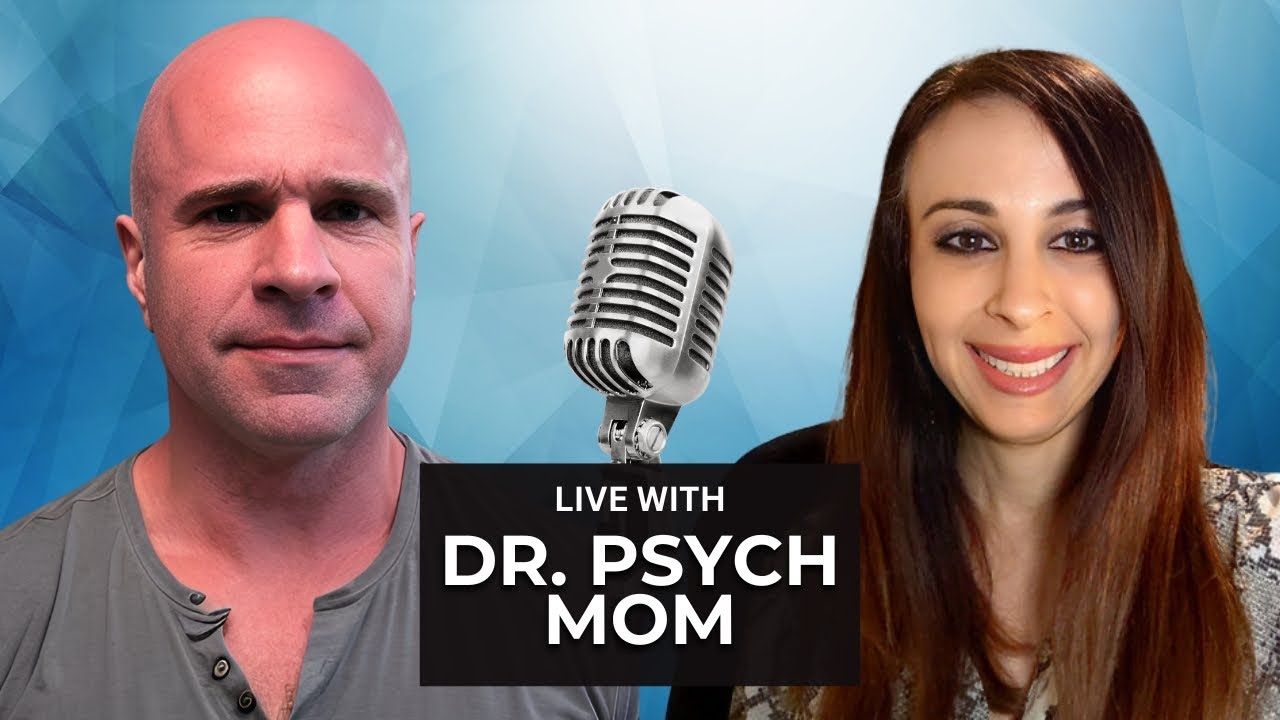
Ralph Brewer and licensed psychologist Dr. Samantha Rodman-Whiten discuss why marriages become sexless, covering anxious-avoidant attachment, trauma's effect on libido, and how SSRIs and other medications kill desire. They answer live audience questions about therapy, boundaries, and when to see a sex therapist.
Chapters
Hello, hello world! Here we is. Hi, it's your boy, it's your boy Raffalito, live once again with the lovely and talented Dr. Samantha Rodman-Whiten, aka Dr. Psych Mom. Don't call her mom, she doesn't like that.
Yeah, right. No, Dr. Mom is what those people say. Dr.
Mom.
Actually, a couple of them call me mom. Yeah, a long time ago.
But yeah, you're not a fan of the whole mom thing.
Yes, thanks, sir. It's been a while.
They call me, uh, they call me dad every now and then. Um, yeah, fight My thing just blipped and went away for a second. Now it came back.
Okay, cool.
But anyway, um, well, let me share. Fight for Better Now is in the comments early and he's okay. He says like the video on the way in. Yes, thank you for the reminder. If you're watching this, give us a like. That always helps the old algorithms tell the whole world that this is worthy of other people seeing. And share it and leave a comment here and all that fun stuff. So if you're watching this, you probably know my bald head, but you may not know this not bald head next to me. Smooth. Um, Dr. Samantha Rodman-Whiten is a psychologist who helps out folks. And you know, here's a question: if you're a psychologist, that doesn't necessarily mean that you're a marriage therapist or counselor. You have to be separately Licensed. Credentialed, licensed for that, to call yourself that, as well as any other kind of—
Right, I'm a licensed psychologist. Yes, but if you just become a psychologist, um, I mean, there's other kinds of psychologists.
You could be like an IO, industrial organization. Yeah, my screen just went black on me.
Oh yeah, I see that you're frozen.
You know what I'm gonna do? I'm gonna, I'm gonna text my boys here real quick to get off the internet because I guarantee you it's them.
Yeah, yeah, probably.
Here we go. Get off the internet, please.
Yeah, for sure.
All right, cool. Okay, very good. Well, we got, we got psych mom and dad. Somebody says hi, says Steve-O. Well, hello, Mr. Steve-O. How you guys doing? Well, we, we've collaborated in the past. If you guys have seen some of my videos that I've posted, and I'm sure Samantha has some— yeah, you have some clips on TikTok and so forth of both of our heads one on top of the other.
You know, the comments. Hi, Steve-O.
Yeah, and so we haven't done one of these in a while, and it's tough to coordinate the old schedules, especially with Samantha. You're so busy. You've told me in the past that you have like up to 8 people a day that you're chatting with.
Yeah, yeah, it's a little bit less now. I'm now running the business more, but I still see at least 6 clients a day, so, you know, it's a lot.
So you say you're working on the business more so than in, right? That's the vernacular that the entrepreneurs use.
Oh, yes, I'm doing a lot more, you know, the podcast.
Yeah, and growing the practice as far as the other people that are helping you.
Yeah, hiring people, all of that sort of thing. So yeah, I mean, at the height, I used to see like up to like 38 people a week, and now I see like 20 or so. So So it's a big change over the years, and it's only going to get less over time.
So very cool. And that's your goal, and you're cool with that? Or do you miss having so many people in a day?
Then I would just see more people if I missed it. I mean, there's never— I mean, there's a lot of people who want to see me. Um, but yeah, no, I, I don't miss it. It's a, you know, it's a difficult job. You're sitting with people's feelings, and they're— it's like The definition of emotional labor, actual emotional labor, you know, is to hold space for people's emotions.
You're cutting in and out. I don't know if it's me or you. I don't know.
I don't see it. It's high-conflict couples I work with a lot. I mean, it's stuff where it's difficult to, you know, to— you need to take a break sometimes. So it's not the sort of thing you could really do 10 hours a day in perpetuity.
Yeah, your connection and mine too is a little wonky on this. Hopefully kind of smooths out here, but you're, you're cutting it out. But yeah, I got what you were saying, which was, uh, the emotional labor of it, which is if you are in fact a sensitive person, or the term is highly sensitive person, HSP, then yes, you are going to be a little bit more sensitive to, um, taking in all this potential negativity and just, well, just all the energy that you get from your clients day in and day out. It's got to wear on you mentally.
Yeah, all of us really are highly sensitive people that go into this field, so that's not like unique to me. But yeah, certainly it's a sort of field where there's a high risk of burnout if the only thing you do all day is see clients, you know. That's why a lot of us do other things, you know. And obviously I do a lot of other things in the podcast and social media and writing and all of these sorts of things. So So yeah, so I don't just only do the same thing day in and day out, which is positive, and that's how to avoid burnout, you know.
Mm-hmm. Yeah, yeah, guys, I apologize if this is glitching on you. For me, I assume it is, but my— I see a side by side on my screen and mine's going black every now and then, and Samantha, you're freezing every now and then. So if this is a—
I don't see it going—
our experience, sorry about that. The good news is that this system actually records the stuff, so we should have a higher quality recording later or clips later from all this. So that's a positive. Um, Fight for Better Now says it's smooth on his end. Well, that's cool. So I guess it's just me. So I don't know what you're seeing on your— like, right now Samantha's frozen for me. So, uh, let's see, we got Olivier, Olivier F. I won't say your full name here for the world, uh, from YouTube. Says he's from France and he's here to get our hot advices. I don't know about hot is the right term there, Olivier, in English. You're maybe are good. Hot has kind of a—
I don't know, probably ask some sexy questions.
Samantha, you are frozen here. I don't know if you can hear me, but, uh, I do hear you on my end. Maybe you want to get out and come back in. I don't know, that may help things.
Perry said that I'm coming through fine and you're only a little glitchy.
I'm gonna kick Samantha out there temporarily, see if she'll come back in and join us here, hopefully. But I had a bad connection there, she was all frozen. I assume you guys saw the same on your end. Uh, bestlifebehavioralhealth.com is the name of her website you want to go to. bestlifebehavioralhealth.com, that's her full practice with, you know, multiple people— multiple people, hard to say— not just her that practice, as well as drpsychmom.com. And on drpsychmom.com, you'll see it's a really, really large blog with, uh, all kinds of articles and everything else, all about, oh, uh, all kinds of things in the topics of psychology and marriage therapy and all that good stuff. I'm gonna add her back here. All right, you're back. So everyone was telling me no, Ralph, she's good. It's you, buddy.
Yeah, I know.
Yeah, we're all frozen on my end, so I assume everybody else all the same.
No, I, I still see you as glitchy, but it's—
you're fine. Cool. Perry says it's just me that's a little glitchy. Oh well, you do. All right, cool. Very good. Um, we are here, guys, not just to watch us babble on and on, but to take questions from you. So if anybody has any questions, stories to share, anything at all, now's the time to do so. Don't be shy. It's not often that we have, uh, Dr. Samantha Rodman-Whiten here with us live to answer any questions you may have. Oh, what are some topics that we talk about often? Well, the old SEX is what moves—
you went off. You want to do it on Face? Hi everybody, he's not here but I'm still here, so I don't know if I should be talking, um, but I'll take questions. If anybody has any questions, tell me in the chat. I don't even know if I'm being transmitted. Oh, member of the Dr. Psych Mom secret group here, thank you so much. Perhaps whoever that is can, can ask a question so I have something to talk about. But I assume Ralph Brewer Brewer is going to be right back, guys. And, um, we usually answer questions about marriage and relationships. Here we go. What strategies would you recommend for a person dealing with a wife who is not fully wanting to engage? So probably you are in a pursuer-distancer relationship where you are the preoccupied attachment partner and she's the avoidant partner, and I talk about that a lot, uh, you got to work on yourself and you can also work on the relationship. If you can get her into couples counseling, then you can work on the whole dynamic that you guys have where you pursue and pursue and then she avoids and avoids on your end. And I think Ralph is back. Hi, Ralph.
Well, you're just blabbing away, just took over, huh?
But he gave me a question and I felt I should keep this going. Um, but anyway, I was finishing answering him Um, on your end, you would want to work on your own stuff in therapy, um, about why you kind of get into these relationships with people who are avoidant and who are pushing you away. The only things you could do is work on yourself and then try to get somebody to work on the couple, you know. I mean, that, that's it. But the working on yourself is growing more confident, understanding the roots of your low self-esteem issues, and developing more of a life outside the relationship is a huge one. What do you think, Ralph?
That sounds familiar. You know why it sounds familiar? Because I say exactly that in my book, The Dead Bedroom Fix. You can learn more at deadbedroomfix.com.
I got all these banners here.
Like, look, I got— look, we can talk about— we can talk about brofests, we can talk about— I got a free course here, deadbedroomfixcourse.com. I got it all right here, folks. Um, but yeah, I mean, that's— but, but Samantha, that's not what any, um, anxious dude wants to hear, which is, dude, you got some issues you need to work on. That's a huge part of what got you in this mess and why you're in it. And why don't you stop pursuing and pushing and hovering and, and smothering this woman who wants the exact opposite of that? You're just pushing her further away. And the big— and the biggest fear of any anxious person is if I stop pursuing, if I stop smothering and hovering over them, then they will go away and they will go away permanently. And I love them, I don't want to lose them. It's the old if you love them, let them go thing, isn't it? It all comes back to these old axioms, you know, let the bird go and fly away.
And if it, uh, if somebody doesn't want to be with you, you can't really make them be with you. You can end up in some sort of a, you know, a détente, at least until the kids are older, if that's your choice. But you cannot really force somebody to engage with you, you know. The person needs their own kind of motivation to do that, and sometimes their motivation is also keeping the family together. And if you just lay off a little bit and develop your own life, then that gives them the chance to come forward more, you know, and miss you, because they can't miss you, you're never gone, you know.
There's, um, there's certain subsets of individuals that have read my book and come to me with help. And there are some that, oh yeah, you talk to them for 30 minutes and you're like, dude, you know, this is really bad and this isn't good. There's, you know, some of this is tantamount to abuse and all kinds of horribleness. All the way to the opposite end of the extreme, which is, mister, it sounds like you got a really good woman on your hands. You just need to yank your head out of your butt and leave her alone. You're just— you're annoying me just hearing your stories. Like, dude. And some of these men do, and the wife flourishes. And sometimes the wife literally says to them verbatim, I recognize what you're doing. Thank you. That's what— that's what I needed. And now how about we go on a date Saturday? And the guy's like, well, that's awesome. All it took was to back off. It's like, yeah, dude, somebody— you're too much.
It's really like that, especially younger couples, especially people who are not as entrenched in a negative dynamic. They have more flexibility, especially with younger kids. People are really motivated, you know. So there are windows when it's easier for people to change.
Yeah, if you got a postmenopausal wife who, you know, got— still got 3 kids under your roof and she's working full-time and she's on SSRIs and everything else, your situation is going to be a lot different than the 25-year-olds who just had their first kid, 35-year-old that just had their first kid, or anybody who just had their first kid.
Oh wait, what's your take on that? If he wanted to, he would, meaning like if a guy wanted to be romantic, then he would? Is that what you mean, Steve-O? Um, my soon-to-be— or I don't know if this is continuation— my soon-to-be ex was pushed away by my pursuing. When I stopped pursuing, she said I was being distant and that was the problem. Well, that sounds like two fearful avoidants, Steve-O. That sounds like two people that grew up not seeing very good templates for a calm and loving marriage, and so then you are kind of just triggering each other left, right, and sideways. Oh, we're back.
Steve, I lost you for a second.
Yes, Steve-O said neither of us had a dad around. Yes, I know, Steve. Uh, that makes sense. I didn't know about the dad, but I figured that it was a tough time for both of you. And so then now's the time, Steve, to change and to say, I'm not going to get into another relationship that's the same again. I'm going to use this time to figure out my contribution to what I did wrong, so then I can get into a healthier relationship moving forward. I can grow more securely attached, and so can— then I can attract a securely attached woman that likes to give and receive affection, and I'll learn to give and receive affection in a more measured and calm way. That would be the ultimate positive resolution, Steve-O.
There you go, very well put. Now, if you, if you jump up there to Jay's comment from YouTube, I assume you can see it there. One year of couples therapy, still no sex or affection, no interest in changing from the wife. She seems okay with no sex. Uh, when do I make an ultimatum, and would consequences change her mind?
J, you gotta say so much more stuff. Did you have a baby a year ago? Did you go through menopause a year ago? Did you lose your job and develop a drinking habit a year ago? Like, there's like a lot of variables here. Is she depressed? Like, like, what's going on? Is she an individual? Are you an individual? What are her problems with you? So she may be okay with no sex because anything from that she's asexual to that you had an affair that you're conveniently forgetting to tell me. You know, so it could be a range of things. That's like people when they are in dire straits in their relationship, they look for these answers that they can use as like this template that it's one size fits all. And there are really not a lot of one-size-fits-all situations, you know. I see this in counseling all the time. People come in, they're like, oh, like, this is what I saw on the internet is the issue. And then they forget like 17 different variables that are going on, which can include active addiction, a blended family, the woman's father just died 2 months ago, you know, like anything really. So it's just a PSA: the more info you give, the more I can help you, Jay. So you should elucidate.
And it always— and I'm sure you see this too— it's always surprising just how much there is under the surface that people leave out. And you're like, something you could have shared early on, dude, that's kind of huge.
Like, I'll be like, oh, that's nice. You know who you should have told that to? Your therapist. Oh wait, I'm your therapist, you should have told me. You know, I mean, people have been— and this is not unusual for people to literally be having an affair and they don't tell me.
Well, it's a very shameful thing. I can see that.
Yeah, yeah. But like we're talking about, you know, and exactly when somebody really bonds to you, they can open up and tell you everything, you know, or at least more things, and then you could try to help.
Here is— here is in my world And I bet we could talk about this for quite a while. Here is the, well, dude, you should have told me that thing that is coming up more and more lately. Um, oh yes, by the way, I'm on the autism spectrum. Hear that more, hearing that more and more from guys. Um, or that whole neurodivergent umbrella. And sometimes that is brought about by me saying there are some things you're telling me and there's like a certain affect about you or something which makes me— I don't mean to be that I always, you know preface it by saying, this isn't an insult, dude, but if you are— if this is the case, you're in good company because it happens to be like the majority of my audience. But have you ever been formally diagnosed with— and the guy's 9 times out of 10, oh yeah, yeah, like 2 years ago I was formally done. Like, things to share that kind of help paint the picture for this.
The ADHD thing is hugely common in our world amongst sexual trauma, sexual trauma, sexual trauma where people come in with sexless relationship and it turns out that one or both had sexual abuse abuse as a child or a teenager or something, it's like, yeah, that's like a really big issue, you know? And they just thought like, oh, maybe that's not relevant. It's relevant. It's all relevant.
Of course. Now back to the neurodivergence thing. Why is it that we see so many men in our world— there's a couple of things. Neurodivergent guys tend to have relationship problems, so duh. The thing too is, um, Neurodivergent guys are very attracted to self-help manuals, step-by-step how to do things. And, uh, if there's something out there— and there's a lot of really negative material out there that tells them all the way down to the mechanics of here's what you do with your, your hands and feet on a date, here's how you talk, here's how you do this— they eat that stuff up. They love that stuff. So when there's a guy like me who writes a book or something, or they see my material over and over again, they're like, yes, I love this, a guy telling me what the hell to do.. And so they join our group. That's really common. Kind of sad, but understandable.
Um, yeah, yeah. And it's, it's people that are looking that they think that they just have the right algorithm, then they like update it. Like if their wife says something once, she'll be like, I don't want pizza. He will never get her pizza again. She just didn't want pizza right then. And it's the same for anything in bed. These are the guys that get very angry when I'm like, the same thing she may like before ovulation, she's not gonna like in the luteal phase. And they're like, what do you mean? Like, she's supposed to like the same thing every day. How else am I supposed to know what to do, you know? So it's very upsetting that there's no hack, that like a human being responds exactly the same way predictably, you know, like an AI girlfriend would, you know.
Very well put. Yeah, very well put. And a phrase I find myself saying more often than not to men is, yeah dude, life's not fair, man. You know, sometimes you can do everything in the world and you could be a really great guy and everything you're telling me, and she may do a horrible thing, or something outside of you may affect, you know, some horrible thing. It just— because you did all these great things doesn't mean it just— doing the right thing and the great thing doesn't always result in zero drama and everything's great. Sometimes it often results in a lot more drama, but it's still the right thing to do. And a lot of men have a really difficult time with that because it produces so much anxiety in them.
Um, yeah.
Okay, so here's a good one. Mr. Shytown, and a lot of ones from YouTube, says, long time listener of both, thank you. 5 years dead bedroom, oof. 2 years of couple therapy. Been married 16 years, I assume. Anxious and avoidant dynamic, he says. Uh, what makes our dynamic odd is that affection is touch, etc., good, but you can't— so he's saying we touch, probably. I'm putting words in your mouth, dude. You're probably saying we touch, cuddle, kiss, all that stuff, but we can't cross over into the erotic sexual side of things. I hear that one all the time too.
And he says, he continues, feels like progress is so incremental. I'm wondering what progress I could really expect her to make. How much hope should I expect working to get myself to earn secure? And he said, yes, you're right.
Yeah, thoughts on that, Samantha?
Yeah, are you addressing the sex issue in couples therapy, or is it just the I statements? I feel, I feel, and then nobody ever you know, moves into addressing the practical side of how can we reconnect sexually, because the first step would then be to do that. Sometimes you could do that adjunctively. Like, for example, we have Heather the sexologist at my practice who can work with couples who are not making strides in couples therapy. I always think that couples therapy should also talk about the sexual side. So that would be the first thing I would ask. And it also— but I need to know so much more, right? Like, is she on SSRIs? Is she depressed? Like, was there a trauma? Was there a rupture? That stuff, all— like, there is no amount that I can say this will happen. What I will say is that the younger you are, the younger the kids are, the more not menopausal you— that she is, then the likelier things are to repair. However, I mean, I have people— like, I have a couple in my group that— oh, the guys in my group— and, um, they came back from like a multi-decade sexless marriage working with, uh, coach at my practice. So I mean, it's possible, you know, it's possible.
Is the plumbing still working at that point?
Yeah, it's, it's, uh, it's just based on the couple and their motivation, really.
Look at, look at Chi-Town's latest. There you go, brother. There was some physical trauma at childbirth, age 47. So late.
Yeah, 47.
You had a kid at 47, or that's your current age? It's always with these comments, they always end up leading to more and more questions.
I was like, oh, she's like, she's gonna go right into menopause. Yeah, you're probably right that he's 47. And then, uh, physical trauma at childbirth. Yeah, so that could be hard to get over. She should of course be in her own therapy to address that. You cannot address her childbirth trauma. Um, I would say that the best when our daughter was born, there was some physical trauma, and it was sexless since then though.
So she was so acutely bothered by that— that at least that's the excuse, quote unquote, that she's using. You know, I had a lot of trauma down there, I assume, like a pizzotomy type of thing or something, that the idea of doing any kind of physical sex really turns her off, hence why she refuses. Is that what she's saying?
Um, yeah, there's probably some PTSD if I just had to guess. There was trauma earlier in this woman's life, then there's the, then there's the childbirth trauma. Because trauma, if you start out with childhood trauma, then any trauma, whether it's combat, whether it's childbirth, whether it's a car accident, it's cumulative and it ends up worse later on. So the same childbirth trauma could happen to two women, and if one has had a trauma history before that and one didn't, one with a trauma history is likelier to have the more severe response to the exact same trauma, you know. So I would imagine that. And I would also guess that if this guy is a long-term follower of both of us, then you are not— you waited maybe longer than you should have to consider this a problem. She did not have the best upbringing. Her mom married a man that physically abused her mom, and I know this caused some issues for her. Yes, she grew up with PTSD, childhood trauma. You know, and now the number one thing for her is to have your— do you have only one child? Because anyway, the— I'll, I'll just say what I'm gonna think is the case, is that the number one thing for your wife, since she grew up like this with a bad upbringing, is to raise your daughter in a safe and loving home. She's pretty— if she, she's probably a little bit hypervigilant, especially, um you know, if her anxiety was activated by the trauma. And she's going to be really, really focused, hyper-focused on the kid, you know, and giving them this loving home, which in our culture is very child-centered. So she's not thinking about herself, she's not thinking about you. Yeah, safety for the girls is her number one concern. Sometimes I feel like I'm doing those TikToks where they have the psychic and the psychic just kind of says all the different stuff about the person. But, um, but yeah, so I would say that she's struggling with anxiety and PTSD Is she on any antidepressants for any of this? Because that would also obviously tank the sex drive.
Well, I'm learning, I'm learning, not so obvious for most, you know. It's like a, like a total shock to everybody. SSRIs do what? Yeah, dude, that's a known thing. Uh, lowers the libido in, dare I say, most people. And she's very focused on that.
All medications do. Blood pressure medications do. Like a lot of cholesterol— like a lot of like Ozempic. Like, a lot of these have sex, sex drive impact. Um, no antidepressants, but very focused on the safety of the kids. So she basically has untreated anxiety, and she has childbirth trauma, and you are kind of codependent and enabling a lot of it, I bet. And now you're finally into couples counseling, and you're working on, you know, feeling closer with the idea that that's going to lead to, to sex, but it's not going to lead to sex unless you guys are motivated at trying to make it lead to sex, you know. And here is that we're just also talking about like the romantic component, which often also goes away when it's a hypervigilant, anxious home. Then there's no romantic component because you need to be like— like romantic is like at the top of Maslow's hierarchy, and she's thinking these kids are gonna drop dead every second because her anxiety is activated. So she can't get to the top of Maslow's hierarchy. People with anxiety They think that they're fighting for their life and the life of their kids. That's how their internal state is. They're in fight or flight like that all the time. So her anxiety needs to be treated. That's really—
and so here's something I say to all the men in these positions, Mr. Shytown. Usually when you get to this point, if you're one of these guys, um, you've just had enough. I've reached my breaking point. I'm tired of being Mr. Codependent Man. We're going to counseling, damn it. And then what they say is, so, all right, hurry up, woman, chop chop, let's fix this, let's go. It's like, dude, it's— we're talking, you know, intense therapy for her.
Your patience is going to be a multi-varied thing. But let me do this. You should clip this one for the good of the world because this is a common question I get. Can she be anxious and avoidant at the same time? Yes, because anxiety is generalized anxiety disorder or it's social anxiety, or it is any other form of anxiety— agoraphobia, OCD, whatever— that, that is an issue that is completely separate from your attachment style. Attachment style— you could be avoidant, you could be anxious, you could be fearful avoidant— it's completely orthogonal construct, right? So you could be depressed, you could be anxious, you could be PTSD, anything, and then you could have any attachment style. So this is actually a common question that I get from guys who say, but I thought that anxious means anxious avoid— anxious attachment. No, anxiety as the disorder, and then separately, many people with anxiety are avoidant attachment. It kind of goes together. The more anxious you are, the more you're in fight or flight, the less you can engage in a romantic relationship. You don't have the bandwidth.
Yeah, we have the stereotype of the avoidant woman who just wants to be left the hell alone. Stressing out and pulling her hair out and— pardon me— sighing and slamming stuff around the kitchen. And like, what's wrong? It's got the kids' thing, I got this thing, I got that thing, and she doesn't— and she has to down a bottle of wine just to calm down every night. And that's like a, you know, stereotype. We hear a lot of guys say that. But back to my original point, Mr. Shytown, is that if you're sick and tired of this, you had enough and everything else, any therapist worth their salt will sit you down and say, Mr. Shytown, you're gonna have to be really patient, dude. This ain't— this ain't gonna be fixed next month. This is you two coming in together, she coming in on her own, you coming in on your own, and just really working through a lot of this stuff. And if you're like one of those guys that's gonna— I'm gonna give this woman 6 more months— then I say let her go now, because, you know, that ain't gonna be— it's not fair to her, it's not fair to the relationship. This is— I mean, you just, you just identified like the childhood abuse and everything else. You ain't gonna fix that in a couple of visits to the old marriage therapist. It's just not gonna happen.
It's And he's working, it says, on his own anxious attachment. Or, or, well, I think what you mean is your anxious attachment. You're working on your own anxious attachment, which would mean that you are now giving space to her, which is great. So that's what you should be doing. But there's also the fact that likely, if I had to bet dollars to donuts, you are enabling her anxiety. There's a lot of rigid routines, there's a lot of stuff going on in the home. There were a lot of preparation and checking and preparing and planning, and, and you just don't ever want to upset her, so you go along with the whole train. And anxiety thrives when it is enabled like that. So you should be also talking to your therapist about, I think my wife is actually anxious, am I enabling it, you know?
And then you— Chi Town says here, follow-up, but she doesn't want to go to individual therapy. Well, No, there's that avoidance side of things. Yeah, I don't want to open up to people.
So listen, how'd you get her in couples therapy? Whatever you did to get her in couples therapy— also, I bet that you are not bringing up these anxious, actually anxious behaviors that she does with the children in couples therapy, because a lot of guys with anxious attachment, they allow their wife to set the frame about what they say in couples therapy. I have a podcast where you have implicit rules about what you could share in couples therapy, and sometimes the guy will start to say 'Well, you know, I think you're a little anxious around the kids,' and you look at him, then he'll stop. It's like, 'Oh, whoops, I forgot we're not allowed to say that.' And so then you're not actually addressing some of the issues. So if there are like a lot of compulsions and routines, and things can only go a certain way, and you can only do certain things at certain times, that should be stuff you bring up in therapy, by the way. Just like, just like guys who are married to a depressed woman— she comes home at 4 o'clock, she goes to bed. She goes to bed for hours and they don't bring it up to the couple's therapist who could potentially say she's depressed and then encourage her to go to individual therapy because it's kind of like an open secret in their house. It's, uh, it's, it's enabling. It's, it, it's saying I will not bring up this thing that we both know would make you look bad in front of the couple's therapist because that goes against our implicit agreement that we don't talk about that.
Yeah, this is a lot of, uh, very frightened men that are scared of the ensuing drama and every assault. And so they, uh, they dare— they dare not bring up certain topics, certain verboten topics, that's for sure. And but again, eventually these guys get to the point of no return, of like, I've had it, I'm done. And Samantha, I'm sure you've heard this— men being who they are, especially these men, very insecure in themselves or so forth— if these men are like, I'm going to work on myself and become more secure, and I'm going to be more confident, I'm going to get healthier, and I'm going to lose all these 300 pounds I need to lose, and their, their, uh, oh, confidence goes through the roof, and they start getting some attention from some woman at the office. It doesn't take much. All she could say is like, you want to get coffee? And he's like, you know what, I'm finally getting attention from another woman. I'm done. I'm out. I'm over my marriage. I've seen that dozens of times. I'm like, dude, you just got done telling me last week that you're in it for the long haul, no matter what it takes, and now you get a crumb of attention from some woman and you just quit just like that. It's because they've had all this built-up resentment over the years and just— he's just ready to pop.
Yeah, very low self-esteem. So then you feel—
and so he gets that validation from somebody else and he's just like, yeah, yeah. And he hasn't felt that in years from the wife. Uh, soon-to-be ex didn't like it if I brought her up in my individual therapy sessions. What business is that of hers? Do you come here? Did you come home and give her a report, or did you? That's Sounds like soon-to-be ex.
Um, Steve-O, that was done and this is now. Let's look toward the future, man. I mean, you could find a lot of healthy relationships and you, you need to keep working with your therapist and focus on how to resolve some of your past stuff. That's from childhood all the way up through the last marriage.
Yeah, these, um, you know, going back to the, the trauma compounds over time. Um, very often I will hear men that the wife comes to them and says, I'm done here, and the men's reaction is one of just way over the top, gets into drinking and does all these things and just destroys things. He's just over the top. And you're like, this is such an acutely horrible reaction to an admittedly strenuous thing. But you're right, it's always as a result of Tell me about— you're like, did you have to go through some shit? Oh yeah, my dad, dad beat the shit out of me, mom left, blah blah blah. It's like, well, yeah, yeah, keep all that bottled in there, it's gonna blow at some point.
When you have negative— who settles more, men or women? Equal, equal. People with low self-esteem settle, you know. But what is even settle? You know, at the time that you're doing it, most people don't think they're settling. They think that they have a realistic assessment of what life is. You know. And if you grow up in a depressive, negative home, you don't think that everything is sunshine and roses and unicorns dancing through a meadow. You think, oh good, I found somebody who likes me and I like them well enough, and now we're gonna have a family, and that's what life is. Then as you get older, you get more confident and you start to think, well, maybe I could have had more of a loving relationship, you know. Maybe I just settled too quick, you know. But you don't— very, very, very few men or women think at time, I am consciously settling. Like, I've almost never heard of that, you know.
Well, we've had some men with the horror stories of big fight with the wife. I just had a Dear DSO that I recorded. A guy heard this from his wife verbatim, which was basically— put it this way— when people are in these really horrible arguments and one of them feels really cornered and they want to get out of the fight and they want to hurt the other person, they really hit him below the belt where they know it will hurt them the worst, to make the other person back off and go, okay, we're done here. And this woman, when she was done with the fight, she basically said, and you know, I settled for you. I would much prefer to be with the ex that you're aware of. He was my first choice. You were my second choice, just so you know. And he's, oh shit. And then he was, he was so bothered.
He left out all the crazy-ass things he said to her. And you know what, at the time she thought, oh, I finally met a nice man. My ex was such piece of shit, you know. So you don't— people tell, you know, this is why I do spouse sessions, you know. I have a— I frequently say, can you bring in your spouse just for one session? Let me know what she or he thinks about you. One of those is worth like 100 individual therapy sessions. If you are that woman's side of the Dear DSO, she'd be like, he's following me around, you never love me, right? You love more than me, right? You love Bob more than me, right? And I was like, yeah, is that what you want me to say? And then he goes and records a DSO. You know, so we don't know.
You never— you don't know all the stuff that led up to that. Yeah, I've been laid out with ME/CFS since onset in August. Do you know ME/CFS?
I know chronic fatigue syndrome.
Oh, okay, gotcha. Um, it bumped on me. Due to extended early life being bullied and ostracized, overworked, building mold and lead exposure.
Finally some sort of spam because it keeps on going and going.
Oh, gotcha, gotcha, gotcha.
Yes, so I would get—
yeah, sorry about that, reading spam out loud. Well, maybe not, I don't know. Is it going here? Uh, okay, is this an antimicrobe, anti-mold thing?
No, I think it's an anti-psychologist rant. Um, okay, let me— Regina says, I've noticed a common theme I've noticed is a lot of couples move really fast, in both personal experience and as an observer. Do you think fast is oftentimes a farce? No, I think that people go at very different times. You know, people's relationships move very, very different paces. People ask me frequently, um, you know, uh, when should you introduce your new partner to your ex— or sorry, when should you introduce your new partner to your kids? Or, my ex introduced my new partner too fast to my kids. And they'll say to me, oh, like, what's the right amount of time? The right amount of time really differs. For some people it's years, for some people it's months. You know, relationships move at different paces.
But back to the point of a lot of these men— is sticking to my audience, that's all I know— um, need guidance. No, I need a number here, dude. And the number I give them, well, if you want to play it safe, um, you know, why not wait a year of dating to say, okay, here's my new girlfriend, kiddos. I've, you know, I've determined that she's a good, healthy human being, and I'm wondering what you guys think, you kids think, means a lot. I'm going to bring her into life, etc. But some men are like, I just know after 3 months. I'm like, dude, You just got over a divorce from this crazy woman who cheated on you 8 times, and you're still reeling from that. You've had a lot of trauma in your life. How about we not introduce the kids to the woman you just met 3 months ago, you know? And why not give it a year? And he's like, I can't wait any longer. And it just blows up, and it's just major trauma. So that's where I get my little 12-month thing from. It's just kind of a safe buffer, I guess. What's the hurry? I always counter when people are like, I introduced my kids to this woman after 1 day, and we've been married for 20 years. Like, okay, I think you're an anomaly, and I can't tell my dudes that because that will end up in a whole shit ton of chaos.
Yeah, I mean, most people aren't gonna wait 12 months. I mean, that is a long time, but you know, you're usually saying I love you a few months in, and especially as you get older. But you know, I mean, it's certainly not good to do it the next day or the next week or anything like that. So I mean, obviously there's, there's a balance to be had. Here somebody says, any tips for couples like me and wife where both are anxious and codependent? Yes, both of you can support each other in developing your own lives outside of the relationship. This is exactly a good thing for you to do. You could have one night to go do a thing, and on the same night she goes as a thing, and you're not allowed to do it together. That could be— I mean, if you have children, you would have to alternate. If you don't, then you don't have to alternate. But yes, you can support one another in developing hobbies, friendships, and interests, and that will really enrich your relationship instead of being in basically an echo chamber of your relationship becoming like in like parallel play, like, you know, like when you like get enmeshed and interwoven with each other too much. That's codependence. And if you encourage other to be your best selves, that also includes an individual aspect to your lives, individual interests, career, hobbies, and friendships.
Very good. Um, I want to, if I may, and this is, this is kind of tiptoeing towards some Be Careful Ralph stuff, but Mr. Minnesota Guy here went on his rant about his medical problems. Um, and if I'm understanding all of these, dude, because it was a lot of stuff you just shared here, um, you went through, you went to, uh, for medical help with all of your problems that you had that you laid out for us, your, uh chronic fatigue and all these other issues that you had, and you got a hold of your medical records that basically showed that the doctor basically said it's all in his head and there's nothing, uh, wrong that we can see with the man. And you didn't like that, and you're saying, uh, you have lost all trust in the medical professionals because of what they said and, uh, not doing patient harm, etc., etc. Um, I can speak as the spouse of a medical doctor and I know that world relatively well, and I've been involved in that world for years hearing all these folks. Um, the sentiment from the medical world of the eye rolling, like, oh, here we go, another person with a lot of problems up here, and they have gut issues, and they have— yeah, that's a real thing. Um, do sometimes those doctors miss something real because they initially roll their eyes and say, oh, here we go? Yeah, but there's a reason that they have that stereotype. Often Mr. Minnesota Guy, it's in your head. And that doesn't mean you're crazy. It doesn't mean you're, you're nuts, you need to be committed. It means that you probably— like what Samantha alluded to earlier with past traumas and so forth. Samantha can tell you, people have past traumas, that's where you see the chronic fatigues and the fibromyalgias and these other things. These people are far more likely to suffer from those mysterious kind of pain disorders versus a person who doesn't have those past traumas. And some of the best treatments for those people are antidepressants, and they tend to do very well on those. Um, again, not— doesn't mean they're crazy. It's just the way the body and brain processes things. And maybe that's what you saw, is that your person was saying, I think this person suffers from some possible depression and other things, yada yada, and you didn't like hearing that. Um, that's pretty common from a lot of patients. They don't like hearing that kind of thing because it thinks— they think that they're, um, being belittled and kind of shoot out the door like, yeah, get out of here, crazy person, when in fact You got trauma, maybe a perfectly valid, uh, explanation for what's bothering you.
Manifest— there's a huge mind-body connection. Depression manifests in, you know, physical symptoms. My goodness.
Irritable bowel.
Hey, yeah, exactly. You know, and this is— anxiety also manifests that way. So certainly people do have it. There's obviously a huge overlap between psychological and medical symptoms, and there's no shame in that at all. And doing whatever you have to do medically, or as you said, a lot of the antidepressants are also for chronic pain because they work on the same, you know, emotional pain and physical pain are highly linked. The same areas of your brain light up when you're ostracized by others as when you are like hit by others, you know.
Yeah, it's interesting. Yeah, uh, love bombing versus— let's talk about the whole concept of love bombing. People are talking about here. I missed the original question. In interest of time, Samantha, I want to be cognizant of your time. Are you okay?
I don't care. Yes.
Okay, cool. Well, you got things to do, places to be. So love bombing, what exactly? Okay, fast love and love bombing, what's the difference? Mr. Sami Radina asks.
Um, okay, so love bombing is not— none of these things are as common as people think. It's like 1.7% of the population has narcissistic personality disorder. Slightly more has borderline personality disorder. You know, most Most people when they're in love, they are drunk on new love and they are not consciously trying to hurt somebody. They are especially— they're fearful avoidant attachment, which is the attachment style in NPD and BPD, but it's people than just that. It's basically back to trauma. Anybody with trauma, right? Most people's trauma— you don't really know how to self-regulate. You don't know boundaries. Feel kind of terrible inside yourself, and you finally just met somebody who you associate now with all these positive feelings, all these neurotransmitters popping off inside your head. And you do, after 2 weeks, then, if you're that sort of person, think that they are the best thing ever and you want to marry them. It's not like a malicious intent, you know. Most things of love bombing, we're just getting involved with somebody who is very, very, very impacted by new relationship energy. Energy. And then when the relationship doesn't work out, you go back and you're like, oh, it must have been fake. It wasn't fake, it was what they were feeling at the time.
The, uh, I'm always surprised at the power of the new relationship energy, the honeymoon phase, how a lot of people are ignorant of that, that they're not aware of just how potent that is. So when they talk about their partner used to do all these amazing freaking things all the time—
oh my God, it's so funny that whenever, literally whenever on my Facebook I'll say anything about, um, you know, over time sex drive drops, and they'll always be these people who are like, I don't know what y'all are talking about, you just married the wrong person, because if you marry the right person, it's going to be, you know, you're going to be feeling that forever. Literally every single time I click on the profile, they were married within the past 3 years. Every single time. I'm sorry, it's bimodally distributed because there is another little, little jump around 55 women taking testosterone. They're like, well, I don't know why y'all aren't having sex 16 times a week because, you know, I'm on testosterone. But they don't say that at first. It's only you got to ask about it. So that's the two kinds of people that believe that you're gonna have sex every day happily: the ones that are in NRE and the ones that are on enough testosterone to kill a horse, right? So those are the two groups.
And NRE, new relationship energy. Yeah. I had to pause for a second. I'm like, okay, yeah, gotcha. Uh, yeah, that's a— guys, that's a potent stage of the relationship. It's Mother Nature doing what it's supposed to do, which is getting you guys together to make babies, basically. And so that's why you literally are high, drunk, drunk, or high on new love.
It is the same as taking ecstasy or something like that.
And it is— is it addictive necessarily? In a way, yeah, because Some people are wired in a way like, I, I need that, and as soon as it fades, it's like they go to the next one. They go to— they jump to the next one. Serial monogamy is their thing in a big, big way.
Yeah.
And it would seem that, um, we're all wired to some degree in that way, some more so than others, and some in a very severe way where they drop their entire family to chase that high. But all of us, I think it is not anti— anti-marriage, anti-monogamy to recognize that tendency in us as human beings. To have those feelings. It's realistic, and it's, it's equipping you with the tools and knowledge necessary to be able to deal with that later in life when you guys 10, 20 years down the line go, well, shit, this is kind of boring. Well, yeah, you better get to work and not make it so boring if you want to have some fun. I shouldn't have to work. Oh Christ, here we go, it's the same thing over and over and over again.
Yeah, it's not even 10 years, it's like literally it's always—
oh no, yeah, like 3, 4 year mark for some people, even earlier for some.
Yeah, yeah. It's as long as it takes to meet a man, make a baby, wean a baby, and move on.
And there are some folks, men and women, not just a woman thing, um, that as soon as the relationship gets anything, uh, resembling for real comfortable, we're committed to each other, as soon as we move in, they just shut down. And they're like, what happened to this person? Um, we see men that do that, um, as soon as the baby's born. They see their wife as a mom now. They see— it's like, I didn't sign up for this shit. And they take off. And they, you know— and we see the women that are like, as soon as I said I do and we move in together, all of a sudden it's like she just turned into this domestic creature that's like, ah, don't touch. You're like, don't touch? We always touch. Some people are wired that way. Unfortunately, some of you guys find them and you don't know till after the fact. But I say that, but often if you go, really, there were no warning signs that she would flip, or he would flip like that. Yeah, there were.
Um, yeah, there's always signs. There's always people have attachment issues and have intimacy issues. But if you yourself have attachment and intimacy issues that are interlocking, then of course you don't see those, you know.
You don't see those. Ah, and then, uh, oh, somebody's saying you, you gotta pause there for a moment, you buffer paused. Um, yeah, sorry about that, guys. Internet can't do nothing about that. Um, letting go of resentment, that's a good one, one I hear often. And this is from the guys that I speak to that have been cheated on. And, uh, you know, it's been a year later and I still have little triggers that keep me up at night, little moments of the heart palpitations. I can relate to that. I had those. I, I've shared with the group before that, uh, when I went through what I did, which was 12 years ago now, over that, um, when I made the discovery um, I was on a beach in Florida. And for years after that, as soon as I would hear or smell or see the beach, the little heart palpitations would come in. And I'd give myself some grace and just say, it is what it is. And guys, I don't know if I'm frozen or if it's just Samantha, but, uh, Samantha's frozen on my end. I don't know if I am on your end, guys. This sucks, right when I'm middle of saying Maybe if you guys want to say something in the comments, what are you seeing on your end?
Oh, so black, and now we're both back.
Yeah, okay, cool. So yeah, it's, it's common to have those little moments of icky, yucky feelings post, you know, some kind of trauma like that.
That is what trauma is. That's PTSD. You can have betrayal trauma, etc. I mean, it's called an empathic rupture when in, in a relationship where somebody wasn't there for you in a way that you expected them to be. People can have those at all times of their relationship, particularly around big events like the birth of a child, the loss of a parent, the loss of a job, things like that. And in terms of letting go of resentment, the best thing to do, obviously— and a lot of people do this in therapy— is to understand more objectively the entire context of what happened instead of telling yourself the same old story where you're the victim and they're the perpetrator. And instead, like, for example, like the woman who says, my husband wasn't in the hospital the night that the baby was born, he didn't stay overnight. That's like the most common empathic rupture, you know, and that I hear about. And it's like, if you really want to stay married, then you got to also understand where he was coming from there. You gotta zoom out, you gotta look at like a movie scene instead of, you know, like us. Like, you gotta look at it, I guess less like a movie scene, because the movie scene that they have is like the tragedy of, oh, I was victimized by my husband, that selfish bastard, right? And in reality, he was tired. Half of them, when they go back and they remember, they're like, yes, I did tell him he could go home, and he's never really been good at reading between the lines, and he was exhausted, and my mom was there, and this and that. And you know what, like, it could be time to see it more clearly, more objectively. Nobody was trying to hurt anybody else, you know. And the same thing with repairing after infidelity. Obviously that's an even bigger rupture, but if you want to stay together, you have to understand how did the infidelity happen. Like, what was going on in the person's head? Probably wasn't really about you. How— like, a lot of times the person is feeling like shit about themselves and they have attachment issues and the— yes, maybe the marriage isn't going great and blah, blah, blah. Then they were drunk. They're almost always drunk. And, you know, you got to kind of see everything more clearly and almost get it out of encoded as a trauma memory and encoded into your frontal lobe as like a narrative memory so you can understand this story and pick it up and turn it around from all sides.
Very good. Oh, then we have Steve-O. That's an odd little story. The signs were there. First date, soon-to-be ex, 16 years ago. During the date, she asked me if I'd still have sex with my wife if she put on weight. I didn't get a chance to answer, and she said I wouldn't have sex with him if he put on weight. Well, good to know. Okay, it's random. Be like, it's a little odd thing to say on date number one. Good to know. I'd say probably somebody has a story in their past.
Maybe that would be a huge red flag if literally on first date somebody brings up a time in the hypothetical future when she would stop having sex with a hypothetical husband, I would say you win biggest red flag that I've heard. You know, that's a pretty explicit one. So yeah, hindsight is 20/20. You got to move forward, Steve-O. But yeah, yeah, and by the way, Steve-O, to stay on a date with a woman like that and not think, what a Strange question and uncompassionate response. And what's wrong with that woman? Instead to think, now that sounds like somebody I want to be in a relationship with. That means that you have self-esteem issues, that you were like, okay, well, I guess she likes me enough to go on a date with me, so I guess I should stay with her. You know, the devil knows better than the devil you don't. But get it, I don't have to go on dating apps anymore, thank God.
You know, or, or the other sad angle of this is, well, I guess this is just what people do in relationships. Because I don't have any experience. And what little I do, watching mom and dad was really nasty and not fun to— but this is kind of goes along with that. But I guess it's just how people act, you know. Some of our neurodivergent brothers have a difficult time with that, of understanding some social norms and what's, what's good, appropriate, and what's not. Yeah, that's what—
remember, neurodivergent is genetic, so then they were seeing neurodivergence in the parents as well.
Oh, absolutely.
That's very unusual. Non-normative behavior in the home, you know, and a lot of sensory issues, a lot of not touching, a lot of strange interactions. And so yeah, they think that that's just what it is.
Yeah. And it's, uh, ask any clinician that specializes in the neurodivergent world— ADHD, autism, whatever it may be— when a kid is diagnosed, they will smile and turn to the parents and say, which one of you, or both, is also? And the parents usually go, what? No, we're not. And Mom will look at Dad and go, yeah, that's, that's him. He's, he's Mr. ADHD.
A lot of people come in and say that they didn't realize they had ADHD until they were going— or autism or anything— until they were going through the checklist for the kid, and they were like, wait, what? That stuff's not normal? Because that's me, or that's my husband, or that's my wife.
Yep. And, uh, the, the thing that first clued me into, wow, this is so common in my group, like in our private group, the Brotherhood, you can learn more, helpformen.com, um, was we heard so many men saying, um, I have a kid on the spectrum, one of my kids is autistic, one of my kids has special therapy for his autism. You know, when you hear that over and over and over again, you're like, okay, what the hell's going on here? It's like, well, there you go, there's a strong genetic component to that. Um, and then Steve here says his son's autistic. He says, I think, I think my father was, Steve says, my soon-to-be ex's sister is. Oh, we got it just coming from both sides then for the kid. Okay, well Yeah, so it stands to reason that— not a surprise that he is also on the spectrum himself. Um, okay, wow. And then Jack Lumen saying he and his wife are unpacking childhood traumas. They both deal with PTSD, dissociative identity disorders, and responses. My goodness.
All right, both of you over here with Chinatown up there, it says in codependent relationships and anxious avoidant pairings Is the anxious partner typically more codependent than the other, or is it a 50/50 split? So what codependence means is that they're like enmeshed with each other, you know, and it's not— it— there's no real percentage that you can give. So it's, it's more of a feel of the relationship. It's— they're not, um, these are not people that can easily go between being independent and being interdependent and being close Um, the avoidant person is pathologically independent and rejecting of affection, and the anxious one is pathologically wanting to merge too much with the other. So both of them are contributing to this strange relationship, you know, that does not feel good to either one. Some people are like, oh, my avoidant wife is perfectly happy in our relationship. No, she's not. You know, she's not happy. She does— may not want to get divorced for the sake of the kids, or for the sake of that she would rather be married, literally, because people are married and that's what we do. But it's not like she's like happy. She's not happy in any relationship. An anxious and avoidant person doesn't really like to be in a relationship. Every time you try to talk to them, they're annoyed. So I mean, you're probably more unhappy than the preoccupied person, you know. They just feel like they have a forever baby almost, you know, somebody following you around for the rest of your life that's supposed to like— that it's asking you shit all the time and wanting to hang out. Like, what's that travesty to an avoidant person? So they are not happy, you know. Nobody is happy in an unhappy marriage.
Yeah, it's just that the anxious person is, uh, framing it— their happiness from their own internal how they define it. And they would think, if you were happy, then you would be jumping my bones and we would be going at it and kissing and hugging and schmoozing and talking and on and on and on. It's like, no, that's not how she's wired. Which is why it is such a mind F for so many men to discover that their way avoidant, bordering on narcissistic wife, um, had an affair. He's like, where'd she get that energy? You know, she seemed to be so anti-anything like that. And yeah, but she's still a human being. She still has needs, and she's not happy, and she's susceptible to that just like anybody else is. And, um, but if you probably would look at that relationship it, it may, you know, her affair, it may seem loving and close now, but it will go in the same direction as yours. It will eventually dissipate, and she will drift away from him, and she'll do it all over again. Just kind of how she's wired.
Or on a positive note, people can change and grow. And you know, if the second marriage starts to go bad, I had a lot of people in my practice that come into couples counseling with so much more motivation to save the second marriage than they ever had for the first. Because with the first marriage, they said, oh, it's got to be that person. That person sucks, you know. By the time you're coming up potentially on divorce number 2, you're the— you are like, whoa, it might be me, you know. I mean, who is— who, who is the common denominator, right? So people can change and grow. That's my entire profession is predicated on that. And the avoidant wife who, let's say, has an affair, which of of course, is not common, you know, but let's say she does and then she leaves them and all this stuff. Well, if she meets another guy and he also starts to complain that she's too avoidant, well, she doesn't want to be divorced twice, you know. And that may be when she tries to work on herself the most. And the preoccupied attachment guy, if he gets into another relationship and the woman is like, my God, give me some space, like, what do you mean you don't want me to go out with my friends? He may say Holy shit, I heard that.
I'm doing it again.
I'm doing it again.
And then here's Steve saying he thinks that he flips between the anxious and avoidant attachment style depending on how secure he feels.
You're fearful avoidant, man. You had the childhood trauma. Go to my podcast, The Dr. Psych Mom Show. I have a podcast called Fearful Avoidant, the attachment style you get when your childhood was traumatic. Literally, because that's what happened. And so fearful avoidant does flip-flop between pursuer and distancer based on the minute, based on where the other person is. They say they want to be close. Guess what? If the other person comes close, they go away because they're terrified of intimacy, because they had early large disappointments and misattunements and even abandonments in their family of origin. So they cannot trust, they cannot feel comfortable trusting somebody who wants to be with them, you know. So that's why they end up attracting only people who are usually a similar attachment style, you know, and then that person clicks and feels like home to them.
A dynamic we hear often from men when talking about their avoidant wives is the wife basically had to raise herself and, uh, she couldn't depend on mom and dad. They were— the mom and dad were very almost childish and, and irresponsible.
Parentified child.
That's a parentified child. And And they— a lot of these women hyper-achieve as well. So they become really big, you know, execs or whatever. And they're the typical boss babe, kind of cold. And I have my schedule, damn it. And I do this. And when they have the kids and everything else, it's all very regimented and it's my way or the highway and very controlling in that way. And we hear these guys in the opposite end. The dude is kind of the dreamer, kind of the guy who has a difficult time holding on a job and jumps from thing to thing. And the ADHD guy, and he's all over the place. So it's kind of interesting to watch that. Dynamic play out again and again and again.
And I see it in a lot of the guys I work with, are super high-achieving guys who marry the same kind of woman. Yep. So, and I say to them, didn't you want really a wife that would let you do anything you needed to do to build your career? When you think about it, and they did, you know, that was the type of woman that would never challenge them, never outthink them, never anything. Then they get to the midlife point where they've made enough money, they want to be closer. But guess what? She doesn't really have the capacity to be very close. She never did. If she did, she wouldn't let him go on 3-week business trips to Japan, you know. So like, you can't have your— the same woman that is good for a high-achieving man early in life, or the same man that is good to support a high-achieving woman early in life, once they hit where they want to be and they have more time and bandwidth and they turn to self-development frequently doesn't work out. That's when they get into therapy.
There you go. Well, I'm going to call her quits here soon. Uh, drpsychmom.com, bestlifebehavioralhealth.com. I got it right. Cool. Yeah, if I'm— if I may make a suggestion, I think you need to shorten that one. Maybe best life health, best life, something.
That's a lot better. Health or whatever, you know, you know, those people, better health. People.
GoDaddy and play around with it. You know, you can put stuff in, it'll give you suggestions on what's available out there. Uh, I, I nailed it with— I got lucky with Dad Starting Over, and then I got lucky with Help for Men. But I had to buy Help for Men. Somebody was holding that one hostage. Oh yeah, I didn't have to spend a ton, but yeah, so never mind. But, um, yeah, this boom boom has to be some kind of like a two-syllable—
so many people come in, and I'll be honest with you, you know, because sometimes people say to me about some of my podcasts and stuff that I move a little fast, or my writing, it's good Not everybody can— not to be offensive, but not everybody can understand sometimes, you know, like all of the topics covered. And it's an editing mechanism because if somebody cannot type in bestlifebehavioralhealth.com, I don't really know if they're going to be able to fill out the intake forms.
Maybe it's a good screening process.
Yeah, it's the same thing for my own clients. If they can't get through a Medium article that I wrote You know, we may not be a fit for a client. My people are, you know, I like working with the smart people. But anyway, I, I do think that, yes, I mean, it— I, I'll go get a different one, like therapy.com, but I bet that's taken.
Oh geez, that one, if it's available, that would cost millions. That would cost millions. Yeah. So that's lifebehavioralhealth.com.
Chai Town says to join secret group. That's my Facebook secret group. Anybody who wants to subscribe, it's only $4.99 a month. It's awesome. We have super smart discussions in there, a lot more engagement with me. It could not be cheaper, literally, I don't think. So yes, come to my secret group, listen to the Dr. Psych Mom Show podcast, and, uh, if you need a therapist or a coach, reach out to me or my people at bestlifebehavioralhealth.com or samantha@drpsychmom.com. To get me directly.
Very good. And I also have my own secret group, uh, you can learn more at help4men.com/join. We call it the Brotherhood. We get together for live meetings, we have private discussion forums, we get together in person, we do one-on-one coaching, there's free courses, and all my books are free for everybody. So check it out, help4men.com/join, the Brotherhood. And we have coming up next year BroFest2026.com. We got Dr. Robert Glover is going to be joining us, No More Mr. Nice Guy author, We have, uh, Lauren the Dadvocate will be there with us. Uh, Adam Nissenson, the Betrayal Shrink, will be there with us. That'd be a guy you need to connect with. I think you'd like him a lot. AdamNissensonBetrayalShrink.com. So he helps guys with overcoming the trauma of being cheated on, and he also is a certified specialist in sex addiction for men. So kind of interesting. Good guy to know. So he'll be there as well. Um, so check it out, BroFest2026.com. What else? DeadBedroomFix, I already talked about that. You guys know that one. DeadBedroomFix.com is My best-selling book. So third edition just came out last year. All right, Samantha, that went by fast. That was a good one. Is somebody saying we should do another one? I agree, should make these more, uh, more frequent.
Yes, another one soon. Thanks so much.
All right, all right, Samantha. And guys, thank you for joining us. Appreciate you all. Have a good one.
More from Ralph


Why Women Emasculate Men — and Why You Must NEVER Cave | Alison Armstrong Interview








Sexless Marriage… She Said She'd Rather Get a Divorce Than Have Sex With Me Again