Chat LIVE with Ralph (DSO) and Adam Nisenson - The Betrayal Shrink!
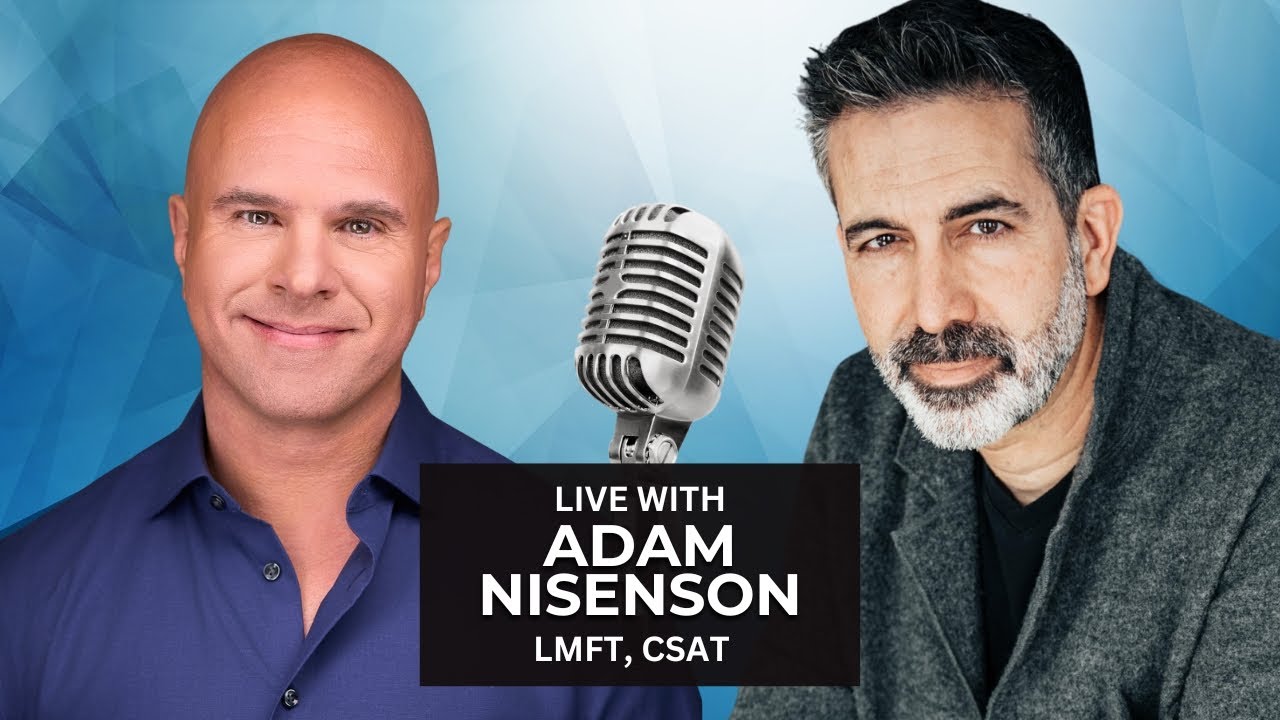
Ralph Brewer interviews Adam Nisenson, a therapist specializing in infidelity and sex addiction, about men's experiences with betrayal and dead-bedroom dynamics. They discuss how shame damages therapy, the role of pornography in shaping intimacy expectations, and why many men pair anxious attachment with avoidant partners. Nisenson outlines a two-phase treatment model that moves from accountability to healing trauma and relational wounds.
Chapters
All right, howdy folks, how are you guys today? Me, I'm doing well. As you can see, we have a special guest with us here today. Adam, you've been on with me a couple times before.
2 times. Yeah, I guess, I guess I can be like a regular. Or what's Saturday Night Live? If they're hosted 5 times, they get a jacket, right?
I don't have a jacket for you.
I'm sorry. I don't get a— I don't get a—
pretend, I guess. Maybe get a towel or something like that, put over your head.
A terrible towel.
A terrible towel.
There you go.
Very good. Uh, for those that don't know Adam, do you want to introduce yourself to the guys real quick?
Sure, I can do that. So yeah, my name is Adam Nissensohn. I'm known as the Betrayal Shrink. That's how I've shown up a bunch on your materials, Ralph. I'm also a licensed marriage and family therapist, and I'm also what's called a CSAT, which is a certified sex addiction therapist.
Ooh, titillating. Yeah.
That's who I am work-wise.
Yeah.
Okay.
Well, my name, for those that don't know me, you're just stumbled upon this and wondering who I am and what we're doing here. My name is Ralph Brewer. And I've been putting content under the name— out content under the name of Dad Starting Over for years now because like a lot of you guys watching this, I endured a nasty divorce that involved infidelity and all that fun stuff. That was about going on 13 years ago now. Me too. Yay, yes. And, uh, you know, I had to go through the whole single dad to 3 little kids thing and mother going through like a midlife crisis thing, whatever you want to call it, and all that fun stuff that went on for years. And, uh, I, uh, did the hard work of rebuilding myself and going through the process of figuring out what got me in this mess and everything else. And I have been devoting myself professionally to the cause of helping other men go through this. So when I talk to all kinds of important people in the biz, like Mr. Adam Nissensohn here, the Betrayal Shrink, who specializes in helping out guys, uh, dealing with the emotional trauma, I guess you could say, and the coping with the aftermath of betrayal, and it's just understanding betrayal, understanding betrayal. And, um, it, you know, it affects different people in, in different ways. And it was a pretty acutely painful and traumatic to me, to be quite honest, put it out there. And, uh, uh, it took me a while to come to terms with it, I guess you could say, and what that meant for me and how to overcome and how I got there. That was a big part of it, how I got there. Um, and then, uh, you and I connected some time back, and we've been talking off and on here, and it's always been a wonderful conversation. So I love having you here. And just so you guys are aware, we do have, um, I didn't mention this, I have a private community for men called the Brotherhood, and you can learn more at help4men.com or jump right to the join page at help4men.com/join. I put it on the screen there. And we have an annual event for our group, which is this year— actually, next year, 2026, the next one coming up, um, is going to be open to the public as well. So if you're a guy that's like, I'm not a paying member of the group yet or anything, but I'd like to come see what it's all about, and I'd like to come see Adam and Ralph and Dr. Robert Glover and Lauren the Dadificate and the whole Help for Men team, well, you can do so. You can come join us in Louisville, Kentucky next year, March 27th, 28th, 2026. Go to brofest2026.com to learn more. brofest2026.com. And like I say, meet myself in person if that means anything to you, and Adam Nissen, the Betrayal Shrink here.
Yeah, if anything, Ralph, they should come just for the name. I mean, brofest.
I mean, you can't get much more manly than that.
I need I need a t-shirt. That sounds pretty awesome.
Oh, you know what, we don't have Brofest t-shirts. We do have t-shirts that say Help for Men, the Help for Men logo on the front.
But good idea, good idea.
And I do have a, um, a new book in the works that should be up by the end of this year, hopefully before winter, like fall. So what are you working on? Anything? You do have a book yourself?
Yeah, my— well, my book's been out actually. Hang on.
Yes, please.
Copyright.
Show and tell time purposes.
Hang on. So yeah, so here it is, A Man's Guide to Partnership. Betrayal. It's actually the only book out there written by a man for men to navigate partner betrayal. Also, I have a workbook on trust after betrayal, and my publisher is pushing me to finish my workbook that's going to go with this book to help men navigate betrayal.
Very good.
But as you know, Ralph Brewer, it's hard to find time to do everything.
All— tell me about it. And have you, have you done the audio for your book? You plan on it?
No, they— I don't know, I'd have to ask my publisher.
Men love audio, audiobooks. They love podcasts, audiobooks. And when I did that, that kind of sent my book into the next level of a whole other world.
Yeah, yeah, I should talk to them about that. I actually— I did though, I started a little podcast, and you're gonna be a guest one day. Oh, when I start having guests. But it's called, uh, it's called Men Get Cheated On Too.
Love it. That's awesome. That's it, man.
That's it. And they're short. They're like 7 to 10 minute podcasts. They drop every Monday. It's just me talking about a specific painful topic that men experience in betrayal.
But that's awesome.
Yeah, down the road I'll have guests and those will be longer format out on video too.
Very cool. So Men Get Cheated On podcast, check it out, guys. Men Get Cheated On to Adam Nisenson. Do a search on your Apple Podcasts. I assume you're on Spotify, all the—
yeah, I'm not hard to find on the internet.
Not hard to find. And betrayalshrink.com is your website. betrayalshrink.com. Check that out. You know, you and I have spoken about the world of being cheated on and all that fun stuff, as I often say, one of my catchphrases. Yeah, you know what, Adam, when you do this long enough, you start noticing your little verbal crutches that you—
all the— my clients call them Adamisms.
Adamisms.
Yes, it's always— yeah, there's the same little lines drop over and over.
Yeah, it's got to the point where I'm going to do a drinking game on guys. So one of those things, all that good stuff, it's a little verbal crutch. But yeah, uh, what we don't talk about much, and I thought it'd be interesting to focus on this a little bit. And guys, just for those watching on YouTube, um, and, uh, X, we are not live. Oh, here's— let me fill you in on the drama here, Adam. Oh my goodness, Facebook. Facebook, I woke up one morning, decided, Ralph Brewer, not gonna let you do any lives for like the next month. And you're not gonna be able to make money anymore on Facebook. I'm like, what happened? What'd I do? And so I went and looked and it turned out I had screen captured a post that somebody made on Reddit, you know, the online discussion forum thing where he said, guys, I think I figured out a solution to my dead bedroom situation. What do you think of this? And his solution was, what if I pay my wife to go to bed with me? And I took a screen capture and posted on Facebook and I said, guys, this is no way to go through life. This is not healthy. Don't do this kind of stuff. And it generated some conversation with guys going, I thought about the same thing, this is awful, why would men do this? And on and on. So it's a good post. Facebook saw that and their little robot detection system saw some of the keywords and said I was soliciting for sex. It's like, Facebook guy, you, you misunderstood the whole thing. So I appealed and apparently the humans reviewed it and said no, we, we agree with the robot, it should be taken down and you're penalized for it.
Like, yeah, they didn't review it, Ralph.
No, of course they didn't. So I have to go to a whole board and everything if I want to say—
I was like, oh Christ.
So I to do all that. And, uh, so our audience, it's not too bad right now. We're going to reach, you know, thousands more with this as the recording of this is published and the clips from this are published. So not a huge deal, but Facebook was— I always tell guys I put money in terms of bills— Facebook was paying my mortgage. So not no more. So it's, it's not, it's not nothing, you know. So, all right, but we'll move on, right? It is what it is.
That is— we're here though.
We're gonna do it here though. We're talking to our guys on YouTube. Thank you all for joining us on YouTube. But anyway, Back to what I want to talk about today. We always talk about the betrayal thing, we always talk about the being cheated on thing. The sex addiction thing is the other angle of this. And let me, uh, let me put this out there to steer the conversation. A lot of guys that talk to me are, um, pretty anxious in nature, as I often say. They're anxious in their temperament, very anxiety-prone guys. Probably neurotic is probably the proper psychiatric term there. And, uh, They're also very anxious in their attachment to their partner. As far as, you know, when you look at the attachment styles— I'm avoidant, I'm attached, I'm anxious or preoccupied— they're very preoccupied and anxious in their relationships, which for those that don't know means they're the ones pursuing. They're the ones that have been called very needy when it comes to romantic relationships. Like, I want to talk about this and I want to talk about it some more, and I want— hey, wife, watch this YouTube video about relationships, and let's go to counseling, let's read this book. And ironically, they tend to be paired up with women who are like, can you just stop it already? I don't like talking about things all the time. I'm very avoidant in nature.
And often what I was going to say, yeah, yeah.
And often what corresponds with that is, and I'm not the most sexual person in the world either, I don't, I don't need it all the time, is what they hear from their wife, if ever, unfortunately. So when you got Mr. Needy, who is sometimes ADHD, and he's kind of hypersexual in that way, and he just needs a lot of, a lot of loving, he could do it several times a day if he was able to. And he's matched up with this woman that's like, get away from me. And the woman often in those— in that dynamic pulls out the old bomb of, you know, dude, I think you're a sex addict. I think you need to get help. And the guy's like, we haven't had sex in 6 months. Just because I ask for it every now and then, does that make me an addict? So when guys— some of those guys may hear from somebody like you say the word sex addict, those guys may roll their eyes going, oh shit, here we go again, more shaming of men and their sexuality.
Yeah. I, you know, Ralph, I, I hear that a lot. I, you know, I, I sometimes I've, I think, I think the word sex addiction can totally be like you were just saying, it can be weaponized and misused. I think it's often misunderstood. Um, you know, I have so many guys like on my, like I have two kinds of practices, right? I have my betrayal side and then I have my therapy, my sex addiction side. And like, I would say a majority of those men, I would not necessarily call them truly sex addicts, but more men that are struggling with compulsivity or misuse of their sexuality. And then I have some guys like that are truly sex addicts and struggle. Um, but I hate that it's labeled. I hate that it's weaponized. And, um, you know, I, you bring up a good point. If, if, uh, if, if a partner threatens like that or labels you like that, I've had that happen with plenty of clients and they often ask me, what do I do? You know, and, and my answer would be, I'm curious what the partner's definition is of a sex addict, right? Because I think it's so misunderstood. And I don't know if, I don't know what road you want me to go down here with and if there's going to be tons— hopefully there'll be tons of questions we can bounce around today. But, but let me just say this: at the end of the day, if sex gets in the way of your life, it is something you need to look at. And to give you some examples, um, the man cheating on their partner, right? Having affairs, going to massage parlors for what we call happy endings. Um, if you're working your day around— if you're Um, thinking about acting out, right? If you're thinking like— I have some guys that I would say compulsively are addicted to porn, so they're doing it every day or every other day or a couple times a day. And what a lot of men don't realize that I work with, let's just say they're like, I only look 30 minutes a day. Like, okay, well, you know, we all probably look at social media and Facebook and YouTube longer than that in a day, so, so they don't think that's that bad. But what they don't realize is the amount of time that they spend thinking about looking and planning when they're going to look and how that looks. And then also, what does that do to their connection with their— if they're in a committed relationship, what does that do to that relationship, right? What's the impact on their partner, right? And then also, what does that do to their own sex drive or their own intentions or how they're even perceiving their partner. So there's so many variables to, to this topic for sure. So I've rambled. What—
go ahead. It is as simple as saying, um, because there are some people that say, I don't really think sex addiction is really a thing. Like, it's not— yeah, drug addiction or alcohol.
Yeah, you know, that's out there. There are those people that say that in the therapy, in the psychology world. It's interesting, there's two different governing bodies, and one recognizes it and the other one's still in the bubble. And I can tell you this just from all my years doing it. I mean, if to say that there's no such thing as, as sex addiction would almost be like saying there's no such thing as people being addicted to social media or truly being addicted to alcohol or addicted to working out or addicted, like by nature, I think humans, we, we have compulsive tendencies. Again, to me, if something gets— starts to get in the way of your life, it's— if it starts to be something that you don't want, then— and if it starts to get in your way of your own integrity and your own accountability, I think then it's a problem. I can tell you this, everything I know and I've read in the science and I've studied, sex addiction sexual compulsivity, the things that people experience when they're preparing, getting ready to act out and act out— same dopamine receivers, same sort of endorphins, everything the body experiences the same. It's just a different drug, that's all. But you feel— you get the same kind of response to your body from it, for sure.
So whether it's gambling on football or what— which I mean, I'm seeing it, I'm seeing that.
Yeah, you know, that might end up becoming a bigger problem porn.
It's so readily available. Like, when I go to, um, a friend's house or something to watch some big football game, or even if I'm at the kids' game or something, I'm surrounded by all these dads. They're all on their phone, and you think, what are they doing? Are they on Facebook? No, they're all like, did you, did you see the line on the Bears game is now— I'm thinking about it, and I'm like, wow, this is a lot more.
It's a problem. Yeah, actually, and they're targeting— there's some statistics out there. I don't know the exact numbers, but what, what's happening in, in the college dorm rooms with kids, these college kids. Um, and there's no way to really govern it per se, right? There's— it's so easy to have a fake persona or have a fake something or have an older friend do it for you, but that creates that excitement, that endorphins. Like, I don't know, I didn't need to gamble when I watched sports growing up. I still don't, right? It's not Um, but yeah, that's a big, that's a big problem. The other thing too, you just made me think of, is what's really interesting I see in my practice so much, Ralph, and it's sad at the same time, is that I see men that they are exposed and start their porn addiction or their sexual compulsivity, whatever you want to call it, like 10 to 14 years old. That's crazy. That's so sad. And they started it maybe out of curiosity, but the bigger part is what started it was learning it was a way of coping and managing feelings. And that's the other thing is that if you're really, guys, brutally honest with yourself, if that's how you're coping, if that's how you feel better at the end of the day, if that's what helps you fall asleep at night, that's not necessarily healthy. That's not necessarily normal. It's an old coping mechanism that needs to be looked at.
So are we assuming that— pardon me for getting graphic here— are we assuming that this, this always involves the man servicing himself in that way, or is it just looking at an image or video repeatedly throughout the day and getting that dopamine hit?
Yeah, actually it could be both. Um, I don't know the statistics, but it's actually more than you might think of men that will actually, let's say, look at porn and not, not look at the point of an orgasm, right? So, so it's actually— those numbers are pretty big too. That's just another, another way men, when they were young, because they couldn't orgasm but they weren't looking and all that, kind of would calm them. They would feel better, right? They wouldn't have to feel or hear mom and dad fighting, or they were bullied at school, or girls didn't like them, or whatever. So, so yeah, it works both ways.
I can see how this, this dopamine-hitting stuff, something like pornography— like when you and I were kids, I'll be 50 this year, it was, uh, print material is what it started with, which was, which was relatively difficult to, to put your hands on. The store kept it on the shelf and, you know, all the stuff. So you had to like, maybe you found dad's stash or friend of dad's friend or brother or something like that. So you had to find your way to it, but Now it's just, it's just click, click, done. That's the infinite amount.
It's not only that, man, it is everywhere, right? And just not only, not only actually, let's say, porn, but just sexually explicit material or, or risqué, or, you know, what kids see today, like when they're on, on, you know, on, um, Instagram and stuff. And once, once it gets that, like, you start looking at women in bikinis, it'll just keep feeding you that. Oh yeah, it gets deeper, gets deeper and deeper into that hole. It takes you— and often will take, you know, I have some guys that'll tell me like it will just take them in a direction they never imagined. So that's actually the other part I want to bring up, and I want men to think about and really be honest with yourself, is so many of the guys I work with, it started off innocent, right? Oh, just, you know, I found my dad's Playboys, and he's maybe once a week, once a month Right. And one of the things with this compulsivity or addiction that happens is it's called— I call it the heroin effect. And it's like, you can't, you know, you get one bump, well then you're going to need two, right? And so many guys I work with will be like, they will go to massage parlors or they end up getting— having experiences with prostitution and stuff. And they'll be like, I don't know who I am. This isn't me. I can't believe I'm that guy. And that's— and if that doesn't tell you it's an addiction, then I don't know what is. Is, right? Because when we start to lose control of ourselves, when we forget our core values and what's important in our life, when we're willing or unwilling but do it and, and break a bond we have with our partner, I mean, that's, that's 911 to me. And it's fixable. It's— you can— if, if like anything in life, one of the things I love about being human is we have free will and we have the ability to grow and change And yes, an old dog can learn a new trick, and you can be better than you ever imagined. So that's the other part, is, is this condition I find really takes away from intimacy with your partner. So that's a whole nother part of this.
But then we're stuck in this— I don't know if Catch-22 is the right term— this circle here of logic where the men will excuse away their use of pornography by saying, look, And let's be honest, they have a point. This pornography exists for a reason. It's because the market has, has requested it, basically. It wouldn't be so prevalent if there wasn't a, quote, need or demand for it. And why is there such a need or demand? Because the majority of men don't get their needs fully met in that way, so to speak, within the relationship. So you got a guy that's like, my wife hasn't touched me for 4 months, what do you expect out of me? You know, when the menu of all this available stuff is, is there and Yeah, but Ralph Brewer, I'll also say this.
I think the porn industry has also created the need, you know.
I—
you could say the same, like cigarettes. They created a need, right? They created that feeling. They created a lifestyle, the way they marketed it and the way they made people perceive what they were doing.
I—
look, there's a need for alcohol, sure. There's probably a need for porn. There's a— there's a need for everything. Right? It's just like, to what is the limit? I think, I think the porn industry has gotten— they've exceeded beyond what that need is, right? They've actually— like gambling, they've created the compulsivity, they've created the need in a bigger sense, you know. Going— a man who hasn't been intimate with his wife in 4 months, going to porn is not going to fix that issue in the marriage.
No, it's just a, just a Band-Aid, I guess you could say, over—
it's not— I don't even know if it's a gushing wound. I think it, I think it creates a bigger gap because then I see this all the time. What happens is then the man stops asking, right? And they stop wanting, and then they go into this other rabbit hole that's super lonely and it's honestly super not fulfilling. And then their partner, they start to wonder too, maybe, or they're finally relieved and they give up. Like, everyone gives up. You can't— and you can't have a relationship where you give up. Relationships take work. You have to fight for it. You have to understand there's work to do. If your partner doesn't want to be physically intimate with you, you know, that, that says actually more about your partner than it does about you.
Right?
And so there's this—
there's a sound bite right there.
There you go. You have to drop the mic. But that, that's where you do the work, right? That, that's the same thing like with infidelity, right? It's, it's almost the same difference. Oh, we're drifting apart. He or she wasn't giving me attention, so I found it elsewhere. That doesn't fix shit. That just makes it worse. That, that, that makes it to the point where you can't heal or you can't figure it out. You know, I've had, I've had partners, wives say, well, if he's using porn, great, he can just keep doing it because I don't want to have to deal with that. That kind of— the marriage is over, right? It's hard to come back from that, I think.
Yeah, the old, uh, you have your hand, don't you? That's some of the what men hear from women that are very checked out of the relationship and he keeps pestering her for sex.
Yeah, they just, they keep poking the bear and they don't want to, right? It gives, it gives them an out and it gives them an excuse. These are all excuse things versus really stepping I always tell my guys, you got to lean in, man. You got to lean into that sharpest point, and that's where the work is. And you have to challenge your wife, and she has to be doing her work. You both have to do your work to understand what is the intimacy block and what's happening. Because, you know, also, I don't— at the same time, I don't think you can have a truly healthy marriage or relationship without having a healthy, safe connected sexual physical intimacy in your marriage. I think that's hard to do.
A lot of these, um, vices, for lack of a better term, that we're talking about— gambling, alcohol, for example, drugs, pornography, sexual material, if you want to call it that— you know, this has been going on for thousands of years. All of those— oh yeah, I've been gambling and drinking and doing the— well, the oldest profession in the world, oldest profession is sex work, and it's been around forever. Well, then doesn't that point to this is just a natural proclivity within the human species? Yeah, in a way, yes. But our— how to say this— the sexual, gambling, alcohol founding fathers never thought it would come to this, where we have an infinite supply on a magical box in our hands 24/7 that we have access to, and that would lead to— that it would be engineered in such a way that is just so prime for compulsive behavior and people that are compulsive. And it doesn't necessarily need a person to be— there's also the prevailing thought of, I'm not really a very addictive type of person. I'm not— which I would call myself not so addictive type of person. I've never been really into drinking. And I saw people around me just like, you know, before I go out tonight, I gotta drink a case of beer. And I'm like, are you okay? You know, that's very common. All I have to do is, for example, on my, um, Dad Starting Over page, is post something that's mildly anti-alcohol on my page you'll have commenters come out of the woodwork to say, who are you to tell me? What kind of teetotaling beta male are you? And all this other stuff. There's a lot attached to the world of alcohol, for example. Yeah, hypermasculinity and everything else. Yeah, it's really embedded into our social fabric. And porn is kind of going in that way too. It's like, yeah, it's just something you do, man.
Yeah, yeah, yeah. What does it matter? It's not— you know, I, I hug guys a lot. They'll say things like like in my work we call it impaired thinking, right? It's like, well, it's not hurting anyone, or no one knows, right? Or it's only for 30 minutes. And what I'll say is that sure, that could be true. And at the end of the day, we don't know— like when you're looking at porn, you don't know the story behind that person in the videos or in the photos. You don't know why they're doing this. You don't even know, you know, statistically it's super high, but I don't even remember the number. Let's just call it though, for conversational purposes, 60-70% of porn is actually aggressive and abusively formatted or formed or themed against women. And so if you're a dad and you have a young son Is that okay for you to, to know if you knew he's watching that? Is that what you want him to watch? Or if you're a dad who has a daughter, like I always say, like, all those women in porn are somebody's daughter. So if you're going to have impaired thinking, if you're going to be open to reframing, you know, like, your view, I'm going to ask you to reframe it in a couple other ways too and see what fits your core values.
Yeah, it's, uh, I wrote about this in my book Real Talk, which is a book I wrote for young men, that, um, we, we see this pornification— is the term I use— it crosses over into a lot of aspects of our relationship life. And one of those, unfortunately, that we see is when you talk to counselors who specialize in helping out teens, they are reporting the girls are saying the boys I'm with are very very scary in bed. They want to choke, they want to do this, they want to do every orifice right off the bat. And all these— and I don't feel safe and comfortable doing that. I'm kind of scared, honestly, about that.
Yeah, they don't understand intimate— yeah, they don't understand intimacy and touch and physical touch. And, you know, there's a big difference between screwing and making love, and both have a place. Trust me, I—
all—
both work. But making love is the art of connecting with your partner. Making love is the art of, of, um, being safe and, and trusting, right? And, and pleasuring each other, right? And kids, you don't get that in porn, right? Right. Porn, there's a couple, there's some little conversation, and then bang, it's at it, right? And there's nothing— there's no intimacy in that in the true sense. So yeah, kids are getting super skewed view on on what is sex and what is it about. And also they're getting a message it's about conquest. And I want to add another part is I think that, um, what we see in porn, right, for men, is that they, they get a skewed view also of what the male body looks like, right? And that can create body dysmorphia and lack of self-worth and stuff like that.
So Yeah, I guess one interesting positive aspect, I guess you could say, out of all this is, uh, it's interesting how a lot of women when I was a kid used to say that all those women in Playboy and the other things, which is a form of pornography, uh, represented a very unachievable ideal for a lot of women. Like, look at this woman, she's perfect, cellulite-free and everything else. But we're seeing airbrushed— we're seeing a lot of young men are veering they're a lot more lackadaisical about what they will accept in women these days. I don't know if that's the result of seeing a lot of different naked women on the internet or what it is, but we're seeing a lot of men are like, I don't mind it if she's 30, 40 pounds overweight and looks like this and that. And a lot of women were like, woohoo, they're starting to come around.
I mean, I mean, it is, um, you know, the whole fetish, you know, porn has created fetishes that we've never even really heard of, right? So, so that's kind of what you're saying What I was saying is, is for men, part another danger of porn is it— I think it kills how young men, young teenage boys see their bodies and what they expect, you know. And I wrote a blog years ago around penis size because that's always every— no man thinks that their penis is big enough, right? And, and porn kills that idea of us loving our own body, accepting our own body, or believing what we have is enough.
Of—
that's a whole nother— it's a whole nother time for us to talk.
I guess we could talk about male body dysmorphia, but that, that is a growing thing. We see it in terms of the whole genitalia thing. We also see that in terms of, uh, muscles. We have a lot of young guys hitting the gym, uh, obsessively and taking a lot of anabolics and other agents to get as muscular and as lean as humanly possible. And that combination can be very unhealthy for a lot of people to maintain that and try to reach that. 20-some-year-olds with blood pressure through the roof and everything else, and all they're trying to chase some kind of physical ideal that is, uh, where'd you get the idea that that was a good thing?
Well, possible.
Yeah, online stuff, porn stuff, whatever it may be, superheroes or whatever. And it's, yeah, you know, the pornification thing, going down the road of this, you, it all, it's always the same thing with a lot of these obsessive type of things. I start with just looking at some nudity. This— that we got Jay here in the comments saying he remembers growing up in the '90s looking at the Cinemax on TV, you know, starts there.
We call— we call it Skinamax.
Skinamax. It's like basically like R-rated, a lot of boobies and stuff like that, right?
And then just a little bit more than— yeah.
But what happens is it never stops at just that for a lot of guys. It's now that I had a taste, the heroin—
that's the gateway.
I want this and I want this and I want this. And some men are more prone to that than others, sure. I talked to a lot of the ADHD guys who seem to be really prone to that. And some of the guys I talked to— I've, I've said that one of my verbal crutches or little stories that I go back to all the time is I will often speak to men who are overcoming dead bedroom situations and they are reconnecting with their wife at a very positive level. And he'll say, I have gone from once every couple of months that we'll get it on to like once or twice a week. And I'm like, dude, that's awesome, good for you, right? And he's, yeah, but— and here it comes, the old pornification— I would really like to get into— and they just lay out some of the most like out-there stuff imaginable. I mean, it's not like illegal, but it's like threesomes and this and that, and I want to take her to a swingers club, and I want to do all this other stuff. And I'm like, dude, at some point you're gonna have to, you know, pump the brakes here, man. It's nothing—
fix it, ma'am—
nothing's never going to be good enough for you. In this, and you're always chasing that high, chasing the dragon, totally, and dragging this poor woman along with you. And it's going to breed a lot of resentment. And sure enough, it does. Like, and what do they got? What do these guys hear from the woman? I don't think I'm ever going to be enough for you. And she's right. In his current state, she's not.
He's— yeah, well, he's not enough for himself either.
He's not. Another mic drop. Look at you with the sound bites there.
Yeah, to think I feel tired today. I saw, I saw another message from Mark I thought it was—
yes, can I read?
I'm going to read it.
Please go ahead.
Um, Mark said, my perspective on CSATs was that they focus entirely, entirely on the behaviors, but they don't attend to the relationship with the partner. Sometimes men are not heard, especially regarding her neglect. It's a great question, Mark. So that's true and not true. Um, so in the CSAT work The first phase is like, here's the deal. I have a lot of men that they quit the work, right? So they never get to the next part, right? But the first phase is all about accountability. It's all about your behaviors. It's about understanding how you got there, the impact of them, um, accountability, accountability, and growth and change. The second part of a CSAT's job, I'm actually with a lot of my men that stick in this work and, you know, this work CSAT work, sex addiction, sex compulsivity, can take anywhere from 3 to 4 years. It's not a quick fix, right? And that turns a lot of guys off because they're like, you know, we want— I want instant gratification.
It's every man. Yeah, yeah.
But here's the deal. If the statistics— most men start when they're 10 to 14, that's what I see in my practice. Well, if you have a lot and you come to me and you're in your 40s, well, there's a lot of rewiring. There's a lot that has to be worked on and understood and healed. And changed. And so the second phase of the work for me is, I call it the healing phase, right? And that's less about accountability and that's more looking at how did you get here and what happened and what are your grievances and what are, who are the people that impacted you and what's your trauma and stuff like that. And so do get more into the relational, more into the, the how did this all happen. So there's more understanding and then the healing is kind of for me I see for men, that's where the sobriety and the healthiness really, really latches in.
So yeah, there is, uh, as, as Mark is kind of alluding to here, there is a predominant theme amongst a lot of men when talking about any kind of therapy. A lot of men will think that it's inherently at its core kind of shaming men in a lot of ways. A lot of men go into sessions and they feel like the therapist is kind of going, you bad boy, and you're at the root of a lot of these problems. I mean sees this as probably a continuation of that.
Maybe. Look, I'll— look, I'm not saying I'm like the greatest therapist. I think I do a good job. I, I have a low turnover. And one of my things is I, I meet the guys where they're at. And I would tell you guys this, if you're thinking about going to therapy, I, I— every guy I work with, I do a connection call. I'll do a 15 to 20 minute Zoom call with you Because I think the relationship between the therapist and the client is as, if not more important than the therapist's own ability and training. If you don't feel safe with that person, if you don't think they get you and understand you, if you don't think they're gonna challenge you, then you shouldn't work with that person. If a therapist is shaming, I would leave. I mean, that's not, that doesn't, shaming. You have enough, you're holding enough shame, you know. And, and one of the things I say, I've probably said this before on one of your shows, Ralph Brewer, is shame, guys, is toxic, right? Shame is, becomes a belief system. It's I am, I'm terrible, I'm unworthy, I'm a loser, whatever it might be. And shame, because it's unspeakable, we can't heal it. You can only heal things that you're willing to talk about. So if you don't trust your therapist, if you have a CSAT that's judgmental— like, I tell my guys, like, I, I may be shocked once or twice a year, and if you shock me, I'm going to tell you, not in a shaming way, but like a holy crap, all right, let's dig into that, right? It's— so you have to feel comfortable with the person you're working with, for sure. All right, that's my soapbox.
Very good, very well put. Uh, and then Jay here said, yep, Skinemax, the old softcore. I didn't have internet porn yet, so as a 13-year-old, sit in my it got me through. There you go. So he has framed it as a tool to appease a need that otherwise would have been directed how? Violently as a teenager, or another way?
Yeah, well, you know, here's another thing. It's like, like, when— why do we stop teaching young boys what it means to be a man, right? And being a man, of course, is more than just sex and understanding your body, but it— but I think we've lost that art, right? In the ancient days, right, the elders would come for the little boys. They would take them off into the jungle, the forest, whatever, and they would teach them all everything they needed to know how to survive and care for themselves and others. And we just kind of stopped, like, mentoring and truly teaching men today. It's another part that really makes me sad. And so men fall into these traps, and they fall into traps, and then And then their mentors end up being really toxic men out there on the internet and stuff, and men that really teach, I think, not what it means to be a man.
It's, uh, it seems to be a natural, uh, response to a lot of this stuff is when you have this shamed, downtrodden population, whatever it may be, for somebody to come forth and say, um, you know, you're actually not bad for having those thoughts and feelings and so forth. You're actually better for having those thoughts and feelings, and let's propagate those thoughts and feelings. 'Yay, more porn! Yay, more this! Yay, more that!' And let's sexualize everything, and let's, you know, err on the side of being more brutal, physical, whatever it may be. And that's appealing when you've been kind of the opposite, super shamed for having any kind of masculinity or anything, for at least—
that's it. Seeds were there.
Absolutely.
Yeah, I always, I always tell people, uh, do not, do not go to Reddit for moral support. Do not go to Reddit to find your tribe, um, because you don't know— you don't know who those people are, what their wounds are. They're trying— look, I have empathy for those people. They probably had a lot, like a lot of their own, right? Like women cheated on them, or they had poor sexual experiences, or they— whatever their trauma was growing up. And so they haven't— they haven't decided to heal. I want men to heal. I want you to own your stuff, and I want you to step into it. You know, that's where the growth happens for sure.
It seems to be for a lot of men that I work with, it seems like they have this either-or mentality of, uh, I got this woman over here who tells me she wants nothing to do with me sexually and hasn't for months if not years, so I'm going to swing my pendulum over here to— first it starts like you say, it's like chasing the dragon thing, pornography, and then next thing I know I'm going to the rub and tug as they call it, the happy ending place, and then after that next thing you know I'm calling escort. And I'm doing all kinds of stuff, and then I have a full-blown affair or two or three with other women, and on and on and on. And it seems like it's— there's no in-between for a lot of guys. And what they see is that if you are shaming what they're doing to what in their mind is to remedy this situation over here with the sexless marriage, if you shame their solutions, so to speak, you're shaming them and you're shaming their sexuality. And you're shaming— no, it's just that you're, you're methodology for, for, uh, and it's causing a lot more damage than what your current addicted brain is able to process. You need to remove yourself from that. So when you go to a therapist and they're like, dude, you got to cut that shit out, they're like, here we go, shaming the man for, you know, trying to resolve the issue. Why don't we address the goddamn issue over here first? It's like, yeah, but the, the easy pickings right now is you going to see prostitutes and, and all this other compulsive impulsive behavior is a big no-no. Let's, let's figure out how to cut that out. And then, and then, you know, what happens is they have to face the demon, so to speak, of the, the marriage and the core issues. And guess what, buddy? You're in a relationship that died years ago, and you just don't want to face it.
Yeah, if you, if you keep acting out, if you are in those negative— and, and some of these behaviors, Ralph Brewer, really dangerous too, right?
Sure.
Like prostitution, sexually transmitted diseases, all these things can really devastating. I've had guys that have lost jobs because they looked at porn while at work on computers. They lost everything, their livelihood. And so if you don't, if you don't own the behavior, look at the behavior, work on the behavior, you can't, you can't heal. You can't get into the other parts. Because if you're in the behavior and you're going to therapy, there's no growth, there's no change, there's nothing's happening. You're just stuck and you're just checking a box saying you're going to therapy. So, so yeah, you need to find sobriety, or if anything, like, you need to have some accountability, you know, little wins, or just at least starting to own what's happening is, is where the growth starts.
Because just like with everything else, if you don't do that hard work, you're going to do this all over again. Like, let's say in that example I gave, he ends up divorcing that woman, and then he goes out in the market and he starts dating, and he's like, woohoo, I have plentiful sex! And there, there we go, it was the, it was the wife's problem all along. And then that relationship eventually subsides and the sexiness starts to dwindle after 2, 3 years or whatever. And now he's like, oh shit, here I am back again, and here I am back in the brothel or whatever it is, however that works. Are brothels even a thing anymore? I guess they are legally, like in— yeah, like Nevada, whatever.
There's still a thing. I'll tell you, man, I've had guys that have been arrested for solicitation. And what I want you all to know out there is When that happens, you get listed as a sex offender.
Oof.
And sex offenders— I think the system is really messed up though, because sex offenders are all bundled as one. So you're not any different than the pedophile or the guy that raped someone. You're in it. And so that's another thing to think about. And once you're in it, it is super hard to get off that list. And every time you move, everywhere you go, can't pick your kids up from school. Like, there's so many things that happens when you become a registered sex offender.
So, wow.
What are your—
what are your thoughts, Mr. Sex Addiction Therapist, on the legalization of prostitution?
Man, you're putting me on the spot.
That's a tough one, isn't it?
Yeah, I don't— you know, I don't know. Like, like, as much as I'm against it, I'm not— like, I'm one of those, like, You know, I want people to have free will, right? I, I don't— you know, it's one of those things, you know, we can get into the conversation, right, of marijuana legal in some states, not in others, right? And it's, and it's one of those things, people are gonna do it. So I don't know, you know, that's, that's a tough one. I think if you legalize it or not, it doesn't matter, it's still happening. It's gonna happen.
Well, but we see, like, for example, with Marijuana. I am not a marijuana user, but I know a lot of people that do. And I think what we're learning is, from what I've read in some of these things— my wife's a medical doctor, so she hears a lot of this too— is for some people it's a godsend. It's kind of a medicinal thing, lowering of anxiety. And there's also other things that a lot of people— all, all the people that are huge fans of marijuana will list all the positives, like glaucoma and cancer, and helps with the nausea during chemo treatment. Well, that's a relatively small portion of the population. But what we're seeing is some people don't tolerate it well at all, and it sends some people into psychosis to take something.
It's like anything, it's going to be abused. I mean, I mean, the same, the same question can be raised— I hate to do it, but I'm gonna say, Ralph Brewer, about alcohol purchasing and why, right? Like, it's just, I don't know, man. It's not, that's, that's not a road I want to go down.
Well, you know, um, our young people are not drinking alcohol anymore. Very little compared to what we did, our generation. All the booze— beer, wine, and bourbon. I'm in Kentucky. The bourbon sales down, and they're all freaking out right now. We got some distilleries going bankrupt as a result. The wine people, they're shutting down production. The beer people are cranking back. It's interesting. Why? A lot of marijuana use, more so than before, and it's just culturally not as much of thing. And I thought this was interesting. It kind of goes along with it. You know how we joke about kids or young men that are kind of this loser mentality and playing video games too much? Um, video game sales are also going down. So it seems like people are just losing other little time-wasting vices and escapes. And but I don't think porn use has gone down at all. If anything, I think—
no, I think it's— I think it's increased, you know. I mean, and interesting, nothing, nothing stays the same. Look, humankind, we're always going to have a vice. We're always going to look for something to feel good or to not feel, you know. And look, I don't know, some CSATs would get mad at me. I don't, I don't necessarily know or think looking at porn's bad. Like, I think sometimes that happens. It's just like smoking a joint, or maybe I got drunk last night. Like, we do those things. Again, it's why do you do it, how often, what are reasons? What's the escape? You know, I, I think that that's, that's what I like to look at with the men I work with. Is it, like I said at the beginning, is it getting in the way of your life? Is it getting in the way of your integrity? Is it getting in the way of your agreements? Is it who you want to be? Is it what you want to do? Is it like, you know, I have guys, Ralph, it's crazy. Like, we do the math, like, on how much time they spend thinking and acting out. And some, some guys— I've had some guys, it's been months in a year, awake hours in a year, like 2 months of their awake year is acting out. And if you're brutally honest with yourself and if you struggle, that's close to the norm, I would say. Wow. Yeah, it's pretty scary.
Problematic for sure. It's— I, I talked about this before also, that it seems like the male sexuality again with the two extremes. We see, uh, one extreme is a lot of men saying that is how men connect emotionally, and that's how we get a lot of our internal validation and sense of worth, is if our partner, you know, has sex with us. And it's, it's— we feel really bad about ourselves if we don't get it. This is how we express our love and everything else. All the way to men admit that, yeah, if I haven't had it for a while, things start getting a little crazy. This is when I start doing things that, you know, the porn usage. And we hear those stories. I remember there was a story when I was a kid of some kid in high school got caught having sex with a pumpkin. I mean, it goes— of all things. Hey, you know, whatever floats your boat, right? Of all the produce, you know. But, um, that sounds okay.
I don't even want to dice that or figure out what that was.
Yeah, anywho, so, so many jokes. If it's— if we go without, and if we're of a certain mindset, I think that's key. We're able to take to some pretty dark places with this, just like with everything else. There's some people that can have a glass of wine and they're done, and they won't touch wine for months, and they don't miss it. It's cool with them. Well, other people have a glass of wine, here, let me finish the bottle, let's order another bottle, and you're like, oh shit, somebody's got a problem. And they do that every night for years on end. They got an issue. It's interesting, and it's— they're both human beings, they're both the same species, but just wildly different reactions. And there are some men who probably go, oh, look at that, a naked woman on my phone screen, she's pretty, and they move on. They don't think anything about it. Well, other, like, more, more, more, more, more.
Yeah, it sparks something, sparks.
So there's some mechanism at play there for sure. And, um, it's, uh, it's bit— it's a big tough thing to recognize that about yourself and say, yeah, I'm that type of guy. I'm the type of guy that becomes kind of compulsive in that way when it comes to whatever it is. We talked about the gambling earlier and the pornography and the drinking. It all goes hand in hand.
Food.
Food. Oh my goodness, there, now you got me. Yeah, I'm Mr. You're gonna finish that? I'm that guy at the dinner table. You're gonna finish that? You know, I'm that guy. And I have to be told, like, you know, and I've learned what are my limitations with that over the years. I've learned, Ralph, you don't bring snacks into the house. Because as soon as you do, they're just gone. I'm the type of guy, I sit down with a bag of something, it's gone. So limits on myself, don't bring it in the house. Some of you guys need a limit where you put the little app on your phone that says, what are you doing, John? Why are you going to the porn site? Don't go to that.
Oh shit, right, you've done social media for 3 hours today. Yeah, yeah, we're all looking for an escape in a different— in different ways.
So, so if we're all looking at for an escape What exactly are we escaping from? Is our life so damn stressful that we need these little releases or else we go nuts?
I, you know, yes, no, maybe. I think at the end of the day, like I was alluding to earlier, I, I think we've lost, we've lost the sense of community, we've lost the sense of ourself, right? Like, our world has become isolating. We are attached to our phones, right? Porn or whatever it is. I think, I think men's society has taught us we're afraid to feel, afraid to be in our truths, right? Afraid to ask our partner, I need love, I need to be seen, I need to be touched, I need to be hugged, I need to hold your hand. Like, I think a lot, like, like society's changed a lot. I think we're trying to find who we are, but acting out compulsive acts don't don't help you get there, right? They, they just keep it actually stuffed down and they let it just build and build.
So, you know, I, uh, you're, you're preaching to the choir here because that's the crux of my next book, is that we have lost our sense of identity and who we are and our values and community. You hit on community, huge thing. A big, big epiphany for me over the last couple years is just how much men don't have a sense of community at all.. And unfortunately, many of us do the whole— we have a family, an extended family, we get along okay with them, but at least they're an extended network and family and friends and everything else. And we pick up and leave because there's a big job across the country in California that's going to pay me a lot of money. And now it's just my wife and I and nobody else. And let's have a few kids. And they realize, oh shit, community is really important.
Yeah, super important.
I'm alone and this sucks. And, um, that's more and more common. We're just so split up. And, uh, Mr. Mark here, you got a question?
Uh, yeah, let's do questions because I gotta remember I gotta run.
I only have— oh, I apologize. Yes, no, no, Mark, we answered that at the beginning here. Uh, label sex addiction as a way to shame. Absolutely. There's, you know, partners always pull stuff out because they know it hits you right below the belt, no pun intended, uh, and, you know, to get you to shut up and back away.
So I think, yeah, yeah. So Mark, I would say, you know, a lot of men, when their partner does that they get angry, I'm gonna show them, right? Or I'll just go look at porn. That, that's— that is— you can choose to run away, or you can choose, like I said earlier, to lean in. I would challenge your wife, like, why would you say that? What does that mean, right? What's wrong with me wanting to be physically intimate with you and share something that's actually super beautiful connective experience. Like, why should we not have that if we're married and we trust each other and we love each other? Unless there's other things going on, right? So I would— I would challenge your partner.
That is a— that is a speech, though, by a man who's very secure in himself.
Yeah, that's true too. But you can only find security by practicing it also, right? So exposure therapy—
expose yourself to the possibilities of rejection, your partner saying, get away from me, you weirdo.
It's gonna happen. Yeah, and look, I— look, no, look, life always has a lot more nos than yeses.
Oh yeah.
So it's always— I like to look at nos as not nows. Kind of doesn't hurt as much, doesn't land as badly, if you will.
So yeah, another mic drop moment with our friend Adam Nissensohn. You're full of them today, my friend. I'm gonna clip all these. Maybe your key is to be a little tired and then all the knowledge just oozes out of you, right?
All my walls are down.
All your walls are— there you go. Well, we discovered something today. And then, do men— CR asking, do men use these releases to cope with the dead bedroom? And in other words, avoid confrontation? I say absolutely.
That's the crux of it.
Yeah, 100%. Yeah. What is more difficult? Wife, let's sit down and have us a little talk about, about this. We've really disconnected as a couple, and I'm kind of concerned about us, and yada yada. 'Or never mind, let me just go take my phone to the bathroom and be done with this in a matter of minutes, seconds, whatever.' I mean, which one's easier? There you go.
Well, what resists persists, right? And, and if you just let that gap keep growing bigger and bigger, you're gonna have a hell of a lot more work than in the moment, you know. I, I see— and the other part too, I see guys is like they're scared of that intimate— like they want to be intimate But then they don't want to have those intimate conversations to figure out what's going on, you know. And intimacy breeds intimacy. Connection, connection requires connection. You have to pattern interrupt. You shock the system, shock the relationship, take a risk. Because actually, you already are by not doing anything. That's a risk, right? No decision is a decision. So You have to do something, and if you don't, that something will do it to you. So you got to choose.
But, uh, but Adam, for the majority of my audience watching this, that confrontation will result in the wife saying for the 100th time, I've told you I don't want you, buddy. I don't know how many, how many more times I gotta tell you. And well, they have to face the reality.
Yeah, maybe it's, maybe it's time to find a good couples therapist, right? Or let her know, or, or decide, right? Like, work— what are my needs and wants, and what are my boundaries? Right? What do I need? Because, because look, this journey is fleeting. It's fast. I was in a loveless marriage for a long time, and you know, and, and I did all those— I succumbed, right? And I begged, and nothing. And, and I played small. Damn it, it pisses me off that I did that, you know. But I'll tell you what, once you, once you wake up from that, you'll never do it different again, for sure.
Boom! What a great ending. Mr. Adam, thank you so very much. Appreciate you, brother.
Thanks for having me.
And everybody, thank you for joining us today. Thank you for your questions. Check out Adam's website at betrayalshrink.com and show your book one more time if you got it there in front of you.
I still have it right here. There you go.
And A Man's Guide to Partner Betrayal by Adam B. Nissenson.
What do you think it's available, Ralph? I'm sorry, what do you think it's available?
Amazon, of course. There you go. And I'm sure you can learn more about it at betrayalshrink.com.
Totally.
Mr. Adam, guys, thank you so very much. All right, we'll catch you on the next one, gentlemen.
More from Ralph


Why Women Emasculate Men — and Why You Must NEVER Cave | Alison Armstrong Interview








Sexless Marriage… She Said She'd Rather Get a Divorce Than Have Sex With Me Again