How to Founder Podcast - The Sunk Cost Fallacy
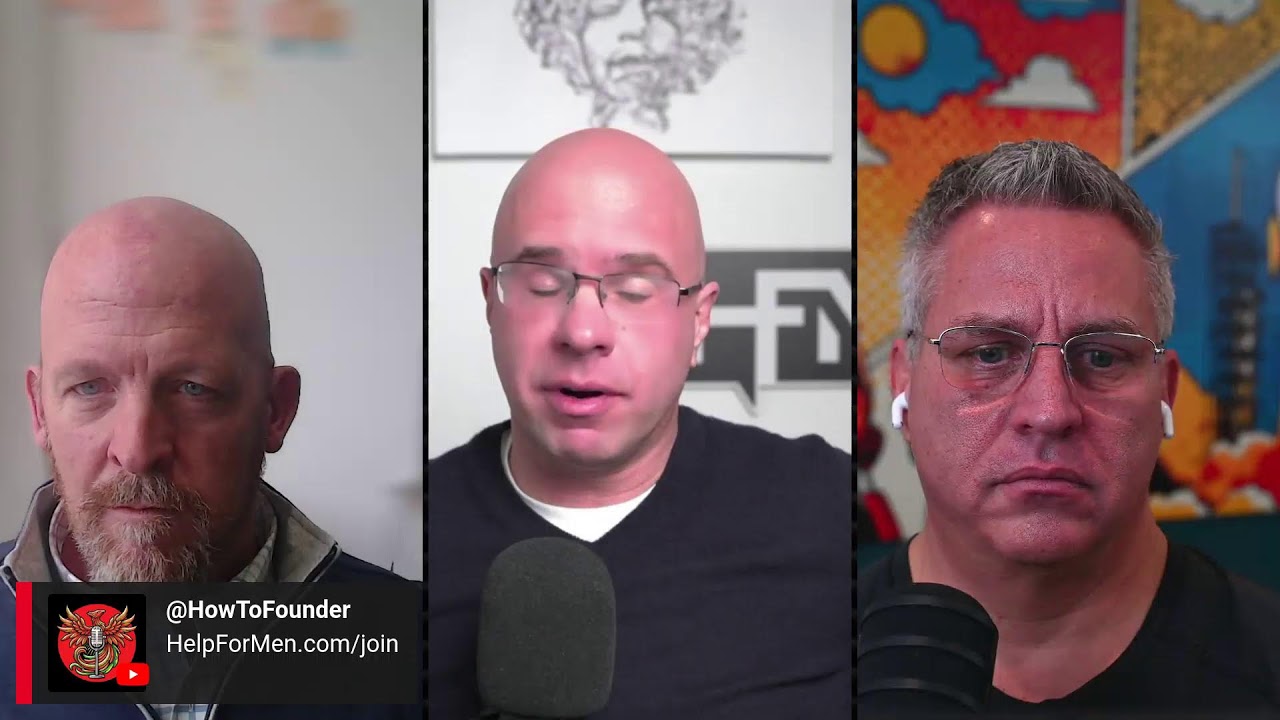
Chris Franks and Anthony Franco talk with Ralph Brewer about the sunk cost fallacy and when founders should quit versus push through. They cover how the same trap shows up in relationships, identity shifts, and board-level decisions for small companies.
Chapters
Good morning, Chris.
Anthony, how you feeling, buddy? You had I mean, I said it was a man cold, but it turned out you had them.
My, uh, my kids, my kids thought I sounded like a pirate for the last, for the last week. But speaking of pirates, uh, do you know what the, uh, pirate's favorite letter is?
I do, but go ahead.
No, no, what is it? What do you think it is, Chris?
R?
No, you think it'd be the R, but my first true love be the C.
Sorry, Anthony. Hard to follow that from you. I did see some new terrible, terrible news. I don't know if you saw, it's just outside of Denver. There's an old man was walking along and he fell in a well. You're like, why did he fall in that well? Well, turns out he didn't see that well.
He didn't see that well. Mm, got it.
What part of your identity is your business paying for right now? Cos Marte ran Manhattan's largest drug delivery service by 19, then rebuilt himself inside Rikers Island. Is ConBody Fitness Studio now hires formerly incarcerated trainers. I have no idea what this has to do with our subject, but today on How to Fender, we're talking about the sunk cost dilemma. I am your host, Chris Franks. With me, Mr. Anthony Franco, who is looking spry after beating— I mean, you beat the flu. I mean, you just did it. Well done.
I'm alive, so that's the only, only, only measure. I, I—
today by somebody with a terrific haircut, like really good-looking dude, uh, Mr. Ralph Brewer. Ralph, Ralph has guided thousands through identity collapse and reinvention. As founder of Help for Men and author of Rebuild, he knows exactly when holding on becomes the real failure. Welcome, Ralph Brewer Brewer Brewer. You've had time. Do you want to react to any dad jokes?
Do react. I was rolling with that C one. That was good. That was—
I mean, he didn't see that well. I thought it was pretty good. But Anthony didn't even chuckle. There was not even like an acknowledgement.
They were both puns on the, on the, on the word C.
Well, it's a letter first of all. It's not even a word really.
No, it's both. Yeah, the double entendre.
Ralph, save us from this dad joke dilemma that we have found ourselves in and say something smart.
Say something smart.
Tell me, what is a sunk cost fallacy for us as founders? What is this thing? Define it for us. Help us get our head wrapped around what it means to fall into this fallacy.
It's the all too familiar— now there's two different ways of looking at this. From the entrepreneurial angle, which is I have spent a tremendous amount of money and time on this thing, on this whatever it may be, this goal, product, service, whatever, and it just hasn't paid off. But you know what, it— I spent and I've invested too much I can't turn back now. I've spent a half million bucks. I can't just say, oh well, I tried and give up. I'm too far into this. I gotta keep going. And next thing, it's another half million and a million and at 1.5. And then what do the guys say at the end? I should have quit back when it was a half million into it.
And Anthony and I are 181 episodes into this podcast.
This, this is the story of my life. Like, I can't— this is not just the podcast, it's everything that I've done.
Exactly what this I made it this far. Oh, wow, right. I think it's an incredibly nefarious thing, Ralph Brewer.
Yeah.
It is a trap that we fall into both as individuals and with our businesses. And I think it has profoundly, profoundly negative impacts on both sides. Why? Why is this such a big deal? You and I, we can talk about it, we can discuss sunk cost fallacies, but I've fallen into it, I'm sure you have, I know Anthony, you have. We've all fallen into this trap. Why is this such a nefarious trap for us?
Well, in my world, in the Relationship Talk world, we see this all the time. Uh, an example may be a man says, I've been with my wife for 20 years and it's been the last 15 years just not so good. Maybe there have been affairs on her end, maybe financial infidelity, maybe she's a lot of anxiety and depression. Just, they haven't touched each other in 15 years, whatever it may be. And you say, what is it that keeps you hanging on? Because in the defense of a lot of the men I talk to, they really do try. Wife, can we go to the marriage counseling? I want us to read a book together. I want us to go away together. No, no, no, no, no. And like, well, you've tried everything. What is it that keeps you there? It's a 20-year relationship. I can't just walk away from this. I gotta keep trying. You're 25, you're 30. I'm telling you, 10 out of 10 men say, I should have dropped this like 15, 20 years ago. But I've invested so much in, in the entrepreneurial world and in the relationship world. To quote, give up means what? All those people that doubted me were right. Um, all this money and everything that I've invested means, quote, nothing, which is not true. We can talk about how you've learned a lot along the way. It's not nothing. And What am I going to do after that? Because this has been my sole purpose— entrepreneurial thing, relationship thing— this has been my identity for sometimes decades.
And for me, I am— who am I after this?
Who am I after this? When it's all said and done, I have defined myself by this, whether it's this business, this relationship, this whatever. To walk away from it is really scary. And I, I will take the very uncomfortable familiar over the unknown any day is what a lot of guys say. And that's a very toxic mindset, very dysfunctional.
Anthony, this is so real for so many founders. And I mean, Ralph was bringing it up from a relationship perspective, but we joke about having dysfunctional relationships with our companies and about that same idea of being like, this company doesn't love me back. I'm putting everything I have into the company and the company's not giving back, but yet we don't walk away. What's your most poignant example of this sunk cost fallacy?
Oh, I mean, obviously my MC Squares company, the— it was exactly that. Who am I when this thing— I hadn't failed before, right? I've started and sold 6 companies. MC Squares was the 7th. And it was like, no, I don't fail. I'm gonna see this thing through. Perseverance is the master key to success. And turned out, it caused me to ignore the signs that it wasn't a bad business. It was not the great business that I had hoped it was going to be when I started it and should have and should have abandoned it, um, way before I, I was infatuated with it.
It's, Ralph, I mean, it's, it's such a dangerous thing. And I think what you said, and really want to touch on, is this idea of identity. And for founders particularly, we go all in on these companies, and particularly our first company or two, right, where we We, you know, that becomes our life and we tell everybody that I'm doing this thing, etc. Like, it's, it's really painful to lose a part of your identity, right? That's an incredibly painful thing. How should I start to think and look at this? Like, as I know, and again, we're talking about sunk cost fallacy, it can go the other way too, but particularly, let's say, with a company that's really struggling, etc. It's so hard to remove your identity from the actual fundamentals of the business or a relationship, right? How do you— how do I approach it?
Usually I will tell men to kind of go back to ground zero and figure out exactly what it is, who you are, what do you stand for, what are your values, who are you as an individual, and why have you allowed outside things to dictate who, who it is that you are. Why is it that when a man loses his job of 20 years, he's no longer vice president of sales? Why does he have an identity crisis? It's like, that little title on a business card is not who you are, dude. You know, who are you? And a lot of men cannot answer that. And what a lot of people do is go back to youth, maybe young adulthood, where I had a more grounded sense of who I was, but I allowed other people to dictate. Well, you better get married. You better go to this job. I know it's not your dream job, but it's safe. And he just allowed everyone to dictate. And man, as you guys know, 10, 20, 15 30, whatever years goes by like nothing. And when it ends, you're just like, I have lived all this time for other people's expectations of me, and I never stopped to think exactly what is it that I want. Now, to the founders, entrepreneurs, usually it's their thing, their baby. This is, this is everything. I'm throwing my everything into this, which, let's be honest, guys, if you want to succeed at this, you kind of have to do that. You have to live, eat, and breathe your thing. Your baby. You can't just let it go and just hand it over to somebody else. You got to be in that thing, not necessarily 24/7, but you— it's your baby.
No, 24/7.
You got to tend to it. And as, as many of us know, what, what suffers as a consequence? Family, romantic relationships. They don't do so well when you're in that. And so when that finally ends, what do you got to do? You got to face all that ugliness of the kids that you haven't spent a whole heck of a lot of time with and the wife who wants nothing to do with you anymore. And it's, it's not fun. So, but still, you got to do the ugly work of going back to who are you, what is it you stand for. And maybe next time you do this, it should be more in line with what your values and identity are. And if you're like, I still don't know who I am or what I want, then maybe you should pause all of the getting into dates and relationships and starting up new companies. Maybe we should take a timeout and figure out exactly what it is that we want to do with ourselves.
It's so funny, Anthony, because as he's talking about relationships, this is the same thing we do with companies. Like, after MC², you and I started 3 companies together. Like, it's like you hadn't even closed down MC², so we're jumping into another next pro— like, it's just— it's— it is constantly— it feels almost like a bad addiction, Anthony. Like, is it—
is it so? I want to— I want to push back here. I want, I want to challenge you a little bit, Ralph Brewer, because I've done the work on to decide who I am, right? And, and who my identity is. My identity is two things. I'm a loving husband and father, and I'm an entrepreneur. That's who I am at my core. I don't have hobbies. I don't go play tennis. Those are the two things that I am. So the walking away from some one of those things would be walking away from who I am.
Mm-hmm. But so, Anthony, I feel like I'm never going to jump in just to— yeah, back to Ralph Brewer Brewer Brewer. But in this particular case, it's one of the things that you and I have said so much, and it's one of the real core purposes of why we do this show. Is you and I have both done tons of companies, and you end up— my identity now is about being a founder and an entrepreneur and a good business person and a teacher, all these other things, but it doesn't have to do with this current company, right? That current company is the thing that breaks. So the idea of being a founder, I think, is probably overall positive. You're creating value for the world, but it's that individual company, Ralph, and I want to, I want to press on one thing too, which is the idea of perseverance. There is not a single— if you've ever listened to— Chris, you didn't let Ralph Brewer react to both because I would explain the question away. Thank you for calling me out on my terrible questioning, Anthony. I appreciate the feedback.
Chris, you suck. Anyway, moving on.
I want to talk about this idea of perseverance, but then I want to take that back to what we were just talking about. So everything that we've learned is that it takes a tremendous amount of perseverance to get to good things, right? This idea of perseverance is so fundamental to who we are as human beings, not even, not even founders. It's the same thing you're saying in relationships. Well, you have to, you got to work, you know, you got to kind of get that out. So there's this idea of perseverance, but then there's this idea of things not being good and healthy for you. And how does that tension play out? And I think it, it does relate to your question, Anthony, and kind of your comment about identity.
I will challenge with a question here to Anthony. A business opportunity drops in your lap, and oh my gosh, this has the potential of going into the billions. Gross income, this is a huge deal, but oh, I'm gonna have to be on an airplane like 90% of the time. I'm gonna have to fly to China, a lot of trips to Europe. I'm barely going to see my family at all. Do you pursue that opportunity or you just go, that's for somebody else, timeout, that's not me?
Um, so many questions. The first, the first answer would be that's a conversation between me and my wife, so it's not my decision, it's our decision. Um, I would lean away from it but allow her to weigh in on, on, on the pros and cons of it. So it's a partnership decision, not an exclusively my, my decision.
Uh, true story, Ralph, I have the job I have now because Anthony didn't want to drive to Denver, so he invited— introduced me to the recruiter. That's like a 30-minute drive, it's not even all that far.
So, so if there's a guy that's like, A, number one, family time, a lot of guys that I talk to will qualify this and say, my father wasn't around much when I was a kid, and that really affected me. As an adult, I realized I missed out on a lot of father time, and there's a lot of relationship issues as a result. So I'm not doing that to my kids. I am sticking around with my kids. And here comes an opportunity for him to go fly somewhere, and he's gone half the time. He's like, no, I'm not going to see my kids half the time, let alone 90% of the time. Sorry, let's let somebody else have that opportunity. So he has very much allowed his, his values and his identity It's a Mr. Family Man, number one, to dictate everything. And that may mean losing out on billions, millions or billions of dollars. So be it. That's who I am. That's my—
I, I, yeah, it's very personal decision. I would— I wouldn't say that's the right or wrong decision. It was right for him, so great.
But man, does that—
but that butts heads with the extremely conscientious, extremely busy entrepreneurial type, you know, the type that if you give them an ax and drop him in the woods, he's going to have a house built in no time. He's just always go, go, go, busy, busy, busy. And that's nothing wrong with that, but that clashes with a lot of that softer stuff, the family.
Maybe, maybe just because— so when I'm asked, why did you choose entrepreneurship? After I get through the, well, because I'm a terrible employee, it's the only way I can earn a living, the, the, the real reason is because I don't want to operate under somebody else's value system. And so if, if you're doing it right, in, in my humble opinion, you need to know what that value system is before you can decide whether or not you're going to violate it.
Um, going back to the beginning.
Yeah, yeah, going back to the— so, so, um, and Yeah, I'll leave it there. There's so many tangents, and I don't want to take it away from the insights that you have, Ralph, but I think knowing your value system is a core piece of it before you move forward.
It's a great moment to recap and just say where we're going and welcome people to Anthony's therapy session.
I'm much better now.
Yeah.
Did you guys see, what's his name, Hormozy? Um, he's entrepreneur Alex Hormozi. Are you familiar with him?
Oh yeah, yeah, yeah. Uh, beard, beard, muscular guy.
Yeah, yeah, yeah. So he recently did an interview with Tony Robbins, Anthony Robbins, and basically same kind of thing to him. He's Mr. Busy, go, go, go, go, go, and he never had the time to stop and go, what makes me happy as an individual? He's just so caught in the— on the treadmill of go, go, go. He doesn't stop. And Anthony was really pushing him towards for an hour, you know, to try and rediscover who it is, what his values are, and helping others and everything else. And you could tell through the whole thing he was really struggling with it. This is something that I personally struggle with. Um, to backtrack a little bit, here's some things we notice in my world, which is men who have relationship problems. Number one, wow, there's a lot of entrepreneurs. How interesting. And I don't, I don't, and I don't, and I don't think number two is a coincidence either. And wow, dare I say, the majority suffer from ADHD. Isn't that interesting?
What were we talking about?
What did you say? I wasn't paying attention.
Those two things are very, very common in the entrepreneurial world. ADHD is a form of neurodivergence, and the ADHD and autism world share a lot in common. In fact, 60% of people with autism also have ADHD. So one of the things is, oh boy, when they get into something they really get into something. They dive 1,000% into it. They don't just casually, I have an interest in—
no.
But so a lot of them are business, this, I got to dive 1,000% into it. And their relationship suffers, relationship with their kids and their wife, and there's all kinds of divorce and nastiness as a result. And, um, but I just thought that was interesting and how that can—
how this—
do you want to call it a disability, a personality trait in them? Which is seen on paper as kind of a detriment, can be used in a positive way to ultra super duper focus on something and have a lot of success. But it always comes at a price. There's no right or wrong here. It's just that's the way it is. And some of us enter into businesses where we know, as a result of my business— this is really kind of a dark turn— some people are going to get hurt or some people are going to get killed because there's some factory in China making this in very unsafe conditions for pennies versus I could spend dollars in America. I'm going to go with the Chinese factory. A lot of people go, oof, sell your soul to the devil there. But yeah, that's business, man. It is what it is. I got to keep going, got to keep going. So it's an interesting world. I'm an entrepreneur myself. I know this world very well. And I, um, another ADHD thing is that a lot of ADHD guys don't work well with others, don't work well for others. So they're like, I have my way of doing things, and this guy over here saying do this, and I don't like that. I like my way of doing things. I want to, I'm going to do it on my own. But what they've all learned is that they need a lot of community around them to keep, help keep them focused, help they can delegate other people to do things that they can't get done themselves. So it's a really interesting world, this entrepreneurial world, for sure.
I want to, I want to go back and frame the question that, that I kind of got away from, but because I want to create this, the sense of tension that exists, which is sunk cost is about continuing past a moment in time where logically it doesn't make sense. But there's another story that's layered on top of that, and this is more even so than being a successful entrepreneur. It's that success in our world comes from a sense of perseverance and going through difficult times and getting through difficult times and not giving up along the way. And that is a very, very ubiquitous story, not just in entrepreneurship, but really in life. Help me understand how I can balance those two tensions in my life. What are those two things, and how do I frame each of them because they are going to pull me in very different directions.
Chris and I both have been on a quest to find the algorithmic answer to this question. Yeah, what's the math behind this? What's the, what's the, what's optimal stopping? What's the optimal stopping algorithm?
How many times as entrepreneurs— I know you probably listen to podcasts and read books from successful men— that there's this story, and it's so, it's so, so common, which is I had my last $500 in my bank account. I believed in this product or service. Everyone was telling me to give up on it, but I was like, no, I'm gonna push. And I could, I could have lost it all. And that was the moment where the thing flipped and success. But it could be— sorry, I'm Mr. Cynical here, but we hear those stories. What we don't hear are the 100,000 other examples where that didn't work out too well, and he's like, oh shoot, I shouldn't have done that. I don't think there is a magic formula here, other than there does seem to be a, quote, magic, hmm, remedy or magic way of minimizing risk, which is what? Getting others involved. Getting a board of directors, so to speak, peers, a network, a community around you of like-minded intelligent people to say, here's what I'm facing, what do you guys think? Do I go down this way or this way? That is something that in my relationship world is huge. To surround yourself with like-minded men. Um, community is something that so many men, especially us entrepreneurial types, kind of set aside. No, I'm a lone wolf. I can do this all. I got my computer, I got my internet connection. What else do I need? I don't need to surround myself with a bunch of people and go into a boardroom. I got out of the corporate world, you know, so I could avoid all that nonsense. But then you slowly but surely realize, no, I do need this guy to be kind of a mentor when it comes to this, because I don't know what the hell I'm doing with this. I need to call on my other buddy. He knows someone who does this.
I'm going to get a hold of him.
Now I've been introduced to this other guy who knows a guy. Next thing you know, you have this web of people around you. That's what it takes to succeed. And I think that's what it takes to properly navigate those fork-in-the-road moments of, do I spend the last $500, or do I call it quits and go something else completely? Maybe go back to working for somebody for a while and do something on the side. It's a very common dilemma that a lot of guys have. So there— I don't think there's any right or wrong. I don't think there's an algorithm, but I think there's a way to approach this in an intelligent way, and that involves getting other dudes involved.
The podcast on NPR called How I Built This, terrific podcast, interviews incredibly successful entrepreneurs, like always billionaires. And I stopped listening to it because it got so programmatic that like you could go to the same amount of time in the podcast.
Speaking of my great wife, she just brought me a coffee from Starbucks.
The— you go to this point of, um, I was down to my last 500. Awesome. You know, and I was down to this thing, and, and I, I somehow persevered through this thing. I want to get your take on that same question, Anthony, which is— I don't think that there is an algorithmic answer, but how do you think now at this point in your life about that tension between perseverance and knowing there is a time to quit even if we— it's not evident, right? Even if you know that it's really hard to find, how do you think about it now, and how do you coach other founders?
I, I— so I have a very poignant answer on this. I have no freaking clue. I, I, I, I don't know, man. I, I don't— I don't have trepidation when I do stuff. I'm either all in or I'm not. And I don't think there's a way to do this job without that. So if you're hedging, I think that hedging predisposes you to certain risks that you wouldn't have if you don't— if you're not all in. Um, so I don't, I don't approach this with balance, and that, that is probably going to bite me in the ass again and again. But, um, it also is what it is, what has helped me succeed in other ventures. So I don't have an answer to this, Chris, and I think any, anybody that says they do, they're full of, full of it. I do like Ralph Brewer's answer, which is surround yourself with other people to challenge you. So that it's not just your voice in your head. I think that's the only answer. But you also know, got to know when to ignore those other people.
So there's no advice here, it's just no advice.
Live and learn, right?
Ralph Brewer, I want to switch, I want to switch this and talk a little bit about companies, sunk costs, and If we know that this thing can be incredibly nefarious when it comes to personally and how we make decisions and how really there's a gravitational pull based on identity, on your desire, on this, this idea that perseverance will conquer all, all those things, yet there is very real thing realities on the other side. The same thing is true for businesses, right? It is very difficult sometimes to make a decision because I think sometimes there's more people involved. And so I wanted to ask you that, like, when you get to a place where it's not just you, there's a business and there's livelihoods and you're taking care of people, and yet you're starting to get this feeling that maybe this thing isn't going to work out, how should I think about that? And how should that differ from the approach for me personally with some costs?
You know, when it comes to the business side of things, I, you know, like I said, the outside counsel I think is so important, and to remove emotion from it as much as humanly possible. As much as humanly possible, because we're humans and emotion just is the blanket over everything. Entrepreneurs in general tend to be overly optimistic to a fault. I know this can work, I know this is going to make billions of dollars, and that's why you need to surround yourself with guys who've been there and done that to say, I see this as a half-million-dollar-a-year business at best. Really? Yeah, because I've done it. This other guy's done it. I've seen it work. Here are the numbers. Oh, that makes sense. I was being overly optimistic and thinking it would be this. I've had those conversations. Um, again, it sounds like a cop-out, but there's no right or wrong here. There are plenty of people in the world who have made the absolute most wrong decision on the planet Earth, and it worked out like gangbusters for them. And you're like, what the heck? Did they get lucky? You know, talk about that podcast, How I Built This. At the very end of each episode, they say, how much of your success do you attribute to hard work and how much to luck? And like 10 out of 10 people say, luck, luck, number one luck, this thing fell in my lap. But I did the hard work of going, ooh, opportunity, and I ran with it. And I just worked that thing into the ground. And I went into bazillions of dollars of debt, and I lost a marriage over it, and I did all these other things. But I persevered and pushed through and made it work. But that opportunity fell in my lap. It just— I just happened to be at the right place at the right time. You hear that like over and over and over again. With me, with the Help for Men thing, it came as a result of a horrible divorce and all this kind of awfulness. I don't suggest that guys start a business under the same kind of beginnings, but it worked out for me. And I took it and it's like, this gives me a sense of purpose. Now I'm writing, I'm doing books. Oh my gosh, a book became successful, one of 5 of them. Let's keep going. And now I'm doing the coaching. Oh, this is working well. I need to hire some people to help me. Now we got a membership group and everything else. But that to say it fell in my lap, it really did. I had, you know, if you asked me 15 years ago, this was not my direction in any way, shape, or form at all. I had no inkling of this at all. But I— it landed in my lap and I ran with it. And but this could have went horribly. I could have spent hundreds of thousands of dollars. And at the end of the day, been, what'd you do that for? I don't know. I had an emotional thing that allowed me to push towards this. I thought this was my mission. I thought this was my thing. This aligned so perfectly with my identity and my values and my personality, and it could still not work.
But is there something here, Ralph, about— so this was what you're doing now, was naturally progressive because it, things just aligned? Yes.
And if I had to point to some success, what was kind of the— oh, I don't know, what lit a fire under my butt was that I literally had people go, you know what you should do? And I was like, oh, great idea, I'll do it. And it didn't work every time, but that was the onus for me to get going. I had a little push from people and I ran with it.
Is there something to be said for it needs to be— it needs to feel easy? Because easy, easy is not the right word.
Attainable. With what I have now, it needs to be realistic. So if somebody came to me 15 years ago and said, I have a great business idea for making rocket ships, you know, to the next SpaceX. I'd be like, I don't know what— no, I don't have billions of dollars and I don't know anything about that. No, no thank you. Versus, you know what you should do? You should write a book. That's attainable. I can write. I enjoy writing. It's just me and the computer. There's no monetary anything other than my time. That's attainable, and it's very low-cost point of entry. At the time, it was perfect for me.
It brings up like this incredible point because I, I want to try to pull these threads together on a couple of different points, but what you guys are talking about is a very important concept when we talk about this idea of sunk cost, which is you, your time as a founder, your time as a human, and Ralph Brewer Brewer Brewer in a relationship, or whether or not you're being in a company, is we tend to undervalue our time and energy. So if something doesn't feel easy, Anthony, if it feels terrible and it's— it is draining every bit of energy for you and you're not excited to come in the office and you're not excited to go kick down the next door, then you have to question that concept of alignment, like founder-market fit that we talk about occasionally. Do you still have that? And if not, are you now falling into a sunk cost fallacy just because this is the thing you do every day? It's become a habit. I think it's a really interesting point. I want to, I want to hit on just a couple of themes here and then get a couple reactions, and then we'll move into the speed round. But we've been talking about two concepts, Anthony. It feels like we keep coming back to some themes in this show that just over and over and over again, which is number one is self-awareness. As a founder, you have to develop those self-awareness skills. Ralph It's a big question, but briefly, how do I do that? How do I start to develop self-awareness? They're called blind spots for a reason. You can't see them. And founders, we are set up to be in a power dynamic where nobody's going to tell us the truth. Nobody. So how do I develop self-awareness?
I think you got—
everybody believes they have it too. Everybody believes they're experts at their own self-awareness.
You gotta set your ego aside, don't you? And some of us learn the hard way by losing a, excuse my language, a shit ton of money and losing the respect of peers and everything else by failing. Then you realize, yeah, maybe I should listen to others. I know we're going in circles here, but it boils down to who are you? What do you stand for? What's your identity? What are your values? That kind of everything branches from that. And then surrounding yourself with like-minded individuals or not so like-minded individuals that are there to say, I see things— you see things black, I see things white. A, B, whatever it is. And bring those people into the fold, even though what they say and do may really hurt your feelings and may make you feel like an idiot. If that's the case, that's probably the people you want to surround yourself with, because they see things from a completely different perspective. And they may be overly negative, but that may be also, Mr. Optimistic, what you need in your life. And this isn't just a business thing. This is a life thing, I think. And that is something that I keep pushing this to guys because it's so important, and I see this as a huge hole in the life of so many men, is the form— is the concept of community. So many people are getting away from it. Do you know how many men I talk to that say, um, I'm out here in California, my wife just divorced me, and I have nobody— no friends, no family, no nobody?
Yeah.
Why are you in California? I moved out from New York for a job, you know, 10 years ago, and since then it's just been kids, job, kids, job, and I haven't had a time to cultivate any kind of social group or anything. I have all huge nuclear family and extended family out in New York and friends that I grew up with, and I just left them. We didn't used to do that generations ago. Now that's a super common thing to just pick up stakes and move elsewhere. And that's when the guys realize, oh yeah, the community thing is kind of important, isn't it? It helps me guide through a lot of things in life.
It's a great segue too, because the other thing that we talk about— and Ralph, you, you couldn't have set this up better. Which is the people that are going to tell you the truth in an early-stage company, Anthony, are fellow founders that you build trust with, right, in some sort of a peer relationship. We've talked about this, Anthony, but how do you find those people? How do you find people that you can build that level of trust with and then actually ask them to be honest with you?
It's, it's, it— well, first of all, you have to genuinely mean it. So I, I think I think you have to, you have to crave criticism. Criticism is different than negativity, right? You have to crave criticism and almost have an allergy to praise. Almost put like praise into like the BS bucket. It's like, okay, yeah, great. You're telling me what I wanna hear. Now tell me what I need to hear. So you, you, I, I think finding it is, is, genuinely wanting to make yourself better. And the only way you can do that is hearing what you don't want to hear. So you have to be open to it, which means you can't be selling. You have to be looking for, for that negative feedback when you're talking to your friends and co-founders. And if you're, if you're in that right mindset, um, you're going to attract the people that are, that want that in, in the same from you. And you'll start to cultivate great friendships from that. I mean, Chris, you and I have no problem telling each other we suck.
And you tell me that every time I go. How do you say, hi, Chris, great to see you suck today.
And if most people don't know, wouldn't know this, but we actually love each other.
Yeah.
In a non-awkward way.
In a non-awkward way. One other point here just to close this. And then Ralph, I want to get your take on one more thing before we dive into some which is there is a— as I'm teaching corporate governance in a class I'm teaching for undergrads, there is governance associated with companies, particularly larger companies, with this thing called the board of directors. And a board of directors is there specifically for this problem. They provide oversight. So when Anthony and I that are in the company and operating the company, we get overly optimistic and we think we can pull this thing out, A board of directors is there to say, hey guys, you're delusional, you're not going to do this. Most of us don't operate companies with large boards of directors. How can we find that same element? And specifically, I want to talk because there is this thing, and if you coach people, this is an element that coaches tackle as well. So how do we find that same level of board oversight for smaller companies and/or ourselves?
You know, there are formalized business networking groups just for this purpose in all different kinds of name brands. I used to do marketing work for companies for years, so they would pay me to go to their business. I'd sit down with the CEO or some higher muckety-muck dude and talk about, here's how we're going to market your business, and do all the creative work necessary to get that done. And every single one of them belonged to some kind of business networking thing. And sometimes I would sit in with their little powwow of like-minded CEO types And so they would just all get together and they always had like a mediator type of guy, like a coach kind of guy to kind of mediate the thing. And just watching them all exchange ideas, like, "I got an IT problem and I don't know how to solve it." "I got the guy you need to talk to." "Cool, what's his name?" "So-and-so, he works for so-and-so company." "Oh, I know somebody there. Do you know somebody?" That was like, and I saw it again and again, no matter which CEO I went to talk to, they were all the same, sometimes with each other. In my world, in the relationship-oriented world, There are men's groups, for example, that get together just for an express purpose. I happen to have one. It's called The Brotherhood, and your listeners and viewers can go to help4men.com/join and check out The Brotherhood there. We get together in live—
I've got the link. That was my cue, wasn't it? That was my—
Oh, there you go.
All right. Yeah, there you go.
So we got the live Zoom meetings, so we get together face to face, so to speak. We have forums, so we get together and chat online. We get together in person for a conference. We have one coming up in March in Louisville, Kentucky, and also one coming up at the end of the year in Australia. And what we have found is that getting together is huge. It's absolutely paramount. You need that in order to get over the hump, so to speak. But there is this thing of the— I hate to say it, I hate to throw my men under the bus— the fragile male ego. I don't know if that's the right way to voice it, but there is a sensitivity to men of somebody telling them, you suck, or you're doing it wrong, or I don't like that coming from our wives, our girlfriends. That really hurts our feelings. We don't like that. So to surround ourselves with kind of peers and other men, it tends to go over better. Guys that have been there and done that and have earned that level of respect.
Um, really good conversation. Are you, Ralph, emotionally ready for the speed round?
I don't know, we'll find out.
We'll find Oh geez, pretty dramatic, wasn't it? So just real quick, first reaction. These are actually some really good questions, so I'm interested in your response. Is what destroys more founders, clinging to old wins or chasing new ones?
I say clinging to old.
A founder who pivots 5 times, visionary or scattered?
Visionary.
Would you hire the version of you that started this company? Yes. Anthony, would you hire the version of you that started this company?
I know.
What percentage of your current identity is holding your business back?
Oh, wow.
Let's say 25%.
Anthony, what's yours?
I don't have an identity, so zero.
Honest. It's a good thing if you're egoless, it's just been crushed. No, Anthony, your ego is fine. It's safe in your wife's purse.
Wow, that was harsh. That was hard. Sorry, sorry. That hurt my feeling.
Uh, name the one founding era skill that's now your biggest liability, Ralph.
One, say it again, the question.
The founding era skill that's now your biggest liability.
One founding skill that is now— uh-oh, my camera's going off. Oh no, hold on, hold on.
We can, we can hear you.
Hold on, my count— my camera just said it overheated.
Uh, well, I'm just gonna say you're smoking hot.
Ralph Brewer is a lot less good-looking, so we brought the good looks I don't know. See how long that lasts. Oh my gosh, your question destroyed my camera. The heat from your brain.
What's the skill that's now your biggest liability?
I don't— I would say probably that perseverance we talked about. Go, go, go.
I had—
burnout is a thing for me. I have worked to the point of mental exhaustion. It's not pretty.
Deep Dive Resources: Quit: The Power of Knowing When to Walk Away by Annie Duke. And Transitions: Making Sense of Life's Changes by William Bridges. I would also recommend people go out there and create a personal founder plan before you start the company. This is what part of risk are you willing to take? And revisit that with you and your spouse and your friends and your partners frequently. I think that that's a good tool that I've heard in the past.
I like it.
Okay, Ralph Brewer, we learned a little bit more. We're fine about you. What do you offer? Why should we go? Like, what's the thing we should go hang out? Do you have content?
Is it just about joining the group? Help4men.com is the hub for everything. You can learn about our men's group there, the Brotherhood. You can find out about all my books. You can read articles, videos, the courses, all kinds of cool stuff there. I do social media content under the name of Dad Starting Over. I've been doing that for over a decade now. I got hundreds of thousands of followers. A lot of guys know me from that. My most popular book is a book about, believe it or not, sex and marriage. I know, hard to believe sex sells, but it's called The Dead Bedroom Fix. It's a book for men about sexless marriages, and that's the most painful topic for a lot of people. So a lot of people know me from that book, but check it out. My latest book is called— let me bring it up here, hold on, gotta reach. Oh my gosh, it's called Rebuild: The Complete Guide to Starting Over as a Man. You can find it on Amazon, Audible, all those good places. But help4men.com.
We also have a lot of social media followers, not, not quite as many as we—
we just need to add a couple zeros and we'll be where Ralph is.
Would you mind just following us? Just get a little cred, you know?
Will do, sure.
Appreciate that. In all seriousness, very, very good and very, very important conversation today. I really appreciate your time, Ralph. Anthony, get us out of here.
A couple deep dive resources really quick. Quit: The Power of Knowing When to Walk Away by Annie—
You just missed the read, Anthony.
You did that?
Yeah.
I missed it. I apologize. All right.
Thanks, everybody, so much for listening.
Please be sure to visit us at howtofounder.com, or you can connect with us on LinkedIn. Subscribe to our YouTube and podcast and Spotify channels. Please smash that like button, um, and, and leave us review and subscribe to our YouTube channel. That's really where, where we go live every, you know, 2-3 times a week. Everyone listening, you are the pioneers of economic prosperity, and, um, The hosts at How to Founder and our guests are just really grateful to be here along the way with you. Thanks, everybody.
Bye.
More from Ralph


Why Women Emasculate Men — and Why You Must NEVER Cave | Alison Armstrong Interview








Sexless Marriage… She Said She'd Rather Get a Divorce Than Have Sex With Me Again