LIVE With Ralph (DSO) and Dr. Orion Taraban
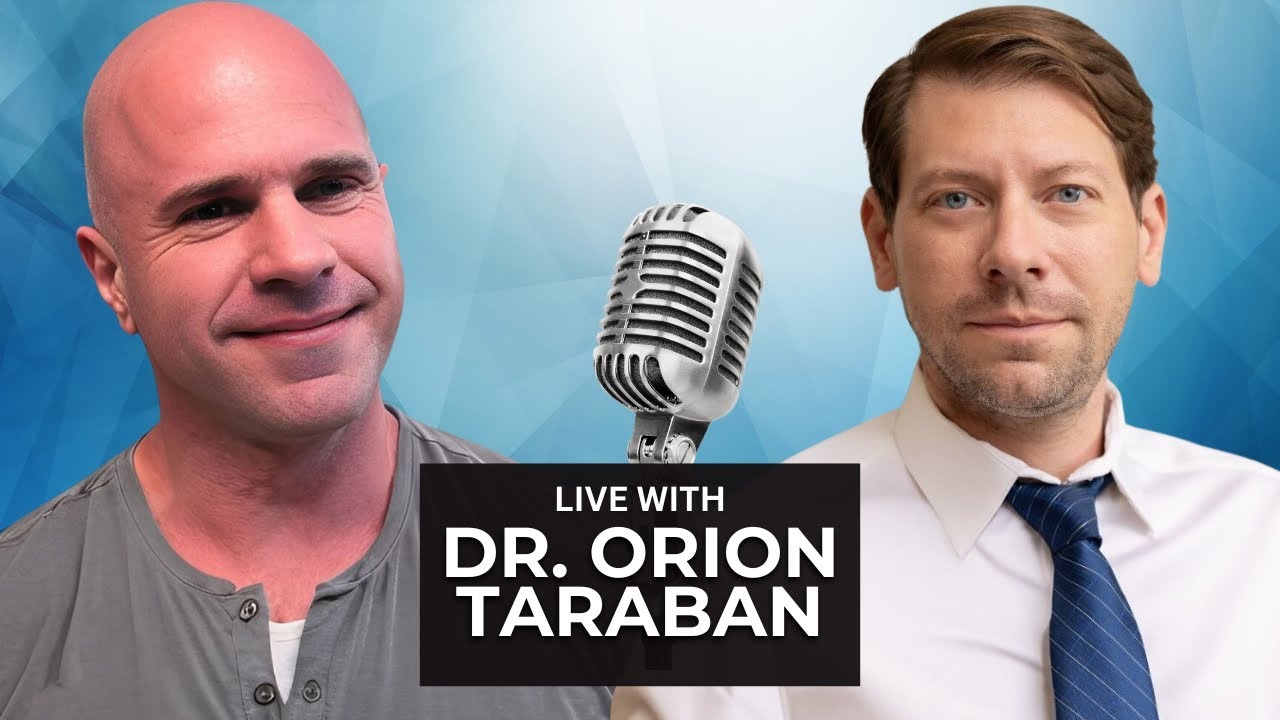
Ralph Brewer interviews Dr. Orion Taraban about his rise on social media, his book The Value of Others, and how he combines acting, teaching, and psychology. They cover dating, marriage, societal pressure to reproduce, and why personal agency matters more than victimhood.
Chapters
live. What I'm going to do is do a quick test or look over here on Facebook. That's kind of my go-to test to make sure everything's going through properly. Give it a 10-15 seconds or so here. Let's see, still not up just yet. Come on, Facebook. There we are. All right, Dr. Orion Taraban, welcome, sir. How are you?
I'm doing well, thanks for having me, Ralph. I'm excited to speak with you.
Thank you for coming. And I, you know, for those, if you are seeing online a bit of choppiness there, hey, we know it's the internet and it's the best we can do here, uh, working with what we got, um, you know. But the good news is that this will be recorded and you guys can watch back and the quality will be better, thank you to to, uh, the— what's the thing we're using here? Riverside. Yeah, that's the program that we use that uploads this. I'm actually going to pause the upload here for a sec because that should— pause upload. There we go. That will help with some of the throughput here. Pause upload on my end as well. Okay, that may help a little bit. All right, well, welcome, welcome. For guys that are watching, let me bring up the chat here so I can get the comments. Alright, we got already got a couple of guys, one on Facebook, one on YouTube saying hello. Hello Joseph and hello Fight for a Better Now. That's a deep name. With us today is Dr. Orion Taraban. If you guys don't know Dr. Taraban, then where have you been? Because you've been apparently living under a rock for a while. Dr. Taraban, you've been all over the place. You started, you know, I discovered you on, like everybody else, Psych Hacks on YouTube. Follow Dr. Taraban's Psych Hacks on YouTube. And if you've been watching, no podcast YouTube channels such as Modern Wisdom. What else you been on? Uh, Diary of a CEO, that was a big one. Um, trying to think. Oh, Soft White Underbelly, we talked about that last time you and I chatted. That was a huge one, got you in front of millions and millions of folks. And you've been on there several times, what, 3 or 4 times now?
I think 6 or 7 actually, and I'm 6 or 7.
Oh wow, okay.
Record some more episodes next month. So, uh, Mark's a big fan, so I would say so, the opportunity.
Very cool. And the, the, um, the episode that you did with Mr. Sexton, the attorney from New York, that was a big one. That was interesting.
Yeah, I got to fly out to New York to meet him, and he's a force of nature. He's very charismatic and charming.
That he is.
And I also think sensitive and deep feeling. So it was a Really great experience for me to meet James.
Very cool. How are you, uh, let's get into it a little bit. How are you dealing with all this fame, if you will? How are you schedule-wise, pressure-wise? I mean, how was he— whenever I see somebody's like, I'm flying over here, I'm flying over there, I'm doing this, I'm on the internet all the time, I'm just sitting there going, how in the world are you managing all this? How are you keeping sane?
Well, it's fun, to be honest. It's definitely creating more solutions than problems, in my opinion. I do have to restructure things to facilitate more travel and more conversations like this one, to create time in my schedule, and I'm happy to do that. It is strange though, being social media famous, because I do get recognized on a daily basis, but only by folks who are familiar with my work online. To anybody else, I'm like any other person in the world. So it's not like I'm Tom Cruise or Donald Trump, where I'm just so famous that even people who have never seen my stuff know who I am. So it's kind of strange when I have any kind of interaction. I'm not quite sure if I'm interacting with a fan who is very excited to talk with me, or I'm just a normal citizen, and it's a little bit difficult to know how to navigate that, but I'm learning how to do that.
I, um, you know, it is a bit of an ego stroke though. I have a very, very small fraction of your audience, but even I, I've had a few videos that have gotten like to 14 million or something like that. So I have been recognized 3 times in public, and each time of course I'm like, well, all right, you know. I was in the security line at the Louisville, Kentucky airport And a guy just sits at the AT— what do you call it? What's the security dudes? Whatever the acronym there is. And he just looks at me and squints and he says, YouTube. And I was like, excuse me? He says, YouTube. And I was like, oh yes. He's like, I thought so. I like your stuff. And sends me on my way. I'm like, well, that was cool. So I can't imagine, you know, how often you've been stopped. We got Ian here saying he loves both of our work. Please keep it up. Well, thank you, Ian. I appreciate that. Ian from Facebook. Guys, we are live here today with Dr. Orion Taraban, Psych Hacks, and from, you know, fill in, we just got in saying, you know, whatever popular podcast that you like to watch, Dr. Orion has probably been on there. I'm a big fan of your work, Dr. Taraban. You and I spoke for the Help for Men podcast. You were the very first guest of the Help for Men podcast and the most popular video we have so far. Here's a question for you. May be a little difficult for you to answer.
Sorry, you faded out there for a second. What was the question?
Oh, I'm sorry, I hadn't, hadn't asked it yet. So here's a question for you. Um, what is it you think— what are you tapping into with this relationship speak, with whether it's your demeanor, whether it's the topics that you talk about, whether it's— are you doing a good balance of the cerebral with the hard-hitting What is it about Dr. Taraban that touches so many people that I can put up my, you know, hundreds and hundreds of videos and yours is the most popular? I mean, you— there's something to you. What is it?
Oh, I, I'm not entirely sure. Maybe my episode just has the most views because it's been on your channel the longest and it's just kind of a longevity effect. Um, I'm not quite sure. I, I think that if I were to examine it It has to do with some of my previous experiences. I've had 3 careers before I launched my YouTube channel. I was an actor, I was a teacher, and I was an— am a psychologist. And I think that I learned skills from each one of those careers that unbeknownst to me were preparing me potentially for a career in social media. As an actor, I learned a lot about how to effectively communicate, how to use my tone of voice, how to use my expression, how to confidently present myself in front of an audience. That's important to do as a social media personality. As a teacher, I had 20 years of experience explaining often challenging, complicated, or difficult topics to people in a way that they might be able to understand without making them feel dumb, which is really important to do as a teacher. You can't ever make your students feel dumb. You don't want to talk down to people, and you might need to mediate the subject in a way to make it comprehensible to your audience. You have to meet them where they're at. So I have a lot of experience taking complex ideas and making them palatable to, let's say, a lay audience. And then as a psychologist, I have a credential which lends me some credibility. I try not to rest too heavily on arguments of authority. I never say you should believe me because I went to grad school or because I'm a doctor. I think that those arguments are kind of bullshit. But I do have more credibility than the average social media presenter, right? And I've also had experience talking to thousands of people in a confidential therapeutic context. So I have a lot of experience getting to know how people really think and how they really feel. Which is often very different than how they present themselves to the world or even to their close friends or spouses. So I have this sort of like insider knowledge with respect to how both men and women are feeling and behaving in the modern dating environment. So most of my episodes come from, or inspired at least, by consultations that I've had with people. If the same problem comes up multiple times in my consultations, I can assume that probably millions of people are dealing with that issue. And if the interventions that I try out in session work for those individuals, chances are they will also work on scale as well. So that's my clue that maybe this would be useful and interesting and helpful for people at large to know. So I think the synergy of those three things have made me effective in the social media.
It's like you're— what do they call it— like skill stacking. You're going back, you know, you're acting, you're teaching the psychology. It's just, you get a perfect, uh, storm, I guess you could say, of all these skills all come together into what we know now as Dr. Orion Taraban from Psycax. It's, it's kind of neat how that works out, isn't it?
It's a little strange. It's sort of like Slumdog Millionaire where kind of in retrospect all things sort of lead you to the present moment. And I don't know if there's a lot of proof in, you know, destiny or synchronicity, but looking back it does seem like I was prepared for my current role in ways that I couldn't possibly have comprehended at the time.
I'm remembering I did, I watched an interview with Jamie Foxx, you know, the actor, comedian, and he was talking about how he got to his big breakout role was playing Ray Charles.
And Oscar, he did a great job.
That's right. And he got the, and they were talking about what got him to that point. And he was saying, you know, did the comedy thing, which led to this thing, which led to the acting thing. But before all of that, he was actually a trained musician, classical trained pianist. I believe he went to Juilliard or something like that, some big school. And so he went to rehearse for this, for the role for Ray, and they were very impressed with his ability to mimic Ray and basically became him. And they're like, well, we're going to have to find somebody to do the piano playing. And he's like, well, actually, he's like— they're like, what? He's like, yeah, I can play whatever you want to play. I can do it all. And they were just like blown away. And he was like, everything came together for that one, that one moment, how all these things stack together. It's very neat.
But, uh, well, and I think that might be true for all of our lives as well. And if it doesn't quite make sense yet, maybe the time for fruition hasn't arrived. And I do think that that's an argument potentially for hope and faith that things will eventually make sense.
You wonder what's going to be the next chapter. What's the next Taraban chapter?
I'm not sure. I'm enjoying the way things are going.
Enjoying it while it lasts. Yeah, that's right, guys. We're here live with Dr. Orion Taraban, and we are welcoming any and all questions that you guys may have. For either of us, but more importantly for Dr. Taraban we have here today with us. You guys are awful quiet so far. I hope everything is working properly. Let me jump over here to Facebook. Yeah, looks good for me. Uh, um, just have a lot of people watching us but not a whole lot of people asking questions here, ladies and germs. We are live on Facebook, we are live on YouTube, we are live on Twitter, and yes, this will be recorded for you guys to watch back later. What do you have going on? You have your book.
Sure, yeah.
I wrote a book last year.
The Value of Others.
That's right.
The Value of Others. It came out last July, so it's been out for about 8 months. I'm very happy with the way that it's been received. It was definitely a labor of love, and I'm very proud of how it turned out. It's about 420-some pages long. I think it's my definitive argument with respect to the game of mating and dating as I see it. I wrote it in a way that I hope will still be relevant 100 years from now. It's a little bit more complex than some of my YouTube stuff because it's a very different medium. YouTube, people put on in the background while they're doing household chores. A book is something that you sit with and you read and you reread and you consider It's a different type of argument, and I think it's one that's better suited to this theory that I'm proposing. But I'm very happy with the way it turned out. It's selling very well, especially for a self-published book. I don't have an agent. I don't have a publishing house.
Oh, I didn't know that. Very cool. Yeah.
I haven't spent a single dollar in marketing the book or advertising, so it's all been word of mouth and facilitated through psych-hacks and other social media platforms. I'm just astounded by the impact that it's had already.
Yeah, that's huge. I didn't realize that you self-published it. Good job. I did the same. That's the way to go, isn't it?
It's the way to go if you have the audience. I think that's really important, is you have to have the audience first. Otherwise, you could be the next Nobel laureate and you'll have your uncle and 2 friends who maybe will give it a shot, unfortunately. So it's a good idea to, you know, it's like being a street barker. You have to draw the crowd first before you do your act.
That's right.
The other way around, it's more difficult.
Mm-hmm. We got Tyler in the comments saying, appreciate both your work. Well, thank you, Tyler. Tyler from Facebook, appreciate it. Thank you so very much. And the book again is The Value of Others. You can find it Amazon. I haven't listened yet to the audio version. Do you do the narration yourself?
Of course, yeah, I wouldn't trust anyone else with that. It was also a lot of fun to do. It was one of my dreams back in the day to be an audiobook narrator, and I wasn't able to get that job even though I applied for it over and over and over again. So I finally got to realize my dream by narrating my own book. So that's the secret. If no one will give you a job, you have to write the book yourself.
There you go again with, with the stacking and realizing your dreams. We got Ian here saying, I would love to ask more questions, But, uh, and get my reading glasses. I'm getting old, Orion. I don't know about you, um, but I still have a court hearing next week and I can't talk about things until then. Well, thank you for that, Ian.
You guys are leaving Ralph hanging, man. He's doing his best to tread water, but come on, help him out.
Very good. Um, and then we have another one. Well, everybody's just praising, but guys, we— I mean, we love the praises, keep them coming. Our egos appreciate it. Mr. Carey, thank you so much. He says he appreciates your advice and insight. Well, thank you so very much. But if anybody has any questions, we are all ears. That's what we're here for. Thank you all so very much, and thank you to Dr. Orion Taraban for joining us today. Psych Hacks is the big channel. If you're looking at Orion going, I know this guy from somewhere, what do I know? You've probably seen his face on numerous clips, you know, with the little clips that people take of videos. There's this whole industry of people taking other people's videos, cutting them into clips and putting them on their channel that have nothing to do with Orion or nothing to do with SykeX, but they're benefiting from your likeness and face and content and growing their channels, which I guess you're probably going to say, eh, that's okay.
That doesn't bother me so much. Most of the time, uh, it's easy enough for folks to figure out who I am and it leads them back to the source material. What is more frustrating is when people take the content and present it as their own. And there's been a couple of channels that have basically taken my scripts, made some very superficial changes, and presented the material as if it was their own.
As their own, yeah.
It's difficult. It's certainly plagiarism, but plagiarism isn't quite the same thing as a copyright violation. In any case, I think that's just what happens when you get to a certain level. And as they say, imitation is the highest form of flattery.
There you go. That's what I was going to say. All right, we got a question for you. Do you believe in marriage, the concept of marriage?
I believe that it exists. It is an institution that exists in the world, right? It's not like Santa Claus. Smart. It's not like— I believe in it. It exists.
It does exist. Next question. Okay, so, but he says, how would you justify the concept of marriage against the modern world red pill truths? So this is from Fight for a Better Now on YouTube. So he is saying that He thinks he has seen, using the Matrix metaphor, he's taken the red pill and he's seen behind the curtain, and he's coming to you saying, from what I know and from listening to you and myself, do you believe in marriage as a, let's say, a positive thing? And if so, why?
Well, I certainly don't feel like I need to defend marriage. I mean, if it's truly a good thing, it should be able to stand on its own merits. I am not married. I am not interested in getting married in a legal and formal sense. And I've said before, I'll say it here, is primarily because I'm not sure how I benefit from entering into that legal contract. It just seems like a lot of risk and not a lot of reward. I also am unclear as to what opportunities being married open that weren't already available to me as an unmarried man who's in a relationship. So maybe it's the libertarian in me, but it's also like, why does the government need to be involved in my romantic relationships? It's like, why can't we just be two consenting adults who enjoy spending time with each other? So to my end, there's a lot of risk, not a lot of reward, especially as a high-earning man. I'm— I think it's Like, if I were a woman, I would definitely want to get married under most circumstances. And I'm not saying that I would never get married, but I kind of would get married for the same reason that most women would want to get married, namely it would significantly improve their quality of life. So if there's any, like, beautiful billionaire heiresses out there who are looking for a husband and want to, you know, subsidize my vocations, like, we can talk. Like, I have a lot to gain from that arrangement, and under most circumstances, women have more to gain from the marriage arrangement than men. So I can understand why at a certain point, there— an ultimatum generally comes down the pipeline where the woman's basically saying, like, you know, I'm going to need this in order to continue the relationship. It's a level of security that on that level, at that point, the hypothetical woman is demanding that she couldn't provide to me. It's an asymmetrical arrangement. The only way it would be symmetrical is if we're more or less socioeconomic equals. That's happening more and more, but in general, women don't want to marry socioeconomic equals, and certainly not men who earn less than them. They are more enthusiastic about marrying hypergamous men who are higher status and higher earning. So we also know that in situations where the woman out-earns the man, that there's a host of poor marital outcomes. The men are like 3 times more likely to be on erectile dysfunction medication, for instance. And we already know that women initiate 70 to 80% of divorces. But when the woman out-earns the man, it's significantly more common for them to initiate divorce than it already is. So while modern women have careers and are often very high-earning and are socially accomplished, and they might say that because of this, material conditions aren't really that important to me, the behavior on a population level belies that claim. Is that it does seem to be important, maybe more as a psychological or an emotional cue than as a material resource, but it does seem to be important. Otherwise, why would there be so much more unhappiness and conflict and dissolution under those arrangements? So that's kind of the long and short of it, is that I have No problem with commitment. I think commitment is good and necessary where it's appropriate. I, I just don't see how marriage serves my goals.
Now, if we were to jump into a time machine and take Orion back, I don't know, 50 years, would, would your tune be different then because the social framework is a little bit different and more advantageous for men in marriage, or no?
I think it'd be more difficult for me to speak out so bald-facedly about the issue. And I certainly— I mean, I have experienced all kinds of direct and indirect social pressure to get married. I think that would have— if we go in the time machine, it would be even greater at the time. I doubt I would have gotten this far without being partnered up. Also, it's like I'm in my early 40s at this point. To be a bachelor in your 40s 50 years ago would be, "This guy is never going to change. He's an inveterate playboy or bachelor or what have you." Yeah, things change. It's just also how disagreeable you're willing to be. It's like the social pressure is going to change, but it's never going to go away entirely. Alan Watts said, if people can talk you out of something, you deserve it on some level. So the ability to withstand social pressure, to understand who you are and how you want to live your life despite the consequences, that's not a path that everyone can take. It's much more difficult than people think. I think that movies and video games and have trained a whole generation to think that they have main character energy, and that's just not true. I think most people in their private consciousness think they're the ones who are gonna stand up to the Nazis, and they're the ones that are gonna go fight the band of brigands at high noon when no one else will. They'll do the right thing even if it costs them their lives. And it's like, have you talked to people recently? It's like, I don't think that that's true. So the pressures to conform are incredible and very, very powerful, more so than a lot of people would like to acknowledge, because it's not very socially— it's not very socially desirable to say that you're compliant, nor is it very positive from an ego-based perspective. No one thinks, ah, I did exactly as I was told today, I feel really good about myself. And yet So many people respond to arguments of authority and direct and indirect social pressure, um, that I think it would be extremely difficult for most people under most circumstances to live the lives that might be in their best interest to live, for better or for worse.
I did an interview with a lady by the name of Michelle Langley who wrote two books, Women's Infidelity 1 and Women's Infidelity Part 2. And she said a common thing that she says to women that she consults with is, uh, you're not as good as you think you are, to the women.
Kind of, uh, probably translates to, I mean, I think we know that most people think they're above average in most things, which we know is physically impossible. So we all have a, most of us have a positive bias, and that might be healthy, actually. Like, if it gets too delusional and we, and we lose touch with reality, that can harm our interpersonal relationships. But on the whole, it's probably better to think you're a little better than you are than a little worse than you are, to be, to be fair. Like, there's— I think some research suggests that slightly delusional people are the happiest people. And like, the more clearly you see reality, the more likely you're prone to depression.
That's right.
Because there's a lot of, you know, there's a lot of difficult and unfulfilling and just awful aspects to being alive and being a human being. Sometimes it's difficult to maintain optimism and hope in the face of what we see and logic and reason and statistics and experience. But it still might be called for.
And this is where things like religion and other things step up to give people a sense of purpose and direction and a framework to live in to deal with the plethora of not-so-nice things that hit you day to day. That's a deep conversation here, Orion.
Well, sure, people need that. And, you know, just like the army could be really good for some young men, they don't have discipline they, they're kind of just weak and flailing, and, and they get inducted, or they join, and they enlist, and it's almost like they're given a container in which they can become somebody. They can learn skills, they can learn to self-regulate. The Army— but the Army is not for everyone. But if you don't get in the Army, you have to get it— most people are gonna get it from somewhere. If it's not the Army, it's It's religion. If it's not religion, it's your spouse. I think that's— oftentimes I think that men, at least historically, would talk about their wives as if they're their better half, kind of keeping them on the straight and narrow. And without her, I would just go off the rails. And it's like you're talking like a young guy who needs the Army. You know what I'm saying? It's like we definitely need structure. But I believe, to the extent that it's possible, that it's in the individual's best interest to extrapolate that structure internally as opposed to finding an external structure to conform to. Because no matter what that external structure is, it's like buying clothes off the rack. It's not going to fit you perfectly, and you're going to amputate or stretch yourself to conform to that externally imposed vision of who you're supposed to be. As opposed to doing the hard work and self-regulating into an auto-extrapulated structure. But that's difficult to do because you have to on some level reject the army and the spouse and the religion and all those things to create the space to think, "Well, what do I truly value? What do I really want? How do I truly want to live?" And in the beginning, you're in like a featureless environment where you can walk in any kind of direction. There's no right and wrong and you can pretty much do whatever you want. But how do you go from that to, no, this is, this is how I want to live? It's extremely difficult. It's so much easier to just be told how to live, whether that's by your priest or by your doctor or by your spouse. But that said, I don't think that's best for the individual.
But is it safe to say it is best for the majority of individuals because they don't have the tools in their toolbox to navigate things independently, like what you just talk about.
Yeah, I think you can make that argument. I, I would think that these things, these externally imposed structures, will remain necessary evils for quite some time.
I was going to say, and there are plenty of— and one of our commenters here, uh, exemplifies this perfectly— that there is plenty of pressure from our social circle. You mention it yourself, a lot of pressure to, hey, how come you got— haven't settled down yet? How come you haven't found Mrs. Right yet? You You know, when you're going to make an honest woman out of her? When you got a girlfriend next to you, you know, at the Christmas dinner or whatever it is. And sometimes that pressure gets pretty nasty. And for example, Jay here— not to pick on you, Jay— here from YouTube says, a bachelor is a selfish teenager. You were born able to support far more people than just yourself, but you just want to keep that given abundance for yourself. How childish. I think that perfectly encapsulates the mind frame for a lot of people, a lot more religious conservative people that really push somebody towards, uh, you know, marriage, settling down, is that, you know, to keep all these riches, so to speak, for yourself, not necessarily monetarily, just, you know, everything for yourself is the ultimate in selfishness and you are not contributing to society.
Well, I don't think that that's true. Bachelors can certainly contribute to society. What we're getting at, I guess, is the sin of gluttony as it was initially defined. Gluttony today means that you, like, eat too much or you drink too much, but I think it was first meant to mean like you hoard, like you, you hoard money or you hoard food or you hoard value and you don't share it. And, but you amass it for the sake of amassing it. So, uh, there's, there's a difference between hoarding value and being married. So for example, if I were married with children, it would be much less likely that I would have made a YouTube channel, that I would have written a book. Like, a wife and children take a great deal of time, energy, and money. I've, on some level, chosen to benefit a larger swath of humanity versus a couple of people. And it's not for me to judge which one is right or which one is wrong or which is better. I think each man has to decide that for himself. But under no cases should a man amass value and hoard it. But the idea that the proper use of his skill and resource is simply to provide for a nuclear family, I think, is actually fairly short-sighted. I think that's within the bounds of the average man, but for anybody who might have a wider scope, that actually might be limiting in ways that— and more guilty of hoarding value than spreading it across, um, a wider audience or humanity. So that would be my rebuttal to that.
Perfect. And Jay is here saying, yes, but men are born with massive ability and strength. Jay, what Orion is saying is like, yeah, he recognizes that he has all this ability, but you can either focus it on this, you know, family we have here— wife, kids, presumably— or you can— what he has done and what other men like him have done is blast that energy, so to speak, out to millions and millions of people potentially and helped out thousands and thousands of individuals, something he couldn't do, probably, let's be honest, if a lot of your time and money and everything else was focused on two kiddos and a wife.
It would be very— it would be very— it would be much more difficult, let's put it that way. And you can make the argument, it's like, okay, so I've, I reached millions of people a month, but in a very superficial way, versus— so you can put that on one pan of the balance, and the other one is to help 1 or 2 or 3 individuals very, very deeply? Like, what is actually of greater impact? And I think it's a non-rhetorical question. I do think that there is probably some threshold, some kind of equation that I can't extrapolate, that says, you know, at a certain point, one is going to make greater impact than the other. And to say that, going down one path doesn't necessarily foreclose others, or that taking on certain commitments doesn't allocate resources that might be deployed in other ways more effectively, is absurd. Because we have to make decisions out of limitation, limitations of time, energy, money, et cetera, et cetera. So it's like, if the idea here is to use your strength and to use your resources to create positive impact to those around you. Well, okay, just define those around you, and to what extent of an impact do you think that you're going to make? And to have the tolerance to understand that not everyone's going to make the same decision as you, and that's okay.
Yep, that's huge. That last part, the tolerance towards others are not going to necessarily make the same decision as you, and that's okay. You're asking a lot, Orion. People, you know, this is This is the way you do things, gosh darn it. This is life. This is the prescription. We have this all figured out. Stop trying to rewrite everything.
Well, that goes to Jung's— I always say it wrong— Carl Jung's definition of the shadow. We often think of the shadow as sort of like the disavowed evil or badness or immaturity that lives inside of us that we prefer not to look at. And that, I think that's a good definition, and that we can— that's a juicy concept that we can get into. But I don't think that's how Jung initially confronted or defined the shadow. The shadow wasn't necessarily evil or bad. The shadow was the path not taken. So when we choose certain pathways in life, we on some level permanently close certain others. And the shadow is the self that you could have been if you had made different choices. The married man's shadow is the bachelor. The bachelor man— the bachelor's shadow is married life. This sort of goes to the grass is always greener on the other side, right? It's like the, the issue is no matter what road I take, for my own psychological well-being, I need to feel like it was the right one. So if I got married young and had a family young, that clearly foreclosed on other possibilities, but I need to feel like my decision was the right decision. And so the shadow is anyone who mimics the decisions that I didn't make. And if I'm not insightful, If I'm not careful, I'll project my own need to be right in my own decision-making process onto other people in a moralistic framework. And if I'm really not insightful, I will try to purge the world of those who remind me of the paths that I didn't took that might undermine my faith and commitment that I took the optimal path for myself. Yourself. So of course, more or less, people get behind the decisions that they make. Like, I've, I've never heard a, a father— I'm sure maybe they exist, but I've never heard a father in all the consultations that I've done say that they regret having kids. It's a permanent, unrevocable decision. So it's like, the best thing that you can do is get behind it. There's nothing you can do about it. You can't unmake them. So you might as well get behind the decision 100% that they were the right thing for you. Best ever happened to you. Maybe that's true, maybe that's a rationalization in defense of, uh, the shadow.
And, uh, circling back to a lot of people pressuring you to marry, have children, and so forth, we have to realize though that what that's rooted in isn't necessarily— they're thinking about this from some holistic, uh, almost metaphysical way of it's better for the universe and the world that— but no, really the root of a lot of it is old-timey thinking. We need to reproduce more because kids die, and you need to reproduce or else our civilization's going to die. That's, in essence, a big chunk of it.
That's part of it. Like, we have a population collapse problem. For most of my life, I've been told that the world is overpopulated and we need to stop having babies, but it turns out in recent years that where many industrialized nations are well below replacement rates, and that's going to create all kinds of social challenges, let's put it that way.
Economic.
Yeah, I don't necessarily feel like I have a duty to the human race to reproduce personally, but I can see how other people might feel that. Um, I think that it's important for those who— so here's the thing, it's like I haven't been ready to get married So if the social pressure for me to get married was successful, all it would have done was push a man who wasn't ready for marriage into marriage. And how would that actually end up good for my wife or any children that I had? It makes it much more likely that it's going to lead towards divorce and the dissolution of the family unit. So it's like, part of the reason why I haven't been married, a big part of it, is I haven't felt I'm not ready to do that. You can judge me for not being ready, I suppose, but like, it would be irresponsible of me to sign up for something that I didn't feel capable of discharging. I just think that it's in everyone's best interest to not force people to do things that they don't feel ready or equipped to discharge. It's like, what are they thinking? It's like, Ralph Brewer suddenly become ready.
In their mind, they're thinking of a grand— so many people. And this isn't a gender thing. There are women out there, young women right now, that are saying, kids, no, it's not happening for me. And they get the pressure from the grandmas and the moms that will— a lot of these women here, oh honey, you'll change your mind, trust me, when you get to a certain age. Maybe, but if she— but if she does— but if she doesn't, let's not hold a gun to the woman's head saying reproduce, gosh darn it, because that doesn't go well. If she's not wired for it, she's not wired for it. And there's, as far as I'm concerned, there's no advantage to introducing chaos to an already chaotic situation.
Yeah, and I'm, I'm for vive la différence. It's like, yeah, I have a problem with people having different ideas and living in different ways than me. I think that on the whole it's probably great that we have, just like genetic diversity, that we have cultural diversity as well. And that means that people aren't going to live the same way.
Yeah, I want to, um, be cognizant of your time. Are you good for a few more questions here?
Yeah, absolutely. Okay, very good. We've warmed up and we've entered into interesting—
All right, and it appears that— I don't know if you see it on your end, but it looks like, uh, our connection's a lot better now, so that's good.
Yeah, I've noticed that. That's great.
We got a good question from Mr. Steve. He read your book, so there you go. Thank you, Steve. He says, I have a question for Orion. In your book, you say that In general, in relationships, men try to get as much sex as possible for as little commitment as possible, while women try to get as much commitment as possible for as little sex as possible. I see your point, and I agree women try to get as much commitment as possible, but quote, for as little sex as possible? I don't understand that part, he says. It makes it sound like women don't enjoy sex. How would you explain the discrepancy?
Uh, I feel like what I wrote is that men attempt to exchange— they want as much sexual opportunity as possible for as few resources as possible, and women want as much resource, broadly defined, for the least amount of sexual, um, uh, exchange. So commitment is one of those resources but it's not the only such resource that men can exchange for sexual opportunity. There does seem to be some gender differences with respect to the desirability of commitment. It's like there's an old joke that what does the lesbian bring to her second date? U-Haul. A U-Haul trailer. Yeah, exactly, because they're like, they're gonna move in together and begin the cohabitation process and they're ready to start nesting. So there does seem to be a gender-based preference for security and emotional intimacy and commitment in women, whereas there might be more of a preference for novelty and playing the field and sowing your wild oats and diversity of partners in men. And on some level, that might be reflected in the biological realities of the gametes involved, etc. Et cetera, et cetera, that's mimicked across the animal and plant kingdom. So it seems to be baked into the nature of sexual dimorphism across kingdoms for billions of years. There might be something to that then. But the idea here is, don't women enjoy sex? Yeah, a lot of them do. A lot of them do. However, the— they don't often So here's the thing. As I've said on the, the channel— I don't know if I said in the book, but I probably said in the book somewhere— all men pay, but the more she likes you, the greater the discount. So a woman who's very attracted to a man won't need commitment, won't need exclusivity, won't need time and attention. She finds being in his presence, sleeping with him, engaging with him to be inherently valuable. But that's because her attraction for him is off the charts. Because her attraction to him is off the charts, she feels that she's adequately compensated for her sexual opportunity. She doesn't even see it as an exchange. The less attracted a woman is to a man, the more that she is going to require other resources to compensate her for the lack of intrinsic value to the sexual, the romantic relationship. So, you know, sex is like pizza. It's rare that it's really bad, but there are certainly better pizzas than others. You know what I'm saying? But to answer this man's question, the reason why it ends up this way is not so much because women don't like sex. That's like saying, well, do men not like money? Because that's often what they're using to exchange for that sex, right? I think men like money and women like sex. The reason why it's come out this way is it's the cat that decides the milk is good. So because most men have put such a high premium on a woman's sexual opportunity, and because women have a cultural monopoly on their ability to sell that commodity— sell that commodity— like, they get to decide who gets access to their bodies who doesn't. Men don't get to decide that for them. You put those two things together, and like, men have taught women that they have an extremely valuable resource that they are willing to exchange for rings and jewelry and trips and dinners and drinks and houses and etc., etc., etc. It's not the fact that women might enjoy it, it's just like the icing on the cake. But even if they didn't enjoy it, like, the enjoyment is, is, it's sort of irrelevant. It's the fact that their customers, their consumers, value it so highly that they're willing to trade all of these other things in order to get access to that aspect of a woman. So it's, it's men who have created on some level this exchange by their, let's say, hypervaluation of of sexual opportunity.
And using that as a framework, we can more clearly see why the current environment of very easily available casual sex for many people, especially many young people, kind of disrupts the whole system, doesn't it? If I don't have to, quote, pay a lot or anything for it But let's back up, point, you know, piggybacking on one of your points where if she is so over the top attracted to you in the moment, you don't have to pay much of anything. You're just you. You are enough currency just in your own self. Well, if that's the case, and we have people out there saying, man, I got laid 4 times last week by 4 different women, he probably has a high currency. His self is such that he is a good all-around package that a lot of women go, oh, I like that.
Well, it's true, but you have to understand that both men and women have different short versus long-term mating strategies and selection criteria. Like, women will have one-night stands with men that they pro— that they might not want to get married to or even have their friends know that they're seeing them. The overlap is more considerable with women between like casual sexual relationships and long-term partnerships, because even a casual relationship can lead to pregnancy and a more or less a long-term commitment to it with a man, whether he's involved in raising children or not. Men, the Venn overlap is smaller, but, um, you're absolutely correct, is that the hookup culture and the free love promised by birth control and has radically changed the valuation system. It's like, for better or for worse, the price of sex used to be marriage, which, let's be honest, is an exceedingly high price to pay for sex, like a lifetime of protection and provision.
Mm-hmm.
But men are so horny and they're so driven by that biological impulse that if there was no other way to get laid accept marriage, they'll do it because they're, they're thinking with a different part of their anatomy.
Yeah.
And so that's also something to keep in mind, is that we should be careful about idealizing some of our grandparents and our great-great-grandparents' relationships. Some of these folks were just horny teenagers who did the only thing that they could do to get laid, and they lived in a culture where divorce was just— it didn't happen. There was— you could—
forbidden. Yeah, yeah.
So, you know, it doesn't necessarily mean that they were happy. Doesn't necessarily mean that getting married and staying together was the best thing for either one of those people. Might have been, but I don't think it's fair to say that just because they didn't get divorced meant that that was the best possible relational outcome for either one of those individuals.
Yeah, and—
But anyway—
Go ahead, I'm sorry.
So, just to finish my thought, we've gone from the price of sex being a lifetime of protection and provision a couple of drinks at the bar. And, um, where this has led to a radical reevaluation of commitment between men and women. Women are anchored historically. They think that there are no gentlemen anymore, chivalry is dead, all men are cads, they just want to get in their pants without providing them any kind of commitment. Because they're thinking about the way things used to be, and there's been a huge devaluation of the price of commitment and the price of sex. But men are anchored contemporaneously. They're thinking, well, I slept with you on the first date after a couple drinks because I assumed you were attracted to me and you wanted to, and we're just two adults and you've done that to other men. So like, why— I can't get married to you because of the sexual opportunity anymore, because you've already proven through your behavior with me and other men that you'll give your opportunity in the absence of a lifetime of protection provision. So I'm not going to pay more for something than I have to. Men and women are rational in that capacity. No one pays more for the same good that they have to. And so men are like, well, what else can you give me? Like, what, what, what else is in it for me? I don't have to marry you to have sex with you, so why should I get married? Well, if you don't marry me, then I'm going to leave you. It's like, that ultimatum works on a lot of guys because even in today's day and age, most men don't have any optionality to speak of. And the threat of Maybe this was the first woman who ever treated him well. Maybe it was the first girlfriend he ever had, and he's thinking back to the years of loneliness and horniness and rejection and desperation. He's like, okay, fine, I'll give you what you want. That's— that sounds great. But there has to be some other rational reason to motivate men to move in the direction of marriage. If And I, I, it's really interesting because there's a lot of, I'd say, modern apologists for marriage, like Jordan Peterson is one of them. And these folks like try to make their best argument for why marriage is good for men, in the same way that I think the army is good for some young men too. It's like it gives you, it grows you up, you finally stop being a boy and you start being a man, you learn to care for something. It's like you can do all of those things, they're good things to do, you don't have to get in the marry to do those things. That's my counterargument. But my point is that if, if marriage was obviously good for men, they would be lining up to get into it. Like, you wouldn't need arguments to motivate guys. They would, they would clearly see that it was in their best interest. So rather than making really articulate and heartfelt and persuasive arguments in defense of the institution of marriage, If you actually want to motivate more men to get married, change the incentive structure. Make it much more worthwhile for men to get married, and men rationally will line up to do so. But in the absence of that, I think you're just gonna have to like— you're preaching to the choir, which is what Jordan Peterson is increasingly doing, and/or you're just sort of like trying to whip someone into compliance. And when that doesn't work, you're gonna use shaming language, or you're going to use angry outbursts and name-calling and denunciation. And when that doesn't work, you'll leave them alone, I suppose. But it's not going to motivate people to do what you want.
Yeah, there's the opposite side of that, is there's a whole, um, loosely organized group of men online that call themselves MGTOW. Are you familiar with this? M-G-T-O-W. Sure, yeah.
I'm not, uh, I'm not really sure what they stand for, but my understanding is they're kind of like male feminists. And there's like, we— well, women get to decide how they want to live their lives. Maybe they get married, maybe they have careers, maybe they, they tell the world to fuck off. And so we want to have the privilege to do that too.
And I, I tell them, I say, guys, God bless you if you want to live the bachelor life, more power to you. You're not going to hear me say, no, no, you must get married. But at the same time Don't spend an inordinate amount of time on the internet blasting married people. That's not how you win people over, so to speak. You do so by exemplifying, look how awesome my new single life is and look at the advantages of that. Like, no, they spend more time saying you simp and all these other things to these married guys out there.
Well, I think it's again the shadow. So yeah, you know, they, they're missing out on certain aspects of life, just like the married man with the family is missing out on certain other aspects of their lives. And everybody wants to feel like their decisions were the right one, and so they have to disparage the road not taken. So that's Goong's shadow. And they're also probably reactively dealing with years of social pressure and shame and misunderstandings, and, you know, people looking down on them, saying that they're boys, saying that they're immature, that they haven't grown up. And the only way to do that is to make an honest woman out of a and to go to the marriage bed. And it's like, really? Is that the only way? That's the only way to become mature? Like, I don't know if anybody can look at my life and say I'm not responsible. Mm-hmm.
But again, you're, you're a reflection, you're a reflection of what they could have been potentially.
Yeah, it's a road not taken, maybe. But it would be really Tough if you knew how I live to say that I'm, I'm undisciplined or dissolute or living in some kind of debauched haze, or that I am not creating, providing good to other people. It's like, that's what I do like all day. I just don't do it for one person.
There you go. Debauched Haze is a good band name. Um, Scott says, deep question for you, is there such a thing as too much self-awareness? Where does introspection become emotional masturbation? Well put, Scott. Good question.
Yeah, there's, there's kind of an in-between space with respect to self-awareness, like a lot of things in life, that's very dangerous and uncomfortable to abide in. There's this old joke about enlightenment, and the joke is, "Enlightenment better not start. Having started, better finish." It's like, if you're not going to go all the way, it's probably best that you just fucking take a different route in life. But if you decide to take that road, like walk it all the way to its completion. So it's really like a little bit of self-awareness, a little bit of enlightenment, a little bit of knowledge, a little bit of anything is a dangerous thing. Sometimes it's better to just not open up that can of worms. And there's certainly a, let's say, a valley through which self-awareness can lead to being self-conscious, which can lead to one feeling really awkward and alienated from self. The self is also a labyrinth. It's very easy to get lost in the search for self because there might not be a final thing to find. If anything, the self is the process that looks for itself.
The journey.
I don't think that there's something else that that process is going to find that that is the self because who's initiating the process if not the self? So the self is— it's looking for what it is, which is one way of playing hide and seek. Some people like to play hide and seek. It's like there are— some people are perpetual seekers and they'll say to themselves and to others, "I'm just looking for truth, I'm looking for real goodness, I'm looking for enlightenment," etc. I'm seeking it. There's something romantic about that adventure of never finding. But if you're seeking, you're not finding. You're seeking, you're seeking. But if you, if you're a seeker, you don't want to find. Finding means you stop seeking. And a lot of seekers need to be honest with themselves. They don't want to find. They want to keep seeking, which allows them to keep wandering and to keep hoping that over that hill is the promised land. And maybe, maybe there is no promised land, or maybe it's right where you're standing. So sometimes people have to make the decision to find. And when people start to become finders, there's generally enough Oh, you're getting, getting choppy on us here. About enlightenment and self— I see.
Okay, you're back.
Am I back? If we're talking about enlightenment and self-awareness, you can do that anywhere and under any conditions. So it's like where you are right now is the perfect place to find yourself. You don't need to go somewhere else or study under a guru. It's like the Buddha sat down on one tree, but like there was nothing special about that tree, that banyan tree. It just happened to be banyan tree, in my opinion. So, like, you can start to find anywhere. Now, if you keep going, I think that self-awareness becomes a positive, but there could be a valley that you have to pass through for that to occur. Just like you might need, you know, sometimes a little bit of knowledge ruins everything because you— as the more you learn, the more you start to learn how little you actually know, and that fucks up all of your frameworks about your, your mental models and your sense of self and your identification, etc., etc. But if you keep going, you might actually get to— not omniscience, that's impossible— but to some measure of grounded expertise, which is a good thing to have. Hmm, in my opinion, there's nothing wrong with that as long as you operate within the limits of your expertise with humility.
Grounded expertise in yourself. What is the discipline that you are an expert at at that point? Just exist.
Yeah, you can be an expert in yourself too. Like, you can, you can have expertise in self-awareness. You can have expertise into your own instrument, into your own consciousness, and that's extremely useful as a human being. So I would say if you've already started down this path and you're a little self-aware, keep going, keep, keep going. 'Cause if you stay there, it's gonna suck, but if you keep going, maybe you'll, and you start to shift towards, like, also what's my— fall into just navel-gazing and introspection for the sake of introspection. The Buddha had a point, like he was trying to escape suffering and his introspection was in service of that goal. He didn't just say, well, I got nothing else to do today, so I guess I'll just examine my thinking.
So, so we may have somebody that's trying to stay goal-directed and keep going.
That's what I would say.
Somebody tries to keep some— or tries to go on this journey of self-awareness, it's to what end is the question. What are you trying to solve? What are you trying to do here? I think for a lot of people, the answer would be, I'm bored and looking for some kind of deeper meaning in my otherwise boring life. Or for some people, you know, I just went through some kind of trauma and I'm looking for ways to cope with said trauma. For a lot of guys watching this, probably spouse left me, cheated, and all this other stuff. Looking for answers. Yeah, looking for answers.
I think most people are looking for answers. Answers. And it's, it's often we reach the conclusion that there are no definitive answers, there's just tentative explanations that we're willing to accept.
Oh, deep. I like it. That's a good one. Your connections, your connections get a little wonky again, or my connect—
I don't know who's— what—
however this works, you're going in and out a little bit here. No, no worries. Um, but I'm gonna do one more and then we will let you go, if that's okay.
Sounds good. All right.
Okay, so Mr. Justin says, this is in it, this is in regards to just in general dating and the, the mating game, if you will. The stats say— now anytime somebody says that, I'm like, okay, what stats exactly are we quoting here? But the stats say that the women are attracted to, he says, 5% of the male population. I don't know where he got that, but while men are attracted to roughly 60% of the female population. It seems that all of the advice is about becoming the 5% man. If that's a question or just a statement, would you agree with that statement overall?
Uh, I don't know where these percentages come from. They don't feel correct to me to say that only 5% of men are attracted to women, but I do think that let's say, I think it was even Andrew C.K. that mentioned this in one of his stand-ups. It's like men are kind of wired to be willing to have sex with most of the—
oh, we're losing you.
Like, yeah, men cast Am I back?
Yeah, you're going in and out on us a lot.
I'm sorry, Ralph, I don't know what I can do about that.
No worry. Hey, nothing you can do. The wonderful world of the internet. I mean, who knows? But hey, don't worry about it.
Let me try to make a quick response. Okay, it'll be for the recording anyway.
There you go.
So I do think that men are willing to entertain a wider swath of females for sexual opportunities than vice versa. That's true.
Yes.
A lot of the advice is to become one of those top percentile men, and I would say, yeah, that's probably true. And I think some guys hear that and they just I'll just go back and be 6'3". Like, that's the problem I should have. Told my father to reproduce with an Amazon, and that would solve all my problems. Yeah, thanks a lot, Orion. I'll just try to be taller and better looking, etc., etc. So that's focusing on some of the things that you can't change. Like, you can't change your height. You can't change your facial symmetry. Absent some very intensive surgeries.
Mm-hmm.
But there's a lot that you can change, and you have to understand that, like, you know, 15 years ago I was living in the projects in Brooklyn, and I was broke. I didn't have a degree. I didn't have a girlfriend. I was at the bottom of the barrel in terms of social hierarchies. Now I'm definitely in the top 1%. Of men in a lot of different metrics. A lot can change in 15 years, you understand? So it's like the people who are at the top now, even if it's in terms of pure attractiveness, they're not the people that will be at the top 10 years from now or 20 years from now. And men, they— we do have a kind of a privilege in the sense that We can take more time to figure things out and to get our shit together. Women kind of have to get— figure that out and get their shit together faster, for better or for worse. But men are kind of like long-term, slow-growth investments. And if you can't change your height and you can't change your facial symmetry, then change your habits. Are you smoking weed and playing video games all day. Change your social circles. Change your outlook on life. Change your socioeconomic status. Change the way that you, you dress and present yourself to the world. Change your skill sets so that you have more of what Ralph Brewer might be looking for, if that's your goal, or at least have more that other men might be looking for so that you can be of value to your fellow human being. Like, these are all changeable things. They're not changeable overnight, and they're certainly not changeable without, in some cases, a great deal of hard work. But what else you gonna fucking do? It's like, it's too young, it's too early at 25 to throw your hands up in the air and say, I'm never going to be a top percentage man. So I can understand how the young guys like myself at that age would just hear that and say, well, I'm never gonna be able to compete. But the fact of the matter is, if is that we live in probably the most fluid, mobile socioeconomic society that has ever existed on the planet. That doesn't mean everyone's gonna be a billionaire, but it does mean that the people who were at the bottom of the barrel 10 years ago might be near the top 10 years from now. Mm-hmm. And to focus on what you can change, because even if it doesn't lead to better outcomes with women, though it probably will, it will lead to better outcomes for yourself. Like, chances are you will be happier if you're more agentic, which is that you take more responsibility for yourself in the direction of your life, as opposed to feeling like you're just sort of a victim of circumstance or hopeless. There's, there's a time to give up hope. I worked in a cancer ward for many years, and when all the other treatments have failed and it's metastatic disease and and you have systematic failure, that might be the time to get to accept gracefully the situation and to move with dignity in the direction of the transition. But it's, it's not, in my opinion, correct to give up hope when you first get a stage 1 diagnosis. So that's sort of like the, the Blackpool movement online is I think that men, young men, have reached for hopelessness and surrendered hope far too soon. They have not done enough. Um, and more than anything else, they will thank themselves for making those changes and assuming responsibility for the direction of their lives. And they can turn that franchise around just like I did.
Very well put. What a perfect ending to this. I hope, uh, guys, you know, I always leave these things like when I do events and so forth, I always tell the guys at the beginning, some of these events I go to, people pay good money to go to them. I'm like, you've been given a platter with some good knowledge here, some good information. Do something with it. So I hope somebody listens to that and sets aside a lot of the, the victimhood that we hear so much of. And like you say, the black pill, which is a very nihilistic view of the world and so forth, and just say, "You don't have to do that, guys. There is hope out there and it's all within your power to make a lot of change, and you do have a lot of power to change your life." I'm one of those guys that flipped things around 12 years ago. Well, Ryan, same thing, sounds like. You were at what, Bed-Stuy or something like that in Brooklyn or something?
Crown Heights.
Crown Heights, oh, even worse. Yeah.
Well, it depends. I hear Bed-Stuy is very bougie these days.
So yeah, that's good.
Everything changes.
Yeah, yeah, it's kind of my point.
But yeah, it takes a long time, but you know, if it's going to take a while, you might as well get started. That's kind of my opinion.
There you go, brother. Thank you so very much. I appreciate you and everything you do. Thank you so much. And guys, thank you for joining us today. Value of Others is your book, guys. If you haven't already, please get that on Amazon, Audible, check it out. Value of Others by Dr. Orion Taraban. Psych Hacks on YouTube. What else you got going on? Anything else we need to know about coming up, or—
No, that's about it. I have my member community, the Captain's Quarters, that folks can enroll in if they want more group consultations. That's the main selling point there. Other than that, I'm just doing my consultations, going to the gym, enjoying my life. Very good, such as it is.
You poor thing, what a terrible existence I really like my life.
I'm very grateful.
Very good. And we are, uh, we're lucky to have you. So thank you so very much for everything you do. Thank you for your time. We all appreciate it very much so. And guys, thank you for joining us once again. And check out help4men.com and our own members group, The Brotherhood. Help4men.com. Orion, thank you once again. Appreciate it.
Thanks for having me on. Thank you.
Appreciate it, Ralph.
All righty.
And it says I— oh, stopping. Okay, there we go. All right, Orion, thank you.
More from Ralph


Why Women Emasculate Men — and Why You Must NEVER Cave | Alison Armstrong Interview








Sexless Marriage… She Said She'd Rather Get a Divorce Than Have Sex With Me Again