LIVE With Ralph (DSO) and Dr. Robert Glover!
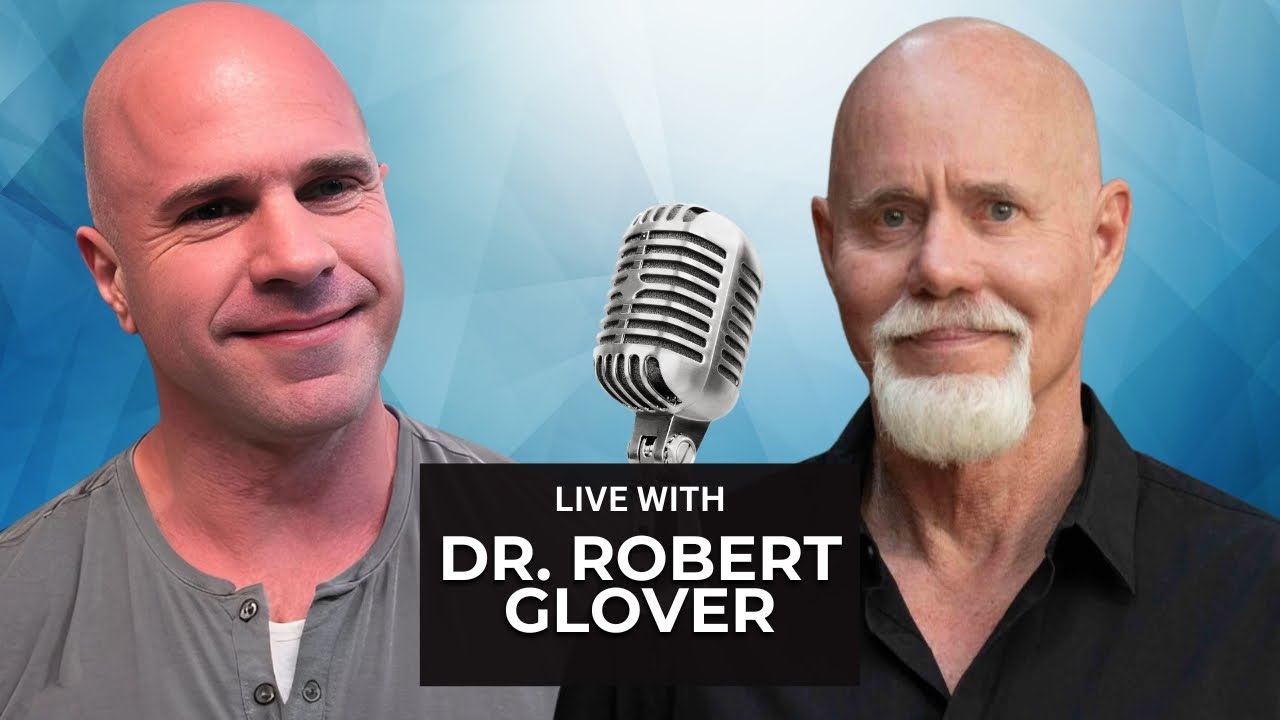
Ralph Brewer talks with Dr. Robert Glover, author of No More Mr. Nice Guy, about the three covert contracts that keep nice guys stuck, the trap of victimhood, and borrowed functioning in relationships. They cover what happens in long-term marriage when both partners stop growing, and why extreme focus beats constant moderation.
Chapters
Welcome everybody. It's your boy Raffaellito here with Mr., Dr., pardon me, Mr. Hello, what am I? Dr. Robert Glover, author of No More Mr. Nice Guy. How are you, Roberto? How you doing today?
I'm fantastic. It reminds me of when my wife, who's Mexican, so speak Spanish, which he calls me Mr. Control. No, it's Dr. Control.
Control, as in you're the controlling? Okay.
I've never been accused of being controlling before. So when somebody calls me Mr., I get controlling, man. It's Dr., you better get that right. So my wife actually calls me Dr. Glover as just, you know.
Oh, does she? Glover, okay.
Dr. Glover.
I don't know if I told you this or not, my mother is Spanish. She's from Spain. So my whole life I've been Rafaelito. Rafaelito. Rafaelito.
But Lupita, my wife, will not let people call me Roberto. It's so much easier. If I go to Starbucks down here and tell them my name's Robert, they go, "Robin?" I've had Robin written on so many cups. Why Robin seems easier than Robert, I don't know. And so I'll go, "It's Roberto." "Oh, oh, Roberto." They get that. But my wife goes, I married an American. I didn't marry a Mexican. My husband's name is Robert, is not Roberto. Okay.
I like it. She sticks up for you. Very good. Very good.
I think she's sticking up for the fact that she married an American.
She has to show that off.
I know this was really what we got online to talk about today. Yeah, that's right. But you know, it began with the whole control thing.
Yeah. Well, you know, for those, for those that don't know who the heck this gentleman is, this is Dr. Robert Glover, author of No More Mr. Nice Guy, which may be one of, if not the, most popular, best-selling, however you want to put it, self-help books for men, which dates back over 20 years ago when it was first published, if I am correct. Okay, very good.
Around 25 years now.
Excellent. Wow. And you have inspired all kinds of folks to get into the world of doing men's work. Myself, you're a huge inspiration for myself. And I got to say kudos to you that when I first started this years ago, You know, I sent emails to all the big names saying, "I would love to talk to you, chat with you," whatever it may be. And like a lot of nothing, occasional, "Hey, you know, buzz off," or, "No, I'm not interested." It took a few emails to you because you're a busy dude, but eventually Dr. Robert Glover said, "Yes, I would love to chat." And you and I have chatted via the podcast, I don't know, 2, 3, 4 times now. This is our first livestream together. We've done a live event together in Austin, Texas. So it's been fun. Been a good friendship and— oh, what's the word I'm looking for— partnership, if you will. And we've helped each other out as much as we can. And so I just want to say thank you to you, and it's been a real pleasure getting to know you and work with you. And it's one of the biggest names in the biz, so thank you.
And a rule of thumb, maybe, for people who identify as nice guys who we don't want to impose on people, and we think, who am I? Ask. It doesn't hurt to ask. You and I were chatting about that before we got on, about, you know, different people you know, we'd like to have on our programs to interview and, you know, reaching out. Sometimes they don't get back and we go, oh, maybe they just got busy and it just went down their email inbox. Ask. So yeah, it doesn't hurt to ask. The worst answer you can get told is no.
One of my positive/negative quirks, personality quirks of myself over the years is that maybe I don't have enough of a— and this has worked in my favor, by the way. Oh, I don't know how to say this. I am not above, like, if I'm in the elevator with the CEO of the giant company that I'm working for, I'm not above going, hey Bob, I'm Ralph, how are you? Very nice to meet you. And people are like, do you realize who that is? That's, you know, that's CEO so-and-so, Ralph. You don't just go up to him and shake his hand and say, hey Bob, you know. I'm like, oh, pardon me, I didn't know, you know, he was off limits. So I take that energy out to, you know, I've emailed all the big, big shots in this world and just say, this is— I'm Ralph, this is who I am, you want to talk? And I'm not like saying, "Oh, they would never reply to me." They may, Dr. Robert Glover. So what's to be, you know, what's the big deal?
You know, if you want to take this a step further, it's even bolder when you're standing next to them in the urinal in the public restroom. You say, "Bob, how's it hanging?" You know? I'm actually a big fan of chatting in the urinal. Are you?
Well, that's one of us. Okay.
It's almost as off-limits though as chatting in elevators. With strangers, but I'm also a big fan of chatting in elevators.
I'll do the elevator thing. I will draw the line at when genitals are involved. I will.
Well, usually there's a little partition in between, you know, so unless, unless you're in Japan, you know, you and I were talking, I just got back from Japan, uh, their public restrooms don't tend to have those things in between the urinals. But I tell you what, you, if you've been to Japan, they've got the best toilets. I, that's the thing I miss most about coming back, the The electronic toilets, the lid automatically lifts, the light comes on, the toilet seat warms, a light comes on down above the water, sprays a little bit on the water, flushes automatically, puts the lid back down. And we won't even go into all the options that are on the little device next to the wall that are all in Japanese, but they have some illustrations so you know what—
That's good.
You know where the water's going to squirt and maybe with— But yeah, these are even in public restrooms. These toilets are fucking amazing. So it's kind of like, how can you not talk to the person next to you while standing at these magical electronic urinals? It's just like, I mean, why wouldn't you?
It's urinal talk, ladies and gentlemen, with Dr. Robert.
There you go. You knew we got on it. You knew you kept persisting to talk to me for a reason, right? So we could chat about—
Oh, I could talk urinals all day long. Speaking of, you know, the worst is the trough. You know, the pee trough.
Oh, yeah.
Like it's some ball. Ballparks like Wrigley Field is famous. They have the big peach trough and stuff. That's just animals just standing around the trough.
I hate it though when they pile it full of ice, I guess.
What is that? I guess to cut down on the splashing, or—
I don't— I think, I guess. But you know, it just, it kind of gets cold though, you know, depending on—
yeah, it's pretty good.
You, you brought, you brought the trough, man. You cheated.
That's good. Yeah, I know, cold. Anywho, we got Justin saying hello. Well, hello Justin, guys. We got Dr. Robert Glover here with us today. Always takes a bit for folks to see that we are online and we are live, and then the questions should start rolling in. We got Dr. Glover here for the next 40, 45 minutes or so. Um, brought Dr. Glover here to say hello and howdy, take questions from everybody. He was kind enough to take time out of his very busy day. So thank you once again, Dr. Glover. And we have a bit of an announcement. I've already made officially the announcement to folks, but we can say it here again today that we talked about an event that you and I did 3 years ago now at Austin, Texas. Uh, has it been that long? Maybe longer.
I— it might have been coming up on 3 years.
Okay, 3 years.
Okay, because you, you, you did New Orleans, and then I think you did another kind of Las Vegas. Okay, so it's probably been Las Vegas, New Orleans, and now we got—
we got one coming up here in South Carolina here in a few weeks. Okay, that one sold out pretty fast, but we are announcing in 2026 we have an event coming up, BroFest. You can go to brofest2026.com and sign up. It's going to be in Louisville, Kentucky in 2026, March 27th, 28th. Sign up, brofest2026.com, and this young man here will be joining us for the weekend. He's going to hang out, have fun, do a little presentation, take questions, all that fun stuff, along with myself, a couple other special guests, including Lauren the Dadvocate, who's really huge here on Facebook and YouTube where you guys are watching this. So if you ever want to meet Lauren the Dadvocate, Dr. Robert Glover, join us, BroFest 2026. And thank you again, Dr. Glover, for joining us.
I'm excited because I've never been to Kentucky.
You haven't?
Oh, well, I've been close enough. I lived in Memphis, Tennessee, and I've got a cousin in the central part of Tennessee, so. But I've never been up to Kentucky. And, you know, I had to laugh that, you know, I, you know this, I shot a promo video for, for Bro Fest yesterday. And it's good that I'm going to make a trip to Kentucky because I don't know where anything is. But I got the city wrong in the video. And then you wrote back to the video is great, Robert, but it's in Louisville.
Louisville, not Lexington.
Lexington. I mean, they're both L words in Kentucky. How many L cities, you know, could there be in Kentucky?
And ironically, you picked the rival city to Louisville because there's a big collegiate basketball rivalry. Yeah. Yeah. Louisville-Lexington is a huge— that's Big no-no.
Yeah. Okay. So you're a UK guy?
No, no, I'm a University of Louisville guy. Oh, Lexington is University of Kentucky.
Yeah. Okay. You're not a UK guy?
No.
Well, they're a bunch of cheaters anyway.
Exactly. Exactly. Goes without saying.
Yeah, I grew up. They hire those big name coaches and so they can recruit all those, you know.
Yeah, that's the name of the game these days. Well, it's not cheating anymore. It's all above board now. They can pay the kids whatever anymore. So.
They can change schools every year now.
Oh, gosh. It's the portal, as they call it. Yeah. So, yeah. So Louisville is big with the horse racing, bourbon. I don't know. Are you— I don't even know. Are you a drinker? Yeah. You have the occasional cocktail.
I live in Mexico. I make an amazing margarita. I make great margaritas. I actually don't drink a lot anymore. When I was in Japan, I had sake. Because, you know, you have to really if you're in Japan. Um, but yeah, you know, probably the last couple of years, you know, I, I'll have a drink every 2 or 3 months and, you know, it's no, no moral issue other than I started counting macros a couple of years ago. And when you look at certain things of how many calories, you know, they've got, you go, whoa, I better cut back on all those handfuls of nuts I'm eating all day long. Or, you know, Man, even those eggs that are healthy have a lot of, you know, calories. So alcohol has a lot of empty calories. And man, when they announced, you know, I just saw 2, 3 months ago announcing, oh, alcohol causes cancer.
Carcinogenic. Yeah.
Kind of like doctors have known this for years. I'm going, how did the alcohol industry keep that a secret from the rest of us? You know, not only does it, you know, contribute to belly fat and unwanted calories and whiskey dick and dementia, but cancer too. So I thought, I want to keep— I want to keep the brain cells. I want to keep the heart going. I want to keep the dick working. I want to keep the belly fat off. I figure I'll just, you know, I'll drink occasionally when I'm in the mood.
So everything in moderation.
No, I actually don't believe that because you don't— we would have to say rat poison in moderation as well.
That's true.
Which I don't believe. And actually, I don't— we can dive into this. We'll move on from toilets and things like that.
Toilets and rat poison.
You know, a lot of nice guys will say that. They'll say two things I hear a lot from nice guys. One, I just got to find some balance. And number two, you know, all things in moderation. And you warned me ahead of time your contact was—
yeah, my contacts bother me. So guys, I'm not winking at you.
Okay. And you know, I think that's even a nice guy mentality. If I can just get the proper balance, or if I can just, you know, you know, do everything moderately. But that's what nice guys are trying to do anyway. We're trying to be moderate. We don't want to offend anybody. We don't want to show up too much. We don't want to be in too much of a spotlight. We don't want to be at the extreme. But in my experience, I, I don't know that I know any successful, happy person that lives a particularly moderate life. Most of the people I know that are kind of kicking ass and having a good time are often at the extremes. In some matters, maybe not with the rat poison, but they're at extremes. Maybe they're excessively in the gym, or maybe they're excessively working, or maybe they're excessively, you know, counting calories or investing their money, or they're doing something often at the extremes. And in my experience, when I'm really invested, well, I'm invested in work, when I'm invested in my personal health, when I'm invested in relationship, when I'm invested in keeping my home, I have found, for example, that I can only really and truly fully invest myself in maybe 2 or 2.5 major things at a time. I've tried to be invested in 3 or 4 things at a time and I can't do it. Everything just gets mediocre. So I'm actually really okay with being in moderate, unmoderate. I don't know what the correct pronunciation is, but at the extremes, if it is your calling, if it is your passion, if it's your deepest desire, go get it at the extremes. But I also am a big believer that we can cycle on and off of things. We don't have to be, you know, at the extreme of one thing all the time. I will cycle in and out of things. But trying to find moderation and balance in all things, I've never actually seen it be a recipe for success or happiness. So I'll just throw that out there for whatever your people—
yeah, well put—
maybe want to comment on that.
I mean, there's a— there is the thought of, uh, anytime you study anybody who has a great deal of success in whatever endeavor it is, whatever discipline, you will see an intense amount of focus. They sent— they had the thing, whatever the thing is that gives them that feedback loop of got to keep going, got to keep going. Maybe it's a guy who builds this business into a billion-dollar business and then sells it, and he really goes for it. The danger is when you're so hyper-focused and you crank it up to 11, you just said it, you have to know when to say when and when to say time out. You can get burnt out, panic attacks, burnout. These are things that are big in the entrepreneurial world. We were talking before about being an entrepreneur because we all seem to be wired towards want more, do more. I really love this. This gives me that boost I need. Go, go, go, go, go. Next thing you know, you've only slept 3 hours a day, and that's not good.
Yeah, you do have to decide, you know, which, which things you're going to be extreme at. And for example, I can't not pay attention to my physical health. So I'm, you know, pretty fanatical that I'm shooting for being in bed around 9:30 at night. I know for a lot of people, you know, they're up till 11, 1, 2. I can't do that. My wife does that. I can't do it. She'll go out dancing and having a good time and get home at 3 or 4 in the morning. I can't do it. It's not even my idea of a good time, but that's her. For me, yeah, dear, go out dancing, have a good time. Don't wake me up when you come in. I'm going to bed. And being in bed at 9:30. And, you know, since I started counting macros about a year ago now, and, you know, I'm down to about the weight I was at in my 30s.
Good for you.
I found— and, you know, I'm still tweaking a little bit at getting more consistent with my daily training because I think at any age it's important, but as we get older we lose muscle mass, so it's important. So I think you have to decide which things you're going to be at the extremes at. And I, for example, I won't sacrifice my personal health to be extreme at something else, but I found I can usually take care of my health and take care of my relationships and, and focus on the project that is in front of me. Now, my wife will tell me that, you know, she says, you work a lot. I go, you're right. But she's also a very happy woman for a couple of reasons. One, when we are together, I'm all there. I'm fully present. I'm not thinking about something else. I'm not distracted. I don't have my phone out. I'm fully present when we're connected, and that's satisfying for her. And the other thing is, is she's free to live her life on her terms. I think most people get into relationships and there's this fusion, there's this sense of obligation. You belong to me, therefore you should. You're my wife, you're my husband, you're my boyfriend, you're my girlfriend, therefore you should live like I expect you to. And I really encourage my wife to live the life completely that she would choose to live. And I tell her in Spanish, "Tú eres mía y tú eres libre." You're mine and you're free. I'll always be here, but live free, live life on your terms. And so because of that, she's not sitting around going, "When's my husband going to pay attention to me? He's working too much." She lives a full life. She goes to the gym an hour or two every day, goes to dance class every night, goes out for a dance social once or twice a weekend. Every few months she'll go to a dance event somewhere.
Good for her.
And, you know, and she's really living life on her terms, and she takes good care of her health. And, and so we can be at extremes even in relationship, but again, I think we have to be real conscious of how we're doing those extremes. It can't be an unconscious— you know, I often say that we live in a world where we bow down and worship at the altar of Navy SEALs. That, you know, if anybody's a high-performing— you don't even have to mention names, but you know, if their last name, you know, Goggins or Hormozy or people like that, we, I mean, we just love their, their content. And I, I do too.
Super high-performing, hyper-masculine.
But if you watch enough of it, you go, man, they're still trying to outrun some demon that there's not enough success, enough money, enough pretty women that will slay that dragon. This, this, you know, right behind, you know, fire-breathing dragon on your ass. So I don't think just being at the extremes for the sake of being extreme. I don't think just working a lot for the sake of working a lot. I don't think just going to the gym for multiple hours a day just for, you know, there is diminishing returns. But if we're trying to outrun are demons, those fire-breathing dragons, sense of toxic shame, not good enough, uh, imposter syndrome. You, you can't get— you can't live at a far enough extreme to outrace those demons. So I'm also a big fan of, of let's, let's deal with our demons, let's deal with whatever's in our past, whatever made us feel not good enough that we have to overcompensate for. Because living at those extremes I'm not sure serves us. But again, just, just my opinion. So again, very good. To summarize, I'm okay with living at the extremes, but do it very consciously in a very mindful kind of way.
Very good. We got Brian here, says hello from Nashville. Well, hello, Brian. He says he's a recovering nice guy. Glad to see two of my favorite resources chatting together live. Well, very good. Thank you, Brian. Appreciate that. We got Mike from the UK. Saying hello. And then we have Mr. Fight for a Better Now on YouTube. He's a regular on here. He says, I read your book and was wondering, um, are covered contra— oh, covert contracts is what he means to say. Are covert contracts formed from the expectation of reciprocation unfulfilled?
Yeah, good question. I'll, I'll go into that one. You know, he may be, um A little backstory. When No More Mr. Nice Guy came out as an ebook around 2000 and in print 2003, it also came out as an Audible version. And I asked to read it, but the company that gave us the contract had a professional voice read No More Mr. Nice Guy. And he had a little bit of a British accent. And people would complain. They said, Robert, How come you didn't read the book? I said, I didn't, I didn't get paid to do it. And he said, this guy says covered contracts instead of COVID contracts. And so after a few years, several years actually, I finally, I wrote my agent and I said, listen, we fulfilled that contract. The guy mispronounces covert contracts and everybody says, you know, how come I'm not reading it? And it only was distributed in North America. So I said, I want worldwide distribution. So my agent contacted the company that had the contract. They said, okay, we agree to cancel it. And about 2 weeks later, my agent sends me this email. He says, we encourage you to consider accepting this offer. And it was from the vice president of the company that had the contract and said, you know, we would like to keep your book, No More Mr. Nice Guys, part of our evergreen catalog. We believe Dr. Glover and No More Mr. Nice Guy are synonymous. We want you to read it. He said, we've only done this for one other author, but we would like to offer you an advance of $75,000 and $5,000 to come to New York and read it. And I'm going, okay, I just wanted to cancel the contract. Yeah, I didn't know I was going to get an $80,000 offer to come do it. Now, all that $75,000, you probably know this in the book world, in advance of— it's an advance on future royalties. So all it really did was boost my taxes. For the one year that I got the $75K. But he said covert, covered contracts. So the COVID contract, it basically is this. Nice guys tend to operate by three primary covert contracts. And covert because they're hidden. They're unconscious, often from the nice guy himself, but surely from everybody else, whether it's a partner, a friend, business, God, whoever, the contract is secret, is hidden. And the 3 covert contracts of nice guys, number 1 is that if I'm a good guy, I will be liked and loved, universally. And the woman I desire or the person I desire will desire me back, 'cause I'm a good guy, right? Covert contract number 2, they're all if-then propositions and they're all subtly at least manipulative. Covert contract number 2 is that if I meet your needs without you having to ask, then you will meet my needs without me having to ask. So I think if I read your mind and do nice things for you, you'll appreciate me and you'll give back to me. Even if you don't give back in a completely unilateral reciprocal way, you'll at least appreciate the hell out of me for all the nice things I've done for you. Now, unfortunately, this model doesn't work for many reasons. Covert contract number 3, that if I do everything right, then I will have a smooth, problem-free world. And this is kind of the 'I don't want to grow up' Peter Pan-ish view of nice guys who want to just hang out in the nursery. I'm a good guy. Everything should go my way. Nothing should ever go wrong. Now, responding, you know, back to the question, I heard a quote from Neil Strauss that I absolutely love. And he says unexpressed expectations are premeditated resentments. That's covert contracts. I have this premeditated, you know, unexpressed expectation to you, and you are— I am going to resent you because you're not going to know what my expectations were, and therefore you'll never fulfill them. Okay, add to that that we nice guys are terrible receivers. We don't typically let people give to us, all the while thinking they should. How come they don't give to me more? So yeah, the question is really a great question. And again, I love tacking that Neil Strauss quote onto the whole covert contract dynamic of unexpressed expectations are premeditated resentments, because that is what happens. Nice guys tend to get very resentful and frustrated and even rageful. I know those don't sound like nice qualities. Yeah. But they're very common nice guy traits because we are living with our covert contracts and the world, God, people, you know, are not living up to our expectations. And so as typical nice guy behavior, we just double down and do more of what's not working. We give more, we try harder,, and we keep getting more and more resentful, frustrated, rageful even, which always comes out as either withdrawal, passive aggressiveness, which is an indirect expression of anger, or even something my second wife used to refer to as victim pukes, where something would build up so long. Every, you know, every, you know, we nice guys rehearse these little dialogues in our head, things we want to say to people that we never get around to saying. And you know you're living in covert contracts when you are feeling frustrated and resentful, even rageful, and when you are rehearsing these conversations where you want to let people have it for how, you know, they're not living up to their reciprocal, you know, expectation for everything that you've done. And then with the victim puke, all of those come out. Little straw breaks the camel's back, and it's ugly. It's not nice. I remember my ex After the, you know, the dust would settle and the puke would get cleaned off the walls from me vomiting out all my resentments, she'd say, "How long that been bothering you?" I go, "I don't know, 6 months maybe." She goes, "Never crossed your mind to just bring it up?" "No, actually I never. I rehearsed it a lot, but I never thought I'd actually say it to you because I thought it'd piss you off if I brought it up." She says, "So you think this method's better?" No, I can see the flaws in it, but I just didn't have one that I thought would be more effective. So that is the, that those premeditated resentments and the not so nice behavior that can follow from nice guys when they're living in their covert contracts.
And some of the premeditated resentment is ironically, oh, purposeful in the way of, and a way of kind of holding over the head of in this example, Mr. Nice Guy holding back on something. I'm, I'm picturing the guy kind of crossing his arms and pouting and watching, saying, I know what she's going to do. She's going to do the thing that I don't want her to do, or she's not going to do the thing that I want her to do. Watch, watch. Oh, there it is. There's the thing. It's this premeditated— you're almost sabotaging, waiting for her to fail so you have it over her, like, you have failed me again. It's almost a kind of quasi-narcissistic thing. I don't know what it—
what you call it. Let's call it full-blown victimhood thing.
Yeah.
And you know, there is a seductive energy, maybe even dopamine payoffs for being big, for feeling victimized, whether you're a victim or not. Well, you know, we probably all have had a pity party or two where we just wallowed in our mistreatment and how bad we, you know, how mean people were, how unkind or uncaring or this this or that. There is, there is some emotional payoff. I think there's actually an evolutionary payoff for feeling victimized. And, you know, once we get into that place, well, I've done this and they haven't done that, or they didn't appreciate me, or they keep doing this and it's not fair, and, and we just go deeper and deeper, you know, into that, that whole victim state. And I tell you what, yeah, when you are in that victim mentality, you'll see all around you proof and evidence to support your belief that you truly are a victim. I mean, confirmation bias will really— look, there's another example. There's another example. And this may be just towards an individual, might be a parent, it might be a sibling, it might be a boyfriend or girlfriend, a spouse, a coworker, a best friend. It might be towards women or men in general, depending on which side of that gender fence you're on, where we can just, you know, and I think social media and the internet's just really propagated that whole victim mentality. Like everybody's a victim nowadays and it's seductive. Again, it kind of feels good to wallow around in it. But I tell you what, It doesn't serve us or serve the world to be in that victim place, but it's so much easier to blame everybody else than just take some responsibility and accountability for what's happening in my life and make some different choices. Well, it's their fault, they should change. Well, fuck, if that's the way they show up and I don't like it, I guess I need to make some changes. That's on me. But again, it's a whole lot easier just to, you know, flame them on social media.
Yeah, and we tend, as human beings, we tend to gravitate towards the easy, you know.
Oh, really?
Yeah. If something looks like it's going to be a little, just a little bit more difficult— oh, look, something shiny and easy over here— they'll go towards that. And the victimhood is super easy to do. It's, it's them.
It's funny, I, I kind of always go towards the difficult. Oh, this person, uh, she's in a bad mood. I can fix that. This person, this person hates men. Oh, I can get her over that, you know. Yeah, I, I tend to take on those big challenges, and then I get resentful. Wait a minute, I'm the good guy. I was different than all the bad men you were complaining about. I'm different than your ex. How come you don't appreciate me and treat me different? Yeah, we set ourselves up for it a lot of times.
Yeah, we do. It could be argued though you are taking the easy way out because you are, um, acting out some kind of innate program programming with you from childhood and so forth that you go after the work environment. So it's easy for you to, oh, I know this, the damsel in distress. I can fix this. And the hard thing is to say—
Captain Save-A-Ho, I know that one by heart. Been there, done that. Started with mom when I was just a few weeks old. Let's take care of mom. She's unhappy. She's mad at dad. Dad doesn't treat her well. I'll be the good man. Yeah. Yeah. Most of it is already wired into our nervous system. We tend to go out and co-create systems that feel familiar for us. And that's why trying to get the other people to change doesn't work, because we'll just— we'll actually reinforce the behavior we need them to show, or we'll go find somebody else or some other situation that feels familiar. And that's why people go into couples counseling. As a marriage counselor for 25+ years. If the marriage counselor just kind of figures out whose side, who's right here, whose side do I need to get on? They're not doing them any favors because both people have co-created that system or that system wouldn't exist. If both people didn't need it to be exactly the way it was, it would be some— something else. So that's what you have to dig into is why have we co-created this system? The two of us, uh, whether it's you and I or partners we've got. What— why did this let us play familiar roles or meet old needs? And if we can't get a handle on that, we'll just keep repeating it over and over again.
You got it. And we preach that often in our world, don't we? And that's probably one of the most difficult messages to get across, is in this next question here, or comment rather, from Jay, kind of exemplifies this. This victimhood, if you will, is so ingrained in our everyday behavior that we literally don't see a way out of it. Like, I have no choice but to be a victim. Gosh darn it, what are you— what are you people talking about? And Jay here says, um, it's my wife who chose to completely remove all affection, touch, gratitude, and sex from our relationship. I don't want to be a victim, but I can't fix her decision. This is on her.
Well, Jay, been there, done that. I can top that. Uh, on my honeymoon to my second wife, A relationship that began as an affair. So we were both in relationship. So like most affairs, it was highly sexual. On our honeymoon, she said, aren't you glad now that we're married, we don't have to pretend to like sex anymore? Well, I was a true blue nice guy. I had not begun any work on myself yet. I thought, oh, I can fix this. I actually kind of saw it as, you know, oh, challenge, challenge. I'll be the good guy. I'll get her over this. And 14 years later, I hadn't, right? 14 years later and hours and hours of therapy and $100,000 of therapy expenses. I now say that was probably, she told me one time, she said, "We probably spent $100,000 on therapy." She loved therapy. She was a therapy junkie. And I now say it was probably $80,000 too much to figure out the marriage wasn't gonna work. So the truth was, You know, yeah, she changed. You know, she announced on our honeymoon, you know, basically, I don't wanna have sex with you anymore. And that basic underlying dynamic stayed pretty constant throughout the 15-year marriage. And I stayed. I stayed.
That's on me.
That's on me. So do people change? Yeah, they do. And I mean, I'm not saying getting out of some, some relationships or some dynamics is necessarily easy. And you've heard it. I've heard it from countless men. Well, I made a commitment for life, or there's kids involved, or money, or we're mutually in debt together, or, you know, I make a lot of money and she'll take half of it. I always tell guys, hey, she's got— she's got 100% of it right now. And there's not a judge in the world that's going to tell your wife to quit spending your money. But if you get divorced, Actually, there are judges that will enforce that. So I get it. I stayed 14 years and kept thinking it'll get better. And that was my covert contract. I can make it better. If I get better, if I, you know, whatever, you know, she'll get better. And she didn't. She didn't. Now, did I grow a lot? Did I write a book about it? Yeah, I'm amazingly grateful. Tell the listener, unless you're writing a book about it, they're gonna pay you six-figure royalties 25 years after the fact, you might want to consider, number one, the two of you getting into therapy with a good therapist and finding out— is there more than— because here's the thing about that whole sexual dynamic and relationship. Again, I've been a marriage therapist for over 40 years. There's never just one simple little tweak that unravels this sexual dynamic relationship. You know that it's too simplistic to think, well, it's just this or that. It can be so many things. It can be childhood sexual abuse. It can be other traumas. It can be, um, just a repeated, you know, one person letting the other person down and not following through and not keeping their commitments. It could be that one person is getting— trying to get all their needs met through sex, and they're in an empty bucket walking around trying to hook that up to their partner. And the partner's going like that. It could be one of them's a clumsy lover, one of them just sucks in bed, and the other one doesn't want to do that. And sucks in a bad way in bed. Um, it could be so many things, and it's never just one thing. And so to say, well, here's the fix to it— you know that there's no easy answers. But number one, get into therapy and find out, is there some things that can be addressed and dealt with? And then number two, If it can't be, decide if you're going to stay. And if you stay, you quit complaining, you accept it is what it is, or do you need to go? And if you go, you go without resentment. But that's what mature people do. But again, I was not one of those mature people for a long time. I stayed. I was a victim. I complained, hoped it would get better. I have a little quote I used to keep on my refrigerator said, hope keeps all suffering in place. So hoping they're going to change or get better. Nothing to bank on there.
That's a good one.
Keep you suffering, keep you in resentment. But again, it's so seductive to be in that victim place, you know. Oh, it's bait and switch. She changed the terms. I'm helpless. No, we're not. No, we're not.
Yeah, you know, with your situation, 14 years before the divorce, you could have very well said, oh, that's not good, sweetie. We need to talk about this. Maybe, maybe this was a big mistake. Maybe we should talk to somebody about annulment or something because We're obviously on two different, you know, got two different ideas.
Assertive, you know, and again, going back to what's easy. I was already in that mindset of how do I fix an unhappy woman. I, I knew she was an unhappy woman already. I already knew all the problems she had in her marriage because she was married when we met.
And that appeals a great deal to the, uh, the whole male, oh, sentiment of life tests you, life throws a lot of tests at you, and you're a man and you overcome them. You're like, I got this, and you put on your work boots and you get to work and you overcome them. And that was one such test. But unfortunately, the, the— you missed the solution, which was to go, I'm going to go over here then, as opposed to I'm just going to stay right here and continue hammering my head over and over again and hope that, you know, the headache stops. It doesn't work that way. And Jay, that's what we're saying to you, buddy. You sound very victimish, like helpless, like, man, I don't know what to do here. The woman just shut everything, every bit of affection off. Well, you could say we're going to work on this, or Jay goes elsewhere.
Well, you know, one thing I did do towards the end of that marriage, you know, about 2 or 3 years before it ended, I was in couples therapy with, with my then-wife. We'd gotten out of it for a while, and I got us back in, and I said, listen, I am gonna have sex. And I said, but before my wife, my then-wife, and the therapist, who's a woman, I said, just because she doesn't want to have sex doesn't mean I I shouldn't. I said, I am gonna have sex. I'm gonna walk through open doors of opportunity. I will not get emotionally involved with anybody else, and my preference is that I have sex with you, my wife, but just 'cause you don't have sex doesn't mean, don't wanna have sex doesn't mean I shouldn't. And I said, I am gonna have sex. And both my then wife and the therapist just nodded their heads. What else could they say? I mean, it made perfect sense that I didn't— there was no reason why I shouldn't be having sex just because the person I married didn't want to have sex with me. And that shifted everything for me. And then later on, I did walk through an open door of opportunity. My wife found out about it and she said, I, you know, I want you to leave. And I go, okay. I left.
Say no more.
About 2 weeks later, she said, I want you to come back and work on the marriage. I go, ain't coming back. Yeah, it was too hard for me to get out. I'm out. I'm not coming back in. And so that was the best thing that I did in that marriage, just to say, I am going to have sex. And I said it out loud. It wasn't hidden. It wasn't a covert contract. It wasn't manipulative. It was just stating how I was going to live my life moving forward. My preference was to have sex with her, but just because she didn't want to doesn't mean I shouldn't. And, you know, it took a while to get to that place, but it It was amazingly liberating.
Just curious, assuming she's still around, do you still have somewhat of a relationship with wife number 2 there, friendly or otherwise?
I assume she's still around. I haven't heard otherwise. Okay. Another backstory. My first 2 wives— I've been married, I'm on my 3rd marriage. Lupita and I have been married 8 and a half years now. My first 2 wives actually Both of them remarried within 2 weeks of our divorces being final. Both of them. Which made me wonder, how important was I? So 2 weeks. And then my second wife, I think, then filed for divorce about 6 months later and then got married again. I don't know how that's gone. I stayed more in touch with her kids, my stepkids, than I did with her. But about 10 years ago, she reached out to me and said, I'd like to come to Mexico and chat, and I was dating my then-wife, my present wife now. And I told— she was my girlfriend at that time, Lupita. And I said, oh, you know, my ex-wife wants to come talk to me. I said, I don't think I want to talk to her. And she says, I think you should. Said, she either, you know, wants to say she's sorry or fuck you. And I said, well, she's not real good at I'm sorry, you know, that wasn't in her vocabulary. And she wasn't actually real good at the fucking part either, at least not while we were married.
Not post-nuptial.
And so, you know, she— I met with her and we had a coffee at a Starbucks and just chatted some about the past. Very casual conversation. Talk some about my stepkids and how they were doing. And she made a comment. She says, you know, I used to think, you know, everything was so terrible between us. But, you know, it wasn't always that bad. And we were actually pretty good parents. And I go, yeah, we were actually. We parented pretty well. You were always at the extreme blowing up and I was always keeping things calm. And actually, you know, the kids—
good dynamic there.
It worked. But we actually were on the same page without a parent. So that was the last conversation I had about 10 years ago. And it was very calm, casual conversation that didn't involve any apologies or any fucking. But, you know, she, you know, seemed very calm and centered. And it was a very pleasant conversation, like her version of closure.
She just needed—
I think it was. I think that was really her coming and doing— I think maybe she was— I'm just projecting that maybe she was doing some of her own work to clear up things from her past. And I think that's probably all it was. And I was fine with that.
And I think she exemplifies something that we see often in our world with the dead bedroom stuff and the nice guy thing is that there are some people, not just women, This isn't a gendered thing. It sounds like, with what little I know, what you shared here, that she is of the type that that initial honeymoon phase, getting to know you, and if you layer like the energy of an affair on top of that, it's extra invigorating. Like she really, she really thrives in that sexually. And as soon as, as soon as it becomes real and for sure, and like we're getting married, you and I, this is a safe, secure thing, that just shuts down. It's like, eh, all the, all the oomph is gone now. And, you know, a lot of people like that.
Without going too deep, because I don't know my, you know, my one, one takeaway after that relationship was that I think due to trauma, you know, I don't want to, you know, throw her under a bus in a public way. I think she was wired that she could only have sex with people she wasn't supposed to. And once she got into a committed relationship where now there was an expectation of her of sex. I think that brought up old trauma that, that just shut her down. Um, so anyway, without going, you know, too far in the deep, and I'll just say again, I'm actually very grateful for that relationship.
I was going to say she was integral to your, your development.
Grew a lot. I wrote a book. Um, and I'm grateful for where I sit today, and she was an important part of of my life journey. So I'm— I have no resentments, no negativity towards her. I wish her only well, and I believe she knows that. And so I'm grateful. She's on my gratitude list, as my first wife is as well. She's mother of my son, and I'm grateful for both of them. I made plenty of mistakes in both of those relationships. I bear plenty of give the blame, uh, for what didn't work. But I grew tremendous amount from both of them, so I'm grateful for that.
Well, what more can you ask? If you can, you know, unfortunately there's a lot of pain involved, but such is life, you know. It's not all rainbow and sunshine. Sometimes you got to learn the hard way and go through hell, right?
I, you know, I tell people I had a PhD in marriage and family therapy at 29 years old, but I've still bumbled my way through every relationship because number one, They're not part of human DNA. Pair bonded, sexually exclusive relationships with a member of the opposite sex that lasts a lifetime. Our human ancestors never did that.
That's why it's such a struggle.
We've been trying to do it for about 10,000 years. Once we quit being tribal and decided to move to what's called an ownership mentality, or often called the patriarchy, um, it hasn't worked, but we still keep thinking it should. This should work. It should be easy to find my soulmate. It should be easy to fall in love. It should be easy to find that one person who's going to bless my life, who I want to be with forever, and she'll want to be with me forever, and it should be easy to be together forever. No, it's not, because it's not in our human DNA. Now, if we do it consciously, I'm actually a big fan of relationships, even though I bumble my way through them. I keep learning a lot. I love David John S. Narchez, who wrote Passionate Marriage, I love his phrase of calling conscious relationships powerful personal growth machines. I think whatever our human mind thinks the opposite sex is going to do for us is typically wrong. But if we accept our partner as a gift to help us grow, man, that's nothing but good is going to come out of that, even if it is frustrating and painful and create struggles. Well, that's where the growth comes.
And unfortunately for nice guy types, which for those that don't know, I guess you could say it's a slang term. That's how I often describe it for codependent types. Codependent.
Yeah. Simp is another term that's commonly used with the younger generation.
Simp is the new one we hear. Yeah. So the unfortunate layer of complexity on top of everything we're talking about is if you're of that flavor persuasion, Mr. Nice Guy codependent type, you tend to pick types that make things even more difficult for you in the relationship game, a lot more difficult for you, and people that you probably shouldn't be in relationships with to begin with, like wife number 2.
But we don't know that because it feels normal. Like, I'm amazingly attracted to unhappily married women because my first love object was an unhappily married woman. It was my mother.
Mother.
And that just got wired into my nervous system. I can, I can spot a sad, unhappy woman just energetically. Now, once I became aware of that, I had to start making different choices about how I did relationship. And that was actually the challenging part. As you said, the easy part, which is going with what, what came naturally. So I had to start making different choices. Now, another word for codependence So I'll talk about this for a minute and I'm going to have to wrap because I got another livestream coming up. Um, I did not use the word codependent in the book No More Mr. Nice Guy, and that was a conscious decision because at that time the only books or only real writing about codependency was either the partners of addicts. So that's where the word originated. They were, they were, they were codependent, dependent on their addicted partner, and it was primarily directed at women. And you know, the books like Women Who Love Too Much and Codependent No More and Overcoming Codependency and a lot of books for adult children were aimed at women because I guess maybe women bought the books. So I consciously did not use the word codependent, but that's what nice guy syndrome is. It's codependent. The COVID contracts are the basis of codependency. Now another term that I like even better that I think is more descriptive is called borrowed functioning, that codependent relationships are actually borrowed function relationship, meaning I only have meaning or value or identity in relationship to you or this other thing. If I have a good-looking wife, I get identity from that. If I have a partner who has problems, I get identity that she needs me to help her fix those problems. And if I don't help her, she, she won't find a way out. And that can be really messy because if my identity comes from her having problems that I help her fix, I will actually sabotage any progress she makes because if she actually gets better, she might not need me, so where's my functioning? Where am I needed? Now, I mean, for example, even it can be as simple and weird as my dog. I love my pit bull Nala. She's just the sweetest dog. Everybody loves Nala. I get so much joy out of that dog, but I get joy out of people loving my dog, which is a form of borrowed functioning, right? Because other people love my dog, I feel good inside. Well, what if I didn't have that dog, or what if people didn't love her? Who would I be? Would I still be me without Nala? Would I still be me without my partner? Would I still be me without No More Mr. Nice Guy, without my book? I've pondered heard that before. How would I view myself as my identity if I wasn't Dr. Glover, if I'd not written No More Mr. Nice Guy, if I had not accomplished what I've accomplished? Who would I be? And it is so easy to get our identity from all these other things external to us, even if they're the things we created or accomplished. But they're not who we are, and they're not our identity, and they're not where we get our value. But this We're getting right at the end of the call, pretty deep stuff.
Yeah. Yeah.
So, so you may ask, where are you getting your identity? What, where's your borrowed functioning? Is it through, uh, do you think, well, I'll never be valuable unless I have a girlfriend or a wife, or, you know, or my wife isn't attractive enough, or my job isn't good enough, or I'm not in good enough shape, or I'm not good looking enough, or I'm not tall enough, or what are these things that we think define us for good or for bad that truly have nothing to do with who we are as a human being, have nothing to do with our true essence that existed before birth, that's existed through life, that will exist when we're dead and gone. You know, who are we really? And when we start digging down into that deep work, we can start kind of cleaning up some of this borrowed functioning codependent relationships we have in our her life.
Very good. Wow, what a perfect ending. You've done this a few times.
I, I get asked every now and then about nice guy syndrome.
This— hey, a total separate question, do you ever get tired of this?
I haven't yet.
I haven't yet. That says a lot.
I, I typically average week do 4 or 5 interviews a week, so I, I, I talk about it a lot and I, I I still enjoy it because every conversation is different.
Yeah.
And, um, and I love getting those emails. Maybe it's still borrowed functioning when people say, Robert, thank you, your book changed my life.
Sure, sure.
I'm grateful to you.
Validating.
Um, I, I, I, I like getting those. I don't depend on them, but, but I like knowing I make a difference. And I think most of us do.
Yeah. Well, I, I love our chats because every time I leave with a little something extra, a little nugget of info that makes me— I like that. And then you explore it further. I mean, that's what these all about, right? We learn from each other. So guys that are watching this, yeah, Dr. Robert Glover, if you haven't yet, go get a copy of No More Mr. Nice Guy. Check out Robert's group, Integration Nation, which is a private community for men.
And you have your open enrollment going on right now, right now, started yesterday, going through Thursday. So people are watching this live. Yeah, you know, this is so fun because there's so many great men's membership programs out there and you've been doing this long before me. And I love that, you know, I have people like you and Connor Beaton and Trevor Bowen and, you know, all these other guys that have great men's programs. I have them on my program. You guys have me on your programs because we're all committed to helping men do their work. And it's none of this, you know, competitive. Oh, he might get somebody. I just love that we're working together for the same cause.
Absolutely. I always say if there's a guy that comes to me and says, Ralph, I think I'd I prefer to go to Glover's group. I tried it out. I like it better. I said, go. What am I going to hold a gun to your head? No, you must be in my group. Gosh darn it. No. The end game, we can't lose sight of it, is just to help out dudes. We got a lot of dudes out there that are hurting, need some help, need an extra little boost over the wall. They get it through you, through me, through whoever. Fine. Go get help. That's all we ask. So, Dr. Glover, you're one of the best, my friend. Thank you so very much. We appreciate you.
And I'm looking forward to BroFest Louisville, Kentucky.
Or as they say locally, Louisville. Louisville. Yeah. So it's Kentucky, you know.
I lived in the South for 11 years, so I picked it up from there. You know, you know. Like, it's not New Orleans, it's New Orleans.
New Orleans or New Orleans.
Yeah. Yeah. Louisville.
BroFest2026.com. Check it out, guys.
All right.
Dr. Robert Glover, thank you so very much.
Ralph, always good to talk to you.
Always good talking to you. Thank you. Alright.
I'm close. 99%, it says.
More from Ralph


Why Women Emasculate Men — and Why You Must NEVER Cave | Alison Armstrong Interview








Sexless Marriage… She Said She'd Rather Get a Divorce Than Have Sex With Me Again