Sexless Marriages/Dead Bedrooms - Advice vs Reality - with @drpsychmom
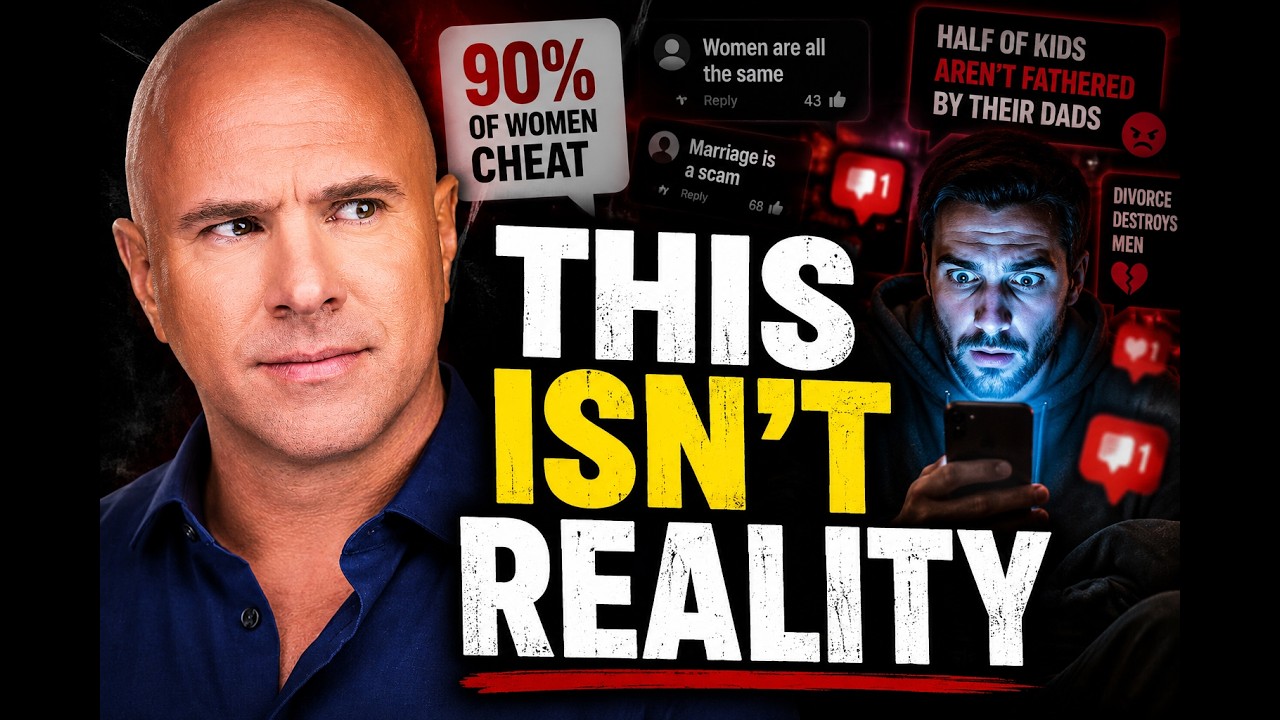
Ralph Brewer and clinical psychologist Dr. Samantha Rodman discuss why marriages become sexless, exploring attachment styles, control dynamics, and how neurodivergence like ADHD shapes intimacy. They examine why men avoid support groups while women seek them out, and why rigid relationship rules often backfire.
Chapters
Royally entertaining so far. What's been up with you, Sammy Sam? What's going on in your world?
Pivot like that too.
What's, what's new?
We have, uh, 2 therapists now, uh, licensed in California. Oh, you're not even licensed in California. We have one licensed in New York, so Best Life is expanding and, uh, We got like, I don't know, over— I don't know how many people we have because we have like 9 therapists, but then we have like 5 coaches, and then we have a therapist who does coaching. So yeah, we got a lot of people and they're all sex-positive, relationship-friendly. And, um, you know, so if your people need, uh, you know, a therapist, a coach, anything like that— my women's midlife group is going well. If you're all— people have wives, which some of them do, some of them did, some of them want to, but you know, if anybody's wife Does. That's fun. I mean, we meet every other week, we talk about midlife issues. We were just talking about sex and hormones and all that. Like, a dozen— no, not a dozen, a dozen showed up, but like, we got like 20, you know. So that's awesome. An hour every other week.
Very cool. But for women, you know, something I run into every now and then, um, I, I am not opposed to throwing men under the bus when it comes to some of our little manly quirks. And one of those quirks is a lot of us like to control a lot of things in relationships. And we're called out on it a lot as men, like we're trying to control everything. And one of the controlling things for a lot of, um, anxiously attached men is to have friends.
So then they— right, is that what you're gonna say?
Or they— or they're worried about that new group that they joined. Like, my wife has joined a group for women going through perimenopause or blah blah blah. What I'm worried is she's going to talk to a bunch of angry women and she's gonna end up divorcing me, or she's— or life's going to become miserable because she's going to be more miserable. Yeah, now the men have a point to some degree because women tend to be kind of, I guess you could say, more pliable, more social, and more— however you want to frame it— to where, um, men tend to be more, I'm just going to stick to myself and watch my YouTube videos or whatever else. Unfortunately, trying to get men into a support group and a support community is a little tougher.
Yeah, every— the majority of people like group norms, and a lot of those men are also scrolling on Reddit in, you know, looking on social media, and they are— that, that's the whole manosphere. They're learning a bunch of toxic stuff, and people will say much more extreme stuff, as you've pointed out and as you and I witness every day, than women in a Zoom session with me who are like learning about attachment theory, you know. So it's so much better to talk to people in person, or virtual— like a person, like with a face, because if you're just like typing all over the internet, you get down these rabbit holes that make you crazy. And that it's like AI, you know, how we— how I led to psychosis. It's the same thing in the echo chambers of the internet.
Oh, I get, I get men on a daily basis who are convinced that 90% of women are committing infidelity, um, that half of the kids out there are not actually fathered by the person that is, you know, supposed to be their father.
90% of women with a college education get divorced. How would that happen? It's in fact the opposite. Of course, the more education, the lower the likelihood of divorce, but You know, nobody listens to anything, so it's no point.
Well, there's, um, I've talked about this, you know, this is one of the topics that if I go on to it, it gets next to zero engagement. Like, people don't watch it, people don't talk about it. And that is the concept we've talked about so far, because we don't talk—
we're not talking about sex.
There you go. Well, victimhood. Victimhood is contagious.
But I framed it different. I said, does your partner play the victim?
There you go.
Yeah. And it's memorable for me. No irony, you know, I wasn't even trying to do it, but I'm like, why is this one on accountability getting so many hits? It's because I framed it differently. Doesn't someone else in your life need some accountability? I was like, oh my God. Hey Ralph, did you take the Overtrovert test?
The what test?
Ralph, come on, man, we don't even have any watchers. You can take it right now, probably. Um, this is an entrepreneur They're definitely gonna be— what I think you're gonna be one. I'm one. Am I allowed to comment in this?
I don't see why not.
Yeah, but like, I can't unless I— I can't comment. Private chat. Oh, here, you keep this and show it to some of your men. It'll lead to a lot of good talks. It's about people who are not good with group norms and who don't let the consensus tell them what to do and who are Yeah, right. I don't even have to describe it more, but I have this dude on my podcast. I really liked him, and it would be interesting to you as just to understand your own self. Your wife would like it.
It's interesting. I've always been, uh, like, you know, welcome to university, Ralph Brewer Brewer Brewer. Do you want to join a fraternity? And I'm like, I'm not a joiney kind of guy. I don't want to be in. No, I'm not.
But then ironically, you like leading your groups, right? And they have a special thing for that on the list where it's like, um, charming and friendly in groups when has a specific role.
There you go. Yep.
Called the leader, you know.
And if I'm being honest, a bit of an ego stroke. I'm the head dude in charge and it fills me with a purpose and it makes me feel better about myself versus—
When I was like my friend's vice president campaign manager in middle school, that was better for me than if I would, you know, which is like not the leader, but it's just like a specific thing that then you do that thing very well. You don't have to engage in like the endless nebulous small talk stuff.
Speaking of ego, you're— you, you get around a lot with all your material. Have you been recognized out in public yet?
That has happened to me. Um, it happens about on average maybe once or twice a year because I am a psychologist of the community. And it's always like some sweet woman who comes over and she's like, are you Dr. Psych Mom? And actually was a guy most recently in the summer. Um, I was at a festival and um, you know, like a— one of those things, but not like a festival, not like Burning Man, like one of those things where they sell like fruit, you know, I mean, like a farmer's market. But it was like at night, like that kind of thing. And he recognized me, and he recognized me two times. I saw him at the same place a different year. I took a picture with him. That one got a lot of engagement.
I mentioned this because I was in Las Vegas here My birthday is coming up here soon, and a couple of old friends of mine— a couple of friends of— yeah, friends that I haven't seen in a couple years, like, let's get together. We met in Vegas for the weekend, and I was just walking in my hotel lobby, and some dude goes, 'Excuse me?' And I was just like, 'Yes?' He's like, 'You do a podcast?' It's like, 'Yes, I do.' Cool. Proceeds to tell me his life story. He's 72, wife's 74, and then on and on and on. That's about the 12th time that's happened to me or whatever. And so I'm like, nothing, minuscule amount of celebrity, if you will. I can't imagine that when somebody's like on the TV on a daily basis or whatever, and they're right—
how am I— list celebrity, so feel free.
Yeah, but you know, I was like, I'm in Vegas, what if I'm not wanting to be seen, I'm wanting to be private or whatever, and here I am in a crowd and some dude just like Hey, I'm like, well, shit, there goes privacy. There's good, you know, trying to be by myself or whatever, or get away with something. So yeah, I gotta, you gotta watch it. Um, but, uh, the best was the guy who came to do the security updates on my home security system, and I opened the door and he just stares at me and he's like, how do I— he's like, how do I know you? And I was like, I don't know. And then all of a sudden I go, oh wait, do you happen to watch? And he's like, Dad Started Over, I got your book. I was like, oh, that's awesome. So hello Josh, if you're watching. So, um, uh, yeah, we got some comments here. In your personal lives, when it comes to your family, friends, co-workers, which has a more promising longevity so far? A fast courtship versus a slow courtship for a couple. What?
I know what you say, Ralph. You say that they— you're supposed to wait to get engaged, right? And then I say you're not. So we could do that. Go ahead.
Oh, okay. Is that what you're saying?
That's what he meant.
Oh, is that what he means?
Okay, so he's on my thing, on my—
oh, I see what he said. Okay, yeah, I'm having a, I'm having a blonde moment. Get it? I'm bald. So yeah, here's, here's my take on it, and I can totally see your point of view, especially from a young lady. There was a lady here recently, a young lady in her 20s, who did a video that went kind of viral in our world, and she was saying, um, guys, I've done the math. Here's the thing, um, I'm a woman who's gone through school, post-grad, career. I want to find a man. And she's, she's laying it all out, and she says, I need to find a dude. I need to date a bunch of guys. I need to find one man. We need to— and I think she, in, in her little spiel, said, we have to date like 2 or 3 years, and then we get engaged, and then our engagement is going to take a while, and then we want to have a honeymoon period as a couple, which is going to be at least like 2 or 3 years before we have kids, right? She goes, I'm doing the math on this. She says, I gotta like get started like 5 years ago. She goes, it's already like too late for me. And she was like 29 or something like that, you know.
So she's like, 29 starts to feel hard because you've already had friends with infertility.
Infertility.
Yeah.
So I can see from the point of view of a woman when you got this guy and he's just like, let's just hang out for a few years until we decide what we're gonna do. And she's like, dude, I don't got no 3 freaking years. I mean, come on. But in the man's defense, I talked to these guys who are just like, met a woman 2 weeks ago, I'm in love, she's moving in. Dude, easy, easy, you know. And what often happens is it's what— it's not until month 6, 7, 8, 9, year 2 that they go, it— the, the thing just came out, whatever the thing is, and thank goodness I found this out versus when we were talking about getting married last year. So I hear enough of those stories that it just colored my perception, all this. I'm sure somewhere in the middle is the truth, but to guys I always say like Who am I— who am I speaking to, Samantha? The guy who's been there, done that. He's got the kids already, he's got the ex-wife, he's— and he's fallen in love with somebody. I'm like, just give it a while, dude. Just you two, you're in no hurry. Date. 36 months goes by like that. What's— what's the rush?
Well, I mean, the good women though, a woman that— so a lot of you guys also want to date younger. They're open to having more children, even though they say they're not at first, then they do. You had more children, obviously. Um, and there is no woman that's anywhere near an appropriate age for divorced guy that's gonna wait 3 years to get a proposal. It starts to seem like he's not that into you because he's not that into you. He's more into listening to Ralph Brewer's advice, which, although you're very smart, it does not indicate a man who could think for himself and who could really fall in love without following some weird anxious rule that could work for some if they come up with it. But like, it's kind of a red flag when people just say like, okay, so like, how long, how long should it— how many dates until this? Or like with women, how many dates until I have sex with them? It's like, well, that's a very different answer based on if you're incredibly anxious or not, you know. Because generally, if you're not, then things can develop at individual timelines. So if there's two people that are really into each other, they seem very compatible then things can move a lot faster, especially when you're older. If you are, uh, you know, a 22-year-old guy and you decide like, we're gonna move in together after 2 weeks— no, that's obviously not— or anybody who moves in together after 2 weeks with children involved, that's not right, you know. But things are way individual. But anxious people— and you've been very open that like a lot of your guys are very anxious, not just anxious attachment, but anxiety. And those people like rules, but the rules can make you very rigid. And if you explore them on a deep level, you could see that they're a way— like a distancing mechanism. Because a lot of these guys will say, well, I'm not gonna propose before 3 years. And then the woman's like, well, that— it's like how a healthy man would react to a woman saying, we have to have 6 and a half dates before I would let you have any sort of sexual contact with me. And he's like, You know, like, that's very rigid. So there is really a balance, you know, between coming off rigid and dogmatic.
But, uh, I guess to follow up with that, if the man were completely, uh, uh, transparent with a woman, for example, she would say, where'd the 3 years thing come up? And his thing should be, well, I know me, and I tend to kind of jump the gun when it comes to relationships, and I got a really bad track record when it comes to relationships, and I jumped into one after 6 months, and it Sure. And then I jumped into one after 3 months and, uh, so let's just cool it. What's the rush? Why get married so fast? Why cohabitate? Let's keep things as they are and get to know each other. And if a woman's like, no, I want commitment, goddamn it, and I want it now, I don't necessarily know if that's a positive or not.
No, they're not a fit. It would be two anxious people. So if you want a guy to get another anxious— oh, anxious woman or an avoidant woman, an insecurely attached woman, she will like rule. So good. But most guys don't want that, you know. And, and in fact, um, when the more things that people of either gender say they're not comfortable with, the more personal boundaries we have, you know, the more difficult and rigid and anxious people are.
So as a balancing game, Samantha— of—
yeah, as you get older—
well, it's a guy that I— a guy that I talked to who has years and years of zero boundaries. Yes, dear, whatever you say, dear. Yes, dear, whatever you say, dear. And then a kaboom blew up in his face. All of a sudden he swings the pendulum over to 'F all you people, I'm just gonna do whatever it is I want to do for once.' That's me, me, me. And, um, then he puts up all kinds of rules. And you're right, and the women are like, 'This guy's Mr. Strict A-hole' type dude.
Super anxious. It comes off really anxious. It comes off really weak, like that you have to stick to these artificial rules because you can't make sense of the world on your own, you know. And, and I mean, this is why my profession exists, right? This is when people want to get into therapy and explore on a deep level Where did you learn these attachment issues from? Why are you so rigid? Why, why do you get into relationships so quickly when there's a million red flags? Did you see my Halloween post?
I don't know.
I mean, with all the red flags.
Oh yes, you had them on your—
yeah, yeah, yeah. I don't know where my red flags are. They're like my thing. I should bring them out. But anyway, oh, I have one. Here it is. I'll use it when we have to. If anybody asks me a question, I'm gonna wave it. Not like indiscriminately, but if necessary, I'll have it. But yeah, I mean, when guys say something like, yeah, I really love you, but you know, my personal boundary is that— it's just like, it's like the same thing as when the women are like, oh no, I will wait exactly 3, 3 weeks to kiss you because this influencer I follow on the internet, who always turns out to be no good, you know, is like telling me to. And then any man who has a brain should say, why aren't you making your own decisions about when we should have sex?
Because the woman says, I don't trust myself. The last 3 guys I've been with, I screwed immediately and then they ended up ditching me. And there you go, red flag.
So that's when the man says— see, I'm so glad I found it— that's what the man says. Oh wait, did she just describe a history of dysfunctional relationships that have destabilized her to the point that she is looking to a cult hero on the internet to tell her when to have sex with me. Red flag. Because I have— I do not want to be involved with an unstable woman who is taking directives from— that make no sense, that are not individually based.
There you go. Well, but then we're going in circles here. Individually based. A lot of people that I speak to— and I just wrote a book on it, I think I have a— yeah, here we go. Well, bam, new book. Rebuild: The Complete Guide to Starting Over as a Man. What I talk about in that book is, uh, you put it down, I was gonna go like wrong way, other way.
No, it's this way on my screen.
Well, you're wrong, so So anyway, what I talk about that is, um, in talking to so many men over the years, you realize they don't have a real sense of identity.
Yes, that's called borderline personality disorder, and it could be— well, not every time, but you know, let me tell you something though. Like, the reality is, is that a lot of people need deep psychological help and evaluation. And if, uh, and if a person is really deeply struggling with a core sense of identity, has no direction You know, there's— there— that, that is not a solve that happens by listening to directives about when one should propose or when one should have sex or when one—
no, I love you.
Yeah, right. I mean, let's be real. So like, there are—
you see this with ladies all the time. They externalize their identity in the form of, I'm a mom. It's like, okay, and now you— now you're— now the kids are out of the house. What are you? Who are you? Don't know.
Or like, yeah, or with work, people do that of both genders.
I've been laid off. Yeah, I'm old now.
What happens? I'm old. Oh my God.
Or for every man that I talk to, uh, in as far as the divorce world is concerned, my wife says I'm out of here. And like, I've been this Mary's husband for 20 years. Who am I? What am I? And now the kids are gone too. It's like, so every other week, who then— they're just like completely like, I just— in depression sets in, and they have— they need to do the real work of discovering who the hell it is, what they stand for, what their values are, and that kind of dictates everything going forward. So if you're the type of person that's like, I— this is what I want out of a relationship and this is what I will and won't tolerate, when you see those red flags, you say, oh, it's, you know, a pleasure knowing you, but this isn't going to work out for me.
If you—
if you externalize everything— a lot of the guys that I talk to, and I— let's not forget, let's put this on the shelf for now. I want to talk about neurodivergency because it's coming up more and more here lately in the popular discourse. But, um, so many men are basically such a feeling of scarcity in relationships that when they see the waving red flag, they're just like, isn't that pretty?
Um, did you see one of the guys had a funny comment on my Katsumi? He said, why do you have all those green flags? You assume a car, a car racer or something, you know?
And ironically, I am colorblind. I don't know if you knew that about me. So anyway, so, um, Well, they see that and they say, I see it, I recognize it, but hey, I'm never going to get a woman like this again. And then that woman says, I want to marry and I want to have 5 kids. And he's like, I really— back of his head's going, and he's like, but I, I'm never going to find a woman like this again. I have no relationship experience. Every woman I've ever been with has shot me down and treated me like dirt. This one makes me feel amazing. And away they go. That's the story for a big chunk of the guys that I talk to. And a big chunk of those guys are, coincidentally or not, neurodivergent.
A lot of them are, are, um, those are the black and white thinkers, by the way, who really love rules.
Oh, they love, they love a book that has step 1, step 2, step 3. Yeah, they love that. Give me the blueprint. And when that blueprint doesn't work, uh, it's like, yeah, there's, there's gray.
You have to force the square peg into the round hole.
This is, these are the people that, uh, let's stick with the guys. These are the guys, um, that have a very hard time coming to terms with, you know, there's two people in this relationship, dude. It's not just all you, man. You know, she has opinions, thoughts, feelings, hormones, whatever it is. Yeah, you can't control everything.
Young men, neurodivergent men, um, those are especially young neurodivergent men, those are the ones that struggle the most with empathy, you know, and they cannot You know, and I love this research because my children are two girls and then the— my youngest is a boy. But research shows that boys with older sisters do a lot better with women. They are more comfortable with women. Boys who have close relationships with their mother are better with women. Like, if you don't have any idea what a woman thinks, if she's a person, how she feels, then yeah, it does seem like a puzzle to be solved. It doesn't seem like a person with the same level of personhood as you do. And this is what so much couples work is, is helping people see that there's a whole other person there, like you just said.
Yeah. And, uh, are you familiar with Cassandra syndrome? Have you heard of this?
Yeah, that's the affectionless— that she's— she's— when you're married to somebody with Asperger's— well, used to be called Asperger's.
Yeah. So, and they, they— it's often seen at the beginning as, I think this person's a narcissist because they have no empathy for what it is I'm going through.
And I have on my side, like, is he narcissist or does he autism spectrum. A lot of people don't know. Or is he avoidant attachment? That's another—
I don't think we have an appreciation for what a large percentage of, for example, the manosphere people who take in a lot of that stuff— I have a feeling if we— I know this is impossible, but if we were to wave a magic wand and be able to measure, you know, autism in that group, the, the, uh, it would come back as a relatively high percentage.
Oh yeah, sure. And also the people who need all the dating advice. Like, it's— you go to some of these comments. I was stupid enough to comment on a dating coach's, uh, comments because I know her. Oh my God, there's, there's such, um, violent hatred, you know, toward like people, people in general, but like between the genders. Like, the people who are the most dependent on the internet to tell them what to do, and they don't go further. They don't go into therapy, they don't go into coaching, they don't go into friendship. They just sit in the rabbit hole of the internet, make their decisions based on that. That— those are the people that are already usually have attachment issues because they fear interactions with real people, and possibly on the spectrum. I mean, there's there's just a lot going on. Depressed, because that's the people who scroll constantly all the time. I mean, would it occur to you really, as an individual, not as Dad Starting Over, to comment repeated negative things on an internet page? No, it wouldn't for me either, because something could happen. People could see those comments. Maybe your employer could see those comments.
Every day I'm looking at these going, does this guy know that the world can see this, right?
And so those people already have what we call limited theory of mind. They cannot picture what another person would think looking at those comments. So you're right, I always use your term, the vocal minority. These people that are in the comments, you know, these people are extreme. They're extreme people.
The most, uh, the most glaringly what the hell example I can give, and this really happened, was a man was telling me, um, stories of his wife's behavior. And it— with every story, I was— my eyes were getting wider and wider, and I had to stop him and say, um, is there ever been concern for her mental health? Because what you're describing is something like paranoid schizophrenia. It was that bad. And he goes, oh yes, she was diagnosed like 2 years ago. And I was like, well dude, that kind of freaking changes everything. Why didn't you kind of lead with that information? Like, my wife's a paranoid schizophrenic. And then— and he's like, yeah, yeah, I know, it's just something we've dealt with, and she's, you know, medicated and all this other stuff. Anyway, he says— I'm not, I'm not bullshitting you— he said this: I think if I get six-pack abs, I can turn this relationship.
I mean, that's, uh, you know, so I mean, that is quite wrong. And yes, complete lack of insight when, when people are consistently around a sort of information that they don't have no skills to Like I always say, like, well, so if somebody doesn't agree with something I say, okay, that's okay. Maybe there's a different thing you agree with. Maybe you just don't want to follow me anymore, and that too is okay. But it's the people that find it to be their mission to argue with each other in the comments, and then they say that their relationship problems are their spouse's fault. You're the same person that's arguing in the internet comments, you know, arguing in the internet comments when you don't make one a penny from doing it is its own issue, right? And you're probably not pleasant to be married to if you're arguing with the internet comments for free. It's also like, what about a hobby? Go out and, as the kids say, touch grass, you know? I mean, it's something—
get off your screen.
Yeah, exactly. So wait, we got some comments here. Oh, you gotta— you, you, you got some fan, fan comment here from Alan. Do you see? You got it.
Yeah, it says, what do you both do for physical health lately? Ralph looks like an Action hero.
Oh wow.
All right, I'll take it. I have lost about 20 pounds here recently. I say recently, it's been over like last 4 months or so. Just, you know how I did it? I stopped eating shit.
That's basically—
I've always been very physically active, and I was actually looking at pictures from our last Bro Fest. I'm like, I don't like how I look. And I was like, I'm not going to show that picture, not going to show that picture, not going to show that picture. I'm like, And I work out a lot, and what do I do? I lift weights and play basketball and walk and stuff like that, as much as my 50-year-old body will allow me to do anymore. And, uh, and then I realized, like, I, you know, let's just cut this out and cut that out. And it's slowly but surely I'm gone from— yeah, 209 to 189.
A bad diet or something, like you can't outrun a bad diet or something like that.
Yeah. And I, and I know me, and I'm very set. My weight can do this easily, and I'm very sensitive to certain foods, and I can't drink alcohol. It makes me feel like shit. And I put on weight easily.
So I stopped drinking. I can't drink anymore because I would always get a migraine, but then I would be able to kind of bounce back after that. But I'm not at the age where I can bounce—
bouncing back is a lot tougher now, you know?
So like, I can't have a day gone because I have a migraine that I did to myself. I mean, that just seems insane. So I just have not— yeah, I didn't— I never drank in adulthood since the— since having the kids much. I mean, college I did, obviously, but I don't know if that's obvious, but you know, I did. And, um, but like after that, like, it, you know, it just every year it gets worse and worse, the recovery. And now it's just like, why? Why would I do that?
Well, yeah, why do people drink so much? Here's what I found. They're just escaping. There's like, my life is stressful, like, this is shitty, it feels nice to unwind. And you're right, it does. But again, you feel like crap the next day, your sleep's garbage, and It's— I'm very sensitive to all that anymore. I was in Las Vegas and, uh, the time change, the— yeah, holy shit. And, um, the cost of everything is outrageous. You know, I'm gonna have a cocktail, I'm gonna have an Old Fashioned, and it's like, that'll be $27. You're like, okay, seriously, what the hell? And then that night I didn't sleep very well at all. It's like, well, enough of that. So yeah, I'm officially old now and I gotta watch what I eat and drink. And that's basically it. I've been really super, uh, strict with eating and drinking and everything else. Um, yeah, Fight for Better Now makes a good point. Like the video on your way in. Thank you, Mr. Fight, who's a regular on here. Yeah, everybody please give us a like, share, thumbs up, all that good stuff, because it—
and I had David Crystal say hello to me. Maybe he's still here. Hi, David. I like him.
Uh, Dr. Samantha, this is a question directly to you, then I'll go to Thomas's. Uh, Fight, Mr. Fight for Better Now, the interesting thing is you have an open-minded influence or change. Most people live their lives from a perspective of a fixed identity. That they're fighting never to change.
Yeah, fight for better. Now I say that all the time, is that open-mindedness is the, from my perspective, the biggest green flag. I don't have one of those, I need to buy one. Um, for a difference, so you could wave the red for a happy marriage because everybody's changing and growing all the time. So I literally just did a podcast on this this morning that's going to be out God knows. But the point is, is like, if you're always tied to the previous conception of yourself, you could never get your mind changed. Like, there's like people who are like proud of having the same music taste since they were 15. Why are you proud of it? I mean, that's nice, but if you then will not go to a different concert with your spouse because you don't like country— I don't like country— it's like, my God, like, how— why care? You know, I also have like an article that's like, alert, you don't have to have an opinion on 90% of things because you don't, you know. And people that do fight to never change their identity are very insecure people. They grew up in closed-minded homes. They are struggling deeply with, you know, fear and anxiety about getting older, about their changing place in the world. And so what they do is they cling— it's called Terror Management Theory— the older you get, the more you cling to the mores and norms of your youth because that's what's comforting to you. So that's why people become like crotchety and cranky old people. They get even more close-minded. But countering that, there are people who have more wisdom and open-mindedness with age and who understand that you can still grow and evolve even by learning a new thing or trying a small new thing that would benefit anybody that you know and love. So the difference between, um, open-minded and closed-minded people is that open-minded people are okay when their partner changes, or when their kids change, or when their job changes. They can flexibly accommodate that, whereas closed-minded people become angry, threatened, anxious, and kind of blow up relationships and jobs, you know, and relationships with their children.
There you go. But like everything else, there's a limit, because you can be too open-minded where you let everything in and you become, you know, highly influenced by it. You're scrolling on the internet.
That's not what open-minded means, though. That's easily— that's a totally different thing.
Go ahead.
Is able to think about everything. Like, you should be able to empathize with everybody. If you're— if you're reading a book, you should be able to empathize with all the characters. Characters. If you're watching a TV show, you should be able to empathize with all the characters. This is why literary fiction— reading literary fiction promotes empathy. They did a study where people read like an actually good short story and it led to increased empathy in some sort of, uh, thing that they— some sort of exercise that they did later. This is why I, I recommend books to people all the time, novels as well.
He says we have great chemistry together.
Oh.
I love seeing your videos when you're together. Yes, we should do these more often. It's like once a quarter now or something like that. Um, I'm gonna, I'm gonna scroll back up here if I may to Mr. Tomas Rosado says, how do you feel about a person reading The Five Love Languages?
You're allowed to do that because you have Spanish, right? I'm not.
So, so if I may start this off, um, it is a The Five Love Languages written by, uh, it's interesting, I've often mentioned this because it kind of puts it in perspective. Ralph Brewer, um, a very conservative man, a conservative Christian dude trying to write a book and better understand, um, how couples interact with each other. And he kind of recognized certain patterns and behavior and how people like to be loved and how people show their love, and he called them the Love Languages. And it really took off, and a lot of people say, yeah, this is kind of a model and a template, if you will, that I can relate to. Where I have a problem with it is that just like with everything else, everyone just takes it to the oomph extreme to the point where people are like, I don't do that, not my love language. And you're like, okay, be a little bit more open-minded and understanding. Like, nope, nope, nope, I, I like gifts. I like—
actually, originally wrote it was so that people could be better partners, better understand the other person about that. Yeah. And then in our culture, which is so self-focused, we twisted it to how can I better advocate for my needs to be met. That was not what it was designed for. It was designed to say, how can you understand your partner, what's meaningful to them, so that you can give them that thing? And then it's been twisted.
And also, people tend to also look at these things as, um, it's almost like they think it's in the DSM or something, these love languages. It's like, I have people that almost become despondent over the fact, like, I can't quite determine which I fall in because I do like the touch, and I like it when she gives me gifts, and I like it when she says nice things. It's like, dude, You can have a little piece of all. It's like, you're— this is me and who I am.
There's no research on it. I'm like, so I have my doctorate, you know, in clinical psychology. I've taken advanced statistics. What research are you proposing? What research is there, for example, on favorite colors, right? Or liking country versus rock? It's a framework that helps people say, do I like this thing? Oh, do you like this thing? It is a conversation. Validation Guide. What sorts of research, what kind of data are you gonna get? Who cares? By the way, they actually did come up with data on it that I repost frequently that shows that, you know, men have more of a physical touch love language. Young men like gifts though more than older men because they don't have any money. I mean, common sense. And, um, and I mean, and, and things change before 45, after 45. No kidding. But yeah, I mean, the people love to fight, as we just talked about. Most people are like, oh, love languages. That's a handy way to think about it. Maybe I'll discuss it with my spouse, right? Those are the happily married people. And then the other people are like, you know, basically like, uh, well, A, where's the research? I don't even trust this anyway. And B, my wife has the wrong one, wrong love language. It's like, you know, you like— if people could really bastardize anything, you know, and then this is no exception.
And it could also be used as a tool for— because it seems like everyone, especially in the dating market, is really well-versed in a lot of this stuff because they're on the internet all the time. So if you're meeting some gal and you're having dinner and she turns to you and goes, by the way, just so you know, I am not a touch love language person— I took the test—
because who would say that?
There you go. And so if you're a guy, you'd be like, oh man, well, I'm a very touchy dude. I like to hold hands and, and put my arm around a woman. And she'll be like, well, then you know, oh, okay, cool. So that's where— okay, but, but that doesn't mean she's a horrible person. It just means that she's like, you're not a good match.
Is that you would say, oh, I don't think we're compatible, because there you go. It's not about the love languages there, it's about a person who told you she doesn't like touch. That's it.
There's no tool called the love language.
Correct, incorrect. You gotta look at what's actually going on, which is a person brought up something in order to say— she doesn't have to know the love languages. In a different hour, she could have told you, you know, I believe that God doesn't want me to touch anybody and I'm joining a convent. Okay, so that would be a different way to say, like, I'm not going to touch you today. Either way, It's a red flag if you do like touch.
Never gets old.
So, uh, it won't get old until 1, and then I probably will not use it again. Don't worry on your show.
Okay, uh, couples therapy. When do you say when to a couples therapist and know it's time to move on to the next one?
Because I have an article on this, I could send it to this person, but If you go a few sessions, you're not making any progress, you're not learning anything about each other, then leave. I mean, what do you— you don't— people think, oh well, you know, I guess I should stay. Why? Why would you say— you think that that person doesn't know that nothing is happening? Everybody's aware. It's like an elephant in the room, you know. And wait, what are you going on 2.5 years working with a therapist that had limited success? And that was 2 and a half years into your 5-year dead bedroom, I'd say maybe time for a change, you know. I mean, it was time for a change probably, uh, 2 years ago. Um, so the majority of the change according to treatment outcome research, um, at least in individual therapy, happens within the first 6 months. So that would have been 0.5 years. If you have gone, let's say, I'll give you even, let's say you're a real softie, go 6 sessions of couples therapy, if you do not feel that you understand each other better— that— and listen, every session, by the way, is not going to be a dance through the meadow with the unicorn. They're not all going to be super pleasant because you're trying to dig into deeper stuff. If you feel like you just talk to like a friend, then you're not doing any couples therapy. But if after 6 sessions you just— nothing has changed, you don't understand each other better, it's not promoted any good conversations, you've not gotten any good assignments nothing is interesting, you don't feel like there's flow in the session, why are you going? You're going for those things: to develop empathy, to understand each other, to maybe get some skills for how to relate to one another, to think about things in a new way. And all that is in service of feeling more connected and close. You can't get a therapist that says, oh, I guarantee that you will be having, you know, um, a raging sex life within 3 months or your money back. Nobody's gonna say that because you're human beings, right? So the course of it is very different for different people. But 2 and a half years working with somebody where you're making no progress, would you keep that? Like, if you had an administrative assistant that kept misfiling your stuff and could not remember who your clients were for 2 and a half years, would you employ them? No, no, you wouldn't. So that's as well.
Um, this is kind of—
and reach out to us in our practice if you want, or reach out— where are you, in Chicago? There's going to be a million— a million.
Look at you, looking at the name and figuring that out. I was like, how do you know? Chi-town, 1111. Okay, so, but it's interesting, maybe this is a, a stretch, but the guy that is in the therapy for 2.5 years, nothing's working, and maybe I should move on, maybe not, is also the kind of guy that I've seen who hangs on in a dead bedroom relationship. Well, here you go, he says 5+ years, right? It's the same thing.
You can't say goodbye to what's not working. It could be the therapist, it could be probably your job.
Yeah. Oh yeah, it's all tied in together, the whole thing.
Yes. So that's you. This is— I need to go into deep internal, uh, deep individual work relating this back to what you were raised. When you're raised in a negative depressive home, you think Oh, the devil you know, the devil you know, because you have scarcity mindset. You think nothing could be better than what it is. Everything in my life sucks anyway. And that's not true. That's a negative. And maybe you are— who knows? Get evaluated for depression. You don't know what's going on. What we do know is you feel stuck and paralyzed, and nobody deserves to live like that.
And Chi Town, by any chance, are you the one of the neurodivergent persuasion? Um, seems like when I ask that, more often than not I get the, oh yeah, I was diagnosed ADHD so many years ago, or autism spectrum, or whatever. What I have seen for those guys is fall in love very, very quickly, hang on no matter what, and they take rejection extremely hard. So they want to avoid that at all cost, even if that means hanging on to a woman who says, dude, I don't like you, for the next 20 years. He'll do it if it means avoiding that ultimate rejection of divorce.
Reasons, even the ones with no children. Oh, I couldn't afford a mortgage on my own. But like, I don't understand, what were you doing before her? Like, what— why do you need a mortgage? You're a single man. Live in a closet. Go to a different country. The world is your oyster. Do anything, right? Live with 3 roommates, you know. But, but people don't hear it. They don't want to hear it because the, the whole devil you know thing is basically saying like I have a self-fulfilling prophecy that my life's always going to suck, and it's comfortable when it sucks, even though I hate it ostensibly. It's more scary to think about changing it.
If you want to get a bunch of guys in a men's group to all say, dude, what the F, all at the same time, it's the guy who has no kids, who's with a— who's with a girlfriend, you hear that one, and which means no marriage, no legal anything, no kids, who says, man, we've had a dead bedroom for the last 3 years, and we're all like Dude, what the F? Well, you know, he's about— he's so connected to her, I feel bad. Sometimes there's a health thing involved, like she's sick and she's got this issue, that issue.
You should be sick without you, you know.
Exactly.
Maybe she'd be laughing.
It's an unhealthy connection, codependency, whatever you want to call it. There, I'm reading the comments here, but at the— in the corner of my eye, I just see this little red flutter. So, um, guys, any other questions here?
Uh, we're coming up, 9 minutes.
You got to leave in about 9 minutes. Okay, so anything? I find that, um, those neurodivergent men and women, says Kelsey, uh, are also the most resistant to change or to put an effort to make things actually better and listen to the therapist.
You're probably right. See, that's what the definition is of, you know, is rigidity. The rigidity on the autism spectrum is a defining features. So that's just the definition of it. So you need to get— I mean, if you want to stay in the relationship, you want to be working with— actually, really, you don't really be like a specialist, you know, but you need to have somebody who has experience working with neurodivergent people, which is most therapists that work with couples, because ADHD is huge, autism spectrum is huge.
And also you get into the— this is a bit controversial— the highly sensitive person thing, of which you yourself, uh, you say you are, and I, I have some of those characteristics myself, kind of falls into the category of neurodivergent if you look at the checklist.
Right, because, and so now high intelligence also, they say, is also neurodivergent, right? Basically anything where your brain is an average. So, all right, so, you know, I mean, this sounds like, well, people make an epiphany about this. Okay, yes, the people whose brains are not average are also not average in many other ways. Yeah, they divert. Is it normal to be in a long-term relationship 9 months and not have identified even one red flag? Uh, yes, Graham, it is. That's called the honeymoon stage. So good luck, good luck.
See, but Samantha, I'm gonna, I'm gonna circle back. Graham's girlfriend says, why aren't we living together, dude? What are you scared of? It's been 9 months. I mean, come on, we know each other by now. And here's Graham going, I don't know, this seems like it's too good to be true. And here's Samantha saying, Welcome to the honeymoon stage, Graham.
So it's always the honeymoon stage until the resolution of uncertainty. So there's no—
that's what men are catching on to. So what men see is, let's wait for the certainty to set in.
So it doesn't set in until you say that you're together and committed. And for most people, that's married. So that, that's, that's what newlyweds are. They're the people in that first year or so after marriage, it's, it's kind of all— that's gonna make you always still be in honeymoon stage, you know. It's not like you can like wait this out, you know. It's not like, okay, we're gonna date for 3 and a half years and then we will be fully out of the honeymoon stage, at which point I'll be overcome with love and want to propose. No. What? You know, this don't even make any sense when you're still ramping up to be together forever, you are in this stage by definition. But somebody with some self-esteem that wants to actually start a relationship and a life and a family, they're not gonna wait for like 7 years. They're not gonna wait for 3 years. They're gonna say, wait, so you, you're telling me you saw what on the internet and we can't live together? I mean, it's just not gonna make sense to them.
But I'm trying to see pragmatically of the, uh What I'm hearing from you is take the leap, dude. Aren't you secure enough in yourself to take the leap and, and, and go for it? That's a big go for it.
And he may not be. So that's when I would say that that's where the individual work comes in. Everything isn't couples related. A person has to say, you know, like, what am I doing? Am I doing the same things I did before? Did Graham over here have this happen with a million other girls who turned out to be bad?
You know, let me pause you there. I happen to know Graham from past comments, and yes, Graham has left a very, uh, toxic relationship and has jumped, uh, full on to the deep end of the pool with a new one who's been together for 9 months now, 5 to 6 nights a week. He's head over heels, I'm sure, Mr. Graham. I'm putting words in your mouth, and you're like, this seems too good to be true. If I may, Mr. Graham, I got a book for you, buddy. Well, bam!
Yeah, how about we, uh, You're red. That's your version of this thing.
There you go. How about we read that sucker there? And, um, I'm not saying dump the woman, I'm saying work on yourself, you know.
Yes, Graham, what you gotta do is you gotta— you want to live— what, you have children? You have children?
I don't remember.
Do you have children? Let me look at your little picture. It looks like multiple people, so you might. Well, Graham, if you have children calm it down a little bit because you just got out of another relationship. I assume they knew the other woman. Um, okay, very calm and relaxed. Good. I hope it works for you. But obviously don't get married or propose without living together first. If you have children, I have multiple resources on how to introduce a new partner. You, you still have 2 children part-time. All right, how long have they known her for now? I assume, what, uh, months? Or— I know, I'm kidding. Um, did you introduce her right away, or like, what happened, Graham? You could, you could just type out the whole thing. But, um, but yeah, so point being that things— I'm not telling Graham not to live with her. Live with her. You want to live with her, cool. But like, the, the point is, is that we have to maintain some sort of balance. If he has a history of being in quote-unquote toxic relationships then the issue isn't this 9-month relationship. The issue is his, uh, ability to maybe discern what is healthy and what isn't. And hopefully, Graham, you are in therapy and you are working through this, resolving the old relationship, not blaming the whole thing on her, understanding your contribution to whatever dynamic that was. All those things are very important.
I have a lot of men that I work with that cannot be alone. They just can't. And they— their wife has told them, I found somebody else, I want to divorce you, goodbye. And that dude is on the internet dating apps the next day, and they jump into a relationship and they fall head over heels in love. And they end up like Graham here, 9 months later, I don't see anything wrong with this person. He's like, you know, I think if you waited this time next year, you would see a little bit clearer picture and go, I was a little nutty back then, I was a little needy, I was a little— I was dumped, I was cheated on. I was, I was looking for love. I was trying to have somebody to heal me and make me feel better. And that's not necessarily the greatest basis for the beginning of a relationship. Sometimes you luck out and you're like, I'm— I'll be damned, I found a good one. She's a good woman. She's good head on her shoulders. She's a great person. I got lucky. This is a cool thing. But often I found is no, often it's like, oh shit, I did it again. That's what we see a lot. It's like this.
If there is a history, we always have to examine the history and our role in the previous relationship's demise before we jump headlong into another relationship. There's nothing wrong with feeling passionately connected to somebody or with proposing sooner than 3 years, certainly, but it's all individual. If you've had a bunch of 3-year relationships, let's say, or 2-year relationships, and they all go a certain way and you've not done any deep introspection, and you say, oh my God, I just seem to attract these crazy women Well, guess what's gonna happen next, you know? With the same relationship's gonna go the same— the next relationship's gonna go the same way.
Is a lot of that done— is a lot of what you're saying, Samantha, under the umbrella or theme of a long-term monogamous relationship with one person is the goal for all of us? Because I don't necessarily think this—
but it is for Graham. So I mean, that's what he wants. I don't know.
I don't know. I know you Does he want that out of a need to make him feel better, or does he want that because that's how I'm wired?
I know Graham better than anybody, and I, that's, I mean, I assume that Graham has competing drives like all of us, and he has these two children part-time. It's kind of lonely to be alone. Also, he's never had the great love of his life. He thinks that this is it, and you know, all of the things. And our biology makes us want to procreate, and, and even if we don't want to procreate, then we at least want to be together. Um, I got like 30 seconds to answer, Kaylee, before I gotta go. What are some tips to know whether or not you're ready for a new relationship? Um, the number one is, have you resolved your anger toward your ex? So that was the one that I will say right now. Um, are you happy and calm when thinking about, um, dating, or are you anxious and feel urgent like you can't be alone? Have you resolved your deep resentment and bitterness toward your ex, or do you still blame them for everything and think that the new guy's gonna make it perfect? Um, and have you done any deep work and introspection and reflection on your own contribution to not only the most pre— the most recent prior relationship, but all the other ones? And that's a wrap.
So very well put.
Go into a client, but we should do it again, you know. Give me the email. All right, okay, cool.
Guys, thank you so very much for joining us. And thank you, Samantha.
Oh, there I am. Oh yeah, thanks. Thanks for having me.
All right, follow Dr. Psych Mom.
Bye-bye.
We'll see you guys. Thank you all so very much for joining us.
See you later.
And guys, check out my latest book, Rebuild Amazon. Check it out. Thank you. See you guys.
See ya.
More from Ralph


Why Women Emasculate Men — and Why You Must NEVER Cave | Alison Armstrong Interview








Sexless Marriage… She Said She'd Rather Get a Divorce Than Have Sex With Me Again