Buck Wise on Being Inquisitive and Segmenting Data [FUBCON Session]
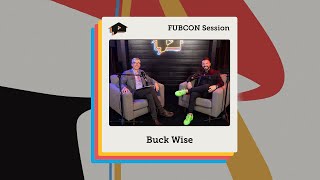
This transcript is an interview (Real Estate Team OS host Ethan Butte with Buck Wise) about leadership, marketing, personal branding, and using data in real estate teams. Buck emphasizes inquisitiveness and self-awareness as central leadership traits, a results-and-accountability oriented leadership style learned from mentors (including time at Grant Cardone), and the need for leaders to let go and redefine roles as organizations scale. On marketing and data, he stresses SOPs for data collection, selecting a small set of KPIs, starting with manual capture to force system investment, cleaning/segmenting CRM data, and automating targeted nurtures so marketing creates intent (MQL → SQL). He contrasts wide-net (mass blasts) versus spearfishing (persona-driven, niche outreach), illustrates persona targeting with a Starbucks pumpkin-spice example (persona-led campaign that increased sales ~22%), and gives personal anecdotes (his wife's real estate team growth). Practical recommendations include: define KPIs, implement SOPs, segment audiences, give value in nurtures, and automate the repeatable processes.
Chapters
No matter where your business is today or where you want to take it, you'll get there faster and more profitably with an operating system. Welcome to Team os, your guide to starting, growing and optimizing real estate team. Here's your host, Ethan Butte.
Buck, thank you so much for spending time with me.
I'm excited to be here. I appreciate you having me here.
Yeah, I'm glad we're doing this audio in video because your shoes are on point.
They're glowing in the dark, man. Yeah, that's. Yeah, they got the spikes on today. Yeah.
Looking good. I'm going to start with you where I started with everyone else.
Let's hear it.
Because I think it's important, what is a must have characteristic of a high performing team?
To be inquisitive. I think, you know, too many times people rest on their success and if the bigger you get, I think the easier it is for you to do that. I've worked with a lot of big multimillionaires and the one thing that they all have in common is that they never stop asking questions. And so I think a high performing team, high performing, performing individuals are, are always asking questions. And if you think about it, because there's so much you know, you can go back to any of the thought leaders that talk about the way you're thinking and what you're saying is what you end up doing. If you go back and really study what you're thinking and how you're talking, are you too busy telling people what to do or are you busy asking them questions? It's one of those really great leadership characteristics is like not driving the team to do a particular thing but asking them, getting them to think instead of just doing, you know, so that would probably be my best trait.
I love it. And kind of tucked underneath the way that you responded there is this idea that we can be inquisitive with ourselves, not just with other people.
100%.
Yeah. To be reflective on what we're doing, what we're not.
Yeah.
How we're doing something.
That's exactly right. Yeah. A lot of self awareness is the key, I think to success too is just understanding where your strengths and where the weaknesses are and not being a micromanager when you're not really good at something. So yeah, having that is important for sure.
Love it. Whether we're working with clients or our own team members, I think a lot of it is a process of discovery, diagnosis, prescription, basically speaking. And that prescription stage is so much best left to the person themselves. All we can do is guide them there.
It's so true.
Perhaps as a therapist, people use therapy as a joke in a real estate context. Oh, I feel like I'm a therapist. Like actually we should be adopting more of those practices.
Yeah, it's so true. I'd say the same thing in marketing because obviously I own a marketing agency and so we work with a lot of clients and sometimes you realize you're not talking about ads or data points anymore. You're like talking about issues that they're having in the business with an employee who won't perform and they're like, well, will you just tell them what to do? And I'm like, that is not leadership, but let's have a little consultation here. I'm not going to tell them what to do. We're going to measure their results and they're going to be very specific KPIs and SOPs in place for them to do what they're supposed to do. And if you don't have SOPs, you got to have accountability that you're being a bad leader in the first place. And then I go, did I just have a therapy session? Yeah, like, yeah, I'm supposed to mark.
Well, I mean, I love that you, what you shared there about the, the doing marketing work in an agency context, serving others and coming alongside them and helping them. That inquisitive spirit is the key to the whole thing because it's not a market. I mean, very often it, you might be solving a marketing problem. You're not going to solve the marketing problem sustainably or.
Well, Right.
Until you figure out kind of what that's like. Yeah, probably laddered up or chained up from other source problems in the business.
It's so true. That's exactly it. That's why the first thing we do, any new client is an audit because we know the data is dirty and we got to find out where so that we can stop the faucet from leaking wherever it's leaking. Yeah, that's the key.
Yeah, man, you have me opened up to kind of all the zones I want to go. So we're definitely going to talk data. Let's dwell for a minute though, in kind of teams and leadership. How would you describe your own leadership style?
Yeah, I'm, I'm a big fan. I've had a lot of great mentors of like John Maxwell, 21 irrefutable laws of business. Brandon Dawson was a CEO that I worked with in the Cardone Enterprise for a while and he's got a lot of great leadership philosophies that I've adopted on the way to inspire and motivate people and an organization. In fact one of them that he, that he would always tell me is you can inspire people all day long, but you cannot motivate them. And being a good leader is recognizing where inspiration, motivation, connect and where that stops. But you know, I would say my leadership style is, is big on accountability. Like if there was one word, it would be one. And Grant Cardone taught me this when I worked in his organization as a chief marketing officer for three years. Anything that bad happens in a business is my fault. So that's my leadership style. It's not so much leaders eat last Simon Sinek it's not the like serve and over serve. It's that we're all accountable, we're all responsible. I'll do my part as the leader to show you what it looks like to be responsible when things don't work. But I'm going to hold you to the same standard in your particular role. And as a leader I'm going to set you up for success. The question is, are you dedicated to the task? That would be my leadership skill. It may be a little regressive for some people, but it works for me because there's no nonsense. I think when you get into like check ins and you know, and working on goal setting with employees, sometimes leaders just get too wrapped up in emotions of things and it's good to care, it's good to have a heart and I'm okay with that. But we're all here to serve a purpose. I'm not running a therapy clinic and so, you know, mentorship, sure, but not crossing the line of leadership and mentorship, two different things.
Yeah, yeah, yeah. I also like this idea of allowing other folks to hold you accountable as the leader. And yes, like the two way dynamic there is what gives it the integrity it needs to.
So true to do its job. Yeah, yeah. I also like the like take this however you want. I like the, you know, what is it called manage up style too. Like I give people a little bit of flexibility to manage. Back to me, I tell people, hey, manage me. You know, as the leader, where are opportunities for growth where I want people to be thinking. I think that the problem with the first piece that I gave you where it's so accountable and tight people can't innovate. So I like to have a little flexibility so people can innovate. And in that innovation there has to be obviously accountability that drives a result. And so I'm just very result focused. But, you know, culture's one of those funny things is you build a team. When you're small, it's great. And then you hit 40, 80 employees, and then it shifts, and then you got to determine what's the new culture. And so when you hit 80, you know, I've built a few organizations where we went to 200, 300 people. And when you get that big and you're driving millions of dollars, your leadership style changes a little bit. So I would say there's like, breakpoints where your leadership style here is very different from your leadership style here. Yeah, yeah.
In part because you can surround yourself with other people at a certain point, you can finally afford to stop wearing the six hats and only wear three.
That's right.
Then eventually, kind of. And then I've heard this story from a number of leaders. You know, I had the opportunity to take off a couple of hats, and I had to really be reflective of myself. Like, what. What piece do I still want to own? What do I still want to hold myself and allow other people to hold me accountable to? And what am I willing to.
So true.
Yeah.
Yeah. It's funny when you, you know, you brought up therapy a few times, and I've brought it up a few times. It's funny when you see leaders go through that transformation and they're like, they feel less important when they get bigger because they're not doing the thing. And the thing that they used to do is maybe doing better than the way they did it. Right. And they got to let go of that and be excited about it. But then there's even this third piece of, like, what's the ultimate goal of what you're building and why you're building it, and what's your exit strategy? And I've talked to a few massive entrepreneurs who've exited companies that say they go through a deep depression when they get a cash out from an exit and they're not in the business anymore and they don't feel needed and they don't have, like a big why in their life. And yeah, money was great for two weeks, and then it just didn't matter anymore, you know? So that whole thing is interesting about the dynamic of shifting through culture of business and leadership. Yeah.
The demands on you change quite a bit through that process. And as you already just observe there, you change in the process, too. I hear that story, by the way, a lot in retirement as well.
Yeah.
Like, oh, my gosh, what do I do?
Yeah, that's. That's why a lot of mentors are like, they push you now. Like, I'm. I'm. How old am I? 45. I'll be 45 in October. And they're pushing me now. Like, think through what's the big. Why not just the business or an exit? Because that's going to be the next phase and nobody ever does. You're just so focused on driving revenue and growing and innovation and talent. And so I don't even know that I have that yet either. This will be the third agency that I've built and sold. And so, you know, I'm just focused on getting results for the clients and attracting amazing talent back to the organization.
And everything else just kind of happens.
Yes, of course. Yeah, exactly.
I'd love to go directly to real estate agents and real estate team leaders here. Because you're a marketing guy, I would love your take on. You know, there's often a tension between the individual agent and the. Their brand, their own personal brand. Of course, you have the team brand sometimes then there's a brand brokerage or a franchise brand on top of that and then sometimes even another one. So, like, just to give an example, I was chatting with Gary Ashton at breakfast this morning and it's. It's ReMax. Then it's ReMax Advantage.
Yeah.
Then it's the Gary Ashton Real Estate Group. Yep. And then it's. Let's just make up a name. Tim Jenkins.
Exactly right.
So how do we balance the tension between. You know, they can all be. They're all leverage points.
Yes.
Useful in different contexts.
You said it.
And we can all. But some of them need to be invested in it, which particularly obviously the. The corporate entity is investing in itself for the benefit of everyone, including themselves. But at the individual level, it's really down to the individual.
Yeah.
Or can the team support that? So I know I asked a lot.
There, but you just answered too. And answered it because you said everything that I would say, which is the umbrella brand is credibility. And we could go deep into brand. And what is the credibility of using ReMax mean? Like, what does the sentiment of using that word say to people when I say Sotheby's, what do people think about. Right.
Yeah.
Immediately people know there's an association with it. So in the marketplace you're in. You said leverage points. That's exactly it. How, where and why would you leverage the umbrella brand in your personal brand, how would you leverage it? When do you leverage it? Where do you leverage it and what. I always like to remind the Solopreneur inside the team, which is a entity in itself is that people do business ultimately with people. Not businesses, not umbrella brands. So you will have to invest. I think too many times people lean on the corporate brand and they don't build their own a brand, their own personal brand. And that's the one thing, you know, I've worked in a lot of companies where we've done due diligence and companies have been acquired or sold. The one thing that you never sell is your personal brand. It transcends where you're at today and where you're going to be tomorrow. And it is to me the personal brand is the most valuable thing that you can build. And so I would say focus in on. Yes, your corporation has value propositions. ReMax has I'm sure, five value propositions that ReMax does. X, Y, Z, whatever that is. That's their, that's their position in the marketplace. From a branding standpoint. One, do those work in your market to how do you use them? But three, what are your value propositions? What is buck wise value propositions? Why would anybody do business with me? Because ReMax gets them in the door but I got to motivate and inspire them to close with me and choose me. And so I would say do the granular work to determine your own brand, your own value propositions and your competitive differentiator even what makes you different from the thousands of other agents that are all doing the exact same thing you're doing.
Yeah, yeah, really good. And I also feel like there's room in there to figure out why are you aligned with that team and that brand as well? And like, like what are the through points there and does that reinforce your value?
So true.
Or your point of differentiation, whatever you want to call it.
So true. Ye. It's a good example of you know, just having. So the word is this. How do we get people. People say buck, what is marketing? So I'll go high level marketing is connecting and earning trust. That's it. So one of the best and fastest ways to earn trust is consistency. So back to your point. What is your personal brand and how does it align? Because there needs to be that thir. Through or the, the. What do they call that? The. I don't know what they call it. It's a fit through or something. But basically where your brand aligns and syncs with the umbrella brand to some degree because the consumer passively feels when things are disjointed like whoa, I went this and then I did this experience on your portal. And the portal was very different than what you offer. You know, it's like, how does it all feel? The same and succinct. And so I would think through that too. Yeah. No matter where you're working or how you're leveraging it.
Cool.
Yeah.
Big, wide open question. Why do brands or businesses fail?
That's a big question.
Yeah.
Why do businesses.
I just thought it'd be fun to see where you took it.
Yeah. I mean a couple. Number one, I'll go back to your first question. Lack of leadership 100%. You can only get so far with a good product or service without great leadership. I think, I don't think there'd be anything more important than that for scalability. There's a lot of surviving businesses, not thriving businesses with bad leadership. But they never grow. They get to this one point and then they just say stuck and they never get bigger. Why do they fail? You know, if we want to go technical, less aspirational data, you can only in the first break point of business, let's say 1 to 5 million revenue. You can only get so far off of technique. You can get there with technique. I always make, make this into like a lighthearted joke. But you got senior agents who refuse to build their better personal brand, create content. Like I've got a, you know, database and I've got lots of retention from clients for years and years in the market. I don't need to do YouTube. And you get these kids, no CRM, no data, not they don't know anything. They just get their license and they just nail YouTube all day long and they start trickling clients. I saw this in Texas and they went from 0 to 2 million GCI in less than two years. And they did it all organically off of YouTube and very little data. Right. So you can create success without the data but you will be stopped and then you will fail and you are susceptible and there's a liability. And not collecting the information and placing it inside of the brain, the CRM in your organization, the follow up boss or wherever it is, you keep your information. And so that's why it's so important that you have the data. You keep the data and you, you segment the information so that you can understand how to use it and leverage it.
Love it. You just teed up another place I wanted to go.
Great.
Which was, which is. And it's kind of a two layered question. So I would love for your kind of tips or recommendations or guidance for folks I parse kind of the big Data question or problem or opportunity into two categories. Like how can individual agents and teams do a better job of collecting, organizing, and ensuring hygienic data?
Yeah.
Right. Data hygiene is always an issue. Like, this guy's in here twice.
Yeah.
Daniel I. E. Daniel Ei, there's someone.
You know or you set up a trigger that puts the name in six times. You don't know how to stop.
Yeah. So one bucket is that. And we'll start there. But then the second bucket I want to get to then is how to leverage it once we know. Because. Because if you don't have that right, if it's not collected, you obviously can't do anything. It's not organized. It's hard to do anything with it. And if it's not clean.
Yeah.
And we can't, then we cannot trust it. Yeah. I can't tell you how many times someone I was in a meeting over at some point in my career where someone presented something and they support it with numbers. And you ask like, two or three questions and it literally all falls apart.
Yeah.
Like, I'm asking these questions because, A, they're just pragmatic, responsible questions. But then, B, I also kind of don't trust them on their face. It flies a little bit against my intuition. So if we can't trust the data, then we can't make decisions against it. So I want to save. I want to get that part first and then talk about maybe how to leverage it and some of the ways that we can take what is in our CRM or in our database and turn it into opportunity. So start with that first half. Like, how can people do a better job of collecting and organized.
It's a good question. I talked a little bit about this on stage at fubcon in Los Angeles, and I said, hey, let's talk about how data equals dollars. And so the number one thing is. This is kind of a boring answer. But if you know what an SOP is, what is your standard operating procedure to collect information and if leadership. Because if anything fails, it's my fault. Didn't put it in place. Then you got a bunch of team members below you that don't know how to collect it. They don't have a place to collect it. You know, first and foremost, you don't have a system in place. Manual. And everyone's going to hate it, but at least you're getting it. But I'll tell you, the pressure a manual data collection puts on an organization to get a solution is fantastic. Yeah. What do we got to do to invest. Because I'm tired of going into spreadsheets. I don't want to write this down, right? What system? Let's compare systems. What are the costs? Right? And the leadership's going to get tired of hearing about it and human error. You need systems that don't have human error. So the very first thing is understand the KPIs you want to collect. Which KPIs are going to drive better business faster. Which ones? There's a thousand, right? Amazon has over 800 KPIs on one single Persona, but there's five to 10 that drive the most revenue. So that's what I would say is get organized. Even if you start a notepad, what information is most important to you? Transaction size, when you connected with them, where you connected with them, how often you connected with them, how active they are, how engaged they are, how big their micro network is. Like, there's just so many different avenues. But the way you do this is understanding as you're closing these clients, that journey of where they came from, who they are and how they made a decision helps you clone the strategy. So then just repeat what you just did. Now you did it manually. How do we automate the repetition? And that's sort of the second question. You started collecting the information and figuring out which data pieces are the most important and where do they go? Where do they live? Okay, and they're clean. Now it's like, well, how do we use it? Well, you have to automate pieces of the system. Once you know who the target is, it's easier to bring them that experience in the places where they're already having those conversations. Instead of forcing your email nurtures on people you shouldn't be talking to about subjects they don't care about. Your unsubscribe rates going up, get really specific with that data. I call that strategic tools. Understanding your brand, understanding the Persona, their challenges, and speaking directly to it. A funny way to put this into perspective. My wife and I, we've been married just over 13 years now, and we've known each other for 15. I know she loves pizza, she hates steak. Red meat is. It's a textured thing. It's weird. She doesn't like it. And so imagine my 14th anniversary rolls around next August and I say, baby, we're going to the best steakhouse in town. How well does she felt known by me? Because ultimately love is knowing one another really intimately, right? She can't know me very well if I'm. Or I can't know her. Very well if I'm taking her to a steakhouse. And so what's my conversion rate when I go home that night? It's not very high, you know. And so when you blast, I call it wide net when you're blasting your automation to everybody just hoping to catch a fish and you got all these little things in the net like you're, that's how you're destroying your roi. That's those unsubscribes. You're serving stake to your pizza lovers. So start segmenting your steak lovers, pizza lovers, empty nesters, divorce couples, investors start segmenting them and having very niche conversations that are value add. That's the other thing. Call to actions. Everyone in their automation is doing a take, take, take instead of a give, give, give, old Gary V. Buck punch, punch, right, jab, book, whatever it is, the old book. Yeah but the principle of that book is still lives today, which is you can't take until you give. You got to give, give, give.
Yeah.
And so your nurture, your automation sequence needs to feel niche and personal and that's how you create better connection. And by the way, the job I call these MQL versus SQL Marketing qualified leader, Sales qualified. The marketing qualified lead is based on the automation boiling, the potential to the top of the water so that you can skim the conversion. That's what MQL does, that's what automation does. That's what this data is going to do for you. It's going to nurture the audience to bring them right up to the top so that you work smarter, not harder and you can skim the top and have conversations. That's the idea. Everyone uses the nurture as the conversion. Everyone goes transactional. They're all kissing on the first date without asking. Nobody converts in. Nurture, nurture 70% of the lift to get you to the conversion. So I would say really focus in on how do we just get the conversation started. What value can you give to get a response? And once you get that response, you've made the connection. Now go through your sales cycle. Now you're in a relationship. Move them through the stages, ask the right questions, make skin to skin contact, but leverage the data to get there faster. It does two things. One, it allows you time is money. So it allows you to have more time to focus on the actual deals instead of qualifying everybody in the damn database and cold calling all day long. Let the, let the heavy lifting be done in the upfront. But number two, it speeds up the cycle. You'll close them much Faster. If your nurture is so valuable, their trust has increased before they ever get on a call, they call that intent. If the intent by the time you connect is so good, that means your nurture cycle's so great that you understand the consumer so well, you don't even have to close them. They close themselves. They're ready to roll. And that's the ultimate goal I think anybody should be focused on with their systems is, you know, I think everybody's just like, oh, how do we automate emails? It's like, okay, that's. We all know that's a feature. Yeah. Every CRM has the feature to send an email. Right. Get serious about the data, get surgical with the information and do the granular work. I think it's a Jim Collins thing. Granular innovation versus explosive innovation. Explosive innovation was, hey, we should get a CRM. The granular innovation is okay. Now, what audiences do we want to segment and how many newsletters should we be sending to which audience? How do we break it up? Nobody wants to do the hard work. They just want to do one email and see what they get.
Yeah, you know, tons of really good stuff in there. I'm going to try to stitch a couple of them together. One thing, this may be three, four minutes ago, the idea of just going back to inquisitive, an inquisitive nature and curiosity in general and wanting to get to root causes and things, that's another great value that you had me thinking about. As you're talking about ways to organize and use the datas, it's not only to surface opportunities or to do that segmentation so we can speak to people in a way that allows them to feel seen, heard and understood, which is all any human being is desperate to feel.
That's it.
All the time.
That's it.
And so this mass blast stuff is destroying your reputation in that process because people don't feel seen to your point. And frankly, all these channels, whether it's email or any other one, are so loaded with demands on our time and attention that you, you're not, you know, fool me once, twice, whatever that thing is.
Yeah. The attention span is short. It's less than three seconds on any social platform.
But we can, but we can inquire into that, into well organized data, things that we wonder about. How many people have we worked with over the past amount of time that fit these three characteristics? If this is true, this is false.
That's correct.
And this is true.
Yeah.
And the date ranges, this and the price ranges were that. Let Me find those people. Right. So like your own curiosity. I mean, now you're probing your own data. Like people are learning to prompt ChatGPT. Yes. But I think that's a super powerful effect in there as well. I think there are a lot of business problems and opportunities that we might be curious about that if we're well organized from the get go, we can satisfy.
Yes.
Through some of these.
100%. And if you're not well organized and you hire me to come extrapolate it later and clean it up, it's going to cost you a lot more later than it will today.
Yeah. And the trust factor is going to be lower too because like, how long is it bad? How bad is it? How long has it been bad? Yes. How long has it been this bad?
Yes.
How bad is bad?
That's true. We get some companies. I won't name names, but we've had big ones, medium small ones. But I've got a big list, Buck. We can do a lot of business, but it's been nurtured so poorly. You don't have a list.
Yeah.
You're starting this tree. Zero.
I loved your metaphor. I used it in the second book that I wrote of trawler fishing.
Yes.
Like this idea of like you're going to take this device, you're looking for one thing, some fruit of the sea.
Yes.
Some wonderful.
Call them whales. Yeah.
Yeah. Some delectable thing. And you're just going to drag this whole ecosystem and ruin everything in it to try to get the thing. And you got a couple of that thing. But you ruin so much.
So true.
In your own process. And that's, I mean, in this, in this business in particular, you are your own best differentiator. You are your reputation going back to the personal branding anyway.
And I call it spear.
I'm just preaching now.
I call it spearfishing. Yeah. You can go wide net or spearfish. Spearfish better. Roi.
Yep.
Right. We did this at Starbucks. I did pumpkin spice latte for two years and the.
Never heard of it.
Yeah, exactly. You're probably an avid drinker. I bet that you have two a day. But no, you don't actually match the Persona at all of a pumpkin spice latte drinker.
Okay.
Your name is not Heather. You don't have college debt and you're not trying to be an influencer among your micro group on Instagram.
Appreciate that.
But yeah, you know, you're, you're probably more of a, of a black coffee man, I'm gonna guess. Yeah.
Often.
Yeah.
And if I go crazy. It'll be an oat milk latte.
Oh, getting wild. Yeah, I like it.
By wild, I mean spending money I.
Don'T want to spend. Exactly. Yeah, that's it. That's exactly it. But we. You. The sea of pumpkin spice was so inundated. It was so crowded. Howard Schultz was like, how do we find the consumer? How do we target in on them? So we spent six months and millions of dollars looking for what it is that Heather really wants and the behavior that is going to drive a decision faster and on more occasions. And we were able to find one data point. You know, it's so interesting. What are the top five data points that are going to drive revenue? And you think it's the easy stuff like source, where they come from and the conversation. It was more of an aspirational data point. She wanted to be the first. She wanted to be the influencer in her micro group. She wanted to be the one that said, did you know pumpkin spice was back and I want to take you to have the first sip of the season, or I want to document that I had it first. Right. She wanted to share that out. The millennials on Instagram loved that. And so we created a dark posted scavenger hunt where she was able to get access to the drink before the average consumer, and she was able to use secret words in the store to get it. There was no branding anywhere. It was like she was the only one that knew 22% increase in sales from the year before. Because we zeroed in on that Persona, we targeted her so specifically that not only did she come, she came early and she came often, and it was.
Interactive, and there's this, like, kind of an exclusivity on. It's brilliant. I love that. I love that campaign.
That's exactly. And when you talk about owned, paid, and earned marketing, the earned residual of all the documentation online, she literally became influencer without having to pay her by giving her value or giving her access to the beverage early. But, yeah, it's. People overlook it. You know, they're like, I know my target. I've got emails. Like, it's like, let's do the work. Let's get diligent, you know? Yeah, yeah.
Or do you have phone numbers or do you have texts? You know, can you text?
I've got all that going already. Yeah, it's like, let's. Let's dig into it, you know, really good, Buck.
This has been awesome. I've really, really enjoyed it. And before I let you go, I would love for you to share with me. What is your favorite team like to root for?
Yeah.
Besides closing day agency.
Yeah.
Or what is the best team you've ever been a member of?
Can I do both?
Yes, you may. You may.
My favorite team that I root for is my wife's real estate team. She's in real estate. And she was the stereotypical, like, mom had three kids, corporate job. She did real estate for Nike and Columbia Sportswear. Corporate job, six figures, comfortable, healthcare, normal. Nice home, you know, like normal life. And her boss was like, you should become an agent. You're really good at real estate. She was transaction coordinator for corporate real estate and did a lot of, like, contract stuff. And she was like, really? And he's like, yeah. She tried it on a weekend, she got a license, tried it on the weekend for fun. And then it was less than six months. She made more than her annual salary. And she was like, oh, imagine if I dedicated to this.
I get it.
He was right. Yeah, she was right. She's licensed in four states with 45 team members. And I'm just so proud of her growth and her ability to create, you know, just an amazing business. And I think it's a proof point. Even after three kids, it's never too late to start. Start that business, get that independent wealth and build a legacy, you know, so I'm. I root her on. I root her real estate, real estate team on. People joke. She has a live in cmo. So, yeah, you know, it's kind of unfair advantage maybe at times.
Well, and certainly your past experience would lend itself to it too. Like all lined up. And someone who's like. Like someone who had that vision for her.
Yes.
I understand you. I know you. I respect your work. You're an awesome person.
True.
And I have an idea for you.
Yes. Yeah.
And the courage to pursue it.
But I don't work in the business with her because that's how we stay married. Yeah, totally.
Totally. Some people can make it work, but.
I imagine God loves it.
I imagine that's the exception.
It's. It's. We tried.
Yeah.
It was difficult. Okay. You know, that line is very blurry. Yeah. So, second question. Best team I've ever worked for. Been on.
Yeah. Sports team, company team, whatever.
Yeah. I love the team I have now, obviously. But you said no closing to agency. I've got an unbelievable, innovative team right now. My vice president, Jacqueline Taylor, is just amazing and she helps run a really talented team of people. We have clients in Dubai doing real estate. We've got Ryan. Sirhant. We work with Glenn Sanford, exp. Like we've got amazing clients but it takes an amazing, innovative team. So I would be, I would be remiss not to say that I have an amazing team that I love working for. But I think my team today could not be who they are. Had I never worked for Grant Cardo. He taught me something really interesting about teams and leadership. And here's what it is. I started a business when I was young. My first marketing agency, thought I knew what I was doing. Hiring people, firing people, doing taxes, losing money, no idea what I'm doing. And then scale that out, you know, years later, working for the world's largest organizations, wpp, Starbucks, Nike, Google and understanding Enterprise level business. So I always thought there were two sides of the coin. There's like startup culture and there's like million dollar enterprise. There's like, and there's a little something in between, scaling in between somewhere. He is this cardone industry. Whether you love him or hate him because he's polarizing. You know, we work with Ryan Sirhan. No one hates Ryan. Ryan's amazing people. His sentiment is always positive. Grant's polarizing. You either love him or hate him. But I will give him kudos to the point that he's mastered. He'll do, you know, 4 or 500 million revenue in his enterprise this year and he's mastered enterprise level. That runs like a startup. He is so nimble. Speed, the ability to take action, the ability to have, you know, accountability and no excuses and data like tracking where everything is at and where it goes and, and so it is just, it is a well oiled hybrid machine. And you know, depending on where you're at in the organization, leadership may be a little bit different. Sales is very militant to some degree. It's a little bit different. Less of that room for inspiration. It's like how many calls a day and get it done and convert it. But then there's other areas of the business like health and his venture side of the business where it's, it's just got, it's, it's an amazing hybrid space and I think a lot of my leadership today came from that and so I'd have to give him credit for that.
Yeah. Awesome.
Yeah.
Well done. Thank you so much for this buck.
Yeah, you got it, man.
Thanks for checking out this episode of Team os. Get quick insights all the time by checking out real estate Team OS on Instagram and on Tick Tock.
Hiring people, firing people, doing taxes, losing money. No idea what I'm doing and then scale that out you know years later working for the world's largest organizations WPP Starbucks Nike Google and understanding enterprise level business so I always thought there were two sides of the coin there's like startup culture and there's like million dollar enterprise level there's like and there's a little something in between scaling in between somewhere he is this cardone industry whether you love him or hate him because he's polarizing you know we work with Ryan Sirhan no one hates Ryan Ryan's amazing people his sentiment is always positive Grant's polarizing you either love him or hate him but I will give him kudos to the point that he's mastered he'll do you know 4 or 500 million revenue in his enterprise this year and he's mastered enterprise level that runs like a startup up he is so nimble speed the ability to take action the ability to have accountability and no excuses and data like tracking where everything is at and where it goes and.
More from Real










Zillow, PPC, Referrals… what’s actually working in today’s market? #realestateteam
