Clients for Life with Amy Stockberger | Ep 056
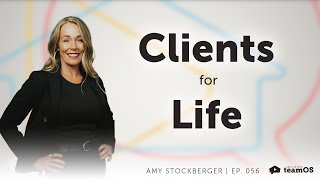
Interview (Real Estate Team OS, Ep. 056) with Amy Stockberger on turning a real-estate database into a "data bank" of Clients for Life. Amy recounts her 20+ year path from agent to team leader, the 2014 realization that strong "before and during" systems weren’t producing repeat/referral business, and the creation of a lifetime-home-support system (moving trucks, tool/party sheds, online discount center, VIP club) that keeps clients engaged and generates referrals. She describes operational details: custom booking software, agent notifications, vendor program (paid sponsorships, employee-benefit tie-ins), monetization (ad space on trucks, vendor fees), and recruiting/retention benefits for agents. Team metrics mentioned: ~20 agents, ~10% market share in South Dakota, ~375–380 units/year, average agent tenure ~7 years. Contact/resources: Amy on Instagram (AmyStockburger) and lifetimehomesupport.com; she offers a "Data Bank Developer" and source-code system to track lead origins.
Questions this video answers
"Clients for Life with Amy Stockberger | Ep 056"
February 11, 2025
About 20 agents; ~375–380 units/year; ~10% market share in their state; average agent tenure ~7 years
$3,500 per year
Chapters
We've heard it many different times in many different ways from many different team leaders. Right here on this show, we're under investing in our most important and valuable lead source. That is our past clients and our database. But today's guest, Amy Stockburger made the same realization in her business, but built a system to transform the database into a data bank to turn past clients into clients for life. And you're going to learn those elements right here in today's episode. Amy's about to share with you several ways you can be of service to all of your clients, no matter where they are in their lives, to your vendors and partners, to local employers and to all of your agents all at the same time. And to monetize it in the process using things like a moving truck or a tool shed or party supplies, including a margarita maker. Tons of great ideas in this episode. Also some bonus resources that she offers. It's all right here with Amy Stockburger on Real Estate Team os.
No matter where your business is today or where you want to take it, you'll get there faster and more profitably with an operating system. Welcome to team your guide to starting, growing and optimizing real estate team. Here's your host, Ethan Butte.
Amy, I am so glad we connected. I'm really excited to have you on the show. Welcome to real estate Team os.
Thank you, Ethan. I'm honored to be here and love what you do for our beautiful industry. So thanks for having me.
Yeah, it is a beautiful industry and like just the idea that I have gainful employment doing this, which is like meeting and learning from amazing business owners and people who are willing and able to share hard and interesting and wonderful stories for the benefit of other people. And for me to be the vehicle for that's a privilege. So I appreciate your perspective and philosophy on that too.
Yes, no, my honor. And, and that actually is a beautiful characteristic to have to like want to learn those things. Like when you get to that level of your life of like, okay, this is, this is fun. This is fun. This is what it's all about. That's beautiful.
Yeah, absolutely. So our standard opener on the show, Amy, is what is a must have characteristic of a high performing team.
You know, I really feel that for us when it was like a big switch for us is when we really had our vision and our values down packed and it was something that we lived and breathed in. Everything that we were doing, whether it was admin, onboarding, agent onboarding, and just making sure that everybody was really working for the Same cause, like, we're big on service first, and so we've had in the past, you know, team members that didn't really align with that. And I have a PhD in failing forward. I've done all the things wrong. Right. I've been in it for over 20 years, so I figure out how not to do it so I can do it well. But I did all the things wrong where I was quick to hire, slow to fire, and wasn't really paying attention to those characteristics to begin with. Like, do they have that service first mindset? Are they here for the client's experience first? And do they understand that we don't do things small, we do things big. And that's just the way that we will always do it. And so I really think it's just making sure you're in and you have that conversation even on your phone interviews, before you even get in front of them. Like, this is what we live, breathe in our community. Just want to make sure you understand that, because if you don't, that's probably not going to be a fit to begin with.
Really good. And how often have you found, especially probably in the later years, that people might even be introducing that into the conversation where you're so clear and expressive about these values and about this approach and your reputation. The market carries such that agents, you might not even have to ask or bring it to mind.
Well, actually quite a bit, to be honest, that people know that we've been doing this for a while here in our market. We're in a smaller market, but we're small giants here. And knowing that the client experience is our number one goal. My vision is to build big, juicy legacies for everybody within my ecosystem using our lifetime home support method, whether it's our clients, our team, or our community. That's what, that's what gets me out of bed every day, is to do that and help people build those big, juicy legacies.
Cool. Well, we're going to get into almost every one of the key words you said in that passage over the course of this conversation. But where I want to go, like to just for context and setup, talk a little bit about your path into real estate in the first place. And then kind of, when did a team and a brokerage occur to you?
Yeah, so I got into this actually straight out of college. My dad had a Caldwell banker brokerage, and I always say he did the opposite of Nepetu. He gave me a job, paid me 24,000, put me in the back of the office, dark little office and really said sink or swim. And I got to learn it in a real beautiful way in that I got to learn the backside of it first and not really understanding the real estate part of it to begin with, which was kind of a blessing for me. So I got to do it that way and I fell in love with the industry and the whole purpose of it. He was a Caldwell banker franchisee at that time. And so I was the relocation person. I was the concierge. That person had a concierge program. And I loved that. And I decided, gosh, I want to, I want to get licensed. And. And he of course, being a dad, very familiar with, you know, paying my bills for a long time in my life. Right. Said no, absolutely not. You know, you can't, you can't do it. It's hard, it's expensive, it's cutthroat. You're not cut out for it. And it was. Exactly. And he probably was doing it for that right reason, knowing that I was the oldest and a high D on the disc, that that's what I needed to motivate me. And it was. So I became a biologist.
I'm gonna tell you, you can't or shouldn't.
Right? Yeah. You're like, okay, under, you know, underestimate me. Here I go. So he was likely doing it knowing that's exactly my personality type. And so I got licensed and became my, my stepmom as a buyer's agent for a really short time and decided that that wasn't for me. And so I became a single agent for even shorter time and decided that too was not for me and was reading at that time back. You know, I've been doing this for 24 years in the business, 22 years licensed and my, my bible back then was the, the millionaire real est agent. Google wasn't what it is today. You know, my biggest ad spend back then. Some agents won't even understand this, but was print, it was the newspaper.
Right.
But I was just looking at how I could scale and really serve on a high level. And I knew I needed to get somebody. So I got my sister licensed. She became my first buyer's agent and I hired a part time assistant right away because I knew I just, I didn't want to do the things I didn't want to do. And again, knowing my personality type that I'm better suited to be out with people than to be really doing the $10 an hour at that time, you know, task wasn't going to be the best suit for my family. And so just really started growing and making all the mistakes, you know, doing all the things that you do wrong when you first start a team and you're just, you know, going out there and just like grabbing all the shiny objects and trying to put it all together.
Were you starting that team inside the Caldwell Banker brokerage at that time?
My dad was an indie. By that time he had already departed from Caldwell Banker. And so I was a team within his independ brokerage at that time.
Cool. And how did you fit? Like, were there other teams inside the brokerage at that point or were you kind of like this, they're just over there doing this thing, you know, it.
Was a newer concept within our market.
Of course, it's a newer concept in every market, right? Most markets, yeah.
Right. And so South Dakota, we're South Dakota. So we're a little bit behind, I feel, on a lot of things every once in a while. But we're, you know, one of the first that started out as a team and we started growing, got, you know, got my assistant full time when Stacy and I and my sister were doing it. And back then like our biggest lead source was open houses. We would open house out Everybody. We do 15 to 20 a weekend. I mean that's all we did. We lived on, we joke about this now, but we lived on beef jerky, sunflower seeds and Mountain Dew. And that was like, that was our Realtor diet and that. And we, I still had a little bit of PTSD from hearing open house signs clanging in the back of my car because I did so many of them. But it was just such a good, we had such a good ROI on it. And that was just the way the market worked because the websites weren't the way they were at that time, you know, as big as they are now. But yeah, we started growing and my husband left the banking industry in 09 to come over and help me take a business that I really, really enjoyed and turn it more into a full time career and took it to the next level for us as far as starting to really lock down everything we had. I'm a systems person, so we've always been really systemized. He just came in and helped really make it, you know, that get everything else set up that I was missing on the operations side. And we just started recruiting and getting more people in and still making plenty of mistakes, you know, doing what we had to do to grow. And then in 2014, that's where I really found that I had a major hole in my business. And I found a big hole in our industry, too, at that time, because by that point, we were. We were chugging, we were doing good. We were a small but mighty team. But. And we were killing the before and the during parts. Our systems were so. Just so dialed in, but we were not getting that repeat and referral business. And I just could not figure out why I didn't understand. Like, if I did so good before and during, why would they not always remember me? Why would they not always have my name coming out of their mouth when somebody had a life change? And that's when I knew I had to make some big changes for our team.
Cool. Well, I think I know what the solution to that problem is, and we'll delve into that a little bit. But for the early team leaders or aspiring team leaders among us here, in this conversation, you mentioned some of the mistakes. You know, when you go back to those days, you're kind of either reminiscing with someone who is part of it, or you're providing some, like, insights or education for people who are aspiring to do that today. What were some of the first kind of key decisions you made kind of in that pre2014 window that went really well or really poorly? Like, what are some of the key milestones in that journey that allowed you to. To make that key discovery that we'll get into in 2014?
Well, the first one was really just having that clarity of what our goals were, and we didn't. You know, before Adam joined my husband, before I got in there, I just, you know, I. Again, I was doing something I loved. I call it a hobby that paid me pretty good, you know, that I just was not really taking it to the level I should have taken it. And that's because I just didn't have that clarity. You know, no matter how many books I was reading, no matter what I was doing, I just felt like I was still kind of floundering a little bit and needed to have that. That sense put in. Right. If I knew I wanted to do this, then I had to do the backwards math on it. And this is what I needed to do to get to it. And I had to lock down how I was going to get there, because, again, I think our industry is the biggest shiny object industry in the entire world. But there was so many, you know, I was trying to figure out.
Because everyone can make their own decision, right?
Yes. And my real estate coach, I believe in coaching so much. I have a handful of coaches, but my real estate coach has this line he says to me, he's like, we, as entreprene, get into the business. It's because we don't want anybody to tell us what to do. And then we get into the business, and then all we want is somebody to tell us what to do. So. But then we want to have our freedom then to go and to make it our own. And I just, I really feel like my biggest failure was that I was not locking down my lead sources on what I was going after. That there just wasn't enough clarity for each one of those lead sources to really make a difference. I was. I had too many that I was trying to go after. So, you know, when you get. You do too much, you don't, you know, nothing gets done. Right, Correct.
Yeah. And again, you know, what I think I hear in your use of clarity in that context is, you know, I know where I'm spending money. I know where the leads came from, but I don't necessarily know where the closings came from among those leads. And therefore, it's difficult for me to put together roi. So if I know I need to cut this in half to make it more manageable, I don't know which half to cut.
Right, right. And it was just like having that and spending so much on different things that weren't producing the roi because I didn't have, you know, the source system, which I give. I tell agents all the time, like, they need to know, like, to be able to plan their 2025, they have to find out where did their 2024 closings come from. And if you don't have a source code system, you need to get one like you need. And I'll. I'll send you mine. Actually, if you want to put it in your.
I would love to.
Yeah, I'll put it. You can put it in your show notes. I'll send you my source code system that I teach agents how to use. That is the easiest way then to tell every quarter, okay, where is this coming from and when? At what point? After six months of trying this or whatever your goals are, if this isn't producing anything, where do you need to be focusing?
For folks watching and listening, whether you're watching in YouTube, the link is down below in the description. If you're watching or listening on the website realestateteamos.com, it's down below. And same thing if you're listening in Apple Podcasts or Spotify, the link is right down below in the description. There's a very specific reason to go There, that was great. I appreciate you sharing that with all of us, Amy. I'd love for you just to kind of characterize. Amy Stockburger, Real Estate however you'd like today as we head into 2025, like market size, structure, culture, whatever you want to share about the team, just for context for folks. Yeah.
So since we created our program in 14, since then we really started going in 15. Since then, since 2017, actually. After getting everything going, we've become the highest producing team within our state. We're small giants. We're about 20 agents. And my agents are the. We're in the top 50 in the United States. And again, we're in South Dakota, one of the fifth or is actually the fifth least populated state in the, in our country. We're going to, you know, this year we'll end the year, you know, hopefully the market's down here quite a bit, but we'll end the year, you know, close to that, like 375, 380 for units. And I'm really excited about what 2025 has over. Over the majority of our business is repeat and referral business. And we have an average agent, 10 year of seven years. And we just keep our clients sticky to us because we have a serve, serve, serve, then sell approach to it.
Awesome. So really good market share.
10%. Yeah, we have about 10% market share killer.
And then that seven year agent tenure. What do you think are a couple of keys to that?
Well, when I got into this, I did it all, like I said, I did it all wrong. I had a small child at home who, you know, he paid the price for me working all the time. It was 15 hours a day, seven days a week. He works for us now, works with us now. He's a rock star. Bought his first house when he was 18. You know, sold his first house in high school. But he did it because he had no other option. You know, he's done more open houses than most real estate agents have because he was just with us. And so I say to my agents, and why? One of the reasons why, again, my vision to create those big juicy legacies is that I wanted to provide a path to show them how to do it the right way so they could have that financial and time freedom and not have to go through what I did. I had the blueprint ahead of them. And so I made this program so that they could serve and stay top of mind with their agents so they could build this repeat referral business. And my goal is to turn one of their Clients into five every single time. So they're just building that. And I'm giving them the tools to stay in contact because that's what happens with agents. Like, we don't mean to not stay in contact with their clients. You know, we haven't had a past client since 2014. We only have clients for life. And that's because I give them the tools to call up their clients, their whole data bank, and just say, hey, I'm here to have a service. Have you heard who joined our vendor program? We have this in our VIP club. We have all these things besides the standard commission breath. Here's your equity review. Here's what your neighbor's house sold for. But it's more of coming from a place of service that just enacts that law of reciprocity that we have no control over. That's just a universal law.
Okay, so I heard a number of wonderful things in there. I heard client for life, not past client. I heard data bank, not database. So now I'll just give it to you. I think we'll pick up at, you know, the hole in the industry is essentially something I've heard as long as I've been serving into the industry, which is about, I don't know, 14 years now or something, in a couple different roles. Everyone says they would work with their real estate agent again, and very few people actually do. So that's what you observed about your own business. You were doing all the blocking and tackling. Well, you said you were doing a good job of, you know, turning opportunities into contracts. You're doing a great job of serving people through closing. People were writing you nice reviews and yet even you felt you weren't getting the repeat and referral based business that you wanted at that time. So you designed a system.
I did, yes. And just for that, I was like, I didn't understand it. I needed to figure it out. And what I wanted, though, I wanted a blueprint. I wanted somebody to have already created a system that I could take and make my own. And I couldn't find that. All I found was ways for us to nurture more cold leads, buy more cold leads, build a cold lead department. All these things that did make sense to me because we always know the stat you just said. NAR tells us year after year, your biggest lead source is always going to be your sphere. So what should an agent's biggest lead pillar be? It should be their sphere. They should be looking at it. Because right now, back then it was like 10% of your sphere was going to transact in the next 12 months. But right now, it's probably about 5% of your sphere is going to transact in the next 12 months. So as a numbers game, you know, just thinking about it from the numbers perspective, your goal should be to always grow your sphere and be doing it in an authentic way. And that's what I found. I. I went back and, you know, in 14, when I found this whole. I had to have some major extreme ownership in that. That was like, okay, well, how was I different? What was my unique value proposition compared to all of my competitors? And all I could come up with was that I was the local best at connecting buyers and sellers and getting their house sold. Top dollar, shortest amount of time, least amount of hassle, finding them a house that matched their parameter and their budget.
I've never heard that before.
No one has ever said that about this before.
Right.
All the things that are our basic job description, like, they wouldn't. You. That's what, that's what they come to us from. And my analogy is it would be just like you using an attorney who says, I pass the bar, okay. Or a surgeon who says, steady hands use me. Like those are just like, those are like table stakes. Those are things that we expect to happen. And. And I had to look inward in my business and decide I didn't have anything else different besides I had systems. Well, to them, they, again, really table stakes. I should be able to keep a deal together from contract to close. I should be able to keep a marketing campaign together. Like that should be part of my entrepreneurial skill set. And I didn't have anything else. And so I wanted to provide because the millionaire real estate agent Gary Keller says that human brains have two places for a real estate name in their brain. And your job is to kick that other agent names out all the time, your other agent's name out all the time. And so it's like, how could I do that after the sale? And so I started thinking about like, okay, here. This is nothing revolutionary. I'm going to buy a moving truck. But my husband, who is my red light, I'm the green light. He's my red light. He's like, buy it, but monetize it. So I bought it. I sold ad space on the back of it, had vendors pay for it. So. So I monetized the truck before it even arrived, but gave it to my clients to use for life for free. And so they could, no matter what they buy or sell, come back for life. They could come and use it for all the different parts of their human experience. Again, nothing revolutionary. And it was a billboard on wheels though. Nice write off. It was paid for by somebody else and it was a really good community. It is still a good community to give back. We have multiple trucks now and I thought, okay, that's one way to stay of value, something else that we're doing. And at the same time we added in a party and tool shed and an online discount center. And again, think it's a human experience. Humans care about themselves. Like that's just who we are. We just care about our experience and we want to know other people care about it too. And so I thought, okay, what are the home ownership journey? They need all these tools, all these things to take care of this. Their biggest asset, likely like over 78% of, you know, Americans, their biggest asset or wealth building asset is their home. And so I've got all these tools. Actually I stole a lot of them from my husband's garage to begin with, but took all these tools, branded them with my name all over it. Things they didn't have to rent by or store that they could come get for free. So like wheelbarrows, specialty tools, ladders, commercial grade carpet cleaners, the basics. And then I had parties. I was thinking, okay, there's all these human experiences too that they have with their sphere. And if my goal is to grow my sphere, what a better way to have them say my name outside of their mouth in front of as many people as possible than to provide them these things for free. So banquet tables, commercial grade food warmers, cotton candy, snow cone, popcorn machines, anything you can think of, platters, games, outside games, anything you can think of they can come get for free. But it's littered with my brand. My brand is everywhere. So there's no doubt that anybody doesn't know where they're getting these things. And again, when we are then able to say to them like a margarita machine, like, you know, hey, just want to let you know we have a margarita machine, you know, at the, you know, come get it. How's everything going? Who do you know that has a life change that doesn't feel like commission breath that feels like serving? And so I set it up to really come from that way for our agents in all aspects of this. And then we did an online discount center that saves them $5,300 a year on all these different national products and bundled it into what we call our VIP club. So it's just there for them for life when they buy or sell or invest one time.
Okay, so much really good stuff in there. And like, one of the, like, high level main ideas that I love about it in particular is, as you said with like the margarita machine. It's like every agent is always looking for a reason to have a conversation with somebody or they should be. Right? The key to more everything is more conversations. So you're looking for, you know, now the next step is I'm looking for something, you know, timely and relevant. I'm looking for timely and relevant reasons to have an anticipated outreach to someone. I want them to have some level of anticipation of hearing from me, and it better be for them and about them. So this idea that you have all of these different things available and you could pick up, hey, just want to make sure you knew that we had this thing and that thing, you know, because we're heading into this season and people seem to really want it at this time. Just want to check in, make sure you knew. So, like, you're fulfilling all those needs and checking all those boxes. I want to get into the logistics of this a little bit for someone that's like, yeah, I've seen that truck with an agent's face on it. Not in my market, though. Maybe I should be the first one in my market or maybe I should be the second one in my market. If that's the case, start with the truck. Like, okay, so it logically makes a ton of sense, but, like, logistically, how did you, like, have it booked? Was one of someone on your admin team, like, keeping a calendar of where the truck was going to be on what days? Like, just get into the weeds on it a little bit for me, like, at least on that first step, yeah.
The first step was, again, we did it the wrong way and we found out how to do it the right way. So first up, we did a Google Calendar or we had a booking software just like, you know, white label booking software that wasn't branded to us and didn't take care of my agents either. Didn't work. You know, it was like, obviously didn't work because so many different things, like, needed to be. I felt in one spot and I wanted to have again, a place where these clients were coming back to branded to me that they were seeing that we were serving them, that we were taking care of them. So I created software and it's set up just like what you just said there, that it's set up for them for the clients to go back to at any time to go in and book all this stuff. See Our brand, see their agent, review their agent, refer their agent, have it.
More benefits to it. Yeah, yeah.
Yes. It has our vendor program in there. It has the online discount center access, quick access to our private VIP club for them. All this stuff a place to look for our listings. We have a home suite concierge program like all of it right there that serves and has all the booking software in it. But the beauty of it is because think about websites and also agents. When you're thinking here like this sounds hard. Pick your hard. What's your hard is. Is. Do you love working cold leads? Do you love doing cold calls? Do you love doing open houses? Do you love doing it like pick your heart in your business and see like. So that's what I said when we're even, you know, talking to new agents coming on, like tell me what you want to do. Do you want to talk to the people who already know like and trust you and serve them so that they're referring you as much as possible as well as work other lead pillars? That's what I want for you. Because people coming to you who already know like and trust you are fun transactions. And our jobs are so hard already. They are. Our jobs are hard. We get to work with people who are very, very happy sometimes and really, really sad sometimes. That's we're very integral in all those parts. And so pick your heart when you're thinking about your lead pillars in that working with people that know like and trust you is the easiest way to work. But so when, what happens now? When a client books a piece of our equipment, my agents get automatically notified so they have a reason to call them. Hey, just saw you, you know, just saw you grab the margarita machine. That's awesome. Do you have a birthday party? What's going on? Great, Fabulous. You know, nice to talk to you. Let me know if anybody, you know, has a life change coming up. You know, again, it's just an organic way of service to stay in touch with them.
Cool. So you also added a couple more layers for me. One this also further drives the vendor program which we'll absolutely talk about it. Also I'm getting the sense that there's like obviously agent branding. You said opportunities to like provide reviews. So I just thinking about this as a recruiting and retention mechanism. Just going back to that seven year agent tenure, it's like, well if I leave I need to figure out how to come up with my own warehouse full of awesome stuff that my clients are going to want so I can keep working with them. Like this, this idea that you brought to life checks so many boxes that are of need to agents. Speak a little bit, I guess to that from a recruiting and retention standpoint. Was that a surprise to you? Like, oh, like that emerged or was that part of the plan from the get go? Is it something that you realize, oh actually this would be really useful for the agents that I should start including this in my recruiting conversations?
Yeah, it was later again, I'm not a genius. Not at all. It was later like I was doing it. I wanted something for my clients or my agents to build businesses easier than I did. I knew I wanted that. That's a big core part of my. I wanted them to have these big juicy legacies without having to do it the hard way. And that was one way of doing it. But I didn't build it for the retention. Thinking about that going into it, that naturally came. And the nice part about it. So like in May of this year, we had over 800 pieces of equipment rented out, which was a record for us in one month. And during that same month we had over 50 sphere referrals come in. That's huge for my agents that's building their business in such a lovely way that they're able. And then again just layering it on because that one turns to five, that one client turns to five more automatically because of how much service they're getting. They're just naturally talking about them.
Another logistics double back. Is all this stuff like in a.
Warehouse, people ask that all the time. No, we started it with probably like an 8 by 10. I always say 10 by 10, but Adam corrected me like it's probably like an 8 by 10 shed. And I have agents, I teach agents how to do this all over the United States. And I have agents who do some in like closets. They keep just the basics of like I call them my gateway drugs to my, my VIP club. Because when you rent this, then they usually rent that and then they usually rent that. But to get the basics of what is always rented, you can keep it, you know, in an 8 by 10 space if you wanted to. We in the building we're in now, we think it's about 16 by 20 that I have everything in. So it's. And again, we've had our business or this program since 2015. But we know the nice thing is that again I've made all the mistakes. I got all the equipment that didn't work out well or was the cheap equipment. So I know what equipment's the good equipment to keep that's going to stand the test in time and what clients want. And that's the other thing we're always asking at our client events or any of our nurture sequences is like what do you want? What are you seeing that you'd like us to add? Like we want to add this. And it's not just first time home buyers who use this. I get that question a lot too. Our luxury clients use this all the time. They just, they don't want to rent by and store stuff. They want an easy place where they go to come get everything.
There are like every other year. I live in Colorado Springs. Like 2/3 to 3/4 of our yard is like xeriscaped with you know like nice trees and bushes and stuff in it. But like I like to reflect, replenish or refresh the mulch. And I don't want to own a wheelbarrow because we have like a one stall garage. So like I don't, I don't need a wheelbarrow in there all the time to use it twice a year. But the place I rent for from in the neighborhood like I. You get like these, you know, inch long splinters in your finger because these things are just like not well maintained and overpriced to rent. I would so much rather go to my local real estate agent and get these things. So do they come to pick them up or does the agent maybe like does this create opportunities for in person interaction? I guess is my question.
That was, that was, I was just say yep. So they come and pick it up and it's the agents get notified right when it. So something gets rented. So they know when they're coming, they get notified again the day that they're going to pick it up. So if they want to have that interaction with them, they can come do that. And otherwise my front desk is the one who takes care of it. That there's just the in and out of that. But it's all set up through my software. So it's streamlined it I'm knowing like what's coming in and what's going out has the liability forms, everything built into that so that it's just an easy, easy way. But it's mainly there for them to have that, that face to face how you doing? And it just gives them that warm fuzzy and you know, like here this is what I'm getting back. I'm getting from my agent all the time. And the one thought I didn't complete Ethan, which happens a lot. So sorry about that. The thing about Your websites agents that those big beautiful websites we built, our clients are coming to them before and during. They're not coming back to your websites after. They're going to your social media, hopefully, you know, but they're not coming back to those websites. That's the vetting and the checking out your competition or your house you're searching for. This software is a place where they're coming back after the sale to get something from me, to get something from my agents. Which again, you know, kicks in that law of reciprocity that says that if you get something from somebody, you feel compelled to give back in kind, which is that in this case is in the form of repeat and referral business.
Share some insights for folks who are underdeveloped or not even started on either. A, getting some of this stuff sponsored, but then B, which I assume is kind of like tucked right in there, launching a vendor program like I certainly like most real estate businesses probably have, you know, lists of people that they like, you know, for the benefit of, you know, a home buyer who now wants to do a couple things to the property. Right. So, but it's not necessarily the impression I'm getting is that yours is pretty well developed, pretty thoughtful and, and monetized is my guess. So, so talk a little bit about how that got started and maybe even start with where do you go when you decide you want to get a moving truck sponsored?
If you go out and follow me on Instagram, Amy Stockbrigerger and you send me, just send me Ethan's name, send me Ethan and then I'll know. So that's coming from Ethan's podcast and I will send you over my Data Bank Developer and that's going to help you grow your sphere. Anyway, it's like a memory jog on how to grow your sphere. I recommend you do it every 90 days. So go out and get that and DM me that. So Amy Stockburger on Instagram DM me Ethan. I'll send you my Data Bank Developer. But in that Data Bank Developer, there's also a section about how to build a LEADS Club slash vendor program. So it's going to give you the memory jog of who the best vendors are for both of those types of programs. Because at Leads Club, a networking group, agents, you should be in one anyway. That is the easiest. Low hanging fruit, low time commitment, low financial investment. You likely meet only like 48 to 50 times a year, one, one hour a week. It helps you with your speaking skills, leadership skills. It helps you to sell Your listings, because you bring your highlight sheets in for your listings for your whole company. You become that knowledge broker within the rapport build of that leads group or networking group. But then those industries that are on there are those vendors that you're going to need to keep your deals together. We're super connectors as real estate agents. We connect buyers and sellers, but we also connect them to everything else they need after the sale. They want to know who we trust for H vac, lawn care, snow removal, you name it, they come to us. And so I started realizing, and I had this in my heart for a long time, and it took me a long time to get it off the ground, but that I wanted to create a vendor program that could really serve us in a big way. And I wanted to create it first to take care of my clients because I knew they needed these things. So I wanted to have this lockdown group of vendors in our market who I knew were the best of the best, who are going to give my clients legendary care, preferential treatment, maybe even sometimes preferential pricing. And then I wanted to monetize it. Because hear me on this too, agents out there, you need more than one form of income besides commissions and downlines for the most part, for most people. Some people got downlines easier, have bigger downlines, but you need more income streams than just that to be able to scale and to build a big business that you can one day sell. And that's why we're doing this, right? We want to build it to serve and that we can one day, you know, do what we want to do with our lives down the road. And so I wanted to build it where I could bring in money. So I started this program. I charge my vendors $3,500 a year to be a part of it. We have about 100 vendors in our program. And we also then use it as a really big lead generation. And what I've done is to be a part of the program, these vendors have to give us access to their employees a few times during the year. And we get to go out and talk to their employees about how we do things very differently in our market, where we're their lifetime home support partner, we take care of them before, during, and forever. Our clients can save up to $20,000 in the first year, and the saving and support continues for life. And then go over all my vip, that access they get because I turn that into an employee benefit package where then they sign up for this. They because they come into my nurture sequence. It's growing my sphere, which is giving me more leads to give to my agents, which give me warmly to already know, like and trust us. We're helping these companies grow their businesses, which fills up my cup big time because I love helping the other people win. And so we are helping these companies. We're monetized the program to a pretty high level and it's again, serving our clients at the very base of it, the very beginning a serving our clients on everything they need.
Really good. And again, follow her on Instagram. That link is down below. And DM her my name, which is Ethan. And you'll get some structured material specifically on these topics. I love the idea of folding this into talk about when did it occur to you in this kind of VIP program that it wasn't just for your clients, that you could also turn this into essentially an employee benefit type situation? Like, when did that dawn on you? Because that's super smart too.
Yeah, well, I read this book. I knew I wanted to do a vendor program. I knew I wanted to take care of my clients at a higher level in a structured way. And that's the other thing I think where agents fail is they forget that they have the option to have a super superpower of implementation. Anybody can have a power, a superpower of implementation. They just have to decide they're going to do it. And so like, that's what I wanted. I wanted to have put this, to implement this structured into my business. So it lived in every part from all my marketing campaigns to all my onboarding efforts to my post, you know, post sale. So it was everywhere that there's no way omnipresence, there's no way anybody did not know what they get when they're with Amy Stockbroker Real Estate. And I knew I wanted to do that. But then I started thinking, okay, real estate agents, entrepreneurs in general, how do we scale a business? We solve problems and we own a handful of other businesses. And our biggest issue all the time, which every, you know, leaders business, our hardest issue is attracting and retaining good talent. It just is. That's just part of the deal. And you have to build the people, you know, to build the business. And so I thought, okay, how could I solve a problem of helping companies attract and retain good talent while at the same time serving my clients, monetizing it for me and providing a solution to that. And that's where I decided, okay, I could take all of these unique value propositions I have in my UBPs or my business model, lifetime home support, and turn it into an employee benefit program and offer it up to them. Just as another, it's really five pillars we offer these companies on why they should join our home support team, our vendor program. And that's one of the pillars is we help you attract and retain good talent by giving you these things. Things to keep people there and to attract more people in.
You mentioned exiting the business. That's something we have not talked enough about on this show. I'd love for you to share your philosophy around it and maybe your how you're thinking about it today.
Any business, every business should be about to be sold or built to be sold. It just should. And that's one thing I feel that when I was looking back that in 14, I was like, okay, what's my exit strategy? If I was a wealth advisor, I'd have an exit strategy that was taught to me. Like when I entered the business. Why was I not being coached on that? Why was I not being, you know, told like, this is how you build a book of business to one day sell. And it just, there was nothing out there that I could find. And so I went down the rabbit hole of this too. That okay, if I want to build a business that I can one day keep, you know, hand over to my, you know, my family, if I want to hand over, I just want to hand it over and sell it to have it keep pumping in different ways, what would I need to do? And I found that a systemized repeat and referral business will sell for 50 to 100% more. That's 5, 0, 100%. That's a lot of money. More. That's bananas. Because most agents in our industry sadly just turn around and just give their book of business away for maybe a couple 25% referral fees. There's no structure, there's no plan on that. And I say this to my agents all the time too. Like I want you to build your business so that you can one day sell it to somebody hopefully in my company that wants to keep building it and keep doing it and getting all the services they want. But I don't want you to do this and have nothing to show for it. You know, that's tragic.
I think that makes so much sense. I mean, I've worked in a number of software businesses now and typically they're subscription based, unlike real estate, which is it might be every three years, five years, eight years, whatever for a client if they were to repeat and there's no contract on it. So most software you subscribe to on a monthly or annual basis in X percent of the population churns every year. And that the lower your churn rate that drives up the multiple. Where were you to be able to or choose to sell the business which is going to be it's going to software or any recurring revenue. Business like that is sold on a multiple of revenue typically.
Right.
And of course interest rates will dictate what the range of multiples available are. But your point of a repeatable process of clients that want to come back again and again and again is the single most valuable thing you can build in your organization blended with something else you already mentioned, which is people, staff who've also been retained. I mean I've heard you say a number of times client experience. And in my mind and in my experience, the number one driver of an exceptional client experience isn't just the vision of the leader, it's also an exceptional team experience or exceptional employee experience. Exceptional staff experience. If they buy in and believe in the, you know, what we're all doing here and they're motivated to serve, that takes care of like 80% of the client experience you can get through. I mean you're obviously a process oriented person, but you know, for those people who aren't running really systemized and process based businesses, they can still deliver a great client experience. It's just going to be lumpier, right? It's not going to be as predictable and as consistent. Whereas if you build it out and the people are bought in, that takes it to 100% delivery of an exceptional client experience. Anyway, I said a lot there. Does it trigger anything for you?
My line too when we're talking about. Because again, it's the buying of those alignments of core and vision that is big with us. And think about it like serving like it sounds to some people who are just like hardcore, just want to sell numbers, numbers, numbers, numbers sell. But think about this too. Like when's the last time you helped somebody and you felt terrible?
Right?
It doesn't happen.
Right.
And isn't our job in this life, in this human experience, we get one time going around in this soul that you should have fun and you'd want to do things that feel good like that. That's what we want for them to feel like they're offering up some major support that are changing people's lives that are helping them. And one of my visions with our industry is that I would love for industry to become a community of serverpreneurs, not entrepreneurs who do elevate that client experience before, during and forever. Because if we did that, our jobs would be more fun, the consumer would have more fun in this experience. We wouldn't be likely in the situation we're in right now. And they would build us to build those careers that we could walk away from and hand it down to somebody else who was going to do the same thing, who's going to serve in that same capacity to, to the client. Which is really where it begins.
Yeah, the, what I really like about the way you describe that, I'll put it into my own language, which is the commissions or the closings are a consequence of doing all the other things. Right. You know, like so often, whether it's like, like lead, follow up, nurturing, conversion, which you obviously don't spend a lot of time thinking about or worrying about from a cold perspective, but a lot of people do. You know, you look at all those steps and like, the more you're driven and oriented toward your outcome in that scenario, the less likely it is to happen. You use the term commission breath. Whether it's that or some other dynamic, people can tell whether or not you're in it for them. And some people can go about that process and do a really good job of it. And they are very service oriented or service motivated. But their results are driven by that service orientation, that service mindset, just that their way of being that other human beings can sense intuitively and they feel like they're in a safe position, they're in good hands, I get a sense of warmth, you've demonstrated your competence and therefore I can safely move forward with you. And so all like when you design sounds like you've designed your business around serving, it's aligned to be like a win win situation or a win win win in the case of the vendors or a win win win win in the case of agents and vendors or whatever. Like I don't get too crazy with it, but when you start from that perspective, you're just going to be more successful and the money is the outcome, it's the consequence. When you treat it as the goal, I think you over chase or you over try or you, you know, you give off a sense that you're in it for something else besides me. And I'm standing right here in front of you and I have needs and wants and I know you're capable of serving them, but I don't necessarily really feel like that's your primary motivation.
Right. It's authenticity. The book the Go Giver. If you guys haven't read the book, the Go Giver Go read the book that was actually given to me from a competitor who was my pace car at the time back in 2014. Love him. Great friend of mine in the business right now. And he's like. And he gave it to me. And he's like, wrote on the inside. He's like, if you continue to be a go giver, life is going to be so beautiful. And I read it and it truly changed my concept on everything, which led me to. To tribes of living, to raving fans, all those things. But the underlying concept is just that when you authentically serve other people's wants, needs and desires, sales naturally follow. They just do. And that's what I was. And I wasn't in 14. I wasn't authentically serving. I was doing what I said. I was the local best at connecting buyers and sellers, top dollar, shortest amount of time. That wasn't authentic. That was my fricking job. You know, that wasn't taking care of them in an authentic way. And people can I say this to agents too. Like when they pick a lead pillar of open houses, and I know the agent and I'm like, I know your energy. I know you hate open houses. You will not be successful at them because that is how the world works. They feel. Everybody can feel your energy field. When you come in there and you don't want to be there, nobody's going to gravitate towards you. That is just. So take that off your lead pillars. That's not a good lead pillar for you to go after because it's not one that you are inclined to authentically. Like.
It's the same thing, you know, a year from now, because we're recording this before the year's out, 20, 24. A year from now, what do you want to look back and say, Gosh, I'm really glad I focused on that and that we got that done.
Yeah, a global domination. You know, our goal this year was actually to get to that 13% market share. You know, we're still going to end the year right around that 10%. So I want to get to 15% next year. I really feel like we can do that. And by adding in another, you know, growing a layer of my business that I've started and I really enjoy, which is our corporate partnerships and working with big companies and offering the same thing to them and getting in front of them and providing solutions for HR and solving their problems. So I really feel like I can do that, which again, is just gonna allow my agents to build, you know, these great careers. In my team to have, you know, as much systems as possible that their days go by fast. It's kind of jokes. It's a joke here. But when we onboard a staff, we always say, like, we don't. Days don't go slow here. Just know. And everybody's like, yeah, yeah, yeah, yeah, yeah, until they get here. And then they're just like, oh, holy cow. Yeah. You do not. There isn't. We don't take their foot off the brake here. We're going because we know what we're doing is important and we know we have a lot of people that we want to continue to serve.
Awesome. I have three pairs of closing questions. I think they're fun. I hope you do too. And you only have to answer one of each. And the first one is, what is your very favorite team to root for besides your own real estate team? Or what is the best team you've ever been a member of besides your own real estate team?
I'm a Red Sox fan.
So.
Yeah.
How did this come to be?
Yeah, well, we just went there one time and fell in love. My husband, before he joined us and went and sat on the first baseline. My younger, my oldest was three. He became a die hard Red Sox fan. And so that's. We used to travel all over to go see them. So yeah, they're. They're my boys.
That's awesome. That's really fun that you travel to see them too. It started with like essentially a. I mean, not chance. I mean, you've put yourself on the first baseline, but like essentially a chance experience in person created a lifelong love in your child.
Well, ESPN and all the sports news that actually taught my oldest son how to read. Like, he got so into it like that. I mean, that was just his life and still is. He's very much everything. Everything New England.
That's good. What is one of your most frivolous purchases or what's a cheapskate habit you hold on to even though you probably don't need to?
This is kind of embarrassing. I'll tell you my cheapskate thing and my husband, I tell him he's my. He's my beautiful tight ass. I'm not, but I am on this color. Wasting color prints drives me bananas. Bananas. Back in the day when we were grinding and just, you know, small business, like instead of having post its, I would cut up the paper and I'd put, you know, I'd put a thing and then the color printer. I'm like, if somebody will hand me a color print on something doesn't. I'm like, are you trying to kill me? What's going on?
Yeah, there's a checkbox there for a reason. It's there for discretion. Healthy, reasonable discretion. Uncheck that box. You don't need that color.
Right? Unnecessary. Give me 25 cents.
Yeah, that's really funny. Color. Sorry, Laser or inkjet?
We're laser.
Okay. Yeah, yeah. Those are expensive cartridges.
Yeah.
What are you doing, Amy, when you're investing time in resting, relaxing, and recharging? Or what are you doing when you're investing time in learning, growing, and developing?
I kind of mix those together. I don't know if I have a clear path that separates those, to be honest, which probably isn't wildly healthy, but it is just how God made me. So I'm big. Self development and success, I feel are married. And so a big podcasts I'm big on. I listen to a lot of books. I read a handful, but I listen to a lot of them. But even when I'm working out, I'm either listening to something to help me grow on a podcast or I'm listening to a book, listening to profit first again the second time around. And so I'm just always doing something that's helping me know something I didn't know because I feel like it's the only way we can do it.
Yeah. Yeah, it's really good. And I really, I'm so glad for podcast culture in general. Learning from other people. So, for example, all the folks who have listened to this conversation to this point, I don't. I mean, what are. You can only reach so many people in a given day. And so this idea that you can share all these stories, examples, ideas, and people can mow the lawn or wash the dishes or work out or whatever and learn at the same time. I do the same thing. More, more podcasts than books. I find audiobooks are just too long for me because I like how. That's what I like about podcasts. I listen to a lot of long form ones that are like 90 minutes long, even two hours. But two hours later, we can switch to a completely new topic, a completely new person, a completely new voice. Like, the first audiobook I ever tried to listen to is like 27 hours. I was like, oh, wow. Yeah, that's a lot.
That is a lot. Yes. Yeah, we are so lucky to have that, though. And even my, my. My 21 year old, I don't know if your 21 year old is the same, but he's a podcast boy too. Like that's, that's just how he, you know, gathers his information and he knows they know. They know so much. It's just bananas how much they know.
But yeah, and far less disjointed than say short form video on TikTok, for example.
Oh yeah, yeah.
Like a scattered ideas versus I'm immersed myself in a topic or a life story or a biography or a lesson or whatever for 45 minutes is a different thing.
Right. And the reach, like you said. I mean look at our election. Look at the different things that happen. Like there's so much reach that you can get, you know, with just a podcast compared to, you know, any other way. So it's totally, totally. And agents, that's one thing they should think about too. Just to go back to that is your jobs, to grow your sphere, I call it OPAs. You should leverage other people's audiences. So that means locally, like who are you in front of locally that you can be that, you know, the go to expert in your market? Who are the ones, you know, what can you do to be on all those podcasts locally so that you already have that experience when you walk into a room because people are so used to hearing your name. Like that's just be one big part of your, of your lead pillar and really working that.
Yeah, really good recommendation. This has been an absolute pleasure. I appreciate you so much. Amy, we already mentioned Instagram, which is linked down below. Is there any other place you'd like to send people who've enjoyed this conversation?
Yeah, if you guys want to go out and check out lifetimehomesupport.com it's all my proven on demand digital courses on how I help agents scale too. I'm happy to help, but just big thing I really enjoy. I want agents to systemize their business. I say keep it SaaS, systemize, automate and delegate. Or delete it and just lean in to their biggest lead source as much as they can so they can build big juicy legacies. I want that for everybody. Go help the clients at a higher level.
All that stuff is linked up right down below. I love the extra D in sad, by the way.
Yeah, yeah.
Or just delete it.
Or delete it. Just delete it. You probably don't need it. Now's the time to look at that. What did I spend money on that didn't make me any money? That's. This is the time to look at it.
Yeah. Really good. I appreciate you. I appreciate your energy, I appreciate your clarity of focus on what you are here to do and the way that you communicate it. Thank you for doing it here.
Yeah. Thanks for everything you do for our industry, too, Ethan. You do a great job. Great job. Thank you.
Thanks for checking out this episode of Team Os. Get quick insights all the time by checking out real estate team os on Instagram and on TikTok.
More from Real










Zillow, PPC, Referrals… what’s actually working in today’s market? #realestateteam
