Debra Beagle on Inspection and Consistency [FUBCON Session]
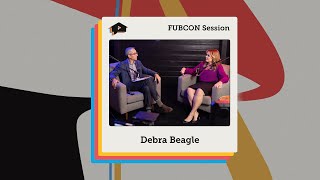
A recorded FUBCON interview (Oct 12, 2023) with Debra Beagle, co-owner and managing broker of the Ashton Real Estate Group (RE/MAX Advantage). Debra emphasizes consistency, documentation, inspection and iterative optimization for high-performing teams, describes how CRM (Follow Up Boss) and a structured ISA function raised conversions (including a recent 5% lender-conversion bump), and shares tactical details on ISA scheduling, comp-plan changes, hiring and personal routines that support sustained performance.
Questions this video answers
October 12, 2023.
5% increase in lender conversion (reported after the recent tweak).
Implemented around late 2017 into 2018 (Debra cites end of 2017 going into 2018).
Primary ISA shifts 8:00–16:00 (8am–4pm) with one ISA doing a swing shift 13:00–21:00 (1pm–9pm).
Debra reports that in the first six months after hiring Joe the team's volume rose by almost $100 million (that year).
Chapters
No matter where your business is today or where you want to take it, you'll get there faster and more profitably with an operating system. Welcome to Team os, your guide to starting, growing and optimizing real estate team. Here's your host, Ethan Butte.
This episode of Team OS features Debra Beagle, the co owner and managing broker of the Ashton Real estate group of ReMax Advantage, the number one ReMax team in the world. We recorded it together in person at the JW Marriott, LA live in downtown Los Angeles at Fubcon. And in this conversation she delivers insights into operational excellence, including documentation, consistency, inspection, accountability and optimization. She also delivers some great tips and breaks one myth about building an ISA team. Here's my conversation with Debra Beagle to kick us off.
Deborah, what is a must have characteristic of a high performing team?
Consistency, grit and operational excellence, which is you've got to document everything that you do and you have to do what you say you're going to do and then you have to inspect and improve it.
Love it. I love that breakdown. Let's spend a minute on inspection because I know that's an area a lot of people struggle. Like how I don't have the time to look at all the detail. How do I know what's important enough? Like do I set alerts to surface things, talk about what inspection means to you and kind of, and maybe even how that's evolved.
And with our team, I mean it's really inspecting consistently because over time you are going to see the data and when you're doing certain things, you know, you say, hey, this is what we do every morning. Our agents are supposed to call all of their leads that are in their leads to call today and they're supposed to do an activity. So you know, then you go back and you audit and see and inspect that they're doing it and are they having success with it and is there something that we can tweak or improve that will give them more success? But again, you've got to start tracking it. You've got to start at some point and it's something that gets built on. It's not like, oh my God, we got like a hundred things we've got to do. You just have to start somewhere, pick one area and focus on that and focus on the inspection of it. But all forms of accountability are. And this is where when we look for agents to join our team and our brokerage, we're looking for people that are open to feedback because we're not giving feedback to make you feel bad. We're giving feedback to help you improve and sell more houses and provide and thrive for your family. So. And that's where it gets kind of gray because agents are 1099 and they think I want to do everything my way and I'm going to do it, you know, and you can't tell me what to do. But when you're running a highly effective and high performance team, the people that join say they want to be a part of that because we're stronger together, we're better, we have the systems and processes so we're checking and that's the inspection part. And you have to be open to feedback.
Yeah.
You know, anytime that we try something different, we monitor it and see if it's working. I mean we just implemented three months ago, three and a half months ago, you know, our inside sales agents are working to set appointments for our agents and we decided, hey, let's, let's do some training with our lender, with them. Let's. If we can't get the appointment with the agent, let's set it with the lender. Our lender conversion has gone up 5%. Just that little tweak and our lender is integrated into our follow up boss so everybody can see. So by the time that boss buyer is ready to go, the first lender they speak to usually is who they stay with and that's our primary lender partner. So I feel over time that little tweak is going to show itself in our team conversions in addition to what we're already doing. But you don't know that until you track it. And that's one thing too because we haven't really broken down and that would be another metrics. And that's where you. What are we doing? Are we doing it? Yes, we're doing it now. And then you have to inspect it. So do we now also look at our closings and conversions? How many were original appointments set to agent and how many were appointments set to lender and see if we're having a higher rate with one or the other. That's how you look and inspect things and then you tweak.
Yeah, really good. I like the way that. Because there are tons of ideas. Lots of people have lots of ideas. Lots of people try things. They don't commit to them and they're probably not committing to things that could be very useful but they don't have this tracking layer added on underneath. What you made me think about in that offering was like flashback for me, like eight years or something. I just picked a Random.
We opened the brokerage at the end of 2015, 16, and we had very little staff. I mean, it was just Gary and I and we had our office manager and a receptionist and, you know, we had 50 some agents. We were growing agent count. And, you know, we've always been one to look at ways to increase productivity and conversion. And then we just started. You have to start somewhere because we were like, God, we have so many things we want to do and it just seems so far away. And that never ends. That's the other thing. But back in 2016, we hired a finance person that helped and just started doing all of the, the closings and paying. And then we hired a transaction coordinator just to help the agents with their transactions. And then we hired an inside sales agent and every ad that we did, we improved. So I mean, our productivity just kept increasing and increasing. But. And on stage, when I spoke at fubcon here in la, one of the things that I touched on though is, you know, like our inside sales department, we had a lot of changes. We've gone through three comp plans, three different compensation plans for them, and really looked at our data, looked and had to make some decisions based on the data. It's nothing personal. And that's, I think, where a team leader or an owner that's trying to coach up their agents or their staff. It's nothing personal. It's the data. We're looking at it. How can we improve? And we take that data and we improve with it.
Is there anything that you have in place today that you're like, gosh, I really wish we had come onto this four or five years ago. And I'm asking on behalf of team leaders who are. Their team is not quite as developed as yours, not as large or whatever. Like, is there something that you're like, gosh, I wish we had been turned onto this a few years earlier?
Oh, absolutely. Because it was so 2016, 2017. I think it was right around the end of 2017, going into 18, that we integrated Follow Up Boss the CRM with us, which. And this is now, because I talk about this all the time and to other team leaders and you know, the best. It's a Maserati. I mean, it's just, it will do so much for you as far as giving you the information to help your agents and your business thrive, having a good CRM. And that's the one thing I was like, you've got to have a CRM where you can get in there and help coach your agents. The recorded Conversations. A lot of you recording conversations. That was a big mind shift back then. But it's like, well, this is, this isn't us listening to your conversations to, you know, this is us here to help coach you through your struggles and to help not only coach you, but to get that information to help coach the other agents that might be experiencing or our inside sales agents with what is the consumer? I mean, they're the front line. So that's, that's what we're hearing from the consumer sentiment. So. But the CRM is critical follow up. And that was game changer for us because I think the year we implemented Follow Up Boss, we started increasing our inside sales agents. We had a good, strong push in agent recruitment. It was just. It all started to come together. The other thing though we were doing is we were documenting everything that we do. I mean, every little thing. You know, you get a lead, you have to make 17 touches. No, you can't feel like I'm bugging them. This is part of the process. And it's just, you need to do the 17 touches. And, and we're making sure you're doing that because we are seeing that if you do this while it feels hard, it works. And that's what we. We have stuff that works. We know what works now. Sometimes it doesn't work really great, so we tweak it to take it to the next level. Like the appointment sets. I thought that was brilliant. And integrating our lender in. And if we can't get the appointment with the agent, hey, let's punt it over to the lender. So just those little tweaks and then the other thing, like with our inside sales agents. I just spoke on this at another event last week on the ISAs, and I pulled up the schedule. I wanted to show our schedule because that's another question, you know, you bring on an inside sales agent, how do you integrate them into all your systems and processes? What you. You got to train them on your CRM. You got to train them on how you take a lead, how you process a lead. And now our department's pretty big. Not the small one, but.
But it was small at one time.
It was, it was one. It was Joe, who's our leader now, and then we added a second. So. And we gradually built up to the most coverage. But right now our ISAs are working 8 to 4. Our ISAs love to log in at 8. I log off at 4. Whereas we know most realtors want. You work 24. 7, 7 days a week, basically at the Mercy of your client or the deal. But, you know, just in a little tweak. So our ISAs work 8 to 4, and we have one ISA that does a swing shift every day from 1 to 9. And I pulled up the schedule, and he had a B's and C's on the schedule. I was like, what are the A, Bs and Cs? Like, I didn't even know I was. But I. Three weeks ago, he goes, you know, I was thinking about how we were doing this, and I thought the very. In the morning, when the inside sales agents log on, they're all hands on deck. They're handling any incomings, outbounds, you know, stuff right now. And we were trying to also do nurture. So as a part of it. And it would be. You get through all this and then you're an isa, you work alone, basically with some communication with Joe, but you. So they're working. And then they would go to do their nurture at whatever time. So he split the ISAs into three groups. A group, B, group C, group. A group does their nurture from 10 to 12, B group 12 to 2, and C group 2 to 4. So we have nurture six hours a day separate. And the ISAs are loving it because it's more structured, which the ISAs love. Structure.
Yeah.
So. But Joe, that. That's where you're looking at things. And a good leader, and he's just an amazing leader. The people just respond to him and he makes these decisions with their input at looking at what works, doesn't work and is trying new things. And we're tracking how is it working. So. But.
And it's a journey and it's never perfect.
That's right.
Take me back to the beginning of the isa. What was going on in the. Where you said this seems like something we should be adding to the team. And again, I'm asking on behalf of people that don't have an isa.
No. And a lot of. A lot of people think ISAs are needed. You know, if we're spending money for leads. And I try to get team leaders and even individual agents to look at it. Not just, you know, an isa, an inside sales is not just for a team or somebody spending a lot of money. It's all incoming leads. If you're a 10 to 15 million or $20 million producer, you repeat clients. You have people in your market that are reaching out to you. You have clients that you've worked with in over the years that now need to buy or sell a home. And as things come in and doing that nurture and the touches, so many people will get hired by an agent or I mean get hired by a client, do one deal and never communicate with them again and you have a great CRM with follow up boss. So that inside sales agent, just one adding them in and if maybe you hire one part time that is going to give you consistency in your follow up which for anybody, regardless of the size, it's a game changer. Most realtors are good in the field. They're good at going out there and working with the client and selling and, and where they may be good at paperwork and doing all of that nurture and everything dollar productive wise they're better out in the field. And a good isa it's more about the consistency and being that trusted real estate advisor for your client regardless of what level and, and it's hard to do and be all things so. And I coach all my agents, you know, I do the four quadrants of you know, what are you good at, what do you love to do? So that's quadrant one. And then what do you love to do but you're not good at? And then what do you hate to do but you're really good at it. And then what do you don't like to do? And you really kind of stink at it. So finding those things and that's where you leverage your time. You bring in people that you can compensate at a lower per hour, whatever your hourly rate is and you find those places to fit into your business. And an inside sales agent is invaluable. And our, our needle has moved going back to 2017 every time we added one our volume, I mean Joe, when we added Joe and he was, he's, he's really the perfect model isa. And when we hired him, I mean it literally this first six months we went up almost 100 million that year. It was, it was a game changer just having somebody in there inspecting and making sure the leads that were being hand out that they were being followed up with and that this was us working together. I'm here to help you as an ISA and, and this client, we need to help the client. So an ISA is just a, you know, the first. I think if you're a top producing agent or starting a team, you have to have a strong admin which kind of could, you know, kind of rolls over to an isa.
An isa, it depends on how you write that chapter.
Right. But that's where you start. You write down everything that you do. You gotta say what you do and then you know, you're doing all of it. Who can you bring in to do parts of it to take it off your plate so you can grow your business and then you have to communicate with that person and see how that's working for them or tweaking it or, you know, but that's the whole four stages of growth, of operational excellence. I mean, when you look at any of the big programs like Eos or things like that, they track everything. So. And it's not that people are bad, it's to really help move the needle and make difficult decisions. Yeah. Because last year it was hard for me when I had to lay some people off because the market had just. They're just the work wasn't there and it wasn't me saying I have to let you go. It really. The data shows it helps make the difficult decisions.
Yeah. I would assume that of course, those decisions, even just changing comp is probably just part of paying a lot of attention in doing your appropriate duty on behalf of everyone, past, present and future who will be in the organization. Of course, people you serve to run a profitable business. That is the foundation for your privilege to do the work.
It is, it really is. And last year, that second comp plan with the inside sales agents, because the market had increased in value so much and they were getting paid a percentage of the closing commission so that it wasn't moving, we weren't generating more transactions, they were making more money. And it was. That was a challenge. I think all transactions for the ISA should be treated the same. I think it just focus on the service to the client and the rest will come. And it is, it's coming. They're going to make more money this year on the flat per closing versus the percent last year and the business. We've made up a 30% market deficit, breaking even. So it just. And. But it was analyzing the data last August, it was really sitting down and looking at it like, this isn't working for the company. It was working for the isaid, but not for the company. So we had to make some, some changes and pivot.
Yeah, lots of really good stuff there. I appreciate so much this idea of the ISA function. The way that I was thinking about it, as you were describing it, is it's just this layer of consistency in support of people that need to be flexible and adaptable to urgency, needs, changes, emotions, the direct client facing stuff for active deals. So I really appreciate that. Deborah, this has been super awesome. I appreciate so much your willingness to do this with me. I'm so excited about what you all have built and your continued growth, especially in some of the headwinds that we're facing as we record this in late 2023. Before I let you go though, fun question for you.
Okay.
What are. And you only have to answer one of these.
All right.
What are some of the ways you prefer to continue learning, growing or developing or what are some of the ways that you prefer resting, relaxing and recharging?
Okay. The learning, growing is definitely for me, it is attending these conferences and just being. I flew to another conference and I was on the plane for four hours sitting next to another team leader and we literally mastermind the whole time. As soon as I landed, I got to the hotel and it was sitting like, like this. Like we're sitting right here and just. What are you doing? What are we doing? Oh man, I need to do that or I need. And then there's just. With like minded people that are facing the same challenges, I think, you know, because everybody. Why are you traveling, doing this? And it's really to have a pulse on the industry. What is new, what is out there, what is working, how can we tweak? And which again goes for operational excellence. You gotta be able to improve what you're doing. So that one's a big one. The hard one for me is the downtime, you know, finding the relaxation. But on a funny note, my husband and I, we. So for 20 years we've been going to this little tiny island in the Caribbean off of the coast of Cancun. And last summer we bought a house on the island, which is crazy because I'm. We're so working all the time and yeah, we have a house down there. So we try to get down there like three days we'll just pop down there and try to rest. And I don't know, but that's, that's the extent. But then I just got Starlink set up there.
Yeah. So that resting is kind of borderline.
Going to be work. Yeah.
So that's awesome.
That's. That's the one thing I think. And just trying to find those little things in the day, I, I love little things. My home is my happy place. My back porch, my dog. And my mornings start that way. I let him out and then I sit on the chair outside and he pops on my lap and just, you know, that's just a little bit of grounding. But it's consistency. I do that every morning. So it's one of those anything that you do, just try to do it often, the little things.
That's awesome. I have at least an hour more questions about inspection. We will have to do that at another time. Like I want to like you well.
And you know what's interesting too, so. And I'll throw this little one out because it kind of goes on that rest and relaxation. This is something that I learned because it wasn't tied to my business but it impacted my business. I want to work out. I love to work out. I am on the phone, start at seven, I go till five and it was very hard for me to step away from the business. Go to the gym, which a lot of people, you know, it's your drive time there is doing it or you set something up at home and somebody said, well why don't you get a mobile trainer that comes to the house? And I was like, okay, that's actually a good idea. I'm an afternoon one. So she just shows up at 4 o'. Clock. I've been working with her for two years now. She shows up at 4 o'. Clock. I literally just shut off, go out there. I don't think I'm not on my phone. I don't have to figure out what I'm going to do. I just. Because I'm making decisions all the time and having to. I just turn myself over to her and she runs me through everything I need to do. And probably one of the biggest game changers in my personal life was that because I was able to do it consistently I can't not show up because she shows up at my place.
Right.
So it's.
It's like a baked in accountability.
It is baked in accountability. Which. And that, that's where looking at the way you do things in your life and how you can tweak it and leverage your yourself and your time to accomplish the things that you want to do is important. And I would never have thought of it. And somebody said it to me and I was like, well that makes sense.
Yeah, it's awesome.
But it's when you're talking to people and that's where the ideas and things that'll help you move the needle come about. Cool.
Well, I appreciate everything that you shared here. Again, I have more questions for a different time.
Okay.
And this is like kind of an open mini mastermind and I appreciate you sharing your experience with folks. And that's what we're trying to do here is bring ideas from successful people like you to other people for their benefit.
Yeah. And I always say this and I was telling Ricardo I said I probably sound like a Follow Up Boss commercial, but truly Follow Up Boss has been a huge game changer for us and for a lot of other teams that I have coached and helped by integrating it and using so many of the features. And the other thing too is because we're very progressive and forward moving with different technologies. Our relationship with Follow Up Boss and the integrations that you guys have done, we have been using just another company or are open to close is one for our, for our contracts with our contract coordinators. And now we have the integration with Follow Up Boss. So it's all going to be in one place, but I love it. So awesome. It's a great tool and it helps in all areas of your business.
As you well know, it's a privilege to be of service to other people. Yeah, it's nice to hear.
Awesome. All right, well, great.
Thank you, Deborah.
Thank you.
Thanks for checking out this episode of teamos. Get quick insights all the time by checking out real estate teamos on Instagram and on TikTok.
More from Real










Zillow, PPC, Referrals… what’s actually working in today’s market? #realestateteam
