Jon Cheplak on Teams vs Traditional Brokerages [FUBCON Session]
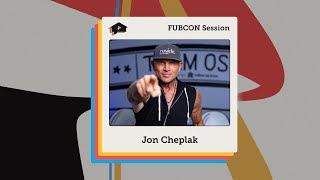
Recorded at FUBCON, this interview with Jon Cheplak explores how high-performing real estate teams differ from traditional brokerages by enforcing clear standards, prioritizing human behavior and emotional intelligence, and tracking a few high-leverage metrics (notably average reach-out attempts and early lead follow-up). Cheplak emphasizes enrollment (relational, experiential onboarding), mutual accountability, mastering mundane skills through repetition, and the growing operational sophistication of teams (COOs, ISAs, listing processes). He also reflects on industry trends, agent anxiety around splits/models, and the importance of people-first leadership (P&L vs. people in their lives).
Chapters
No matter where your business is today or where you want to take it, you'll get there faster and more profitably with an operating system. Welcome to Team os, your guide to starting, growing and optimizing real estate Team. Here's your host, Ethan Butte.
This episode of Team OS features John Cheplak, who is dedicated to growing real estate teams and companies by developing stronger human beings. We recorded this together in person at the JW Marriott LA Live in downtown Los Angeles at fubcon. And by watching or listening, you'll get John's insights into the advantages that today's teams have over traditional brokerages. Into tracking fewer but more meaningful metrics, into enrolling people successfully into mutual accountability. And into sustainably growing your business by reframing the way you think about your P and L. John also shares some of the top takeaways from his recent Tahoe Mastermind. Here's my conversation with John Chatblack. John man, thank you so much for making time for this.
You bet.
Appreciate you to get going. I've asked this question to dozens of people now in the past couple of days and I'm going to ask it to you too. What is a must have characteristic of a high performing team?
Standards that are actually enforced, Period. That simple? Yeah, they all have them. But your standards aren't what is in the contract. Your standards are based on the behavior that you allow or do not allow. It is the, it's the make or break period.
How do we, I mean so much of like. And I feel like we're gonna get into a lot of like behavior and psychology, I feel like, because I love it. I know it's like underpins everything. You. How do we put like mechanical definitions on or do we. On the types of behaviors, the tone, the language. How do we set some of those standards? Like, I think, I think it's easy for a lot of people to say we have very high standards and our service is above average and we don't like. How do we like really practically for someone that's like, okay, I've tolerated a wide variety of behaviors and actions and treatments of other people, customers, other agents inside and outside the team or the brokerage, whatever. How do we start locking that down a little bit? How do we start putting definitions on it? Or is it just a cultural model thing?
No, there is, there's science to it, mission principles, values, but not in the form. I mean, because we see that first step of okay, I've got them. And then what happens a lot of times are these, these big college words that are on the wall and no one even understands or even reads them anymore. So, number one, it is establishing those. They are part of the interview process. They are part of every decision that is made. They are part of the sales meeting at the very beginning. They are read in the beginning. They were read at the end publicly, while respecting human beings because, you know, sometimes people are not going to align to those principles or values or something's going to happen. And letting people go with dignity, but letting people know that every decision is based on those, because otherwise you end up with this grayness that our industry is full of as it is. And so then we have these challenges of, oh, gosh, it can't be. It can't be black and white. I'm watching today. And many leaders have been forced to learn it because they had no choice. And now they're thinking, why didn't I just do that before? You can do it if you choose to do it and you do it the right way, and you will win because you're going to impact people's lives. So I think it's mission, principles, values. I think it is repeating it over and over again. Every decision is made based on it. And publicly, when you make decisions, bring it back to those.
Yeah, really good. And probably also things that you celebrate or train against, you reinforce. Use those as teachable moments as well.
Yep, a hundred percent.
Now, let's talk to the kind of. The practical side of it that is even probably, and you tell me, more difficult for more people, which is accountability and tracking. Tracking and accountability relative to those standards. What do those look like? How do you advise? I mean, you know, obviously someone leading a team of, let's just make up a number 42 agents, even if they have really good people around them, you know, you can't track all of the things. Like, how do you advise tracking in order to create healthy accountability?
Sure. And I love where you went into it because there's. There's two parts to it. You can have the scientific part down, but if you don't have the emotional intelligence, the emotional maturity to take someone through a process of accountability where they don't feel condemned, doesn't matter. Right. So I think the critical piece is your communication skills. Seek first to understand, then be understood. Don't go fast, go slow. Constantly living in rhetorical questions. Rhetorical questions, in my experience in leadership, are the most powerful questions. Allowing them to bring it forward. Keeping why? So that human behavior thing, Keeping why out of it. The minute you put why in there, it's over. Because I'm going on defense mode. Because what we know also the people you lead, there's an element of, of their parent they chose to work for. And the number one thing we want from our parents is approval. Leaders don't think that scientifically it's interesting because I just spoke to that. I think there's many ways. Here's what I've seen. Okay. And because of the. I don't get no nothing for plugging this. It's I just taught from integrity. The average contact attempts is everything. If I were to go to one metric that tells me darn near everything and take me down the right hole because I think there's this over analysis like what you said too. I mean we could go down so many rabbit holes on one age. But your text to call ratio was 3.2 and it should be this in your email to call ratio and your time on the call and this and that and you can and they're all valid. But the one that I've watched that moves the needle the most is what average reach out attempts on two big ones, average reach out attempts on leads and then the first 10 days of a lead and then, and then what I've got tied to that is sales on a quarterly basis and that's all over the board. I've got some people that are, you know, you've got to sell six homes in a quarter. Some are three homes and a quarter. Yeah, I think, I think keep it really simple.
Yeah. I think the most important thing you did there is say yeah, we can pay attention to all these things but let's find the ones that truly matter and let's pay attention to them. Something I feel like you have something to say on. I know I have an opinion. I want you to validate me is what I'm really doing here. Same as you said before, I'm looking for approval for my own thoughts from other people. So it's the number of contacts and all these things we can look at is really all about and I'll just say it this way, we want X. So in order to get X we need to produce 7x of this. And if we want 7x of this then we need to do 10x of that. Right. So and this is like calls to, sets to, holds to whatevers to whatevers. And implied in all of that is that there is a, is a ratio. But it's, it's like it's about what it's about a baseline, it's about some historical metric and what it doesn't take advantage of is how are we actually doing the 10x how are we actually doing? Because not all the calls are the same, not all appointments are the same. And I feel like if we spend more time in. How are we executing these things? Not just how often are you pounding, pounding, pounding, pounding. We would get to the same place by probably annoying fewer people, both our agents and our clients. Thoughts on any of that valid?
Because there are only two. That's the neat thing about real estate. We're sitting down with an agent and they want to do more or they just want their business looked at. Well, great. It is activity or skills. There's nothing else. And so what you're talking about is 90% of the challenges leaders have is with agents activity. But 100%, as long as you have moved them to that activity, it is then the mastery. And I am about that because the mistake that leaders make. So it's a 100% resounding yes. But here's the reason why it doesn't happen is because leaders, we're all humans. We want to validate ourselves, especially leaders. Part of it. There's that thing in there. I've got that helper thing in me. And so they keep throwing new training on instead of going back to the same training and mastering. You know, my buddy worked. Didn't work, played. Probably worked for him. He was in Belichick and Brady's locker room. Okay. He said it was the most boring, miserable part of his life, and that's what winning was about. His foot would be. Yeah, just reps mastery. He said that, you know, they'd be across the field and Belichick had yell, Brady Evans, run it again. You stepped one, like over and over and over. And leaders got to have the strength to keep going back there instead of the validation. But they've also got to have the enrollment skills to get people to understand the mastering the mundane. And that's really not to go off on the tent. That's what Belichick's mastered.
Yeah. That's fantastic. I appreciate that language of enroll as well. Speak a little bit to that. I mean, part of what I heard in that word in the context is, you know, we can't want things for other people. They have to want it for themselves. And we can't force someone into joining whatever joining means. Joining this mindset, joining this philosophy.
A choice. Correct. Yeah.
So we need to enroll them in. There's a welcoming aspect of that. There's a formality to that word. Right. I am enrolling in something like it needs to be in that. I feel like there's like a clear communication piece. Talk about the word enroll.
Sure, enroll. I mean it's so encompass so many things. You know, we're in a sales business and we're hiring salespeople and recruiting is. It's a 10x ROI1 recruit. It's really 100x if you really to map out, okay, over the life of you with my organization as a recruit, the retained dollars that I'm going to get from you over time versus one sale which I might get some referrals. It's huge.
So.
But, but the key piece is in the enrollment process is it goes like this a creating experience of what it's going to be like when someone works with you, chooses you or buys the product as best as you possibly can in the enrollment process, expecting nothing in return and coming from a foundation of relational versus transactional. And sure you've got your KPI, sure you've got your numbers you've got to hit, but just staying true to that mission, being crystal clear in the enrollment process of what someone wants. Stop being the hero, you know, the simple hero guide. See how you can facilitate the condition for that person to be the hero and make sure that them being the hero in what they want maps morally, ethically, from a personal standpoint and also from a professional standpoint. So I think the enrollment process is really. It's enrollment, it's indoctrination, it's experiential. Before anyone makes a choice, almost to the point of hey, free trial offer, that's what enrollment is. But then also though is making sure that it is mutual accountability. In our industry, it's singular accountability. A lot of the time the leaders think they've got the accountability because mutuals respect, it's mutual. No, many of them are on their heels not holding people to standards because the agents holding them account, hey, you better. The leads better get better. Hey, you better do this, you better do that or the split better. Right. So yeah, yeah.
How do you advise some of your best team leaders, most successful, to invite people to hold them accountable.
To declare, publicly declare what they're doing when the agents, for example. A great example is an exercise we do call go to the board. So quarterly. And I really break things down. Simple. You know, big business plans are great, but here's what we know. People do a big business plan, it goes in the drawer and they never look at it again. So we do this declaration process of how many homes you're going to sell, what's the one lever, if you go all in on this one lever that's specific, measurable and actionable, it'll happen. And what's the one thing you want to have happen personally? So every agent does that. Then the leader has to go up at the end and they have to declare, from an organizational standpoint, public declaration. And then they declare it to them. Let them know too. Listen, we are. You're not my customer, you are my business partner. Okay? We have mutual accountability. So it's the declaration of what you're doing. And so I'm going to declare to you and we're going to ride along together. That's the number one way I do that.
You're not my customer, you're my partner. Is that more true in a team environment than in a traditional brokerage model, in your view? Or is it. Is it kind of about the same.
Same, same because you're still in that partnership? Because here's for a couple reasons in. And you know this, in A, B to C, it's a buy, sell relationship. You're only as good as the next thing you're selling me. And so the other program thing in humans is customer's always right. The difference is for the traditional brokerage is you're there to deliver training, you know, probably some, a little bit of advertising, things like that. Now what I would say is there are some cases in a traditional brokerage where they're really like a landlord, you know what I mean? Pay your fee, I leave you alone type thing. So there, yeah, there you get into. I mean you can get into B2C, but as a whole, the true operational ones, I see it as a B2B. I do.
Yeah. Fair. Okay. You've been in the industry for a long time. You've been in a variety of different roles and capacities in that you've seen a lot of things. You're what I'm. This is my long tee up too.
I love it. It's great, man.
What's the give give a quick snapshot of your view of kind of the past and present of the team model. How long has it been on the rise? Where are we? And then maybe push to a future trajectory. Like when did this start to become a thing on your radar? When did we start using this language? And when did you say, oh, this is. This is a thing and it's different. This seems to have some traction. Talk about some of that inflection along.
Over the years, 11 or 12 years ago, roughly. I'd have to go back, but I remember the Phone call.
Okay.
Guy out of Phoenix, he says, I just heard you on a podcast. I get it. We're a brokerage within a brokerage. I need to learn how to function like they do. I'm a team. I'm a top team. The guy came back in. So I don't know if it was 11 or 12 years. And he followed the same principles. The principles were universal. And I can remember thinking, I'm not going to mess with teams, even though I know it's different. I'm not going to mess because I was dealing with a lot of brokerages and. But then, you know, he took the same exact principles, blew up his business, started telling people. So anyways, you know, I think that. And then from there it's just been this trajectory that. Here's my opinion and I've said it to my good friend and he was a coaching client at Coaching for about four or three years. Adam Kontos, FORMER CEO.
Oh, yeah, absolutely.
Yeah, I coached Adam for a bit. I says, Adam, three years ago, four years ago, I said, here's a scary fact. And this isn't about whether it's ReMax, whether it's Coldwell Banker. It is the traditional broker. Here's what's scary. And this talks about the progression of the team. I could probably put your top 10 broker owners in the world on that side of the table. And I could put Justin Haver, Gary Ashton, Rob Golfy, Peggy Hill, Frank Leo. These are the top 10 in the world, ReMax. I'm just using them as an example.
Yep.
And I could do a drop ball of a lead and say, tell me what to do. In the first 30 days they'd be done. And then how do you generate those leads and how do you continue to generate those leads and what do you do with SEO and how do you handle a PPC and how do you. So here's. Here is my. And I've got great broker owner friends. And guess what, it's interesting. A lot of broker owners, because they know that I work primarily team. They're coming in and coaching, being in my environment. You want to know why? They're smart. They're going. I want to understand this. Okay. They're passing them up, they're getting passed up. And. And so I think that the team model. There's arguments both ways.
Sorry.
Yeah.
Passing them up by their knowledge, their.
Competency, their online presence, value to the agent. To value to the agent. Lifestyle for the agent too. Yeah, yeah. Really good. The. It is the ease at which they can do what they're meant to do toe to toe and knee to knee with the consumer. And it's, it's tough. I mean you and the margins too. You know, you've got these teams, you know, I've got some, I've got outliers that hit a 35 of top line gross. You know you have those anomalies out there and I'm talking to realty, not small. I mean you get someone small and they're selling, they're doing 40. I mean that's. But that's not, let's be real. Right?
Yeah.
So. And you see these brokerage they're hoping for like, like if they didn't sell houses, the broker owner in a lot of cases they would make a profit. Like their sales make the profit and sometimes keep them floating. So you know, listen, I think that it's not going to get easier. I think that they must, and there's big, huge brands out there. They must continue to progress in the online world and understanding the behavior of the Internet empowered consumer. And they may say, oh we do and we this and that. Well, I've sat in those rooms, the broker managers and I've sat in the, and these guys with their SEO and I mean they're, they're ridiculous. So I think it's, I think the online world is one where my advice to any broker owner is man, work on your skills because I think that, I think you'll see these teams roll people in. I've already seen it happen. They're rolling them in.
Yeah. So as we record this at fubcon we're like a week removed from your event in Tahoe. Your mastermind. You know, you had amazing people at the event when you're now a week removed. I'm sure you spent some time reflecting on like how that whole experience went. What are a couple things that like collectively people, there seems to be some excitement and energy around and then maybe what are a couple things that there's some anxiety around?
I think there's big anxiety around their modeling. They've got pressure constantly because the first place an agent goes to when their sales go down. Oh well, you should give me a better split. Yeah. Because since I'm making less. Yeah, yeah.
You need to make up that difference for me.
Yeah. And I'm watching and this is a lot of the conversations whether it's privately with clients which, you know, I maintain their confidentiality and or publicly with someone approaching me. John, I've got pressure. Should I change model? It's this, this immediacy it's really strange. There's this immediacy to just change model. That's the big one. I mean I've got to give up, I've got to do this hybrid. I've got to offer more. I've got to offer more. And you want to know what's interesting? Do you know the people that are having literally record break and I would sign someone who did, you know, 10 deals last year and they did 20 deals this year in September. I'm talking about people that their, their best month ever was 30 million, 40 million. Right. Is they are unwavering, their splits are the worst, whatever. I mean maybe that's not the best but their splits are the lowest. They are just sticking to the standard. So that's the one, that's the one concern I see.
I think the, and so it's driven by agent anxiety. It rolls up there, there are higher demands and they're like how do I deal with this?
Yeah, I mean I can't. I'm not making as much money. And, but here's, here's why that's happening though. It's a leadership piece. It always comes back. Didn't enforce the standard because if, if the agents had stuck with the standard of the amount of reach out attempts, the calls, emails, texts in the database instead of cherry picking, you know, hey, their habits would have been pretty good. But right now the toughest thing to do is okay, you got to pick changing the behavior all these agents or bring in new people that believe in it. You're going to change a few of them. Right? So that's the biggest one that is the biggest concern. I think the, you know, the changing, I don't know as much. It's very interesting. I'll hear from other people. But the changing of you know, the buyer broker, the NAR thing and the settling that's taking place with.
Oh yeah, yeah, yeah. Buyer stuff.
Yeah, yeah. But you know what's interesting though is they're all powerhouse branders and my, my opinion is that yeah, you got to build your skills up and extend your value. I don't see big concern with them and they're real transparent with me on that one. What do they see as opportunities? The, it's, it's, it's like never never land out there to blow your mind. And I saw from bringing it in. But I know YouTube, I mean, you know, we bring in a guy that does a million dollars net income, million dollars in GCI. Excuse me, in 16 months from startup of an organic page, spending no dollars and it's so what's so interesting? So it was one of those, you know, sexy things, if you will. But it's shocking at their brilliance of the caliber of people in that room that like there was a 1 out of 250 in that room that is generating organic leads regular every month. So that was it. I think the honing in on their listing presentation, big time. I had typically not surprised me because I'm typically looking at, okay, ISAs and lead follow up and lead conversion and recruiting these business owners. And it's like, oh my goodness, I've been bringing these people together for years and I don't go through their listing process.
Yeah, that's where we started. It's what are the key things that actually move the needle and let's focus there.
Yeah, totally take my own coaching. Right? Yeah. I mean, I'm like, whoa. Yeah. They were all over it. They were all over it. They really. The listing process, The thing is the mindset theme. So I've known her for 20 years. Someone special in my life. She's a legend. Sherry Chase. She held the record for the highest price home sale in history for years. Thunderbird Lodge in Tahoe. Okay. 60 million. Double ended it at the rate that most of us would like to get. Yeah, we'll say that. Okay. In 98. And so I had her come speak, you know, day in life. She sold 12 homes in her career, over 30 million.
Wow.
I think the big thing that really got them and moved them because she went up, she said nothing about luxury real estate. She talked, she focused on human you need to become to do luxury real estate. And it moved that whole room. I think there's this when you get in challenging times where you're not feeling as confident and hey, I'm not hitting my numbers, you know, it's.
It.
It's easier to take a look at ourselves a little bit more because you're kind of forced to. So I think there was this real desire of the interpersonal with these folks. I think that was huge. Trying to think which other ones really stood out. The marketing and branding was. Was good people, people like that. But the listing, Deborah's. Here's what's neat too. You know, Deborah runs an organization. She's got three or four ISAs that will be a part of 100 sales a piece. And so there was a real magnetism towards that and how that runs yet then there's other people that run without them and do well too.
Yeah. So that's my favorite thing about these conversations that there's no one way to do any of it at all. And. And you can take pieces from a variety of different.
You know what? It just hit me.
Yes.
I think the operations panel was a hit. So it was three COOs. One from a $700 million team, a $900 million team, and the other, I don't know, 900 transaction team. They're all just big. It was unreal. And so what we did is. And it's a safe room. A lot of them are my clients, but they've been with me for years. And so they gave the freedom and was what I discussed. How do you deal with the crazy of the visionary? Yeah, yeah.
That's a thing.
Oh, it's a thing. And people are just like. So you can see the visionary going, oh, my God, that's me, that's me. That's me. That one. That was big. Yeah, that's big. Putting other leaders. But you've got to facilitate that environment, too. I've got to have leaders in there that feel safe and trust me to put their people up there also. That's not the. I'm wonderful. These. I'm just fortunate. These people have stuck with me and they've built the community. But they really like seeing and hearing from leaders of other organizations. Not the team leader. They like that. But other people.
Yeah, the guts. Because it's easy to see the. On the surface, whether that's on social or anywhere else, it's easy to see the team leader and hear the team leader. And the team leader gets. Frankly, I've been talking with a lot of team leaders myself, but, yeah, that. That COO and then other positions. And Gary, when I had Gary Ashton on, he was of course, immediately. And very gracious about Deborah and how she makes the whole thing. He's like, she runs everything. She calls me the visionary because it appeals to my ego. So everyone understands that that partnership is key. I mean, she couldn't do it without him. He couldn't do without her. But the person that we tend to talk to the most is not the operator. And I think. I think operations is sexy again. And getting that way, especially in this climate. I mean, everyone can feel like a superhero when the market's up, up, up, up, up.
That's really. I like what you said there because I've got a lot of the operations people they're crossing over into driving. I'm like, you're a COO sales manager. I mean, they're really. Because it's more process driven, I think, than it's Been ever before.
Yeah, right, Yeah. I mean, once that ISA model becomes so standard and more and more and more people are implementing it and that organization within the larger organ complex, as the business gets more complex because it's getting larger and the market is changing and all these other things that drive additional complexity, you need that skill set more than ever because the personality is not going to carry it, the vision's not going to carry it alone. You really need that partnership. At the risk of running long and keeping you too long.
It's my privilege.
I heard your go at P and L versus P and L. Oh, you did? Yeah, yeah. Profit and loss versus people in their lives. Yeah. And the reason I want to close on this is that again, this is where we started as well is the like to me, the profit and loss there are precursors and indicators that we can watch and we can track and trend and see if we're ahead of pace, behind pace, whatever and adjust as we need to particularly adjust expenses to manage what we're seeing in terms of top line. But it's such a trailing indicator even as we're watching it trend through the course of a quarter, through the course of a year. And all it is is the end result of the. And I'll go to a lazy football analogy, you know, you see the score at the end of the quarter, you see the score at the end of the game, but that score is simply a reflection of everything that happened moment by moment in the 15 clock minutes leading up to the end of that quarter. And so I just really appreciated the sensitivity a toward the human because this is still. If it wasn't as human to human a business, we would have seen a lot more of these startups that are, that are trying to move the human out of the thing. This is a human business and the only way to motivate people is to connect with their own lives. So like I, I would be remiss if I did not create an opportunity to get that go into this show, not just your own.
Sure, yeah. You know, I shared it on stage and I mean I'm young today but you know, and 2000 in 2000, so that's 23. I was 34 years old. I mean my business matured. Not even close. And I remember just, it was sheer force and terror and I got brought over because I could hit numbers. I mean I was managing an office doing 1483 transactions in 98. One office, one assistant manager and just clocking. And the, the first thing that Ed kraftchow said to me When I came over to be the gm, I waited till the first check cleared to go, why the hell did you hire me? I went from 100 agents to 100 offices and 5,000 agents. But anyways, he said, you're going to do really, really well if you abandon all of your real estate knowledge because it's there, it's in the end cloud. You're good and I need you to study. I need to obsess over human behavior. He says we can throw everything, I remember this speech, we can throw everything out on the streets. It's worth pennies on the dollar. But that human being is an elevator asset. They come in the building, the asset's there. That's 100,000 retained company dollar, that's $250,000 retained company. And guess what? That asset goes home. You got to make sure they come back. And so that taught me, it matured me because I was just so that driven part. And then, then he started to teach me empathy, you know, because I just, you know, again, youthfulness and, and that of why do it? They should too. They said they wanted to make this money. I'm showing how to do, I mean, you know what I mean? Yeah, yeah. So it was some real hard experiences that he allowed me to have. He allowed me to fail, but not really fail. He said, celeste, he says, I can't, I, I have to take risks like that so you can self discover. So that's where I got it and, and I was open to it. It was hard because he was tough. He's that true mentor. And, and I saw it take place when we were open up startup offices, we were walking agents over. It just changed every dynamic. And so what I do know is we are in a for profit business, but people move the money and if you, if you do not have deep psychological and emotional bonds with people, if you do not connect at the heart, it's going to be very, very, very temporary. And it's going to be a temporary production if they get up and up and running and, or it's going to be a temporary relationship if they get up and running over time. But it was just transactional. And so I learned it from there and with blind faith I listened to him and he's been right, he's been right because the heart chooses, the mind justifies. So if I can, and the other thing too is I can't make someone do something. I had to learn that one. And so, so if I can get.
To this, at least not to do it well.
Right. But if I Can get to this depth of what? What can. What can this do for your life? I'm not. Not freedom. What's freedom? Okay, and this or that. Or that. No, I mean, what is something? What is something? If you touch your heart, you feel it beat out of your chest as a result of this work we do, my likelihood of having them do the work versus the person. Okay, here's the math equation. Make this many calls, do this, this so long. Answer that short question. But it was someone that, you know, everything I have has been generously transferred to me. But I was open to it and took action.
Yeah. That's great leadership, by the way, to give you an opportunity to learn through the thing. The other thing too is that when you do that with people, not only are they more likely to succeed, they're more likely to stick with you when you messed up or things go sideways or whatever. Yeah. John, the way that I've been ending these is giving people two questions and you get to choose which one you answer. And they're related, but I'm taking the choice off the table for you.
Yeah, cool.
I'll read the whole. I'll give you the whole question, but I'm gonna have you answer the second one. So one of the pairs of questions I ask is what does it look like for you to continue learning, growing and developing? Or what does it look like for you to rest, relax and recharge? And I want to know how you rest, relax and recharge because I don't have any question about how you continue learning, growing and developing. You're constantly engaged with so many people. You're producing your own content, you know, through these conversations and things that you're learning. I feel like I have a zone there. Feel free to give me something that I'm blind to, but I really want to know how someone like you, high energy, highly productive, super engaged, locked in so often in so many environments, how do you turn that off?
Sure.
Or how often or how.
Yeah, it's typically with my wife and. But prior to that we just got married in April. But you know, we've been together a year or two before then. I mean, we're friends. Like just not even. But my time today is with her because she's the same. She's just full blown. I mean, 4:30am, she's in the gym, she is eating perfect. She wants to get her two little girls ready the morning time and take them to school. And then she runs a beautiful real estate business herself. It is with her. And our best time is literally. And people laugh. Saturday, we bought this cloud at Restoration Hardware, and she hates it because it's got the. The wilty pillow, so it looks terrible, but she loves it because when you lay in that cloud, you're just. It's like it's trapped the family. So it's. It. It's one of two things. Like our thing. We will just lay and spend time together. And maybe we're reading a book or maybe we're just chatt our home. We are very introverted. We go out and do the things that we need to do, but we don't do social things. We've got our friendships through this business and the work that we do in front a lot of people. So. So it's there or it's in the mountains with her and gosh, you know, if I'm home every Saturday, we shut it down close to every Saturday. Yeah. I mean, and then the mountains. We just got back from nine days in Tahoe. Two days was my event.
Yeah.
But we just go out and sit on a rock. So, yeah. My best thing is the mountains and then just simple stuff with her.
Awesome. I feel like there's an accountability in that between your two personalities to like. No, no, no. We are turning off. Are we turning off? We're turning off.
Yeah. You're on the phone. Yeah, yeah. But it's good.
Cool. Thank you so much for sharing that and thank you so much for spending this time with me.
Yeah. Thank you. I appreciate it, man. Great opportunity.
Thanks for checking out this episode of Team OS. For email exclusive insights every week, sign up at realestateteamos.com.
More from Real










Zillow, PPC, Referrals… what’s actually working in today’s market? #realestateteam
