Melissa Sofia on Doing the Most for Your Clients [FUBCON Session]
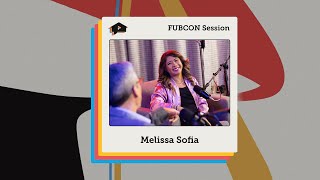
Melissa Sofia, founder of Avenue Home Collective, talks about building a collaborative real estate team and staying in active production to mentor agents. She partners with Side for back-office work, asks clients multiple times about competing offers, and shares her 2024 market outlook on interest rates and home prices.
Questions this video answers
November 30, 2023
Each new agent who joined in the past three years sold a minimum of 15 homes in their first year.
Grew from 8 agents to over 40 agents.
Production grew from $40 million to over $250 million.
Interest rates estimated to be sub‑6% in Q2 of next year.
Chapters
No matter where your business is today or where you want to take it, you'll get there faster and more profitably with an operating system. Welcome to Team os, your guide to starting, growing and optimizing real estate team. Here's your host, Ethan Butte.
Melissa, thank you so much for doing this.
Absolutely. I'm so excited to be here. Check this out.
Yeah, it's a pretty nice setup by the way. It's way nicer than the previous episodes I've recorded. These people are taking care of us really well. So fun to get us started. I want to ask you a question that I've asked literally everyone who has sat in that chair the past couple of days. And that is what is a must have characteristic of a high performing team.
Oh, collaborative in nature. 100%. It's like that concept, if you want to go fast, go alone. If you want to go far, go together. That is absolutely it for us. We were running, you know, pretty good production. We were virtual actually all the way up until 2020. And in September of 2020 when everyone else went virtual, we person and that ability to gather together, to share ideas, to communicate and help each other out when everyone else was going solo onto an island, it. It blasted us off into outer space at the perfect time when the market was also blasting off.
Yeah, I love this so much talk about. I mean, it's a risk of kind of asking the obvious. Talk a little bit about the in person dynamic. I mean, I have a very strong bias toward it. Like I talked my way back into the office before our office was officially open. Like in that, in that same zone. Like, like summer 2020. To me, there's a serendipity in it. Like I didn't expect this to happen or I wouldn't have asked that question. I would have just gone on about my day. But she's right here or he's right there and we can have a quick conversation about it. Talk about some of like, why was that so important to you to go against the tide? And what was your instinct on it?
Oh, well, I mean, I love to go against the tide. I'm like a rebel without a cause by nature. But I've actually, despite my how I appear, I've been in the business for 23 years. So, you know, I started out in an in person office and I really saw the benefit. However, the industry kind of went dog eat dog over the years and it was very much like, don't, don't tell them what I'm doing. Like, don't show them my Special flyer that gets me listings. And I really disliked that about the real estate industry. So as I began to grow in my leadership, as I began to scale and grow my office, I really saw the benefit of my agents sharing ideas and just being able to, like, teach each other. Little tips, little tricks, hearing each other. We're an open format office, and we, like, keep no secrets. So if somebody is taking a call and they're trying to talk their client through, you know, repricing their home, or they're trying to help somebody understand, like, why this offer is better than that offer, there's so much advantage for our newer agents or, you know, our growing agents to hear how they did it. You know, what are the words they're using, what is the strategy they're using? And I'll actually use all of these things as teachable opportunities and be like, did you hear how she said that? Did you hear how he did this? This is what I would have done. And so you're taking the opportunity to help everybody grow through teachable moments. If you just lay it all out on the table. And, you know, it also helps me kind of center in on who should be at my office. If you are an agent who's not willing to share, to collaborate, to help other people grow, you really shouldn't be in our atmosphere.
Yeah, so much good stuff there. And I can see the teachable moment thing speaks to kind of what I loosely referred to as serendipity. This, the ability to observe something or someone or that moment and turn it into something else. You just can't do that. Like, there's a little random zoom call you to see, like, hey, what's going on?
Can I create?
Can I force a teachable moment on you?
Yeah, 100%. And it's like in the zooms, like, is anybody even paying attention? Like, are you looking at your daughter? Really? Just look like you're looking at the screen. No. It's so important to have those moments and to help everybody grow. That is how you skyrocket these agents. Like, we're really lucky at our company. Every new agent who's joined our team in the past three years has sold a minimum of 15 homes in their first year of real estate. And I credit that to us giving our agents the ability to help teach each other and to work together, to team up.
Yeah, that's awesome. Is. Is this focus on collaboration, all the things that you've shared in the first few minutes here, is any of that captured in the. In the choice, to use the word collective to kind of title and brand the organization.
So it's so funny because, interestingly enough, when I came up with the Avenue Home Collective, I was going to be completely solo.
So funny.
I swear, I was just going to be my own broker. But I was actually really intimidated by being solo. I wanted to give the as if I was a larger company. I actually had no intention of bringing on other agents. My best friend got her license, and she was like, I'm hanging my license under you. And I was like, no, I don't want any agents, not even you. She was like, well, that's too bad, because the DRE has already requested that you sign this document. I'm like, man, all right, well, if I'm gonna do it, like, let's go big. And so I actually now very much utilize the Avenue Home Collective because we are a collective of not just solo agents, but also teams of different sizes who come together and help each other grow and use that collaborative nature of the collective. But fun fact, when I first started, people literally thought we were a dispensary. That's funny, because they were like, you're a collective. Yeah. What is that? It's a real estate company. Thanks. It's funny.
Well, and it was also the rage for a while. It was. It was, you know, as the market was getting fully saturated, um, your story is different than almost every other story I've had in this context. I think it's like, you know, couple dozen now that you did not intend to start a team. I think the story that we hear the most often is, you know, I did all this production. I got to a point, I still had leads. I or I achieved this thing, and I wanted to do more, but I was physically exhausted because I was working seven days a week, 12 hour days, 14 hour days, et cetera, et cetera. How did you get turned on to, like, talk about that period from, oh, okay, I guess we kind of are doing this, so we might as well do it big, right? How did you. How did you turn around on that? Because I just think about, like, the mental preparation of, like, how I'm going to approach the business in general shifted dramatically for you in some window of time. Talk about that shift a little bit and maybe some of your first moves after your friend made her way into the collective.
Yeah, absolutely. So I truly had never wanted to start a team. And as I was achieving my broker's license, you know, I had a lot of agents who were coming to me just for help, support, guidance. At that point in my career, I'D been in real estate for 10 years when I got my broker's license. So, you know, my ability to navigate the market and the number of recessions I'd already gone through at that time was more than most people. So, you know, I began to mentor other agents. And I did not realize the value that I could bring to the table as a mentor. I just wanted to help out, you know, some great agents. And what I realized at that time is there were not a ton of leaders in my space that were willing to mentor in the way that I was helping people grow as a human, helping them look at the soft power skills that could help them increase their business. And, you know, as a team, There were not many, many leaders who were helping people outside of the paid lead space. I was like 100% and still am, 100% referral, word of mouth, building relationships, nurturing community. And I did not understand that that was a lead generation system in and of itself. So once I really started to refine my systems and my processes around growing SOI business and growing referral business by creating community and relationships, I realized that I could teach and share that to my agents. So when that happened, I set a process and a system and decided to join and partner with SIDE SIDE real estate so that I can kind of release some liabilities so I could, you know, gain more tools, resources, some help with, like, onboarding, offboarding, accounting, those fun things. And when I did that, I was able to grow from 8 agents to over 40 agents, go from 40 million in production to over 250 million.
Awesome. That's wonderful. I. That kind of. That may be part of the answer to my next question, which is, as this got more complex, were you the operational person? Did you bring an operational person alongside you? Or did some of that come through your relationship with side?
Absolutely. So a lot of the operations I was able to release to side, I mean, I had been so alone for, you know, nine years. I had to do everything. I had to, like, go and vet tech. I had to go and, you know, figure out how to just create an entire brokerage on my own. And so it was really nice. When I joined side, I was able to release all of those, like, very busy duties. And that way I can focus on actual mentorship for my agents. I could focus on growth strategies. And then my admin was able to really take a bigger role in just helping me grow our company without having to do all of the boring stuff, without having to do, like, the very highly high liability items. And so, yeah, it was a really great partnership for me, and they also helped, like, recruit. So I actually, you know, didn't use that, that aspect of it as other people have, but it was just nice to have that option and have like a partnership that really I could fall back on.
That's awesome. I'm. I'm going to paraphrase it and maybe butcher it slightly, but I feel like I read on your website something about delivering a level of service that makes you wonder whether you've ever really had service.
Yes.
A. I mean, I didn't nail it, but it was a standout thing that I was like, I'm going to take note of that and I want to ask about that. What does that mean to you? And, and then as a second layer, maybe we can go back and forth on it. But like, how do you, you know, across, you know, going from under 10 agents to over 40 agents, like, how do you maintain that standard? So first, like, when did this occur to you and what does that mean to you? Like, like what? Like, is it just like extra little touches? Is it like a, you know, truly exceptional, remarkable experience? Like, what does that, that, that language mean to you?
Absolutely. So I think at the heart of it, one of the things that I knew about myself that was very different from people, a lot of people in the industry is that I care so much. Like, I fight for clients money as if it's my own. If we're fighting over five, $50, like, so be it. We're fighting over $50, you know, and, you know, I, I was incorporating tactics within our negotiations, within our marketing strategies that most people wouldn't do for a client, but they would definitely do for themselves. And so when I was really teaching this to my agents, like for instance, when we're asking about if there are other offers on a table before our clients make an offer, I ask no less than four times if there are other offers on the table and what price those offers are. Because I don't want my clients to go in blind. I'm going to ask four different ways. I'm going to find out and give my clients some sort of clue to where they should place their offer. And I can't even tell you how many times my clients get their very first offer accepted. Even in the busiest of markets, even up against 10 offers, even if we are up against cash or we're not the highest, you know, we really strive to build relationships with the people across the table where most people don't even call or text the other agent or read the MLS to see what the instructions are for writing an offer to that person. You know, so when people are working with other agents, there are things that happen that they don't even know their agent is not serving, not serving them at their highest capacity. So that's what I mean. When we're giving luxury level service, it's across the board. It's care more, do more, work harder, protect their fiduciary needs as if they're your own. And it's all about building those relationships across every single portion of the real estate process and just doing the most you can for your clients.
Clients, yeah. Love it. How do you. I assume that that's an important part of training as well as probably the ongoing. Yeah, sorry, the onboarding as well as the ongoing training.
Absolutely. I mean, I think it's probably even.
Part of how you attract people.
Oh, absolutely. I. It's part of how we attract people. You know, I'm teaching, I'm teaching my agents how to communicate with other agents, how to build relationships within the industry and with our clients. We're focusing not just on how to make the most money from our clients, but how to be the best we can be to elevate the industry at large. And I'm trying to teach, like, why that's important, you know, know better so that we can be better, so we can do better for our clients. Absolutely. It's something that I teach through onboarding. It's something that I, that runs through our, our, our ethos. I constantly am talking about our ethos, our values, our unique value prop. So that my agents can really understand, like what we're trying to go after. I want agents whose clients want to stand behind their code of ethics. Like I want them to stand for something so that they're proud of who their agent is.
How has your role and responsibility changed in that move from, you know, there are a few of us to there are dozens of us, probably a lot, but like, maybe what stayed the same and what's changed for you and how has that changed you personally?
You know, it's really interesting because I have, I've taken on a lot more, but I would say my role itself is very similar. You know, it's my job to be the visionary. It's my job to understand the pulse of the market and to teach that to my agents, to prepare them for the future, to help them shift their communications. You know, are we focusing on buyers now? Are we focusing on sellers now? What's going to happen next? What do I need to learn and understand so that I can help my clients and do the, you know, be the best of what I, what I can be. But at the same time, I'm still in active production. And I think a lot of people in my position typically step very quickly out of active production. But there's kind of a need that I feel is very important because if I can stay in active production and still talk to buyers and sellers, I can better guide my, my agents to understand what they need to do, how to shift your conversations, what's the temperature of the market, what do people need to hear to feel secure right now? And I, you know, when as leaders, we start to separate ourselves from understanding that it can hurt our agents because, you know, we can't guide them as closely. You know, you, you better have somebody who's very, very good, as good as you are, to guide your agents in that, in that area if you're not going to be the one to do it. But generally I am doing a lot of the same things, just on a bigger, higher level. I'm just now bringing in people that are going to take some of the duties that I just don't for anymore. But I just make sure that who I'm bringing on is high quality of high caliber, integrity and who will maintain the same quality level of service that I provide.
Yeah, that's great. How, how do you decide? Because obviously you have a lot of ways. First of all, I'm hearing I like to stay in production so that I can stay in touch.
Yes.
For my own benefit and for the benefit of the people that I've, you know, brought into this, into this team. So I appreciate that. How do you decide who to work with and who not to like where.
I am as far as clients.
Yeah, yeah. Because, you know, you have a lot of different responsibilities. You have a lot of people who need your time and attention. You have a very high level of service. I'm sure you don't want to too much overstretch yourself. So like, how do you, like how do you, how do you toggle that a little bit so that you're not. How do you maintain.
It's funny because the question you're really asking is like, do you take the 2 million and over listings or not?
I'm not.
Well, I guess, yeah, that's what a lot of leaders in my position would do. We would take the highest listings. But to be honest, like, I was first agent on a mobile home sale last summer. You know, I was, I'm on a listing right now that's at 500. When my median price point in my neighborhood's 1.2. I am very loyal to my past clients. Like, if my past client is. Yeah. If it's a past client of mine, if it's an investor of mine and they're used to my level of service, I want them to know and understand that I'm here. At least I'm watching it. You know, at least I'm watching their text messages. I'm watching what homes they're seeing, and I'm in it. When we're negotiating, I'm calling that agent or I'm making sure that my agent who's working on it with me is asking all the questions, giving the right information. So it's less about how to choose, and it's more about, like, who needs me. Who needs me the most.
Yeah. I really appreciate. And then that also then speaks to this idea of I'm doing it in part to stay in touch with what's going on. And I know it's kind of cliche, but I've heard it for over a dozen years now. There's always something new. Right. Like, when you get into these things, whether it's on the buy side or the sell side, like you, things happen. They're like, I honestly have never seen that before. And then there's also, like, the changing and shifting stuff.
Absolutely. And if I'm pulling out of active production, if I'm not even talking to any buyers and sellers, if I'm never talking to agents, like, I can't feel what that is. I can't tell my buyers and sellers what to do in all honesty, and say, this is exactly the direction that you should go. That's why I love to be so involved in the conversations. At the same time, I'm making sure that when I'm bringing my agents on, I'm teaching them, what are the questions I ask? How are. How am I conducting my conversations? What is my strategic. Like, what is my strategic mindset around the way that I'm conducting this conversation with another agent or a client? That way they are reproducing who I am and how I conduct myself in a transaction, and then I can kind of of step a little back, just make sure everything's running smoothly. Okay. They're doing it the way that we support in our office, and I know they're still getting the highest level of service, but I'm just kind of like a little fly on the wall, making sure it's all running smoothly.
Yeah, that's great. So as we record this this is the time, year when people start thinking about the year ahead. You don't never want to get too far ahead.
Right.
But what are you expecting, hoping for setting your sights on, for The Collective in 2024.
Absolutely. So I really like to run about, on starting to shift my agents mindsets around what to expect from the market. So, you know, a year ago we were telling all of our clients, or I was telling all of my agents, hey, get all of your sellers to get on the ball, sell their homes now because we're going to shift into a buyer's market. Well, here we are, we're in the middle of that buyer's market now. You know, I was just sitting with Jordan, our state economist, and they're estimating that the interest rates are going to be sub 6 in, you know, second quarter of next year. I know it's gonna open something up. It is. And they're estimating that the home values in California are gonna increase by 22% between second quarter and third quarter of next year. So what I'm talking to my agents now is like, I'm like, you guys gotta get all of your buyers off the fence right now is the time where they can still get deals. Let's get them all to purchase their homes with less competition over the next six to nine months. And then once we hit that six and we're starting to see interest rates soften, we're starting to confirm that that really is going to, that shift is really going to happen in Q2 of next year. Then we're going to start going to sellers like, hey, sellers, start getting your ducks in a row. Paint your front door, you know, tidy up your stuff. Like we're going to, we're going to hit it hard as soon as the seller market like explodes. So yeah, I like to prep my agents really far in advance so that they can start prepping their clients Farm advantage.
So smart. And it also, as you're carrying this message not only to your agents, you're also carrying it into the market yourself and seeing how the market responds and.
Right.
And all that.
Well, I mean, here's the thing, the bottom line is like all the news that they're getting, the consumers are months behind what we're doing. I'm like, no, don't listen to the articles. Like they don't even know what they're talking about because I'm writing offers today. I know exactly what's happening in the market today. They're talking to you about numbers that were four months ago. Like they just reported those numbers, and that's inaccurate data. So if you want to be four months behind what's actually happening, go ahead, listen to all the articles. But I'll tell you, like, we're in it. We have 38 homes in escrow right now. I mean it. Like, we, we, we can advise you and, and give you the best of. Of what we can provide.
Awesome. I wish you a fantastic 2024. Thank you and your team.
Thank you.
Before I let you go, fun question for you.
Okay.
What is one of your most frivolous purchases? Or you only have to answer one of these? Or what's a cheapskate habit you hold on to, even though you probably don't need to?
Interesting. So here's a fun fact about me. I cannot make frivolous purchases. Like, my most frivolous purchases are literally like vacations with my family experiences. But I am a cheapskate habit person all the way. Like, I'll take home not just my leftovers. I'll take home, like, your leftovers. Your leftovers. We'll save it all. Because, you know, there are starving people out there. I can't even if we're not going to eat it. It's like, what if someone gets hungry later? Yeah. What if we need to drop it off on this, you know, on the sidewalk with somebody? So, yeah, I'm a leftover queen.
Love it. And you're fighting the food waste issue, which is an issue that doesn't have a high enough profile given the scale of the problem.
Exactly.
Cool. You're awesome. I appreciate you. Thanks for doing this.
Nice to meet you. Thanks for checking out this episode of Team OS for email exclusive insights every week week, sign up@realestateteamos.com.
More from Real










Zillow, PPC, Referrals… what’s actually working in today’s market? #realestateteam
