Paths and Playbooks to 40+ Agents with Kyle Draper | Ep 046
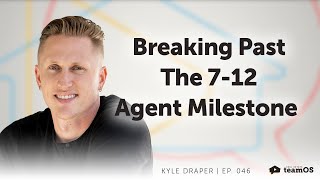
A recorded interview (YouTube/podcast) with Kyle Draper of Serene Team describing how he grew from a 3‑person startup to a 40+ agent real estate team over ~4.5 years. Topics include recruiting and a 21‑day onboarding trial, managing the difficult 7–20 agent inflection, staffing choices (stateside ops, transaction manager, offshore VAs), transaction management experimentation, the mix of sphere vs. online lead generation, and heavy use of short video (BombBomb/screen recordings) to demonstrate expertise and reduce synchronous calls.
Chapters
About four and a half years ago, just before the onset of the pandemic, he started his real estate team with an admin and with two agents he'd mentored earlier in his career. Today, Kyle Draper and Serene team are more than 40 agents strong and those three original team members are still contributing. Kyle joins us here in this episode to share the various paths and playbooks that make up that journey. He shares specific challenges in that 7 to 12 agent range. Which tools and tech are vital to turning online leads, past clients and sphere opportunities into closed transactions. Specific staff changes to the structure of the team in order to support a new transaction management process and something near and dear to my heart, the role of video in helping build relationships, demonstrate expertise and advance opportunities. Here's my conversation with Kyle Draper on Real Estate Team os. No matter where your business is today or where you want to take it, you'll get there faster and more profitably with an operating system with welcome to Team os, your guide to starting, growing and optimizing real estate team. Here's your host, Ethan Butte. Kyle, you and I connected by way of John Zambrana who helps bring to life Real Estate Team OS every week. A great partner of mine. I know you've done a lot of work with him as well. Really glad we got introduced and excited for this conversation. Welcome to Real Estate Team os.
Thank you. I'm excited to be here.
Yeah, we're going to cover a lot of ground here. You're in a really interesting spot in your team journey, a spot where a lot of people find themselves and decide do I step on the gas and go forward or do I like let up and get back to like this kind of smaller team where I felt like things were more manageable. So we're going to cover a lot of ground here, but we're going to start where we always do, which is a must have characteristic of a high performing team. What comes to mind for you, Kyle?
I would say standards of accountability and just general kind of performance expectations. As we've really dialed those in for our team, that's really helped with, with.
The growth expectation management I think is so underappreciated in almost any business, in almost any industry and almost all stakeholder groups. But this idea of team leader and staff setting expectations with agents about what's, what's expected and perhaps even what's required, I think makes everything go easier. Like give me a little bit more on when this occurred to you. I don't know if there was a painful experience behind this, but like you Know, I've learned this the hard way as well. Like to set expectations, expectations in advance, you know, in the case of an agent, like before they're even on the team. So that there's no misunderstanding and that we just get off on the right foot.
Absolutely. I mean, I think for us there was a big shift that happened a couple years ago where we decided to like really hit the accelerator on growth and scaling. And that meant just kind of being a little more like liberal on the recruiting side of things. And we've had a lot of success with giving people opportunities and it's really gone both ways. I've had some interviews where I give the opportunity and in my head I'm like, man, am I being a little too liberal with this right now? And then they turn into just these absolute rock stars. It's a great, you know, example of like maybe prior failures in their career. You know, they just weren't in the right environment. So we've had great success stories on that side. But then there's been countless ones where people talk a big game and then join the team and the numbers just. And you can see in follow up boss, I mean it's like, you know, the call attempts like the conversations, it's all right there. So there's really no fudging that stuff. And I'd say that like we're in a good place now because we're, we're very like strict on what our expectations are. We do take on new agents, but you know, they're basically in a trial period before they, we like officially, you know, have them on the team before we assign them a mentor on the team. And in that trial period, it's a 21 day process where they need to make at least 300 calls, which is really not that much, that's about 20 a day calls, not conversations. So that's really just a basic metric for somebody to hit. We want them to do one AI roleplay training session per day and then we also want them at the end of that period to have at least 100 contacts uploaded into the database, including email, from which for a lot of rookies is a little tricky because, you know, most people are exporting their contacts from their phone and they only have name and phone number. So this really forces that for them to call so that they can then ask for that for that email. So those are really not tough metrics to hit. But we've, we've recently like implemented this and you know, because without something like this, people will join your team and especially if they're a rookie, you almost give them more leeway because like, ideally we want them in production in three months, but there's probably not a huge like crisis alert, you know, if, if they get a deal into escrow on like month five or month six or so. But, but still we do not want a six month period before we're like evaluating whether somebody is like a good fit in our organization or not. And you know, it's really, really telling for me. You know, before we had this, I used to tell people when we were onboarding like, I'm going to know who's going to succeed and who's not based off of how quickly you're getting your people uploaded. I teach on like sphere script training right at the jump because the goal is to just get people into production as quick as possible and that's the lowest hanging fruit. They know like and trust these agents and because they know like and trust them, they also know that they're green and they're rookies. But that's the benefit of joining like a top producing team. So like I've just been doing this long enough to know like what I need to see at the very start to know whether it's worth it to really pour in on that investment. I mean, especially with a mentorship program, that was an issue that we were having is rookies would join the team and I was obligated to assign mentors and the mentors are some of the top agents on the team who are very willing to help. But you know, if, if somebody, if the mentee is not taking it anywhere near as seriously as the rest of the organization, that's really not fair on my mentor to be asking them, hey, take time out of your day to be coaching these agents along. So now it's more of a, like you earn your spot, you earn your mentor. So that allows us to still recruit a little like liberally and then just give people the opportunity to see if it's a good fit.
I appreciate that you took what you've learned over the years and implemented something that's a tight three weeks is tight, which I like. As you mentioned, the hurdles aren't gigantic. It's not super difficult to jump over them, but they're high enough to have someone identify like, am I really going to do this? Because that's the deal. Everyone on the way in is like, oh, I think I can do this. You know, realtors drive nice cars, or my friend made a killing as a realtor or whatever. You know, open them up. To this opportunity, especially as a brand new agent. But those initial hurdles that you set up, I think you mentioned three of them in particular before you're getting any investment from your mentors, which would be very frustrating from their seat as well, and reflects kind of negatively on you at some level with that person who is devoting time and attention that would be better spent somewhere else if the person kind of flames out or doesn't step into it or people come to you, I'm sure with like stars in their eyes of how successful they're going to be and they think they can do it, but these hurdles allow them to self identify. Like these activities are very uncomfortable and I'm not going to do them like, okay, good. Yeah, glad we know this in three weeks or less. You mentioned you've been doing this a while, so I'd love for you to share like really quickly, like some fast version of your real estate journey. I believe it's the family business at some level. And so just kind of like walk us up to getting into the business when you realized a team was for you and that you wanted to lead a team. And then we'll kind of pick up from there.
Yeah, totally. So I kind of backed my way into real estate initially. I was working in music in college and, you know, almost was then going to be an attorney in the music industry. And long story short, I'm sitting my parents down at the dinner table explaining to them that I'm not going to go to USC law, which was like the path that I'd been on for, for a minute, you know, because I was getting back into music. There were artists that we were recording and I was kind of doing artist management, all this fun and exciting stuff. And that's when my mom, who was a real estate agent, you know, and my dad's a real estate attorney, so they both were very supportive. Got to give props to the parents for not freaking out when I was like pulling the plug on law school. But my mom was like, hey, why don't you get your real estate license? That way I'll throw you on a deal or two. And so you have some income coming in while you're figuring out how to make money in music. Well, fast forward like 10 years later. I never really cracked the code on how to make money in music. I got really good at making money in real estate, though. And it was this kind of evolution where it initially started, where I was selling houses to finance this independent recording studio and record label. And, you know, as I got better and Better at selling houses. The music video budgets got bigger and bigger and bigger, and we did a lot of cool stuff, you know, did some major festivals, toured a little bit. So really good life experiences. But the business model of it, I never really cracked the code on. And there was this shift where music was more of something that was dragging me down, especially financially. And, you know, real estate was what I was passionate about. I really, really enjoyed it. Like, I love working with the clients. Love how every day is different, every client's different, every property is different. Just, like, love everything about it. So it was this weird shift of, like, my passion was then real estate, and I had to get rid of music. So when I turned about 30, that's when I was like, okay, it's time to, like, officially make these. Make these changes. Um, and, you know, I kind of just bounced around different offices, like, kind of rising to the top as a. As a solo agent in each office. But I knew that the next level was, you know, creating the team. I was definitely at the point where I could not handle the amount of business that I was naturally attracting. Um, but I couldn't really start the team until I shut music down because, you know, I didn't want to be, like, an aloof leader who's, like, just checking out and going on tour, you know, for weeks at a time and whatnot. So, yeah, turned 30 and started the team. And that was also right when Covid was hitting so really wild times. I reached out to two agents that I mentored at a prior office. You know, we were. We were friends. I also knew that their way of doing business was my way because I taught them, you know, my kind of approach to things and asked them to take a chance on me. And they. They did. And. And so that was. That was two agents. We had an admin as well. And I'm very proud to say that all three are still with us, you know, as like, kind of top producer, like, leader roles on the team. And I had a vision of we were going to be a very, like, in office every morning for, like, a morning huddle. You know, we're going to be just really, really extreme. And Covid hit, and there were a lot of horrible things that came out of COVID One beneficial thing that came for us was that it kind of forced me to take our morning meetings virtually. And to this day, we have a morning zoom every morning from 9 to 10am and it's virtual, though. And that really changed kind of the fabric of our team because agents were starting to come to me from all over town, including as far as the Inland Empire. Our current offices in Culver City. That's about an hour and a half or two hour drive, depending on traffic. So not, not very close. And I was like, well, I don't know a whole lot about Inland Empire real estate, but I do know a thing or two about systems and online leads. And so, you know, we're also very virtual right now, so. Sure. Like, I don't. I'm super down to take on agents who are just kind of geographically spread out and we've just kind of grown, you know, you know, over the last four years that way. And it's, it's, it's great. You know, we have agents really that cover as far north as, like, Palmdale, Lancaster. We do deals as far south, sometimes even in like, San Diego county. Not very often, but we can cover a lot of territory, which is really fun as a team leader, especially a team leader that, you know, goes to the national conferences and is trying to network on more of a national scale because we can get a lot of, you know, referral business and we're not just like one little niche market that we're good and we really cover a lot of territory. And I think from a culture standpoint on the team, I think that's a big part of why our agents are as like, collaborative as they are. Because if we are, you know, at a kind of hyper, local, you know, brick and mortar, you know, big, big broker kind of office, which I've been in a lot of those over my career. You know, you're friends with your agents, but are you really sharing, like, all of your tricks? Because you're probably like mailing and door knocking, you know, the same sellers as the other agents and whatnot. So I think that just from a, like, culture of collaboration standpoint, it's been really, really nice to be, you know, geographically diverse. And, you know, we still do get together for some, like, fun events. You know, we'll do like team topgolf or axe throwing. We've got a pool party coming up in a week or two. So people do kind of make the trek when it's, you know, like, like culture events and whatnot. But I don't know, that's just kind of been the fabric of our team. And, you know, it was just kind of a situational circumstance that we had. But it's, it's been great and something that we're continuing to really lean into.
First of all, so many really great pieces of information and nice accomplishments in what you shared there, particularly of course kind of the initial that, that joined you four and a half years ago with an idea. Here's my idea. Believe in it that they're still with you today and learning and growing along with the team. Obviously the slightly different nature, even like a super healthy brokerage, it's still different than a team in some ways that you already identified, which I love. Give us a snapshot of where Serene Team is today. Like how many agents, how many staff. You already touched on culture a bit, you already touched on geography a bit. But anything else you want to share to characterize the team?
Sure. We're at Now I believe 43 agents, very active in recruiting. We're kind of constantly onboarding and offboarding. So that number fluctuates a lot. But right around 43 agents and then five staff members on the team. Two being, you know, international support help. So three US and then two international. Cool.
What have you opted to source offshore and what have you opted to source locally?
So our three like local support staff. One is our director of agent Success who's also a producing agent, but she, she was actually our original admin. So she, she produces as an agent for herself but she carries the role of, you know, before we get into escrow, like all the just real estate specific help, like I need help pricing this property. Can you look over this contract? You know, all that stuff. She, you know, she, she gets paid basically to help with on the team. And then we have a operations manager who's also stateside, covers, you know, onboarding, offboarding, does our database management, all our like online lead partner reporting, whole lot of other operational stuff. And then we have a transaction manager. So what the transaction and this is all stateside still. So transaction manager is like a TC on steroids basically. And that's something we're really dialing in is like that there's not a one size fit all approach to what agents really want. Some really like kind of handing the baton over when we open escrow and letting our transaction manager like really run the show and others like still running the show and leaning on the transaction manager as more of like support for them running the show. So that's our stateside staff. And then overseas, our transaction coordinator is overseas and basically serves as like the kind of right hand of our transaction manager. And they also cover our listing coordination as well our transaction team and then our other virtual assistant helps with our property tour scheduling which is really, really, really helpful. We've got him really dialed in on that. That takes a Lot of kind of admin time off the agents, which is always kind of my thing that I'm trying to always contribute and help with. He does some graphic design for us, does some skip tracing for us, just a lot of kind of odd jobs. And then our operations manager also delegates to him with some stuff that is delegatable, basically.
Yeah, really good. I appreciate you sharing that. And this idea that you're constantly thinking about what to take away from agents so that they could be a dollar productive activities is like essentially the name of the game and how to do that profitably, like what roles, in what order. And you also mentioned one of the constant challenges too, which is like.
Some.
People like it this way, some people like it that way. You know, at, you know, 40 plus agents, you've got a lot of diversity in that group. Even if you kind of hire them through the same set of values, you know, there's still a lot of diversity in terms of what they want, what they expect. Especially as you're blending brand new agents with, you know, they've been doing it for two years somewhere else, never really got that productive. And so you've helped unlock something in them through your systems or accountability or the way that you manage leads or source them, these kinds of things. I would love for you to share one of the biggest challenges for someone who is about where you were in, let's just say mid to late 2020, you know, small team, a lot of energy, a lot of passion, a lot of excitement, some early wins. Where are we going to take this thing to where you are now. A lot of people struggle with how do we preserve what made this team great out of the gate and gave us those early wins and gave us our early success and built the momentum and allowed us to be the kind of organization that had people from an hour half away proactively reaching out and saying like, can I be a part of this? Was that just good fortune? Was that just good people or was there some level of intent or design behind locking up essentially the, the best cultural components and preserving them through this growth that you've had over the past four years?
Yeah, it's a really good question. And I think the first piece of the answer is that I think a lot of people think, oh, we just have to grow a team as big as we can grow it, and that's just the path to go on. And that is so not true whatsoever. I think there's a lot of teams that should stay lean and nimble, especially if the agent is like a huge Huge piece of the production piece and whatnot. So that's the first thing for me. My mentors are Mark Pattison who runs porchlight down in San Diego. Kyle whissel runs the whissel realty group. Colton Whitney is a mentor of mine and they all run like the large team model. And so I'm very familiar with it. We mastermind together. So I'm fortunate enough to basically have their playbooks to follow. And so for me, I know that it is the right path for us to hit this accelerator. Like really scale. Has it been hard? Absolutely. From a financial standpoint, you also go through this, like, really kind of messy middle that you are going to be a lot less profitable, quite frankly than you were before. I mean, it's kind of crazy when you think about it. Like most team leaders get to the point that they're at because they were just rock star agents. And so if you start a team, especially if you pull yourself out of production, which we can, we'll get into that in a second. You know, that's the equivalent of this all star player on the field stepping off, putting the coaching hat on and then putting basically you're like bench reserves onto the field and, you know, just really, really, really hoping that everything goes the way that it used to go. And that's tough. That's tricky. And you know, for us, when we first started when we were, you know, basically just a four, four person squad, like three agents and an admin, it worked really, really well. And I was basically like very much in production and we were partnering on every deal. Basically. Like I would handle a decent amount of the showings, you know, very much just our duties were very much split and then that continued to work as we added a few more agents. But then we hit just this kind of like breaking point, I want to say when we were around seven agents because that model does not scale. Right. Like, I can't continue to be a like partner and continue to take on that same responsibility with that many more people. You just can't like duplicate that way. So that was a big. That was, I'd say our probably biggest inflection point really was when was it? I want to say it was like the back half of 2021. You know, going into 2022 is where we started to have these kind of growing pains, some kind of kinks in the armor. And I went to actually it was the y lopo conference in Vegas, I think spring of 2022. And I realized that I had the wrong CRM. We weren't with FUB yet at the time. And it was very clear at that conference that I had years prior just picked the wrong pairing with Ylopo and that FUB is the horse I should have picked. So I was like, okay, shoot, we got to switch our CRM. I made a decision to switch my coaches at that time as well. And it also was clear that like, I really need to kind of step out of production or at least in a different sense than where I was at the time. And you know, then we, then we really scaled. We were able to recruit a bit more aggressively. My current coach is very like growth minded and you know, was just encouraging too of like me stepping out of production a bit and you know, so, so things got better after that. But it still is very tricky that like kind of 7 to like 20 agent threshold is hard because you basically need the same amount of staff and resources. So your overhead is, is, is, is high. Right. And so you're just kind of in this thing of like, I need more agents because I can't really cut my overhead right now. The more agents we get, you know, get them into production, the more this will make financial sense once again, you know. And so we did, we continued to just grow and just kind of, you know, we went from 20 agents to 30 agents to 40. Now we're hovering a little over 40. And it's, it's definitely like getting to the point now where it's like, okay, like this is why I went through all that. This is why I gave up being a super profitable solo agent with like no overhead to taking on all this responsibility, all this overhead, you know, managing so many different personalities and all the fun that comes with that. And I'll say another, another part of it is I've stepped back into production a little bit, which has been really, really, really, excuse me, helpful. Just, you know, I mean, even from a personal fulfillment standpoint, it's very fulfilling to be hands on, you know, with, with, with your, your buyers or your sellers. So some of like my, you know, closest friends, past clients that I've worked with before, especially with all the like, infrastructure that, that we have as a team, it's very, very doable for me to like produce a little bit again now. And you know, we're kind of like, right now I don't have a like true showing partner model of like, there's one person that I'm leaning on, on the team to like help with the kind of more in the field stuff. But you know, so far it's Been pretty doable to depending on kind of where the business is. Like I said, I have agents all over SoCal, so, you know, just kind of like letting somebody know, hey, can I pay you, you know, like, 50 bucks to go open this door for, you know, they. They wanted a contractor out to measure something or something. So that way I'm just not driving around town constantly. And that is just way, way, way more profitable than, you know, bringing in an agent for, you know, splitting the deal like 50, 50 or something like that when there's certain clients that I know I'm already going to have to be way more hands on with just because of the nature of our relationship. And I don't mind it either. So that's been huge because as a team leader, yeah, your checks are. You get a lot more, but they're a lot smaller. And, you know, especially with running a big, like, monthly overhead, sometimes it's like, whoa, like, we're working really hard here. But, like, the business has its overhead. My personal living has its overhead, too. Like, it was pretty nice when I would like, you know, have like a check that was, you know, like 30,000, 40,000, 50,000. That's just to me, rather than like 3,000, 5,008, that, you know, it's all depends on price point, obviously, but it's been really nice to kind of get back into some of that production again. Love it.
Okay, so there's a lot there. I just want to double back a little bit. Putting the bench on the field, it's not just, you know, expecting equal production or hoping for equal production from a team that hasn't quite done it before. You also have never stepped off the field and coach. So it's like a rookie coach with a, you know, with. With like some of the starting lineup, but also some of the bench lineup, like, mixed in. That's part of the challenge, getting back into production. Like, when did that occur to you? Like, like, what was that about for you? I mean, you already explained a lot of the benefits of it. Like, in the. Another benefit that I'm sure you've experienced that a lot of folks have shared on the show is I never left and. Or I got back in. Not just because, you know, it's helpful to the team and to myself, but it also allows me to coach agents a little bit more effectively because the market is always changing. Even when it doesn't feel like it's changing dramatically or super quickly, it's changing all the time. And there's no better way to be of value and Service to the agents that you're directly engaged with in terms of like coaching guidance, language and these types of things than having a sense of what's going on out there yourself. But like, what was that decision about for you? Like, and I guess one more to kind of tack onto that. What did, what did a good day, good week, good month look like for you when you were kind of right before you got back into production? What does that look like today? Like, what were you doing that, that you were able to maybe set down or delegate that allowed you to spend some more time? Or did you just eat that time? You know, instead of working 60 hours a week? Now I work 70.
You know, well, quite frankly, you know, a lot of I was afraid to take on any client by myself just because of how spread thin I am. So there, there was a component of that why I was bringing agents on files that now I would just be working myself. There is also a component of, you know, I really want to make sure I'm retaining top talent. And you know, there's definitely that kind of balance of like, you know, everything that we're providing as a team. So, like now we've got a ton of staff, like systems up the wazoo, all that good stuff. So, like, I'm a little less self conscious of like, okay, I have to at all times make sure that like the kind of team business and the splits on all that is like really justifying people who have really strong solo production on their side, you know, because at the end of the day, there's something always going to be in the back of their head where it's like, would I be making more money if I was a solo agent? Right. So because of that, I was very much just like, okay, like all of my business, like, I'm partnering with you on it. Well, we'll do it 5050. And you know, that's, that's great. But the reality again is that with these clients, I can't take the same backseat that I would with a different team provided lead on the same splits, you know, which would be like an Internet lead or something like that. I realized that I'm like, still very, very involved in the work. And especially, like I said, we have a transaction manager now. So running escrows is very simple. You know, I know that I'm not going to miss anything because I'm so scatterbrained and have so many things on my mind when, which was a huge fear before. Why I was like, somebody else needs to be responsible. But just the Cost of that now, I can manage way better with our transaction manager. You know, she's played a. Paid a flat fee at closing, and it's really not that much additional work that I realized. And I know I'm providing a lot, a lot to all the agents. So I'm a bit more just confident when, you know, there's opportunities that just makes sense for me to work it myself. I'm confident doing that now. So it's not really more or less work for me, really, which is the crazy thing, probably why I should have done it earlier. And I just know, you know, from masterminding with so many other team leaders, you know, like Colton Whitney, for example, he's a huge proponent of the showing agent model. And, you know, just seeing him present on it, it's one of those things where I've known I should do. Just took me a minute before I really executed. Now that I've done it, like, oh, it has made the world of a difference.
You mentioned when we first connected that you were working on some staffing changes. I'd love for you to share as much as you want to or can. When did you become aware that you needed to make some changes? What were those changes and kind of where. Where is that in flight? Like, how did you become aware that, like, I should probably switch some of this stuff up?
Absolutely, yeah. I mean, you know, a lot of it is. Is just feedback that I'm getting from. From the team, kind of able to, like, recognize just certain areas of improvement that we can do. And, you know, I really wanted to have a model of this transaction management system that we're talking about. So, you know, the original vision is different than where we're at now after I've kind of learned a lot from it. It's a very tricky model to run, but I did know that, like, I wanted for. And again, some agents like it, some other agents don't. But we were running into an issue with some of my top producers about, like, the amount of deals that they could basically put into escrow at a time just because of the amount of escrow involvement that was needed. And, you know, to what we were talking about earlier, if there's anything that I can make a tweak on that is going to, like, allow agents to just really not have that ceiling on their production, just really spend their time stacking the deals. If I can provide a team that, like, is not just TC ing files, but is rather, like, you know, doing the whole escrow, basically for the agent, the agent still shows up to the inspection, all the like in the field stuff. But you know, they, they can take a back seat if they want to, to our transaction management role. So that, that's really what it was, is just, you know, kind of having this vision that, you know, there's, there's a different way that I want to try this and I see the benefits really long term and I guess what like five or six months into, into the transition and we're still refining it, we're still improving it. And again, my biggest takeaway is that there is not a one size fits all approach, even per agent, because I've noticed this with myself. There's some cl. Some clients are just going to demand way more of the agent and other clients are going to be fine with, you know, being introduced to this new, you know, player in their escrow basically. And there's so much too that we're refining to improve the process on. Like at what stage are we introducing the client to our transaction management staff? So rather than when we open escrow, we're sending these emails out with like explaining the process, explaining who they are when they're submitting offers, you know, same with how do we introduce our transaction manager to the agent on the other side of deals? We've had some agents that, that have no issue, you know, having her as the main point of contact and then other agents that no matter what we say, they're still calling the agent and the agent's like, call our transaction manager, you know, so it's, it's, it's definitely a work in progress still. But I do, I do love the service that we offer to the agents. There's a lot on the team that are like, oh my God, I could never go back to the old way of doing things. And then again, there's a lot of agents that I've learned don't want to do things, you know, where they're in control of everything. So yeah, it's, it's, it's a, it's a, you know, a nuanced model, I'm learning. Yeah, yeah.
And it's also, it goes back to where you started this conversation, which is expectation management, you know, managing the expectations of clients. Who is this person and what is their role? And can I still talk to the agent? When, why and how? And for some of these kind of like side cases, you know, the exception to the primary rule, you know, how do we facilitate that so everyone knows what's going on and everyone knows who needs to contact who. I could see how there's a lot of, you know, there are a lot enough moving pieces there because you want to honor some of that variability that either the client or the agent prefers, but that also then breaks some of the expectations that are set. Or you know, a particular email, for example, may not apply in this case because the agent wants to do it differently. So yeah, it is a lot to manage. So you mentioned how much you're providing agents in general. You just shared a really, really good examp example of that. I would assume that another one is online leads Marketing is a passion of yours, it's a skill of yours. There's some tech kind of rolled into that. You mentioned, you know, for example, spending time on the national scene, going to events like Y Lopa, which is a marketing slash tech type of event. But you've also mentioned to me, I forget whether we've covered in this conversation or not, that that the majority of your team's deals are still sphere deals. So like talk about this balance between investing time and energy and resources into online leads and online lead management versus the fact that still the majority of your actual closed deals are coming from sphere, which also requires time and energy but like in a different way and maybe requires different, you know, tech. So I know I asked kind of a big messy bundle there, but talk about like lead gen and where your deals are being sourced and kind of how you're getting those Descro.
Yeah, absolutely. It's, it's so funny because our first year as a team when we were looking at our numbers that that's when we had this big aha moment of oh my goodness, like I forget what the exact numbers were. But like sphere was sphere and past clients was just the dominant source. I would say it's probably the dominant source for like the majority of teams, you know, maybe Zillow Flex teams excluded. But, but so we realized, oh shoot, like we have this great, great, great like source of business that is really more like an afterthought for us and we are spending all of our time and energy talking about the online leads, our systems chasing them. So we've gotten a lot better at like keeping that perspective. And we're very intentional with like sphere outreach. Like I was saying earlier, onboarding is like very skipped or sorry, sphere script training based and whatnot. So yeah, it's, it's, it's definitely a blend and there's some really good tools that are kind of helping us a little bit with the like online lead management and like taking a little bit less of like the time Sync off of like our team and staff. Maverick is a, is a product that is really, really, really great on that side of things because we can basically just from a super zoomed out overview we can see like if there's rule violations in follow up boss, which basically just means like the agents are tardy on, you know, doing outreach. They're supposed to do. So rather than having to go through like every, you know, all these smart lists and you know, having to individually like let agents know, hey, you need to do this on this. You need to do this on this. With like basically three clicks of a button. We can do that at scale, scale to our whole database. So that's been a really helpful tool in terms of. To your point. Yeah. Making sure we're not spending all of our time and energy and focus on like this one, one lane of our business that you know, other, other lanes we definitely want to be able to give that focus to. So yeah, it's, it's about just keeping that perspective really. I would say. And, but the, the thing about our sphere and part of why I love the follow up boss kind of Y Lopo combination is that the like nurture and you know, retargeting the AI, all of that helps with our, with every single book of business that we close. It's funny a lot of because a lot of people know I'm a pretty big like Y lopo follow up boss component and if they're like taking a meeting with Y Lopo or something like how many, how many of your deals like you close from my Lopo And I'm like 100%, you know, because like yeah, I buy pay per click leads from my Lopo and we close a decent amount of those. Don't get me wrong. But that like remarketing engine, the, the AI, the nurture, like the seller like AVM reports that are sent out, being able to like put, put our buyers on, on drips and then having the system notify us like through the, through people's behavior like when it's time to kind of, you know, be a little bit more aggressive with our outreach for them because they show us through their behavior like that that works with our entire database, including sphere, including past clients and including Internet leads. We've, you know, we're chasing and we haven't even spoken with yet. You know, case in point, we had a listing agreement signed about a week ago and it was the funniest thing. Like this was a super, super long time ago past client that shame on us. You know, we Were not. We hadn't really communicated in a minute. But one of the top agents on my team, he got that AVM like hand raiser coming from the seller report that Y Lopa was sending out. And so he called her and she was basically like, wow, this is just so crazy that you're calling me house Serendipitous. Because yes, I do want to talk to you. So yeah, that's not an Internet lead. That's somebody that our tech and our systems like really, really, really helped us just know when to get back in front of people. So yeah, we apply it, apply it to everything.
Cool. A lot of really, really good tips and examples in there. Quick cross promo right here. We're fresh out of Tech Timber, a five episode series on the show. We talked a lot about transaction management, a bit about marketing. There were some tool tools mentioned, kind of the way that you described the specific value that Ylopo brings you paired with follow up boss. So we got a five episode series that we're just fresh out of and we're like two weeks away right now from launching a nine episode series. Inside Whissel Realty Group. You mentioned Kyle Whissel earlier. So we're deep in with that team and talking with a variety of team members. Something we've only done once before with the Lawton team in Phoenix. We have an Inside the Lawton Team series too. So thanks for your patience on that Kyle. Video. I know that video has been important for you all. It's only come up a few times on this show. I still think that it's massively underlay leveraged. When did video come onto your radar? What role has it played? And I think probably the biggest challenge for team leaders is, you know, I don't think you can expect every agent to participate in video because some of them just aren't going to do it. And even if they do, they might not be very good at it. Might actually be a detriment because it is a developed skill. But like for you, when did you get turned on to it? What role has it played and how are you maybe helping some of your agents leverage it as well?
So we're super video heavy in our onboarding. There's like a whole section dedicated to just like why we think video is so important, all the ways that we use it, how I got turned onto it, it honestly probably was Kyle Whissel. This was way before we were like, you know, masterminding buddies. Like years ago when I was just a little scrub. Basically I saw him speak on Stage about how, like, he has Bombbomb incorporated into his business to the degree that he does. And I remember just being like, whoa, like, I get it. That's so cool. I don't think he knows that. It was so long ago. But anyway, yeah, so since then we've just really leaned into it and we use it in all components. We just have like one account that the whole team uses for bombbomb. It works really, really, really well for us. And I can't tell you how many times that, like, clients that initial first impression, like, because we do it for our comparable sales analysis. Like, we don't just send PDFs and then like, hey, like, review these comps. And we think the like offer should be this, like, it's like an 8 and a half minute video where it shows exactly the, like, thought process that we go when we're comparing their property to the comps. You know, price per square, just the whole thing.
Screen recording. So they're seeing what you're talking about.
Yeah, Screen record. Exactly, exactly. Screen record. Quick, quick story on that. We, we signed a listing agreement a few months ago. And this was a veteran United lead. It was a seller lead that when they initially came in, it was clear they were like, nowhere near being ready to like, list or anything like that. So I wanted to showcase our value right from the start, show that we're different. And so I, I told the client, I said, I know you're not ready to sell right now, but I'm going to send you a comparable sale analysis video pretending as if we were like going to market tomorrow, basically just so you can see snapshot of where we're at today. And also to show off our skills and knowledge and all that. So we sent them the video and they responded very favorably. And then we were able to stay in touch. And it was months later. And so we're finally at the listing table and the client and her husband, they just start laughing and they're like, oh my God. Like, Jenny would be so mad if she knew that we were doing this right now. And my partner Ariel and I, we look at each other and we're just like, what? And we look at them, we're like, who's Jenny? And they're like, well, Jenny is the agent that like, represented us when we bought our house. She's also our best friend. Like, we got really, really, really close with her after the transaction. We have dinner with her regularly still. And so Ariel and I were like, well, what the hell are we doing here with you signing this and they said they were like, honestly, when you sent us that comparable sales video like six, seven months ago, however long it was, they were so impressed by it and they had a conversation, husband and wife about like, we love Jenny, but like Jenny does not do this. Like, Jenny does not provide this level of insight. Expect expertise. Like it's, it's also even just selfishly for the agents, like when you can really articulate like why you think something should be the way that it is, the clients typically like accept it. Because if you're, you know, making the argument very well, there's way less pushback and bouncing back and forth. So it's just really, really, really nice. There's, there's so many other benefits to it. I mean from a liability standpoint, you know, like what, what we do, we, we review seller disclosures via bombbomb. The first offer we write for a client, we will go through the RPA and explain it. So there's a record of us like going through this stuff with the client. So from a liability standpoint, that's very, you know, powerful and it, it gives the agents their time back. And so what I mean by that is when I was a solo agent, like early in my career, before I was leveraging this, I like pretty much every night I was having like 9pm conference calls, 10pm conference calls, you know, because that was the only time that the client was available and we needed to have this kind of lengthy exchange for me to like transmit information to them. And we don't really have that issue anymore because we, during our time, like when we want to take the time to do like a 20 minute analysis review of something, we'll do that during our workday, we'll send it to, to the client via video. And we say, hey, you know, watch this. When you have time, let us know if you have any questions. We can jump on a call, you know, if you want to talk anything out. And just about like 99% of the time they're like, that was so thorough. That was so helpful. Like we have no questions. Thank you. So we don't then have to take like conference calls at like 9 or 10 o', clock, which is so nice. The client also then has something that they can go back and review, which is huge. And it's also helpful for me to have stuff to go back and review. When I'm driving out for a listing appointment, I am like playing the video that I sent a few days prior of pricing the home out and everything and going through the comps so that I can be like, oh yeah, that's because I can't keep everything straight in my head. There's like hundreds of properties that we're constantly running comps on and whatnot. So it's so nice that I can go back to work that I've already done to not have to do that work again. And I'm like really, really current and I'm able to just like spit out property addresses and numbers and pricing because I'm like reviewing the video that I did on the way to the appointment. So there's, there's just so many benefits to it. We love it, man.
That's a great go. I'm kind of glad we didn't start on this topic because we could have spent the entire conversation. I got, I got a thousand things to say right now. But, but for anyone that's not familiar with kind of where we were, there a, there's a back button in your YouTube app or your podcast player. Like go back and listen to some of those use cases and benefits again. But we're talking about simple casual conversational videos or screen recordings sent in place of what would otherwise A, maybe not be communicated or B, communicated in typed out text that's faceless and doesn't have your personality, doesn't have your expertise and all these other things that are missing from our faceless digital communication. So this idea that people feel like they know you before they meet you or you know as you well describe, like they understand your thought process and your rationale, it positions you as the expert. You're welcoming them into the process in a way that they can watch, as you said, at a different time than you recorded. So we didn't need to, we don't need to both be available at 9:45pm to have this conversation. I can do it at whenever I want. You can watch it whenever you want. You can rewatch it, you can share it with your, you know, someone else involved in the decision making process that maybe you haven't been communicating with. So it's like so many different benefits to it. So anyway, appreciate that. Go. Fun fact, by the way, when I was at Bombbomb, we only did one conference. Like it was a big in person conference in Denver and Kyle was the opening speaker. He opened the whole thing and I got to close the whole thing. So anyway, love that you shared that. For the sake of time, I'd love for you to give like a quick go before our three pairs of closing questions to like future of the team model. Are we going to see more. Are we going to see fewer? Are we going to see fewer but bigger? Like, like, what do you think is promising about this? Or is this just kind of the way that we're doing business right now? And a lot of people choose to do it this way. Like, thoughts about the, the present and future of the team model?
Yeah, I mean it's, it certainly has evolved over the years. I, I would say that the team model is here to stay. I see teams only kind of getting bigger and bigger. Maybe not there being a million different big teams, but like kind of consolidation. I mean even the NAR settlement is a great example of. I think why there's just going to continue to be this attraction for agents to join big teams is because, you know, especially if you're a newer agent, you know, you're talking to a buyer for the first time right now, you want to work with them. They're gonna, you're gonna ask them to sign a contract that says there's a chance that you'll have to pay our fee. So that's just an entirely different conversation than we've had before. And buyers are going to be scrutinizing who they, who their buyer agent is different than ever before. And so if you're newer to the industry, like agents on my team, when they're at that buyer consultation y Lopo, just put out an amazing buyer presentation tool that's going to show all of our team's closings. Right? All like how much activity we have in all the different areas, all of our teams, five star reviews that we have. Like that is a different presentation that an agent on a team is able to give compared to an agent who is not on a team. And I just, I just see that only, only continuing that like people are going to continue to be selective with who they work with. And so just really it's necessary to have, you know, all the other cool value propositions that that big teams are able to offer to buyers right now that solo agents are not. So I see, I see them continuing to, to really kind of have their place in the market and grow even.
Cool. I wish you continued success in the growth of Serene Team before I let you go. Kyle first, thank you so much. I really enjoyed this conversation. Again, I'm glad we didn't start on video. It's, there's a lot, a lot there. But I'd love for you to share. I've got three pairs of closing questions. The first is what's your very favorite team to root for besides Serene Team? Or what's the best team you've ever been a member of besides Serene Team?
I got to give my flowers to, to Portslight Realty and Whistle Realty. I'd say those, those. It's funny because they're competitors in San Diego, but like both, both of their whole kind of team's infrastructures and then the leaders individually, I mean, I'm just tremendously indebted to in terms of resources. They've provided just roadmaps, introductions that have been made that have been highly, highly beneficial. So I gotta give love to those guys.
That's great. And by the way, I'll link those up right down below. For folks watching and listening, there's a description down below. You'll find links to this and to Kyle in a variety of spots down below in the description. So feel free to open that up. What is one of your most frivolous purchases? Or what's a cheapskate habit you hold on to even though you probably don't need to anymore?
I'm doing my best to like lower, lower expenses. Earlier in my adult life, I think I was a little too loosey goosey. So I'm definitely, definitely tightening the belt. I'll say this, I am super proud of myself that I recently purchased a car. It's a 2017 Jaguar F type and I love this car more than I've loved any car I've had in a long time. And I've had cars that are way more expensive than it. But what I'm super proud of is that I cut my car bill from like 1200amonth down to 6, 600amonth. I think the out the door price was like 33,000 or something. So. I am so happy that I have a car that is so affordable, but it gives me that excitement still. It's a convertible. I get to enjoy driving around in Los Angeles with the top down. There's nothing better than that. But it is not a oh my God, look at how much money I spent kind of purchase and I love that.
That's really good. You had me at 2017. I'm in.
Yeah.
What does it look like for you? What are you doing when you're investing time in learning, growing and developing or what are you doing? What does it look like when you're investing time into resting, relaxing and recharging?
Yeah, so the resting, relaxing, recharging. For me, a perfect weekend because the weekday is just crazy. It's really hard for me to like get into projects just because of all the stuff, you know, appointment after appointment, my phone's ringing constantly. So weekends are huge for me. I take one day where I'm doing nothing real estate related. I want to probably be like partying, laying by the pool, like enjoying myself with my girlfriend. Just totally checked out. And then the next day like that, that'll be Saturday and then the Sunday will be just all day. Deep work, like all projects probably way too many energy drinks consumed and just like getting that kind of deep work like project level stuff in that I struggle with during the week. But I gotta have that one day of just like unplug and party.
Yeah, yeah, we all do. This has been awesome, Kyle. I appreciate you. I'm glad John introduced us. Of course. Wish you continued success. If anyone has gotten to this point, they obviously enjoyed the conversation because you don't spend 50 plus minutes with us otherwise. So they may want to like connect with you online or on social. Like where would you send people to follow up on this conversation?
Best place would be my Instagram. My handle is the Kyle Draper. So yeah, shoot me a dm. I'd love to connect.
Cool. That will be right down below in the description of this episode. Thanks so much Kyle. Appreciate you and I hope you have an awesome afternoon.
Thank you Ethan. This was super fun.
Thanks for checking out this episode of Team os. Get quick insights all the time by checking out real estate team os on Instagram and on TikTok.
More from Real










Zillow, PPC, Referrals… what’s actually working in today’s market? #realestateteam
