Preserving Your Profit Margins with Anthwon Thomas | Ep 059
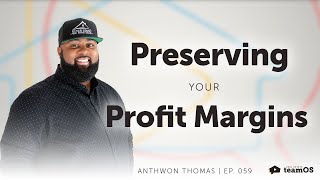
Podcast episode transcript: Ethan Butte interviews Antwon Thomas (founder of Silver Lining Real Estate Group) about scaling a real estate team while preserving gross and net profit margins. Core themes: leadership and culture, hiring/onboarding and standards, CRM/database strategy, commission-split philosophy and economics, and adding services (mortgage). Episode includes concrete metrics and practices used by Antwon.
Questions this video answers
13 agents and 5 staff (total ~20 people).
About 7 years (team started when Antwon brought Amanda on).
Minimum of 20 families served (closings) per year.
At least 22-minute conversations per week (tracked in the CRM).
Production increased by approximately 50% after moving to Follow Up Boss and adding a database manager.
Chapters
As you grow from being a highly productive solo real estate agent to the leader of a 20 person real estate team, you obviously expect to see a lot of top line revenue growth through that transition. But what can be really tricky is preserving both gross profit margin and net profit margin, especially in the later phases of that growth period. But our guest in this conversation, Antoine Thomas, is here to bring you stories, ideas and lessons from his experience doing just that. Some of the keys to success along his journey are a culture of standards and accountability that reinforces itself equitable commission splits that are reinvested in the team and in the organization. Being clear on your operating model both with yourself and with the people you're trying to bring into the organization, and a multi stage process to bring the best people into the organization. Here's a great conversation with fellow viewer and listener Antoine Thomas, who's the founder of Silver Lining Real Estate Group, brokered by Real in Lafayette, Indiana. Right now on Real Estate Team os.
No matter where your business is today or where you want to take it, you'll get there faster and more profitably with an operating system. Welcome to Team os, your guide to starting, growing and optimizing a real estate team. Here's your host, Ethan Butte Antwan.
We connected on social, then we jumped on a Zoom call and I said I want to have an episode conversation with you in addition to this conversation. Here it is. Welcome to Real Estate Team os.
Hey. I am very honored and excited to be a part of this. I've been watching the POD for about a year now, a few that I've watched several times. So I am very thankful to be here and be able to contribute to the family.
I don't want to be too self indulgent about it, but I think it's helpful, certainly helpful for me as I'm trying to prepare something that I would get that kind of feedback on. My goal is to help team leaders no matter where they are, or even aspiring team leaders, no matter where they are in their journey, have the stories and examples and information and inspiration to try to figure out how to make that next decision or how to take that next step for them, or even to consider what steps are available when you think about the ones that you've seen or heard like multiple times, like what are a couple of the big categories where you're like I need to hear more about this or even I don't know where to go get this. And you found it in those conversations, like what? What was it about those conversations that was so helpful for me?
It was always seeking the information needed to be a better leader, to create a better culture, a better work environment, a something that will allow me the information, the intel that I need to exemplify those values, those principles, so then I can support other people. Right. I was very clear as to what I want. I didn't want as far as the work environment, as far as the team, as far as the culture. And your podcast and talking to people and building relationships with people that are already doing this at a high level allowed me to get some of it was like, like reaffirming, right? It's like, okay, cool, I'm good. And then a lot of it was new and then I had to make a decision from there. It's like, all right, this is what I want. This is who I know I need to become. I now need to have the habits and the behaviors that will exemplify it. So then at that point we can build something that attracts people similar. And so that that has been the biggest thing is leadership. How to build a culture of positivity. Books too, by the way. Shout out to Power of a Positive Team as one of our staples by John Gordon. All that stuff has really been impactful. Cool.
I'll link that up right down below. I always try to. Again, this is a resource. It's like a. It's a learning journey for me and it's a privilege to be able to host it. But, you know, I view it the same way that you receive it, which is how can I create a resource that other people will find helpful? So I'll drop that book recommendation right down below because you've seen some of these, you probably know what's next. And that is, Antoine, what's a must have characteristic of a high performing team?
I hate to take away the punch, the power and the punch, but I kind of just said it. I think having a strong leader that exemplifies the values and the principles for that organization. Right? Because I think some teams and even outside of real estate, just different industries, right? Different organizations or companies, they may have values and they put them on the wall, right? They may have principles, they may have a mission statement, but is the leader or the leadership team, do they model it? So I think it always starts with the leadership.
I like that you extended that to the leadership team. And I think that's one of the biggest challenges of growing an organization is as you Antwan, give yourself more responsibilities, as you find people to delegate different things to, how do you make sure that that extends out? So like, when you're another layer deep. And we'll get into your whole story here in just a minute. But leading up to kind of like the size and scope of your team right now and what your aspirations are for the rest of the year ahead. But how do we. You know, you embody that, and you embody that today, but, like, two years from now, when the organization is probably going to be bigger and perhaps dramatically bigger, and we certainly had people with very large teams on the show, preserving that over time becomes a really, really unique challenge. And one thing, you know, the first episode that we kicked the year off with, with Lauren Bowen of Robert Slack, which is one of those massive organizations that she's been critical in helping build over the past decade, she realized that it was breaking down the team. You know, like, when the teams get to 30 people stop, start building another team and build your pipeline of people who, you know, are going to embody that culture going forward. Anyway, share with us a little bit about your journey into real estate. How did you become a real estate agent and how did you become a real estate team leader?
I got. I've been in real estate almost a decade now, and originally, and I'm from a small town, so you're familiar with where I'm from.
Yeah. For folks listening, that's Lafayette, Indiana, midway between Chicago and Indy, closer to Indy. And I knew it originally as the home of Purdue University.
Bingo. Bingo. And we got maybe about 150,000 people, population wise, in my market. So I'm born and raised here. And through high school, I had a single mother, beautiful woman, very intelligent. She was an entrepreneur herself. She had a beauty salon. She started her business the year I was born. And so she instilled into me from day one to take care of people, put people over profits. Right. She had a great heart. She was a hard worker. But for some reason, she never really, like, put the entrepreneur path in front of me. It was, you're gonna go to school and you're gonna be a doctor or a lawyer. And she will say it jokingly, but I took it serious. And I was like, all right, cool. Graduated from high school, going to Purdue University, going to university to become a lawyer. Okay. Two years in, I do a summer internship. And I did not like it. I did not like it.
I was like, find out early.
I found out early. And I was like, you know what? And what's crazy is me and my good friends were best friends to this day. We graduated together. We were both going to go through law school together. Like, that was the Plan, like, we're going to both be lawyers. We're going to do this together, right, man? I was like, hey, brother, I'm the same for me, I'm not going to be able to do it. Thankfully, he pursued it and he's actually a very successful lawyer right now. Conversely, I dropped out of college and the main reason why is because I had to figure out what I wanted to do. And I wasn't going to keep spending money, right, to go through university and just not know what I'm doing. I was kind of stuck. So I was working at different jobs. My girlfriend at the time, now my wife. We've been together 17 years. We decided to start a family. And at that moment I was like, all right, I gotta figure something out. So the job that I had at the time, it was just a part time little gig and I was in a car a lot, so I had time to listen to audio books, I had time to listen to podcasts and, and this guy, his name is Dave Ramsey. Dave Ramsey. I started to get acquainted with him through his radio show and I call him Uncle Dave. What Dave taught me was, number one, being smart with your money, okay? So increasing your financial intelligence, how to manage your money, how to budget, you know, being smart. But one thing about Dave was he used to be a real estate agent. He used to be in real estate. And I was like, oh, real estate, cool. And then that led me to a book called Rich Dad, Poor dad. And I was like, oh, this is a. Okay, it's starting to click. What is something that I can do that will allow me to help other people? That was what my mom taught me, help other people. I was always intrigued with business, right? Like, I would be that kid in Walmart looking around like, how did Walmart become Walmart, right? So helping people, building a business chose real estate. And when I got into real estate my first year in, I didn't know what I didn't know. Thank God for YouTube, by the way, because I was somebody. While I was going through the course, I was also doing research on YouTube as to what is it going to take for me to be successful right out the gate. I didn't have time to waste. I had a family, right? And I, year one helped 31 families. It was chaotic. It was one of those great first year. It was. And you know what, Ethan? I almost got out of the business. For some people, they hear 31 and they're like, wow, that's, that's incredible. I did 31. My life was so chaotic seven days a week. I felt like I worked eight days a week. Like it was. It was crazy. And after helping 31 families and I made the most money I've ever made in my life, I sat back and I was like, is this what real estate is? Leaving early in the morning, working, not seeing my family, come home late at night, dinner's in the microwave, families in bed, not seeing my family. Is this what real estate really is? And then there were some people that I met via Facebook, high level people already doing real estate at a high level and building a relationship with them. I remember being at a mastermind. They said, antoine, you're a hustler. You are going to do the work. It's time to get leverage. You need help. That was about a year and a half in, and then I made the scariest decision of my life and I hired somebody. And she's still. She's been eight years, almost eight years now. She was originally an admin, and now she's grown and grown and grown into our director of operations now. Yep. By the way, she's a fan of the show as well. But it was from there where we started building out systems together. You know, I'm increasing business. 31 families, help from 42, 45, 50 plus. And then we decided three years working together to start building the team, Start actually building the team. Buyer agents, listing agents. And now we're 20 people. And we're growing. We're onboarding people literally today, you know, to keep growing. And we don't want to stop growing. So that's been the journey and it's been. It's went by fast, but it's been fun.
Cool. So the team then is about five, six years old? Six and a half, maybe.
The team is about. I'll say about seven years.
Okay.
Because I would say the team started when I brought Amanda on. It was like when we were a team. So I would say about seven years.
How. What's the ratio of agent to staff now?
So we have. Right now we have 13 agents, five staff.
Go into that in a little bit more detail because we have a lot of, like, early stage and even aspiring team leaders. And this zone is really tricky for a lot of folks. You started with an admin, which everyone says is the right first thing to do. You invested in this person and she learned the business and is now running a lot more, which is another great story that we hear. Not as often as I. As I would like to, but I do hear it regularly, so that's great. So then I assume 1, 2, 3 buyer's agents. Like talk a little bit about how that shaped up. And then like when did you add the second staff and who was that? Kind of like walk into that in a little bit more detail, for sure.
So yeah, it was me and her for about a year and a half. And we hired a first buyer agent. It was just somebody that I knew from for a couple of years. I was like, do you'd be great at real estate. Brought them on and. And then shortly after, actually within like a one year time period, we had three buyer agents that hired the first one and then within like maybe a couple months later added two more and. And they were strictly buyer agents. Like I was like, okay, I'm going to really focus on listings. And listings is my jam. Like that's my wheelhouse. Like that, that's sport to me, right? Going on a presentation, getting a contract signed. And then I had my three buyer agents and then I started training them up to take listings as well. But I would say. So that was what, 20, 20, 18, 2019. And then we brought on ATC, now that the. And then Amanda moved into director of operations. And Amanda is the. Is our director of operations is who I'm referring to. RTC was provided by the brokerage that I was a part of at the time. And then when we left that brokerage, we hired our own in house tc. So then after having. And she's incredible. Like, she, like if you were to Google our company, you'll see her name all over the place. Her name is Angela. That's how good she is at what she does. She, she's a rock star. And then we started, we brought on support for her. So an additional tc, we brought on a marketing coordinator and then we have a database manager as well. So all those kind of happen like back to back to back to back database manager.
Speak to that role a little bit, I think when I hear that. What I think is maybe part ISA potentially, but certainly organizing a lot of the communication and workflows and making sure that all the best opportunities, the right people to talk to at the right time are being surfaced as opposed to just, you know, we're generating these leads one way or another. We're spending time or money or both to generate them and then we collect them and then we brag about how big our database is, but we never turned it into money. So like, so you have someone kind of like on that guard. But like when did that role occur to you? What was the inspiration for it? And kind of like what is that role?
Since I've been in real estate, I've had three CRMs that I've used. Okay. The. The previous two were great. I mean, they were great. They were great. Cool. We got. Last year, in April, we joined Follow Up Boss and I was like, okay, I already know before joining Follow Up Boss that we had gaps in our database. Like there were. We have 20,000 plus leads people, and we're touching a very small percentage of them. So the CRM that we were using, it just wasn't functional enough for a growing team. So when we made the decision to come to Follow Up Boss, I also said, heck, why don't we also add a database manager? So then we're going to have a better system to work out of. But also we're going to make sure we increase the accountability in this new system. Right. We have increased our production by 50% since making the change.
What do you attribute that to, mostly?
Well, I would say the mostly accountability. Mostly accountability. But I also think the ease of use when it comes to Follow Up Boss has been very, very impactful. Very, very impactful. We also have people on the team who are hungry. Like, they're willing to do the work, you know, like they have, they have. They want to go places, they want to serve the community, they want to build up their business. And so when you just combine all that, it's like a beautiful waterfall, you know, it worked.
Yeah. That is the, that is the power. Like the right people, good systems. Um, I got so many directions I want to go right now, but I'll go to one you just mentioned. You know, I, I've got my own curiosity and then I'm always thinking like, well, what would people watching and listening want to know next? Um, and it's. It's hard to get that right. But I hope to do that, you know, more often than not. And what I want to go to is the size of your database in the market size that you are in. Right. Like that. So what have been your main kind of like lead sources or, you know, how have you generated that size of a database, you know, in, you know, 10 years in the business isn't a short time, but it's also not like a long time. And it's not a gigantic market. How, how have you, how have you and the team done that over the years to build up a database of that size that then you're all smartly leveraging for sure.
I ran out the gate. I learned how to market on Facebook and back then, Facebook, real estate, Marketing was not popular. Like, I mean I was the only person doing it in our market and that was probably for about three years. So we're talking 2015 to about 2018. And I remember agents coming up to me at closings or just out and about and they're like, dude, your, your Facebook marketing stuff, like man, I see it all the time, like what? Blah blah, blah. So that really helped jumpstart it. Right? But what, what took it further was when we started learning how to, you know, generate leads from Google, like ppc. That's been huge for us. Then I started, then Google local service ads became the thing. Right? We started getting into that and then just we are a very self generating company as well. So we do a lot of prospecting, circle prospecting, fizz bows. So our number one lead source actually has been a lot of company generated stuff. So like again, ppc, Facebook, but just over the years and we don't even spend that much. It's really like maybe like our PPC is a thousand dollars a month. You know, Facebook is typically right around $500 a month. But it's just we just been able to build it up and now we've implemented retargeting as well. So now we're retargeting our data bank, or I call it data bank but database. And these people that are showing up on our website, signing up, okay, well now they're getting emails from us, now they're showing up, we're showing up video wise on their Candy Crush app when they're playing Candy Crush, next thing you know they see silver lining, right? So we've just kind of just built it that way slowly. Because honestly I think our data bank could be much bigger. And if I had the mindset to spend more, but I figured it'd be better to get, let's get better at converting before we look for more. And that's been my approach.
Yeah, I really like that. It's really, really smart. I know you're surrounded by a bunch of smart people too and you've been very diligent about building relationships to help you make better decisions the first time around. Which is one of the reasons I want to have this conversation with you. But I think a lot of people scale a situation that is mediocre and they're scaling mediocrity and you wind up burning a lot of money that way as opposed to getting great in scaling something that is already like tested, proven, tested, proven, tested, proven. Like a lot of iterative process. Great. We know how to do this, now let's, now let's scale this function or, you know, invest more in this area. It's a really, really smart approach. I want to double back a little bit just because you mentioned, you know, getting good at things. Um, I think a place a lot of people struggle is that place where you were, where you're doing a ton of production. You've got a great person alongside you who's helping you do that level of production. But you bring in those three buyers, agents. But it's not like you have, you know, training material. It's not like you have a ton of time. Like there's a trade off of your attention that, you know, out of necessity, you're essentially pulling back your production in order to invest in these people to get farther ahead over time. But like, what did that, what did, what did onboarding and training look like, you know, seven years ago versus, you know, seven months ago, let's say.
Oh man, that's a great question. So the onboarding that we had in the very beginning, I could pull up my YouTube right now and you'll see probably about 30 unlisted videos of me this, back when I had hair too. Like I had had a nice little fade and everything. And it's me talking about how to convert a buyer. It's me talking about how to negotiate a contract. Like, it's. I knew that if I'm going to bring somebody on, I got to do it right. And again, it's just because like you mentioned, I built good relationships with people that were already ahead of me. And they told me, hey, if you're going to onboard somebody, you got to have a program, right? So I did that. And we use asana back in the day to really help the buyer agents learn and kind of get some, some context. So we just did that. Now it's laughable now because looking at what we got today, we have a two week boot camp. And you probably have heard people do that before. There are incredible people in the industry who implement a like two week boot camp or 30 day boot camp. And it's total immersion. Like it's head first prospecting day one, you know, making the calls. We got the videos built out, they got homework every single evening. They're attending the trainings, the team meetings that we have, whether there's a boot camp going on or not. So it's more. We're better equipped now to also onboard more than just two people. We can onboard 20 people at one time, which is actually easier than onboarding just one or two so it's laughable how different it is now. But we had to learn along the way. After they get out of boot camp, they now have a 90 day, 30, 60, 90 day plan. Right. We want to get them into production as soon as possible. On top of that too. Our current onboarding has standards. Okay, if you don't do this, if you don't do that, if you don't do this, then we're going to, number one, we're going to coach you up or we're going to coach you out. Right. Back in the day, it was a little more lenient, right? It was, you know, hey, I'm just happy you're here.
Yeah.
So, you know, but it was, it's been fun getting better at, you know, getting people into production faster, watching them succeed, watching them feel fulfillment in the business versus it being a burden, you know, so it's been great.
Cool. Where do you want to be in terms of. We'll stick with agents for a minute. Where do you want to be? Like, do you have an agent count goal or do you have. Or are you more of a productivity per agent goal oriented? Like how are you thinking about the year ahead with regard to. And I'm just picking up on the, you know, it's easier to onboard 20 people than it is, you know, one or two, which is absolutely true. But like, what are your aspirations in that zone? Like, how are you thinking about, you know, growing the team from a, from either an agent or per agent productivity perspective?
So originally, when I, a few years ago, if you were to ask me this, I would quickly tell you, it's my PPP per person production. Like, I want a Navy Seals team. We're going to have five or eight of us and we're all going to do 50 deals a year. And that was what we did for a couple of years. And then I realized that I wasn't having a fulfillment that I thought I would have. And what I realized is for me, stagnation equals stress. Stagnation equals stress. And I felt like we were being stagnant. And for me growth is success. So it's. Why are we stopping our growth? Why stop at 8 when we could have 50 incredible people on a team? Why stop at 50 when we can have 150 incredible people? Right. We can make a bigger impact in our community this way. And I have full belief in my, in my heart that I'm a good person. I want to help support people. That's number one. That's my foundation. Number two, I also think I Have enough context and evidence that I can, I can do business at a high level in this industry. So why not give that away? Why not help people come to our organization and build something that they could not imagine being any better anywhere else? So that was what we decided to do. And it's been hard finding the right people, sure, but there's never, it's never going to. Anything worth having is never easy. So I had to learn, I had to learn to accept that too. So that's been the mindset. Now it's, it's both. Now it's looking for the right people. The people that want to grow something, right. They want to grow their business. So the per person production is important because we do have a minimum standard of production that you need to do yearly to stay on our team. However, we're going to coach you to that. We have a playbook to get you to that. But at the same time we're also looking for more of those people. So it's both.
Now share as much detail as you can about the minimum standard. I think a lot of people are scared of it. I think other people are wondering, like, how aggressive can I be or how aggressive should I be? Like, how do you think about a minimum standard? The language that you've used leads me to believe that you can see it coming and you're giving them a chance to coach up, but you're really ready when necessary to move them out as well. How long did that go on where that wasn't really a thing. And what do you have an exact minimum standard?
Yes. So we, to answer your question, we do have a very specific. And clarity is kindness. You probably heard that before. Shout out to my brother, Matt Smith. I got that from him very. From the very beginning, day one, we let people actually even before we onboard them, like during interviews, we say 20 families served per year is our minimum. Right. Why? Because we have people helping 70 families a year on our team. We have the blueprint, we have the formula. The only reason why you don't hit it is typically, typically because you didn't put in the effort. Right. So we're very clear on that. And then we also have standards in order to be on leads and have those opportunities, you got to have 22 minute conversations a week to be on the lead opportunity and shout out to follow up boss. Because it makes it easy to track that. And. But I struggled with this. Like this has been a struggle that I dealt with for probably like the past three years was a standard that's not upheld Is just a suggestion. So I, the standard sounded good, but I'm also that type of person where I just, I, maybe they're not performing because I'm not good enough. Maybe I got to be a better leader. Maybe there's something I gotta say. Maybe what I've been saying, I say it differently next time and they're gonna get it. Nope, don't work that way. Or you know what, maybe I can just hold on and I'll be able to change them or they'll decide to change. Nope, doesn't work that way. So even though we had standards, right. The fact that we didn't really hold them back in, you know, previously, it kind of made our culture a little, a little wonky. Well, today I've learned my lesson. I've learned that I gotta, I gotta make sure that I'm exempt, exemplifying the standards, that I am holding people accountable to the standards. Right. And it's, it's been a 180 in our culture because of that. And then what I love, what makes it all beautiful, full circle, is the people that are currently in our organization want that. They want it and they are policing it themselves. Right. Like they're helping their teammate. Hey, are you, are you going to be on leads? Let's go. Let's get 20 this week. Oh, let's get 25 this week. All right. Hey, how can I support you? So just from holding the standard, we've just increased our culture. It's became more potent with positivity and with growth. So yeah, it's. I'm trying to think if we have any other standards. Yeah, just 20, 22 minute conversations beyond leagues, 20 closings a year. You know, show up the team meet. We do have a team meeting. You got to be at team meetings, which is Every Tuesday at 8:45. Be at the team meeting. But other than that, it's pretty, pretty simple.
Yeah, man. So much good stuff in there. Especially that honest reflection required to, to sort through the. Like maybe they could get there. Maybe it's me. I mean, because this is new for you. Like it's new for them. You know, you've like at a point, you would never run a 10 agent team team before, you know, and then at a certain point you had. And so like there's a lot of wrestling in that. I really appreciate that, the thoughtfulness and, and honesty in that response. I also like the 20 and 20. I think that's, you know, I guess if you rip apart the playbook, just kind of going back to Your observation that you alleviate that guilt from yourself, that you are doing your best. When you have a playbook, you hire to the playbook you have some clear accountability to. You know, I always say the standard is the rul as written and accountability is what actually defines whether it's a standard or not. But we can talk about the same thing multiple different ways. I know we see it the same way. So that idea of like 20 and 20 being key numbers I think is really, really good. I want you to double back into how hard it is to find really good people. By the way. Yes. Shout out to Matt Smith, former guest of the show. Just an awesome person who's willing to answer any question. I mean you guys like open book on a truly, truly successful business and incredible journey that he's been himself with his team. But like Matt, you know, you're both in a relatively small market, I assume that. And by relative, I'm just saying versus a Dallas or an Orlando or a, you know, an LA or something. Finding the right people is difficult anywhere but. But I would imagine when A, you have very high standards and B, it doesn't sound like you're running one of those shops where you bring in 30 people and or any probably refer to them as bodies and you know, knowing that five of them are going to make it through the gauntlet, you know, it sounds like you're trying to do some really high quality pre selection on the front end. So you're not just setting people up to fail. How is that for you? Like where are you finding success? What are a couple of the personality traits? Or is there a way that you're doing some vetting early on so that you and the rest of your team members aren't wasting a lot of time or wasting that person's time because you know, of all of the people who've been successful here, they all almost all fit these three criteria. So if two of them are missing, we know we need to cut this person early. Like talk about that a little bit. Finding the right people and kind of sussing that out earlier rather than later.
Ethan, that's been my biggest challenge since of recent right is now that we've made the decision to grow, we're building out everything to support that growth. It's finding the right people consistently. Right. And in my market because we only we have three to 350 agents in our market. So. And then we do have very strong standards and we have very strong values and principles. We have to build our agents like a lot of the current agents in the market, they're not. And again, I got love and respect for all agents, right? Whether they're in our market or they're not in our market level. Respect for all of them. But not everyone's a fit. So we have to go a lot of people who are looking for a career change and then we're building them up. So we typically do open interviews and we do it via Zoom. And we'll have 15 to 20 people join that and this will be a Friday morning. Okay. We want to see because via Zoom it allows myself and our director of operations, Amanda. It gives us, it gives us more flexibility, it gives us a little more time versus having the open interviews in person. So we do it via Zoom, 30 minutes, two sessions. And then the people who show up, we give them a link that is going to take them to a one way interview, a video interview. Okay? Because in our open interview with me and Amanda on it, we're just sharing with them the reality of the industry. Hey, you're going to have to prospect. We show the leaderboard in fub. We show the leaderboard, we say, hey, this person had to make a thousand calls. This person have 500 conversations this per. And here's the reality. It's not what you see on Beverly Selling Beverly Hills. It's not what you see on Property Brothers. Like it's real work. So the, we try to filter out the, the people who are not really considering it. They were just wanting information. Try to filter those people out there, all the people who are still interested. We say do this video interview. It's just going to be you. You could use your phone, answer these five questions. You know, what has you interested in real estate? Are you looking for full time or part time? What's your five year goal? You know, what questions? It's like very basic stuff. And then we get those, we watch them and if we feel good about that person, we go to step three. And that's another Zoom interview with myself and her. But one on one now with that person. And now we're, you know, learning more about that person. And then if we still like them after that, then we do the offer meeting. But at the offer meeting. And so we would talk about commission splits, we talk about the standards of the team, we talk about all that stuff. And then we say, take this information, don't make a decision right now. We're going to give you seven days to think about it. Talk to your mentors, your family, whoever, and then in seven days let us know yes or no. So It's a pretty drawn out process, but we're trying to do everything we can to filter out the. I don't want to call them the wrong people, but like people that just aren't a fit for us right now.
Really fair. Give me one more pass on the one way video interview. How much are you looking for? The way they respond to the question or their, their answer to the question versus the way they're kind of presenting and carrying themselves. I think that's a distinct power of video and I'm sure it's a little bit of both, but I'm just kind of curious to hear you speak to it.
Number one, are they willing to do the video? Because people hate video. Like me and you, we're on video all the time. So we're just like, it's no different than driving our car. We're just like, oh, okay, video podcast, whatever. But there's so many people that just don't want to do video. Great. How bad do you want this position? If you want it, do the video now how they present themselves, I'm paying attention. Like, what are you wearing? Like, if you got a, a do rag on, it's not gonna, it's not gonna work. If you got, if you don't at least have like what we're wearing on something presentable, like, it's not gonna work. So how are you showing up, answering the questions? They can sit there and write a script out and kind of read off of it. So like, I notice I don't really put too much into it. If somebody tells me, hey, I want part time, not a fit for us. We're a full time team. Okay? If, if somebody says, well, you know, this is just something that I'm going to do full time for like a year and then after that I'm going to go do this other. I want to go be a rock star and move to California and play guitar, it's like, okay, maybe it's worth going to the next step to learn more about that. But I'm kind of like, I don't know. Because what we're looking for are fully committed people who are coachable, they're open minded. Like, you know, and so far people that actually do the video, they've been solid. They've been solid because we're. That, that, that open interview where there's 20 of them, that buffer from that to the one way, that's a big filter right there.
That alone two numbers you shared with me that I, you know, I take notes every time I'M talking to somebody just because it allows me to reflect back on the call better. But two numbers you shared with jumped out. One of them was your. Was your profit margin as well as your kind of just, you know, as we were talking, like your eye to profit margin, which was even off the top of this conversation. If anyone doubles back to it, you'll recognize that, that it's something that it sounds like you've, you know, had your eye on from day one, which isn't necessarily the norm. And then the other one is being dramatically up in your business in what for most people was a down market. So guest's choice. I'd love for you to speak to either one of those in whichever order you prefer.
Well, I. I was trained very early when it was time to start a team. And again, remember, I come from, like when I got into business, like Dave Ramsey, like I learned from Dave, like, okay, we're gonna. We're gonna have a budget. We're gonna have P. L Like all this stuff, right? And I knew nothing about it, but I knew I needed it, right? So I made the investment early. And I also learned an economic model to have. I knew about. I knew that at some point I wanted to step out of production so then I could be more of the visionary coach and trainer and then focus on other things other than being a production all the time, which, by the way, nothing against people, team leaders who are in production. But I did not want to compete against my teammates. I did not want. I wanted to help facilitate the growth and not how. Yeah, this is a $500,000 one. I'll take this one. You know, I didn't want to be that. So I knew that in order to have an opportunity to step out of production, the profit margin needed to be healthy. Actually, before that, the gross profit margin needed to be healthy. Like the cost of sales. What you pay out to the agents needed to be a certain number. Otherwise you can't really scale in the expense category, you know. So if you want to scale, if you want to, like, you're going to be limited. So I learned that, right? I'm always shooting for a 60% gross profit margin. A net profit margin has. That number has changed over the years. There was a year where we were at 35%, 37% net profit margin, and that was not in production. But then we decided to scale a little more aggressively, and now we've dropped that down to 25%. And that is our goal. That's where we want to be. So that's Been the biggest thing is you got to get an economic model in place and be, be clear on it. And it's also depending on what do you want, do you want to stay in production? Well, if you want to stay in production, then maybe your net profit margin will be different, maybe your gross profit profit margin will be different. But I got clear on that. And then in regards to just top line growth and all that stuff, yeah, that's mainly been from agent count, it's mainly been from age account. And then on top of that, better systems, better accountability, better culture, all that stuff. And it's really been, really been huge. But and then also we've added mortgage as well. So more. I'm not mortgage has nothing to do with these numbers, but we have added mortgage to now allow us more flexibility in our spending. But this, the 25 that I'm talking about does not include the mortgage stuff. But we want to continue to add title insurance, stuff like that. So then we can continue to scale at a high level. More importantly, just have more of a control over the client experience. You know, like that's the number one thing. But you gotta, you gotta be clear on the numbers. Better have, you know, a bookkeeper. You gotta track all that stuff. It's important.
What I'm sure you've had this conversation with a number of folks like, and I feel like what your approach from day one and your familiarity and intimacy with your numbers from day one is more the exception than the norm. Although I would hope that that's changing the more a voice like yours is heard. I'm certainly hearing it more often like out and about in general, more conversate. But, but a lot of people are late to this party. So when you're talking with someone who's like, oh yeah, I guess I do need to get a better handle on my numbers. What are a couple of keys to being in that, you know, 25, 35% range, you know, with a 20 person organization? You know, I think it's, you know, if you were, I'm sure it was even higher when it was just you and Amanda, right?
Oh yeah, absolutely right.
So like, but, but I think that's where a lot of people get lost is like as we start making these investments, people just figure like oh, that'll sort itself out over time. It may, but it may not. So like, how have you been able to preserve what, what do you think? Just in, in, in having conversations with other people and indirectly comparing your situations as it just naturally through conversation. Is there anything that you've been doing differently or a couple of key decisions you've made differently. I mean you've, you know, off the top, you shared that, you know, you've been more conservative than maybe even your gut was on, you know, ad spend, for example. But what are maybe been a couple other keys to preserving that kind of a margin through this growth period?
Great question. The biggest thing, the biggest problem, this is a blanket statement, but the biggest problem that I think real estate teams have that are not that profitable is they're paying their cost of sales is too high. Like their splits are just bad. And again, like some people, some, some team leaders and some people who are starting to build a team or people who have been building a team for years and are like, dude, I don't know if I can get out of production or man, we're not that profitable. Or my production is keeping the lights on. It's like, well, what are you, what's your splits? And, and we don't have to get into deep in that, but most people are paying out like 70, 80, 90, 95% to. And it's like, whoa, like what are you reinvesting back into your agents? Are you reinvent? Like what are you. Well, we're trying to, but we don't have the profit to do so. And it's just kind of been this way and it's nothing. We don't see no end in sight. So I tell people like, normally you got to have what I call value based commission splits. You got to have commission splits that are fair, that and then, and then what the company's making, you are reinvesting back into creating leverage for those agents so they can make more money in less time. I tell people all the time, if you're so focused on the. And this is really conversations I have with agents, if you're so focused on the commission split, then you're probably not a fit for our team. But if you're focused on the net what you're going to net at the end of the year, being an agent on our team, then you're going to be a fit for us because you understand leverage, you understand operating a business versus just the kind of the W2 employee mindset, right? So your gross profit margin is extremely important. That's typically most teams biggest, the first issue, the Profit margin is 45%, 50%. Right. You want to be 60. No. Low, no. No lower than 50, like I would say. And then because this is easy to do, your expenses just get out of control, right? Like you have a season where things are going well so you spend more and then things, something happens, right? And then it's like, oh, your top line revenue came down, but your expenses stayed high, you know, so you have to be able to do the red light, green light, like, oh, all right, we're going to cut back on this. Oh, we're having a good. Okay, well, we're leading with revenue, so now we can spend a little more. You know, be careful being in 12 month contracts and, and with certain expenses, right. You try to negotiate a shorter time contract. I mean, these little bitty things you have to learn so then you can have flexibility in your P and L, you know, but that's typically the first thing I think is like team commission splits. And I'm here to say, by the way, if, if you are a team leader, you have to decide what type of team leader you're going to be. What type of team do you want? Do you want to have a team where you are, you're building out like this, this assembly line of support, Right. Like showing assistance, TC help, field coordinator, marketing help. Right. Or do you just want to be a group of people that come together? You're not really giving much to the agents. Well then at that point you should probably give them more per deal. So you got to decide what, you know, who you want to be. Who do you want to be?
Yeah, in it all, I mean, you said earlier really nicely about like three or four different elements that have been, you know, come together in your business really nicely, including culture and the right people and the systems. Same thing here. If you're not clear on what you're operating, let's just call it an operating model, or we could call it a value prop, or we could call it a split services philosophy or whatever we want to call it. Kind of doesn't matter if you're not clear in yourself when this, because you still have to talk about splits even if, you know, even if you want to, even if it is like toward the end of the conversation, the people who want to front on that and start there, like, okay, you still need to be able to justify it to yourself and to them. Like, you know, I, I don't know if you use the word equitable, but that's the way I heard you talk about splits. Like, it needs to be a fair situation. It needs to be healthy for both people to continue growing their businesses together in a way that's fair and gets, you know, good people to stick and allows you to reinvest in them and in the business. For the benefit of them, for you and for the people that are to come. And everyone will benefit from that overall.
Can I add something to that real quick, Ethan?
Yeah, please.
Like, it's a mindset first. Again, like, who do you. And it's not just about you as a team leader or as a leadership team. What type of team are we going to be? Are we going to, again, give our agents leverage, number one? Number two, your a. Your agents. If you're a team leader, your agents are not your clients. I learned this from John Cheplak. Your agents are not your clients. They are your business partners. We are in a business partnership. So there does have to be some equity. There has to be a. The split is going to be this. So then the investment you as a business partner are making into the company here is your return on your investment. Right? And so it's flipping that too. But that's hard to do because you have to help the agent see it that way. You have to help the business partner see it that way. This is a business partnership. Okay? You are not a client. You. You are a partner of mine. And when I was able to understand that, I then was able to have the right conversations with people to help them understand that. And because of that, we have agents on our team that's been with us seven years, six years, right now. We've had people that they're chasing a dollar, right? And then they think the grass is greener on the other side. And then we have those conversations like, ah, see, there you go. And I tell people all the time, 100% of zero is still zero. Right? So it's just a mindset shift that a lot of. A lot of us needed. I know I needed it. And then I was able to perform on that. Execute on that.
Yeah, really good. And again, that clarity allows you to communicate it to other people and to. To. To build against it. Okay. I have so many things I would love to talk with you about. We're like coming up against it. So I'm going to point folks that want to learn more about. Because we'll have to do this conversation another time, you and me, Antoine, but episode nine with Daniel Dixon. We talk quite a bit about when, when and why he added mortgage to his business. And it was very much for the same reason you mentioned, which is we just wanted to control more of the client experience. We want it like we were. You know, as much as we tried, we. We were letting our clients down sometimes in that zone through other partners. But it is a reflection on You. So taking more control of more of that brings a number of benefits, if you're willing. Able to figure out how to do it. Well, he shares some fits and starts in that story as well. I do want to bring into this conversation your show, High Value Agent. I'd just be remiss if I didn't talk with a fellow podcast host about a podcast for just a minute. What was that about for you? How does it serve you personally and. Or how does it serve your business, your real estate team in particular?
Yeah, that's, that's been my, my passion project. It's being able to share the coaching and the conversations that we have within House and now giving it back out to people in the community. When you and I spoke about getting on a podcast, we were talking about High Value Agent, and I told you that it took me maybe about a year before I actually decided to do it, because I was like, I don't know if I'm worthy yet. I don't know if I'm ready yet. Right? And, and you gave me some beautiful words of encouragement, and you were like, yeah, you know, like, some, some of us think we're not ready yet. But I, I, maybe about a year before I actually decided to do it because I was like, I don't know if I'm worthy yet. I don't know if I'm ready yet. Right? And you gave me some beautiful words of encouragement and you were like, yeah, you know, like, some of us think we're not ready yet. But I, I have personally been an agent who has helped almost 60 families in one year. I have, as a personal agent, went to a listing presentation, competing against four to five other agents several times, and got the, got the contract signed. Even when a seller told me, antoine, when you come out, I'm, listen, I'm not signing the contract. I'm not gonna, I'm not making a decision today. Well, a couple hours later, I'm walking out of there with that signed listing contract, right? I've done things to now, like, I have evidence, I have years of evidence, and it's my duty to share with people whether they're doing well, they're struggling, what has worked for me and my, my team, right? And not only just what has worked from us, but maybe things that did not work for us, that, hey, don't do this, you know, don't do that. I was over there, don't, don't go over there. That's bad, right? So I felt like it was my duty. It's my passion project. I love talking, as you can tell. I love talking and I, I love teaching, I love giving, I love contributing. So it's been fun. We've been doing it. It's been about six months now since we started. I'm gonna have you on there. If you would be honoring me and bless me with the opportunity to interview you, I would love to have you on there. But it's, it's been huge and a lot of people have been reaching out to me saying, dude, man, this podcast episode with so and so was great. Or this one that you did about how to convert a seller or the fourth quarter mindset, all that was huge. And that just feeds me to do it more.
Cool. Yeah, I will tell you, I 100%. That's been my experience. This is the third show I've hosted over the past, I don't know, six years or so of hosting shows and direct feedback about what was helpful is like, it just, it's life giving, you know, it's like that's why I'm doing it because you can see like, you can see the plays or the streams or the downloads or whatever, but like it's all kind of anonymous and faceless until someone replies to that email or mentions that you know, the next time you are at an event or you see someone in person. So if you folks watching and listening really like this show or High Value Agent or any of the other shows you're watching or listening to, you obviously get those kind of toss off mentions of like leave a review or you know, hit the five stars or you know, whatever. Tell the host or the guest that you really enjoyed what they had to share and what they shared and why and where it fits in your day. Not only will it make the show better for you as a viewer or listener, but it also like validates, you know, because so much of this stuff is being done free. We don't have any like, we do some gating stuff. You do have to subscribe@realestateteamos.com subscribe to get a few like I think it's seven subscriber only episodes at this point. But we don't charge money. There's no like free learning, you know, like you said. Thank goodness YouTube was there when I start my real estate career. Anyway, I like you could talk all afternoon. But for folks, I try to keep these under an hour. So I'm going to head to my three closing questions which you may be familiar with. The first one is what is your very favorite team to root for besides Silver Lining or what is the best team you've ever been a member of besides silver lining?
So I can answer both. And it's my family. I don't know if that's. I don't know if I've heard that one before, but literally, when. When I was thinking about that question back when I listened to a podcast episode of you interviewing someone else, I thought about it, and I was like, dude, like, the best team that I've been on, the. The best team that I root for is my own family. It's my wife and my six beautiful kids. We're a team. We're the Thomas team. Right? And. And we. We actually operate as a team. Like, we come to. We have weekly team masterminds, you know, so we. Literally. A lot of the business principles that I have that I've learned over the years have been implemented into my family. Life is crazy. So I would say I love it.
That's great. What is one of your most frivolous purchases or what is a cheapskate habit you hold on to even though you probably don't need to?
Yeah, frivolous purchases. So when I got into real estate, I had a Mercedes G wagon, a G Class truck that I always wanted. I had it when I was making my prospecting calls, calling those fizz bowls those expired circle prospecting. I had that truck right there, a white one and with dark black tinted windows. And I bought one in 2001. Or, I'm sorry, 2021, 2001. I don't even know if I was driving in 2000, but 2021, I bought one. And I was so paranoid, Ethan. Like, I've never been that paranoid in my life driving that type of vehicle around town. I was so nervous. I mean, I had the window down during the summertime. I'm looking left to right, make sure nobody. Like, I don't know what was going on with me, but I had it for about two and a half years. I had some issues with it and got rid of it. Kind of just. Just got a truck, something with more utility. So I got me a nice pickup truck now that I love, but I'm gonna get another one in the future. But I will say that's the biggest one. I would say that's cool.
Were you. Were you, like, way out at the edge of the Costco parking lot or, like, you know, like, parking away from all the other cars? All that.
My wife hated it. Dude. My wife hated it. It could be negative 20 degrees out, and we are all the way in the corner of the parking lot four.
Spots away from the closest car at Target.
Yeah, Yeah.
I feel like I know the answer to this one, but feel free to share whatever you like here. Of course. How do you invest your time and energy into learning, growing, and developing? Like, what are you doing? Or what are you doing when you're investing time in resting, relaxing, and recharging?
So I mentioned earlier that stagnation brings stress to me, and I've been very blessed to enjoy, no, to love what I do. So what. What brings me the. The joy, what makes me feel relaxed is actually doing work is actually doing what I do. So I'm constantly learning podcasts. I'm learning and doing. I read books. I listen to a lot of. I probably listen to about, I don't know, 20 to 30 books a year. I'm more of a listener than a reader guy, but I try to do both. I write like, I do some writing. I write down my thoughts. So that kind of helps me relax. It also helps me be more articulate when I'm trying to explain things like that helps me a lot. And I really, really enjoy hanging out with my family. I have boys that are in sports and. And they're actually. They play. They play sports and they're actually pretty good. And I enjoy helping grow them and supporting their growth as well. That really makes me feel good.
That's beautiful. If anyone has gotten here, they might be interested. I assume they would be in connecting with you or with your real estate team or with your podcast. Where would you send people who have reached this point in the conversation?
Yeah, if you want to reach out to me, I'm on all social media platforms. Just Antwan Thomas or High Value Agent. We got a Facebook group, High Value agent. We're on IG, high value agent, YouTube, high value agent. So, yeah, you can reach me any social media platform, whether it's my name or a High Value agent. And if it's anything silver language Real estate group related, it's really the same thing we got on all platforms. Same thing. Silver Lining Real Estate Group. We're here in Lafayette, Indiana. We serve families all throughout the state.
Cool. Those are all linked up right down below. I'll have those in three separate sections. So if you're listening to Apple podcasts or Spotify, it's down below in the description. If you're watching on YouTube. Thank you. It's right down below in the description. Or if you're checking it out@realestateteamos.com we write all these episodes up and put the audio and video in those. I also drop those links down below so all three of those will be sectioned out. Antoine, you're awesome. I appreciate you. I always enjoy talking and I look forward to connecting with you in person, hopefully in this calendar year.
Absolutely. Ethan, it was a pleasure and I look forward to continued growth in 2025 with you man. Love it.
Thanks for checking out this episode of Team os. Get quick insights all the time by checking out real estate team os on Instagram and on TikTok.
More from Real










Zillow, PPC, Referrals… what’s actually working in today’s market? #realestateteam
