The Leader Works For The Agent with Drew Little | Ep 021
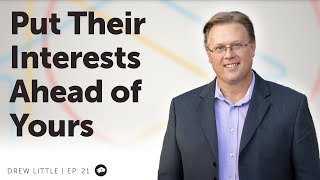
Interview transcript (YouTube) of Drew Little discussing his transition into real estate, founding the Home Run Team, and his leadership philosophy. Key themes: team-building strategies (small-unit ‘SEAL team’ approach and scalable leader development), fiduciary responsibility and trusted-advisor model, economics of brokerage splits and incentives, staffing priorities (marketing director, transaction coordinator, personal assistant, ISAs), and maintaining production vs. CEO role. The piece emphasizes relationship-driven long-term growth and agent-focused service.
Chapters
For insights into starting a real estate team, we're talking with Drew Little.
It's pretty bougie for me to be in a position where I say I work for fulfillment.
A baseball coach for more than 20 years, Drew's named his real estate business the Home Run Team. And before becoming a Realtor and team leader, Drew led and trained retail sales and service teams, served as a director of corporate development for a large format printer, and built a record label, music conference and downloading platform to help independent artists advance their career. Thanks so much for talking team OS today, Drew.
Thanks for having me. I really appreciate it.
Yeah, we covered a lot of topics there in the intro really quickly like, like your corporate background and I'm sure that'll come up throughout the conversation. I'm especially excited to bring you on because of the relatively young age of your own real estate career and the relatively young age of your real estate team. But before we get into all of that, I would love to know from you what is a must have characteristic of a high performing team.
What I look for in a team is people who are able to work together as a team. Right. You've got to all be rowing in the same direction. That doesn't mean you can't disagree. That doesn't mean you can't have different ideas about, about what direction you should go in. But once the decision's made, everyone has to commit. You know, it's like, you know, I'm a baseball coach because like in football, if the quarterback calls a play and the wide receiver says, well, yeah, no, I'm going to run the other way. Got a huge problem. So everybody has to be able to get on the same page and they've got to feel good about it, you know. So as the leader, you've got to determine the course. You've got to take input, of course, but you've got to determine the course and then you've got to sell it. You've got to get buy in from your team so they don't go rogue. Because if they go rogue, the plan doesn't work really good.
I'd love to, I would love for you to speak very specifically to your real estate team as it stands today with regard to high performance. And in light of your baseball coaching experience, as I mentioned, retail sales and service teams that you help build or rebuild and train, all the different things you've done throughout your career. Is there anything surprising to you that it either mapped very, very wonderfully onto the real estate experience or it was different in real estate than it was in some of the other contexts, like similarities, differences in your past coaching experience relative to what you're trying to build and coach today in the spirit of this alignment message that you brought.
I think one of the things that surprised me was because, you know, I understood getting into the business that. That real estate was. Was very individualistic. Right. I was surprised at how much of a hunger there is in many agents to actually be part of something larger than themselves. I think it's why a lot of agents stick with the same broker for a long time, even if that broker doesn't. Doesn't serve them well. They. There's a. You know, we're. We're herd animals. You know, we want to be together with other people. And so I think there's a loneliness to that purely individual agent, and I think they look to fill that, and I think that's something that teams can really help with.
You're speaking at some level even to just the very basic social nature of the human being. And it's one thing to be in an office with people. It's a different thing to be in an office on a team with people. Yeah.
You know, it's funny. I come from kind of a hardscrabble background, Right. I grew up in Appalachia. Poor family, lots of challenges. So when I started working professionally, I was working for success. I was working for money. As I've gone on through my life and career, that has changed completely. I work for fulfillment, you know, and, you know, it's. It's pretty bougie for me to be in a position where I say I work for fulfillment. There's a lot of people that are like, you know, screw this guy. I got to work for the. The electric bill, right? And I totally get that because I've been there. But, you know, I think when it's. When it's the best it can be for you. Work is not about money. Yes, you get paid. Yes, there's money there. But work is about what you add to the world and how it feeds your soul at its best. And, you know, I just. I've been in both places. I've been where I was just trying to make money, and I've been where I felt like what I was doing was. Was worth doing. So that's. That's something I try to share with people. I try to help them get on a path where they can get away from chasing money and build fulfillment.
Really good. I feel like that's going to be a theme throughout our conversation. I know it's something that, when we connected before, I, I aligned with you on. And. And I even think, like, in a practical sense. And so again, we'll double back to it, but I'll. I'll finish the statement. So often the goal supplants the actual thing that delivers achievement of the goal. And by that I mean the more we seek to help people, the more money we're going to make. Whereas the more we seek to make money, the less likely we are to achieve it because of the way that it feels to the other people involved in it.
You get commission breath.
Yeah. Great, Great term. I love that term. Yeah, I. It hasn't come up on this show, but it's come up on another show that I hosted for several years. Came up several times. And again, it's the way we make people feel. And people can hear it, feel it, smell it. And the trick is, because of the nature of the industry, and I know we'll probably talk about this topic too, you know, a relatively low barrier to get in. There are a number of people practicing that don't put the rest of the true professionals in the industry in the best light. So people are looking for it off the. It's the default, it's the norm. We're actually looking for it. Or in this case of commission breath. I hate to walk this out further. We're smelling for it all the time, and we can smell it a mile away. Okay, you introduced a little bit about your background. I would love for you to just kind of share any kind of summary of that. I walked through maybe 25 years of your life and career in that intro. I'd love for you to kind of set up your entry into the real estate business in general as a realtor in order to get into when and why and how you started the team. So start, you know, walk us into. How did real estate become something that you're doing today?
You know, when I was a kid, my mother was a Renaissance woman. And among the things she did as a. As a hobby was design these lavish houses. She would just draw them out herself. No architectural training, just. Just inspiration. And so I was always interested. So I was drawing floor plans myself when I was eight or nine years old. Right. I've always been interested in houses. And then I took some architecture courses in college. You know, my business career didn't take me that way right away. I was in the army before I went to school. So I had a family when I was in school. And I didn't. I didn't want to be On a. On a straight commission job. So I, you know, wanted a paycheck because I'd take care of my family. And in 2009, my educational background's in history and economics. In 2009, I knew the market crash was coming, so my wife and I started investing in real estate at that time. So skip forward 11 or 12 years. And I've been working in the corporate world for 25 years. I've been very successful, but it was really, really tired of it. And I had a. Had a conversation with the boss one day, a guy who I had made probably $200 million. And I really got the impression he did not appreciate what I had done for him. Let me put it that way.
I really needed 300 from you, man.
Yeah, yeah, yeah. And so as any, I thought, gosh, why do I have to put up with this guy's nonsense? And so I sat down with my wife that night. We looked at our retirement plans and her pension and our investment properties, and I was like, oh, I actually don't ever have to put up with the boss again. So I made the decision to leave. But, you know, I'm a little young to retire. Retire, you know, So I started thinking about what I want to do. And both of my parents actually passed away. Well, my mom in 2007, my dad just a couple of years ago. But they both ended up working pretty much their whole lives. And so here I am at 50, able to do what I want with my time. And I thought if I could help other people do that, that is work worth doing, that's fulfilling. And so that's. That's really what I wanted to do, is I wanted to help people do what I did. Real estate was such a huge part of our ability to retire. You know, the properties that we've purchased, the equity in them is financed other businesses we've owned. You know, I thought if I could do that, then. Then that's worth doing, and that's what I want to do. So I quietly got my license without, while I was still at my job. Passed the exam on April Fool's day, Went into work, gave my boss my laptop and my phone. He said, what is this, your two weeks? I said, nope, this is my right now.
For two seconds. Bye.
See ya. Good luck replacing me. I wish you well, but actually, I don't care. And so I've been. I've been trying to help people ever since. And then when I got into the industry, you know, I knew consumers needed help. People know so little about real estate, and about markets and even about their own credit. So I knew people needed help. And then I got into the industry and found out, you know, agents need a lot of help too. I thought these big brokers were doing a lot more for them than they really are. So that's kind of. I knew I wanted to be in a team when I started, you know, because, because I'm an entrepreneur, because I've started several companies that were valued in the millions of dollars. I always have an exit strategy. And I knew that to build an exit strategy, I would need to put together an organization that had repeatable results. Right. That's your, that's how you, that's the basis of an exit strategy. So I came in knowing that. But when I got in, I saw that there was so much more opportunity to help agents than I really realized. So much more that could be done for them and so much could be done to improve the industry. When, you know, these, these, like the Schitzer Burnett lawsuit is a great example of legally a case Realtors absolutely should not have lost. I mean, we can talk about that more in a second. It's absurd that we lost that suit. On the other hand, we lost it because as an industry, we kind of deserved a smack in the mouth. We have done a bad job of policing ourselves and our fellows for a long time and we kind of deserved a little comeuppance there. And it's not over.
Yeah, a lot there. I, I don't know how deep I want to go into that, but I know that we agree on the fiduciary responsibility that every agent should be very conscious of and intentional about in every single relationship. And I think that's part of this message as well. And I think, I think it will square up kind of the buy side a bit, hopefully in favor of this more of a fiduciary position. But I'd love to stay in kind of the team journey you mentioned. You know, I've been an entrepreneur. I had, I had run lots of teams in the past, so I wanted to start a team. But you know, that can look a lot of different ways. So for you, when you thought it could be, you know, a team could be you and a full time assistant, a team could be you and a buyer's agent and you know, a part time and a full time assistant doing any of a variety of things, whether that's personal assistant or transaction coordination or some marketing support or whatever. It could also be, you know, 350 agents at a, at a huge staff of folks like when you, when you thought team in the first place, a, what was that model in your head? Like, what did that look like? And be kind of what other sources informed your perception of the type of team I want or don't want to build? Kind of just talk about, talk about your initial vision for team in this context.
My vision for team was kind of split. And this kind of comes from being heavily involved in baseball my entire life and also from my interest, you know, from army days in military tactics. Right. I'm very interested in small unit tactics and I think that probably relates to baseball. You know, you got nine guys on the field, right. And they all have to do one thing perfectly to win. Small unit military tactics are very similar. You know, you all have your specialties and you have to be, you have to be very good at what you do. And so when I imagine myself working with the team, at the beginning it was me and six or seven people, you know, a tight, a tight unit, almost like a special Forces or a SEAL team of real estate agents. But then my business brain is like, okay, but that's not scalable. You can't be that tight with enough agents to have a scalable team. So it really goes back to sort of this, this corporate idea of building leaders so that from my team I can build out leaders who can have their own sort of SEAL team of real estate agents in various markets. So that's really the idea. We want to get big, but we want to do it in a very, a very tight, culture driven way. So that's, that's kind of the, the big vision. And it's, it's, it's really a mix of two visions. A corporate success vision and a personal, I guess, excellence or victory vision.
I like both of the parallels that you drew there. So I heard from you in that teams within the team, building leaders so that we can build teams within the team. Do you see kind of the support side of it, all of the different kind of staff positions being centralized in service of. I also, by the way, heard multiple markets in there potentially or even currently. We'll get to the current state of the team in a moment. But like when you, when you say SEAL team, do you mean teams specifically of agents with a lead agent and then centralized support behind them? Or, or is your vision, you know, one or two support positions within that, within that team with a, with maybe a larger centralized support team in the home base or mothership or whatever?
I think, I think the support team in a lot of cases needs to be with the Team. Right. I don't want to dig too deep into military analogies, but, you know, there are certain, certain roles that aren't actually, you know, when a, you know, when the rangers are in the field, they may have an intel analyst with them. Right. The intel analyst isn't part of their team. The team is actually supporting that analyst. But without the analyst, the team can't do its work. You know, they're, they're dependent. And so, like, things like ISAs, you know, a lot of people are using overseas ISAs, and I get that it's very efficient. My ISAs are local. You know, we had a specific need for a client. One of my ISAs lives in that neighborhood. She went out and walked the street and talked to the neighbors. So she became an outside sales agent pretty quickly, but it's effective. And then I have another ISA who's based in another city. And he's just a monster on the phones. He can start 70 or 80 conversations a day. I don't mean dial 70 or 80 numbers. I mean start that many conversations. He's incredible. But he has really dug down and, and gotten to know this market and gotten to know the needs of some of our repeat clients. And so, you know, the, the deal I was working on before we got on today is a land development deal that he uncovered, you know, in my backyard. I'm like, how did I not know that was there? So I'm kind of split on that. You know, I like being able to have that, that close community connection. But the right person can feel local even when they're at a distance. Now, things like accounting and so forth that need, you know, things that are lower touch in terms of touching the team and touching the clients that can easily be centralized. But for, for anything that's, that's client facing or agent facing, because we really have to think of agents as clients too. We really do kind of work for them. So we have something that's, that's facing them. We've got to figure out what's best for their situation. And it may be different in one market versus another.
Yeah, very true. I mean, there's one thing that became an obvious theme throughout these conversations. We're now several dozen in. But like, right out of the gate, the idea that there's one right way to do almost anything is, is an illusion. And so we need to be flexible. And here you, you brought it straight to a what's right for the team as well as what's right for this individual person who I'm trying to Work with and help. Right in front of me. Okay. I would love for you to characterize the home run team here. You know, in Q1, 20, 24, however you'd like, size, the markets you serve, structure, culture, whatever you want to share. To characterize the home run team. I would love to hear that.
I think what defines us right now today is a fanatical focus on clients and our fiduciary responsibility. We put clients first because we, we are not interested in transactions. We are interested in relationships. You know, we. We view homeownership or real estate purchases as. As a lifelong journey. We have an international network of agents we work with. We can help people almost anywhere in the world. As a network I've spent the last three years building. And so when we meet someone, know I had a bunch of leads over the weekend, a lot of more rental leads. Okay. I don't love property management, but I love meeting renters at the beginning of that journey. You know, I. I rented two houses myself yesterday. Okay. One of them is a young doctor who's going to have much bigger needs as she goes on through her life. Another one's a. A family who are just lovely. And they've already said, you know, when this lease is up, we want to buy a house and we want you to represent us. And so it's about these, these relationships and being a trusted advisor across a person's journey, not being a transactional real estate agent. And this was something that was kind of a shock to me when I got into the industry. Just, you know, the turn and burn mentality of some agents. It's like, you know, it's like grind, grind, grind. At some point you burn out. You can't do that forever. A relationship model, a model of an advisor to me is much more appealing and much more sustainable. You know, if I were 25, maybe I could turn and burn all day, but I'm not.
I mean, this is. This again, goes back to your. To your call to have the exit plan on the way in to the endeavor. And in this case, it's, you know, both of those imply a long view. Right. And I actually love the idea. This takes us back to episode two with Laurie Finkelstein, reader, who also kind of got started a little bit bit with working with people renting. And of course, every renter is a potential homeowner. And so I love to hear that. I would love just to. To kind of step into your economics background. Economic problems, economic decision making, economic incentives. Talk a little bit about economic incentives at a high level and talk about where there is good alignment and misalignment and maybe that how that informs your approach to your own practice as well as to your team.
Economics is by definition the study of incentives. Right. All economics is really about is understanding what incents people to take action. That's really what it boils down to. And so when we look at the real estate industry and the current brokerage model we have, we see a lot of misaligned incentives. As agents, we want to get into the business and make a living. But the way the brokerage system is set up now, there's not a lot of incentive for big brokers to help agents be successful. Their incentive is to get as many agents at it as they can. Capture those one or two transactions that almost everybody has in their sphere and not spend any money to capture them. Right. I'll hang your license, you bring me money. And I don't spend any money on you because if you fail and 85% of agents do in the first year, it doesn't cost me anything. So there's, there's no real incentive for a lot of these brokers to spend much money on agents. And you know, there's a lot of claims. Well, we do this, we do that, we provide this, we provide that. A lot of the things they provide, if you really look at it like the CRM, so they can get all your contacts and their CRM and still have them when you're gone, you know, that's not so much helping agents as building their, their portfolio. And when we talk about this, what we're really talking about is what is a big brokerage's incentive. Most of them are corporate corporations. They're shareholder owned and their whole world exists on a 90 day time frame. It's from earnings report to earnings report. And if you're the CEO and you have a couple of bad earnings reports in a row, your career could be wrecked. You can be done so. They're always managing that more than they're managing their fiduciary responsibility, in my opinion. You know, I've been with a big brokerage, it was not for me. I'll just, I'll just say that I didn't, you know, because of what my values are. It didn't align with the, the value of serving the shareholder interest. Because when corporations have a bad, you know, bad quarter, what do they say? Oh, we're going to institute cost cutting measures. Well, what does that mean? It means we're going to get more, more money out of the agents and give Them less, we're going to get more money out of the clients and give them less. That's what that means. And if you're a fiduciary, that is a misalignment. So I take that very seriously. You know, I think our industry would be much better if we all saw ourselves first as fiduciaries, like a financial planner or, you know, you know, other professional fields. If we saw ourselves as that first and behaved that way, we'd have a lot more respect and a lot more love from the general public.
I like the term fiduciary, as I said, like maybe five minutes ago. I also like the term trusted advisor. I like your parallels to these other ones. In some cases, it's by law. How would you define fiduciary? Like, what are some key characteristics and how does that differ from some of the agent behavior you've experienced on the other side of some of these transactions? And I don't mean for you to beat people up. I'm really looking for, like a clear definition of fiduciary from what it is and what it isn't.
In the simplest terms, when you're someone's fiduciary, your responsibility is to put their interests ahead of you, up ahead of yours. So if you have a client as a real estate agent, getting them the best result for their situation is more important than getting the highest commission or the quickest deal for you. And that's where you have to put your emphasis. And, you know, we have conflicts come up all the time. You know, I had a. I had a deal not long ago where I was representing a seller and very successful person, had a great property, and we were in negotiations with some buyers that I really liked, and I really wanted the buyers to win. But that wasn't my job. You know, my job was to represent my client. And it all worked out in the end. The buyers that I liked got the place and my client got their price, and it worked out great. But, you know, at one point, there was a point in negotiation where my seller gave me some latitude. They say, well, you know, I'd take this number, but I'd rather get this number. Now, I could have just gone back to them and said, okay, and give them the low number and they would have taken it and we would have been done, closed. But that's not my job. My job is to serve my clients best interest, right? So I went back and I got the higher number. You know, I had to at least ask for it, right? And we got it. So that's me putting my clients interests ahead of what I want. And some people say, well, you made more money, not, not significantly more. It wasn't, it wasn't one of those. It wasn't one of the. I'm in a stage of life where a few hundred bucks. Nah, you know. Yeah, yeah.
So this kind of calls back a little bit to our earlier exchange on the money is the result, it's not the goal.
Yeah, absolutely. You know, we all have to make a living, right? We all have things we have to pay for, things we want to do in our lives. And that's, that's valid. You know, you have to make a living. I just believe that you make a better living by serving people. Everything we've done, my partner and I, where we've been successful, we came from a place of helping first. You know, when we were in the music industry, we started three companies in six years that ended up with a multimillion dollar valuation. Every single one of them was serving, about serving a community within the music industry. And when people understood that we were trying to serve and help and elevate others, we didn't have to, we didn't have to chase anybody. You know, they came to us. And so when we got into the real estate business, we said, okay, let's help people. You know, we know that helping people pays you back. We know that putting others first is not just its own reward, spiritually, if you will. You know, I'm not a. Not a big spiritual language guy, but, you know, it feels good, right? But then also it also pays for itself. Financially. It takes a little longer. You know, it's not, it's not the quick hit, but what I find with the. When you make money quickly, you lose money quickly and you lose relationships quickly. It's been my experience.
How is an agent to suss out claims from realities? I mean, I have some easy answers off the top of my head, but I'd love to know, how do we know that the broker has some fiduciary thought, even if they don't have a fiduciary obligation to the success of the agent?
I think the, I think the first thing an agent has to understand when they're trying to decide where to go is they. The first thing they have to understand is that the broker works for them. They are hiring a broker. They're not being hired by a broker. So when you interview brokers, do not be bashful about asking hard questions and putting them on the spot. You're not there trying to win them over. They need you. Because that's, that's one thing about the misalignment of the broker model that works in agents favors. They need you, they've got to recruit you or their business doesn't work. So you can put them on the spot and you can ask them hard questions and you can beat them up, you can negotiate with them and you should. It's good practice for when you get out in the field. So what you can never do in real estate and be, be good at it is be lazy. And that starts with finding your broker. Going with the first broker or first team you talk to, probably a mistake. You know, even if you, even if you talk to 10 brokers and you end up going back to that first one, at least you know why you're going back there. You know, when I got into the business, I interviewed 23 brokers. I took my time. I had a spreadsheet, I did pros and cons, you know, so I'm gonna.
Say for folks watching or listening who are maybe in this zone of considering a new team or a new brokerage or a new team, Ridge, you can maybe cut that number in half and still, still be doing it in half.
I mean, you know, I, I'm, I'm, I'm very data driven. I like to really, I enjoyed the process of digging into, to things to find things out. So you probably don't need to do that much.
But I guess just, just to, just to make this a practical thing for folks, what were some of the, you know, as you kind of plotted this out, you know, you said 23. I'm saying, well, maybe you could just interview 12. What were some of the key characteristics like checkboxes or rating scales? As you're kind of like putting the opportunities against each other. What are some of the key categories that you were interviewing around and making comparisons on?
It was, I mean, so obviously splits are in there, but it's bottom of the list, right? Because if I'm selling enough houses, it doesn't matter what the split is. So what I was really looking at was culture, opportunities to learn any kind of support, any kind of marketing they do. You know, what, what am I paying for that's going to make me a better agent? You know. You know, every, anybody will hang your license. You know, that's not, that's not worth 40%, right? I can get my license hung for 299 a transaction. That's not that, that's not it. What are you going to do for me that's going to grow my career and make me successful. And, you know, if so, in my case, I was able to point to a long and successful career. This is what I've done in these other agencies. I want to do at least this in real estate. How are you going to get me there? And so those were the things I was comparing. Now, if you're new and you don't have that success, say, my ambition is to be this. How are you going to get me there? And if they don't have a good answer, if it sounds like they're BSing you or they're trying to just buddy up to you, oh, well, you know, it's so much fun. We do, you know, Taco Tuesdays. That does not feed the bulldog. You know, you've got to really, you've got to really hammer them and stay on. And I'm saying, I'm not saying be rude, but be relentless. Really make them answer hard questions and give you real answers about how they're going to advance your career. Because there's always somebody that's willing to do it for less money. You know, you can always find a cheaper broker. I think Sunit was saying that recently. Sunit Agarwal, right. Yeah, you can always get some, you can always get somebody. Yeah, yeah, you can always get somebody to do it cheaper. But you got to make sure what you're paying for is worth it. I'm, I'll pay, you know, I'll pay for good service. I don't mind that, but I'm not going to pay for nothing. And that's the kind of, that's what your questions have to be focused on when you're deciding.
Yeah, I like the, the kind of, the core question is, what are you going to do to help me get there as, as the crux? I also like the idea of sliding splits way down. I actually think that hangs a lot of people up. I think a lot of people would be better off maybe in a team model. But they get, they balk at the split. And I think it's because they don't fully understand how to kind of do some of this breakdown. I mean, they, they know how it, I guess intuitively, I mean, they're, they're intelligent enough to do it, but they maybe are just stopped cold by the split when they're not. What am I getting in return for this? Especially in light of what you and Sunit said, which is, you know, yeah, you can always get a better deal. You can always get that number lower, lower, lower, lower, lower. But what you're doing is trading off in, at some level, you're trading off an investment in yourself, in your long term success.
And the other thing to keep in mind if you have, if you have ambitions to grow, right. You know, a lot of agents hang out their license as a broker, become a team leader before they really understand what that means. And so you see brokerages that are small, that are super cheap and maybe that's great for them locally, but what they've done in building their brokerage that way is they've sort of cut themselves off from further growth. You know, a flat fee brokerage in a local market is going to have an extremely hard time scaling. So if your ambition is to maybe expand and have your own team in your hometown, you know, go back to where you go back to where you came from or move to a new place, you're not going to be able to expand with that team or that company. So you know, it's important to agents I think don't realize sometimes that the financial health of the brokerage is important to them because it impacts the resources they have and the options they have for their future. So not only is cheapest, not always best cheapest, sometimes can be a real liability depending on what your goals are. You know, when I started, like I said, I interviewed all these brokerages. I had offers of 75, 25, 70, 30. I went with a broker that offered me 60, 40 because it was a, it's a, it was a large local firm, like 700 agents. Even though it was local firm, a local firm. So they knew how to scale, they had systems that worked, they had actual training in place. And my broker, my office broker was a legend, been in the business almost 40 years and she was incredible. I love her. She's very mad at me that I left, but she's great, you know, but you know, I met, so I went in at 60, 40, I did in the first six months I was in the business, I wrote a couple of million dollars in business, which is a lot in my market. You know, it's not New York here. We're not doing two million dollar deals every time. And so I went in and said, you know, this is great, but I need to grow, I need a better split. And we negotiated a new split and you know, I was, I always knew I was going to have to leave because I was going to have to be able to pay agents and that they were, the split was never going to get low enough for me to be able to do what I needed to do for my Agents. So I always knew that was coming. But along the way I was able to learn a lot, build some good relationships, some good agent relationships which are so important if you want to be successful and last. So yeah, I mean it was, it was worth the 40% at first. It was worth the, you know, the 35 or the 30 or the 25 down the road. You know, it was all I was always getting what I was paying for. But then when I got to the point where, you know, last year by leaving I gave myself a $40,000 raise, they just weren't offering anything that was worth 40k. So I had to go. And you know, you have to be able to make those kind of hard nosed business decisions if you want to grow your business and succeed.
Very good. I would love to put you on the other side of the table here for all the times that you have been and have kind of the same conversation. I want to talk splits, I want to talk like structure and service delivery. But let's start with kind of like high level value prop and kind of walk into that.
The high level value prop that we're going to bring one of the things that we think is very important and it's also kind of a litmus test to tell us if an agent is really for us. So the very first hire for this team other than me was our marketing director. Right. So when you join our team, you get the benefit of decades of marketing experience between me and the marketing director right out of the gate. And one of the primary things we're going to give you is we're going to build your brand. My brand's fine, the company brand's fine, we're building it every day. But we're going to build your brand as an agent. And when the day comes that you feel like you need to do something else, if that day comes, we hope it doesn't, but it's real estate, so it's probably going to, you know, we're realistic about that. You're gonna, that brand that we've helped you build, you're gonna take that with you wherever you go for the rest of your career. You're gonna be able to build on that. So that's. And agents that get that and understand what a value that is, there are kind of people, because they're long term thinkers, they have a vision. Right. So that is, that's kind of a test right out of the gate. The other thing is, I don't care what split somebody else offers you, I'm committed to making sure you can't sell any more property anywhere else than you can with me. That's the bottom line if you know my goal. So our average Transaction is about 340 in this market currently. If we get to the end of your second year and you haven't done 5 million for the year, I'm not going to kick you off the team. Oh, probably not. I'm going to look and see what I didn't do to get you to 5 million. Because honestly if you want to make a decent living, good middle class living, take care of your family, be a couple of vacations, 5 million is about where you need to be, you know. You know we do, you know, people do a million and they get, you know, somewhere around 30k in GCI, they know that's not getting it. So I think well, maybe 2 million. Okay, well that's 60k in GCI. And then you've got splits and licenses and dues and advertising. You know, 60k in this business is nothing, it's poverty wages. So you've got to just to break even just to have it, just to pay your light bill. You got to do 3 million if you want to really start to have a good middle class life and be doing 5 million a year at least in my market. So my commitment is to get people to that level as quickly as possible and then grow from there. And again it's what's different from the, you know, if a brokerage, if you don't do that at a brokerage, they don't care. You're just another, just another agent. They really don't, it doesn't matter to them. I don't want to say every brokerage but certainly the big corporate brokerages. Whereas if my players aren't successful, right, if you've got a low batting average, I take that personally and I'm going to get in there with you and figure out what's going on. And you know, if it's a you problem, if it's an attitude problem, if it's a motivation problem, if it's something I can't fix, then we're probably done. But if it's where I haven't given you the support or I haven't taught you the skills, then that's a me problem and I've got to fix that. And I think that accountability from leadership is something that's missing a lot this.
Industry both up and down, right? Like just going back to your call that like the, the broker is in service of you talk about the structure of the non agent Portion of the organization. You mentioned marketing director was your first hire. You mentioned in part to prioritize personal brand, but then also at some level, this is a marketing business. If you, if you're not doing that well, you're, you're, that's the gateway to all the opportunity. Like what other, what other positions have you hired from a staff or an admin? Perspect, kind of in what order? And would you do any of it differently?
Okay, so the marketing was the first, first role. And that's, that's my partner. You know, she, she's incredible. I knew she was good. You know, our first startup, we did that, that hit over a million dollars in valuation. She got us 400,000 website users in six months. I mean, just, she's, she's explosive. She's amazing. So that was the first hire, obviously. The second. I've got to think back a little bit. Second was my, my transaction coordinator. I was getting ready to go out of town for a mastermind in March of last year and I had to write six contracts. I was staying up writing contracts before I got up on the plane. And as I'm doing that, like, this is insane. I've got to put an end to this. So it took me a little while, but I eventually found a TC I really liked. Brought her on. She's amazing. She has increased my productivity so much. The next person was my personal assistant who I hired initially as an intern. And he does, he just takes so much grunt work off my plate. I feel bad sometimes. Like, you know, I'll give him these, these horrible administrative tasks to do that would make me go blind. But he, he loves being part of the success of the business and he jumps right in and does a great job. You know, it's, it's. We have a lot of fun. We joke around in the office a lot. So that was a great hire, being able to. So the first two, really, the first three were all about taking things off of my plate that keep me away from clients, right? All the things that we do to generate clients keep us away from the clients we have. They keep us out of face to face contact. So I've delegated as much of that as possible so that I can actually. So they can find the clients and actually spend the time with it. Because that's what I'm good at. I'm good at standing around chatting with people. Right. I'm not super talented. Okay. I like to say that my partner's the brain and I'm the mouth and that's how we work and.
Or the personality. There has to be something feeding the mouth. Yeah. On the way out. Okay, so. So I wanted to go to Isa's next, but instead you kind of like walked me right up to a question that every team leader asks herself or himself at some point in the journey. And it's in line with this idea of like, oh, good, I can take that hat off now. I have someone assigned to these activities who really loves it and they're better at it than I am and they can do it for, you know, it's less expensive for them to do it as well. And I can keep my eye on what I enjoy and what brings me fulfillment and is the most profitable use of my time. How do you think about the question that every team leader asks themselves at some point, which is when, whether and how to leave sales production? What I think I heard from you is that you really enjoy that aspect of the business. So I can see you being with a camp of folks who've already been on the show that are like, yeah, I will always be in production at some level. And then of course, there's a slightly larger camp that's like, yeah, I left production because I wanted to continue taking the hats off so that I could do, you know, other activities besides selling.
So a couple levels above me in the exp organization in my direct lineup is a fellow who hasn't sold a house in about six years. He hasn't needed to. Right. He's got his. He's got his residuals built and he's killing it without selling a house. And that's awesome for him. And he spends a lot of time training and motivating and just being a good guy to be around. And I admire that aspect of what he's doing. You know, I'm actually coached by Ryan Sirhant, who is my moving more out of production and more into a CEO role. And Ryan's great and I love him, but I think I'm of those two, I'm kind of a little more like Ryan. There's always going to be clients I'm going to want to work with. I love pretty houses. Have since I was a kid. Right. We covered that. So, you know, I'm always going to want to be. Have some finger on the pulse of selling those properties, of helping those clients, of just being in those spaces and shooting videos and doing fun stuff like that, because I enjoy it. But then also I really get a lot of utility from helping people, which is something that if, if you told 25 year old me, right? You're going to be all about helping people one day. I was like, you're an idiot. I'm all about money. Right. That would have been my reaction. But it really is what it's about for me now. So definitely want to be engaged with the agents at all times. But yeah, I want to engage with. I want to continue to engage with customers. I have investor clients I work with that, you know, we'll just hang out and go to dinner and stuff because we like being around each other. I'm not going to tell those, those guys, oh, yeah, I'm too much of a big shot to sell you a house now or to help you buy a piece of land. Of course I'm going to help those guys always as long as I'm in the business, because those relationships are just important to me.
Yeah, really fair. ISAs. When did this occur to you? Was it something someone said, hey, man, you should really consider having some ISAs do that? And you're like, tell me more. Or was this like on the, on the roadmap from the get go you already described. I think you said you had two of them, one truly local, one a little bit out of market, who's an absolute champion on the phones. When did this occur to you? And. And what? Just like characterize really quickly and at a high level, kind of like the core activities that they're doing in service of you and your team.
I would always been kind of 50, 50 on ISAs. Right. I have a client who's an investor who has like an ISA bullpen in Central America. And he was, he had tried to convince me to use his ISAs. And nothing wrong with them. They're really good at what they do. But I was just concerned about a disconnect in that client relationship if I was using ISAs or especially using ISAs from across the world. And I don't at all knock anybody that uses them or the quality of them. It's just I wanted at this stage in my development anyway to have a tighter relationship with the clients. And I just wasn't sure how to get that out of an isa. So it wasn't that I was critical, it was that I didn't really have a vision for it. Right. And so I had a client I helped a couple of years ago who just loves real estate. She's just fascinated with the industry and she sent me a lead on a house. She's like, I'd love to see this house. I said, I'm obviously not going to buy it because I just bought a house from you, but I'd love to see this house. Can we go see it? I'm like, sure, we'll go see it. You know, we're buddies. That's fine, right? And so we went out there and we saw it and I was like, look, you don't want to buy this, right? And she's like, yeah. I was like, okay, I'm going to show it to one of my investors because it was a steal. And I showed it to my investor and we bought it. And she's like, that's cool. I helped you do a deal. I was like, that was cool. Would you like to help me do more deals? That's how she became my isa. So she went from client to team member and we're really excited. And, you know, she brought me one just the other day that's it's a million dollar deal if we can get it done. So, you know, she's having fun. She's sitting around, she's a young mother, she's setting her own hours, you know, doing her own thing. I'm teaching her what I can. We're working together, we're working on getting her license. So because there's things she can't do right now legally, that once we get her license, she will be able to do. The other fella was, was and is working as a wholesaler and he was bringing me deals for my, my clients. And he's like, I can bring you 60 a year. And I was like, if you can bring me 60 a year, I'll put you on the team and I'll pay you more. You know, we'll get you more money. And so he and I worked out a framework where he still does his wholesale stuff in his market, but he helps me uncover deals here for my investors in this market and sometimes just straight up listings for me. So, you know, it was it. So they both have other things going on. They have other lives, but they're able to work with the team and I'm able to pay them on a commission basis, which I love, because it's, you know, I'm not paying for something I don't get, which, as we discussed with brokers, is something I don't, I don't like. But then they also have the support they need to really make some good money. So I'm able to help them be more successful. So I get the, you know, the accountant side of me is very happy and the helping people side of me is very happy.
Yeah, you have to love both the Variable cost, pay for performance aspect as well as. I love just to love the story of. I had a relationship with this person, and we figured out something that made sense for both of us, and now we're winning together. I love that. At the risk of running long, one last question before three standard closers for you. Drew, any advice for a solo agent thinking about starting a team?
I. I think know why you want to do it. You know, be really clear on the goal. If the goal is to smooth your revenue, that's a worthwhile financial goal. But there's got to be more to your team than. I just want to not have the commission check roller coaster. Right. Because you can't offer anything if it's just about smoothing revenue. What do you. What are you. What are you providing to the agent? You've really got to put the service you provide first, and you've got to really understand that and have that clear in your mind and be able to deliver it. Because when you start asking, talking to agents, they're going to want to know, what can you do for me and can you deliver it? And if you don't have good answers to those questions, you're not going to build a team. It's not going to happen. Or you're going to have somebody come on the team because they like you, and then they're not going to like you pretty quickly, which is. Which is a rough spot to be in.
Thank you so much for that. You may know that these are coming because you've been listening and watching these episodes. By the way, do you prefer to watch or listen?
I watch, actually. It's. Well, it's funny because if you could see my computer right now, I have, like, 45 tabs open. So I multitask a little bit. So, like, I'll start watching, but then I'll, like, do something else and do.
This other thing and listening together.
Yeah, I wish him a lot. I don't know.
Yeah, Love it. Well, thank you so much for spending time in these episodes. I'm glad they're of value to you. So, again, you may know that these are coming. First up, what is your very favorite team to root for, Drew, besides the home run team or the best team you've ever been a member of?
Both are tough. I think the best team I've ever been a member of is the team me and my partner have. We've been. We've been together 31 years, and I wouldn't change a thing. Well, I've been a jerk sometimes. I would change that but as far as having the relationship, I wouldn't change. I wouldn't change that at all. And I mean, the other one, obviously other one, My favorite team to root for is the kids I coach. You know, there's nothing like seeing these guys become young men and seeing how they interact. And I'm blessed to work with a lot of really great kids as well as some really great athletes.
That's awesome. What age ranges do you. Have you coached before? And what age range is really the one that you feel best at?
I've coached from 8U to 19U, my favorite. And where I've kind of settled in. Once my son got to a point that I wasn't coaching him anymore, I really kind of settled into the 16U. They're a lot of fun. They, they're kind of figuring out who they are as people, if they're going to be good ball players. They're pretty good ball players. You know, it's, it's. And there are some, some dynamics with them interpersonally. Like I learned about only fans didn't know what it was until I heard my players talking about it. And I was like, oh, this is unfortunate, but right.
Doing.
So, you know, so it's like they kind of keep, you know, like, like most of what I know about new music comes from my son or my ball players. Right. I use a lot of viral music in my videos. It's all from the kids, you know, so they kind of keep me young. But it's just seeing how they, you know. So I've got a kid that's. He's. I've coached him since he was 13. He's in college now. He's throwing 96 miles an hour. You know, he's going to go pro to be my first pro player. I'm really excited about that. I've got another kid I coached who was a great ballplayer for me. He's 6 foot 7 and so he's going to. He's about to leave for Penn State in the fall on a volleyball scholarship. So. But, you know, I've had conversations with him and things I taught him in baseball. He's carrying through into other aspects of his life. Because when I coach in baseball, I'm not just coaching the skills of the game. I'm coaching attitude and how you treat people. You know, how you, how you carry yourself in a game so that you're not a jackass. And I teach kids that. And it sticks sometimes. And that feels really good.
Yeah, that's fantastic. What is one of your most frivolous purchases, Drew, or what is a cheapskate habit that you've held onto even though you probably don't need to anymore?
My cheapskate habit is I don't make any frivolous purchases at all. I mean, you know, it's like. Like I said, I grew up poor, and so I really learned the value of a dollar young. And now that it's not as big a deal to me, I still really struggle with just doing fun things with money. You know, my. My partner's. She's got a. She's got a completely different attitude. She's like, let's go, you know, let's. Let's party. Right? So it's a nice balance. You know, she gets me out doing things and spending money sometimes, but for the most part, I just don't spend money. I just don't do it. It's. And it's. I don't think it's bad, but I am probably missing out on some things I don't really need to miss out on, and so maybe that's something I need to work on.
Yeah. Self awareness is the key. What does it look like for you to invest time and energy into learning, growing, and developing, or to invest time into resting, relaxing, and recharging? What are you doing when you're doing one of those things?
So I think growth and development for me, I'm. I'm more of a person to person learner than a book learner. I do read a lot. I watch a lot of podcasts, listen to a lot of podcasts, but mostly when I learn, it's about spending time with people. And so I try to. I try to shut up and listen when I'm around people, especially people with different backgrounds or different experiences, you know, and that's, that's where I get a lot of my learning. And. But then I do try to. I do try to do more formal things through. Through reading and podcasts and things like that. So I guess. I guess I'm just kind of a. An omnivore for improvement.
Yeah, that's great. I can relate to that. Absolutely. If someone has gotten here to this point in the conversation, they may want to learn more about you or your team. Where would you send folks to connect with you?
Well, the easiest way is probably just to text or call me. My link tree is on my Instagram, which is coach drew underscore 757. So you can go to my link tree there and go to the website and all kinds of stuff that we have on there. It's probably too much. But, you know, I'm always, I'm always happy to hear from people. You know, my emails. On your email me, you can check out the website. You can hit the contact page there. That's home-run-team.com. so those are all, you know, all the usual ways. And I'm happy to talk to people however they're comfortable talking, whatever, whatever medium they want to use.
Awesome. Right down below. Whether you're watching in YouTube or you're listening on YouTube and you have other tabs open, or whether, whether you're in your podcast app or if you're on the website. Realestateteamos.com down below, there's a description. I will have a link to Drew's team page as he. As he mentioned, to his link tree as he mentioned, and to his Instagram as he mentioned. All that stuff is always right down below. Drew, I appreciate your time so much, both watching and listening to other episodes, as well as taking the time to make this one happen. I appreciate you.
Thank you. Ethan, I really, I'm really glad you're doing this. This podcast, it's very, you know, it's very beneficial. I think it helps all of us to. To learn more about what's working for each other and to make connections, you know, across the industry. It's. This industry is going to get into its best state. It's going to be its. Its best version of itself at the team level. It's not going to happen at the brokerage level because of the misaligned incentives we're talking about. We, as team leaders and conscientious agents, have to make this a better industry if it's going to survive in anything like the form we're used to.
Awesome. I appreciate the positive feedback on the show and the vision to the future. That's why we have these conversations. And I wish you continued success in driving that message, and I'm glad you could share it here.
Thank you. I really appreciate the opportunity.
Oh, and the vision to the future. That's why we have these conversations. And I wish you continued success in driving that message, and I'm glad you could share it here.
Thank you. I really appreciate the opportunity.
More from Real










Zillow, PPC, Referrals… what’s actually working in today’s market? #realestateteam
