The Role of AI vs The Role of Real Estate Agents [SUMMIT]
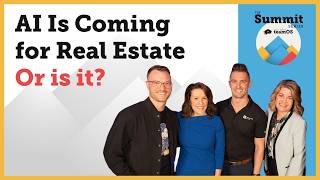
Transcript of a Real Estate Team OS summit-style panel (May 2025) featuring multiple real estate leaders discussing how AI and automation should be integrated into real estate. Panelists contrast a 'people-based, machine-enhanced' model with predictions that AI could replace many sales and communication tasks within five years, highlight practical AI use cases (transcription-to-CRM, market summaries, parsing title/inspection reports, MLS data extraction), and warn about misuse (inauthentic videos, repetitive listing descriptions). The discussion emphasizes human value in negotiation nuance, emotional reading, community expertise, and relationship-building.
Chapters
What is the right role of a real estate agent versus the right role of AI and automation? How do we leverage tools and technology to put real estate agents into their highest and best role?
It's people based, machine enhanced.
In other words, what's the right job for people and what's the right job for machines?
Most agents that are using AI are doing it wrong.
This question has always been important and interesting, but it's especially timely and relevant right now for real estate teams.
I think the sales agent is going to be replaced by AI in the next five years.
In this episode you'll at several specific ways that agents are using AI tips to increase technology adoption, cautions about AI generated videos and listing descriptions, and much.
More behind the scenes. We also kind of need the blockchain to fall in line.
It also serves as a preview of our upcoming summit series featuring 10 different real estate professionals in three separate conversations. We're talking AI and real estate agents right now on Real Estate Team os. No matter where your business is today or where you want to take it, you'll get there faster and more profitably with an operating system. Welcome to Team os, your guide to starting, growing and optimizing real estate team. Here's your host, Ethan Butte. First up we have four real estate team leaders. Jenny Wiemert of Wiemert Group Realty, Renee Funk of the Funk Collection, Ben Lobby of Ben Lobby Homes, and Ken Posick of Posik Group. Learn about the potential of AI to replace agents, cautions for agents using AI right now and a much clearer picture of the ideal role of an expert real estate agent. This is obviously a relationship and referral based business. It's a very human to human business and even the younger generations, through survey data anyway, have proven that they also want an intermediary, someone to hold their hand, guide them through the process, ask them questions that they never thought to ask themselves, etc. So it's obviously still a very human to human business, but we're seeing tech encroachment in a variety of different ways and I'd love to know how any of you are thinking about it like five years from now or even today. Like what's the right role of people? What's the right role of machines? What should we definitely be offloading to machines versus offloading to people? What do you think about people versus machines in this industry going forward?
We're very similar to Ben in terms of just like well we're we use chat GTP for literally everything but it's people based machine enhanced and so like, we don't have VAs though. Like, we're very much. So we want to have people in house. And I'm trying to like build a model to where we can not have to offshore because I feel like having them all in house is important to us. But yeah, that's the way we look at it. Like, okay, so we do maybe like a 3, 2 work from home slash in office. But like even our marketing people, it's like, hey, so we just dropped this video. Can you look at this and come in here? Let's have a conversation around it instead of let me shoot you a slack and hope you respond. And then is the tonality right? Like, there's just something about you and I hanging out together and working on something together versus me just shipping it to you and hope that you respond in the next 24 hours.
It's so funny. I just had this conversation last night with the gentleman who's kind enough to make this happen for us, James Carberry, the founder of Sweetfish Media.
Shout Out James.
Yeah, Shout out James.
Thank you.
We were talking about how hard it is to give feedback on video content remotely. You know, it's like it is an over your shoulder, let's watch together, talk about it. It's a great example. There is something intangibly beneficial about all in House.
Yeah, it's interesting. When Covid did happen, like we went virtual for a while and we were transitioning from brokerages and it was like all of a sudden people on slack, like, when can we just get together to hang out? Like, I miss you, gu. And it became a weekly kind of thing. And so even like we do a Tuesday meeting standup and it's 100% of our company shows up. So I feel like they crave it and just kind of becomes who we are.
Yeah. Thoughts on the role of people versus the role of machines going forward.
I think the sales agent is going to be replaced by AI in the next five years.
All in. Not just for qualification.
No, I mean, I think so what's going to happen? From my opinion, because I've been researching this heavily and before getting into real estate, I was in marketing and web design development. And so I did all the programming and stuff. And what exists currently is omnichannel models. So, right, you can talk to AI, you can talk to ChatGPT. AI voice exists, AI texting exists. You can actually communicate through ChatGPT via video. Right. On the ChatGPT app, you can take a video of a room and ask what's in the room. And it'll tell you what every company is doing right now is they are literally taking all of their processes and all of their data and they're working them into an internal AI agent. And that AI agent's going to be then basically replacing staff. Right. You need a report. Instead of the person doing it, the AI is going to do it. So the thing with real estate is that we have two different components. We have an inside sales agent which most teams use, which some of the lead provider sources provide that kind of asset, which it kind of like is useless usually if you. The lead provider provides it because they ask three questions and then do a live transfer to an agent.
Yeah.
So it's kind of like a horrible customer experience from. From my view, it's like, you know.
Are you hard for the human to ask once they get the transfer?
Yeah, exactly.
And it saves me a lot of time.
But then when it gets to the agent, you're right, you're talking about the agent's requalifying the person, explaining the process, explaining the area, what areas are good, and asking qualifying questions. But the agent is just simply communicating through a list of questionnaires that they're communicating through either text, email, or voice. So the only component you can't really replace at the moment is showing the house opening the door. Someone physically has to be there until someone figures out how to solve that problem. But the whole client experience of communicating with the client and qualifying them and giving them background information and educating them could literally all be replaced by AI, by tools that already exist, that handle text, voice and email, that really build a customer profile. And you're talking about an AI system that knows everything about everything. So you're not having to like, you know, teach the AI what's it like in Winter Garden or Winter Park. Right. It's going to go find one of his videos and then share it with the customer and be like, this is what it's like in this area. Right. Within the next five years, we're going to see a huge transition.
And I think, super interesting. I feel like. Sorry to interrupt. I feel like the curve on this then isn't the technological ability to do this, it's the consumer, it's the human adoption. And am I comfortable with this? Do I want to do this? Am I familiar enough to do this? I actually feel like that might be a slower curve than five years. I could be wrong on that.
Well, so maybe it's the consumer adoption.
That's what I mean.
There are two options, right? The leaders have to adopt the tools and the tech, which, that will take the longest. And the consumers won't necessarily have to adopt because they will be forced into the process. You will call her team and AI will answer and you, the consumer will be able to tell less and less whether it's AI or a human.
It's already happening. Yeah, I feel like the more, and you probably have more data on this than me, but I feel like the more information and the more stuff that's out there, the more questions I get asked. People feel like they're overwhelmed with data and maybe they don't trust it fully. But maybe that's an adoption thing. Maybe that's just like in five, ten years people are gonna be like, I grew up on ChatGPT, I just trust it like I trust my mom. Maybe. I just feel like we're getting so much more buy in from our clients because they're like, I see all of this, but can you just explain this to me just man to man or lady to lady? I don't know. Do you, do you see that?
Absolutely seeing that. And it's also taking note on which generation is inquiring in that way. Right. And so there's, and this is no knock. We're going into the AI conversation. Here we go. This is no knock. There are some agen that are doing AI based video on social and I, I get it like, and, and I, I can see the difference.
Right.
But you know what's really interesting is when was the last time you took that AI video that even an agent posted and you took it to different age generations and you asked them what it was? Because I've done that. And you take it to my kids who are 14 and 18 and they can tell like that, that it's AI 100%. They're like, oh yeah, that's AI right. You take it to the 30 year olds and the 40 year olds and okay, I, I'm seeing some, I don't think 50% can tell. You take it to the 50 to 60 year old. Almost none. You take it to my parents age and the great grandma's, they have no clue. And that's something that we should all take note of. When you talk about adoption of the consumer, I get it that we have access to those tools currently right now any agent that using. Most agents that are using AI are doing it wrong. And that's evident when you look at the mls, because you can look at the MLS right now, Go pull it up and you're going to see 90% of the last listings that hit the MLS over the last three days. Start with welcome to 1, 2, 3, Banana street glorious, beautiful, breathtaking nonsense, total BS. And then the agent will wonder why a leader would say something like we are at risk for being replaced. Because it's the same thing before AI is when an agent would just say, well, I got asked a question and I gave an answer. So directly I said, congratulations, you're Google. Yeah, the consumer's not coming to us to just go to an answer. They're coming to us to say, I want to have a heart to heart conversation with a true trusted consultant who I can look eye to eye with and who I can trust. And if we use AI as a part of a tool, that's okay, but most agents are using it wrong.
Yeah, agree with that. And I think we have to assume that we're not far away from not anyone being able to tell the difference. But what I'm concerned about is one of the things about standing up in front of a came and talking about what's going on in this property or what's going on in this neighborhood or this new development blended with what I've been reading and what I've been learning. And you know, I do a monthly market update video for my clients. There's something about doing that work of knowing what's going on and being able to communicate it that let's just call it fake video. Make a video of me talking about this particular thing and go fetch information that I haven't reviewed myself and just have me say it like the agent is losing something. You say agent doing it wrong. Like the thing that I hear in that or what I want to project onto that is you have to know your stuff or else what are you doing in the business. And so if you're exclusively spitting out machine provided information and not adding anything of your own or integrating it into your own past seven years in the business or 15 years in the business, you're doing it wrong. Any thoughts on future tech?
I agree with it all, actually. I do believe that parts of our job will be taken over by AI and they should be. We're going to rely on the machine. Good agent, that is an expert is going to be needed for the nuances of the transaction. At the moment, I don't know if AI can read the feelings of a seller and a buyer in a negotiation and putting a creative negotiation together to feel like someone's winning if we're only filling in the blanks and we're putting a buyer criteria into the MLS and waiting for the buyer to call us to go see a property. Yes, we're going to be replaced, but curating listings that are on the market, off the market, you know, from different sources, hunting for the inventory for the buyer, putting together creative negotiations that may include contingencies or, you know, kickouts or backup offer. I mean, like, yes. Can. Is it computer smart? Can they read the feelings that the seller is going to need to. To feel good about that? No. And I don't know when that will come around.
Ben's looking at us like a bunch of boomers.
I mean, behind the scenes, we also kind of need the blockchain to fall in line too. Everything is still so segmented and requires so much gathering of content. Reviewing each part. Yes. Do we use ChatGPT to review maybe a title policy to give us a heads up and an assist? Yes. But does ChatGPT going to be able to explain that to the buyer so they feel good about it and safe? It's going to be very technical, so I don't know. We need it. The system is so disjointed right now still. Hopefully in the next five years we get that together.
But I don't know, I feel like most sentiment analysis that's going on from like a machine intelligence standpoint is based on transcripts for the most part, versus the actual voice, face tone. Voice face tone is close, but it's not all there. There are a number. Like, it needs to be lit proper and it has different challenges with different facial features and even skin tones. Like, it's like there are a number of machine challenges with reading sentiment. Here are the pieces here. Here are the pieces here. How do we put together a negotiation where each person feels like they've won something and not give that they've got more out of this negotiation than they've given up and therefore they feel good about it. It's there. But like, when I. When I think about the emotional aspects of it and the inputs that are required to make people feel that way, I have no doubt just based on how good Instagram's ad algorithm has been, even like five years ago, it was amazing. And it's only getting better. Like, the idea of anticipating what we want out of something I think is kind of there. But for me, there's kind of a gap on the emotional aspect of it. I mean, sadly, we're seeing like, it's like whether it's character, AI or something else, we are seeing machines consoling people by interacting with them. So, like some of that might be there, but in terms of like, reading what's going on inside somebody, I think there's still a decent gap there anyway, what they're saying.
And then they have this underlying fear that.
No, exactly. Oh, sorry. That you just closed the gap for me. The problem with working off the transcript is that it only includes what is actually said. It doesn't include what wasn't said. It doesn't include that. Like that pause where, like, I was on the edge of saying it and you would bring it out of me because you want to know the answer. You can feel that I've got something more to add, but I didn't add it. It also doesn't include how something was said. Anything any of us have said, anything any of us boomers have said that have gotten you lit off.
I'm a boomer at heart, so I am too.
I just think a lot's going to change in five years.
Yeah.
I think the curve is kind of going to be exponential. And I think it'll be interesting because we're all trying to use AI from a business operations and a customer experience standpoint. And more and more, I assume if you have kids, they're using AI on a daily basis as their personal assistant. Right. So it would be intriguing to see, like, what, what will happen as the consumers have their own personal AI. I have one person who uses chat GPT as their therapist every morning.
Like, you know, we have agents that are using it in a scripting partnership role. The agents who are doing that, though, are. Are feeding into it and building a relationship, if you will, with. With their chatgpt.
Right.
And it's. There's a conversation around when we would be in the car as a real estate agent. What was one of the things that we were supposed to do? Get on a phone call.
Right.
Don't ever be in the car without being on a phone call. Well, now there, there are agents who are saying, I'm in the car and I'm going to feed information and actually talk with ChatGPT in a scripting partnership or teach it more about you and your business so that it starts to get to know you. And I think that's smart. I do think it has to do with generational. I don't know if five years is the, the time period. I think that agents, though, overall, especially watching this is before you leverage it, please understand the detriment, because a lot of people can tell when it's fake 100%, whether it's video, the written word, the emails that are coming through. We can tell. You can tell it's fake.
The thing that you triggered me on was the idea that people are going to. Some people are going to come to want this. And this is that consumer adoption side. It's like this thing does all this for me. Can't it go meet with the agent or the agent's bot and sort this out for me?
Or they'll be seeking advice from their personal AI versus you.
Yeah. And so we're all thinking of it from like, how do we meet the customer? Where they want to be met with things that are easier or better for them. But then there's also something coming from the other side which is I want things to be easier and better for me. And this intermediary is my way of doing it.
And the biggest advice I can give to anyone who's working to implement AI. The way to avoid standard responses is training it. And the more importantly training it, is it having its own knowledge base? Right. You giving it your IP or your intellectual property so that when it is talking for you or communicating for you, it's talking like you. A lot of people don't necessarily know how to pull that kind of information together or what makes them special to build that kind of knowledge base. Yeah.
I spent nearly three hours with these four real estate team leaders talking about all kinds of topics and they're featured in two of our six upcoming summit series episodes. Our first one features Jenny, Renee, Ben and Ken, and it kicks off just a few episodes from this one. Next up, we have four real estate agents. Bree Tucker of Posit Group, Tony Galarza, who's built his team inside Wiemer Group Realty, and Nick Nelson and Matt Anderson, who started as team agents and have become solo agents. Learn how they're thinking about their role as real estate agents at a very high level. Specific ways they're leveraging ChatGPT to be more efficient and frustrations with some of the ways that other agents are using AI. What's the right role of people? Read real estate agents and what's the right role of machines? Read tech in any of its formats? Like, where do you think we're going with regard to that? Like, what is going to be like the ideal agent role and. Or what's something that you could potentially offload to technology. But you're like, it's really important that I keep doing this myself. People versus tech. Any thoughts or people with tech? I don't want to bias where we're going.
I'll just say that I think we're always going to play such a vital role in the industry because like a transaction in real estate is so emotional, very relationship oriented. So people want to talk to other people, people want to work with people they know like and trust and I don't think tech can really take that away. But just an example of leveraging tech. Like I need, on the way here, I need to get utility information for a closing because my TC is sick and I'm like, oh, I can just put this in a chat GPT and put in the address and it populates everything I need. So I think having a good understanding of what's out there is important because then you know when you can plug it in and when you can, can leverage it. But there's so much that I still like to do on my own because at the end of the day people are transacting with me because of me, not because of necessarily the tools that I'm leveraging.
Yeah, I, I agree with you. I don't think there's going to be, I, at least I can't see it today a place where tech would interject over the age and I think people like that human to human connection and that's still where we're going to stand out the most is by providing the best service. But I think the important thing is being an agent that knows how to use tech technology and actually does use it to level up and make yourself better because there are small tasks like that that you can offload and I think actually be more efficient with so that your time can go back to talking to your people. Listing descriptions is like an obvious one, right? I actually got away from doing it because I felt like chat GPT was getting a little cheesy, you know, repetitive.
I felt like we started to see the same kind of descriptions.
I'm like, I look at them on the mls, I'm like, you couldn't have changed like a few of those adjectives. But no, there's I think questions like that. I like to plug in market data to ChatGPT and it'll give you a real quick, easy analytical overview of the high points that you need to take into an appointment so that you're the expert and yeah, you know it, but now you can also eloquently say it. So I think there's different ways that we can use it just to be the expert of our, our market.
AI is definitely valuable, don't get me wrong. But I look at AI, even though it's a little bit grander scale is the evolution of The Rolodex to the spreadsheet to the follow up boss to the, you know, it's, it's just another tool that you're able to use to be able to do what you do best. Right. I really enjoy AI. I really do. I have every little AI thing you could think of.
Yeah.
But I only do it to number one, educate myself for sure. To make myself sound just a little bit better.
Right.
Because there's sometimes I don't sound tweak it.
Right.
Just to tweak it, you know. And when I'm polished, when I'm angry, when I'm angry and I'm like this agent makes you less angry. It makes it so sweet and honest.
Right.
I've heard the adverse though.
Right.
I've heard this is going to take over real estate, it's going to replace everything and you're really only going to be glorified door openers or whatever the case may be. But I completely agree.
People have said that forever.
Yeah, I completely disagree with it.
Yeah.
AI, I feel like I'm again, I'm having to kind of create these resources ourselves now because we don't have the team resources per se. So something that AI has helped recently with was pulling all of the agents information from the MLS that I was able to just say, hey, here's. I copied and pasted all of these agents from the mls, prospecting from reverse prospecting or if I had a listing in a particular community, all of the listing agents and buyer's agents that had closed deals in that community to let them know there was a new listing, if they had any buyers, you know, during their transaction that came through an open house, yada yada yada. And instead of me literally inputting everything manually, I threw it into ChatGPT and.
Turn it to a file.
Yeah.
And they, they, that's been my favorite.
Thing for reverse prospecting. No, more like copy paste. You just put everything in there. Please remove the emails, extract them into an Excel spreadsheet and that way I can send.
Yeah.
And then you can just plug that all into FUB or whatever platform you're using and that saves you hours of time. So I think it's, it's also just leveraging AI to free up more of your time like you were saying Bri, to get back to your people and have those belly to belly conversations.
So I'll give you a couple little things that we're working on right now, but like for instance, title commitments, inspection reports, anything you could think of. So I taught a class in AI the other day, and one of our agents in the office, I said, how would you respond to this? And she tried to get really analytical and really smart about it. And I said, wait a minute. AI knows you're dumb. All right? I need you to strictly just talk it like you're talking to whoever.
Right.
And it did. And she got the response she wanted. But so what I create called something called my GPTs. Right. Literally, I plug in the title commitment and it gives me a full breakdown of anything it found on the title commitment. Anything to watch out for. A little quick email to the seller to make sure what they need to see. And that has been shared with the team. And now it's like so many people didn't even realize you need to look at title commitments. Like, do I even accept something you really need to do?
Right.
Same thing with the spectrum reports. Pulls out all the red flags, you know, things like that. So I say use it across the board. It saved me hundreds of hours of time to be able to do that.
And just the one other thing and Nick actually showed me this is you can ask them. I think it was like 20 or 25 questions that we learned from Nick. Saw something online or somewhere. And you go and plug in answers to all of these questions to ChatGPT. So it gets to know who you are like, as like a person in a sense. So it's going to be a lot more tailored to you. And then it's easier to copy and paste because you don't have cherished dining room. Now it's like, you know what I mean?
Something.
I would never use that word. Never use that word again.
Yeah, right.
You have so much video content. I'm sure you can upload that and it can learn you immediately.
That's a smart thing, too. I haven't thought about that. What we have been using it for recently, which made me think of that, is you can have an AI digital note taker on your Zoom calls.
Yes.
And you can plug that straight transcription into Chat GPT. It'll give you a breakdown. Copy and paste that into the CRM. And now you have your whole Zoom call right there summarized. The one thing you're not having to take notes while you're talking.
Right.
I was gonna ask if you guys are leveraging this because I've seen some people use it and I think it just looks bad, but it's when you're having, like a replica of you and it's not actually you and it's just a voiceover.
So creepy.
It looks.
I haven't tried it.
It's not. It's not good enough. It did like a creepy, creepy piece. Like it's not good enough.
Like, it's. And I see some people trying to leverage it.
I'm like, your.
Your mouth isn't adding up. One of your lips are off. I'm like, what is going on?
I use more like a parody and just fun, you know? Yeah, yeah.
But I see people legit trying to do, like, market updates and stuff with it. I'm like, you. You couldn't just hop on the. The screen and the camera.
I want to hit on that because it's you. It's. One of the reasons I want to have this conversation is like, I feel like you are missing something. If you teach it how to make a video or even just a voice of you and have it find the data, put it together, and then you're virtually, like, with doing nothing except setting up the system, delivering a market update every month. It's like your job is to know the market. So, like, there's a danger in offloading some of this work. So your example of, like, how do I take this whole set of people and, you know, get information on them? Like. Like, that makes a ton of sense. But this idea of, like, outsourcing or offloading a task that is like, core to what you're doing, you should be carrying around in your mind and in your knowledge to be able to communicate to other people, to be able to either hype people up or calm people down with this information. Like, that's.
Well, that goes into your value proposition too. It's like your value proposition is being the expert. And there's an agent that I know of that I was working a deal with, and I could just tell every single conversation was chatgpt. Every single text back to me was chatgpt. Every email. You will find this specified in a very detailed manner. I said, I know you don't talk like that.
Warmest regards.
They're not warm regards. They're not. And then they talk to me on the phone and I'm like, it's two different people. And I'm like, no, no. When to leverage it and when not to.
Yeah, the integrity piece is key.
It's the same concept, like, you know, going back to why you don't want to just use. Use it as that leverage. So you don't. Because education is big. It's the same concept of you don't send an email with an offer to your seller to say, hey, we got an Offer. Here it is. Review it. You use that as your tool to just. With your scheduled phone call. Right, right. It's the same type of concept. So if you're going to use it as something that just, you know, derives information for you, well, then. Then you have to use that information and actually learn it and absorb it. It just shortens the amount of time you have to sit there and actually put it all together. Because I've seen some doozies where you plug it in AI and it comes back out and you're like, what? Yeah, this is not at all what I thought it was.
And you have to be so careful because if you start now, you're plugging in, like, logistics and actual contractual terms.
Yep. That's a big.
And I've tried it before with the inspection report, but when I went and, like, tested it, in a sense, there was some things that weren't included that I would have pointed out as something for, you know, my buyer to look at. And I worry about inspection in that regard because I never want them to come back at me and say. Even though I could say, yeah, you reviewed it too, but I never want them to come back at me and say, oh, well, why didn't you tell us about this? And this? Whereas, at least if I know I have to take the time, but if I review it myself, then I can feel confident that these are what I thought was important and why in regards to that, that makes sense.
Finally, we have Emily Smith, COO of Weimar Group Realty, and Gio Sanginesi, agent partner with Posit Group. Learn about the challenge of AI comfort levels and adoption levels across agents and consumers alike, the importance of finding community, not just property, and how great real estate agents bring all five senses together in a way that augmented reality and virtual reality simply can't. Let's talk about real estate agents in particular. Obviously, we want them building relationships and ultimately, you know, getting to contracts in a variety of different ways. And we're looking probably to equip them to do that in a more consistent and efficient manner. In general, like when I introduce this topic of the right role of people and the right role of machines, people being real estate agents, let's say, machines being tools that we're rolling out to them. It could be AI in general. It could be their own use of it. Like, any thoughts come to mind on that that you want to open up a little conversation on?
We're a people business.
Yeah.
And so when it comes to technology, there certainly is a lot of room for it. When it comes to AI, I think it's awesome, right. In terms of what AI does. But it's got to come back to also representing you as your authentic self and the brand as the authentic self as well. So do we leverage AI? Certainly we do. To the extent where it's going to take over, over our business? No, absolutely not. In our group, I would say marketing and production probably leverages AI more than anyone else, but we as realtors have dabbled in it as well. Right. When I get some public remarks done, we'll throw it on AI and see what it has to say. But it has to sound authentic because AI isn't always that. And so there's a blend. And I think that's where we leverage the technologies is making, making sure that we don't forget that we're in the people business. You know, these people, buyers, sellers, are trying to manage a very, very, very high level transaction. Hundreds of thousands, millions of dollars, whatever it is, we, you know, have to be there for them. You know, we are consultants helping them through a process. And then the aspect of refining what AI or other technology will do in presenting that information is, I believe, believe where currently we leverage at its highest level or its best level. How do you feel, Emily?
I would like to get comfortable in my chair before. I'm just kidding, before answering this. Technology is such an amazing thing, but in my seat, like, I embrace it. I am a tech, I'm not a tech head, but I appreciate it, I enjoy it, I like reading up on it. I consider myself a student of it because I feel like in my role, it's my job to bring back those best practices to the team. But my experience as someone running a team is that you have such a wide gambit of how everyone else feels about it. And that's actually the hardest part about it for me. So we have agents that fully embrace it, that have recording devices on their phones and are recording, listing appointments and are doing transcriptions of those and trying to figure out what ChatGPT says the personality profile of this person is based on that, that transcription. That is amazing. That is an amazing use of technology. I'm just going to say, provided the person knows you're recording them. But that's the side note.
It's an important one though.
It is, it's a super important one. But, but that is an embrace of technology from, you know, an agent in the brokerage that is trying to figure out how to work smarter, not harder.
Right.
But on the other side of that, I have agents that are Like, I don't want to do that. I'm afraid of that. It doesn't sound like me. It's not personal. And I think the general public still feels very much divided on this too. We have people that are really embracing it and taking off on the idea. And then we have others that are like, oh, that's scary. I don't want to do that. So in the real estate world, in my role, I just try to ask what technology would help us from broad, broad strokes? So how can we make our tasks go faster? Or how can we automate serving up which leads the agent may need to speak to today so that they can go have that personal touch still intact? So I don't want the agent worrying about creating the list of who they would need to speak to. I want them having the conversations and spending the time on the human element part. Or even for our TCs. Like, we've built this really robust task system for them in the back end of our Monday.com system that we've built out so they can spend more time talking to the agents and coaching them, or so they can talk to the clients and help them through the hurdles of the transaction, not be worried about what tasks they're supposed to be keeping track of. I did recently have an agent tell me that they aren't even using their calendar. And I was just, I was like, how are you remembering where you're supposed to be tomorrow? So I just feel like we're dealing with such a wide gamut in our world of the embrace of all of this and then the absolute, like, I just don't want to embrace that. I want to keep going on my. On my path.
That's where our pod leaders will assist. We do have some resistance, obviously. And then our pod leaders will be there to help understand the technology, help them through the learning process of the technology and help them, you know, just experiment with the technology as they become comfortable with it. And so just being there to nurture that along, we find that most people will jump on and utilize the technology. I am not a techie. I interface with it as much as I need to. And I do see the value of technology. We convey that to all of our agents as well. It's there. Use it. All of our agents want to be high producing. All of our agents want to maximize their business as much as they possibly can and still maintain balance. And working smarter and not harder is where technology comes in. And so we do see a lot of benefit.
I will say there's a gap there that I was thinking about as you were talking about that, which is that you can introduce as much technology as you want, but there still needs to be this drive to get out of bed and do the work. Absolutely. So as the technology is serving up those pieces, as a team leader or someone who's running a team, I can't make you get out of bed and go do the work. Right. You're essentially an independent contractor. So when you come to Weimar Group Realty and say, this is the goal I want to accomplish, we can very clearly lay out on our side, here's how we can help you get here. Here's the tech stack that would help you get there. Here are the leads and how those work. And here's a way that we can help build your side of the business as you're aiming to build repeat referral. But ultimately we have to find people that are willing to get out of bed and look at the smart lists or look at the group of people that they're supposed to be doing something with and actually make that happen.
Absolutely. One of the things we measure from the very beginning is is this person truly motivated in wanting to be a successful realtor because someone can tell you they're motivated. For me, one of the questions I always like to ask is, what was your reason for getting into real estate? And the answer I don't want to hear is because I want to make lots of money. Because I have found agents that provide that answer don't understand the work that's required to make lots of money. Making lots of money is a byproduct of the work. If you put in the work, that byproduct of making lots of money is going to be there for you. This is a people business. People are making very, very difficult decisions in something that's going to cost a lot of money or provide a lot of money in return, depending on what side of the ledger they are. And so that's important to us in understanding that they are truly aligned with what the business asks of them.
I agree completely on the measurable success being the outcome of doing the right work in the right way, in the right spirit for the right people, like in accordance with the design of the business model, the level of service, etc. Agree with that completely. I also, I feel like I heard from both of you this idea that it's an AI assisted agent or it's a tech assisted agent to help them do things more effectively. And then on the consumer side, I think like, yes, there's 100% a place for AR or VR tours of homes and like maybe even headset immersive experiences where we feel like we're inside that. But I'm still going to need to get over there. That's never going to teach me what the house smells like. You know, it's not the same as walking the neighborhood or driving the neighborhood and getting a real sense of is this worth my hundreds of thousands or millions of dollars? Is this a place where I belong? And so in that experience, the idea that there is a human companion, at least for the foreseeable future, is going to be super, super helpful. Because a lot of what we're doing, doing, whether we're talking about kind of the, the therapist side of working with our agents through hard situations or whatever, same thing with clients working through an emotional, inconsequential decision and process. Yeah, they could use, I mean there are a number of tools. ChatGPT is the easiest one to name where you can type or talk to something that is going to soothe you in a particular way and at the same time probably give you some information maybe how help you narrow down the neighborhood, maybe help you make a decision about what exactly you're looking for. But the agent is there to kind of close that gap. And the real experience of going out and doing it together, I feel like is still something that, I mean, people could argue whether or not we need it, but I think it's something that people will continue to want, I believe so.
Again, being in the trenches, I can share many examples, but several in the last year, year and a half where I get a call and this, it always goes the similar way. Joe we moved to Orlando about a year and a half, two years ago. You know, back when it was really, really competitive and we wanted to make a decision quickly. So we went off of pictures that we found on a consumer website and we ended up calling the listing agent and we ended up buying the house. And we realized we hate this house and we hit this area we need to sell. Now that's the value we bring, right? As agents, that's the consultative role. At the end of the day, really, they're not just looking for a house, they're looking for a community. It's not just brick and mortar, it's understanding what their community is going to do and impacting their lives on a day to day basis. And I think that's what we do. We bring that perspective, that context into a property place where they can understand it, they can bring all the five senses together. Because AR VR, I like that language Too. It doesn't together. You have to. Because AR&VR doesn't, you know, My wife's a senior instructional system designer and they work with AR VR all the time. She brings us all these new toys where I'm not the techie she is. So we balance each other, right? So I do live through.
I do.
I do live through a techie environment. We have a lot of techies on the team as well. So, you know, she brings AR VR, right, of these. Of these ships that our military is purchasing. And they look great. It looks like I'm playing a game and then we actually go visit. It's like, what an amazing experience when you're there, live in person going through this new equipment. Not new equipment, but equipment that they've purchased that they're now building, you know, trainings off of. It's like. Like I'm beside myself. It's such a different experience than just having. Look, having experienced it through AR VR, I think that's what our business is. Our business businesses bringing the context and the perspective, utilizing all senses and allowing our clients to understand exactly what they're buying and or selling.
Where I really see this play out sometimes in the real world is when it comes to leads. So a lead is on a site. It could be any site. And they've done all the research and they're digging and maybe they're googling and on multiple sites, but they hit a wall of not being able to see something they'd want to see or know something about that area they'd want to know. And so that is the thing that causes them to finally click the button or to pick up that phone. And they want that reassurance from a human that could drive over to that. Especially being in Orlando, like, we Central Florida is such a, you know, a transient area. We have people moving in and out all the time. So we may get calls from all over the country and they're like, what does that neighborhood actually feel like? Or what? And, you know, you have to be careful on some of that stuff. But for us, that's where I think, see the button get pressed is I have done my recon. I've gone as far as I can go. The computer is not telling me what I need to know or feel about this. And so now I need a real person to put this together for me. I see that in paperwork. When you have a seller filling out listing paperwork and it's, you know, 27 pages long and they hit that wall because they're like, I don't know how to answer this question. The technology has served up the paperwork. We're like, look, it's easy. Just fill out the blanks. But sometimes they need that coach or that human voice saying, it's all right, let's talk about this. Let's talk about what the blank means, why we're putting this on the line, and then off they go. They're fine, but they need that hand holding element attached to the process.
Absolutely. With us, there's two types of individuals. One that likes to do all the recon and then push the button, and then one that follows us with all the content we produce and realize, I'll let them do the recon and they push the button much, much earlier. And those are the ones that tend to be the most satisfied overall. They're always going to be satisfied. We're going to be able to. But what we have to do with those that have done the recon is sometimes go through certain level of recon and bring a different perspective because their recon may.
It's a little bit of unlearning.
It's unlearning. That's exactly what it is.
As someone who's out here doing this every day, I don't want to tell you that's not the way. Exactly.
So you're helping them unlearn and they realize, oh, my goodness, I should have just hired you guys from day one. So a lot of our content is not necessarily brick and mortar. Right. All of our content is broader than that. We bring in lifestyle, we bring in community, we bring in attractions, amenities. It completes the picture. It's like having a blank canvas and filling in just the middle of it. If it's just brick and mortar, but what's the rest of it look like? And that's what we try to to do with our content is really paint the picture on that canvas so that they understand much sooner. And so at that point, let's put in more recon and let's give, you know, the poster group an opportunity to represent us.
I love the vision Ken had for that. Can I just acknowledge that? And Gio, you've been a part, obviously, of building all of that from almost the beginning. But the vision of that is so different than what most real estate companies have set out to do. And I admire, I follow, I follow all the channels I watch. When you know the latest theme park episode, I'm glued to it too, just like everybody else. So it's. It's working. And I think it was such a brilliant way to say how Are we going to find a consumer that's different and that we could build trust with them and we could. We could do exactly what you just said, which is get them to call us earlier because now they can envision what life in Orlando looks like.
Correct.
We're just helping them find the house. Well, by the way, here, we're here to help find the house. House. Like, yeah, that's it. I just admire it. I think it's a really good.
We come from a place of value, so we're never. Our content is never there to sell a home. Yeah, never is there. It's there to sell community. Sell Orlando. And I always tell my clients I'm going to apologize in advance, but I am the biggest Orlando advocate you will ever meet. So I love the city and I'm going to do everything I can to have you love the city, too.
That's what I would want to hear from any agent. Absolutely.
Because I am. I'm a true advocate of Orlando. I'm from Canada. Canada is where my roots are, but Orlando is where my home is.
I love that we were laughing last week in the office because we were just analyzing the data of, like, our zip codes last year, and Orlando was a really large market. I mean, our team sold in 213 zip codes last year. That's a. That's a lot of territory and a lot of coverage. But if you were to track, like, where did a person start from? Where did that lead start from? They came in on 32828. They get talked into moving wherever the agent is that's serving them lives because that agent loves that area or has such a love for the lifestyle of Winter Garden or the way that this place feels. And you just watch it. And I'm like, that lead just went from here all the way over here. Because whoever was serving them talked them into it. I'm sure of it. Only because they have a love of where they live.
It's the passion that drives it. And so for me, the passion is not where I live. The passion is not where I live specifically, but the passion is all of Central Florida. Right. And so if you, if you use the vernacular of Central Florida doesn't quite have the same appeal, I find, than if you use the vernacular of Orlando. Orlando is all of Central Florida.
And so just really Central Florida feels vague.
It does, doesn't it? Yeah. Like, what is Central Florida?
Yeah.
Right.
It's.
Because it's. It's a even bigger area.
213S of color.
That's right.
It is right. So we're more than just the parks, right? That's the that's one of the first things I always clear up right away. If they are parks people, awesome. We really dive into that and not lose focus of their why of wanting to live here.
Spend more time with all ten of these real estate professionals in these three groups in our six episode Summit series. Kicking off just a few episodes from this one right here on Real Estate Team os. The very different ways these four teams generate leads and distribute leads. An end to end conversation on recruiting, onboarding and retention. Key people, processes and technologies powering these teams culture, branding, social media and so much more. If you're not yet subscribed, head to realestateteamos.com subscribe when you sign up, you get instant access to eight Subscriber Only episodes and you get email exclusive insights every single week. Thanks so much for watching and have a great day. Thanks for checking out this episode of Team OS. For email exclusive insights every week, sign up at realestateteamos.com.
More from Real










Zillow, PPC, Referrals… what’s actually working in today’s market? #realestateteam
