Three Pillars of Content Strategy with Bryan Koci [Inside Whissel Realty]
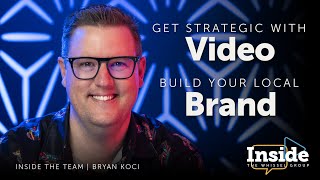
Interview with Ethan Butte and Bryan Koci (Whissel Realty Group) about building an in-house, modular media operation and a three-pillar content strategy: agent-facing content (podcast/education), consumer-facing content (buyer/seller tips, market updates, USP promotion), and community-focused content (local business spotlights). They emphasize balancing high- and low-production media, creating separate channels for distinct audiences, using Facebook pages/groups and Instagram collaborators, and the studio's roles in recruiting, retention, and local relationships.
Chapters
Besides founder and team leader Kyle Whissel.
No one in this nine episode series taking you inside. Whissel Realty Group has been on the journey longer than media manager Brian Kochi. He's been alongside Kyle for about a decade now. And if you're looking for tips into branding, into media, into video, into a studio space, into social media, you're in the right place.
Here.
In the sixth episode of the series, Brian shares with you the modularity of the studio space that we recorded it in and the different ways that the team and other people use the studio space. He breaks down specific tips for Instagram and Facebook, all under the philosophy of different audience requires different channel and why you need to break out multiple channels if you have different audiences. He breaks down the three pillars of their content strategy, including agent facing content and consumer facing content. For a dive into how media and branding played an important role in the growth of Whissel Realty Group, here's Brian Kochi on Real Estate Team os.
No matter where your business is today or where you want to take it, you'll get there faster and more profitably with an operating system. Welcome to Team os, your guide to starting, growing and optimizing real estate team. Here's your host, Ethan Butte.
Brian, thank you so much. I'm so appreciative of all of your work around this. First of all, on the Whistle Way podcast, which I very much enjoy and have learned a lot from. Second, and we're going to talk about that. Second, for welcoming us into this studio that I assume you had a lot to do with building and allowing us just kind of plug in and get going. And then third, for doing so much work in coordination and making this whole Inside the Team series work. So thank you and welcome.
You're welcome. And thank you. I'm glad we're able to use the space. We love this space. We built it so it could be very modular and we've rented it out and our agents use it. Like you said, we use this spot for the podcast. On the opposite side, we use it for, we have a green screen, we do headshots. So I love utilizing the space especially new and unique ways. And yeah, this is our Wissaway podcast and you texted me last night. Hopefully we didn't mess it up too much. I said that's supposed to be, it's supposed to be modular, it's supposed to be changed. So I love it. So you're welcome. Awesome. Thank you.
So we're going to get into all that, like particularly the space alone. I mean, I'M sure it's something that a lot of folks have but are maybe looking to level up or don't have and realize that it'd be a huge benefit. You already mentioned agents. You know, when you're, when you're building a team and building a company that's based on agent production, certainly having media is a big part of that. But we're going to start where we always do, which is a must have characteristic of a high performing team.
I'm going to say a lot of things come through my mind. My first thought is communication, trust, but I'm going to say structure. I've been with whistle for almost 10 years now and we have gone through lots of iterations and we're the best performing now than we've ever been because we've really built a structure and we can't even take credit. We use EOS entrepreneurial operating system and that's really helped us define roles, responsibilities, meetings to actually have them be impactful. Help us not only. I think a lot of teams that are struggling to get to the high performing state get stuck in the firefighting stage. I'm going to talk about this because something came up and we still deal with that and we work through that every week. But we're also, we take four off site sessions a year to really plan the business. We plan our year and we build our quarterly projects to make sure that we're doing what we're supposed to do. So that way we don't get to the end of the year and go, oh, we were off track Q1 and we had no idea. So structure I think is way. The other things, communication, trust, those are necessary. Without any of those, you can't be a high performing team. If you don't trust each other, you can't move forward. But structure is really what took us from one level to the next.
Awesome. Really good. You've built a team yourself. You mentioned you've been here almost a decade. So I'd love to get two sides of that decade kind of in hindsight. One of them is the team and the growth of the media production stuff and kind of the role, the way those things reinforce each other. You could probably. And then the other one is the team itself. Talk a little bit about the state of the team that you run and this operation that you run and how that's changed over the years.
Yeah. So I'll start at the beginning and then I'll go to now. I started, I came in, we had probably 20, 25 agents and this was 2015. And it was. I was the media and marketing manager. And so that just. Kyle's like, you do the media, I'll teach you marketing. It's fine. We're good to go. And we set up in a. I had a 10 by 10 room. He said, you can have any office you want. I said, I want the one with no windows. So he had a 10 by 10 room. I had my computer and all my camera stuff in one half of it and I had a green screen on the other half. And so we did that for about two, two and a half years where I was doing all the property photos, the videos, the recording, the meetings, the, the automations, the. All the stuff. Now it sounds like a lot, but we were doing it for a small team, so doing that now.
And to be clear, recording the meetings was for including in maybe your learning platform, Correct? Yep. Cool.
Yep. Just for posterity state, right? Recording. We did a radio show and so I would do that and we would live stream that. And so I did that. And then Kyle was like, hey, you need to get some help. You need some help, we're growing. I said, no, I got it, I got it, I got it. And I was burning out. But I was like, I can do this.
Right.
Which is, I think, typical for a lot of people. Like, no, no, this is my job. I don't want someone else to do it. And then we went to Agent 2021. It was Gary Vee's initial kickoff of his, his conference that he did and it was in Miami. It was in the Dolphins stadium. I thought that we were going to be like in the stands. No, we were on the field and There was like 200 people there, 300 people there. It was awesome. And I talked or we talked and I talked to Drock a little bit, who's Gary Vee's guy. And he's like, you got to build a team. And so on the flight back, I'm like, all right, Kyle, I'm ready to build a team. And he goes, okay, we'll find someone part time. I go, no, no, we need it full time. This is what we're doing. And so from there I grew my team, I grew, I hired a photographer. People always go, well, where do you find your photographers? This one I found in the prison. He was a correctional officer, but I found him in prison and so I brought him on. We then brought on another photographer. We had Zillow partnership at the point where we needed another photographer. He left. We brought on another. So we've kind of Grown as our team has grown. Now there's me and one other photographer and we have handful of guys and gals on our international team. And a lot of times you'll hear people call it the VA team, the virtual assistants. But I think with that comes a lot of mindset of what they are. Oh, they're just other people. And we can go on a whole nother rant of that. But I love my international team. They're phenomenal. We have Cedric, who's been with me for I think four years now, who does a lot of our project management stuff. We have a photo editor, we have. And both these guys do video editors. We have graphic designers, social media management. And so we've really grown it from just me solo to a team as we've needed it to. I think there's seven of us now.
Awesome. And what was your. I mean, that's a whole different thing. You kind of playfully mentioned something I can personally relate to, which is like, no, I could do that while I'm burning out. Or like, I really want to do that, even though maybe I shouldn't. Like, I've struggled with that my entire career in different ways. How's the path been for you in going from the guy who did it all, I set it all up. I was running all this stuff to now I'm dedicating some share of my time to making sure everything's good, that I have the trust that I need, that I'm communicating well, that I'm taking this quarterly plan that then is customized to our division of the world and the organization, making sure I'm communicating that to the team. That all these other things, like it's a whole different skill set. What was that? And the reason I'm asking is that every single team leader needs to go through this themselves. So I'd love to hear it. And I've asked many team leaders who are agents become team leader, become full time leader and they get out of production or maybe they stay, whatever. Like you're essentially a team leader who's still in production. How did that go for you?
It's hard. Yeah. And you think you're like, oh, I'm gonna have leverage, I'll have more time. And it's hard. And I have. I'm sorry if you're out there, but I have the best media team in the business. And I know you have a great media team too. But for a team, I have me and John, I'm confident I have the best media team for our company. But it's Hard when you see something and go, I would have done this different. Or why did they do. And 99% of the time is, I'll ask Chad, my photographer, why didn't you shoot this? Why didn't you get this angle? And he has a real reason, but from this side, I don't see it. And so it. It's a lot harder than I thought. I always tell this is less so now, but when we are growing and love Kyle, Kyle's not perfect. I would constantly try, and not constantly, but I would remind my co workers, they said, look, Kyle's where he's at because he was a phenomenal real estate agent. He didn't come in from the outside world of CEO dumb and say, I'm the best leader there ever was, and I'm coming in and doing this. And so I said, look, he's doing the best he can. We need to give him some grace. And because there's been times where I've met with Kyle and said, hey, look, I need something different from you. And that's hard for me. And so it's interesting being on one side of it and then flipping over and going, oh, I got to lead this team because I'm really good at media, and that's a different realm. So it's interesting. It's difficult. It's giving me time to reflect of what I'm good at, what I like, and really trying to help kind of piece together a job, as I've been here for a decade, of what's really going to be impactful for me, my family, but also the company. So I'm not just pushing a button. I think people get to the point of, oh, I need to build a team. I need to be a leader. And after a certain amount of time, they hate it and they're handing off their leads. And again, I've seen this from Kyle and we're way better at it now. But handing off, oh, this is my client. And then the client signs with someone else. And Kyle's like, what's happening? And so it's frustrating, but I'm getting to a point where I'm like, okay, I can't pull away from media completely because that's what I'm great at. That's what I love. How can I bring that back in with while still utilizing my time effectively? It's a very difficult balance and one that I still struggle with. And every time I'm like, I have no idea what's going on. Yeah.
So it's really good. There's like these glimpses, like, oh, I've got it put together. And then it's like it's fleeting. Everything is fleeting. Which brings me to media in general. How is the company grown, the brand grown, production grown relative to this media work? I'm talking either to someone who maybe is underinvesting or really hasn't even committed to media besides maybe whipping out their iPhone and doing some Instagram reels now and then, which is still a thing.
That'S a real thing, which I think is phenomenal. I tell people, I say, I think you need to have a mix of high production. And I don't mean this negatively, but a low production.
I think, oh, I don't either. You and I share a lot, a lot of philosophy on low production.
I think the low production, the lives, the reels, the, the, that really humanizes people, that you see them as a real human. And I think that's massively important. I think where, where people miss, especially when they get into this realm of lights and studios, they do all high production stuff, which is great. It shows you as an expert, it shows you as someone that's committed. It shows you as a great leader. Like, people see that and they go, wow, your brain can't diminish or distinguish TV versus high production YouTube. It's the same thing. And so someone gets a high production YouTube studio and they go, wow. But then you get to, I've heard agents go, oh, my neighbor sold their house because they think I only sold million dollar listings now. Or they think I'm too busy, or they think I'm building this team. And so I think having that balance is super important. But what I think is mostly, I'll have to be careful how I say this, but you can edit this out if you need to. What I think real estate agents are often fearful of is someone's going to come and take their job, whether it be AI, whether it be the big players, whether it be mega teams, whether it be newcomers coming, someone's going to take your job. And what I tell them is what, what AI can't do, what Zillow can't do, is build relationships within the community. And, and, and that's what we've, we've built our business on, is building relationships in the community. So that way when you're showing a home and you go, oh, hey, for lunch, go hit up SWAGU here in La Mesa, tell Steve it's on me. Like, tell them, I say, hey, tell them to bill me. Or oh, when you go, here, did you Know that Mount Nebo, which is, you know, part of Mount Helix. Babe Ruth actually used to advertise for Mount Nebo. So, like, that's pretty cool. And so like that those little things that you get from learning from the historical society, that you get from meeting the community and that you can show on video, not only does it show that you're the neighborhood expert, that AI can't be right, but it builds that relationships. And this is a relationship business. And so I see media and I wish I remember the guy who said this because he said it phenomenally. It was on Clubhouse. Do you remember Clubhouse?
Oh, I do.
He said video is just a conversation at scale. And so that's why I tell every agent that comes in here, they go, oh, the lights. And I'm scared. And I go, no, no, no. You're not on stage in front of 10,000 people. Even though, even if this video gets 10,000 views, you're just having a conversation with one person. And I always make fun of my mom for this, and I love her so much for this. She. She would watch morning shows, not Oprah, but like Ellen or the, I don't know, the show. Yeah.
Daytime, hour long talk shows.
Yeah. And they'd have guests come on and she would always say, oh, I saw so and so. I saw Will Smith, I saw Tom Cruise, I saw whoever. I like him. He's a real person. Well, of course, mama. Yeah, of course he's a real person. She goes, yeah, yeah, but I see him as an actor and I see him as a bad guy. But. But no, he's a real person. And I said, that's what video can do. And that's why we built this space, is so people can get to know us. Whether that's high quality production like this or something simple with an iPhone or an Android or whatever, going around and doing reels.
Yeah.
Does that answer? I know, I went kind of weird.
That's good.
That's good. I mean, for me, obviously, it's the. This is a relationship based business. This is essentially a relationship based sales organization. The idea that my personality, expertise, enthusiasm can spread and reach more people than I can reach in any given 12 hour workday. Video is doing that work for me. That's something. Was that Kyle's vision originally? Was he like, just. I mean, I'm just thinking about bringing you on, committing to that because a lot of team leaders, didn't they maybe outsource it? They do it like, you know, every other Tuesday is my video day. So I have to everything have Everything canned up. This is like at some point you and Kyle came to some shared vision of we need this in house all the time.
Yeah. And it's what he did is he said, let me break down, let me look how much we're paying for photography, how much we're paying for video. He had his. Tom Ferry talked about it on stage, this was probably 2014, and talked about the flip video cameras. Whereas the little white cameras, that little USB flip out, I sold those at Best Buy. And so Kyle got one of those. He worked with viral marketing. Frank Klesitz, big fan of him. And he said, okay, I need to do this more because we're outsourcing and paying here and here and here and here. And Kyle is very well aware of what is my time worth, what's my skill set. And Kyle's unique because he's good at a lot of things. And so him being able to say, I know I'm good at this, but I'm going to pull it back and let someone else do it is a big skill that I think a lot of team leaders can learn from. And so he brought me in because he said, look, we're paying an average of $300 a shoot. We're doing this many shoots. You know, if I pay this much, I can bring someone in house and they can do all the shoots and anything else I want to do, anything. Any other media, any other marketing, I can say, brian, do that. And so that's what. What we came on. And so there's not really. That was kind of a no brainer for him because he had a team. Now if you have a small team, you have one or two people. That's not really feasible in a lot of ways, but you can use some of these programs. You can use international team members to help edit. You can use people like Frank Klesitz at Vyral to help grow yourself. I know Keeping Current Matters has some really cool stuff. I know there's a thousand others that I'm not mentioning. None of them have paid me. If you want to pay me, I'm not for sale, that's fine. But anyways, so that was kind of a no brainer, but. But now it went from that to where again, as the team grew, not only was it great for our team to be able to create internal stuff. Right. You mentioned the Wissaway podcast. We can make external stuff. It's a great way to be a thought leader without being pretentious about it. And Kyle gets to share his thoughts, which is great for Multiple things, right? It helps other people, other agents get better. Kyle. Kyle's of the opinion of, like, we all should grow together, right? Gary Vee says there's. There's two ways to have the tallest building. Either tear down everyone else's building and so you're the last one standing, or just build the tallest building. Right? Don't worry about what other people are doing. Just keep going. And so that's really kind of what we're focusing on. And so one. It helps other people, right? Arising. I'm all full of cliches. Rising Ty lifts all ships.
That's the one.
There you go. There's my next cliche. But let's make other agents better. So that way, when we're working with other people, they can be better. It also helps give us referrals, right? People watch the show and they go, oh, I like that guy. And so, hey, my client's moving to San Diego. Send them your way. It also helps with recruiting hugely because not only does it let people know what we're about and teach them the system, but it teaches them who we are fully. So if you watch the Whistle Way podcast, Kyle doesn't pull punches. He'll look straight to the camera and tell you you're messing up. He'll cuss. He'll. He'll be straight. And so some people say, I don't want that. You know what? That's good. Don't come to our team. So it helps bring in the people that say, that's what I need, and helps people say that that's not the culture I want. And then like we mentioned earlier, the studio is a great recruiting tool. And saying, look, not only do you get all the knowledge, all this sort, the structure that we've built, all of our different teams, but you also have this studio as a. To be able to use it to where our team will film. Our team will do headshots. Our team will edit. We had an agent here use it the other day. She had. She was interviewed by someone like yourself, by a local radio host. And so they used RStudio. So it's really cool to have this multipurpose space. We also rented out one day when I was gone, I got a text and said, oh, we put it on Peerspace. So. And so rented your studio for two hours. So this is not only a great way to get referrals, great way for recruiting, great way for retention, because no one else has a studio at a school in San Diego, but it's a great way also to make some Money on the side on utilizing either our team, when we're slow to record stuff for other team members or other teams or other, you know, bakeries or whatever we can do. But we also can rent it out as well.
Cool. Love it. I was gonna ask and you kind of, you hinted at it a little bit already, but I'd love for you to go straight at this one. Balancing the amount of time and energy and effort you're putting into consumer facing Media all in vs. Agent Facing or agent serving. Yeah.
And balance is important. And so we kind of have a couple different pillars that we do that with. And so how our month typically looks is Kyle and I film every. We just moved it every Thursday for the podcast and from that podcast, we. For the Whistleway podcast, which is agent focused, we'll film it, we'll edit it, we'll distribute it, and we'll post it on Facebook and YouTube and all the places. Right. And then we'll cut up mini clips. So that's really. And then we'll send out emails. Can I plug a website, please? Thewhistleway.com if you want more information about all that stuff. Thewhistleway.com is where you can see all that. So that's really kind of our pillar for agent to agent stuff. Now we're doing more stuff where we're having hosting local events and all sorts of things. But that's really our main pillar right now. The other two pillars that we focus on consumer stuff is one, I have Kyle come in once a month and we film four videos for consumers. A buyer tip, a seller tip, a market update, and something that's unique to us, our USP or uvp, what do we offer that other people don't? I heard this from Dan Beer and he's like, if you can all have the same program that you're promoting or that you have, but if only one person's promoting it, only one person has it. And so we have to make sure we continuously tell not only our consumers but also our agents, hey, make sure that you're pushing our, our VIP because it's good for the buyer. Make sure you're letting people know about our seven day listing launch because it's good for the seller. Right. And so we do that. And then we also. So that's our, our, by the way.
Labeling them to be able to refer to them easily. I love that too.
Yep. Yeah. Kyle's a big fan. He loves alliteration. So those two I didn't mention or weren't alliteration but anyways, and so having those as, as kind of centers. And so we film that once a month and then we release it weekly. And then we have. The other pillar is our community focus. Like I said, when you go and get to know people. And so we go around to different businesses in East County. We started it with Santee, did 100 businesses Santee once a week than we did to east county, which is a 15 zip codes versus 1 zip code and focus on restaurants. And now we're doing it once a month where we're focusing on restaurants. We go in, we film with our team, we edit, we distribute and people go, well, how many, how many people say, I saw your video where you filmed, you know, at Casa Gabriela and I want you to sell my house. And I said, doesn't work that way. It's not a one to one thing. But it's what I tell people is I say the pillar that when people, we do the buyer tip, the seller tip, that's great for when people are, they're at the very bottom of the funnel, right? They're. They're ready to make a decision on who to hire. But if they're not looking to buy or sell, they're not going to want to watch. You know how to prep your home for sale. So how do we get in front of them and how do we get to know them? And as I lovingly say about my mom, how do we get her to say that's a real person. Right. And so that's what we do. Our community focus and that's our media mayor mastermind is we actually teach that as well of how do we build this, this relationship with our community to where we're doing good things for them? And it's again, it's not a one to one. You do one, you get a listing, but it's a conglomerate. That's not the right word. It grows, right. And so we've gotten, I mean we filmed one video when we were doing Santee Saturdays. It was very sexy video. It was high quality. It could be on hgtv. It was about a retirement community. I had old ladies doing puzzles. I filmed the pool. It was not sexy, obviously, right. It was a retirement community. I love the retirement community. My grandparents live there. I love it. But it wasn't sexy. Well, the owner of that, who we didn't even interview, said, hey, you guys did a great job promoting my business. Will you list my $4 million home? Sure.
We did one, but it wasn't that transactional. It's Just these are the types of things that happen when you do this consistently and from the right place.
And, I mean, for anyone that knows Kyle knows Kyle got a cybertruck and wrapped it with whistle. He parked it in front of the office one day. And I saw in one of our groups, La Mesa Happenings. It's not a group I own, but it doesn't matter. And people were like, oh, look at this douchebag. Right? Because it was an early thing and people are haters. But then the amount of responses of other people, like, no, this dude's cool. He does a lot for the community. No, this guy, like, he like all this stuff. I finally hit up Kyle, I'm like, do you know these guys? Because. No idea. But it's the amount of community outreach that we've done, the amount of relationships that we've built with local business owners, and we love local business owners because they're connectors as well. They know other businesses. They're connected. So that was super important for us. And we've been doing that for. Since April of 2015. So coming up on 10 years, we've been doing a series on the community, really building those relationships.
Yeah, I remember you guys came onto you and Kyle in particular. The two of you came onto my radar when you were doing Santee stuff, and I was like, man. And I felt like as obvious as the playbook kind of is when you just kind of, like, walk it out, there's so few people executing it a consistently and be with this type of longevity. And so these benefits, just as you said, like, compound.
Yeah. I think Kyle and I really balance each other out because Kyle says, let's do this thing. We'll. We'll do it for a year. Let's go start tomorrow. And I. I'm the one. I'm like, no, let me build the automate. Let me build the structure. Let me do all this stuff. And so we're on kind of opposite ends of that. That. That teeter totter, right? And so we find that balance of, like, he wants seven episodes filmed tomorrow. And I'm like, I got to buy a new camera, right? And so we got to find that. And I think what a lot of agents have is either they're one way or the other, and they don't have someone to balance them either. They're like me, and they say, I want the step by step by step. I want all my T's crossed, I's dotted before I even start. That's how I. How I live. Or they're Like Kyle and say, let's just do it. I'm excited. Let's go, go, go, go. But then something else happens. Fire shows up and it quickly moves. And so that's where one. Can I do one more plug?
Yeah.
Our media mayor mastermind comes in. We started this in 2018 and we built a course around how do we. How do we help those that are stuck in the analysis paralysis and give them an exact playbook and how do we show them how it's done so that way they can just launch and go forward? And so we literally spent four days filming this, editing this. We do bi weekly calls with the community members to really help them get unstuck and move forward and having that playbook and going, okay, now I know what I'm going to post. Monday, Tuesday, Wednesday, Thursday, Friday. Now I know how I'm going to find my videographer. Now I know how I'm going to edit this and distribute this and how to set it up and avoid all the mistakes we did because we made a lot of them. It takes kind of both those personalities and knowing what personality you have. You can, you can help. Check yourself. Even if you. Brian, I can't hire a videographer. That's fine. Check yourself. Of going too far too fast by saying, I'm going to commit like we did Santi Saturdays you can. We. We did a. Our radio show was called Whistle Wednesdays Commit. And so, hey, I'm going to put one out every Saturday. And if you're someone like Kyle who's like, go, go, go, go, go. Well, now you committed to every Saturday for a year, for six months, whatever. Don't let your people down. Don't let yourself down. You've committed. That'll help you go through. So those are some of the kind of strategies that can help both directions go forward. Yeah.
By the way, good job picking up on named things that are alliterative.
I'm like, kyle loves alliteration. Here's no alliteration. Yeah.
No, you just gave us a couple. So with that, give me a couple channel or distribution tips. I mean, it's one thing to have good ideas, to actually go out and capture it all, to get it edited locally or internationally or whatever. But you also want to get it into the. In front of the right people and maybe put this against, you know, the past decade, put it against time like channels and distribution. What are you really excited about? Maybe what's. Maybe a big mistake you made. What is something that has kind of faded out and maybe what's something that you're really excited about as we head into 2025.
All right, I'll try and go through this because I was like, I can talk on this for an hour.
Yeah.
If you're starting a community page like we did, we did Santee Saturdays. We did it on our Whistle Realty Group Facebook page. We've had that. We had that for like eight years previously. We gained like 5,000 followers. Cool. When we switched to switch it to East County Eats, we built its own Facebook page with the intention of, if you're looking to buy a car, sure, you might follow Drew Ford, but if you're not looking to buy a car, you're not going to follow Drew Ford because you know they're going to tell you car stuff. You know, I don't care about car stuff. Right. And so we built its own channel. And within the first year, I think we had like 15,000 followers on that. On that page. So, number one, create. If you have a different audience, create a different channel. I think that's the, the most important thing I can tell you. We have four YouTube channels, right? We have one for our consumers, we have one for our agents, agent attraction, information. We have one for everything. East county, we have one for a team that joined us. We have three Instagrams, we have five Facebook pages. So we have a lot. And, and I don't want you to hear this and go, oh, shit, now I gotta create a thousand different things. Don't do it all at once. Grow little by little, right? But one is, if you're gonna have a different audience, you have to have a different channel. If anything, if you're gonna do agent attraction or agent that joined us, we have three Instagrams, we have five Facebook pages. So we have a lot. And I don't want you to hear this and go, oh, shit, now I gotta create a thousand different things. Don't do it all at once, grow little by little, right? But one is, if you're going to have a different audience, you have to have a different channel. If anything, if you're going to do agent attraction or agent referral type stuff, have that be different than your consumer stuff. Not because there's nothing that we say referral type stuff, have that be different than your consumer stuff. Not because. And there's nothing that we say, and I listen very carefully, I don't want. And I've always listened to this, there's nothing that we say in meetings, in podcasts that's agent focused, that I. That I would be afraid of a consumer Hurt. We never say. And we, we truly believe this. We never say, all right, guys, this is how you screw over your consumer. This is how you trick them to buying a house that they can't afford. No, we never say that and we don't believe that. And I believe 90. And I listen very carefully. I don't want. And I've always listened to this. There's nothing that we say in percent of the agents out there, probably 100% of people that are listening to this don't do that either. They don't feel that. So I'm not worried about them.
Appreciate your respect and excitement about this audience.
Because if you're watching this, you're not watching this because you're like, oh, how am I going to get a quick box? Yeah. You're like, how do I build a business for long term? I know this, I'm just aware of that. And so we don't build long term businesses by screwing people over. By, by finding the shortcut. Right? And so. But I don't want you to. So I'm not afraid that consumers see it. They see it, they see it. But I don't want to confuse them. You know, let's pretend you love NASCAR and cooking. Let's pretend. Yeah. And you're like, oh, I'm watching nascar. I'm watching nascar. I'm watching nascar. And then the cooking channel goes on and you're like, bro, it's my, I don't know what NASCAR is. Sunday, NASCAR day. I don't want to watch four hours of Rachael Ray. And then you're going back and forth. No, you have your NASCAR channel, I think, I don't know. And you have your cooking channel. And so have them. If you, Even if that one audience goes, well, my audience likes the real estate tips, but they also want to have different channels, right? So that's number one. I'm still a big fan of Facebook groups. I think a Facebook page and a Facebook group. How I would distinguish between the two? A Facebook page is someone up on stage, right? They're on stage, they're talking. You're talking to a lot of people and they're consuming it passively. Facebook group is, I'm thinking about, you know, you go into conference, you listen to on stage, then you go to lunch with 50 people or 20 people or whatever and you, oh, what did you learn about this? How about. That's what a Facebook group is. It, it builds collaboration, it builds relationships. It. Without you having to. I mean, you don't have to post all the content, other people post it for you. So that's that I'm a big fan of. My number one tip or hack on Instagram is utilize the collaborator. And what a collaborator does is say we do this video together and you post it on your Instagram and you add me as a collaborator. I get a little notification. Ethan added me as a collaborator. I get to hit accept, and once I hit accept, say you get 500 views and I get 100 views. Now the video shows that it has 600 views, and I got to add me as a collaborator. I get to accept. And once I hit accept, say you get 500 views and I get 100 views. Now the video shows that it has 600 views, and I got to post something without having to do any work. And so we love doing that for our team is, hey, when we do a property reel, we're going to add our agents as a collaborator when we do, you know, neighborhood Spotlight add post something without having to do any work. And so we love doing that for our team is, hey, when we do a property reel, we're going to add our agents as a collaborator when we do, you know, neighborhood Spotlight. Add the business, you know, maybe you're spotlighting La Mesa. We'll add a couple businesses that are in La Mesa. Say you're spotlighting Light bulb Coffee or one of our favorite coffee places. Add the business, you know, maybe you're spotlighting La Mesa. We'll add a couple businesses that are in La Mesa. Say you're spotlighting Light bulb Coffee or one of our favorite coffee places. Tag them, tag the owner. Tag an employee or not tag, add them as a collaborator. You know, if you're doing, if you're an agent listening to this and you're saying, oh, I want to tag them. Tag the owner. Tag an employee or not tag, add them as a collaborator. You know, if you're doing. If you're an agent listening to this and you're saying, oh, I want to. I want to get more views on my properties or my open houses. Add your sellers as a collaborator. Add your lender, add your title. Add, you know, maybe not for an open house, but, you know, if you're doing something spotlighting the community, add the city chamber of commerce. Add the. The mayor. Like, you only add five collaborators. So be conscious of who you're doing it with. But now you're able to do the work and let other people benefit from it, which is doing them a solid. And now they go, Look, I got 10,000 views even though 9,995 came from me, five came from you. But now you get to show, hey, I'm important, I'm special.
Yeah. I would also say as an act, that was great. That was a great rip through a lot of helpful ideas. That's why we have back buttons in our YouTube players and our podcast apps. So that's a good one to hit back on. The other fun thing about what you shared there about collaborators is you are now going to go out and find the Instagram handles of people you should probably be connected with and keeping track of anyway. So you can give a supportive comment or you can share something that they're doing or these types of things. It's fun just to. To round up, like, oh, the Chamber of Commerce for this region, like, do they have an Instagram? Is it active? Should they be one of the five? I can add or not. Tons of good stuff there.
Yeah. And mix it around. I mean, what I wouldn't do is I wouldn't add the Chamber of Commerce as a collaborator if you've never spoken to them. Yeah. So start a conversation. Don't just randomly tag people or add them as a collaborator because that feels spammy, but start engaging with them. But again, if they have an Instagram, and a lot of Chamber of Commerces do, and a lot of them are very bad, not active or very templated or they don't feel human and you do this and now you're doing them a solid. And so now when they say, oh, you know, I have another Realtor that just joined the Chamber of Commerce, but they don't have a team and they want to join a team, or, oh, you know, so. And so is selling. They know that they're selling their business and they're moving to Arkansas. Why don't you connect? And now that you're doing favors and you're not doing this, and I want to be very clear, and I'll look at the camera even at this, you don't do this to be transactional. Your goal is not to be. I'm going to do this so that I get this. It's not a tit for tat. You're doing good things for the community because you're a part of the community. You're doing good things for the chamber. You're doing good things for your fellow person because that's what you do, whether it's. It's based on your religion, whether it's based on your upbringing, whether it's based on whatever. You do good things because you do good Things and good things come back. And so when. When I just want you to check yourself. And I think it's so important to know the ROI on things. I think it's incredibly important. But I also think you got to check yourself and know. Sometimes I do things because it's good. Sometimes I donate because it's good. Sometimes I help out this agent on the other side of the deal because it's good, not because it's best for me financially, or I'm gonna do.
Because I've reasonably projected the ROI of this decision.
I'm just finishing watching Suits again. I love that show, but everything there is tit for tat. You owe me. I did this for you, so you have to do this for me. I don't live my life that way. Our team doesn't live that life that way. It's funny, Shannon, who you'll meet later, she had an issue. She's like, I can't host this morning Huddle. Can you do it? And I said, yeah. She goes, I'll give you 50 bucks. And I said, no, don't give me 50 bucks, because I don't want to have to pay you if I need a favor. And so do good things because they're good for people and good things will happen back. Yeah, really good.
I appreciate that philosophy very much. This has been an absolute joy. Thank you for welcoming us into your space. In particular. It's great to be here. I look forward to all the other conversations that we're going to have and share. Before I let you go, though, I would love to know what is one of your most frivolous purchases? Or what's a cheapskate habit you hold on to even though you probably don't need to?
Oh, man. I love how it's like, hey, are you good with money or bad with money? And I'm both.
A lot of people go both out on all these closing questions.
So frivolous. I can't think of a specific thing, but I can tell you probably a quarter of my camera gear is frivolous because I see a really good ad, and here's another tip I want to give to the audience. The more equipment you have. And, John, I'm sure you'll back me up on this. The more equipment you have, the less you'll use it, the less you'll shoot. Because I've come to the point where I'm like, oh, I have to. Before I shoot, I have to get a microphone and a light, and, oh, well, then I have to charge, and it becomes this whole thing, right? Yeah.
The administrative overhead you've created with this is.
Yeah. And so, I mean, my. My closet of storage is there, and there's half of the stuff in there. I'm like, yeah, I bought this. I never used it once. You know, a little slider camera on skateboard wheels, a phone holder that goes around your neck. Just dumb stuff, right? And Instagram ad, dude, for a minute, I told myself I couldn't go on Instagram for a month because it got me. It was like, every time I went on there, I bought new shoes. I bought, like, just so I would say that I'm frivolous with some of the camera stuff, but yet I'm cheap on some of the stuff where I'm like. Like, just little things like, hey, let's share like. Like sharing a Netflix account with my mom. Yeah. Well, she actually shares it with me. I pay for it. Makes me sound really cheap. But just little things like that. Like, hey, we can all just use this one login. It's like, maybe we all get our own login. We don't need all one thing. So that's where I would say, I'm a cheapskate. And I try, and there's. There's plenty of times where I'm like, what can we use from. Oh, okay. What the real answer is, and every guy listening to this can understand the real answer is that the cheapskate thing, especially with Amazon being so cheap and so fast. I keep so many cords. I've got two drawers of cords in my office. I've got a box of cords there. I've got two boxes at home. And my wife's like, we don't need these. And if we do, we can buy it from Amazon. But what if I need it right now? So that's if I need three of.
Them at the same time.
I'm horrible with it. I store too many cords. That's my most cheapskate thing. Cool.
Really good. Thank you so much, Brian. Appreciate you.
Appreciate you.
Thanks for checking out this episode of teamos. Get quick insights all the time by checking out real estate teamos on Instagram and on TikTok.
More from Real










Zillow, PPC, Referrals… what’s actually working in today’s market? #realestateteam
