When, How, and Why We Started Our Real Estate Teams [SUMMIT]
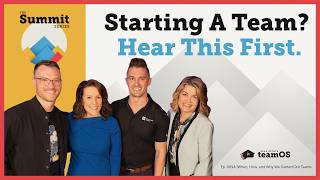
Jenny Wiemer, Renee Funk, Ben Lobb, and Ken Posik discuss how they built their real estate teams. They share who they hired first, usually a transaction coordinator, and explain their approaches to culture, systems like CRM and SOPs, and lead generation through organic database work or paid ads.
Questions this video answers
Jenny Wiemer: 26 years in real estate; has had a team for 20 years; brokerage since 2016.
Ken Posik: ~28 agents (49 people on team total); last year closed 550 units for $330 million.
Renee Funk: current leads team = 5 agents; branch office ~120 agents across Central Florida.
Ben Lobb: licensed 10 years; launched his team 5 years ago.
Ken Posik: started in 2018 and did '100 videos in 100 days' as an early push.
Chapters
To help you make your next decision or take your next step.
No matter where you are on your.
Real estate journey, we constantly bring you the stories, experiences and lessons of real estate team leaders, operations leaders and agents. Now, Real Estate Team OS is bringing you the Summit series, a totally new format that has elements of the Inside the Team series, but features multiple guests in each episode. 10 real estate professionals from 4 teams in total. First up, we have Jenny Weimert of Wiemer Group Realty, Ken Posik of Posik.
Group, Ben Lobb of Ben Lobby Homes.
And Renee Funk of the Funk Collection. From vision to lead generation to culture, each runs their team a little bit differently. So you'll hear agreements and disagreements as we walk through when, how and why they've started, grown and optimized their team. The Summit series kicks off right now on Real Estate Team os.
No matter where your business is today or where you want to take it, you'll get there faster and more profitably with an operating system. Welcome to Team os, your guide to starting, growing and optimizing a real estate team. Here's your host, Ethan Butte.
Thank you all so much for making this happen. I know it's hard to coordinate schedules. I know I'm asking for a lot of time, but I'm really excited to have you all in this conversation.
Excited to be here.
Thank you.
For context, for folks watching and listening, I would love for you. And I guess we'll start with you, Jenny. Quick intro of you, like who are you? What's your team? Kind of, what's the state of affairs? Whatever you'd like to share.
All right. Well, I'm Jenny Wiemer. I run Wiemer Kirk Realty. We're a boutique brokerage here in Orlando. We operate like as a team, Rich, so we operate in a team fashion, but we like sharing leverage across the top. We're a lead based team and I've been doing this for 26 years, have had a team for 20 of the years and the brokerage firm since 2016. My husband is my partner. He was a partner in a CPA firm and joined me in 2010. So he's the back of the house guy. I'm kind of the front of the house. And then we have an amazing team behind us that has been with us for a lot of years. The thing we're most proud of as our attention.
Hello there. Renee Funk, team leader of the Funk Collection brokered by EXP Realty in Orlando. We all, we're all here in Orlando. I too work together with my spouse, I call him my favorite real estate agent. We've worked together for about 21 of our 24 years and we have a leads team that is based on organic lead generation and relationship based. We operate a branch office in Windermere, Florida and have a leads team currently going through a restructuring. So I think we're going to dive into that a bit. Our current Leads team is five agents and our branch office is 120 agents throughout Central Florida.
I'm Ben Lobby. Pronounced like hotel lobby. Everyone gets it wrong the first time. Owner of the Ben Lobby Homes team team. We're brokered by Exp Realty. We have 12 agents in the Central Florida market and a staff that operates out of a millennia. Branch office of EXP was born and raised in Orlando. So I've been here my entire life and I've been licensed for 10 of those years. And we launched the team just five, five years ago.
Nice. I'm Ken Posick. I'm originally from Detroit, Michigan. Been in real estate for 22 years. But I moved here nine years ago. And so we're really content marketing based. We got 28 agents on the team total. About 49 people on the team total staff all the way through. So yeah, we're like content marketing base. That's where we get the majority of our business. Last year we closed 550 units for 330 million. And continuing to grow.
We'll definitely be getting into content based, organic, leads based, be getting into a lot of different things. But I would love to kind of kick this off really with the moment that team occurred to you. And that could be in concept or it could be in like practice. Like what was going on. Anyone can just jump in, like, what was going on for you when you thought I need or I want to go down that road. Like what was going on in your business at that time?
I don't think it was like for me, it wasn't like a big team. It was like, I have a stack of paperwork to do and I'm horrible at it. And my managing broker, Kollo banker at the time walked in, he's like, you know, you can hire a tc. And I was like, what's that? So you mean I don't have to do all this myself? And so very shortly after that, I got my first tc and I don't think I've ever been all by myself ever since.
Props to the person who shared that with you because most teams do it wrong. And Jeff and I, my husband and I, we did it Wrong too, in the beginning. And that was that we first went, oh my goodness, we have this influx of inbound leads. Let's find a buyer's agent.
Right.
We didn't go the TC route. And the number one best move when someone's considering that first hire ever is a tc.
Right.
And so you can do it wrong. Did that and said, we have too many leads. Let's bring on some buyer's agents. And just to solve that challenge, I.
Had a virtual assistant for about a year before I launched the team. And I was also starting to mentoring agents at our brokerage. And I got up to where I was mentoring about like 10 different agents and I had this experience one day where I was basically tapped out. I felt like I reached my glass ceiling as an individual agent. And I also answered the same question to three of the different mentees the same day. And I was like, okay, there has to be a more efficient way to do this. So I started building a training program which then when I felt like I was at my glass ceiling as an individual agent, I was like, okay, I can bring these mentees and create this team environment and really take them from like nothing to something and launch the team that way. And that's what I did in 2020.
What was that glass ceiling for you? Was it just like, I'm doing as much as I can or as much as I want, I'm burned out. And like, what was the ceiling for you? Like, what was what felt limiting about your situation?
Time. Not being able to handle all of the inbound requests and handle everyone to the same level of service that I wanted to.
Yeah, I hear that a lot is like the service level combined with just, you know, what more can I do? I mean, the craziest stories are like, I sold 172 houses with a part time assistant and I almost lost my health and family and friends and, you know, that kind of a thing. Like, what was going on for you, Jenny?
Well, I was a mother of triplets when and they were one at the time. And then I got my license and so I was just always trying to get time back. And when I first started, I was, I started farming a neighborhood and I would put the kids in the stroller and I'd walk the neighborhood and meet people because I wanted out of my house.
It feels like an unfair advantage as well as an.
It'S so easy to make friends when you have a triplet stroller, you know. So I was always just trying to get time back. But to be honest, I Started the business just wanting to just be able to slowly build while the kids were young. And then when the kids were older and went to school, maybe I would take the lid off of that. But it just took off way faster than I expected. So at one point, I think in 2005, right before the crash, I had 80% market share in a 400 home neighborhood, which is unheard of. But, I mean, I was. I knew everybody in there, right? And so that was great. But then it just. It got busy too fast. And so I'm like, I need help. I didn't need more money. I needed help. I wanted more time back. You know, I made the mistake of hiring the friend first. And so that never goes well, you know, because I wanted to hang out with her during the day. I didn't want her to work. So I'm like, well, let's just go to, you know, whatever. So that never works. And so I actually hired a proper assistant, but I was afraid to do that, because usually when you hire your first assistant, it's like, oh, my gosh, you know, back then, this is, you know, almost 20 years ago now. I'm going to have to write that check for $30,000, $35,000 at the time. And I'm like, that's too much. What the reality is, I'm not writing a $35,000 check. I was writing, you know, maybe 90 days if it didn't work out, but I was still afraid. So another agent in the. In the area, George Philbeck, and I were kind of at the same place at the same time in the same boat. We're like, let's hire together and we'll share an assistant. We were putting our businesses together, but we put it. We shared an assistant that worked really well until we both took off at the same time. And then he was ordering too much card stock, and she was licking too many stamps for him while I was trying to get on. And I was like, so you need your own, we need our own. And we had a custody battle over her. And she trained. She had to choose.
She chose me.
Just. We love to tell the story.
We won't tell you.
He tells the story, too. So she hired his assistant or trained his assistant, and we were off to the races. And after you hire your first assistant, it becomes way easier to hire the next one. You know, you've got the payroll figure figured out. You know what to do, you know how to set up a system. So from that point, you know, what you mentioned, having that assistant, they take that the paperwork piece off of you. The things that you're kind of pushing aside to put out the fires with the clients. The next step was, okay, well, I'm wasting all my time driving all over town. I could get time back if I just focus on the sellers and get a buyer's agent. And so that's what I did. And you know, quite honestly, you know, now you know, you know a lot. After 20 years, that is probably the most profitable model you can have is that assistant. Maybe two showing assistants, highly profitable, manageable. You get your time back. But. And I've been blessed. Those people stayed with me for a very, very long time. When we had too many leads or we had too much paperwork to do, we just started plugging holes with people. And so all of a sudden we look up and we're 80 people. You know, I don't know how many agents we have right now, like somewhere in 70, 75. And then maybe a total of 85 of us. But, you know, literally just have been plugging holes since. Who's the missing person? Do we need an admin? Do we need agents? Do we need. We have too many leads. We need agents. We can't. We don't have anybody doing an open house. We need new agents. We do, you know, like, so it's just plug and play sense from them.
Yeah. Give a quick tip and I guess we will do this as kind of a once around. You know, there's someone watching or listening right now who didn't take that step that you took of like hiring a VA or bringing on an assistant. We all know that admin or assistant is the right first hire, but there's a challenge of like. And you kind of talked about it a little bit. You know, that's how you ended up sharing. But like delegation. You've been in control of everything to this moment. And a lot of personality types. Let's just say maybe a high D might have trouble with the patience of kind of guiding this person.
I don't know what you're talking about.
Okay, you don't have any high Ds?
Give a tip for someone who isn't familiar with offloading some of their work, but that is probably their ceiling that they're experiencing at the moment.
I mean, for me, I think it was very much so. So, yeah, it's the assistant and then figuring out what's the lowest dollar per hour work that I'm doing that's taking the most amount of my time. And so even today, like, you know, if I've got My one assistant. And I'm like, okay, you're overwhelmed. Let's figure out what you're doing and split up your day and so we can hire your next thing. Right? Or maybe something that you're not the greatest at. And so I'm not great at paperwork and detail kind of oriented sort of things. So I need to hire away that as quick as possible. So that was the way that I first kind of came up with the job description. And kind of still what we do.
Today, I think that's key, is finding someone who compliments what you're missing in your business. Whether if you are an organized person, then find someone who compliments that or can fill a hole that you're missing. If you're not an organized person and you don't like doing paperwork, then find someone who's systems oriented who can build the systems for you.
Yeah, that's key. That's absolutely. Like, there's a lot of, I'm an amazing salesperson. Everything's like almost off the rails almost all the time. Let me find someone who I can trust enough to build some of those systems and pull what I know is in my head. That is a system. You have a system. It's just not documented at all. Find that partner to pull it out of you.
The one thing I think George and I did well was we actually went out and hired another team's operations director to build our systems for us and train our assistant. Because if we could build the systems, we would have already had them. And so. And you're busy selling real estate. So you're. What ends up happening is you park your agent or your assistant, you're like, I'll get back to you. And then you just take the job back because you can do it faster. And you're like, well, you're getting paid anyway. Just sit there and they're frustrated because they can't support you. And then you're like, you're not doing anything. You're not worth anything because I haven't stopped to train you.
Right.
So hiring that operations director on the side, we didn't steal her. It was an agreement. Was the best thing we ever did.
And that speaks to a simple approach. Is that hire for the skill set you don't have, which is often overlooked. And when you're looking at building a team, there's nothing simple about it. Breaking the cycle in team building is important. And thinking about what are you wanting to build? Because everyone in the industry will talk about you. Get to a certain point, build a team. Why? Why do you want to build a team? Don't just look at the next 12 months because you might have to have somebody do your paperwork or have somebody like we did 15 years ago is, I have leads, I'm going to fill that spot. Ask yourself clearly in the beginning, what am I building? What do I want it to look like? And I know no one likes to ask this question, but three to five years from now matters. Don't just do it arbitrarily. And it's a big cycle that happens in the industry often is get your license, become a successful agent, build a team. What does that mean?
Right.
Where are you going? What are you building? And I think that question alone can help a lot of people. Before you start building, think about the end result of what you want to build and dream about it. What's the biggest dream you want to do?
Yeah, I hear like a theme across all of this is like reflection, like self awareness and some amount of reflection. Whether that is a journaling exercise or whether it's just like, what do people keep telling me that I don't want to hear about myself? That's probably actually true. And you kind of introduced kind of something I wanted to hear from you all on too, which is like, like you've all been at this at least 5 years of team building or more. Looking back on that, is there something that you misunderstood about what this was or could be what you were sharing? There was this idea of I do this, then I do this, then I do this and then I stop and I'm looking back and I'm not where I thought I was gonna be, or this isn't what I thought it was going to be like. What's a misunderstanding that you have observed or experienced about team building?
If we look right now at the condition the market's changing, right? We in an industry have seen one of the biggest industry regul changes that has ever happened, plus a shifting market, plus all of these, I call it, ingredients in this recipe that we're all facing. It doesn't mean it's a bad time to have a team or start a team. It just means the importance of getting really clear first is critical. If I go back to, you know, when Jeff and I first built our team and we looked at each other once again, leads fill it with agents, we didn't have that conversation. What do we want to build? What does it look like and why? So anyone who's going to just take that next step because the industry or others tell them, or there's this glamour view of build a team, it looks so great. Really. Sit down with someone who will tell you the truth and help you with a series of questions. Should I build a team? Is one of the questions I'm sure everyone on this panel gets most often when I have that question sitting down to say, let's go deep on 5, 10, 15 questions on what a team means to you will help someone before they take that leap to not waste time, money, resources and their own well being of, you know, hey, I'm, I might not be happy. Right.
I love Jenny's hack of hiring somebody to hire your people because like, even if you have a really clear vision, you'll probably get it wrong the first time. And like, for me it's, it's loving the journey and understanding that you're going to screw up along the way. And that's just part of the journey. Anytime you can get people to coach you or bring in people to help kind of skip the line a little bit, that's great. But for me, like, I've just realized that like I'm gonna fail and that's just part of it. And we just got to keep rolling.
Sure.
Yeah, that's a good point. Vision changes. It's okay to change.
Yeah, yeah, yeah. I think it's also important to note there too is actually just in this room, we all know each other, we all run teams differently. They all, we all have a different vision, we all have different value propositions and we all have different ways of lead generating. But I think it's fair to say that small team is profitable. That little pod from there you either have to go big or not. Like in my opinion, the middle is hard, especially if you have a true value proposition where you're providing leads or, you know, you have that lead generation machine or you're paying for the leverage or whatever that may be. It gets really expensive in the middle. And when you're used to a 60%, you know, profit margin, it's not that in the middle, it's like nothing. What is the middle?
What is the middle like? Like what is small and what is.
Yeah, I think it's dark on the big side now too, to be honest.
I think in a previous conversation you referred to it as a black hole, which strikes me as probably the darkest thing that you know exists or something.
Sure.
But like, you know, just in terms of like numbers. I mean, in my mind, what I feel like I've heard over the past year and a half of having these conversations is something like, you know, 5 to 10 is kind of one end and then like 40 to 45 is where it picks up again. And like the middle is in between there from an agent count perspective. But I'm only thinking about it from like in terms of one criteria in this way. And those numbers may not resonate with you all. Like, what is the middle to any of you?
Go ahead.
No, you didn't wave it.
I was just going to say I think it also depends on do you intend to stay in the business and sell real estate? Because.
Yes. Yeah. Very good.
Yeah, that makes a huge difference because the minute you step out and everybody's goal is to step out in the red book from Gary Keller, you know, you lose your profitability right there. And so at that point you have to go big or it's not worth it. If you're staying in the business and you are the lead listing agent, you could get away with, you know, a few more agents, especially if you're lead generating or you have a funnel of leads. In my opinion, I don't think coaching agents is enough to build a team. Like they can get a coach to keep them, certainly. Right. But shared leverage, you know, experience level leverage, shared value proposition. Obviously the ability to have leads and flexibility is, is, you know, I think paramount.
I had the most fun between 1 in 5 agents and then right now, which is like 30ish agents.
Yeah.
That at 6 to 25 agents, I didn't have enough leverage to help with the. I was, I was. So much was coming at me. And so the more that I've been able to hire away from my inefficiencies, the more fun it's become. But I had to lead with revenue and the only way I got there was to get bigger. And so that. That's been our path.
Any thoughts on this, Ben?
I agree 100%. I think you got to look at the margins of what, where you're, where you're trying to cover your cost as the owner because like if you're not producing, you have to recover that revenue through the, the production of all your other agents. And then you're basically the one person they're going to until you have that middle management hired. So structuring an org chart of like what Renee said of where you want to be in three to five years and the team that you want to be running then makes it easier to then build the path to get to that point.
I thoroughly enjoyed having a leads team of which I'm a rainmaker, that was around the 25 mark and it it was profitable. If we look at some of the transitions that I'm sure we can talk about because the fund collection is in a transition right now. From a leads team standpoint, we're at a healthy five agents right now. There's some changes in the market. There's some things going on and really getting re centered and allowing that space for vision change should be something that can be okay also because the agents need it. And I don't know how deep you want to go into that right now, but there's a clear distinction of agents who acquired their license for from 2020 to current date as compared to pre2020.
Huge difference.
And we are living that as a team, seeing the difference and seeing that there's such a need to almost essentially start on day one. Pretend you know nothing. Pretend you know nothing. And this is coming from. I consider myself a veteran in the industry and I'm married to a veteran of 25 years who we've seen many seasons in the. In the market, in the industry, in what it means to be a real estate agent. Waking up right now and saying, forget everything, you know, start over is okay. And getting the agents to see, just because you did it one way, all the way up to this point doesn't mean it's going to work moving forward.
Yeah, everything's changed right now.
Everything's changed.
I mean, you actually have to market a listing, you know, because they're sitting on the market right now. You know, agents don't even. They're not even setting sellers up for those conversations properly. They're not pricing in the right trend. And so you can't do what we did a year ago now. And so we are starting back over with the agents that have never worked in a buyer's market. I mean, it's a completely different ballgame. I totally agree.
What's your approach to that? I mean, some people will self select and say, this is harder than I am just going to that 2020 agent or that someone that came on in 2021. Like, I didn't know it was going to be this way. This is a lot harder than I thought it was. This isn't why I got into the business. Like, some people will self select, but then there's like, like there's some other. I mean, from an agent perspective, are you giving them like hard talks or real pictures? Are you counseling them to some degree? Are you trying to hold on to anyone in particular or like, as it's getting harder for agents, you're obviously providing as much coaching and leadership as you can. But like in terms of someone who's like borderline, you think maybe like they're not cut out for this but they don't know it yet, or they're coming to terms with the idea that they might not be cut out for this market and whatever that's gonna look like over the next however long. How are you thinking about that? Like from an agent communication perspective questions.
Curiosity is going to be key. I'm having those conversations on the regular and it's not brokerage related, it's agents who are coming to the brokerage, there's agents who are thinking about leaving the industry as a whole. It's starting with curiosity is how much time on a weekly basis do you have to invest in your career and what is the expectable return you want to yield as a result of those hours? Is one of the very first questions. And it's okay that that may have changed this year over last year, this year over two years ago certainly. Because what's happened is there's, what would we say, three, probably three unicorn years that we've all experienced in the industry that probably none of us have before, maybe back in 06,05. Like there's some similarities of unicorn years back then.
Right. Zero percent interest rates.
Yeah,05 was a heyday. Right. So it's, it's giving them the agent, the space to identify and think about it for themselves. Because we have, we are leaders in this room. We have to tell them the truth. We have to allow them to understand the reality of what's going on. It doesn't mean it's not possible. It means most things are very different to Jenny's point.
And I think it's getting them to be more proactive. It's been raining late for years. Right. And so they haven't had to be necessarily proactive on their lead generation because it was raining leads. Now it's like if you use the apple tree analogy, you know, before you would walk through the apple orchard and apples would just fall on your bucket. And now to go through the apple orchard you have to shake the tree and you know, to get the apples in your bucket. That is the part that people are having a hard time with in our world. It's just how do you shake the tree? Getting really crystal clear on follow up, nurturing. And you know, if you are like LV8's team, like the leads right now from a brokerage perspective or even from a team lead perspective are really lost leaders. So how do as a brokerage how are we retaining so that when we get those repeat referral business in the future, that's where you actually make money, all of us. And that's when you build that stable business. So how are we following up and proactively adding people to the database so the database will pay in the future. But as a broker and team leader, we have to retain in order to, you know, even take advantage of that. And if you don't retain, then you're just on a hamster wheel. Top line. You may be on stage, but you're not making any money. You're just. It's a, it's a hamster wheel.
That's good.
Retain the customer.
You have to retain a customer agent the relationships.
Yeah, yeah, of course the agents or.
They go right out the, the back door.
Sure.
I look at it from two perspectives. We look at it from like a very global, like motivation. Hey, there's 1400 sides or 1400 sales last week. That means there's 2800 sides. So there's still lots of real estate happening. But then on a one to one basis, we're also having the four conversations, contacts, contracts, appointments and closings. And like, if they're not on track, then where do we need to help coach them up? So like leads can be a loss leader. We've had a lot of leads that are converting that are two, three, four years old now. So that. And we just have to shift our focus on like, what's actually working and what's not. And so I feel like constantly things are moving around to go after, you know, make sure that we're converting at a higher level and holding those people one on one accountable. And in that we've had the longevity and a lot more people coming back from referral. And so that's how we're, we're going about it.
I agree. I think holding people accountable, you have to do that at a much higher level in this market than we had to before just because of the limited opportunities or less opportunities than before.
When you all are referring to leads being lost leaders, are you referring to. Because you're. The paid leads programs are Zillow.
I do that, but I don't know what your margin is on your stuff.
But yeah, we don't pay for leads per se. But no, I'm just more. So like leads are down. So now we're having to go back to where can I recover more like leads that came in two, three, four years ago. I'm gonna go, that's, that's found money now because I've already acquired those leads. Instead of having to go after and find new sources of leads and start going, opening up the Zillows and that kind of thing. So I just, just don't want to.
And you and I have some similarities there that we're not paying for leads. We've built it all organically and had a very large uptick of agent to agent referrals over the years. So we look at leads like having a team leader that has a strong database. We have 50,000 people in a database to go back and reengage to look at data points that you have, like how often they're visiting websites, websites, what they're interacting with in your email list. Ethan, you were saying one of the things you're seeing is you send out emails for the podcast and people are responding to that as a team, we're seeing the same. The email connection and communication is key. So it's an opportunity, if you're an agent in the industry, to align with a team that has an ample database that you can lean into and say, okay, well, we realize maybe lead flow inbound is changing at the moment, but what do you have access to as a team and how are you working to reengage that? And then team leaders, the same thing is if you're looking to build a team, you got to get locked solid into your database and you have to think about that database as one of your biggest assets that will be with you year after year after year. It's not a one and done. Thank you. This is one time we're going to work with a customer and then we're just going to close the door and never call them again. This is a career lifetime.
One of the things I hear in what you're all saying is that, that the skills and habits that are gonna make someone successful today and for the next, let's just say 12 months or whatever are different than what was happening in 2022, obviously. And something I would caution or recommend to anyone watching or listening is retraining. Right? Like, yeah, you did the, you know, how to engage people at your database or, you know, even, like, what does a good email look like? It's not. We connected 18 months ago, just following up. So, like, it's essentially retraining and reinvigorating and holding accountable to a different set of skills and habits than before.
Which brings you back to another benefit of a team is team leaders. Here is we, we're doing audits, we're restructuring emails, we don't write the same type of emails today as we did four or five years ago and certainly not three years ago. Text messages are done differently. The way you re engage is differently. So agents who are thinking about a team, that's a benefit. That's all happening on the backside. The audit on all of your automations and texts and emails, that was done a couple of years ago. Just following up. If you're saying that as an agent, stop that. There's no just following up.
No one's asking for that.
No. Or else they'd be proactively reaching out. Would you say that in a team environment there is more cooperation between agents with regard to. Oh, I just, you know, I just changed this thing up in some of my emails to my past clients or, you know, to the people, people in the pond, and I'm getting a much higher engagement rate than I was before. Would you say that that's more cooperative in a team environment than a group of solo agents in a traditional brokerage?
Sure, yeah.
That's part of our culture's other culture.
There you go.
It starts at the top and it's what you demand. We demand that culture. We demand cooperation and collaboration and taking care of each other.
I'm a part of a brokerage where we're all shareholders. So there's an inherent benefit to having an equity position that every agent has the ability to. So it starts there and then on the team. Of course, because rising tide lifts all boats, this is usually washed out in the hiring process when you're interviewing. But if someone does land on the team where you start to realize maybe it was a mis hire or something changes and there's no longer alignment. It's very evident quickly. And it usually starts with people who are on the me, me, me show, the I, I, I show, look at me, I'm so great. And that's usually a fast ticket off of the hey, let me help you move on to your next chapter and graduate you from the team.
This is your show. So I don't want to like jack it, but I'm kind of curious on your. So like we've, we've had it. We went from, you know, we've got an influx of agents that want to join the team and we've really had to slow down and like who we hire as well. So that way we don't get down and so thankfully we don't have a ton of attrition but like, like we've really slowed that process down to not let people on. I'm kind of curious. Your guys take and like how, how are you when you have somebody that reaches out that wants to join your team? What is that process that you're going through? Just keep the culture.
We had, we had to define agent avatars to really define the type of person that we want to join the team. And there are different types of agents that we look for. A lot of it comes down to like the test of their commitment level and also their support network. There's been times when someone's trying to get into real estate and they don't have the support of their partner or their partner doesn't understand what the lifestyle is going to be like and that ruins their working relationship over six months. And it's not even something we can control. So we try to really look at what external forces are affecting this candidate's life and could really, like help them succeed or doom them in the environment.
So you take them out to coffee and dinner with their spouse or how are you unpacking that?
Basically, yeah. Who is your spouse? How are they somewhere supporting you? Questions like that and then trying to meet them early on in the process. Because in a career like this, if there is a spouse, the spouse is one half of the decision. Right? I mean, you talk to the candidate and they're thinking about it and no matter what, they always say, oh, I'm going to go talk to my spouse. Even though the spouse knows nothing about the decision or the interview or even anything about the benefits of the team. So bringing the spouse into being part of that conversation is hugely beneficial because we get their buy in or we clearly know that, okay, this is probably not a good fit. Your spouse doesn't seem like they're on board.
Yeah, we have some similarities there. Agent avatars are key and we talk about vision. Agent avatars can and very likely will change literally as we speak. Rewriting our avatars because if you North Star of who you should hire is who you're seeking to serve and what are the solutions you provide those people. People, right. And that's whether we look at buyers and sellers and the consumer that we serve or even as team leaders. The type of agent that I know, I can look across the table right now and say, I can deliver you X when you come to the table with Y. That's changed currently as compared to say two, three years ago. So rewriting avatars, just like a vision can be rewritten is key. And then we do things a little bit differently. On the spouse thing I do usually every other month we do an event at our house. It's Called Friday night at the Funks. So I'm not necessarily going out to coffee with every potential candidate and saying, hey, I want to meet your spouse too. But we do use an environment like an event where we say, spouses are welcome, come in so you can see from the inside out who we are. Break bread, leave the real estate at the door maybe, but come over and see who we are. Because here's the ultimate thing. We don't want to work with people that we don't like. And we don't want people to work with us who may not feel aligned with us either. And that is 100% okay. So why not find that out?
How have you scaled? I mean, you've got 80 something agents. That's incredible. Like how do you keep that culture as you get that big?
This is going to be a fluffy answer. Everybody hates this answer for me. But the reality is we have been blessed with the retention. We rarely recruit, so it just seems like the universe delivers when we're ready to hire. It's bizarre. It's been our. I don't even know. We don't have a great recruiting machine. It, it has changed over the years. So at the beginning, you know, we were looking for good agents with a servant heart that are going to take good care of each other and good care of our clients. Our agents don't compete internally. They don't have the same goals. I don't need them to have the same goals. It doesn't even make sense to me. Like what? I don't need to pitted this young gun with no kids against a mother of three under 10. You know, they're both good team members. They're both valuable. As long as they plug in and take advantage of the systems. You know, we can accommodate that. We just ask that people don't take their unfair share of leads or hoard or. You know what I mean, like that whole thing. What's interesting though, over time, because of the retention, we have now built a team that has more into attracting elite agents, top producing, maybe even small pods of teams that want to come in. It's lonely out there. It's expensive to run the small team again. So by coming in and sharing those costs, we just have a split. But we pay for all of the leads, we pay for all of the everything. We pay for everything. But then we're also guiding them on how to build their partnership, how to train, how to teach. So like we'll train their VAs for them. We provide a transaction manager. They have a listing director. The Minute they walk in the door, so they're an instant team and then they can grow because not everybody can do this right. And it's really lonely and scary out there right now. So 20 and $40 million producers are showing up at our door right now asking to be in and it's, it's wonderful, it's great. Now is everyone a fit? No. So are they servant hearted again? First and foremost, do they want to be part of the team for the right reasons and that is to collaborate and share and grow. We do want growth minded agents. We don't need them all to be robots, we don't need them to all to build teams. We just want them to be growth minded and take advantage of what we're offering and not, you know, we don't want to offload them into like the, you know, just kind of hanging out area team. And if they're good people, then you're in. You know, we can make that work. I mean it's just not that scientific for us to be honest. But we've been blessed.
Real tactical question for those of you who have, obviously you and I feel like I heard it from you, I'm not sure if you do or not, but like documented avatars for someone who is like, oh yeah, maybe I should get more thoughtful about that instead of just going exclusively on my gut. Because in my mind, in my seed, in my experience talking with folks like you all, it's the business model and the agent experience and what kind of leverage are we providing? What are we paying for, what are we not paying for? What are the, like the potential future directions for someone even underneath this umbrella of ours, let's call it the team that we've built and the business model underneath it. Recruiting to the model is what makes the most sense. But I think a lot of people like hear agent avatar and they think, oh, I like people who are brand new to the industry or the one that I've heard a lot a hundred times, which is perfectly valid. But I feel like it might not go any deeper than this. So the tactical question is what's underneath this headline which is been in the business for 18 months, only 50% to where they thought they would be. We bring them in and we give them what they weren't getting at their previous place and we, you know, double their goal with them or whatever. Like there's a headline on an avatar, but like what's underneath that? Like tactically, Is it a Google Doc with like personality characteristics?
Yes.
Yeah.
Start with who you're seeking to serve and what are the solutions you provide and then as a team leader, give yourself grace that it could change. Right. As well. If I know that I have an overage currently of listing leads that all have a propensity to hit the market over the next 90 days in Windermere, Dr. Phillips, Winter Garden then who is an ideal candidate that could come in and backfill that solution? And then you pair in. Well, what, what's the cultural, who's the cultural type fit for the team? But first starting with what's the most immediate solution that you can provide the person. So it is a Google Doc and getting very clear on the solutions that you provide at any given point is key. We just added I'm not usually big on brand new agents, but there's a couple things. There's brand new agents that are in the industry right now. There's also agents who have had their license over the last year that are hurting tremendously. They're is a training program within our brokerage that is a six week intensive that helps agents go from starting off to I need a kick in the pants. I need to know that true direction, where to go. And that six week training program's yielding 5.9 appointments set in the first six weeks and two agreements signed within six weeks for the agents who go all in on the program.
The number of avatars you have documented is based on the opportunities in front of the situation right now. Correct. How about you?
So we have like three different avatars and they're also based off of like what are the past experiences of the individual. So focusing on experience. So when I first launched a team, you know, I collected all my mentor mentees together and that those were the people that I launched the team with, which worked out okay because they were all starting in the same playing field. As we've grown over the years having bringing new people in, it's been a little bit more difficult because you have brand new people entering a system where everyone else was much farther along. And so we had to figure out a way of how to onboard people in batches as well if we were attracting brand new agents. And I think it's just more difficult with you have much higher turnover with a brand new agent. So we've had to change our avatar to really focus on someone who has, you know, at least six months of a commitment in the bank, like financially is going to do it full time because you cannot be successful in this business part time. And they have to show they have to prove that to us, which means like you're coming to onboarding to the office, you know, Monday through Friday, you know, 10 till 7pm for the first three weeks. Like if you can't commit to that, then I'm not going to waste time trying to train you because you're not even committing to your goals and your success. So it's those kinds of like commitments and bias that we try to get early on and that's kind of how we scope people out. But looking for people to that actually has sales experience is also rather important because there's so many times where I love we've had teachers join who have been successful with us. We've had people come from all different kinds of industries. But like there is an essence of sales professionalism that you can't teach or you can teach but you're talking about like very minute stuff like how to write a professional email like you should. Yeah, you shouldn't have to teach.
That just does it for me now.
Yeah. If they know how to use it.
Well, I think there's also something to that like the sales experience. I think there's also something to the idea of having a stronger ownership or entrepreneurship mindset when you are 80% commission based or maybe even 100% commission based. I think that's new for like a teacher. That's a whole new dynamic for how I'm going to, you know, earn my keep around here 100%.
And it's hard. It's hard when you're getting a dual career agent. Right. Someone who has another job and they're trying to transition to real estate. That's an incredibly hard experience. Right. Because they are trying to basically work 80 hours until they have enough money on the real estate sides to quit their job. And if you're not an entrepreneur, whether it's, you know, natural or learned, if you have not quit your job before to then go to a business, I mean that is the most frightening thing to majority of people who have W2 jobs. Right. They can't mentally comprehend that they have no support. It's almost like you have to build this confidence level in them that so that they have the confidence that they will survive or that they will go get the next deal and that you have to get them to over over trump the fear that comes in with this uncertainty. There's just a huge risk tolerance there and a lot of that you can tell from just their personality type. Right. How much risk are they willing to.
Take on documented avatars?
Yeah. So we only take full time folks but like the avatar is Pretty much the same in terms of who we're looking to hire, because we hired a culture first. And so we took Patrick Lencioni's book and we said, okay. He said, a great team player is hungry, humble, smart. Smart's kind of like a weird thing for me to try to go through. So we said, it's hungry, humble, social, and curious. We hired that, and we go back through and what. What's the past record of success that you've had, whether it is a teacher or is it past record of success? So we hire new, and we have agents that are showing up that have 10, 15, $20 million businesses that want to join us. And so, thankfully, because of the content we. That we create, we have like 10 to 30 people a month that reach out that want to join the team. And now I just get to pick, like, that that one person's a great culture fit. And so far, we've been really lucky.
This may be an unfair question, but I want you to try to put a number to this. How much of where you are today, from the day of starting a team or committing to this concept, what percentage of what your team is today or your business is today is based on kind of plan or design or, generally speaking, proactivity. And what percent of it is fortune, circumstance, in reacting or capitalizing on things that came your way, like plan versus just good fortune or circumstance? Yeah. Is it 90, 10? Is it 10, 90? Is it 60, 40? Like, what do you think?
My gosh, Ethan.
Yeah.
Anyone who's achieved a certain level of success will admit that there's a certain amount of luck that's mixed in too. Right. But you cannot be in this real estate industry without true intention to have a vision, have a goal, and get clear on what you want to do. Unless you're an agent who says, well, I'm fine with just going from one transaction to the next. And that's okay if you are, but if you're really wanting to build something, build a legacy, build something that's going to sustain a career, you really got.
To get clear first.
So you're going like, 85, 15?
Sure.
Yeah. Okay. Anything come to mind for you?
I would say. I mean, to be honest, I'm a high 90s that. It's just we've rolled with what has come our way, and we've morphed along the way with whatever the market is or whatever who we're working with. We've built around our team members and their skill sets and their strengths, and here we are. We've never been the type of team that has drawn out an org chart in the future or said in five years we're going to have X dollars or X number of people because we've always had enough in this business. So it's just we are now, you know, and I've been out of the field for 10 years, so I wake up every day now just trying to make this big enough to accommodate the people that are in our world, to allow them to grow as big as they want to grow. And so organically growth happens, change happens, pivots have to happen. But like it's, I would say high 90s that this is just happens.
Okay, I'm giving, I'm giving you 5.95. Any numbers come to mind for you, Ben?
I would say like in 2022 and 2023 it was like 70, 30, 30% being luck. And then this year it's like 90 10.
Yeah, yeah, but right on the same.
Cool show is real estate team os. OS is operating system. I think of the operating system as the people, processes and tech kind of behind the scenes to fulfill the agent experience you want to create, which is at the same time business model, essentially one person piece of tech. And that doesn't have to be an individual person. It could be a role, one person, one system or process or one piece of tech that you could not have achieved what you've achieved without.
Someone's going to watch this and get mad person.
You're even allowed or you know, a really key piece of the puzzle.
I have an answer. I have an answer for that. So back to when you were saying.
You give me three by the way.
Yeah, I'm sure we all have one. But like the transaction when you were mentioning, you know, the first, first role we should hire right now as a transaction manager. And you know, I agree with that. In the past that was true. Nowadays with, with technology and CRMs and AI so much of that it can be managed in systems where the part that falls off for most teams or even top agents is the marketing piece, the proactive lead generation. And so sometimes when I'm coaching agents now, I say that's the piece that gets set aside because it's never on fire. You're going to go put out the fires and I'll door knock that next day, I'll send that mailer the next day, day, I'll do my emails the next. And it just never gets done because you are busy. And so I always say like maybe that's your first hire, but the world My world really changed too. I got to give my husband the, you know, the CEO role. Like that changed everything. Because I was a teacher. I didn't care about P. Ls so that really changed our world. But Emily Smith, our coo, came over and she came over from a church background where she can do. She has a huge skill set of. I mean, every skill set. And she can do everything cheap to get. She managed volunteers and made them like doing the work. Right? So what an awesome. So she. She can. She can do web design, she can design, graphic design. She can manage people. She's photographer. She's like. So when we got that skill set on the team, we were able to. To move at light speed to get things done instead of having to send them out for proof and, you know, delegate all of those parts that changed the game. When I got that, my right hand.
I'm thinking of the people who are watching this, and so many people will likely think they can't afford that yet. Right? So I would agree with you is.
Who you have is a photographer, by.
The way, which is smart. That's smart.
Smart guy.
She graduated to like, you know, Jenny.
And I are a lot alike in the fact that our ops team is on point. Right? Our ops team as a team, we're so darn proud of. We've had no one with us less than five years. We have a combination of in house as well as a VA team. And if we. Our VAs have been with us for a long time as well. And if I go back to that agent who's maybe listening in and saying, should I build a team, I might have a, you know, emerging smaller team. What should I do in a next step? A lot of agents come to me and talk about teams, and they don't even have a TC yet. They don't have a CRM yet. Let's get real. If you don't have those two things in place, you shouldn't be talking about a team, period. CRM, tc, it's got to start there. You're right about, you know, the. The door knocking. The lead generation gets set aside. In most cases, it gets set aside because of the overwhelm and because that's the thing. Most real estate agents cannot stand doing that. I don't want to do that. That's not fun because I have a fear of rejection. That's what a lot of agents. That's what it's rooted in. So I'll go back to TC and if you don't have a CRM, don't even say the word team yet.
Good.
So besides CRM and tc, chatgpt. Yeah.
Give me a couple use cases beyond the very basic.
So like it's my social media planner, my marketer, Google Ads analysis person. It's my therapist, it's email writer. We analyze property deals and investment deals through it. We use it to data enrich proposals for customers, everything.
Yeah, give me that analysis piece. You know, it's a document. You're running it through there, asking for feedback. Like just walk through that. Like from a. I want ChatGPT to help me break this thing down. Just for someone who's not familiar.
So something. The most simplest, boring thing is we took our SOPs and we just put it in ChatGPT and we talked and then just through multiple conversations over time, getting advice in and put on what is missing. Act as a CEO. What is missing? You understand my business and everything I told you, ask me questions to get more context. How can we take this SOP and really, like beef it out and make it more, you know, fundamentally appropriate for a business than just something I scratched together in year two?
Cool. Quick promotional plug. If anyone goes to realestateteamos.com bot bot everything we've collected over the past year and a half, 115 episodes recorded or something, all that is fed in there and people can either type to it or talk to it. Like you turn the voice mode and interrupt it, redirect it, follow up and oh, that's.
That's great.
You're the coolest.
It's not. Thanks.
You're welcome.
But it's, it's. I think not enough folks are doing that. I think there's like a, like an intimidation layer for a lot of people. They may have like toyed with it now and then, but this idea of having it as a partner to review things or to give you feedback or to brainstorm with, I found it effective the same way. Anything come to mind for you in terms of operating system back? A house that makes everything else possible.
I mean, it's really just our content machine has made everything else easier or necessary. Like not having to buy leads is fantastic. Not having to go hire a recruiter because they show up is fantastic. Retention for that's been fantastic. Past client sphere has gotten easier because of it. So just like nailing the content game has really been a world changer for me.
For anyone who's not familiar with what you've done with content, just give us a quick go at that. Just for context for people, what is.
The content machine so we started off with literally my cell phone and YouTube. And then over the past six years I've garnered maybe 30 million views between TikTok, Instagram, YouTube, pretty much predominantly our podcast. Now we're on our website. We've got a 50,000 person email newsletter. So yeah, like Omni Channel and trying to hit people where they're at. Completely organic at this point. So now I just brought on an ads manager to kind of like put fire behind that to see like, okay, we've got this world, let's go a little bit deeper into their world and follow them around the Internet, Internet and that kind of thing. But it started with the content.
What year did you start? How many years have you been doing it? And what year was a breaking point?
I started in 2018. Yeah.
Yeah. When did you feel like you were going to quit but you kept going.
And now it works.
It was 2018 was when I first started and I put out like 100 videos in 100 days. And it was like literally my cell phone, Apple, imovie at night editing. I feel like six months in I got my first lead and then it was like another year in. It was like a lead a week and then it became a lead a day and then dozens of lead a day. And so I feel like by 2020, obviously everything was going really great and it just, it, it caught on in 2020 and then really hasn't stopped.
Cool.
Yeah. So it was five and a half long months of like, we'll see.
Yeah. Well, going back to luck, like, I mean, I think it's like luck is, you know, if you're gonna, which opportunity are you gonna pursue? I feel like I got lucky in one way, but I, I took a lot of time and work and effort to do. So a friend of mine called me and said like, YouTube's cool. This actually works. I'm like, sure it does. He's like, no, I'm freely. This, this could, this could be great for you. But that was kind of lucky that I found that guy.
Yeah. And it was something you wanted to do. Yeah, I assume.
Yeah, yeah.
You're not editing on imovie at night because.
Not anymore.
Someone's breathing down your neck for you. You have to want it for yourself.
That's true.
And you're a natural at it. You're really good at it.
Thank you.
Yeah.
Well, I mean, guess.
Yeah, let's talk about that for just a minute. I mean, because whether you are going to be on a panel like this or not, or you're going to be on a stage, you're going to have your own YouTube channel. This idea of being comfortable and confident in your own skin and being able to communicate with a camera or with an audience or whatever is a skill that's going to be beneficial, whether it's just you and two people in their living room or you and a stranger at a neighborhood Starbucks that you're meeting because they filled out a form on your website or whatever. Any tips on getting comfortable, communicating in that way based on this very kind compliment?
Oh, I mean, I think it's time. On task over time. I mean, like, I don't know about you guys. The first time I was in front of a seller, I was, like, literally shaking. Like, I was like, I don't know what I'm doing here. They're not going to want to hire me. Like, all right. But then a couple hundred of those later and you just kind of come in and it's natural. And so same thing with content. The more you do, the better you get. I do love it, though. And so, like, I'm sort of on the obsessive about it.
Yeah.
And you have to start somewhere. Right. It's not going to be good at the beginning.
Correct.
And then it will eventually be good.
That's right.
I just have to get out of the gate.
How about for you? How, like, when did you feel comfortable delivering a listing presentation? How many reps? Or, like, when did you, like, feel like, oh, I'm doing what I'm supposed to be doing or have you.
He's like, I'll let you know. I get there.
I don't know. I don't remember when. Yeah, I mean, we've been doing video stuff. Yeah. It's just time. It's the amount of time you're doing it. Is that a part of your avatar to hire two? Yeah.
No.
I mean, we do let people. We get a lot of people that reach out because of that. And they say, well, I want to do what you do.
Or.
Or I can't do what you do. Can I join you? So I can just take advantage? And so they're not required to, but it is something that they can earn into. So we call it the social ambassador program. So we tell them, here's everything you need to do over the next six months on your own. If you do all of this, then you earn into our video team and then they get to take advantage and grow their own socials.
Nice.
With anything. It's in the preparation. And we are both friends with a dear. Best selling author and one of my mentors is Phillim Jones and he reminds us the worst time to think about the thing you're going to say is in the moment you are going to say it right? And so thinking about those critical conversations or thinking about the time that we're coming together today and what are some of the things we're going to cover and don't show up in the moment and just hope things go well. That doesn't matter if you're a team leader or an agent in the industry or preparing for a listing presentation. Presentation we were mentioning starting at day one again in the industry and really kind of clearing your mind. One of the things we did at the beginning of the year is start fresh and say pretend you never went on a listing consultation. Every team member was come to my house, literally my house in Windermere and pitch me like I'm a seller. We're starting at day one. We've never done this before. Let's all just baseline and then build a brand new listing accelerator workshop based on the fact that the conditions are different. Most agents you talk to right now in the industry, if you say there was a time where we would do a 6 to 12 month listing term of time, their mind goes what right. They don't understand escalating days on market. So preparing in advance is key.
Thanks so much for checking out the first episode in our first ever Summit series here on Real Estate Team os. We'll pick back up with Jenny, Ken, Renee and Ben in just a few episodes and we'll be covering topics like lead sources, lead distribution, team culture, agent avatars, and so much more. But next up next week we've got Emily Smith, COO of Weimar Group Realty, a 60 agent team, and Gio Sanginesi, an agent partner who's also served as VP of Growth with posit group, a 30 agent team, and they'll be sharing tips to help keep agents productive at scale after that. Our third episode will feature four real estate agents who all started on these teams, but two have gone solo and two are still with their teams. If you want series updates so you don't miss any of these episodes. Plus you want subscriber only episodes. All you need to do is go to realestateteamos.com subscribe and sign up. It's absolutely free. Thank you again so much for watching this first episode of the Summit Series here on Real Estate TeamOS.
Thanks for checking out this episode of Team OS. Get Quick Insights all the time by checking out real estate teamos on Instagram and on TikTok.
More from Real










Zillow, PPC, Referrals… what’s actually working in today’s market? #realestateteam
