Clearing Clutter from the Inside Out - Coaching Session #2
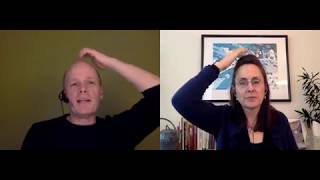
Rick Wilkes and Carol Look coach on decluttering by tackling the emotions underneath: anxiety, guilt, and sabotage. They use tapping techniques to release what keeps you holding onto stuff you don't need.
You.
Welcome everyone. Clearing clutter from the inside out. This is our second session. I'm Rick from thrivingnow.com and I'm here with Carol look from carolook.com we have some amazing questions already. There's an Ask the question link on most of your browsers. You'll see that you're welcome to look and to upvote, but we do encourage you to be present right now. So if you have a phone, see if you want to silence it, maybe close Facebook. And also there's a chat and it's there for you to communicate feedback or questions and give feedback to us. It's not there for you to chat back and forth with each other. And the reason for that is that that will take Carol and I away. We want to make sure that we're tracking what feedback we're getting, but in the same ways that if we were in a circle together and two people were off talking to each other, that would be distracting for everyone. So let's come present and let's begin. Carol, would you like to open things up for us with some thoughts?
I have just absolutely loved this interaction with everybody because they tell us the truth. You all have been so cool about just saying, here's where I am. Helen, we read your message about the perfectionism and Elizabeth, how you've made two big shifts. And all of you writing in with the questions, you're just saying, here's where I am. I've gotten better. I've got an improvement in my clutter. I'm working on this aspect or this. I still have to go. And that's where we are. We want to be present with you. Where are you? My life has changed so dramatically in the last six months over clutter. Preparing for this program, tapping with Rick for this program, everything's different. So we just love being with you. So I think Rick, you and I deciding to do two live calls after the original webinar really worked for emotionally feeling connected with this group. So we're just delighted to have you all here. We have tons of questions. We're going to get to as many as possible and either give you a hint of how to tap for it or actually do the tapping. So welcome to you all.
And someone just said, how do you overcome extreme sabotage? And the core of the inside out process is that sabotage is not about the big project. It's about you sitting down for five minutes, taking something in your hand and allowing yourself to feel what's there. That's my approach to it. And we're going to go into sabotage, we're going to go into a lot of the blocks that people have, a lot of the questions, some of the logistical things today. But part of it is using enough willpower not to try to muscle through everything, but to be present with one thing that you don't want to open. It's like, oh, I don't want to open this. Look how thick it is. Like, oh, I don't want to open this. I don't want to open this. You can put it aside, not open it, but the process of you touching it, being with it, tapping on the emotions that come up and letting it be for a minute a day that is so profoundly useful for the rest of your life. Much more useful than some big heroic effort to get things clear, but not having addressed the emotions. So, questions, let's start. And I'm gonna try to remember to click the start answering button. Okay. Carol M. Writes, I am a master at starting to do some sorting on a pile, and I end up creating an even bigger pile. Sometimes just putting your hand on the pile is a second step. But the reason that you need to, like, it's not just there. Can be like, oh, I noticed that the bill from that doctor causes my gut to clench. You're looking for a reaction in your body as a good doorway. So a person that believes that they can't do it, same kind of thing. If you move one piece of paper, then you can move all of them. But you need to do it from the inside out where you're, you're really like, I can't believe he did that to me. I can't believe he did that to me. I can't believe he did that to me. I can't believe he did that. I cannot believe he did that to me and I had to pay for it. Allow yourself to get, oh, that fucking pig. Notice I'm allowing myself around. One thing to feel what that has and what you'll notice what we do in tapping is it cascades. Chances are the next bill that you pick up from him, oh, God, I can't believe he did that to me. The intensity will start shifting and then you can take all those bills and put them in a, an appropriate file or throw them away. Realizing, you know, that is really not important to keep. When I've worked with people with long term medical things, if a professional came in, they would say, let's create a profile that covers the things that you absolutely need to have that you could duplicate and hand to every medical professional so that they have Everything that they need and everything else we can go with. And that's. That's the practical side, but the emotional, the grief and the like is what you're going to be tapping on with us in the program. So good.
I just want to say Sonia had a incredible breakthrough, and now she's looking forward to letting go and clearing and is thanking us. And I would just say, Sonia, that's what happened to me, which was a total surprise. Like, I can't wait to get to it now. That is so different. So different. So thank you for sharing that with us.
And you're not there until you're there. And that's. We're also honoring that. That's why we did this program, is that it's not just. Oh, it's. You may realize, like someone said, when I got to module five, I was sobbing in tears because that connected her to what was actually the core. That was. That was blocking. All right.
Wonderful.
I live in a small house by myself, and I am really messy. I tapped to both programs over the Christmas break, did a major cleanup, tossed things that no longer serve me. I felt great, happy with myself. The house felt so good. I tapped as much as I could about being okay with the new energy and being okay to make changes. And a month later, it is messy again, but not quite so bad. I know it is sabotage, but I can't work out how to get what reasons are. I try tapping on everything I can think of. Thank you so much for putting this in. Linda. Congratulations. I would say that one of the things is that our program does make, for some people the possibility of a major purge possible, sometimes even easy and delightful. This. That's not the lifestyle. An uncluttered lifestyle says, oh, there are these things that are coming back into my world. What if I took one of those and now did the five minutes? And what you find is that you start. Then instead of it being like, yo, yo, dieting, it becomes, oh, well, in my case, I happened to clear the house over Christmas. Awesome. And now what's my maintenance? What's my lifestyle? What's my healthy lifestyle? Going back to tapping on the small pile of things right here on this table. I liked it when it was clean. What can I do to make that more of my flow? I clean while I live. For example, some people do big projects to clean the whole place. If I spill something, I clean it up. Some people don't. But for me, that's my lifestyle. And the clutter is the same kind of thing. My desk is a little more Cluttered. I left it that way for a prop. But my lifestyle is to feel into and spend five minutes.
The five minute rule. Thank you. The five minute rule changed my life. I wanted just to respond to her. What if it's not sabotage? Take it out of the sabotage realm and just say to her, what if you're just a lot more comfortable with a little bit of clutter and mess? She didn't even call it clutter. She said it's messy. And that's different. What if you did this fabulous thing and you're just sliding back a little bit? Like it feels better with the £10 on than off? Just take a look at that.
What's your right size? What's your right level? You know, it's awesome. Okay, so this is an interesting Carol. This person writes, as soon as I throw something away, even if I hadn't used it for a while, suddenly I find a use for it sometime the very next day. And I beat myself up for having thrown it away or given up. What would you suggest in that kind of dynamic?
I would suggest there's a scarcity issue going on. And I don't. And because I have the exact same problem, I don't believe that person. I'll tell you why. Because I'm full of it. That's not true. I don't find a perfect example of how to use it the next day. It's just that I don't have it anymore. So there's an emptiness that I think is being. I'm not quite being clear enough, but there is an emptiness and. Yes, but I should have had it. And anxiety and see, I told you I could have used it. And it's like, go get another one. We're not talking about $100 items here. Unless he is. But, you know, I save things, like those weird things that come in boxes and the little rolls of containers. I save boxes and bags because I'm going to use them one day and I don't. So I threw out hundreds two weeks ago. Hundreds of bags. I have 10 more. I have 20 more. Right. I live in a small apartment in New York. So I would just say something else is going on. And if you 100% find a use for the thing you've thrown out the day before, something else is going on. It's like if you're 100% wrong in the market, you're actually quite successful because nobody's 100% accurate. Being wrong, choosing the wrong socks or the right socks. So there's some other emotion. Let's Just do. Rick. I'd like to just do a quick tapping on the emotions about throwing it out.
Yeah.
And just see how that sits with people. This person, it might not be totally responsive, but just this direction. So let's just go even right to the eyebrow. All these people tap so much. Probably we can get away with skipping the karate eyebrow point. All this anxiety when I throw something out.
All this anxiety when I throw something out.
Side of the eye. I know I'm going to need it one day.
I know I'm going to need it.
One day under the eye. And I feel anxious when I don't have it.
And I feel anxious when I don't.
Have it under the nose. And the anxiety creates a use for it.
And the anxiety. Ha ha ha. Creates a use for it.
You don't want to give I don't want to give anything up.
I don't want to give anything up.
Collarbone. This anxiety around throwing something out.
This anxiety around throwing something out.
Under the arm. What if I might need it one day?
What if I might need it one day?
Top of the head. What if I might need it one day?
What if I might need it one day?
Eyebrow. It's all around my anxiety.
It's all around my anxiety.
Side of that. I like my stuff.
I like my stuff under the eye.
I don't like parting with my stuff.
I don't like parting with my stuff under the nose.
It makes me very anxious.
It makes me very anxious.
I feel that scarcity feeling come up.
I feel that scarcity feeling come up.
Collarbone. It's all about anxiety and security.
It's all about anxiety and security under the arms.
So I prove my point.
Yep. I prove my point.
Top of the head. That I might need it one day.
That I might need it one day. And that'll stop me from giving things away. Yeah, that. I noticed that. And thank you so much for bringing up this issue, because a part of us gets very anxious when we have something and then don't we talk about that in the program we didn't cover was like, oh, what's going to happen downstream? Well, if you feel anxious and you haven't really cleared it, like, you cleared it enough that you could give something away, your brain is going to search for a reason why that was a terrible idea because it doesn't want to feel that anymore ever again, and it's going to find something. I saw this, like, I had a fondue pot. I hadn't used it. It was tied to getting together with my kids. I gave it away to someone who was really so excited about it. And then the next time my kids and I got together, I said, oh, if I only had a fondue pot. And a part of me shut down from giving things away because one, they didn't want fondue, they wanted pizza. All right, But I would have asked this question. See, I give things away and then the next day I find some reason why this idea. If you're congruent and you're not forcing yourself to give something away or throw it away, then what you notice is that, yeah, I gave that book away last year and I don't have it anymore to give to somebody else or to loan it or read that chapter. And it's okay. It's okay. It may not be perfect, but it's okay. It's not causing distress. Thank you so much for bringing that up. It's so core.
Love this group.
Okay. Others have often influences my choices and what to clean up, resulting in churning clutter to various places instead of normal processing and purging. Please consider tapping on the pain of others opinions. Yeah.
About them giving it up. I didn't hear the first sentence.
She said that others have often influenced my choices and what to clean up. So just taking it from the general. Thank you. The general thing is that a lot of times we're guilted and shamed and told what to do and how to do it. Carol and I offer suggestions, but family, friends, people that are disgusted, people that say, why do you keep that? Because I like may be that you move it out of one place and then put it someplace else so that maybe they're not seeing it the same way. But then that binds it. There's a certain resentment of being told what to do to me and that's painful. Being told what to do. Is there more that you'd like to add to that, Carol?
I was just thinking we could do a quick tapping on because I would say this person is suggesting that she lost her center because other people keep influencing her. And that's what feels bad too. So let's come back and make your own choices. No matter what they say. Sisters, brothers, parents, spouses, children, whatever they say doesn't matter. Get back to your center. Right. Your. Yes. So eyebrow point. I want to make my own choices.
I want to make my own choices.
I don't want to throw it out because of them.
I don't want to throw it out.
Because of them or what they say.
Or what they say.
I'm not making my own choices.
I'm not Making my own choices.
And that's painful.
And that's painful.
It makes me feel resentful.
It makes me feel resentful.
I want to take my power back.
I want to take my power back.
By making my own choices with my clutter.
By making my own choices with my clutter. Good.
Deep breath, everybody. It must be our choice. Like you said, Rick, you know, the pain and how it gets bound then to somebody else's decision. It's like we have to make our own decisions, and otherwise you will regret it. And the person says, why would you keep that? And then you throw it out and then you resent them and hate them for that. It's a. It's a mess. So you've got to make your own choices on your own stuff. And when you're ready for the blazer from the 1980s with shoulder pads, when you're ready to show that, throw that out. You will, but not before you're ready.
You can also look at old traumas. I had a client that had 27 teddy bears because. And she just couldn't seem to. She liked the idea of sharing them with people that would use them. I mean, some were in boxes, not even being treated as beloved items. But she couldn't. And we had to. We dug a little deeper, like, well, what does this feeling of letting the teddy bear go remind you of? And she had had a dirty, well loved, rubbed, rubbed bear snotted on teddy bear when she was a kid that got thrown out against her will. And so the energy was, I'll never let that happen again. And so we had to tap on the I'll never let that happen again. And get back to choice. Well, what do you choose for this teddy bear? What do you choose for this? What do you choose? It was very easy for her. She kept three that are really, you know, became part of her welcoming for grandkids for other people, you know, just comforting. But that energy inside her, the inside out process is. Yeah, what inside is stopping you rather than what outside? And resentment will definitely do it. So. All right. Rebecca writes, I still haven't been able to figure out an answer to the question, how does keeping this clutter serve me? What is it doing for me? I just keep hearing, I don't know. Could you do more tapping about getting clarity about what the clutter may be protecting me or blocking me from?
Okay, so let's go around a different angle. And Rebecca, ask yourself, how would I feel if I didn't have it? So maybe it pops up from a different angle. How would I feel if I gave it away? How would I feel if someone else threw it out? Right. So how is it serving you? What's it protecting you from? Is one angle, another angle is, well, what feeling is going to surface? It's like when we do that with weight loss, put down the donut, what feeling comes up and they go, oh, my word, I know what feeling comes up. Right. So if you didn't have it, what fear, what feeling, what grief, what loneliness? What issue would surface if you suddenly gave it away, if you suddenly didn't have it in your life? So just go at it around the other, direct from the other direction, I would say. Does that make sense?
And someone said they'd feel naked. Yeah. It can be just one thing that provides a measure of some kind of psychic energetic protection. Like this shirt. If I. If this was the shirt that was ready to. If this undershirt and shirt were ready to go and I took them off, I'd be naked. I could go get another one. But that's where you address the energy there. And just quickly, Jenny Wright, how do you overcome the need to look at every single one, pick it up and say, what makes this so important that I need to invest my life energy in this? It is fear of missing out. So do the FOMO again. Do the FOMO module again.
Wonderful module.
And then start with one thing and really look at it like, are you worth my life? Is the fear of, is there really anything in here that. That is so important that I would rather look at this and spend time with you and you and you and you magazine rather than something else that is more rich for my life?
Good.
You will find an interesting shift there. I still struggle with a money angle, Laura writes, but I paid good money for that and worse. Yes, I see some of the money as being my husband's. We lived on one income. At times I feel I have wronged him by making poor choices with the money he worked hard to earn. And this guilt inside especially applies to things that can't be passed along and probably have to go in the trash. All on top of the grief of loss has caused me to hold on to more. How do I approach the guilt feelings? Read my spouse. Wow, Laura. Thank you, Carol. You want to take that one?
Sure. Deal with the guilt until it neutralizes because it's certainly not doing you any good to keep the item that you paid. Yes. Good money for on a shelf that no one else gets to use. And you're not using it either. And it just brings up all these horrible. You just feel terrible about yourself. So the tapping quite simply is I feel guilty for spending on it.
So I feel guilty on spending on it.
Let's do one on the karate. Even though I feel guilty for wasting.
All his money Even though I feel guilty for wasting all that money and.
Wasting it on something I haven't used.
And wasting it on something I haven't used.
And that blocks me from getting rid of it.
And that does block me from getting rid of it.
I understand that I'm not using it anyway.
I understand that I am not using it anyway.
And that the guilt is just a way to punish myself.
And the guilt is just a way to punish myself.
Eyebrow. I'm using the guilt to punish myself.
I am using the guilt to punish myself.
And I'm holding on to the item to punish myself.
And I'm holding on to the item to punish myself.
I must really like to feel terrible.
I must really like to feel terrible.
How would I forgive myself for the mistake?
How about I forgive myself for the mistake?
Everybody I know has made tons of mistakes.
Everyone I know has made tons of mistakes.
What if I got over it?
What if I got over it under the arm?
And that would be better for my relationship too?
And that would be better for my relationship too.
I did overspend.
I did overspend.
Eyebrow. I did overspend on items I didn't need.
I did overspend on items I didn't need.
Sometimes it wasn't my money.
Sometimes it wasn't my money.
But why am I punishing myself so much?
But why am I continuing to self so much under the nose?
It's time for compassion.
It's time for compassion, Jen.
It's time to move forward.
It's time to move forward.
Calibone. The guilt isn't doing me any good.
The guilt is not doing me any.
Good under the arm. And my spouse doesn't appreciate it either.
And my spouse doesn't appreciate it either.
Top of the head. It's time for compassion and forgiveness.
It's time for compassion and forgiveness.
I made some mistakes, so what?
I made some mistakes, so what? I want to take a deep breath at the halfway point. Removing energy. Notice what's happening in your body ground. You're doing great. Thank you all for being here. We have people from around the world that share this. This cuts across all cultures, all country lines. It's something that we're balancing energies of scarcity and holding on because we might need it with the abundance that is truly ours and the spaciousness that we want. This is an inside out job. We use clutter as a way of building resiliency, clarity and confidence. It allows us to have something tangible. You know, something tangible. I still don't want to open this. I still don't want to open this. It's 200 pages to read. I don't want to open it. I don't want to open it. I'm not going to open it right now. Compassion. What, Carol? Just healing and compassion. You start offering yourself healing and compassion around something that's just sitting there, and it's going to be so much easier around the other mistakes that you made in your life. And now you're moving forward with more spaciousness not to make more mistakes. Most people don't need to be whipped. Once you've got clarity, you don't need to be whipped to do it or not do it. Once you've got the guilt cleared up, you've got the energy now to move forward in a different way. When I was buying things on Amazon to soothe myself, boxes would arrive all the time. Now when boxes arrive, they get opened and they're useful. And that energy, when it shifted, I now have a wish list that I don't always buy everything that behavior changed. I don't need to be whipped about it in order to have that clarity now. That's what this process moves us toward. Thank you so much for that, Laura.
Wonderful.
Helen writes, this is sort of like what we had talked about. It's about churning the process of moving stuff around rather than actually dealing with it. I'll pick something up, intending to decide what to do with it, and then wind up just moving it someplace else. Yeah. Hers is not a paperwork issue. It's about possessions. What do you see going on there, Carol?
Energetically, emotionally, the reluctance, again, not to have it. So having it is doing something right. It feels security. I think we could do a. You want to lead us through a security issue. I think emotional security, whether it's our stuff, you know, people use everything for emotional security. Stuff and status and money and having the right books and the right whatever. I think that may be part of what's going on. It may not be exactly hers, but it certainly is an issue that we all struggle with. I don't want to give it away because secure and content and all there.
Yeah. And to me, honoring what is. And that is that when you pick something up, you may. It's just. It's too much to make a decision with that thing. And sometimes acknowledging that it's more Secure right now just to not make a decision also can reduce the churn. So let's tap together and see if you can tune in to a time when you've done that. You've moved and churned stuff from one place to another. Haven't really looked at it. Haven't really allowed yourself to feel the emotions around it. Oh, yeah, I remember. Even though I sometimes move things around.
Even though I sometimes just move things.
Around, part of me feels better doing that.
Part of me feels better doing that.
It feels like flow.
It feels like flow.
It's just not clearing.
It's just not clearing.
It's churning. It's not clearing.
It's churning. It's not clearing.
And I accept myself and that I sometimes do that.
And I accept myself in that I sometimes do that.
Top of the head. Sometimes I need to do that.
Sometimes I need to do that side of the eye.
Sometimes I have needed to do that.
Sometimes I have needed to do that under the eye.
It's an old pattern.
It's an old pattern under the nose.
It used to be how I coped.
It used to be how I coped.
I can't stand my clutter right there.
Stand my clutter right there.
Oh, I'll move it over there.
I'll move it over there.
Oh, yay. It's not clutter over there anymore.
Not clutter over there anymore.
It's clutter over there.
Clutter over there.
Top of the head. And I couldn't face all of what that clutter meant to me.
And I couldn't face all of what that clutter meant to me.
And I'm open to looking at one or two things And I'm open to.
Looking at one or two things and.
All the emotional relationship I have to them.
And all the emotional relationship I have to them.
Deep breath. I want to honor that. We're asking you to do something that is not trivial. For some people who churn or hoard, that's the strategy that has worked to cope with the emotional anxiety, the need for security or protection or whatever it is. But if you churn or hoard, you might say, well, again, what does this thing mean to me? This is like, I had one person say, this is like one of the scales in my armor.
Wow.
And. And the thought of getting rid of it was like creating a chink in their armor. Oh, I don't want to chicken my. Do you want a chink in your armor? I don't want to chink in my armor. No, thank you. I'll just move The I'll just move them around so that they're always protecting me. This is an example. We take it seriously. I may sometimes feel light and giddy with it because I know that there's so much energy there and part of it is the self reflection that this is. As a human, I've had all of these things. I've never looked like a hoarder, but there have been places out of like my inbox or other places where I've had that energy. And so wherever the energy is, the emotional tie to it is where you're going to get some clarity and movement. Take one or two things. You can do the big one like an imagine it all being gone and see what comes up for you. Because that's probably the big huge hairy monster, the dragon that you want your armor about. But you can also get there for most cases with really sitting with what does this mean to me if this one thing was gone? Oh, nothing. You do that. But by the time you've done that three times your body, it's like when someone who really is not ready to do weight loss, right? They'll lose £1. Oh, that was great. £2.
Great.
That was £3. It's off to the donut store. And we know that that, that means that you're right at that edge. That's the edge where you're going to learn something about yourself which can change your life. Not by intensely trying to throw £20 off of you and then have it.
Come back and go to the grief module. Again, those of you who like the person saying moving stuff from one place to the next place to the next place and it never leaves the apartment, go to the grief module. I think would be really, really useful. You know, I can take three boxes of stuff and get it down to two. That's really good. And then get it down to one and then put it in storage. Like however you do it in your time frame, I think Rick, you've mentioned a couple of times choosing one or two things and you've mentioned the five minute rule. I think I can tell you that I kind of forgot that or spaced it out or something. I'm doing it. But I want to remind everybody we're not asking you to clean up your entire home in the basement today. One thing, two things. One process, two processes. Five minutes of tapping, not two hours of tapping. The five minute rule. Clean up the kitchen before you go to bed, right? Clean off the couch with all the paperwork. Do one thing, the five minute rule I've said and I certainly said it in the program that I have been overwhelmed by, that I have to do it all and do it perfectly on top of that. And the five minute rule changed my life. How is that possible that I didn't get the five minute rule? I don't know. I didn't get it, so now I.
Got it because it's so easy to reject. I've gotten at least 30 emails from people who are saying, what's the use? I do it for five minutes, that's no problem. And then, you know, I see this big mess and it's like, too overwhelming. Well, you're using us to encourage you to do five minutes. But the big thing is that you look at it as something that's too big to deal with. I do want to. Someone said, you know, you need to show the clutter who's boss. And, well, if that's the way that you drive your relationships and show other things that your boss. And maybe that helps. But a lot of people have done that. Our approach is not like, oh, I'm gonna, you know, I'm gonna show them who's boss. And I get it. There is. There's a balance here between not taking action. I tap for hours and nothing happened. Well, yeah, did you pick up a piece of paper? But the energy we want is one of relationship between us and our stuff. So that when you pick up something, you know that you have a relationship with it and it feels congruent and clear. You're left with things in your life that you know you have a relationship with by choice. You let relationships go that no longer serve you, though that'll be reflected in your friendships and loverships too. Right? You. You'll really get clarity. Rather, it's just a different tuning. And that's why I wanted to comment on that. Thank you, Carol. Some things, like paperwork, take much longer to deal with than furniture or clothes. If you take the approach of looking at them one by one, it takes so long to get through them. But I don't want to throw out anything important. I thought you'd pick up on something with that one.
Well, just. It's a fomo. It is a fear of missing out again that you're going to throw. I write everything on sticky pads, right? So every color imaginable, hundreds of them. And it's the one email, it's the one telephone number, it's the one, I don't know, code link to get into a teleseminar that somebody else is doing, read it, write it where it's Appropriate in your book and throw it out. Read it, throw it out. Read it. Go through it. Go through the papers. There are. I've got Abraham Hicks notes. I used to take notes listening to Abraham Hicks CDs for years, right? And I gotta make that one thing, read it again. Guess what? It's all been the Same message for 10 years, people. It's all the same message. All the abundance, work, all the Abraham Hicks, it's wonderful. And it can all be succinctly put into one page. So that fear of, yes, but I'm gonna lose it, yes, but I won't have it. That is a panic that probably is related to childhood in some way. What did you lose? What did you throw out one time? And that we want to get to the anxiety again. It really is stress related and anxiety. And most people, when they calm themselves down overall the clutter is not such a big crazy thing to them. It's like, oh, it's an extra book. I'm not going to read that book. Look at it. It looks beautiful. It smells nice. It came from Amazon and I'm never going to read it.
Right. And her question about it taking so long to go through anything, what we, you'll notice we focused in on the energy of I don't want to miss something important. Right? That's the fear of missing out. You'll tap on that. What I want to say also is that you can start using your intuition. How important is this for me to review in detail? And you start like, if you ask that question consciously, this is a Vogue magazine. How important is it for me to review this in detail? And if it feels like a nine, you can say, really, what about this magazine makes it. What about this? It's so old that there's no tax consequences. It's over seven years old. There's no reason for me to keep it. It's not tied to anything current. Or why is it important for me to review all of these things? Can they be bundled up and recycled as a whole? You get to a place where when your emotions are clear, what you're doing is not just like flipping through and dissociated. When I look through a big stack, I can go through an entire drawer of a year's worth of stuff that I put there as a temporary hold. And what I do is I look at it and I'm feeling in my body for a congruent. How important? Weight loss, right? They'll lose £1. Oh, that was great. £2.
Great.
That was £3. It's off to the donut store. And we know that, that that means that you're right at that edge. That's the edge where you're going to learn something about yourself which can change your life. Not by intensely trying to throw £20 off of you and then have it.
Come back and go to the grief module. Again, those of you who like the person saying moving stuff from one place to the next place to the next place and it never leaves the apartment, go to the grief module. I think would be really, really useful. You know, I can take three boxes of stuff and get it down to two. That's really good. And then get it down to one and then put it in storage. Like however you do it in your time frame. I think, Rick, you've mentioned a couple of times choosing one or two things and you've mentioned the five minute rule. I think I can tell you that I kind of forgot that or spaced it out or something. I'm doing it. But I want to remind everybody, we're not asking you to clean up your entire home in the basement today. One thing, two things. One process. Two processes. Five minutes of tapping, not two hours of tapping the five minute rule. Clean up the kitchen before you go to bed. Right. Clean off the couch with all the paperwork. Do one thing, the five minute rule. I have said, and I certainly said it in the program that I have been overwhelmed by, that I have to do it all and do it perfectly on top of that. And the five minute rule changed my life. How is that possible that I didn't get the five minute rule? I don't know. I didn't get it.
So now I got it because it's so easy to reject. I've gotten at least 30 emails from people who are saying, what's the use? I do it for five minutes, that's no problem. And then I see this big mess and it's like too overwhelming. Well, you're using us to encourage you to do five minutes. But the big thing is that you look at it as something that's too big to deal with. I do want to. Someone said you need to show the clutter who's boss. Well, if that's the way that you drive your relationships and show other things that your boss. And maybe that helps. But a lot of people have done that. Our approach is not like, oh, I'm gonna, you know, I'm gonna show them who's boss. And I get it. There is, there's a balance here between not taking action. I tapped for hours and nothing happened. Well, yeah. Did you pick up a piece of paper? But the energy we want is one of relationship between us and our stuff. So that when you pick up something, you know that you have a relationship with it and. And it feels congruent and clear. You're left with things in your life that you know you have a relationship with by choice. You let relationships go that no longer serve you though that'll be reflected in your friendships and lover ships too. Right. You'll really get clarity. Rather it's just a different tuning. And that's why I wanted to comment on that. Thank you, Carol. Some things like paperwork take much longer to deal with than furniture or clothes. If you take the approach of looking at them one by one, it takes so long to get through them. But I don't want to throw out anything important. I thought you'd pick up on something with that one.
Well, just. It's a fomo. It is a fear of missing out again that you're going to throw. I write everything on sticky pads, right? So every color imaginable, hundreds of them. And it's the one email, it's the one telephone number, it's the one, I don't know, code link to get into a teleseminar that somebody else is doing. Read it, write it where it's appropriate in your book and throw it out. Read it, throw it out, read it, go through it, go through the papers.
And that's why I wanted to comment on that. Thank you.
I got Abraham Hicks notes. I used to take notes listening to Abraham Hicks CDs for years, right? And I gotta make that one thing. Read it again. Guess what? It's all been the Same message for 10 years, people. It's all the same message. All the abundance, work, all the Abraham Hicks. It's wonderful and it can all be succinctly put into one page. So that fear of, yes, but I'm gonna lose it, yes, but I won't have it. That is a panic that probably is related to childhood in some way. What did you lose? What did you throw out one time? And that we want to get to the anxiety again. It really is stress related and anxiety. And most people, when they calm themselves down overall the clutter is not such a big crazy thing to them. It's like, oh, it's an extra book. I'm not going to read that book. Look at it. It looks beautiful. It smells nice. It came from Amazon and I'm never going to read it.
Right. And her question about a taking.
So.
Long to go through anything. What we. You'll notice we focused in on the energy of I don't want to miss something important. Right. That's the fear of missing out. You'll tap on that. What I want to say also is that you can start using your intuition, how important is this for me to review in detail? And you start, like, if you ask that question consciously, this is a Vogue magazine. How important is it for me to review this in detail? And if it feels like a nine, you can say, really, what about this magazine makes it. What about this? It's so old that there's no tax consequences. It's over seven years old. There's no reason for me to keep it. It's not tied to anything current. Why is it important for me to review all of these things? Can they be bundled up and recycled as a whole? You get to a place where, when your emotions are clear, what you're doing is not just like flipping through and dissociated. When I look through a big stack, I can go through an entire drawer of a year's worth of stuff that I've put there as a temporary hold. And what I do is I look at it and I'm feeling in my body for a congruent how important is this for the next year to keep and this much and throwing and recycling this much? Because I don't actually need that. And that can take really fast. Most people with a clutter problem might take a week to do what I can do in an in in a short time because I took a week when I did it, when I got tapping, I used to have this drawer. I couldn't face it. It just had so much confused energy in it. And I started taking one or two, three things. When I started feeling like I was getting tired, I'd stop. That was about five minutes. Wonder where that came from. And then I would come back to it. And once I cleaned it once, that way, the next time it filled up, I was able to clear it out less than half a day, taking breaks in between. And then now it's really short. So that's the encouragement and also a realistic view of what this wonder where that came from. And then I would come back to it. And once I cleaned it once, that way, the next time it filled up, I was able to clear it out less than half a day, taking breaks in between. And then now it's really short. So that's the encouragement and also a realistic view of what this journey is like. It's not. It's building up a skill that you Will use forever.
A phrase that could trigger some of you, which is always good, is to say, and to remember you're not missing anything but all of you. We're all saying, yeah, but I'm not whole without this. Yes, you are, but that's a belief. You are whole without the journey is.
Like it's building up a skill that you will use forever.
A phrase that could trigger some of you, which is always good, is to say, and to remember you're not missing anything but all of you. And we're all saying, yeah, but I'm not whole without this. Yes, you are, but that's a belief. You are whole without the perfect item, without the perfect clothing, you're whole anyway. But the come from is I'm not whole, and I'm not okay without this thing, this paperwork, this book, this representation of my family, of my grandmother who died or whatever it is. You're okay and you're whole. But that takes a feeling of emotional security.
Yeah. Awesome. Someone pointed out that in the US The IRS needs you to only hold stuff for three years for business purposes. That's great. And someone else said our tapping went pretty fast on the needing to be harder on yourself to be a better person. I would work with a coach on that. Not everything is in the clearing clutter. I mean, we've touched on it. We gave you. You can go back and look at the replay, tap on that. And if that's a real issue for you, the level of freedom you will get from not whipping yourself in order to go harder, work with so many talented coaches. Um, I'm available for private sessions as well on any of these subjects. Carol has a coaching program that's. That's also available to you. She has. And so find resources that you can work with on some of these core emotions. Like, okay, this is my core thing. It started a long time ago. Do 1, 2, 3 sessions just on those specifics with someone, and you'll notice a big difference. What amazes me, G writes, is how deeply the emotions run, how out of touch I am with myself in this cluttering way. As I begin working the module, my inner child begins attempting to distract me. I had no idea how challenging it can be to sit still and care for myself in this way. I become very nervous without being busy. How long does one tap on the nervousness? I so look forward to peace, calm, and focus.
Thank you, G. Wow. The how long question isn't really everyone's different. But I can tell you that when it goes from a nine down to A five. You'll feel so different. You'll want it. You'll want that peace. But the I think the topic she or he is bringing up that is so important is we are nervous being left with ourselves and our feelings. We are anxious about being still and quiet. Why do you think we have seven phones and computers and noises and bells and whistles and like 50 million books in front of us? Because being quiet and still is difficult. Because we might feel loneliness or grief or hurt or anger or resentment, and we don't want to. Why do you think food is. Why do you think the weight loss is the biggest problem in the country? Followed by health issues created by weight loss. That fear of being together. How about we do one on that? Something on that. Please do eyebrow. I'm afraid to be on my own.
I'm afraid to be on my own side.
I'm afraid to just be with my feelings.
I'm afraid to just be with my feelings.
Under. I didn't know how deep these emotions were go.
I didn't realize how deep these emotions.
Go under the nose. Now I get it. That it's not about the stuff.
Now I get it. It's not about the stuff.
Chin point. I want to honor all my emotions.
I want to honor all of my emotions.
Collarbone. By not. But not by ignoring them because of my clutter.
But not by ignoring them because of my clutter under the arm.
I just want to honor my emotions.
Even if I want to honor my emotions even if it's hard.
Top of the head. It is difficult to be still and quiet.
It is difficult to be still and quiet.
And I honor those emotions, too.
And I honor those emotions too. Yeah.
Now you all are. I think this group is more. Is advanced because they've been working clearly they've been working for a while on this issue and other issues. So all of your insights, everybody, even if you get to.
Yeah.
Aha. That surprises you. This is just wonderful and unfolding that we really, really. And I'm really enjoying it.
Yeah, I want to just address that there. Remember that something isn't clutter if you all are.
I think this group is more. Is advanced because they've been working clearly they've been working for a while on this issue and other issues. So all of your insights, everybody, even if you get an aha. That surprises you. This is just wonderful and unfolding that we really, really. And I'm really enjoying it.
Yeah, I want to just address that there. Remember that something isn't clutter if you actually need it. If Your health and well being, rely on it if your doctors are going to you actually need it if your health and well being, rely on it if your doctors are going to need it. If you need it for legal reasons, then it's not clutter. It may not be in Anita, if you need it for legal reasons, then it's not clutter. It may not be in its right place. So it's clutter in its location, but it's not a thing that necessarily is going to go out of your life. Like, of the 27 teddy bears, three were not clutter of medical information that you put energy into collecting. Maybe it's stacked in a place where it's disturbing to you, but that's something that you can solve. Tap on it and then ask, well, where does this go? And I would suggest that if something is really core to your survival and that's the way it feels, start with the things on the periphery. When you get clarity about teddy bears or old clothes that you. It's right place. So it's clutter in its location, but it's not a thing that necessarily is can't wear anymore. You're probably never going to be that size in the next two years. And why can't you at least get rid of something you would not wear even if you were that size today? Maybe that's your real core thing and that's just. Whoa, wait, hey, don't bring up my weight. Don't bring up my clothes. That's fine. Don't start there. Start with something like the magazine. Start with something like your kitchen counter. You know, do you need to have 2/3 of the kitchen counter taken up by that air fryer that your grandma gave you that she's going to ask about every time? Okay, maybe that's the. What you start with. Maybe it's like I've got six different sets of silverware and I don't need them all. Really, I don't. But I can't seem to do anything with them. Yeah, disorganized is not clutter. Like I said, some of my organization is not very organized. As much as I love organization, I have files that capture things over the course of a year that I will then spend a half hour to an hour going through at the end of the year. I don't need to do anything better than that with them. It's a level of organization that works. Okay, so we've got about five minutes left. I'm going to see if there's a question here.
Great questions, everybody.
So I'm I'd like to do some tapping here with you, Carol. Kate wrote in a question. I'm going to summarize it in a little bit more general way. When people get to a place where now they're living in luxury, so to speak, it no longer looks like the place that they were comfortable before. It feels more spacious, more comfortable, more clean. And now there's something that happens inside of them that is uncomfortable. Would you help us with that feeling so that we can relax into a new. A new way of being, a new place of being. By the time you've done that three times your body, it's like when someone who really is not ready to do weight loss, right? They'll lose £1. Oh, that was great. £2.
Great.
That was £3. It's off to the donut store. And we know that that, that means that you're right at that edge. That's the edge where you're going to learn something about yourself which can change your life. Not by intensely trying to throw £20 off of you and then.
Karate chop, even though I'm not have it come back and go to the grief module. Again, those of you who like the person saying moving stuff from one place to the next place to the next place and it never leaves the apartment, go to the grief module, I think would be really, really useful. You know, I can take three boxes of stuff and get it down to two. That's really good. And then get it down to one and then put it in storage. Like however you do it in your time frame, I think used to the.
New me, even though I am not used to the new me.
Rick, you've mentioned a couple of times choosing one or two things and you've mentioned the five minute rule. I think I can tell you that I kind of forgot that or spaced it out or something. I'm doing it. But I want to remind everybody, we're not asking you to clean up your entire home in the basement today. One thing, two things. One process. Two processes. Five minutes of tapping, not two hours of tapping the five minute rule. Clean up the kitchen before you go to bed, right? Clean off the couch with all the paperwork. Do one thing, the five minute rule. I have said, and I certainly said it in the program, that I have been overwhelmed by that I have to do it all and do it perfectly on top of that. And the five minute rule changed my life. How is that possible that I didn't get the five minute rule? I don't know. I didn't get it.
So now I got it because it.
And the new energetic space.
And the new energetic space.
I choose to remember that I can grow and change.
I choose to remember I can grow and change.
Even though the newness scares me, the newness scares me.
Easy to reject. I've gotten at least 30 emails from people who are saying, what's the use? I do it for five minutes. That's no problem. And then, you know, I see this big mess, and it's, like, too overwhelming. Well, you're using us to encourage you to do five minutes. But the big thing is that you look at it as something that's too big to deal with. I do want to. Someone said, you know, you need to show the clutter who's boss. Well, if that's the way that you drive your relationships and show other things that your boss. And maybe that helps. But a lot of people have done that. Our approach is not like, oh, I'm gonna. You know, I'm gonna show them who's boss. And I get it. There is. There's a balance here between not taking action. I tap for hours, and nothing happened. Well, like the old me, I like the old me. And I didn't like the old me.
I accept all of me now.
I accept all of me now.
Eyebrow. It's hard to tolerate the new space.
It's hard to tolerate the new space.
Side of the eye. I appreciate what I've created.
Yeah. Did you pick up a piece of paper? But the energy we want is. I appreciate what I've created under the eye. It's one of relationship between us and our stuff. So that when you pick up something, you know that you have a relationship with it, and it feels congruent and clear. You're left with things in your life that, you know, you have a relationship with by choice. Sit with it, and I can sit.
With it under the nose. I can even tolerate my anxiety.
What a good one. You let relationships go that no longer serve you, though. That'll be reflected in your friendships and loverships too. Right? You'll really get clarity. Rather, it's just a different tuning. And that's why I wanted to comment on that. Thank you, Carol. Some things, like paperwork, take much longer to deal with than furniture or clothes. If you take the approach of looking at them one by one, it takes so long to get through them. But I don't want to throw out anything important. Even tolerate my anxiety.
Chin. I can even appreciate my anxiety.
I'm open to appreciating my anxiety.
Collarbone. I appreciate the new space. I've created.
I appreciate the new space I've created under the arm.
I appreciate being still while I pay attention to my emotions.
I appreciate being still. I thought you'd pick up on something with that one.
Well, just. It's a fomo. It is a fear of missing out again that you're gonna throw. I write everything on sticky pads, right? So every color imaginable, hundreds of them. And it's the one. Even is the one telephone number. It's the one, I don't know, code link to get into a teleseminar that somebody else is doing. Read it, write it where it's appropriate in your book and throw it out. Read it. Throw it out. Read it. Go through it. Go through the papers. There are. I've got Abraham Hicks notes. I used to take notes listening to Abraham Hicks CDs for years, right? And I gotta make that one thing. Read it again. Guess what? It's all been the Same message for 10 years, people. It's all the same message. All the abundance, work, all the Abraham Hicks. It's wonderful. And it can all be succinctly put into one page. So that fear of, yes, but I'm gonna lose it. Yes, but I won't have it. That is a panic that probably is related to childhood in some way. What did you lose? Yeah, what did you throw out one time? And that we want to get to the anxiety again. It really is stress related and anxiety. And most people, when they calm themselves down overall the clutter is not such a big crazy thing to them. It's like, oh, it's an extra book. I'm not going to read that book. Look at it. It looks beautiful. It smells nice. It came from Amazon and I'm never going to read it.
Right. And her question about it taking so long to go through anything, you'll notice we focused in on the energy of. I don't want to miss something important. Right? That's the fear of missing out. You'll tap on that while I pay attention to my emotions.
Top of the head.
What I want to say also is that you can start using your intuition. How important is this?
I did what I wanted.
I did what I wanted.
But I kind of want to go back to the old me.
I kind of want to go back to the old me.
And that's okay too.
And that's okay too.
We just honor and validate again. We're in a new space, created a luxurious environment by comparison. And now we're like, we want to scramble back to the old one. That's oh, how natural is that? But we want to tolerate that and.
Feel for me to review in detail and you start like if you ask that question consciously, this is a Vogue magazine. How important is it for me to review this in detail? And if it feels like a nine, you can say, really, what about this magazine makes it. What about this? It's so old that there's no tax consequences. It's over seven years old. There's no reason for me to keep it. It's not tied to anything current. Why is it important for me to. To review all of these things? Can they be bundled up and recycled as a whole? You get to a place where when your emotions are clear, what you're doing is not just like flipping through and dissociated and just own it. I'll have that happen when I clear something. Like I remember I cleared my dresser and it was empty. When I look through a big stack, I can go through an entire drawer of a year's worth of stuff that I've put there as a temporary hold. And what I do is I look at it and I'm feeling in my body for a congruent. How important is this for the next year to keep? And it this mighty. I mean it was so nice. I could dust it so quickly and you know, it never got dusty because I could dust it so quickly because there was nothing on it. And it. I did tap on the anxiety too because there was something that really wasn't right sized. And now there are a few things and I play with those and throwing and recycling this much because I don't actually need that and that can take really fast. Most people with a clutter problem might take a week to do what I can do in a short time because I took a week when I did it. When I got tapping, I used to have this drawer. I couldn't face it. It just had so much confused energy in it. And I started taking one or two, three things. When I started feeling like I was getting tired, I'd stop. That was about five minutes. Wonder where that came from. And then I would come back to it. And once I cleaned it once, that way the next time it filled up, I was able to clear it out less than half a day, taking breaks in between. And then now it's really short. So that's the encouragement and also a realistic view of what this journey is like. It's building up a skill. That's few things I play for the right size. It's the same way with the. The counter in the Bathroom. There's definitely stuff on it. It gets, you know, and we. In a clearing lifestyle, one where you're really clear, you notice things, and if they're causing you distress, you just take care of them. And if they're not causing you distress, you relax into them. And then things start. Right. Sizing. There's a homeostasis, like with my weight, you know, my weight has a homeostasis which isn't like, that's the way it has to be. Well, less. Right. You will use forever.
A phrase that could trigger some of you, which is always good, is to say and to remember you're not missing anything but all of you. And all we're all saying, yeah, but I'm not whole without this.
You know, there's a movement by seasons and the like, and I can feel.
It when it's, yes, you are, but that's a belief. You are whole without the perfect piece of paper, without the perfect item, without the perfect clothing, you're whole anyway. But the come from is I'm not whole. And I'm not okay without this thing, this paperwork, this book, this representation of my family, of my grandmother who died or whatever it is. You're okay and you're whole. But that takes a feeling of emotional security.
Yeah. Awesome. Someone pointed out that in the US The IRS needs you to only hold stuff for three years for business purposes. That's great. And someone else said our tapping went pretty fast on the needing to be harder on yourself to be a better person. That's not. I would work with a coach on that. You know, not everything is in the clearing clutter. I mean, this is. We've touched on it. We gave you. You can go back and look at the replay. Tap on that. And if that's a real issue for you, the level of freedom you will get from not whipping yourself in order to go harder, work with so many talented coaches. I'm available for private sessions as well on any of these subjects. Carol has a coaching program that's. That's also available to you. She has. And so find resources that you can work with on some of these core emotions. Like, okay, this is my core thing. It started a long time ago. Do 1, 2, 3 sessions just on those specifics with someone and you'll notice a big difference. What amazes me, G writes, is how deeply the emotions run, how out of touch I am with myself in this cluttering way. As I begin working the module, my inner child begins attempting to distract me. I had no idea how challenging it can be to Sit still and care for myself in this way, I become very nervous without being busy. How long does one tap on the starts like my diet the same way and also my desk. And when we honor that we are dynamic beings, that we seek balance rather than nervousness, I so look forward to peace, calm and focus.
Thank you. G. Wow. The how long Question isn't really everyone's different. But I can tell you that when it goes from a nine down to a five, you'll feel so different. You'll want it. You'll want that peace. But the I think the topic she or he G is bringing up that is so important is we are nervous being left with ourselves and our feelings. We are anxious, right? We are anxious about being still and quiet. Why do you think we have seven phones and computers and noises and bells and whistles and like 50 million books in front of us? Because being quiet and still is difficult. Because we might feel loneliness or grief or hurt or anger or resentment. We don't want to.
Why do you think food perfection and balance isn't like nothing happening? It's a balance like you balance when you walk and you balance when you dance and when you balance when you're carrying heavy objects and when we're.
Why do you think the weight loss is the biggest problem in the country, followed by health issues created by weight loss? You know that fear of being together?
We're doing that. We tap to take the distress out. We tap to give ourselves clarity. We tapped even to acknowledge that that thing that our boyfriend gave us, who's no longer our boyfriend, has meaning to our heart. And we're not going to give it up yet. Maybe we don't have to if we can get peace around it. Clarity. Anything you'd like to add to close up?
We do one on that. Something on that. Please do eyebrow. I'm afraid to be on my own.
I'm afraid to be on my own side.
I'm afraid to just be with my feelings.
I'm afraid to just be with my feelings.
Under. I didn't know how deep these emotions go.
I didn't realize how deep these emotions.
Go under the nose. Now I get it. That it's not about the stuff.
Now I get it. It's not about the stuff.
Chin point. I want to honor all my emotions.
I want to honor all of my emotions.
Collarbone.
But for today.
Honor, validate the feelings. And that's going to move you through the clutter. It's our resisting and rejecting that we have feelings connected to stuff and all we do is Criticize ourselves. That keeps us more stuck. So honor validate. Tap on the distress, tap on the discomfort. But not by ignoring them because of my clutter.
But not by ignoring them because of.
My clutter under the arm. I just want to tap on, but I'm going to need it one day. Tap on FOMO fear of missing out. So many of you wrote in about that. Honor my emotions.
Even if I want to honor my emotions, even if it's hard, top of the head.
It is difficult to be still and quiet.
It is difficult to be still and quiet.
And I honor those emotions too.
And I honor those emotions too. Yeah.
Now you all are. I think this group is more is advanced because they've been working clearly they've been working for a while on this issue and other issues. So all of your insights, everybody, even if you get an aha, that surprises you. This is just wonderful and unfolding that we really, really. And I'm really enjoying it.
Yeah.
Listen to that module again. You all have access to these modules now for yes. So enjoy it. I have thoroughly enjoyed this. Thank you, Rick. I love this topic. Of course.
And anyone that needs some extra support or questions, I've got some ideas. SupportRivingNow.com comes to me and I want to just address that there. Remember that something isn't clutter if you actually need it. If your health and well being rely on it, if your doctors are going to need it, if you need it for legal reasons, then it's not clutter. It may not be in its right place, so it's clutter in its location, but it's not a thing that necessarily is. Share things with Carol as, as as you request and are asked for going to go out of your life. Like of the 27 teddy bears, three were not clutter of medical. Medical information that you put energy into collecting. Maybe it's stacked in a wear in a place where it's disturbing to you as well. I really appreciate the courage that it takes. I know that clutter is the entry possibility and that it affects all aspects of our emotional world, this work that we do together. So I hope you feel our continued engagement. But that's something that you can solve. Tap on it and then ask, well, where does this go? And I would suggest that if something is really core to your survival and that's the way it feels, start with the things on the periphery. When you get clarity about teddy bears or old clothes that you can't wear anymore, you're probably never going to be that size in the next two years. And why can't you at least get rid of some would not wear even if you were that size today. Maybe that's your real core thing and that's just. Whoa, wait, hey, don't bring up my weight. Don't bring up my clothes. That's fine. Don't start there. Start with something like the magazine. Start with something like your kitchen counter. Do you need to have two thirds of the kitchen counter taken up by that air fryer that your grandma gave you that she's going to ask about every time? Okay, maybe that's the what you start with. Maybe it's like I've got six different sets of silverware and I don't need them all. Really, I don't. But I can't seem to do anything with them in this. This is our mission. Not just around clutter, but the whole emotional world and helping you have a thriving, beautiful, right sized, abundant experience of life. So thank you all.
Bye everyone.
Bye. Yeah, disorganized is not clutter. Like I said, some of my organization is not very organized. As much as I love organization, I have files that capture things over the course of a year that I will then spend a half hour to an hour going through at the end of the year. I don't need to do anything better than that with them. It's a level of.









