There's Not Enough Time! What Do I DO??
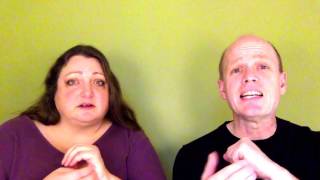
Rick Wilkes and Kathy Vartulli demonstrate emotional tapping techniques to ease the stress of feeling rushed. The practice calms your nervous system and sharpens focus so you can actually get things done instead of spinning in panic.
One of the stresses people run into all the time is having not enough time. There's not enough time, and it can be really stressful.
There's not enough time.
This is Rick Wilkes from thrivingnow.com and I'm Kathy Vartulli from thrivingnow.com and theintimacydojo.com and when you say there's not enough time, what do you feel in your body?
Oh, stress. I immediately get flooded with a sense of urgency. It's like getting a little whip across my back.
And it's actually a good way for people to drive themselves. We can get our primitive brain activated. We get a flood of adrenaline, and we can kind of push through being tired or not interested or understand the difference between not enough time as in, I really would like to get my task this finished or I have to run really fast before the tiger eats me.
That's right. And so people figure this out that by whipping themselves by saying there's none. By whipping themselves by saying there's not enough time. There's not enough time. There's too much to do. What happens is that your adrenal glands, parts of your body respond, your emotional body activates, you go into a place of alert. And like Kathy said, if this was a situation where if you had to grab enough of the berries before the bear came back, that or you'd starve, or you'd starve and your children would starve and your whole tribe would. Would be in trouble, that that kind of frantic level of activity would be useful. But what happens today, of course, is that we get used to the high level of performance sometimes that we get by boosting our adrenals until we're fatigued, and then now we're having to kick ourselves with that. There's not enough time. There's too much to do to the point where we're actually depleting the tissues of our body. Our brain is stress stressed, and we're constantly in a place where instead of being resourceful, we're being pushed, driven like a dog.
Yeah. And our bodies are meant to have momentary, temporary times of that, but it's not meant to be 24 7, like many of us try to run our bodies.
Yeah. And I've had the result of that is often chronic mystery diseases. Fibromyalgia. I had ulcerative colitis from that. And so finding a way of being high performance without that sense of stress, that's the key. And that's why we use this emotional technology called tapping to be able to calm the feeling not denying the feeling, but try to retune ourselves, recalibrate so that we're active and engaged and focused rather than stressed and overwhelmed.
One of the things I notice is when I'm grounded and calm, I actually make more progress than when I'm scattered and rushing. I do three seconds of that and two minutes of that, and then I get over there and do something and I come back and I'm like, what was I doing? And I actually can spin in circles. High in adrenaline, running in my primitive brain, which is not very logical or efficient. Always. Versus when I calm down and get in my body and I'm like, oh, that's done. I checked that off. That feels really good. What's next?
Yeah. And for me, I know that when I'm in that activated place and I still get. Can get there. You can always get there. I mean, it's a very natural reaction.
Anyone can have the perfect storm.
I needed some doorway to walk through that would work for me. And be efficient. And that's what we're going to invite you to try out. Is this idea that stimulating the body and calming yourself with words and action can help reground yourself?
Yeah. Would you like.
Would you do that?
Absolutely. So first of all, just let this time and space be just for you. If you're thinking, oh, I have all these things to do. Bring that energy into the tapping, but use this time for you. Take a nice slow, deep breath and feel your feet and toes on the floor. Notice your butt supported by the chair. You don't have to do anything about you. Just relax for right now and clear some of the stress.
Okay.
Karate chop. Even though there just isn't enough time.
Even though there's just not enough time.
And I feel that in my whole body.
And I feel that in my whole body.
And I feel like I need to.
Run and I feel like I need to run all the time.
And I can't even focus very well.
And I can't even focus very well.
And I feel exhausted.
And I do feel exhausted by it.
I choose to take a nice, slow, deep breath.
I choose to take a nice, slow, deep breath.
And be present with me for a moment.
And be present with me for a moment.
Top of the head. I always feel like there's not enough time.
I always feel like there's not enough time.
Eyebrow. I've been using that mantra for a long time.
I've been using that mantra for a long time.
Side of the eye. I've kind of convinced myself it's true.
I've convinced myself it's true.
Under the eye. I sure do create that there's not.
Enough time I sure do create that there's not enough time under the nose.
And there's a lot of things I want to do.
And there's a lot of things that I want to do.
Chin. But it really helps if I calm down and focus.
But it really helps if I'm calm and focused.
Collarbone. I choose to be present with my body.
I choose to be present with my body.
Under the arm. I choose to let it relax a little right now.
I choose to let it relax a little right now.
Top of the head. And I invite new clarity and direction to come in.
And I invite new clarity and direction.
To come in, take a nice, slow, deep breath. And one of the things that is important to remember, our brains and our bodies do follow our intentions. And if we're constantly focused on there not being enough time, we can subconsciously create that things don't go smoothly or we add things to our list that don't need to be there or that we're not focused, so we're not using our time. Well, I know there's times when I feel like I'm super busy, but I'm actually not getting that much done. So if you can just ground yourself and choose one thing and get that done and check that off your list.
And I want to acknowledge that these chemicals in your body, they're very addictive in the sense that we get used to it, our tissues get acclimated to it. So notice that we just. The whole part of this little video here is two minutes of tapping. Two minutes of tapping. As you look at your list, as you think about your list of things to do and do. Two minutes of tapping. I bet you that that would change the way that you engage with the things that are important to do, the things that you are choosing to do by tuning away from the. There's too much to. Gosh, there's a lot I have to do to. Wow, look at the opportunity for me to be of service and to express myself and to move my life forward and to grow and to stretch and to really engage. When you make that journey over the coming weeks of two minutes before you engage. Wow. You'll become so much more resilient. And that's what. That's what I wanted. And I really. We are so delighted to share this with you. If you have comments or concerns or what. Whatever is coming up for you, we do invite your comments and. And questions and concerns.
Yeah, we. We hope this helps if you can. Every time you notice yourself in that rattled space, take a nice slow, deep breath, go through this video again, give yourself a little space to be actually productive and to enjoy life.
Really, we are so delighted to share this with you. If you have comments or concerns or what.









