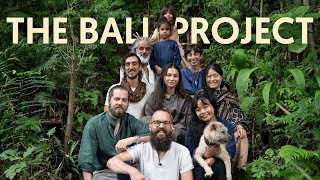
In this talk, the speaker explores the dichotomy between the brain's left and right hemispheres as metaphors for intelligence (goal‑oriented, problem‑solving) and wisdom (holistic, restraint‑based judgment). Citing Iain McGilchrist’s The Master and His Emissary, they argue that modern society over‑relies on left‑hemisphere intelligence, leading to extraction, growth‑obsession, and ecological crisis. The speaker critiques both techno‑optimism (more intelligence = better future) and anti‑technology romanticism, suggesting both are fragmented. A historical illustration—Tibet’s spiritual richness versus China’s military power—shows that wisdom without the capacity to act is vulnerable. The proposed solution is to deliberately fuse wisdom and intelligence: empower those with deep wisdom to develop the entrepreneurial, strategic skills needed to compete within existing power structures and build sustainable alternatives. This integration is framed as “custodianship,” a service‑oriented stewardship that scales both insight and execution. The speaker describes a concrete initiative, Nisa in the Jatiluwi mountains, designed as a space where participants can cultivate both hemispheric capacities, fostering a new, emergent collective consciousness for future generations.
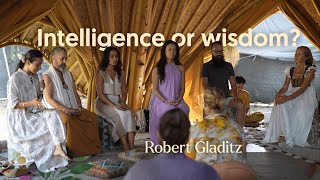
Wisdom is something that I'd like to talk about because I think it's one of the qualities that we collectively are invited to embody more in order to build a future that actually works for us and at the same time works for all large and small inhabitants of this planet. And I would like to ask the question, what is wisdom actually? And where does it sit in our body? There's a beautiful book written by Iain McGilchrist, and it's called the Master and His Emissary. And he describes how the two halves of our brains have actually very distinct purposes and qualities. And that the left hemisphere is very good at narrow, focused, goal achieving. So give me a problem and I will find you the solution. This is what the left hemisphere is for. So there is a wall and there's a nail. I need to put it in the wall. Okay, give me a hammer bomb. This is the modus operandi of the left hemisphere. So the left hemisphere is very, very good at achieving something, whatever it is. And in order to achieve that, the left hemisphere needs to, in their focus, get rid of everything else that doesn't matter and only focus on the one task at hand. And we could call this intelligence. Intelligence is something that we collectively as a species are very good at. We develop the capacity to get things done. But when we look at the state of the world, we all realize probably that this is not enough, that the left hemisphere is very dominant, is very, very present. And if we don't bring our two hemispheres together, then we will probably not be able to create a future that works for all of us. So the right hemisphere that wants to be connected with this skill of getting things done works in a fundamentally different way. The right hemisphere doesn't focus on specifics. It focuses on wholes. It doesn't look at parts, it looks at the whole picture. And it has the capacity to put all our actions in the whole tapestry of the interconnectedness of life. So it asks the question, what should we actually do? What really makes sense? What is the right thing to do? And this, how Emre Gilchrist describes it, is what we call wisdom. Intelligence gets things done. Intelligence solves problems. But wisdom is there to actually check in which problems should be solved, which things should be done. And wisdom has a lot to do with restraint. While intelligence tries to earn more money, raise more gdp, extract more resources out of the earth, wisdom says, says, okay, we could do that. We have the power to do that. We have the power to cut all the fucking trees in the world, but we shouldn't do that, okay, we could sell them to earn more money. But it just feels wrong. It just doesn't feel like a contribution to the kind of world that we want to live, that we want to live in, and that we want to pass on to our children. So I think the state of the world is a reflection of our collective embodiment of the two hemispheres. And if we want to build something new, we are invited to bring the two of them together. Because currently how he describes in his book, and I find that metaphor so beautiful, the emissary, the servant, just kicked out the master. We're living in a world that runs on intelligence that is higher, faster, stronger, more powerful, but doesn't ask the question of what is really the right thing to do. Enough. And when we ask people, how should we move forward? Some of them say, ah, don't worry, technology will figure it out. AI will save all of us. These are the techno optimists that believe more intelligence will be always better. Which I think we all sense is not the full story. Because more intelligence just leads to more extraction, more narrow, focused, goal achieving. And then there's the other, the other side of the coin. And people say, like, no, it's all bad. Technology is bad, money is bad, Just move into the forest, get rid of all of that, and just sit together in a circle and have a good time. Which is there's certain truth in that. And at the same time, it's part of the same problem. It's fragmentation as well. So what if we would bring the two hemispheres together? We both have them, like all of us, all of us have a left part of our brain and the right part of our brain. What if we would let them work in tandem and through that create something that never existed before? Because just focusing on one of them will not work. Just focusing on intelligence on the left side, we just cause more destruction, more extraction. And just focusing on the other part, on the wisdom. And neglecting the intelligence will not give us the power that we need to protect what is sacred. There's a story that illustrates that, like a century ago, Tibet was one of the most evolved civilizations in the world. The consciousness was very, very high and the people were thriving. But China, their neighbors, just had bigger guns. So they invited them and put 7 million Tibetans under Chinese rule. So intelligence by itself would just cause destruction. But wisdom without the intelligence is not able to keep up the strength and the power to protect what is sacred. So our collective task, I think, is for the people with the deepest sense of wisdom to Become the greatest at the game of intelligence, at the game of power. So I want to see spaces like these, with thousands, with tens of thousands as people. I'm looking at you, Myra. I want to have the, like we all sense the. There's a lot of wisdom here in this space. We need to scale that. We need to bring this to a level where it actually has the power to compete within the current extractive system. We need to build alternatives that embody the wisdom and at the same time have the capacity to play within the current game. Because if we don't do that, we'll just be overrun like the Tibetans and their beautiful wisdom, their beautiful consciousness gets just trampled over. So what we are focusing on with our work is to bring the two hemispheres together and to create spaces where the people with the greatest amount of wisdom can at the same time develop the intelligence, the entrepreneurial spirit, the skills at the current game of power to have the capacity to build something, something new. Because I feel that I have a three year old son and when I, when I connect with the. Or when I imagine the world that he and his children and his grandchildren will inherit from our generation, there is a certain sense of sadness and at the same time there's a certain sense of I'm from Germany. In German there's a beautiful word, Meier entropinrach Nord. It's called aufbrochstimung and aufbro stimmel means the epic sprouting as we translated it, the sense of something new that wants to emerge, that is like quietly knocking on the door. And at the same time it's fully present. It's a sense of there could be actually something entirely new emerging right now. And I have the possibility to witness that. How exciting is that? And at the same time I have the possibility to contribute to that. And I feel that this is our collective calling in times like these where we, when we turn on the news or go on social media, we see all the facets of the meta crisis. And yeah, I feel that these times call for integration, for wholeness, for us becoming all of what we can be, for harnessing the two hemispheres and bridging that. And this for me is what I call custodianship. Custodianship is the, in my opinion, most underrated world out there. But that is so important in the times that we're living in, being of service, caretaking, not just for me, my own well being, my own family, my own company, but actually expand the realm of custodianship as far and as wide as possible, maybe even to the whole planet. But custodianship doesn't require just to know what the right thing to do is, meaning the wisdom. But it requires the intelligence, the skill, the capacity to actually serve at scale. And this is how I see the two parts of ourselves coming together. That's why me and David, my co founder, we're bringing an ecosystem into the world of organizations all dedicated to this quality of custodianship. The first one is a beautiful space in the mountains in Jatiluwi. It's called nisa, where we invite people to have a pause, to have a break from everything that's going on right now, and to give both the development of intelligence and the development of wisdom the space to sink deeper. Yes. Really grateful to be a part of that. Thank you, Myra. That's my contribution to our shared discussion later. Thank you.